Last updated: July 7, 2026
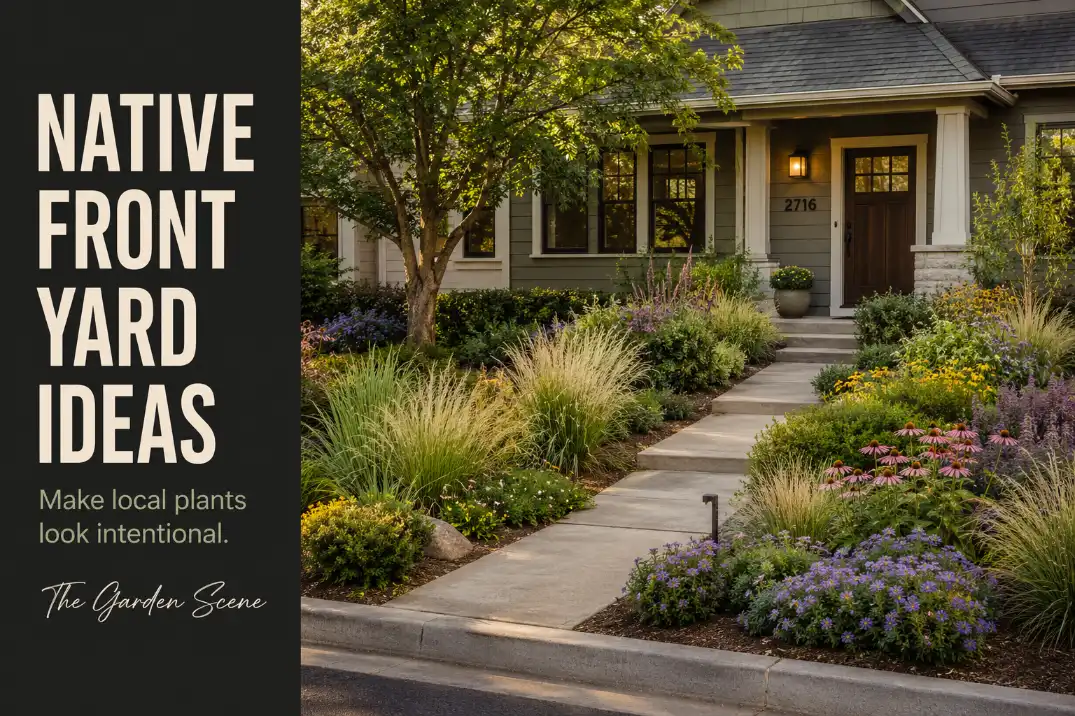
Native plants can make a front yard feel rooted in its region, but the front yard is not the easiest place to use them well. The yard has to face the street, frame the house, keep the entry readable, and stay manageable when plants reach their real size.
That is where many native front yard ideas go wrong. The problem is usually not the word “native.” It is choosing by plant name before deciding the role, scale, edge, and maintenance access.
A native planting that works in a backyard habitat bed may look too loose beside a front walk. A plant that is locally appropriate may still grow too wide for a foundation bed. A beautiful seasonal flower mix may disappear visually after bloom unless the yard has a clean edge and repeated structure.
Use four filters before choosing plants: local fit, front-yard role, mature scale, and curb-facing appearance. Once those are clear, native plants become much easier to use without turning the front yard into a plant list, a meadow project, or a low-water landscaping guide.
Start With Local Fit, Not a Plant List
The first decision is whether the idea fits your site, not whether the plant sounds native. A plant can be native somewhere in the U.S. and still be wrong for your soil, heat exposure, winter conditions, rainfall pattern, or street-facing microclimate.
Front yards add pressure that backyard beds may not have. Driveways and sidewalks reflect heat. Soil near walks may be compacted. Some curb areas deal with road splash, salt, or foot traffic. The planting is also visible from the sidewalk, which means weak edges, flopped stems, and wrong scale show faster.
A stronger order is:
- Read the site first: sun, shade, soil moisture, reflected heat, slope, and traffic.
- Choose the front-yard role: foundation softening, walkway edge, entry accent, curb strip, lawn replacement, or mixed border.
- Check mature size before day-one spacing.
- Choose local native species after the role and conditions are clear.
That order prevents the common mistake of copying a beautiful regional planting photo into a front yard that cannot carry the same mature shape.
For a broader plant-selection frame, use the same discipline you would use when you choose plants for front yard landscaping: site pressure first, plant name second.
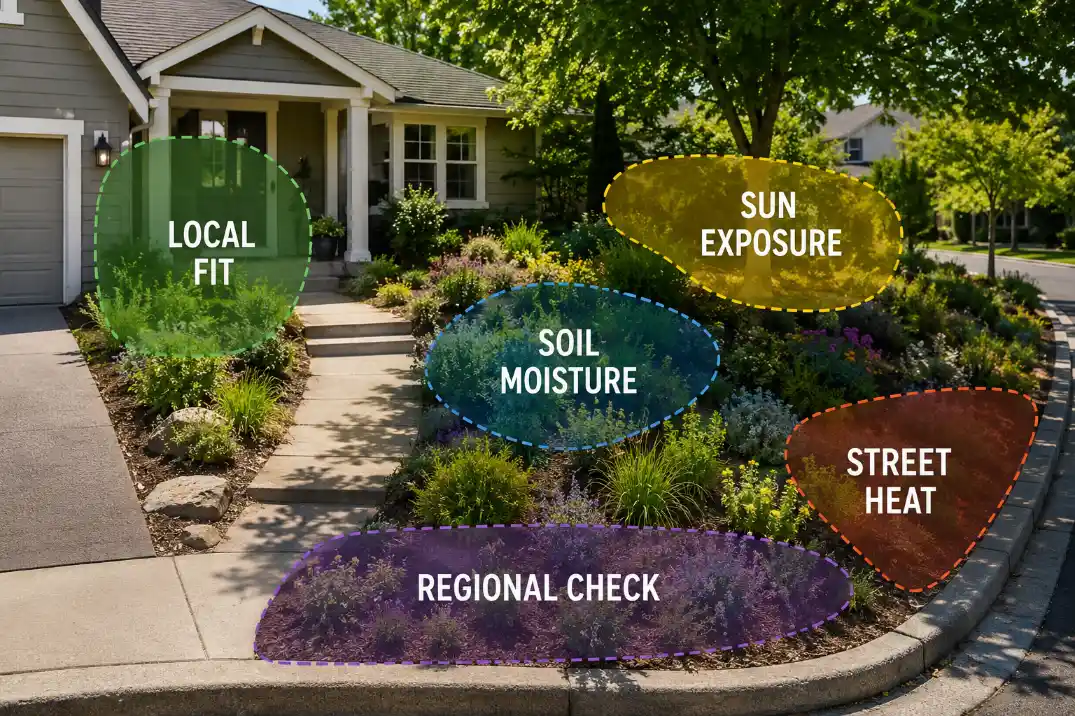
Field Check: A native plant is not front-yard ready just because it is labeled native. It still has to fit the exposure, soil, mature size, and public-facing job of the bed.
Use Native Plants by Front Yard Role
Choose the job first. A native plant beside the front walk has a different job from one softening the foundation, replacing lawn, or filling a curb strip.
Foundation beds need structure first
Foundation beds are the easiest place to overplant because the house gives the bed a strong backdrop. The safer move is to start with a few reliable structural forms, then add seasonal native perennials or grasses in controlled groups.
This works best when the front of the house needs softening but not hiding. Keep lower growth near windows and vents, and use larger native shrubs only where they will not block the porch, house numbers, or entry view.
Walkway edges need low, clear planting
A native walkway border should guide movement, not brush against visitors. Use lower-growing forms and leave room for mature spread.
This idea fits front walks that feel bare or too hard-edged. It is the wrong choice if the plants flop, seed into the path, or need constant trimming to stay off the walking route.
Entry accents should frame the door
Near the front door, native plants should act like a frame. They can soften steps, porch corners, or a bare landing, but they should not compete with the entry.
One strong native shrub form, a repeated grass clump, or a small group of perennials can do more than a crowded mix. The entry should still feel obvious from the driveway and sidewalk.
Lawn-replacement islands need a clean edge
A native planting island can replace part of a front lawn without making the whole yard feel wild. The idea works best when the bed has a clear outline, repeated plant forms, and enough open space around it for the house to still read cleanly.
This is not the same as turning the entire front yard into a meadow. For a larger no-lawn redesign, keep this article as the fit filter and handle the deeper layout through a focused guide like front yard garden design without lawn.
Curb strips need tougher decisions
The curb strip or sidewalk-side band may look like a simple planting opportunity, but it often has the hardest conditions: reflected heat, foot traffic, road splash, compacted soil, utilities, and local rules.
Use curb-strip native planting when the area is too narrow or exposed for traditional lawn to perform well. Avoid loose, tall, or thorny plants where people step out of cars or walk close to the edge.
Mixed borders need seasonal structure
A mixed native border can be beautiful from the street, but it needs more than bloom. The strongest versions combine repeated forms, controlled height changes, defined edges, and some off-season structure.
That may mean low grasses, compact shrubs, seed heads, or woody form that still looks deliberate outside peak flower season. The planting should not depend on one short bloom window to carry the whole front yard.
| Native front yard idea | Best fit | Maintenance caution | Curb-facing appearance |
|---|---|---|---|
| Structured foundation bed | Houses with bare walls or harsh foundation lines | Keep plants below windows, vents, and house numbers | Softens the house without hiding the entry |
| Low walkway border | Straight or exposed front walks | Avoid plants that flop, spread, or brush ankles | Makes the route feel finished and clear |
| Entry accent planting | Porches, steps, and front-door corners | Keep the door view open | Frames the entrance instead of blocking it |
| Native lawn-replacement island | Open front lawns with too much unused turf | Edge it clearly and control mature spread | Looks intentional when the shape is simple |
| Curb strip planting | Hot, narrow, or difficult sidewalk-side areas | Check local rules, traffic, salt, and foot clearance | Can look polished if low and tidy |
| Mixed native border | Larger front yards with room for layers | Needs seasonal reset and visible structure | Adds depth when repeated forms hold the design |
Keep Mature Scale Smaller Than the Curb View
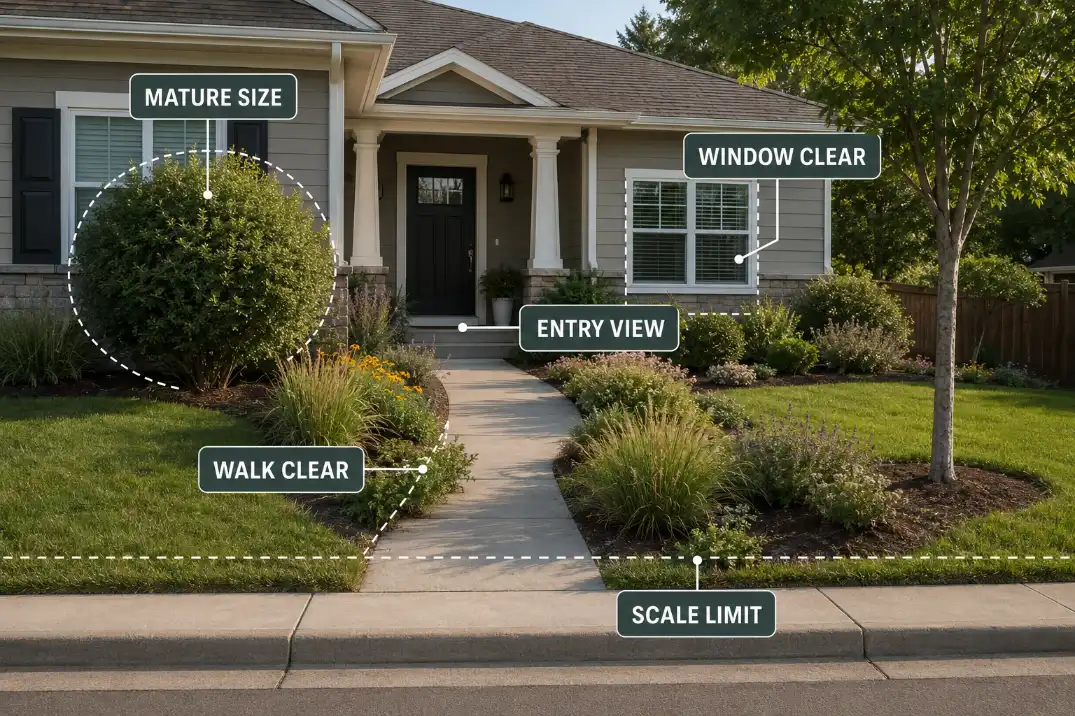
Mature size decides whether native planting looks intentional or starts pressuring the front of the house. The small plant that looks harmless on planting day may widen, lean, reseed, or lose structure in a way that changes the whole curb view.
Scale matters most near the house, near the walk, and near the curb.
Near the house, native shrubs and taller perennials should not cover windows, vents, porch railings, house numbers, or the front door. Near the walk, plants need enough room to mature without narrowing the route. Near the curb, planting should stay low and readable enough that the yard does not look like it is spilling into public space.
A useful approach is to layer height from the viewer’s path inward. Keep lower forms closest to walks, steps, and curb edges.
Place larger masses behind them where they can add depth without becoming an obstacle. The same logic applies when you layer plants in front yard landscaping: the front layer protects the view and the route, not just the color scheme.
Pruning should refine the design, not constantly fight the plant. If a native shrub will always need hard cutting to stay below a window, it is probably the wrong plant for that role. If a grass or perennial leans into the walkway every season, the problem is not its native status. It is the fit.
Common mistakes to avoid:
- Choosing by flower photo instead of mature size.
- Filling the bed for instant fullness, then losing the walkway edge.
- Planting tall native grasses where the house number or entry view needs to stay open.
- Ignoring winter stems and off-season structure.
- Assuming pruning can permanently fix a plant that is too large for the space.
Design the Maintenance Before You Design the Flowers
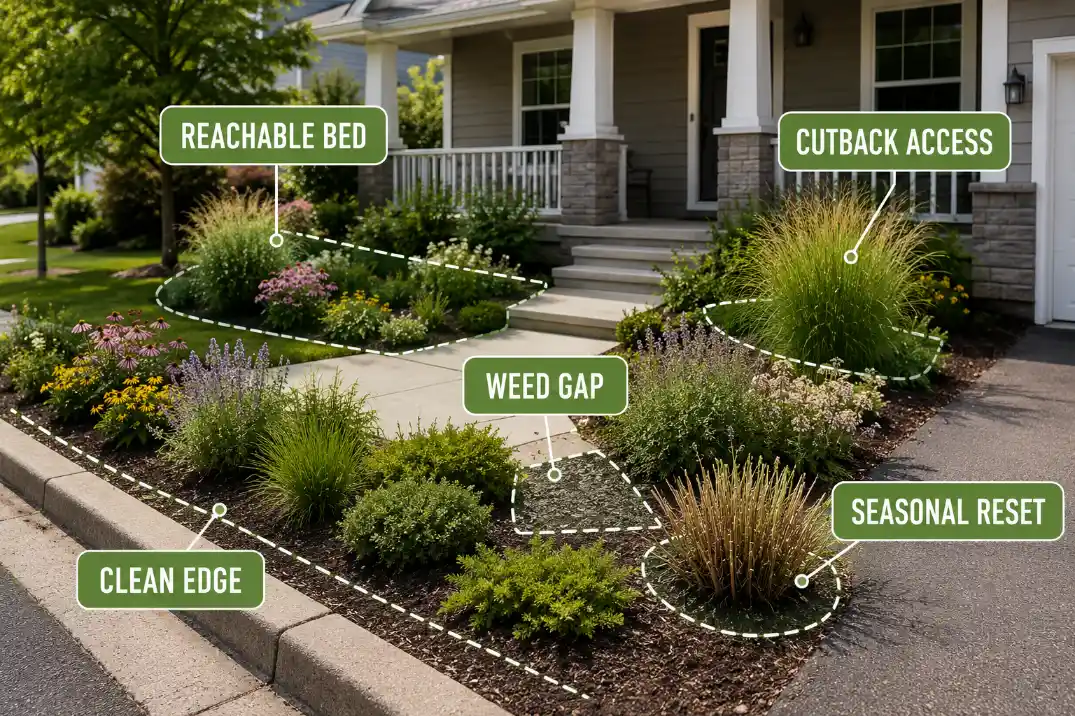
The maintenance question should come before the flower mix: can this bed be reached, edged, weeded, and reset without stepping through the planting?
Native plants can reduce some inputs when they match the site well, but they still need establishment care and periodic management. In a front yard, maintenance shows. Dead stems, open weed gaps, flopped growth, drifting mulch, and unclear edges are more visible from the sidewalk than they would be in a back corner.
A dense native bed may suppress some weeds after it fills in, but it still needs care while it establishes. A looser planting may look airy and natural, but open soil can invite weeds before the plants mature.
Seed heads and winter stems can be attractive when they are framed by a clean edge and repeated forms. Without that structure, the same stems may read as neglect from the street.
That is why front-yard native planting needs reachable beds. You should be able to pull weeds, reset an edge, cut back seasonal growth, and clean debris without trampling the planting. This is especially important near the sidewalk, driveway, mailbox, porch, and utilities.
For a broader maintenance frame, connect this decision to low-maintenance front yard planning rather than assuming native plants solve the issue by themselves.
Make the Yard Look Intentional From the Street
From the street, people do not read individual plant choices first. They read edge, shape, height, openness, and whether the entry still makes sense.
That is why native planting often needs stronger visible structure in a front yard than it would in a backyard habitat bed. Intentional does not have to mean formal. It means the yard has a readable edge, a visible entry, repeated forms, and enough open view for the house to stay connected to the street.
A native front yard can look intentional when it uses:
- A defined bed edge that contains looser planting.
- Repeated clumps or shrub forms instead of scattered singles.
- Lower planting along walks and the curb.
- Taller masses only where they do not block the door or windows.
- Seasonal structure beyond peak bloom.
- Clear negative space so the planting has room to be seen.
The difference is not whether the plants are native. It is whether the planting is framed.
An accidental-looking native yard usually has too many unrelated forms, no strong edge, plants leaning into the walk, and no clear view to the front door. An intentional native yard may use many of the same plant types, but the structure tells the eye where the bed begins, where the route goes, and what the main view should be.
This matters even more when the front yard already has visibility issues. If the house number, porch, or entry path is hard to read, planting can make the problem worse.
Keep the same visibility discipline you would use for front yard house number visibility: plants should support the public-facing function of the yard, not cover it.
Design Caution: Naturalistic planting still needs a frame in the front yard. A clean edge, repeated form, or visible entry line can make looser native planting look designed instead of accidental.
Match the Idea to the Front Yard Condition
The right native-plant idea is controlled by the strongest condition in that part of the yard. A sunny lawn edge does not need the same planting idea as a shady foundation bed. A curb strip does not behave like a protected porch corner. A large lawn replacement needs more structure than a narrow walkway border.
Use the condition first, then choose the idea.
| Front yard condition | Best native idea type | What to keep controlled | What to avoid |
|---|---|---|---|
| Sunny open lawn edge | Repeated native grass and perennial groups with a clean bed line | Mature spread and edge definition | A loose meadow look without structure |
| Shady foundation bed | Layered native shrubs, sedges, or shade-tolerant perennials | Window clearance and off-season form | Tall plants that hide the house face |
| Narrow walkway border | Low native edging plants or compact repeated clumps | Walk clearance and seasonal flop | Plants that lean, seed heavily, or brush visitors |
| Street-facing curb strip | Tough low planting suited to heat, traffic, and local rules | Height, foot clearance, and debris cleanup | Thorny, tall, fragile, or messy plants |
| Large lawn-replacement area | Structured native planting island or mixed border | Shape, repetition, and access paths | Filling the whole yard before the design has a frame |
This matrix keeps the project from becoming a full native plant list. Once you know the condition and the front-yard role, you can take the next step into local plant selection with more confidence.
For example, a homeowner replacing part of a sunny lawn may need repeated native grasses and flowering perennials inside a strong edge. A homeowner dealing with a narrow front walk may need lower native forms that stay clear.
A homeowner with a street-facing privacy issue may need a separate front-yard privacy decision, not just taller native plants. In that case, route the design through front yard privacy planting instead of trying to make this article solve screening in full.
A Native Front Yard Fit Check Before You Plant
A native front yard is ready to plant only when the idea passes both the local-site test and the curb-facing test. Use this check before committing to the bed shape or plant mix:
- Is the plant or planting style native to your local region, not just native somewhere in the U.S.?
- Does the site match its sun, soil, moisture, heat, and exposure needs?
- Will the mature size still leave windows, walks, house numbers, porch edges, and the entry visible?
- Can the bed be weeded, edged, and cut back without stepping through the planting?
- Does the design have a clean edge, repeated form, or visible structure from the street?
- Will the yard still look intentional outside peak bloom?
- Is this idea solving a front-yard role, or does it really belong in a pollinator meadow, backyard habitat bed, low-water plan, or lawn-replacement guide?
- Have local rules, HOA limits, sidewalk clearance, utility access, and curb-strip restrictions been checked where they matter?
The strongest native front yard is not the one with the longest plant list. It is the one where local plants are matched to the site, scaled to the house, reachable for maintenance, and structured enough to read clearly from the curb.
After that fit is clear, plant names become easier to choose. Use a local extension, native plant society, or government native gardening resource to narrow the species for your region.
The USDA Forest Service’s native gardening guidance is a useful starting point before checking more local recommendations.