Last updated: June 27, 2026
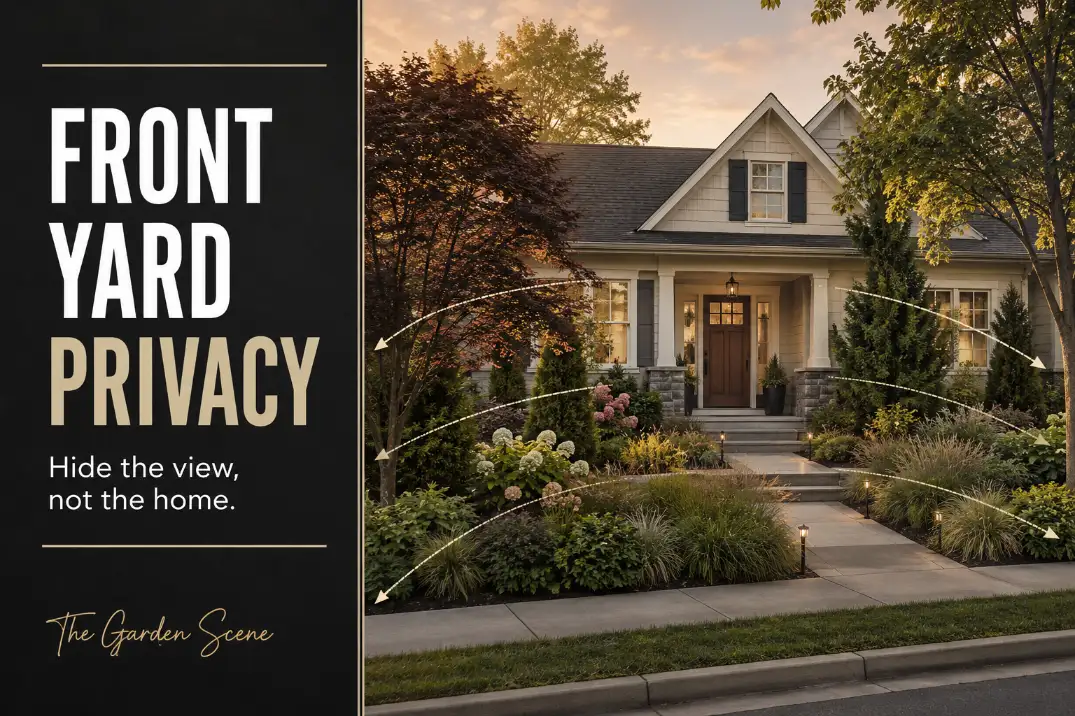
One uncomfortable view can make an otherwise normal front yard feel exposed.
It may be the sidewalk angle into a living room window. It may be the parked car across the street facing the porch. It may be a neighbor’s front steps looking diagonally across the lawn. The instinct is often to block the front yard, but that is where many privacy plans start to go wrong.
A front yard is not a backyard privacy zone. It still has to show the house, guide people to the door, keep windows livable, and look connected to the street. When privacy landscaping hides too much, the yard can feel safer in one direction and worse in several others.
The better question is not, “How do I make the whole front yard private?” It is, “Which view needs to be controlled, and what should stay open?”
Before choosing a hedge, screen, tree, or planting bed, decide whether the real privacy problem is street-to-window, sidewalk-to-porch, neighbor-side, driveway-to-entry, or inside-looking-out exposure. That one decision keeps the design from becoming a wall.
Start With the View You Need to Control
Do not start with the plant. Start with the viewer.
A sidewalk a few feet from the windows creates a different problem than a neighbor’s porch looking across the yard. Street traffic creates a different exposure than a parked car directly across from a front room. A driveway that opens toward the entry creates a different issue than a wide front lawn with no planting depth.
Stand where other people actually see the yard. Look from the sidewalk. Look from the curb. Sit in a parked-car position. Check the neighbor-side angle. Then go inside and look out through the front windows. Privacy often feels worse from one or two specific angles, not from every direction.
That matters because front yard landscaping becomes cleaner when it solves the exact line of exposure. A mid-height shrub group may soften a sidewalk view without hiding the house.
A small ornamental tree may interrupt a diagonal neighbor view without turning the whole frontage into a hedge. A low fence with planting may define the edge without making the porch disappear.
When the problem is street-facing exposure, a broader layered buffer may make sense. When the problem is one window, the answer should stay closer to that window’s sightline. When the problem is the porch or walkway, the privacy layer has to protect comfort without confusing arrival.
This is where the plan has to stay selective. The house can still look open while the worst view is filtered. A deeper look at front yard privacy that still looks welcoming fits that balance, but the first decision is always the view.
Map the Main Front Yard Sightlines
Once the exposure source is clear, map the main sightlines before choosing the treatment.
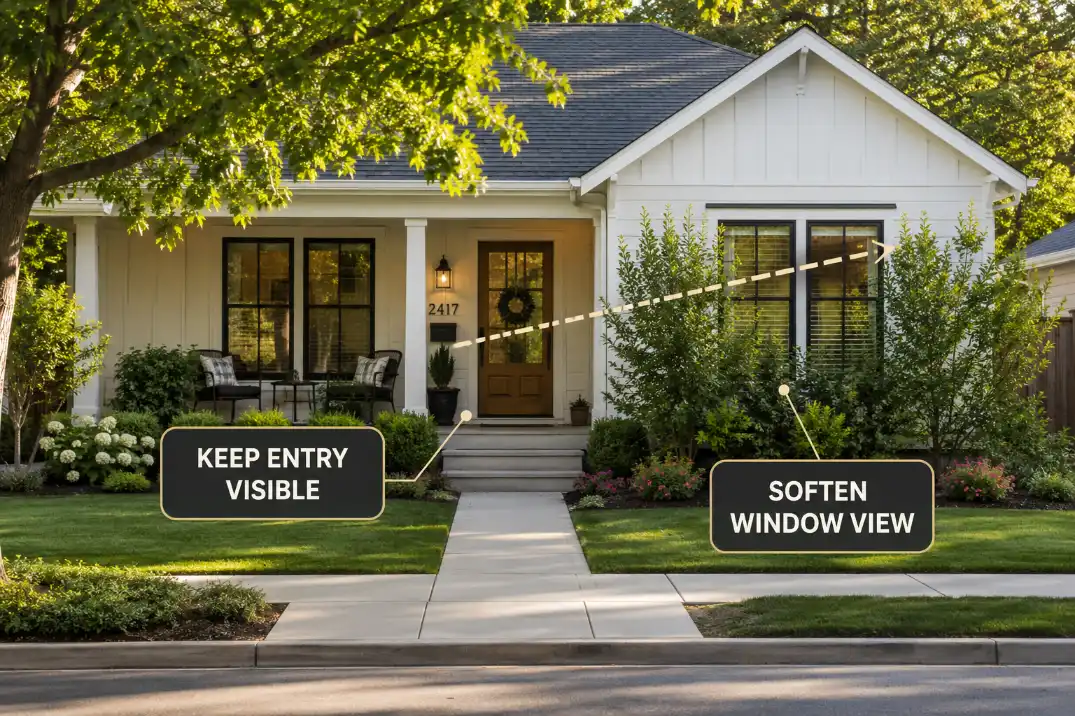
The street-to-window view is usually the strongest privacy concern. This is the line where drivers, walkers, or neighbors can see into a living room, dining room, office, or bedroom window from the public edge. The solution may not need to block the whole yard. It may only need to interrupt eye-level views into that glass.
The sidewalk-to-porch view is different. The issue is closeness. People are not far away; they are passing near the sitting area, steps, or porch rail. A tall wall can make the porch feel boxed in, while a lower layered edge can create separation without making the entry disappear.
The neighbor-to-yard view often comes from the side, not straight on. In that case, planting straight across the front may miss the real angle. Offset planting, a small tree placed slightly forward, or a mid-height shrub group near the side exposure can work better than a full front hedge.
The driveway-to-entry view matters because the driveway often acts like a visual corridor. If the driveway points directly toward the front door, porch, or window, the open pavement can make the house feel more exposed. The privacy move should soften the side of that view while keeping car-door space and the entry route obvious.
Inside-looking-out views are easy to forget. A front window may feel exposed from outside, but that same window may also provide daylight, street awareness, and a better view from indoors. Blocking it completely can make the room darker and less connected.
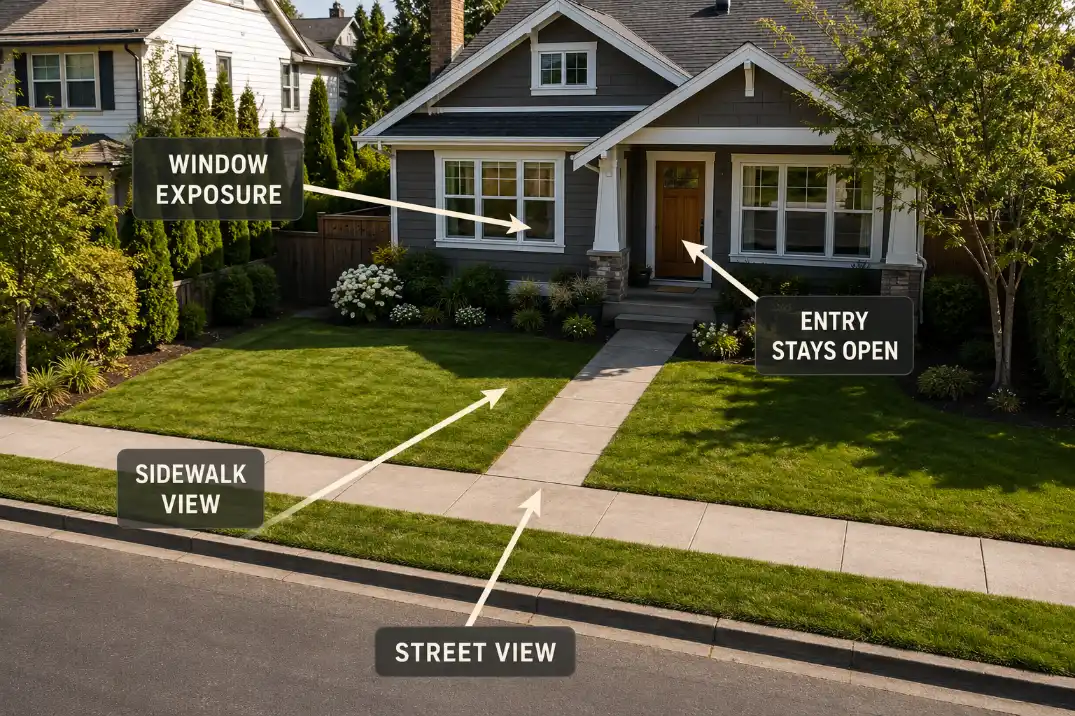
Layout Check
- Stand at the sidewalk and look toward the front windows.
- Repeat from a parked-car angle and neighbor-side angle.
- Mark only the views that feel exposed; leave clear views alone.
For homes close to traffic, one sightline may not be enough. A street-facing layer can soften movement and headlights, while a window-specific layer handles direct eye-level exposure. A focused guide to street-facing front yard privacy landscaping is useful once the main public-facing view has been identified.
Decide How Private the Front Yard Should Actually Be
The next decision is how private the front yard should actually be, not how private it can possibly become.
Full privacy sounds appealing, but in a front yard it can create problems. A tall continuous hedge may hide the house from the street, but it can also hide the front door, reduce natural light, flatten the facade, make the walkway feel less inviting, and create a darker edge at night.
A solid privacy move can solve visibility from outside while damaging the way the home works from inside. The yard may look more screened from the curb, but the front room may lose light, the porch may feel enclosed, and guests may have a harder time understanding where to go.
Filtered privacy usually works better. It softens the strongest views while allowing shape, light, and entry movement to remain visible. A person walking by may no longer see straight into the window, but they can still understand where the entrance is.
Directional screening is useful when the problem comes from one side. A neighbor porch, a bus stop, a driveway edge, or a corner-lot angle may need a targeted screen, not a full-width barrier. Selective exposure is also valid. Some views should stay open because they support curb appeal, passive safety, daylight, or a better indoor-outdoor connection.
Comparison Box — Full Blockage vs Layered Privacy
Full blockage treats the house and yard as something to hide. It can feel strong at first, but it often darkens windows, hides the entry, weakens curb appeal, and creates a heavy street edge.
Layered privacy breaks selected views without erasing the home. It uses low, mid-height, and taller elements to soften exposure while keeping the front door, walkway, address area, and house shape readable.
COMMON MISTAKE — Trying to Hide the Whole Front Yard
The most common mistake is treating every visible area as a privacy problem. In a front yard, some visibility is useful. The entry, walkway, house numbers, and main facade should stay understandable. Screen the uncomfortable sightlines; do not erase the home.
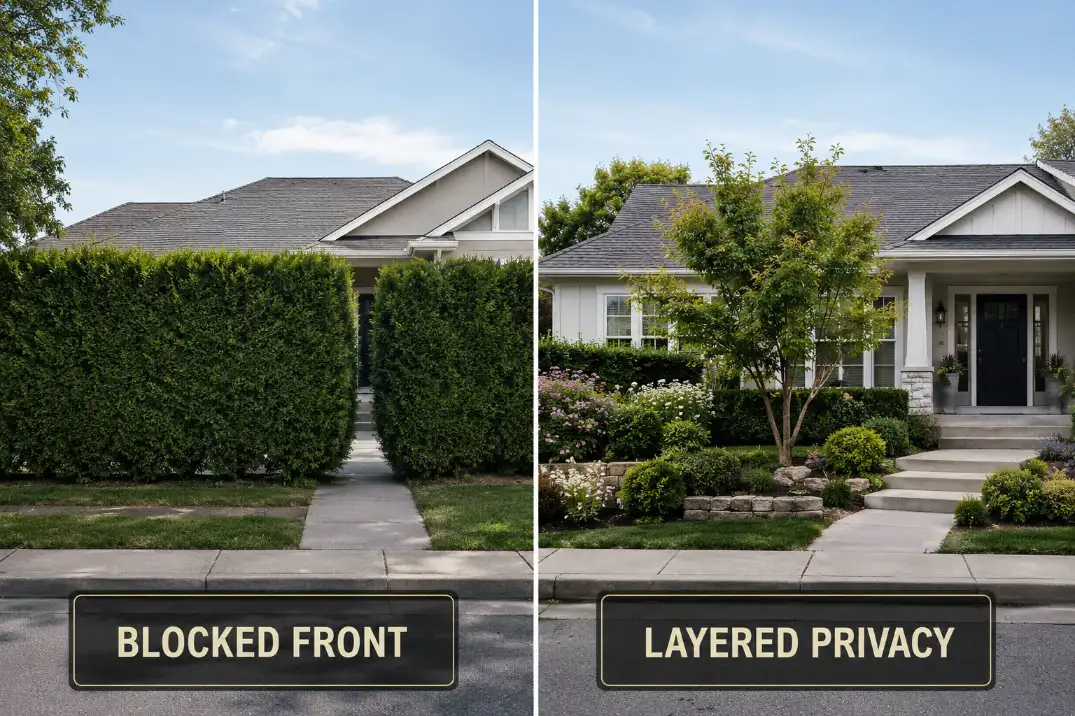
This is where the layout should become more selective. If a window feels exposed, screen the window view. If the porch feels too open, soften the porch edge. If the street feels too close, add planting depth along the frontage.
If the entry is already hard to find, do not add a privacy element that makes it worse. For that tradeoff, front yard privacy mistakes that hurt curb appeal is the issue to solve before adding more screening.
Use Layers Instead of One Front Yard Wall
The core move in front yard landscaping for privacy is layering.
One hard wall creates a single visual stop. Layers create depth. They interrupt views at different heights, from different angles, and across different seasons. This is why a front yard can feel more private without looking like it has been sealed off.
Low foreground planting helps define the public edge without blocking the house. It can make the yard feel intentional from the curb and reduce the feeling that the lawn runs directly into the sidewalk or street.
Mid-height shrubs do most of the privacy work. They can break eye-level views from walkers, parked cars, and neighboring porches. The key is to place them where the view crosses the yard, not automatically in a straight line across the entire front.
Small ornamental trees or taller vertical filters can interrupt higher or longer sightlines. They are useful when the exposure comes from a raised porch, upper window, sloped street, or long diagonal view. They should not sit so close to the house that they darken windows or crowd the roofline.
Offset planting is often better than a flat row. When layers are staggered, the eye has to move around them. That creates privacy without needing every plant to be tall or dense. Partial screens can help in tight spots, but they should support the planting layout rather than replace the entire landscape with a panel.
| Exposure problem | Sightline type | Best privacy move | Keep open |
|---|---|---|---|
| Front window feels exposed | Street-to-window | Mid-height layer with lower foreground planting | Window light and house shape |
| Porch feels too public | Sidewalk-to-porch | Low edge planting plus selective mid-height shrubs | Steps, porch opening, walkway |
| Neighbor view crosses the yard | Side-angle view | Offset shrub group or small tree | Entry route and front facade |
| Driveway points at the entry | Driveway-to-entry | Side planting near driveway edge | Car-door space and front door |
| Lawn feels too open from curb | Broad street exposure | Layered planting bed | Curb appeal and arrival path |
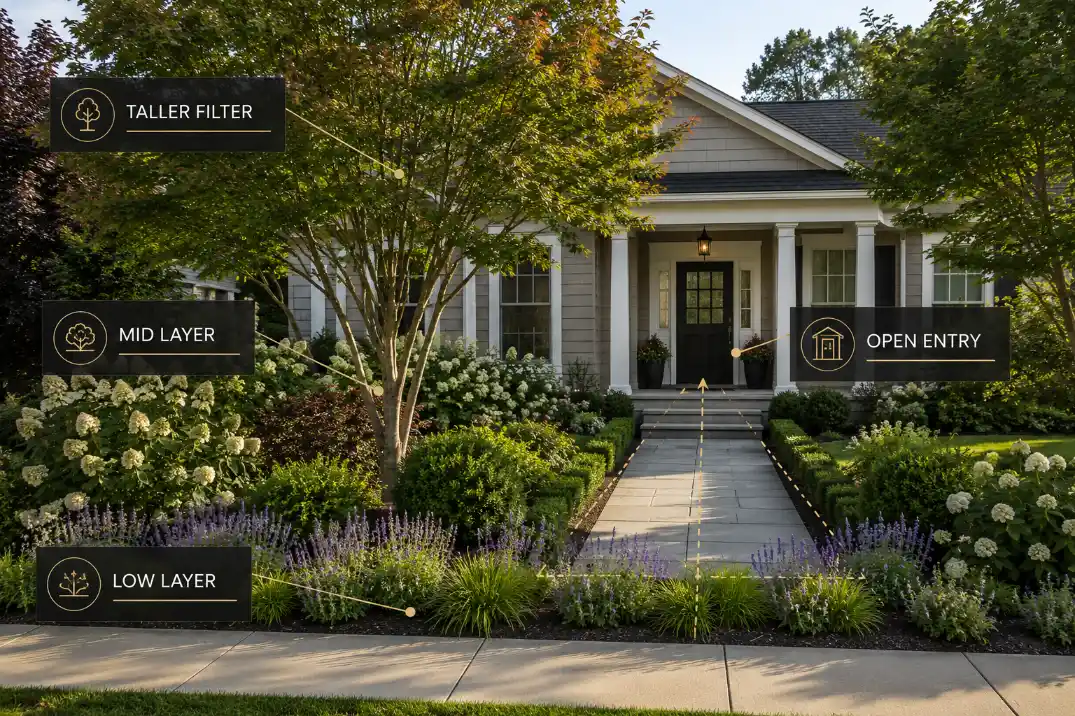
A deeper guide to front yard privacy layering without a fence can handle the tactic-level examples. In this parent plan, the decision is simpler: use the least blocking layer that controls the actual view.
Protect Front Windows Without Darkening the House
Front windows need privacy, but they also need light.
The decision here is whether the window needs lower screening, side-angle filtering, layered planting, or no direct blockage. A window is not automatically a place for tall shrubs. The right height depends on the relationship between the window sill, the viewer’s eye level, and the distance from the sidewalk or street.
Below-window planting can soften the base of the house without cutting off daylight. Window-height planting should be used more carefully, usually when there is direct eye-level exposure into the room. Side-angle planting works when the view comes diagonally from a neighbor, driveway, or sidewalk bend. A farther-out layer can sometimes protect the room better than a shrub pressed against the glass.
Avoid placing dense shrubs tight against the house just to create day-one coverage. That can trap the window visually, reduce airflow around the wall, make maintenance harder, and darken the room from inside. A planting bed needs enough depth for mature spread, not just enough room for the plant on installation day.
A useful test is to look from inside the room during the day. If the planting would remove the only pleasant outward view, use a softer layer or shift the privacy element farther out into the yard. If the issue is direct exposure from a busy road, a focused plan for fixing front yard privacy around windows facing a busy road belongs as the next step, not as the entire parent article.
Keep the Entry Visible While Softening the Street View
The front entry is the part of the privacy plan that should stay readable.
A front door does not need to be fully exposed, but guests should understand where to go. Delivery drivers should see the approach. House numbers should not disappear behind shrubs. Path lighting should still make sense at night. The walkway should feel open enough that someone does not have to brush through planting to reach the steps.
This is where privacy landscaping can quietly damage curb appeal. A beautiful planting bed can still fail if it hides the front door from the curb. A dense screen can make the porch feel more private but also make the home feel less approachable. A shrub that is fine at three feet tall may become a problem when it spreads into the walkway or blocks the address area.
If someone cannot understand the front door, walkway, house number, and porch light from the curb, the privacy layer is too aggressive. It may be solving the view problem, but it is weakening the arrival experience.
Walkway clearance matters because privacy layers grow sideways as well as upward. A front walk should remain easy to read and pass through, especially near steps, turns, porch landings, and the driveway connection. If the route already feels narrow, use lower planting near the walk and place stronger filtering farther away from the traffic line.
Lighting visibility matters too. If the front yard privacy layer hides path lights, porch lights, or the address, the yard may feel less safe after dark. An evening visibility test is useful: stand near the curb after sunset and check whether the entry still reads clearly.
For a tighter porch or door condition, front entry privacy that does not feel closed off is the better place to handle specific entry, porch, and arrival-route details.
Choose Privacy Elements by Mature Behavior, Not Day-One Coverage
A front yard privacy choice should be judged by how it behaves after growth, not only by how it looks on installation day.
Day-one coverage is tempting because new privacy landscaping often looks too small. But fast coverage can become a long-term problem if the mature height, mature spread, density, and pruning needs do not fit the front yard. A shrub that looks perfect beside a window in the first season may press against the house in two or three years. A tree that feels like a light filter when young may cast too much shade as it develops.
The first season may look more open than the homeowner wants. In two or three years, the layer may start doing the privacy work. At mature size, the same element either fits the bed depth or becomes a maintenance problem. That timing matters more than the first impression at the nursery.
Mature spread is especially important in front yards because the space is often shared with walkways, driveways, foundation beds, porch steps, utilities, and lawn edges. If the planting bed cannot hold the mature width, the privacy solution will eventually push into something else.
Seasonal behavior also changes privacy. An evergreen may hold screening through winter, but it may feel visually heavy if used as a solid wall. A deciduous tree or shrub may create filtered privacy in summer and reveal more of the house in winter. That can be acceptable if the main privacy problem is seasonal outdoor use, but it may not work for a front window that feels exposed year-round.
Pruning access should be part of the layout decision. If a hedge or shrub group can only be maintained by standing in the walkway, driveway, or against the house, it will be harder to keep clean. If roots or branches will eventually interfere with hardscape, the privacy element may solve one problem while creating another.
The better choice is usually the element that fits the mature space with less correction. It may look lighter at first, but it will age better.
Where Child Pages Fit Into the Plan
A parent front yard privacy guide should point to the right next step without trying to solve every subtopic at once.
Read a front yard privacy ideas guide if the main sightline is clear, but the homeowner still needs a menu of possible tactics. That is where hedges, partial screens, planters, low fences, porch edges, and trees can be compared without turning this framework into a list.
Read a window-focused guide if the problem is direct exposure into a front room. Window height, indoor light, and side-angle visibility matter more than general curb screening.
Read a hedge-focused guide if the homeowner already knows the privacy layer will be living, dense, and repeated. That decision needs more detail on height, density, pruning, and how to avoid creating a blank green wall.
Read a small-yard guide if the lot has a shallow setback or very little planting depth. A compact yard cannot always support the same layered buffer as a wider suburban frontage, so small front yard privacy landscaping should handle tight-space decisions separately.
Read a fence-line privacy guide if the issue sits on a boundary rather than across the whole front yard. Fence-line planting has different concerns: maintenance access, crowding, neighbor-side views, and how the planting relates to the hard edge.
Read a tree-focused guide if the privacy problem is higher, diagonal, or long-distance. A tree can be a strong filter, but it should be chosen for canopy behavior, mature spread, shade, and placement, not just height.
Read a curb-appeal-focused guide if the yard already feels too closed off. In that case, the next move may not be adding more privacy. It may be reopening the entry, lowering part of the screen, or replacing one heavy barrier with layered depth.
Build the Front Yard Privacy Plan Around What Stays Open
The final decision is not only what to screen. It is what to leave open.
A front yard privacy plan works when the exposed views are softened, the uncomfortable sightlines are interrupted, and the house still reads clearly from the street.
The front door should remain understandable. The walkway should stay open. The windows should feel livable from inside. The planting should create depth instead of a flat barrier.
That is the standard that keeps front yard landscaping for privacy from turning into a wall. Keep the entry readable, keep the windows usable, soften the street exposure, and layer the solution around the view that actually needs control.
For plant selection and site-fit fundamentals, see University of Minnesota Extension landscape design guidance.