Last updated: July 1, 2026
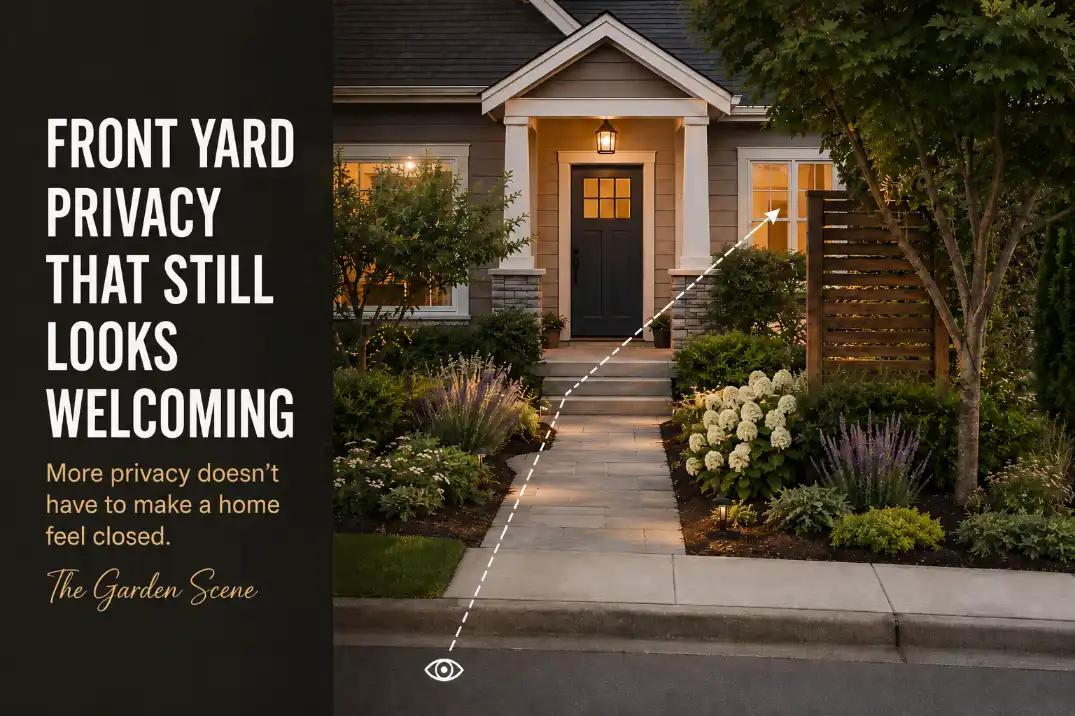
Front yard privacy goes wrong when the screen becomes louder than the entry. From inside the house, a taller hedge or denser panel may seem like the cleanest fix. From the curb, that same move can hide the front door, weaken the walkway, cover the address, and make a normal home feel like it is trying not to be approached.
The better front yard privacy test is not “How much can I block?” It is: which view needs to disappear, and which welcome cues must stay visible?
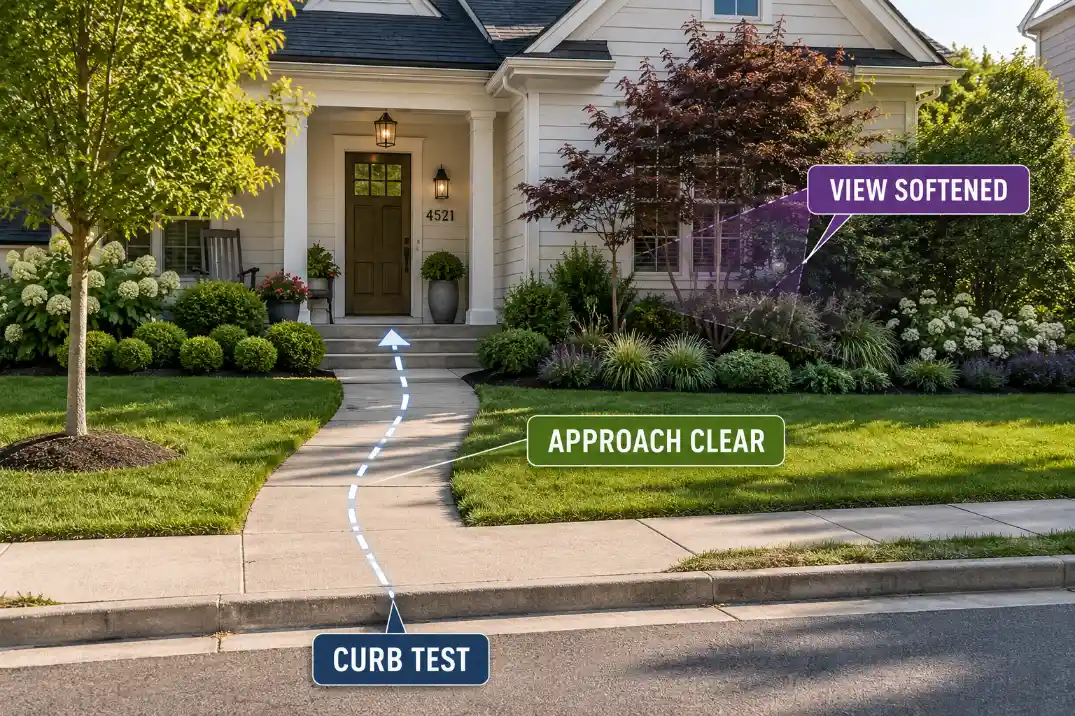
That means the street-to-window view, porch exposure, or side-angle glance gets softened, while the door, walk, address, porch light, and arrival route still explain the house. A front yard can feel private and open at the same time, but only when the privacy layer edits the view instead of closing the face of the home.
Why Front Yard Privacy Can Make a Home Feel Less Welcoming
The first decision is whether the yard is truly too exposed, or whether the planned fix would make the entry harder to read. Those are different problems. One needs privacy. The other needs restraint.
Front yard privacy fails in two directions. One yard is too open: every passing car, walker, or neighbor can see straight toward the porch, windows, or entry. The other yard is too closed: the screening blocks so much of the front elevation that visitors cannot tell where the entry begins.
The second failure is easier to miss because it can look “finished” in a photo. A tall hedge, solid panel, or dense row of evergreens may solve the exposed feeling from inside the house, but from the street it can make the home look guarded. The front door becomes secondary. The walk feels like it slips behind a barrier. The porch loses its role as a friendly transition between public and private space.
The house still needs to explain itself
A welcoming front yard gives a visitor a quick answer to three questions: Where is the door? How do I get there? Does this path feel meant for me?
Privacy elements should not interrupt those answers. They can stand near a window, soften a porch corner, or break a side-angle view, but they should not erase the main entry cue. If the screen is the first thing people notice and the door is the second or third, the design has probably shifted too far toward defense.
A good privacy layer lets the house stay legible from the curb. It does not show everything. It simply leaves enough of the entry visible that the home still feels occupied, cared for, and easy to approach.
Start by Finding the Wrong View to Block
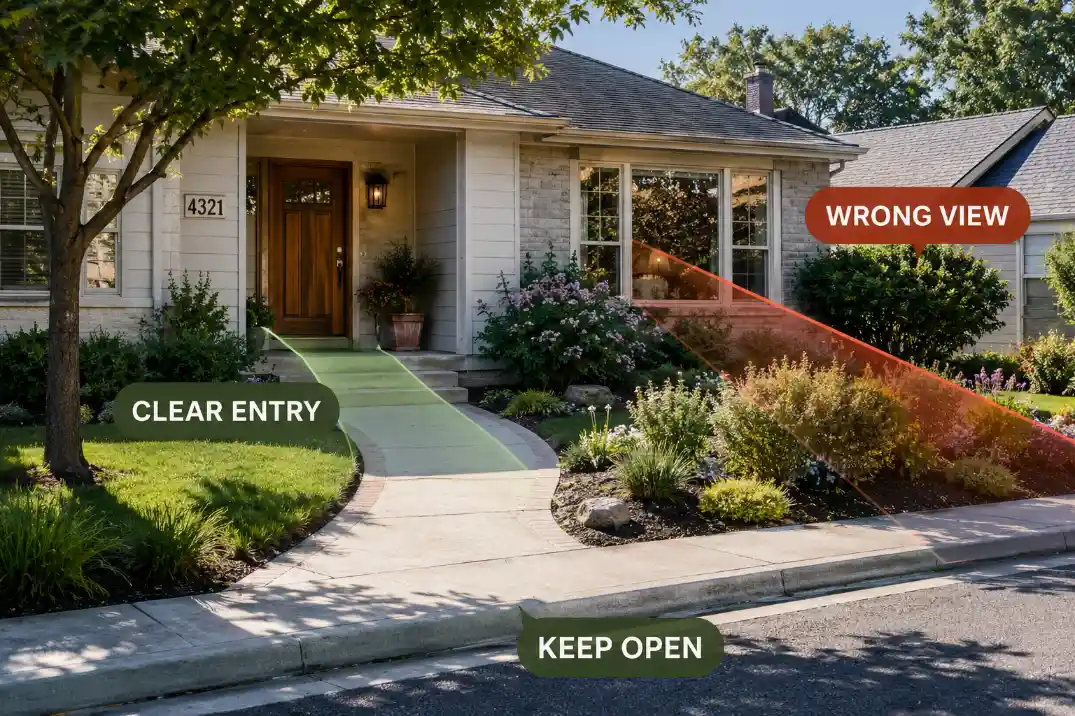
The useful privacy layer belongs where the view becomes personal, not wherever the front yard happens to be open. If the uncomfortable view is only a diagonal glance toward one window, screening the whole front edge is usually too much fix in the wrong place.
Stand near the curb, not just inside the house. Look toward the windows, porch seating, front door area, and any side angle where a pedestrian or car naturally sees into the home.
The view that bothers you most is often narrower than the screen people imagine. It may be a diagonal line from the sidewalk to a living room window, a direct look into a porch chair, or a street angle that cuts across the driveway and lands on the entry.
That is the view to interrupt. The rest of the front yard may not need heavy screening at all.
Keep the welcome signals outside the screen
The front door, primary walk, address numbers, and entry light usually belong on the open side of the design. They can be framed, softened, or approached through planting, but they should not be hidden behind the same mass that blocks the private view.
This is where many front yard privacy attempts go too far. The screen is placed where it blocks the uncomfortable view, but it also blocks the visual invitation. A visitor should not have to guess whether the walk continues behind a hedge or whether the front door is the main entrance.
What most guides miss: the best screen is often offset from the exposed window, not centered across the whole front yard. A slight shift can interrupt the view line while leaving the entry face open.
If the exposure is very specific, such as a sidewalk only a few feet from a window, that narrow sightline needs a more focused treatment than a general curb appeal layer. That situation is better handled as a close-range privacy problem, like front yard privacy when the sidewalk runs only a few feet from your windows.
Keep the Entry Easy to Read From the Curb
A privacy plan is not working if a first-time guest has to slow down and decode the entrance. The entry can be softened, framed, or partially screened, but it should still be the most understandable part of the front yard.
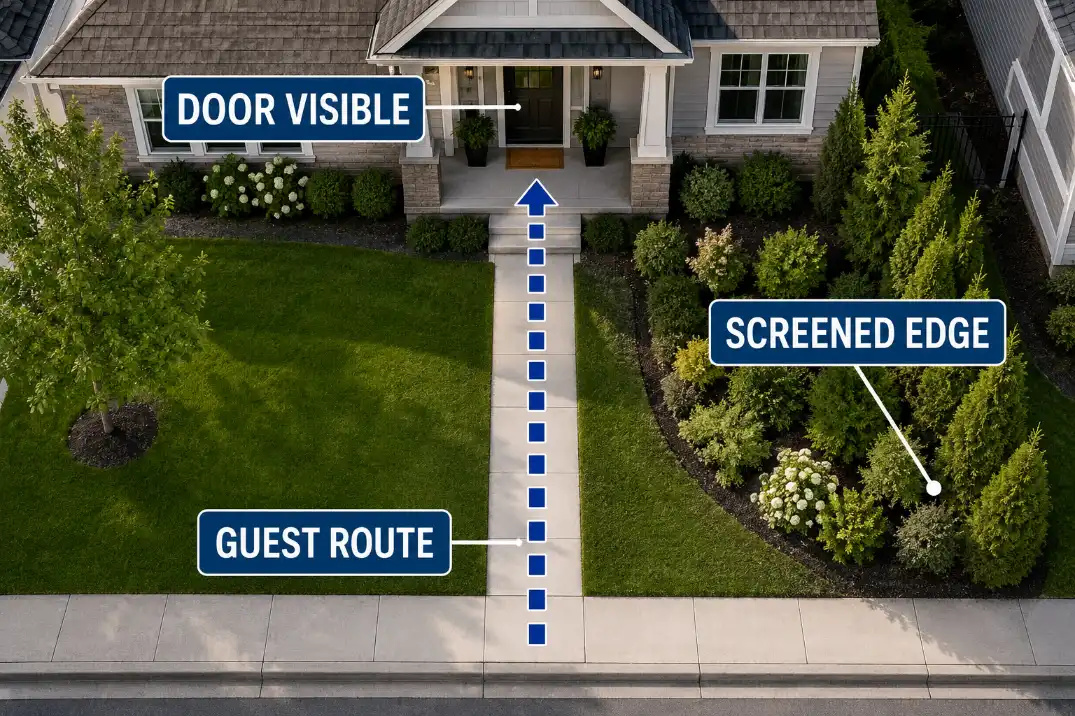
The door does not have to be fully exposed. It does need to remain readable. A visible walk line, an open landing, a readable address, or a porch light can do a lot of work. When those cues stay visible, the privacy layer feels intentional instead of suspicious.
The front walk should not disappear
A front walk can pass near planting, between low layers, or beside a privacy screen, but it should not vanish into a dark gap. If the route narrows visually, guests may hesitate before stepping in.
This matters most when the privacy layer sits near the path. A tall shrub at the wrong corner can make a normal walkway feel like a side passage. A screen that starts too close to the walk can make the approach feel squeezed, even if the actual width has not changed.
The address and porch cue still matter
House numbers, porch lights, front steps, and a visible landing are not decorative details in this type of design. They tell visitors, delivery drivers, and neighbors where the public side of the home ends and the private side begins.
If the privacy layer covers the address or makes the porch read like a hidden side entry, the yard may feel private but less usable. For homes where guests or delivery drivers already struggle to identify the entry, front yard house number visibility becomes part of the privacy plan, not a separate finishing touch.
The rule is simple: screen the uncomfortable view, but keep the arrival message clean.
Use Partial Screening So the Yard Does Not Look Defensive
A continuous front barrier sends a different message than a selective screen. Even when the material is attractive, a long unbroken hedge or panel often reads as a shut face, not a welcoming threshold.
The most welcoming privacy designs leave gaps, depth, or a visible route through the front yard. That can mean a layered shrub group near one window, a short panel that catches a side-angle view, a planter cluster beside the porch, or a low-to-mid planting layer that softens the street without pretending to be a wall.
The screen should break the view, not dominate the yard
A privacy element becomes defensive when it becomes the main face of the house. If every important feature sits behind it, the home reads as closed. If the screen handles one exposed angle while the door and walk remain visually available, the same material can feel calm and intentional.
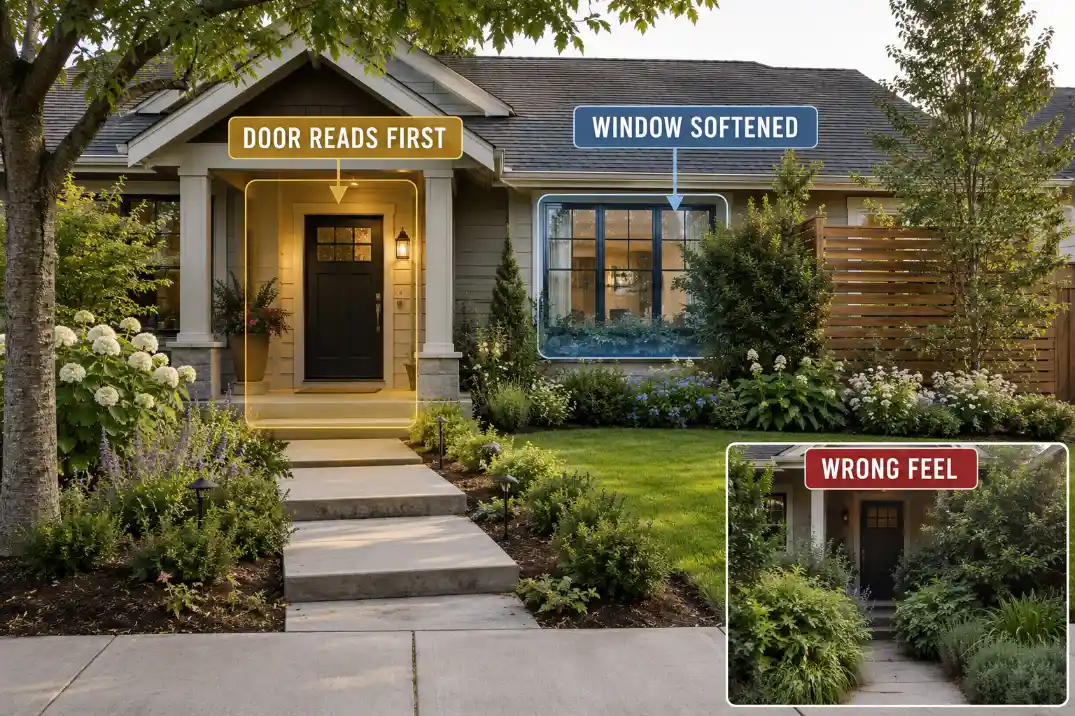
Closed-off privacy hides the house first and solves the view second. Welcoming privacy solves the view first and lets the house keep speaking to the street.
That difference is why partial screening often works better than a full front barrier. A staggered planting bed, a short fence return, or a side-positioned screen can block the eye from one angle while preserving openness from another. The yard still has depth. The entry still has a face. The screen supports the home instead of replacing it.
If the goal is specifically to avoid a fence, the next decision is not “no fence at all costs.” It is whether planting, planters, grade changes, or layered screens can interrupt the view without making the front yard feel crowded. That narrower path belongs in front yard privacy without fences for suburban neighborhoods.
Protect Curb Appeal While You Add Privacy
Curb appeal is not decoration after privacy is solved. It is one of the controls that keeps the privacy layer from making the house feel shut down.
A privacy layer that matches the scale of the house, leaves breathing room around the entry, and uses a material tone that belongs with the exterior will usually feel more welcoming than one that simply reaches the maximum height the homeowner can fit.
Height helps only when the view being blocked is actually high enough to require it. Otherwise, extra height can make the yard feel smaller and the house feel farther away.
Match density to the view, not to fear
Dense screening has a place, especially near a direct window view. But density across the whole front can flatten the yard. A better pattern is often denser where the sightline is uncomfortable and lighter where the house needs to remain visible.
That might mean upright planting near a side window, lower texture along the walk, and a more open foreground near the porch. The front yard gains privacy without turning into a single green wall.
Practical note: the first season is often misleading. Young plants can feel too open, so homeowners add more. Then the same area becomes heavy once plants reach mature size. Leave enough space for the privacy layer to grow into its job without swallowing the door, address, or walk.
Material choice works the same way. A black metal panel, white vinyl screen, wood slat panel, hedge, or mixed planting bed can all feel welcoming or closed depending on placement. The screen should look like it belongs to the house, not like a separate object placed in front of it.
For planting-heavy privacy that needs to stay attractive from the street, front yard landscaping for privacy without fences is the more detailed next step.
Check the Guest Approach Before You Make the Screen Taller
More height should come after the approach test, not before it. A screen that looks modest from the porch can feel much heavier when someone walks beside it from the sidewalk.
Start at the curb or sidewalk. Move toward the door. Notice where the screen changes the feeling of the route. A good privacy screen becomes quieter as you approach. It softens the exposed view but does not make the visitor feel as if they are entering a hidden corridor. A bad one feels fine from the porch but awkward from the sidewalk, especially when the walk passes close to the screen.
Watch where people pause
Guests pause near the curb, near the first step onto the walkway, near the porch landing, and sometimes at the door while waiting. Those pause points matter because they are where a front yard feels either comfortable or tense.
If a privacy hedge blocks the view from the street but makes the porch landing feel tucked behind a wall, the design may solve one problem while creating another. If a screen protects a front window but leaves enough open space around the landing, it usually feels more natural.
This is also where driveway exposure can complicate the design. A screen that looks welcoming from the sidewalk may still fail if the open driveway creates a direct street view into the garage, side window, or front entry.
When the driveway is the main exposure point, use a more specific guide like front yard privacy when the driveway is open to the street instead of trying to solve everything from the front walk.
For a tight front yard, the same approach test becomes even more important. There may not be enough depth for a layered bed, a screen, and a generous visual entry at the same time. In that case, small front yard privacy landscaping is the better next decision because the margin for over-screening is much smaller.
Where Other Front Yard Privacy Pages Fit Into the Plan
Use this page when the main tension is privacy versus welcome. If the yard still feels exposed after the door, walk, address, and curb view are protected, the next question is not “What else can I add?” It is “Which narrower condition is still creating exposure?”
A no-fence situation needs a different approach than a driveway problem. A small front yard needs more restraint than a wide suburban lot. A sidewalk-to-window view needs a tighter, more surgical screen than a general street-facing yard. Planting-based privacy needs mature-size thinking, not just a nice first-season arrangement.
The important point is to avoid solving every privacy problem with the same move. More height is not always the answer. More density is not always the answer. More screening across the front can even make the original problem worse if the entry becomes harder to read.
Use the welcoming test first. Then move to the narrower condition only if the exposure still has a clear source.
The Welcoming Privacy Test
Stand at the curb and judge the house before adding more height, density, or length. If the exposed view is softened but the entry still explains itself, the privacy layer is doing its job.
The practical test is short:
- Can you still identify the front door within a few seconds?
- Does the walkway feel like the main route, not a leftover gap?
- Are the address, landing, or porch cue still readable?
- Is the uncomfortable view interrupted from the street or sidewalk angle?
- Does the house feel more settled, not more hidden?
If the answer is yes, the privacy layer is probably doing enough. If the door disappears, the walk feels squeezed, or the screen becomes the main thing you notice, the design has crossed into closed-off territory.
The strongest front yard privacy does not make the house vanish. It edits the view that feels too personal and protects the signals that make the home approachable. When the wrong view is softened and the guest still knows exactly where to go, privacy and welcome are working together instead of fighting each other.
For broader planting and design principles that support functional outdoor spaces over time, see the University of Minnesota Extension’s guide to landscape design and plant selection.