Last updated: July 1, 2026
An open driveway makes a front yard feel exposed when it becomes the street’s easiest line of sight into the private side of the property. The problem is not always the whole front yard. More often, the driveway mouth acts like a visual funnel toward the garage, parked cars, a side window, a side entry, or a narrow strip of yard that was never meant to be the public-facing part of the house.
That changes the fix. The first move is not to add more landscaping or close the driveway with the tallest screen available. The first move is to diagnose what the street can actually see, where the view passes through, and whether the best privacy location interferes with turning, backing, unloading, or daily access.
This is a driveway exposure problem, not a general driveway ideas problem. A strong fix narrows the view without narrowing the driveway.
Why an Open Driveway Mouth Makes the Front Yard Feel Exposed
The driveway mouth is the one front-yard opening that cannot simply be filled. It has to admit cars, delivery drivers, trash-bin movement, guests, and everyday backing or turning. That is why privacy around a driveway behaves differently from privacy along a fence line, porch edge, or sidewalk strip.
A street view does not need to see the whole yard to make the property feel exposed. It only needs one clean line toward the wrong target. A garage door left open for a few minutes, a side window beside the driveway, a parked-car bay, or a walkway between the driveway and front door can become the exposed point.
This is where many fixes start too broadly. The homeowner sees an open driveway and assumes the whole opening needs privacy. In practice, the driveway often needs to stay visually open enough to function while one specific view line gets interrupted.
If the driveway exposure is part of a larger front-yard pattern, a broader front yard privacy plan that still looks welcoming can help separate what the driveway should solve from what the lawn, porch, or window zones should handle.
First Diagnose What the Street Can Actually See
Start the diagnosis from the public view, not from the place where the yard feels uncomfortable. Stand near the curb, sidewalk, or street side of the driveway apron and look back toward the house at normal eye level. The first private target your eye lands on is the thing the fix must protect.
Do not diagnose from the porch first. The porch tells you how exposed you feel. The curb tells you what the street is actually seeing.

If the garage is the exposed target
Garage exposure is usually strongest when the driveway runs straight and flat from the street to the garage door. The garage becomes the visual endpoint. Even a clean, attractive driveway can feel too public because the eye has nowhere else to stop.
The fix usually belongs near one driveway edge or closer to the garage-side approach, not across the mouth. A low planting mass, offset panel, or short side return can weaken the view toward the garage while keeping the vehicle path open.
If a side window is the exposed target
A side window near the driveway can create a sharper privacy problem than the garage because the view may point into a room instead of a utility zone. The exposure may be narrow, but it feels personal.
This is not the same as screening the whole front yard. The useful fix is a targeted interruption between the street angle and the window. For broader window and planting logic, keep the detailed landscape decisions in a page like front yard landscaping for privacy rather than forcing the driveway fix to solve every privacy layer.
If parked cars are the exposed target
Sometimes the house is not the main issue. The exposed part is the parked-car bay: open trunks, grocery unloading, tools, sports gear, or the daily activity that happens around the garage.
That usually calls for a lower and more partial screen. You may only need to break the view across the parked-car area, not build a tall barrier.
If the entry route is the exposed target
A driveway that doubles as the main walking route can expose daily movement: guests crossing from car to front door, kids unloading bags, or homeowners carrying groceries. When the driveway and entry path overlap, the privacy fix must protect movement without making the entrance feel hidden.
In that case, the screen should frame the walking edge rather than sit directly in front of it.
Driveway Exposure Diagnosis Matrix
- Street sees straight into the garage: interrupt the long view line near one driveway edge, not across the full opening.
- Street catches a side window: place a targeted screen between the view angle and the window.
- Street sees parked-car activity: use lower, partial screening around the exposed bay.
- Street sees the entry route: protect the walking edge while keeping the path readable and welcoming.
The Turning Radius Is the Part You Cannot Sacrifice
The most tempting screen location is often the most dangerous one to guess: the driveway mouth. It is where the view starts, but it is also where the car has to turn, back out, swing around parked vehicles, and meet the street.
A planter, hedge, fence return, or decorative panel can look harmless from the curb and still become a daily problem once the car moves. The failure may not show when the driveway is empty. It shows when a driver opens a door, backs out at an angle, avoids another parked car, rolls trash bins to the curb, or receives a delivery.
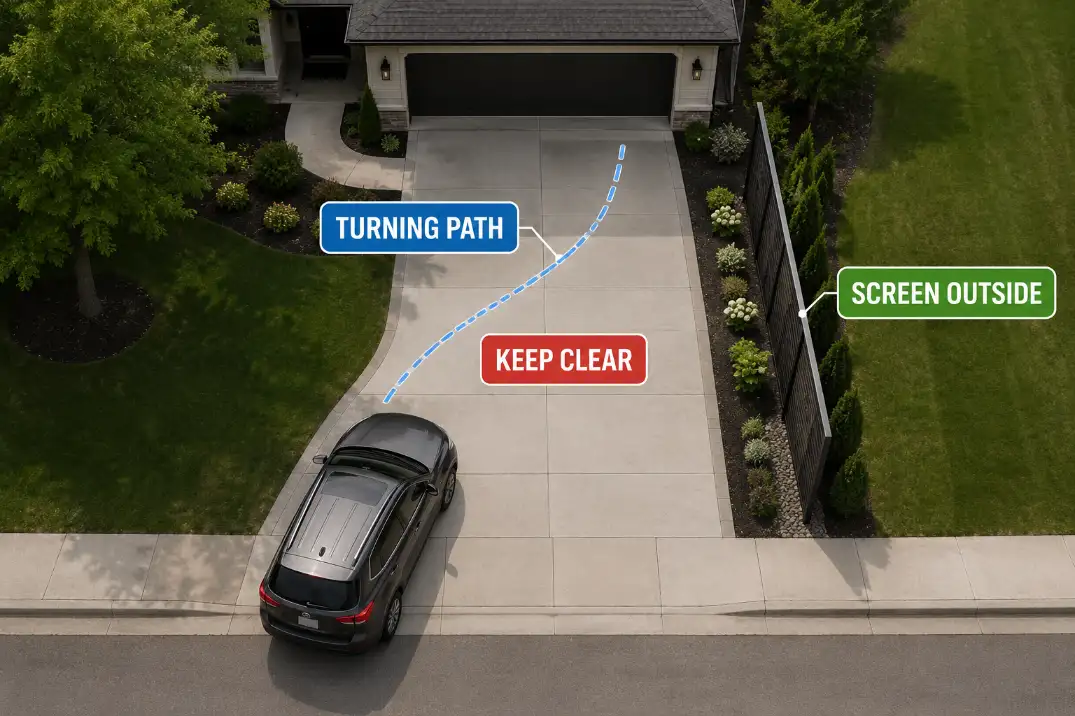
The keep-clear area is not just the tire path. It includes mirror space, car-door swing, walking clearance, delivery access, trash-bin movement, and the driver’s view when backing toward the street. If a screen forces a wider swing, blocks a pedestrian view, or makes the driver edge out blindly, it is in the wrong place even if it improves privacy from one angle.
For driveway-side planting, car-door swing and edge clearance often decide whether a landscape strip works in daily use. That is why a page on driveway landscaping and car door clearance is a better place for detailed spacing decisions than this diagnosis page.
Field judgment:
A driveway privacy fix should fail the test if it makes the driveway harder to use. The useful screen is not the one that blocks the most view from the street. It is the one that blocks the right view while leaving turning, backing, unloading, walking, and visibility intact.
Find the Sightline Gap Instead of Blocking the Whole Opening
The driveway opening may be wide, but the privacy failure is often narrow. One diagonal line from the sidewalk to a side window. One straight shot from the street to the open garage. One gap between a planting bed and the house corner. One low, empty edge that lets the eye travel too far.
That narrow line is the sightline gap.
To find it, stand at the street side of the driveway apron and shift left and right. Watch when the garage, window, parked-car bay, or side entry appears and disappears. The point where the view suddenly opens is usually more important than the full width of the driveway.
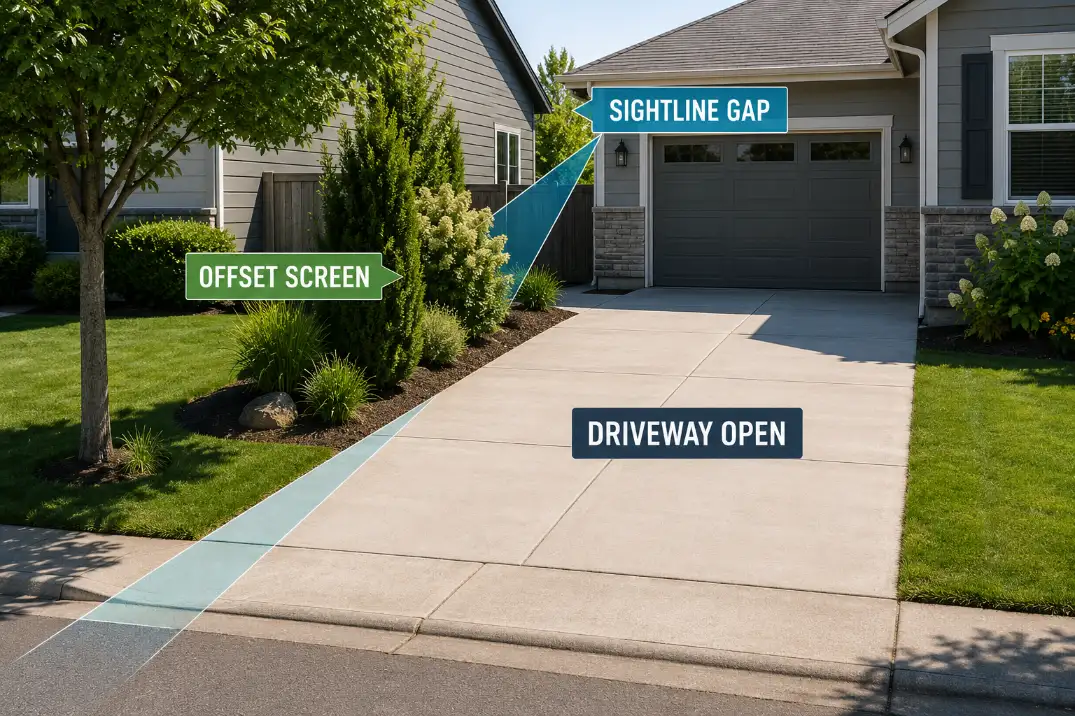
A full barrier across the driveway mouth would usually be excessive. A targeted interruption may be enough. The screen can sit slightly inside the property, offset to one side, or closer to the exposed target instead of directly at the curb.
The common mistake is treating the driveway opening as the enemy. The opening is necessary. The exposed view through that opening is the problem.
If the homeowner wants to avoid fences entirely, the same sightline logic still applies. A driveway edge can sometimes be softened with layered planting, planters, or low screening, but the detailed no-fence strategy belongs in a more specific guide to front yard privacy ideas without a fence.
Use Partial Screening Where It Protects the View and Keeps the Driveway Open
Once the exposed target and sightline gap are clear, the fix should become smaller and more accurate. Do not ask, “How do I hide the driveway?” Ask, “Which part of the street view needs to stop, and where can I stop it without stealing driveway function?”
For garage or parked-car exposure
Use screening that breaks the long view toward the garage without sitting in the turning path. This may be a low evergreen mass along one edge, a staggered planting bed, a short fence return outside the vehicle swing, or a tall planter placed where doors and mirrors will not hit it.
The screen does not always need to be tall. If the issue is the lower half of the garage bay, trash cans, or parked-car activity, a lower interruption can make the driveway feel less open while preserving a safer view for backing out.
For side-window exposure
A side window needs angle control. A screen placed too close to the driveway mouth may miss the view entirely if the sightline comes diagonally from the sidewalk. A screen placed closer to the window or along the side-yard edge may block the actual angle with less mass.
This is where mature size matters. A shrub that behaves in the first season can spread into the driveway in 2–3 years. If its mature width will crowd the car door, mirror, or walking route, it belongs farther back or in a different form.
For sidewalk-to-driveway views
When people walking past can see directly into the driveway, the fix should slow the eye without making the front yard feel defensive. A low fence section, open-structured screen, or layered planting at the side of the driveway can interrupt the view while still letting the house read as approachable.
The line between privacy and welcome matters most near the front entry. If the driveway is part of the arrival route, the screen should frame the entry rather than hide it.
For a wide driveway mouth with one weak edge
A wide driveway often does not need equal treatment on both sides. One edge may be doing most of the damage because it lines up with the garage, side window, or open yard.
Treat that weak edge first. A single offset screen or planting mass can narrow the perceived opening without making the driveway feel squeezed.
For a narrow driveway where height could create a blind spot
A narrow driveway needs restraint. Tall screening at the street edge can make backing out less comfortable and may conflict with local visibility expectations. In that case, keep the strongest privacy move farther inside the property or closer to the exposed window, not at the apron.
For tight front yards where every inch affects movement, a more focused small-space privacy page such as small front yard privacy ideas can help separate what belongs near the driveway from what should be handled elsewhere in the yard.
When Driveway Ideas Help—and When They Distract From the Privacy Problem
Driveway upgrades help when the driveway looks unfinished. They distract when the driveway looks better but the same view still runs into the garage, side window, parked-car bay, or entry route.
Edging can clean up the border. Lighting can make the arrival safer at night. Pavers, gravel bands, and planting strips can make the driveway feel more designed. None of those upgrades automatically changes the street sightline.
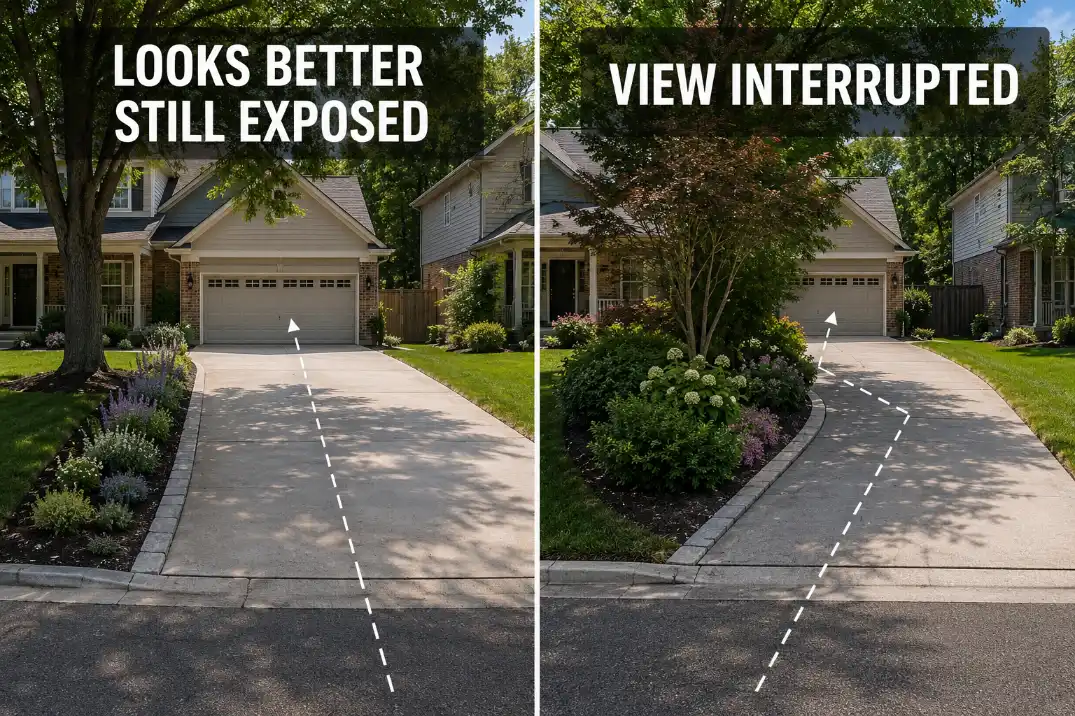
A driveway can look polished and still feel public. It can have attractive edging and still expose the garage. It can have new lighting and still draw attention toward the exact area the homeowner wanted to soften.
That is why this page should not solve the whole driveway design question. If the real goal is appearance, edging, layout polish, or general driveway planting inspiration, then a broader guide to driveway privacy ideas for front yards may be the better next step.
If the real problem is exposure, stay with the diagnosis: what can the street see, where does the view pass through, and what can interrupt it without stealing driveway function?
A Good Driveway Privacy Fix Narrows the View, Not the Driveway
Judge the fix from two places: the curb and the driver’s seat. From the curb, the garage, side window, parked-car bay, or entry route should no longer sit at the end of a clean view line. From the driver’s seat, turning, backing, door swing, walking access, and visibility should still feel normal.
That is the standard. The driveway still needs to work as a driveway. The front entry still needs to feel readable. The street view should be interrupted where it becomes too personal, not blocked so aggressively that daily movement becomes awkward.
The right driveway privacy fix does not close the driveway. It closes the sightline that made the open driveway feel public.
For driveway visibility context, the Federal Highway Administration notes that drivers entering a roadway from a driveway need a clear line of sight to see approaching vehicles: FHWA Access Management: Driveways