Last updated: June 28, 2026
Street-facing front yard privacy landscaping is not the same problem as general front yard privacy. A yard can look open, tidy, and well planted from the curb and still feel exposed because the street sends views toward the house from several directions.
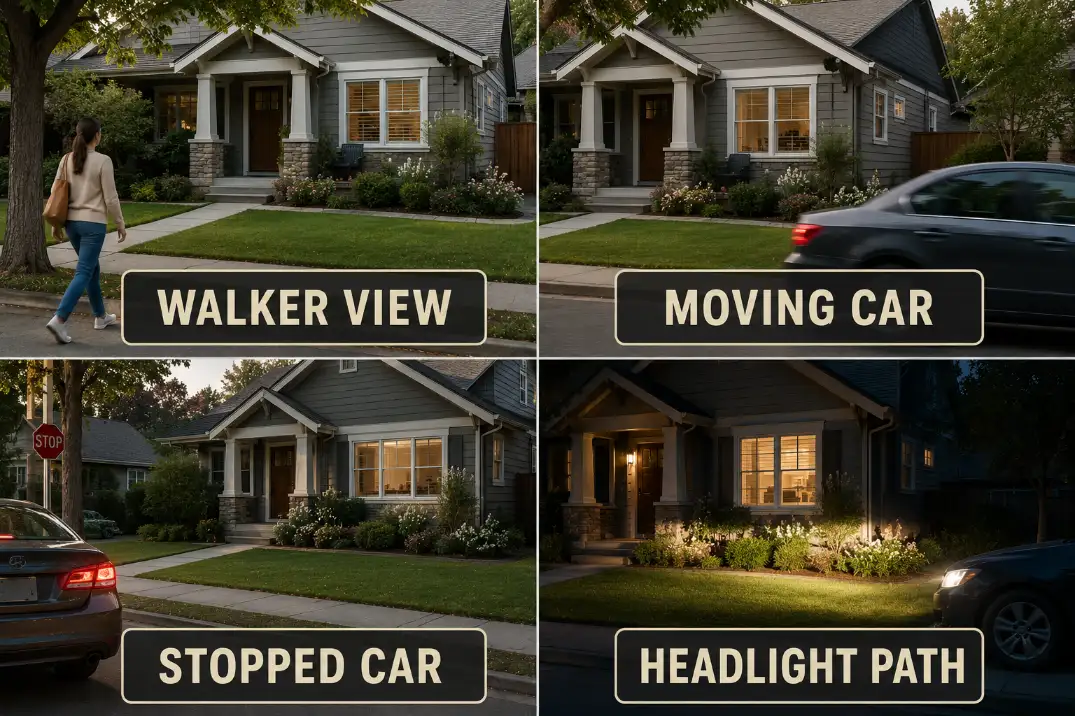
A walker sees the porch at eye level. A moving car catches the window for a second. A stopped vehicle at the curb or intersection holds the view longer. Headlights sweep across the front at night even when no one is looking directly at the house.
That is why the first decision is not “Which plants give privacy?” It is “Which street view needs to be interrupted, and where can that interruption happen without making the front of the house feel sealed off?”
Street-Facing Privacy Starts With the View Path
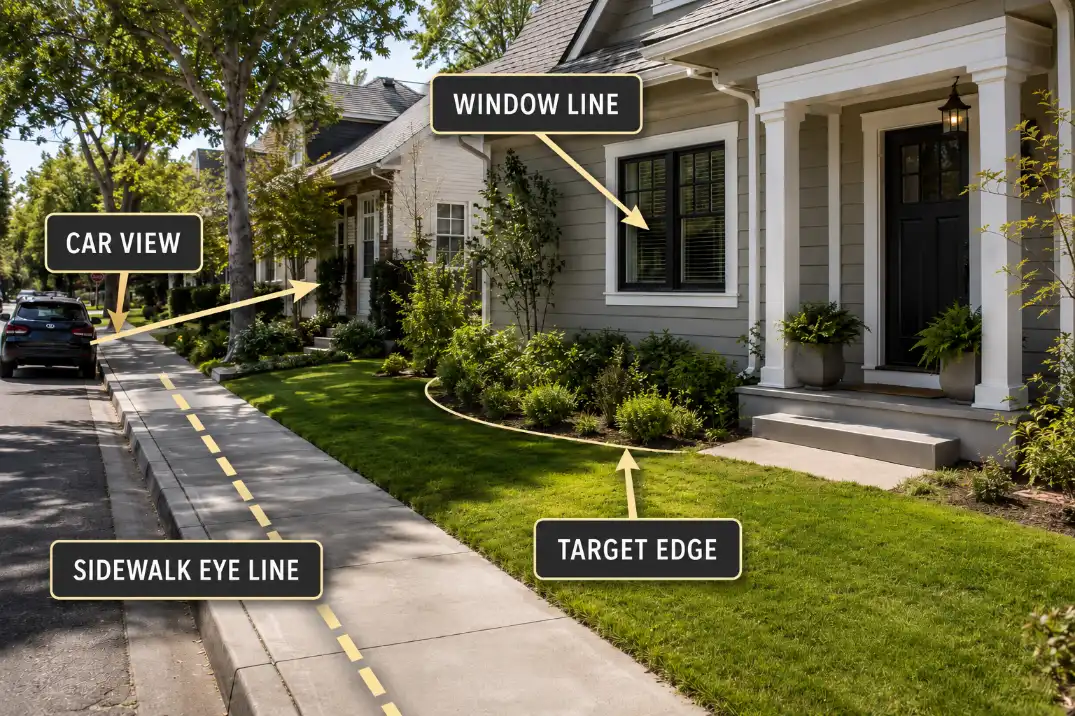
Start at the street, not at the planting bed. The useful privacy zone is the line between the viewer and the exposed part of the house. That line may run from the sidewalk to a front window, from a parked car to porch seating, or from the road angle toward a low front room.
A shallow front yard makes this more obvious because there is not much depth to absorb the view. In a front yard with no setback, a few feet of planting in the wrong place can feel decorative, while the right narrow edge can change the exposure pattern.
The view path also changes with height. A person walking past usually sees from standing eye level. A driver sits lower. Headlights are lower still, but their beam travels differently because it cuts across surfaces and glass at night.
Direct views are not the same as angled views
A direct sidewalk-to-window view usually needs a more precise vertical interruption. An angled car view may need a softer side break near the driveway, porch corner, or window edge.
If the front door is the most visible element, do not hide it first. Usually the exposed window, porch chair, or side edge of the approach is the better target.
The goal is not to erase the house from the street. It is to make the exposed part harder to read at a glance.
Separate Walkers, Cars, Headlights, and Stopped Vehicles
Street exposure feels frustrating because the same yard is being viewed in different ways. Treating those views as one problem usually leads to overplanting the entire front edge.
Walkers create the longest eye-level read
Sidewalk walkers move slowly enough to notice details. They may see into a front window, across a porch chair, or directly along the walkway. This is where mid-height filtering near the window edge or porch side often does more than a low border along the curb.
A planting that breaks the eye line between sidewalk and glass can work even if it does not cover the whole frontage. The mistake is placing all the privacy at the street edge when the actual view slips through the middle.
Moving cars create repeated glances
Moving traffic usually does not create the same long stare as a walker. The issue is repetition. Every passing car gets the same quick angle toward the same exposed spot.
For this type of view, a narrow vertical break near the exposed window or porch corner often works better than a continuous hedge. The driver’s glance is short, so the interruption does not need to be massive. It needs to sit in the right line.
Stopped vehicles need more careful screening
A car paused at a stop sign, mailbox, school pickup line, or busy curb creates a longer viewing moment. This is different from moving traffic. The view is not just passing by; it is holding.
A stopped-vehicle view may need a slightly denser layer at the driveway side, front edge, or window-side planting zone. Still, the planting should not erase driveway visibility or make the approach feel unsafe from the street.
Headlights expose low and angled surfaces
Headlights do not behave like eyes. They sweep across the yard, hit glass, catch pale walls, and make porch seating feel exposed at night. A low planting at the curb may soften some glare, but a better fix often comes from interrupting the angle before it reaches the window or sitting area.
Do not treat headlight privacy as a reason to create a tall wall at the sidewalk. The useful move is to find the sweep path in the evening and soften that line without hiding the house.
Choose the Edge That Does the Most Privacy Work
Once the exposure source is clear, the next decision is placement. A street-facing yard usually has several possible privacy edges, but only one or two will do the real work.
The front edge is useful when the street or sidewalk is very close and the view is broad. Keep this lower or partially open near driveways, corners, and walkways so the front yard does not become a blind wall.
The window edge is better when the main problem is a specific room facing the street. A narrow planting group placed off the window line can interrupt the view before it reaches the glass. This is where front yard screening layouts close to the street become more effective than a general border.
The porch side works when seating is exposed from the sidewalk or road angle. Instead of closing the entire porch, soften one side or corner so the seat no longer sits directly in the public view path.
The driveway edge matters when people pause in vehicles, open car doors, wait at the curb, or look across the yard from an angle. This edge needs care because it also affects backing out, visitor movement, and curb visibility.
A shallow inside layer is often the quietest solution. Instead of planting everything at the sidewalk, place a smaller filter closer to the exposed window, porch chair, or walkway bend. It may cover less ground, but it sits closer to the actual privacy problem.
Use Filtering Instead of a Full Front-Yard Barrier
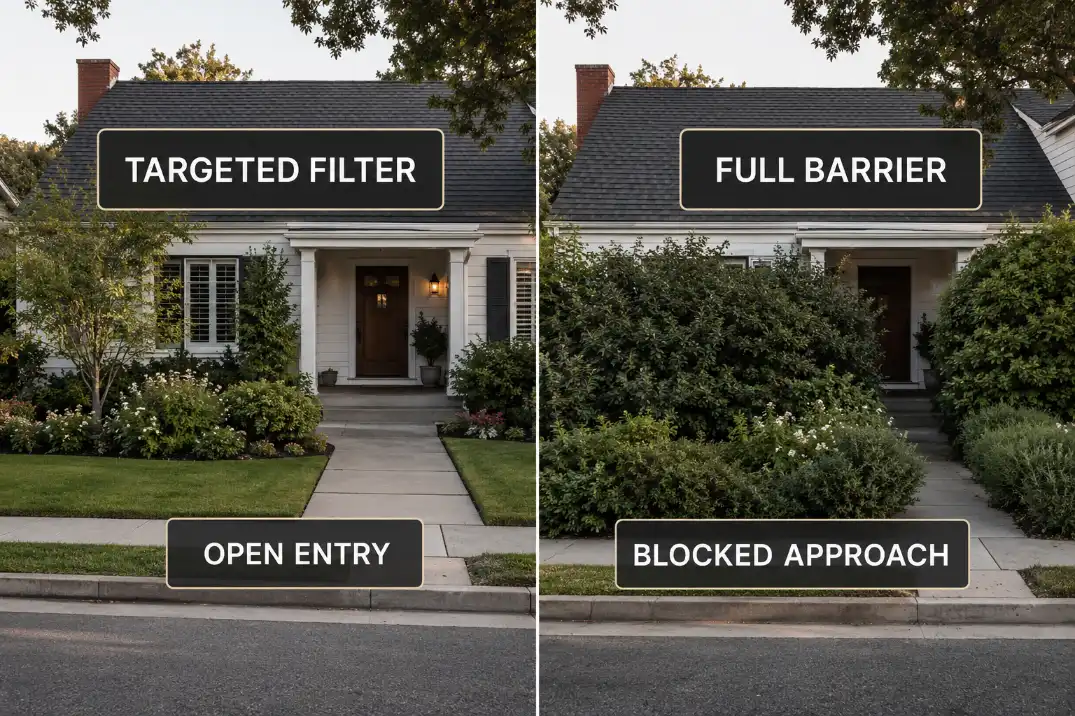
A full front-yard barrier feels tempting because it looks decisive. It also creates new problems. The door becomes harder to read, the house number disappears, deliveries get awkward, and the front yard can start to feel defensive from the street.
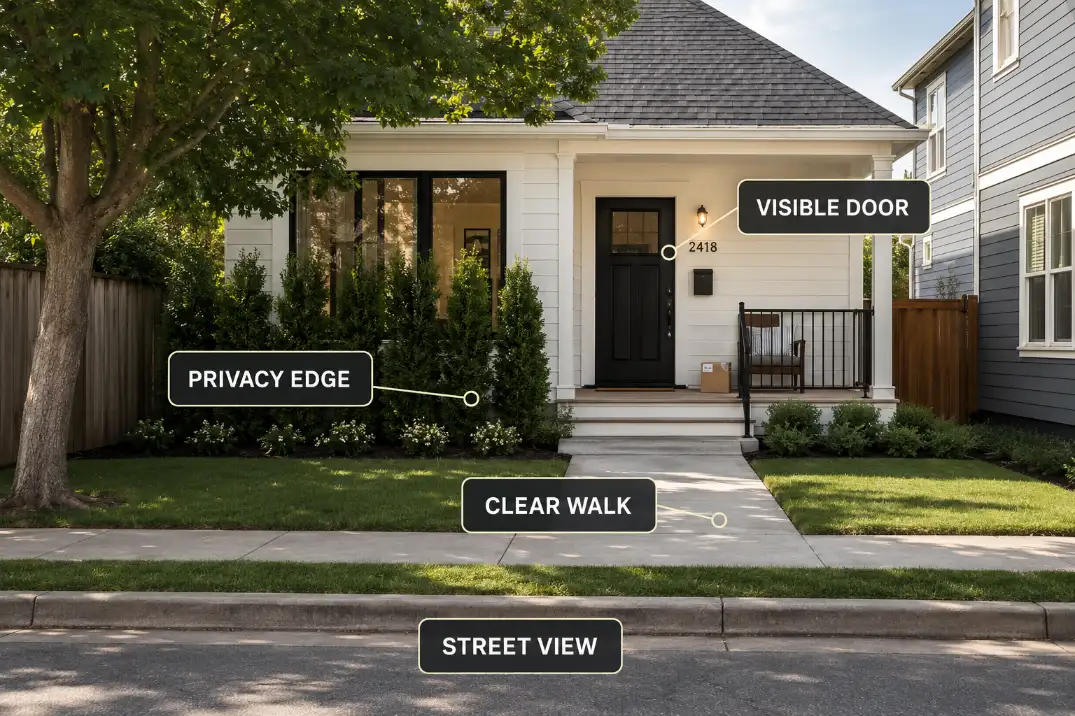
Street-facing privacy usually works better as a filter. The planting interrupts the view where it matters, while the entry, walkway, and public-facing shape of the house remain legible.
Comparison Box: Targeted Street-Edge Filter vs Full Front-Yard Barrier
Targeted street-edge filter
- Breaks the sidewalk, car, or window line at the exposed point.
- Keeps the front door and house number visible.
- Leaves a clear delivery and visitor route.
- Softens the street view without closing the whole yard.
- Preserves curb appeal and neighborhood-facing openness.
Full front-yard barrier
- Blocks more of the yard than the view problem requires.
- Can hide the entry and make visitors hesitate.
- Creates heavier maintenance as plants mature.
- May reduce driveway and curb visibility.
- Often feels closed before it feels private.
This does not mean every front yard must stay low and open. A busier road, corner lot, or repeated stopped-car view may need stronger screening. The difference is that the stronger element should still be placed around the exposure path, not spread across the yard by default.
That distinction matters in older neighborhoods, small suburban lots, and homes close to the sidewalk. Too much privacy can quietly create the next problem, especially when front yard privacy becomes too much and starts working against safety, access, and curb appeal.
Match the Exposure Type to the Landscaping Response
Use the exposure source to choose the response. This keeps the layout from turning into a plant-shopping exercise too early.
| Exposure source | What it feels like | Best interruption point | What to avoid |
|---|---|---|---|
| Sidewalk walkers | Slow eye-level view into porch or window | Window edge, porch side, or narrow front-edge break | Low curb planting that does not reach the sightline |
| Moving cars | Repeated quick glance from the road | Vertical planting near the exposed angle | Full hedge across the entire frontage |
| Stopped vehicles | Longer view from curb, stop sign, or driveway | Driveway-side break or denser targeted layer | Blocking driveway visibility or entry approach |
| Headlight path | Evening sweep across glass or seating | Angled planting between beam path and target | Tall wall at sidewalk that misses the actual sweep |
| Close street edge | Yard feels open before the house begins | Partial front-edge filter plus inside layer | Treating the whole yard as one flat screen |
The matrix is not a plant list. It is a placement filter. After the target point is clear, plant selection becomes much easier because the role is specific: soften a window line, catch a moving glance, interrupt a stopped-car view, or reduce a headlight path.
For street-facing privacy, mature spread matters more than first-season fullness. A plant that looks perfect at the nursery can crowd the walkway, cover the house number, or swallow a porch corner in a few years. Choose the final size for the edge you are trying to protect, not the empty space you see on planting day.
Keep the Entry Clear While the Street View Softens
The front entry has to stay readable. A privacy landscape that hides the door may feel private from inside, but it creates hesitation from outside. Visitors should still know where to walk, delivery drivers should still see the drop zone, and emergency access should not be made confusing by overgrown corners.
Keep the walkway visually open. In most front yards, that means leaving a clear, comfortable route for visitors, packages, and daily use. The planting should shape the approach, not squeeze it.
House numbers need their own sightline. If the privacy layer sits near the entry, check the view from the sidewalk and from a car at the curb. A guide focused on front yard house number visibility is especially useful when privacy planting moves close to the porch, garage, or walkway.
Driveway visibility also matters. Keep lower, looser, or set-back planting near the driveway mouth, especially where cars back out toward a sidewalk. A privacy edge that works from the living room can still be wrong if it hides a pedestrian from the driver’s view.
Porch seating needs a different kind of clearance. The planting should not crowd knees, trap the chair against a wall, or make the porch feel like it has no exit. If a chair pulls out or turns slightly, the privacy edge should still leave the front approach usable.
Test the Street View Before You Plant
Before buying plants or moving soil, test the view from the places where exposure actually happens. This prevents the common mistake of planting a beautiful screen that misses the line of sight.
Stand on the sidewalk and look toward the window, porch chair, and front door. Mark the point where a narrow planting edge would interrupt the view without sitting directly in the walking route.
Then check from a parked-car position. Sit where a driver or passenger would be at the curb, driveway, or stop sign angle. A view that feels minor from the sidewalk may be much stronger from the lower car seat.
Do the evening version too. Watch where headlights sweep across the front yard, especially if the house faces a curve, intersection, or driveway across the street. The planting target may shift once light movement becomes visible.
Finally, look from inside the house and from the porch. The best target edge is usually where the outside view and inside discomfort overlap. If a plant only looks good from the curb but does not change the exposed seat or window, it is decoration rather than privacy.
Where Child Pages Fit Into the Plan
This page gives the street-exposure framework. Once the main view path is clear, the next guide should match the narrower situation.
If the issue is mostly a front room or street-facing glass, window-focused privacy needs a tighter plan than this parent page should carry.
If the problem comes from vehicles pausing, car doors opening, or the driveway feeling exposed to the road, the better next route is front yard privacy when the driveway is open to the street.
No-setback yards, porch-side seating, evergreen filters, narrow front yards, headlight-facing lots, and corner exposure each deserve their own tighter plan. The shared starting point stays the same: identify the street view, choose the interruption edge, and protect the front approach.
A Street-Facing Yard Should Feel Filtered, Not Sealed Off
A good street-facing privacy landscape changes what the street can easily read. It does not have to make the house disappear.
The strongest layout usually leaves the entry open, keeps the front walk obvious, protects the house number, and places the heavier privacy work only where the street view actually lands. That may be a porch side, a front window edge, a driveway-side break, or a short layered planting strip set back from the curb.
When the street edge is handled well, the yard still feels like part of the neighborhood. It simply stops giving walkers, cars, headlights, and stopped vehicles a direct line into the most exposed parts of the home.
For plant selection and site-fit guidance, University of Minnesota Extension offers practical landscape guidance on choosing plants for real site conditions and mature size in its landscape design and plant selection resource.