Last updated: July 1, 2026
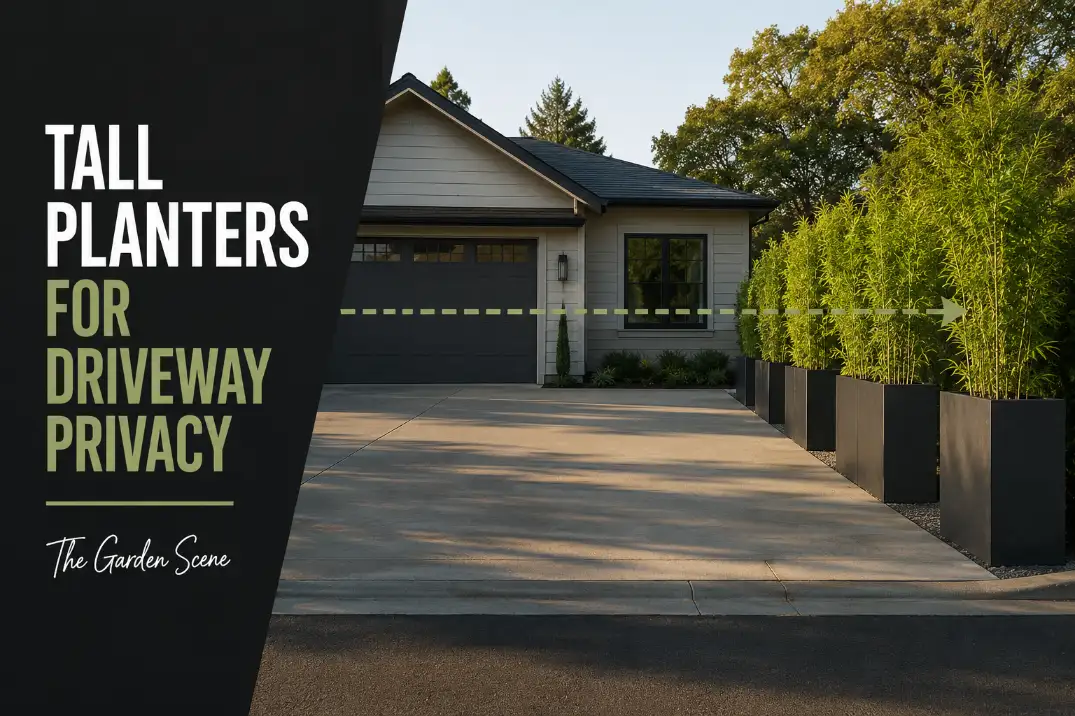
Tall planters only work for driveway privacy when they solve two problems at the same time: they must interrupt the view from the street, and they must stay out of the driveway’s working space. If they only look attractive, they become curb appeal. If they block the car, crowd the door swing, or wobble in wind, they become a daily obstacle.
That makes this a placement problem before it is a planter-style problem. The useful planter belongs where the view becomes personal: the angle toward a garage bay, a side window, a parked car, or a narrow gap beside the driveway. It should not sit where the driveway needs width for turning, parking, unloading, trash bins, or passenger access.
The decision model is simple: find the view line, choose enough combined planter-and-plant height to break it, use a base heavy enough to stay stable, space the planters so the driveway still reads open, and test every placement against car doors, mirrors, and wind exposure.
Why Tall Planters Work Differently on a Driveway Edge
A driveway edge is a working edge, not a display edge. Cars move through it. Doors swing into it. People walk beside it with groceries, trash bins, bikes, strollers, and delivery packages. A planter that feels harmless in a garden bed can become a problem when it sits beside a parked vehicle.
Tall planters work best when the driveway has a usable edge band: a strip beside the pavement, along a side planting bed, near a porch transition, or beside a garage approach where the planter can stand outside the car’s daily movement. If the driveway already uses every inch for parking, turning, or passenger access, tall planters may still work, but they need to be placed in fewer, more deliberate positions.
The useful version is usually not a full row. It is a vertical interruption. One tall planter can block a narrow view toward a side window. Two staggered planters can soften the view into a garage bay. A short run of heavy rectangular planters can make the driveway feel less exposed without closing it off.
That is why this page should not be treated like a general driveway privacy plan. If the whole driveway mouth is exposed from the street, a broader layout may be needed; this focused guide is about using tall planters as the privacy layer. For the wider driveway-exposure problem, the related guide on front yard privacy when the driveway is open to the street is the better routing point.
Start With the View Line Before Choosing Planter Height
The height decision starts at the curb, not at the planter display. Stand where the unwanted view comes from and look toward the exposed point. The planter only needs to interrupt the part of the view that makes the driveway feel exposed; it does not need to hide the entire front yard.
A 30-inch container with a thin ornamental plant may still leave the garage, side window, or parked car fully visible. A slightly lower planter with dense upright planting may screen more effectively because the planted mass begins at the right height. For driveway privacy, the combined height of planter plus plant usually matters more than the empty container height.
Match height to the exposed target
If the view is into a parked car or lower garage area, a mid-height planter with dense planting may be enough. If the view reaches a side window, porch edge, or entry transition, the planting mass often needs to rise closer to eye level from the street.
The weak move is choosing planters that look tall in isolation but sit too low against the actual sightline. Mark the part of the view that bothers you most. That is the height zone the planter has to interrupt.
Do not chase total privacy
Tall planters are better at breaking a direct view than creating a sealed screen. That is useful on a driveway, because a fully blocked edge can feel heavy, narrow, or awkward. Partial screening is often the right outcome: the garage still functions, the driveway still reads as open, but the eye no longer travels cleanly from the street into the private area.
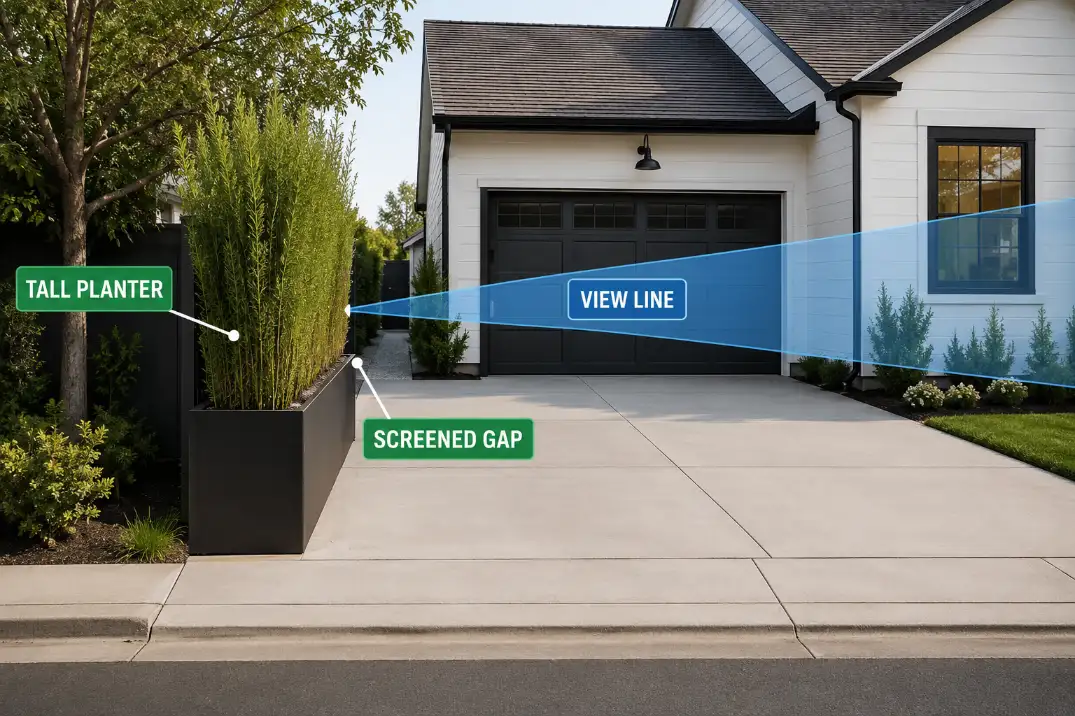
A useful working range is to think in bands, not exact numbers. Low decorative planters usually sit below the privacy zone. Mid-height planter-and-plant combinations can soften car and garage exposure. Taller combinations can interrupt window-level views, but only if the base is wide and stable enough to support the extra height.
If the front yard has multiple privacy issues, do not make this one planter row solve all of them. Broader planting decisions belong in a full front yard landscaping for privacy plan. Here, the planter’s job is narrower: break the driveway view where the driveway edge gives you room to work.
Use Weight and Base Width Before You Trust the Height
The taller the privacy mass, the more the base has to prove itself. A narrow, lightweight planter with upright planting may look clean on a calm day, but the driveway edge exposes it to wind, vehicle wake, hose movement, and occasional bumps from daily use.
A driveway planter needs mass low in the container. Wide rectangular or square bases are usually more forgiving than slim columns because they resist tipping better and give the plant roots more usable volume. Filled weight matters too. A planter that is easy to slide around empty may become stable once filled correctly, but a tall shell with lightweight filler and a narrow base can still behave poorly in an exposed edge position.
Drainage still has to work
Weight does not mean trapping water. A driveway planter should have drainage that keeps roots from sitting in saturated soil, especially after heavy rain. The placement also needs somewhere for excess water to go without staining the driveway, washing soil across the pavement, or leaving the base sitting in a small puddle.
This is where decorative planter logic breaks down. On a porch, a light planter might only look undersized. Along a driveway, the same planter may sit near a car door, a mirror, a delivery path, or a trash-bin route. The container is not just holding plants; it is occupying a movement edge.
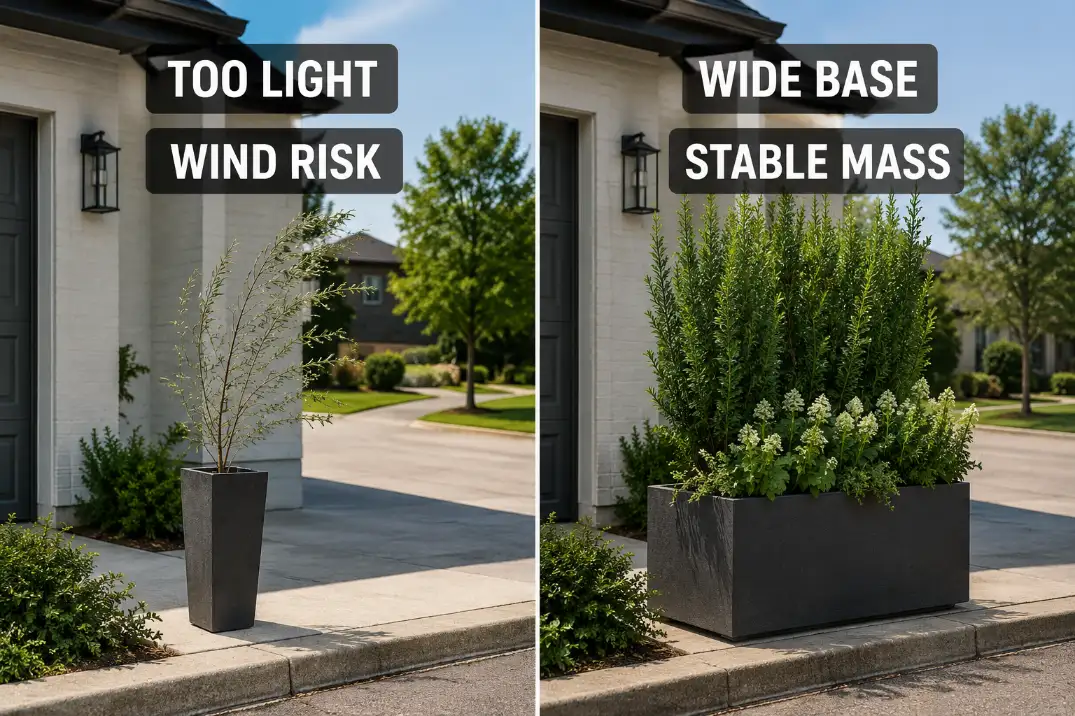
The buying filter is simple: if the planter is tall, exposed, and close to car movement, choose stability before style. Favor a base that looks proportionate to the height, a shape that will not rock easily, and a planting plan that does not put all the visual weight at the top.
For smaller front yards or patios where planters are doing privacy work in tighter spaces, the broader planter-focused guide on privacy planters for front yards and patios can support the product side. On a driveway, though, the final test is still physical: will it stay put, drain well, and stay out of the car’s way?
Space Planters to Break the View Without Building a Wall
Spacing should be chosen by the angle of exposure, not by a decorative rhythm. A straight, evenly spaced row may look orderly, but it can make the driveway feel narrower while still leaving the diagonal view open between containers.
The best driveway planter layout usually leaves gaps on purpose. Privacy does not always require a continuous row. In fact, a continuous row can make the driveway feel narrower, make snow or leaf cleanup harder, and create a visual wall that looks more defensive than necessary.
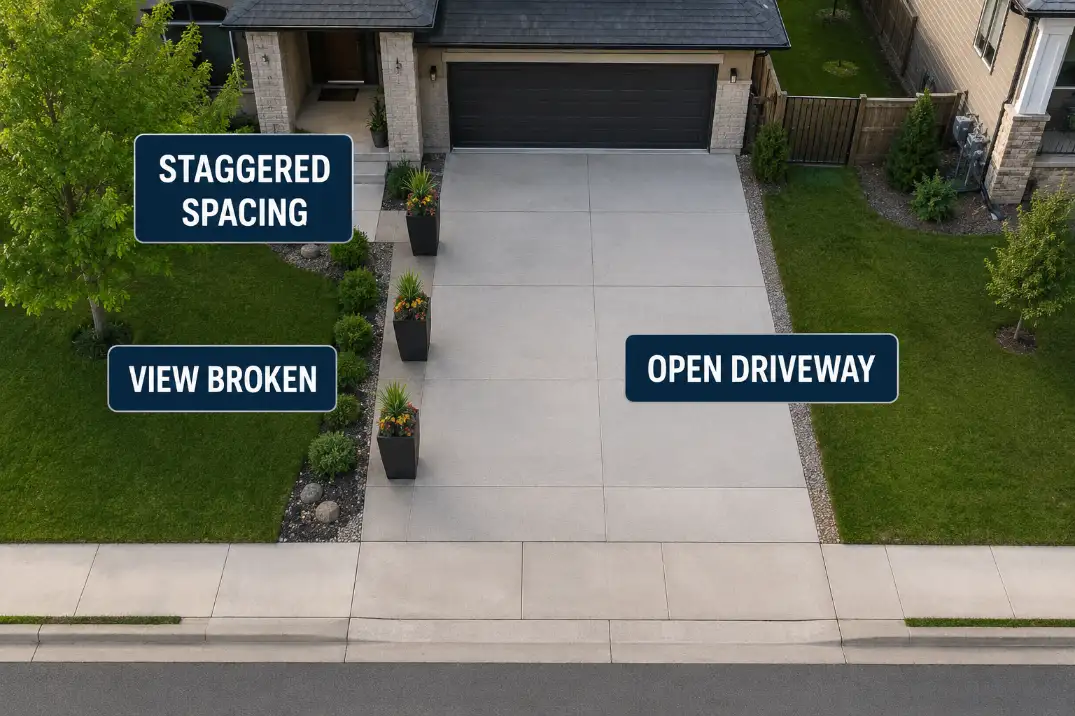
Spacing should follow the width of the view gap. If the view is narrow, one tall planter may be enough. If the view cuts diagonally from the street into the garage or toward a side window, two planters placed slightly offset can interrupt the angle better than three planters lined up like soldiers.
Use staggered spacing when the view is diagonal
A staggered layout works because it blocks the eye path without blocking the driveway edge completely. One planter can sit closer to the street-side part of the edge, while another sits farther back toward the garage or entry transition. The gap between them keeps the driveway breathable, but the offset keeps the view from traveling straight through.
This is especially useful where the driveway is open to a sidewalk or busy street but the actual privacy problem is not the entire frontage. A staggered pair can screen the most exposed angle while preserving the open feel of the driveway.
Keep the driveway visually open
Tall planters should not make the driveway feel like a chute. Leave enough space between containers so the edge still feels usable. Avoid placing every planter at the exact same interval unless the driveway is wide enough and the architecture supports that formal rhythm.
A driveway privacy layout should look intentional from the street and feel easy from the driver’s seat. If the planters make you slow down, swing wide, or worry about brushing a mirror, the spacing has become too aggressive.
This is also where tall planters separate themselves from general no-fence privacy advice. No-fence privacy can include planting beds, layered shrubs, screens, berms, and porch-edge moves. Tall planters are more surgical. They are movable vertical interruptions placed only where the view needs to be broken.
Protect Car Door Swing, Mirrors, and Turning Clearance
The car test should happen before the final planter position is set. A planter that blocks the view but interferes with the vehicle has failed the driveway part of driveway privacy.
Door swing is the first clearance to test. Many homeowners place planters along the driveway edge while the car is gone, then discover later that the passenger door opens directly into the container. A comfortable access zone is often closer to 30 to 36 inches beside the parked car, but the real test is your own vehicle: park normally, open the widest door you use, and leave room for a person to step out without twisting around the planter.
Mirrors need a separate check. A tall planter can sit outside the door-swing problem but still be close enough to worry the driver while pulling in. If the planter makes the driver steer away from it every time, it is too close to the active driveway path.
Keep planters out of the turning path
The driveway apron is tempting because it is visible from the street, but it is often the worst location for tall planters. Cars need more room at the entry than they appear to need when parked. Guests may turn in at a different angle. Delivery drivers may pull partly into the driveway. Trash bins may move through the same space.
If a planter belongs near the front half of the driveway, place it along the side edge rather than pinching the apron. The planter should interrupt the view, not become a small obstacle course.
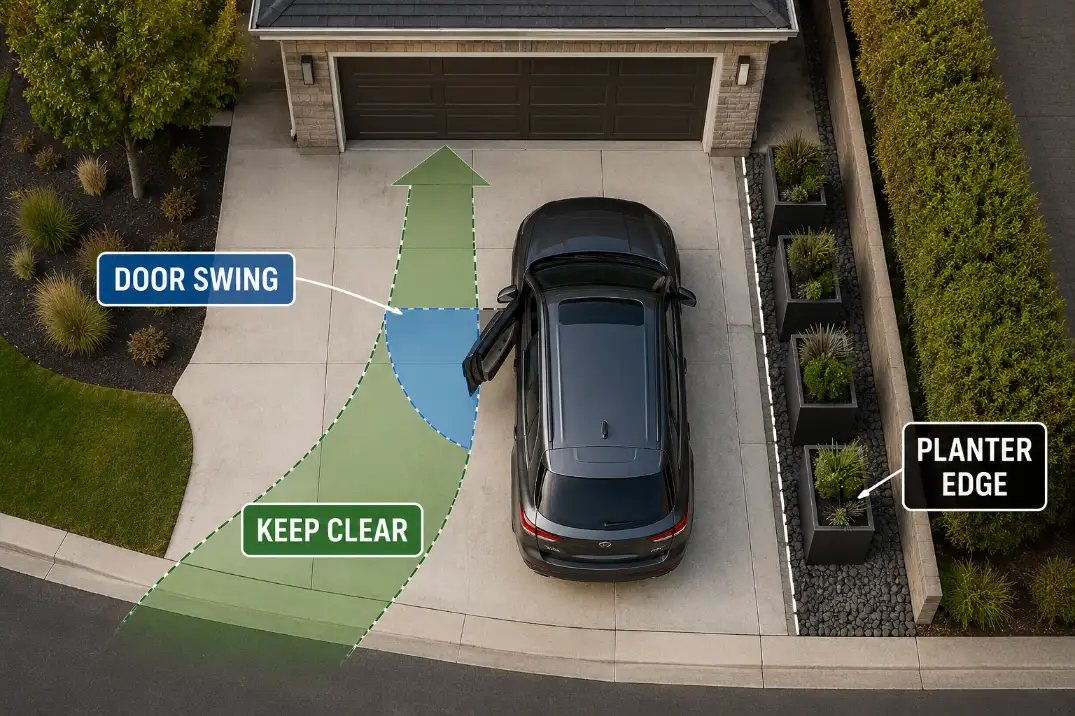
This is the section where driveway privacy and driveway landscaping overlap. If the edge already has planting, edging, or decorative rock, check whether those features are also crowding the car. The guide on driveway landscaping and car door clearance is useful when the privacy planter is part of a larger driveway-edge problem.
Place Tall Planters Where Wind and Daily Use Will Not Punish Them
The strongest planter position is not always the most visible one from the street. A planter near the garage side, side-yard transition, or porch corner may block the same view with less wind pressure and less risk of vehicle conflict. A planter near the street-facing apron may be more obvious, but it can also be more exposed, more likely to get bumped, and more likely to interfere with turning.
Wind matters because driveways often create open corridors. A narrow side yard beside the driveway can behave like a small wind tunnel. A wide open apron can catch gusts from the street. Tall grasses, narrow evergreens, and upright shrubs add privacy, but they also add surface area above the planter.
Avoid relying on rolling planters in exposed spots
Casters can be useful for seasonal adjustment on a patio. Along a driveway edge, they are often the wrong default unless the wheels lock securely and the planter still has enough mass to stay stable. A privacy planter that slowly shifts, rotates, or rolls after storms stops being a layout feature and becomes maintenance.
Place for watering without stepping into the driveway
Tall planters need regular access, especially during the first season and hot spells. If watering requires standing in the driveway where cars pull in, the placement will become annoying. Leave a small service side where a hose or watering can can reach the container without forcing someone into the vehicle path.
Slope also matters. Even a slight driveway pitch can make a tall planter feel less secure if the base does not sit flat. If the only possible spot is sloped, use a level pad or choose a shorter, wider planter rather than forcing a tall narrow one into a poor position.
Heavy rain is another useful test. After a storm, look at where water runs along the driveway edge. A planter should not trap runoff, sit in a low wet pocket, or send soil wash onto the pavement. The more exposed the edge, the more the planter needs to behave like part of the driveway layout rather than a loose decorative object.
When Tall Planters Are Enough—and When They Are Only a Partial Fix
Tall planters are enough when the exposure is specific enough to aim at. They work well for softening a view into a parked car, interrupting a line toward a side window, screening a garage-side gap, or making a driveway edge feel less exposed without closing off the front yard.
They are weaker when the entire driveway mouth is visible from a busy street, when the house sits very close to the sidewalk, or when the view comes from multiple angles at once. In those cases, tall planters may still help, but they should be treated as one layer rather than the whole privacy plan.
They are also a poor fit where wind is severe and there is no protected edge, where every inch of driveway width is needed, or where the only available placement is inside the door-swing zone. A beautiful planter in the wrong place will feel like clutter by the second week of daily use.
If the goal is broader front yard privacy without building a hard barrier, use this planter setup as the narrow driveway-edge move, then route the rest of the yard through a larger no-fence plan.
The related guide on front yard landscaping for privacy without fences fits that wider decision better.
The strongest tall-planter driveway layout follows one rule all the way through: interrupt the view, but protect the working edge. Height breaks the sightline. Weight keeps the screen reliable. Spacing keeps the driveway open.
Door-swing and turning clearance decide whether the layout survives daily use. When those pieces line up, tall planters can make an exposed driveway feel more private without making it feel blocked.
For general container planting care, watering, and fertilizing guidance, see the University of Minnesota Extension guide to fertilizing and watering container plants.