Last updated: July 1, 2026
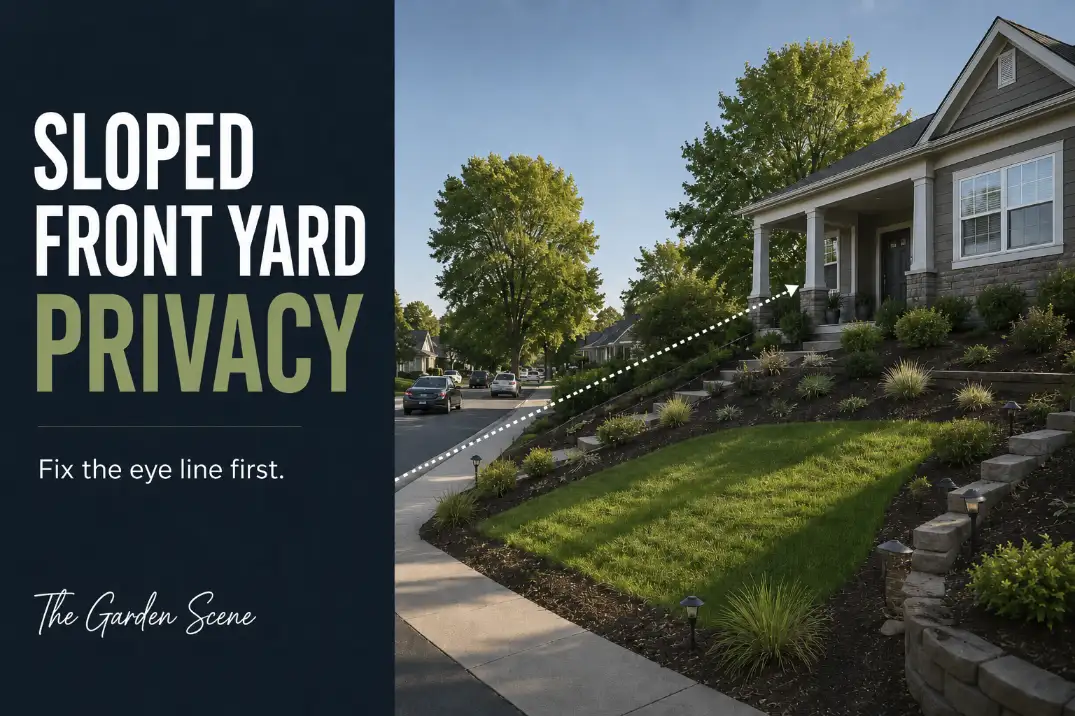
A front yard that slopes down toward a busy street does not lose privacy the same way a flat front yard does. The first mistake is treating the curb as the privacy line. On a downward slope, the street may look over the lower planting, across the middle of the yard, or directly into the porch and window zone before a curbside hedge does much work.
That elevation disadvantage changes the whole layout decision. The question is not “What can I plant along the street?” It is “Where does the street eye line actually land?”
Once you answer that, the privacy plan becomes much clearer. The lower yard can filter traffic. The middle of the slope can interrupt the view. The upper yard can protect the porch, entry, or window where the view becomes personal. A single flat screen rarely handles all three jobs well.
Why a Downward Slope Makes Front Yard Privacy Fail Differently
The slope changes the privacy problem because it changes the angle of view. A person walking, driving, or waiting below the yard is not seeing the front space as a flat border. They are looking up through a tilted plane.
That can make the lower lawn feel exposed, but it can also make the porch or front window more visible than expected. From the house, the lower yard may look like the obvious weak point. From the street, the eye may pass over that lower area and land on the part of the yard where people actually live.
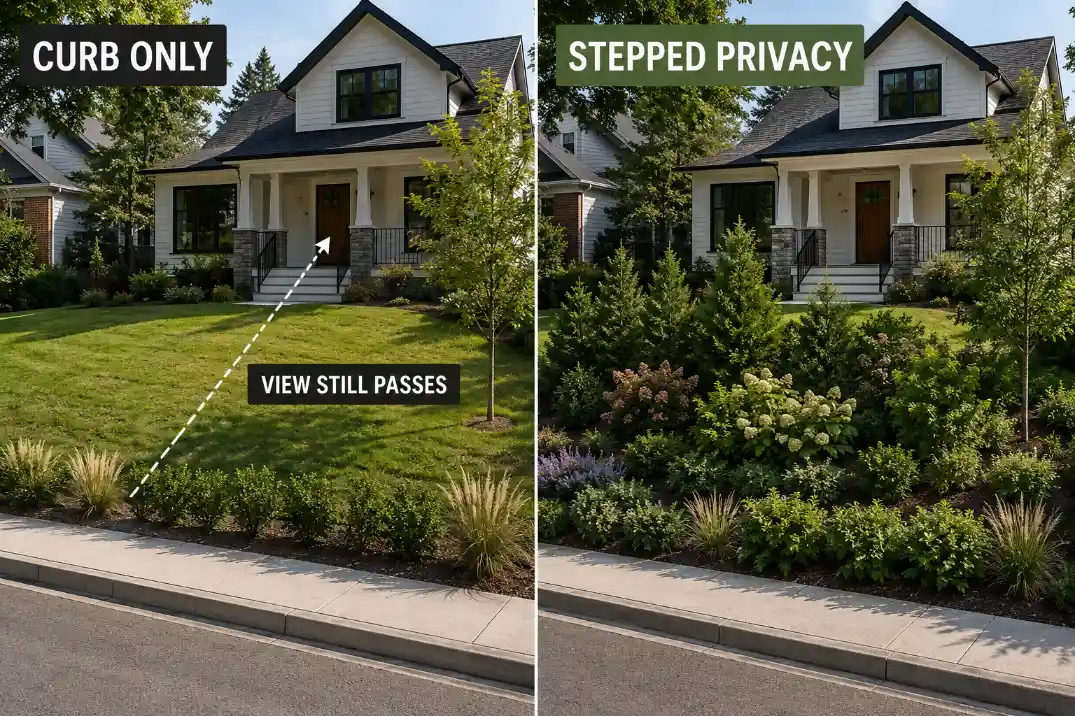
A curbside hedge can fail in three common ways. It may sit too low to interrupt the view toward the porch. It may block the lower lawn while leaving the upper yard open. Or it may make the street edge feel heavy without solving the part of the yard that feels watched.
This is why sloped front yard privacy has to be planned in zones. The lower yard handles exposure from the street. The mid-slope handles the passing eye line. The upper yard protects the porch, windows, and entry experience.

Find the Street Eye Line Before Choosing a Privacy Move
The useful test is to stand where the view comes from before deciding where the screen belongs. That means the sidewalk, the curb, the opposite side of the street if traffic pauses there, and any common waiting point such as a stop sign, school route, bus stop, or neighborhood entrance.
From each point, look for the first part of the yard that catches the eye. It may not be the same part you notice from the front door.
If the lower lawn is the first visible area, the street edge needs a filter. If the eye travels over the lower yard and lands on the porch, the upper yard needs a screen closer to the use area. If the front window is visible across the slope, the best privacy move may be a narrow vertical interruption near the house rather than a long planting line at the curb.
This is especially important on lots that already feel exposed to steady street movement. A page about front yard privacy problems on busy streets can help with the traffic-pressure side of the issue, but the slope still needs its own eye-line read.
Check from moving and standing views
A person walking past has more time to look than a driver passing at neighborhood speed. A car stopped near the bottom of the slope creates a different view again. The privacy plan should respond to the most uncomfortable view, not just the most common one.
Do not judge the yard only from the porch. From the house, the lower yard may look like the exposed zone. From the street, the porch may be the real target.
Separate “visible” from “too visible”
Not every visible area needs to be blocked. A front yard should still feel readable from the street. The goal is to interrupt the direct view into use areas, not erase the house from the neighborhood.
A good slope plan usually lets the entry remain obvious while softening the places where the view lingers.
Match the Exposed Zone to the Right Privacy Layer
The screen belongs where it interrupts the view, not automatically where the property begins. Once you know what the street can actually see, match that exposed zone to the layer that can change the sightline.
Slope Privacy Decision Matrix
Lower lawn exposed:
Use a lower filter near the street edge, then add mid-slope planting so the view does not simply pass over the first layer.
Porch exposed from below:
Move part of the privacy layer uphill. A screen near the porch edge, steps, or upper planting bed may do more than a tall hedge at the curb.
Window exposed across the slope:
Use a targeted vertical interruption near the window line. This may be a small tree, layered shrub group, or narrow planting mass placed where the sightline lands.
Whole slope exposed:
Treat the yard as three privacy zones: lower filter, mid-slope mass, and house-side shield. One straight line will usually feel underpowered or overbuilt.
This is the point where many homeowners choose too much of the wrong thing. They add one tall hedge at the bottom because the street feels like the problem. But the actual view may be landing halfway up the slope or near the front porch.
If your slope also faces a sidewalk or curb strip, the planting strategy should be more precise than a simple green wall. A guide to street-facing front yard privacy landscaping can support the planting side, but on a sloped lot the placement still has to follow the eye line first.
Build Privacy in Steps Instead of One Flat Line
A downward slope usually needs stepped privacy because one flat line only works at one elevation. The goal is not to build a wall at the bottom of the yard. The goal is to make each layer stop the view at the point where the slope would otherwise carry it forward.
The lower layer can be loose and forgiving: grasses, shrubs, mixed planting, or a low fence-and-planting combination where allowed. Its job is to slow the view from the street and make the lower yard feel less bare.
The mid-slope layer is often the most important one. This is where planting can intercept the line of sight before it reaches the porch or front windows. A staggered group of shrubs or small trees can work better here than a continuous hedge, because it breaks the view without making the whole yard feel boxed in.
The upper layer protects the places people actually use. That might be a porch corner, a front sitting area, a window, or the landing near the door. This layer should be selective. If it becomes too dense, the entry can feel hidden, and the front yard starts to look defensive rather than private.
Terraced planting should follow the view, not just the grade
Terraced planting is useful when each level earns a job. A lower bed softens traffic. A middle bed blocks the view path. An upper bed protects the porch or window. That is different from building terraces simply because the yard slopes.
If a terrace raises planting into the sightline, it can improve privacy. If it raises a seating area or walkway into the sightline, it may create more exposure than before.
What flat-yard advice misses:
Flat-yard privacy advice often assumes the first screen is the main screen. On a downward front yard, the first screen may only be the first filter. The more important privacy layer is often uphill, where the street view actually lands.

Use the Lower Yard as a Filter, Not the Whole Privacy Solution
The bottom of the slope should usually start the privacy sequence, not finish it. That lower band is what the street reads first, but it is rarely the only place the view needs to be stopped.
A lower filter can be semi-open. It can use layered shrubs, ornamental grasses, a low fence with planting, or a mixed border that makes the street edge feel less raw. It should reduce the directness of the view while still letting the front yard breathe.
The lower layer becomes a problem when it tries to do everything. A tall, dense screen at the bottom of a slope can make the yard feel cut off from the street while still failing to protect the porch. It can also make the entry less readable, especially if the front walk starts near the lower edge.
This is where slope privacy and welcoming front yard design overlap. If the entry starts to disappear behind the privacy layer, the yard may feel private from the street but confusing for guests, delivery drivers, and neighbors. For that balance, the article on front yard privacy that still looks welcoming is a better route than trying to solve entry design inside this slope page.
A lower filter works best when it slows the view without pretending to be the whole solution. It should make people look less directly into the yard, but the heavier privacy work often belongs higher on the slope.
Protect the Porch and Windows Where the View Actually Lands
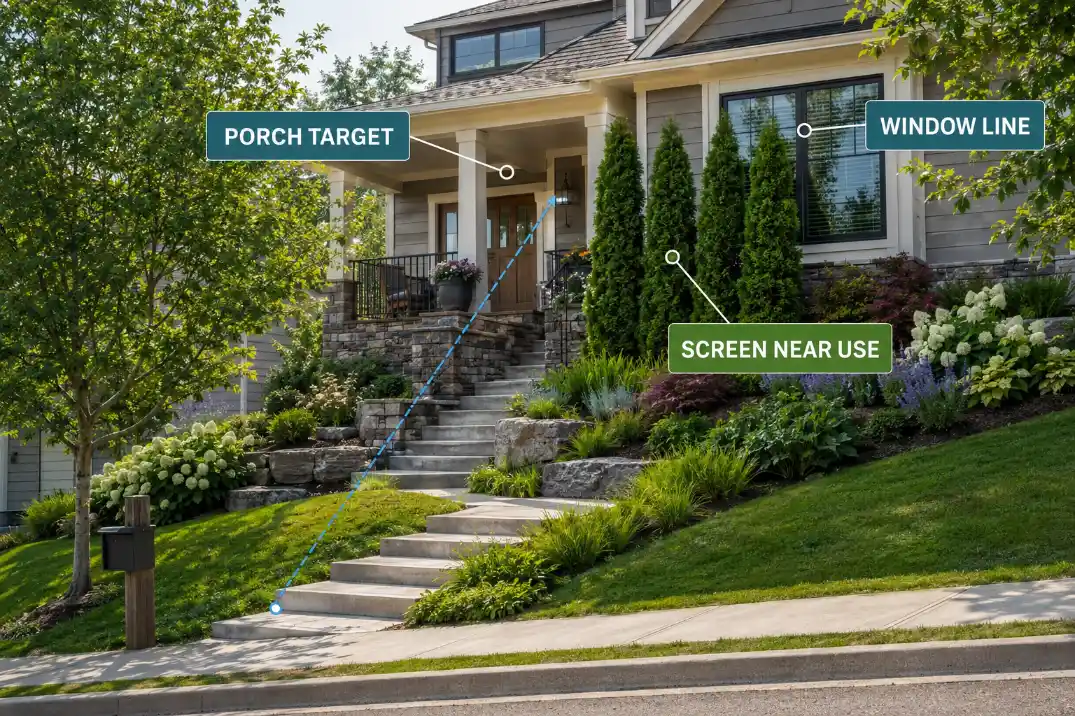
The most useful privacy layer may be close to the house, even when the discomfort starts at the street. On a downward slope, the screen should protect the target of the view, not just decorate the source of the view.
If the eye line lands on the porch, add privacy near the porch edge rather than overbuilding the bottom of the slope. A small tree, vertical shrub group, porch-side planter, or narrow screen can interrupt the view while leaving the steps and entry open.
If the eye line lands on a front window, the screen should be placed where it breaks the view into the glass. That may be closer to the house than feels intuitive. A plant at the curb may look good from the road and still do nothing for the window.
If your actual problem is a sidewalk only a few feet from the glass, that is a different condition from a downward slope. In that case, route the deeper solution to front yard privacy when the sidewalk runs close to your windows instead of trying to solve it with slope-wide planting.
Keep the entry readable
The front door should not vanish behind the privacy plan. A sloped yard already changes how people read the house from the street. If the upper privacy layer blocks the entry, the front yard can start to feel closed, even when the planting is attractive.
A better move is to shield the side of the porch, the seating corner, or the direct window view while keeping the main approach visible. Privacy should interrupt the line of sight, not confuse the route to the door.
Know When Terracing Helps and When It Creates More Exposure
Terracing helps privacy only when it lifts the screen into the view path. If it lifts the wrong use area into that path, it can make the yard feel more exposed than before.
A raised planting bed on the mid-slope can lift shrubs into the view path. That may let a smaller planting mass do more work than a taller plant at the bottom of the yard. It can also make the yard feel intentional instead of like one long exposed incline.
But terracing is not automatically private. If a terrace creates a flat sitting pad in the most visible lower band, it may make the exposed part of the yard more usable but also more watched. If a raised bed sits too close to the entry, it may block the door from view without blocking the street from the porch.
Use terraces to raise screens, not activity, into the view path
The best privacy terraces usually lift planting, not people. A mid-slope planting shelf can interrupt the street view while the porch, walkway, or small sitting area remains higher and better protected.
Where retaining walls are involved, keep the article’s privacy logic separate from construction decisions. Wall height, drainage behind the wall, surcharge, property lines, and local permitting can change what is allowed. The privacy decision is where the screen should work; the wall decision is whether that structure can be built safely and legally.
If the slope is also creating washout, mulch movement, or water running through planting beds, solve that before trusting new privacy layers to stay in place. A broader guide to yard drainage problems from soil, slope, and runoff is more appropriate for that part of the job.
Keep Drainage, Entry, and Street Visibility From Becoming New Problems
The privacy layout still has to let the front yard function as a front yard. On a slope, that means water needs somewhere to move, people need a clear route to the door, and the house still needs to read safely from the street.
Do not block the path water already takes across the slope. Dense planting, raised edging, or poorly placed walls can trap runoff where it used to move through. Even if the privacy layer looks right from the street, it can fail if water cuts through it during heavy rain.
Do not pinch the front walk. On a sloped yard, people already adjust their movement as they climb or descend. Planting too close to the walk can make the approach feel narrow, especially where steps, turns, or landings already exist.
Do not close the whole street edge just because the street feels busy. Some visibility is useful. The house number, front walk, entry, and driveway edge may need to remain legible from the street. If your driveway is part of the exposure problem, use a focused page on front yard privacy when the driveway is open to the street rather than letting driveway screening take over this slope plan.
The better approach is selective privacy. Block the view that lands on private use areas. Filter the lower yard. Keep the parts of the front yard that need to communicate with the street open enough to function.
The Best Plan Usually Combines Three Privacy Zones
A sloped front yard privacy plan should close only after each zone has a job. If one zone is asked to do everything, the yard usually becomes either under-screened or overbuilt.
The lower zone softens the street edge. It makes the yard feel less exposed from the sidewalk or road, but it does not try to become the whole screen.
The middle zone does the serious sightline work. This is where staggered shrubs, small trees, layered planting, or a terraced planting band can intercept the view before it reaches the upper yard.
The upper zone protects the actual target: porch, window, entry landing, or front sitting area. This layer should be precise enough to give privacy without making the home look shut off.
That is the practical model: do not fix the whole slope equally. Find the street eye line, decide where it becomes too personal, and place each layer where it changes that view. A lower filter, mid-slope mass, and house-side shield will usually outperform one heavy screen at the bottom of the yard.
If a raised terrace turns into a retaining wall, check local building rules before work begins; municipal guidance such as San Diego’s retaining wall permit bulletin shows why wall height and site conditions can affect permit requirements.