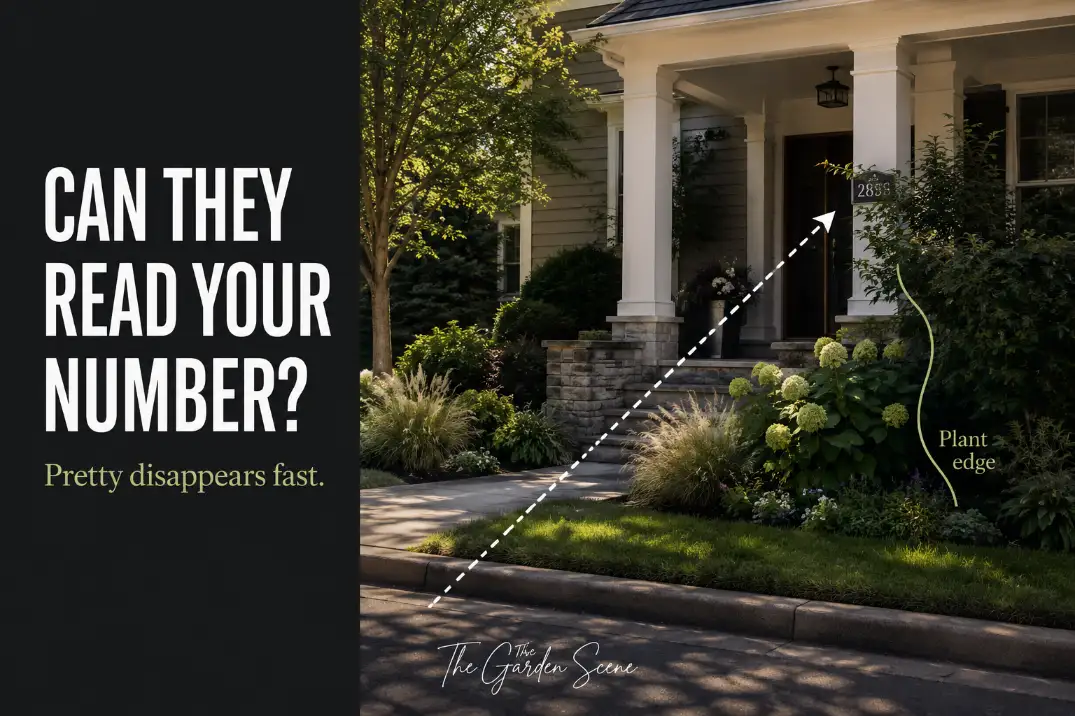
A front yard house number usually fails for a simple reason: the address exists, but it does not read from the place where people first need it. That is almost always a street-view problem before it is a style problem.
Start with three checks. Can the number be read from about 50 feet away? Can it be recognized within 3–5 seconds from a moving approach? Can it still be read about 30 minutes after sunset? If not, the issue is not curb appeal. It is arrival clarity.
This is also where homeowners often misread the problem. They assume the number is too small, so they buy a larger version in the same weak location. But size is only one variable.
Placement, contrast, lighting, and obstruction matter more. A 4-inch number can technically meet a minimum standard and still fail in real use if it sits in porch shadow, blends into brick, or hides behind summer growth. A smaller but better-placed number can outperform it.
Start From the Curb, Not the Porch
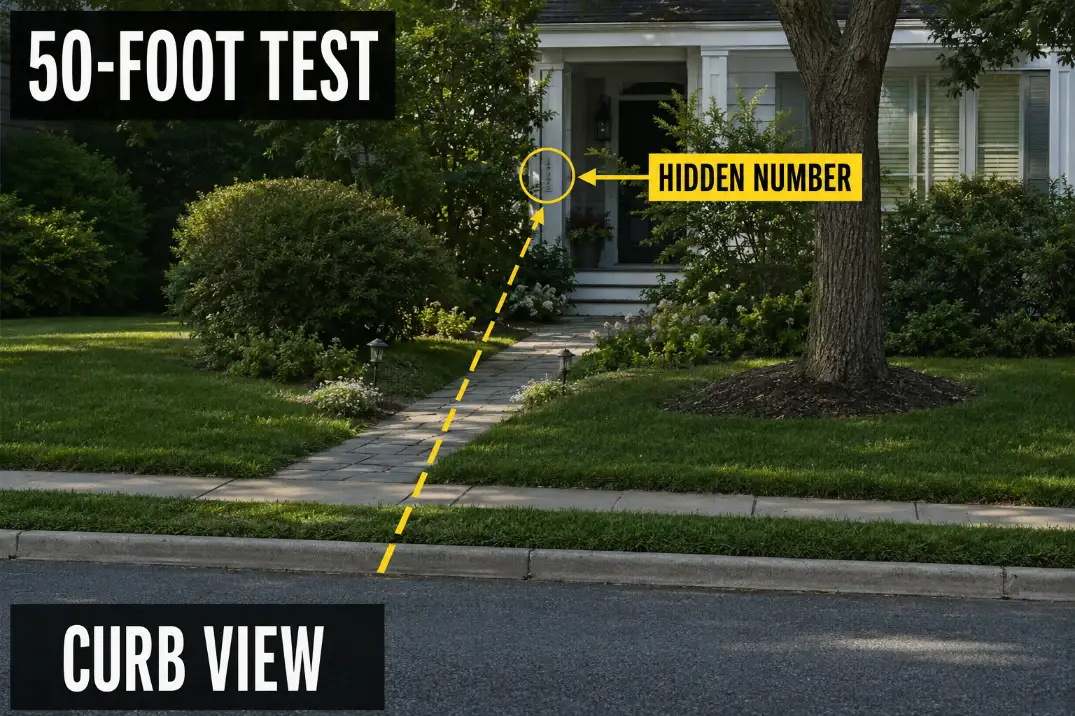
The weakest way to judge house number visibility is to stand near the front door and look back. From the porch, the number is close, familiar, and seen from the best angle. From the street, it competes with garage doors, trim lines, porch posts, shrubs, parked cars, and shadows.
Use the 50-Foot Test
Stand near the curb or across the street and try to read the number without walking closer. On many suburban lots, about 50 feet is enough to reveal whether the address works.
On deeper lots, test from the driveway entrance too, because that is often the first decision point for guests and delivery drivers.
If the number does not separate clearly from the background at that distance, it is not doing enough useful work. This is the same difference between a front yard that looks finished and an entry that actually works on arrival.
That logic also shows up in Front Entry Usability Ideas because visibility and approach need to reinforce each other.
A Moving View Exposes Weak Addresses Fast
A parked visitor can scan. A driver moving at 15–25 mph on a residential street has only a few seconds to identify the property. Thin dark numerals, low-contrast plaques, and decorative script styles often disappear in that short window.
One practical rule helps here: if someone has to pause for more than about 2 seconds to decode the number once they see it, the design is already too weak. House numbers should be recognized, not solved.
Pro Tip: Take a phone photo from the curb and shrink it to thumbnail size. If the number does not stand out there, it probably will not stand out to someone arriving from the street.
What Usually Makes a House Number Disappear
The right fix depends on what is actually weakening the address. Buying a new plaque before identifying the failure pattern often wastes time.
Plant Growth Is Usually Underestimated
Shrubs, ornamental grasses, and seasonal planters hide numbers more often than homeowners expect. A young 12-inch shrub can easily become a 30-inch visual block by late summer.
In humid parts of Florida and the Southeast, one growing season can close a sight line that looked fine in spring. In northern states, the opposite pattern happens: winter makes the number look visible, then spring and summer growth erase it.
The key problem is not just height. Sideways spread matters too. A shrub sitting 18 inches away from the plaque can still block the number from one direction of approach.
Porch Shadow Can Beat Bigger Numbers
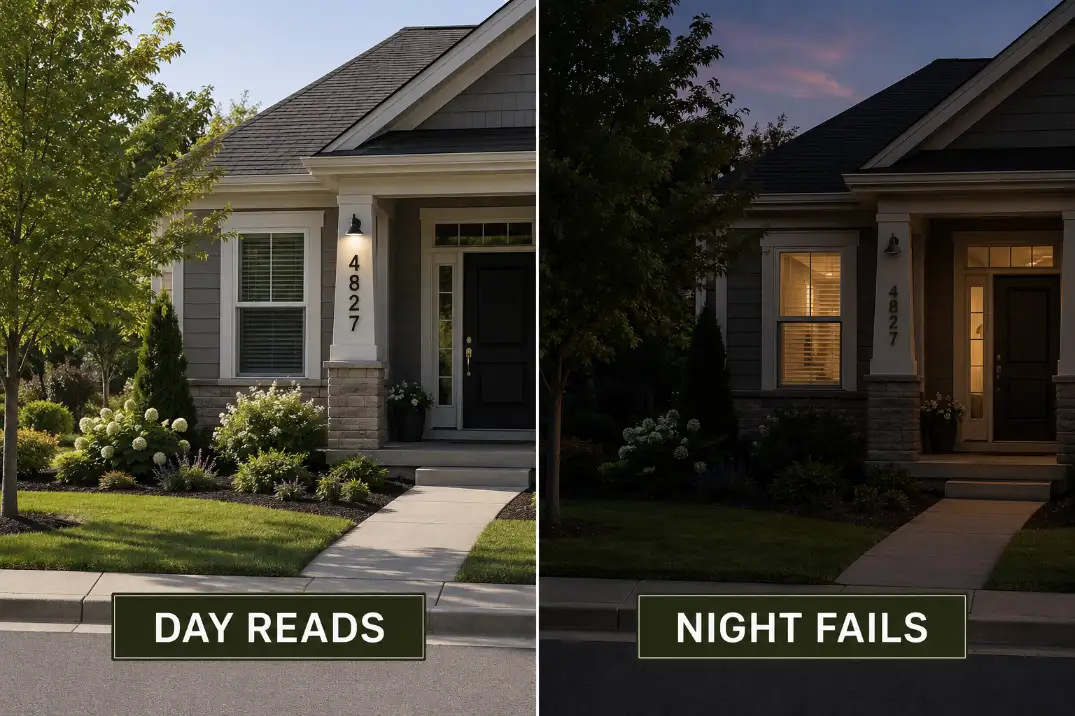
A covered porch, recessed door, or deep overhang can make even a large number fail from the street. The symptom is “the number is there.” The mechanism is that the eye cannot separate the digits from the background fast enough.
This is especially common on homes with dark siding, brick facades, stained wood doors, or numbers mounted beside a porch light that brightens the entry but not the address itself.
The Mailbox Does Not Always Solve the Problem
A curbside mailbox helps only when it faces the correct direction, remains visible in all seasons, and clearly belongs to the house. Grouped mailboxes, snow piles, parked vehicles, and cross-street mailbox placement all weaken that assumption.
When the driveway visually dominates the front yard, the address should support the arrival route instead of disappearing into garage trim or foundation planting.
That same access-first logic matters in Front Yard Design With Driveway and Front Door Access because the route to the door needs clearer hierarchy than the garage mass.
Best Placement Depends on the Front Yard Type
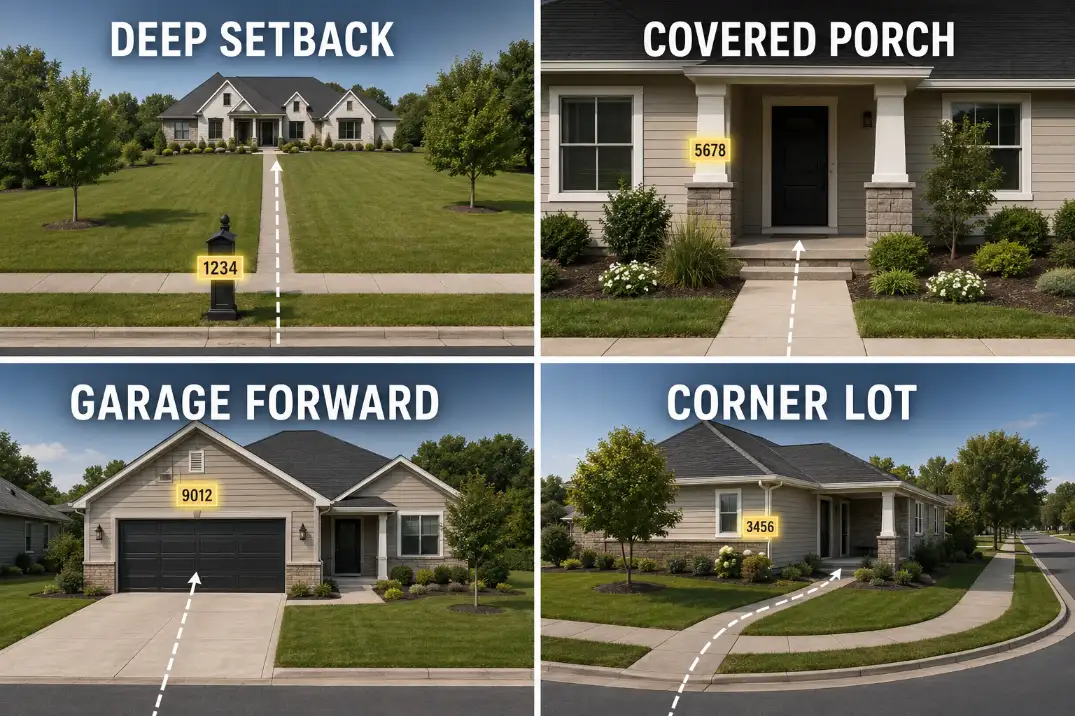
Generic advice often says to put the number near the front door. That only works when the front door is actually visible from the street. Many homes need the number closer to the first decision point.
| Front Yard Situation | Better Address Location | Why It Works |
|---|---|---|
| Deep setback or long driveway | Driveway-side post or low marker | Confirms the property before the house is fully visible |
| Covered porch | Brighter wall plane or porch column facing the street | Escapes the darkest shadow zone |
| Garage-forward home | Near the entry path, not lost on the garage face | Separates the address from the garage mass |
| Grouped mailbox area | House number plus a secondary marker | Prevents confusion between neighboring boxes |
| Heavy foundation planting | Raised post, open wall area, or clear backplate | Avoids seasonal plant obstruction |
| Corner lot or angled street | Visible side facing the main approach | Matches how drivers actually see the property |
Deep Setback Homes Need Earlier Confirmation
If the house sits 75–100 feet or more from the street, putting larger numbers on the house often stops making sense. At that distance, a driveway marker or low front-edge monument usually does more useful work because it answers the first question earlier: “Is this the right property?”
Covered Porches Need a Brighter Reading Plane
A recessed front door can look elegant and still be a poor address location. If the door sits several feet back, under a roof, or behind columns, mount the number where the street can actually read it. A porch column can work well if it faces the approach. A clean wall plane beside the entry can work if it is not buried in shade.
Garage-Forward Houses Need Better Hierarchy
On many suburban homes, the garage is the biggest visible element. If the number sits casually on the garage face, too close to coach lights or decorative hardware, it becomes part of the visual noise.
The better location is usually near the route people should follow toward the door.
That matters for more than guests. A clearer route also supports deliveries, especially where the property, entry, and drop area need to be read quickly.
The same logic carries into Front Yard Package Delivery Zone Ideas because the best drop zone is the one a driver can identify without hesitation.
Readability Beats Style More Often Than People Admit
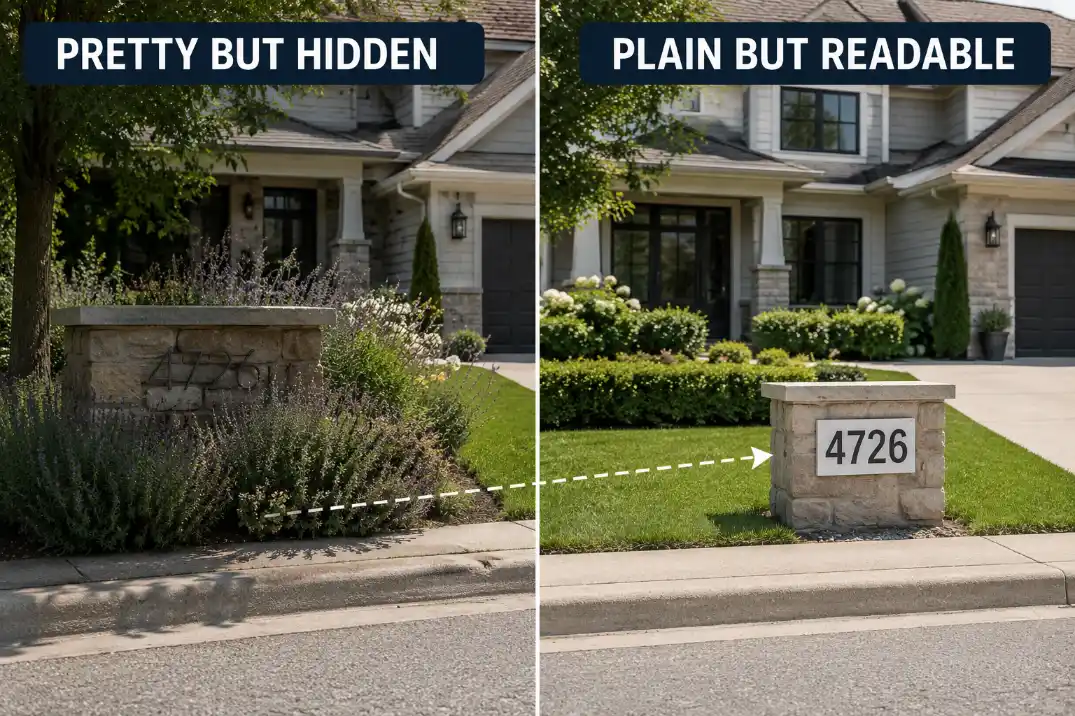
The most common wasted fix is buying larger numbers in the same weak style. Bigger does not help much if the stroke is too thin, the spacing is awkward, or the background stays visually busy.
Stroke Width Matters More Than Most People Think
A 5-inch number with a bold stroke is often easier to read than a 7-inch number with a hairline profile. If local standards use 4-inch height and roughly 1/2-inch stroke as a minimum, treat that as a floor, not a goal.
Dark siding, fast street approaches, deep setbacks, and shaded entries usually need more visual weight than the minimum standard suggests.
Busy Backgrounds Cancel Out Good Numbers
Stacked stone, multitone brick, weathered wood, and heavily textured siding often weaken even decent numbers. A plain backplate solves this better than a more decorative plaque. The backplate gives the eye one calm reading field instead of making it search across texture.
Finish Matching Is Usually Overestimated
Matching the number finish to the hardware, railing, or light fixture can look polished up close, but it often destroys contrast. House numbers should be found first and admired second. If you must choose between perfect finish coordination and easy readability, readability wins.
Lighting Helps Only When It Lights the Number
A lit porch is not the same thing as a readable address. This is one of the easiest problems to misjudge because the whole entry may look bright while the number itself stays dark.
Test the Address 30 Minutes After Sunset
Check the number from the street about 30 minutes after sunset, before your eyes fully adjust. If it reads immediately, the lighting is helping. If the porch glows but the number remains vague, the light is decorative, not functional.
This matters even more in places where winter darkness arrives before 5 p.m. or where rain and windshield glare reduce visibility earlier. A number that works only at noon is not a reliable number.
Low-Glare Lighting Works Better Than More Brightness
A small downlight, shielded sconce, or low landscape light can be enough if it lands on the number. Brightness alone is not the goal. Direction is. A brighter fixture aimed toward the street may create glare and make the address harder to read.
For a broader front-yard lighting strategy, Front Yard Lighting Ideas That Enhance Curb Appeal is useful after the number itself is working, not before.
When the Standard Fix Stops Working
Sometimes replacing the house numbers is sensible. Sometimes it is the wrong level of fix. The tipping point comes when distance, angle, or street-side confusion matters more than the numbers themselves.
Add a Second Marker When the House Is Not the First Thing People See
A second marker is not overkill when the driveway curves, the front door faces sideways, the home sits far back, or the mailbox does not clearly identify the property. In those cases, the address needs to appear where the decision actually happens, not only where the house is best viewed from the porch.
Do Not Solve Street-Side Clutter With More Planting
Fire hydrants, utility boxes, street signs, and large mailbox posts can visually compete with the address. A common mistake is softening that area with more planting, then accidentally blocking the number too.
The better move is to keep the address marker cleaner and more visually dominant than the clutter around it.
That same balance between practical visibility and street-side design shows up in Front Yard Design Around Fire Hydrants and Street Signs because the decorative fix can easily fight the functional one.
Quick House Number Visibility Checklist
Use this before buying anything new:
- Can the number be read from about 50 feet away without walking closer?
- Can it be recognized within 3–5 seconds from a moving approach?
- Is the number at least 4 inches tall, with enough stroke width to read from the street?
- Is there at least 12–18 inches of clear visual space around it?
- Does the number contrast clearly with the wall, plaque, or post behind it?
- Can it still be read about 30 minutes after sunset?
- Will shrubs, snow piles, parked vehicles, or seasonal decor block it later?
The Best Fix Removes Hesitation
Good front yard house number visibility is not about labeling the house. It is about removing hesitation before someone reaches it.
The address should be visible from the approach, readable in daylight and after dark, and placed where the property is actually identified.
Start from the curb, not the porch. If the number disappears behind planting, shadow, distance, decorative detail, or garage clutter, fix that mechanism first.
A plain, high-contrast address marker in the right place will usually outperform a stylish plaque that only works up close.
Because address visibility is also a safety issue, broader official guidance is available from the International Code Council fire code section on address identification.