Last updated: July 5, 2026
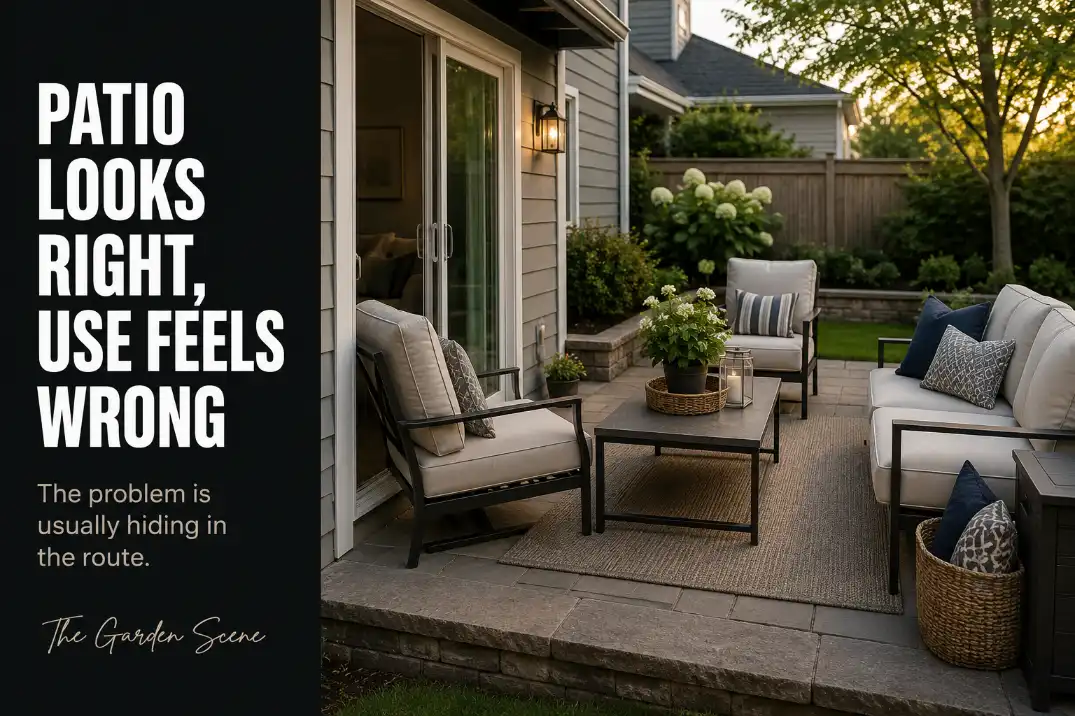
A patio becomes hard to use at the first point where normal movement stops feeling natural. That point may be the door, a pulled-out chair, a table corner, a storage box, or a shaded seat that is in the wrong place at the wrong time.
The mistake is diagnosing the patio while it is still. A layout can look balanced when every chair is pushed in and nothing is being carried. Real use changes the footprint. Someone opens the door. A chair slides back. A drink needs a landing spot. A cushion has to go somewhere. A guest tries to pass behind the seating.
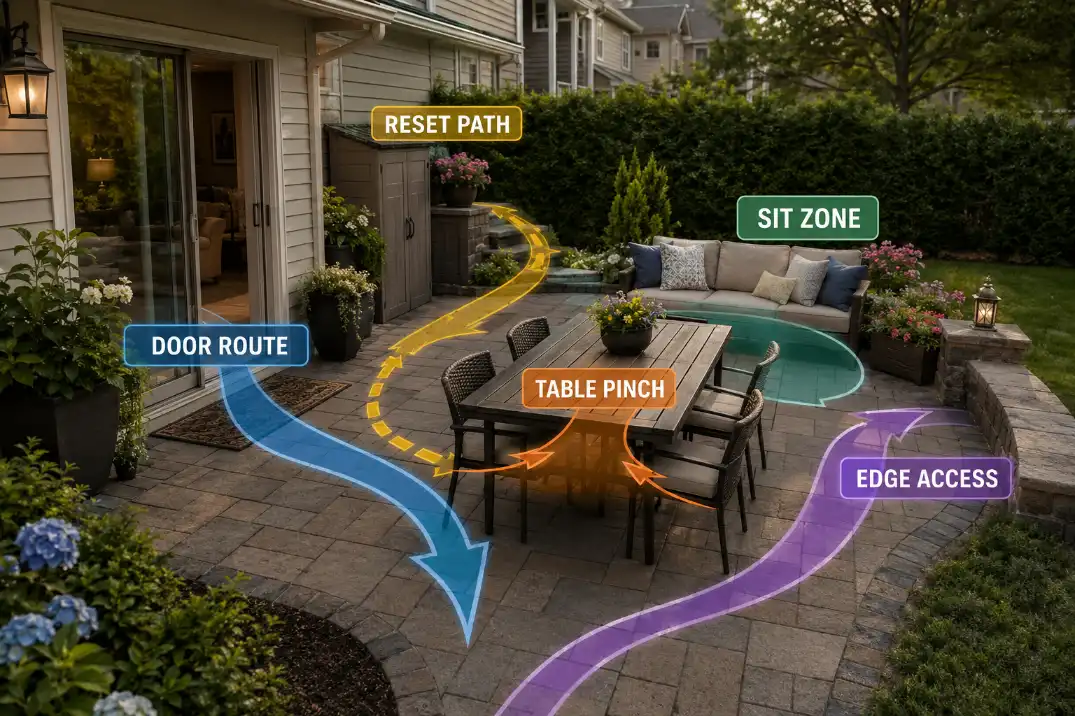
That is why the first fix should not be “buy smaller furniture” or “copy a new layout.” The better diagnosis is to walk the patio’s daily loop: door route, seating, table, edge, storage, shade, and cleanup. The layout problem is usually hiding at the first place that loop narrows, twists, or forces someone to move.
Why a Patio Can Look Finished but Still Feel Hard to Use
Judge the patio in use, not in its reset position. The layout only works if it still makes sense after people sit down, pull chairs back, set down food, walk behind each other, and clean up afterward.
The most useful diagnosis is not the largest object. It is the first repeated interruption.
| What You Notice | Likely Layout Cause | First Check |
|---|---|---|
| You step outside and immediately dodge furniture | Entry route is blocked too early | Walk the first three steps from the door |
| Chairs fit until people sit down | Seating was planned in pushed-in position | Pull every chair out before judging space |
| The table feels useful but always in the way | Central table is becoming a pinch point | Carry a plate around the table route |
| The patio gets messy right after use | Storage or reset path is missing | Locate where cushions, tools, and trash actually go |
| One “best” seat never gets used | Shade, heat, view, or drainage makes it uncomfortable | Check the seat during the time you use the patio |
| The patio feels smaller than its square footage | Movement is forced into one narrow lane | Find the first place people turn sideways |
A patio with less furniture can still feel awkward if the route is broken. A patio with more furniture can feel easy if the main movement loop stays open. That is the distinction this diagnosis should protect.
The Door Route Is the First Place to Check
If the patio feels cramped before anyone even sits down, the entry route is the likely failure point. The door area controls the first move into the patio, so a small obstruction there can make the whole space feel smaller than it really is.
This happens around sliding glass doors, back doors, screen doors, and step-down transitions. A chair may look natural near the house. A planter may frame the opening. A grill may sit close to the kitchen for convenience. But if the first move outside requires a sideways step, the patio begins with friction.
The first-three-steps test
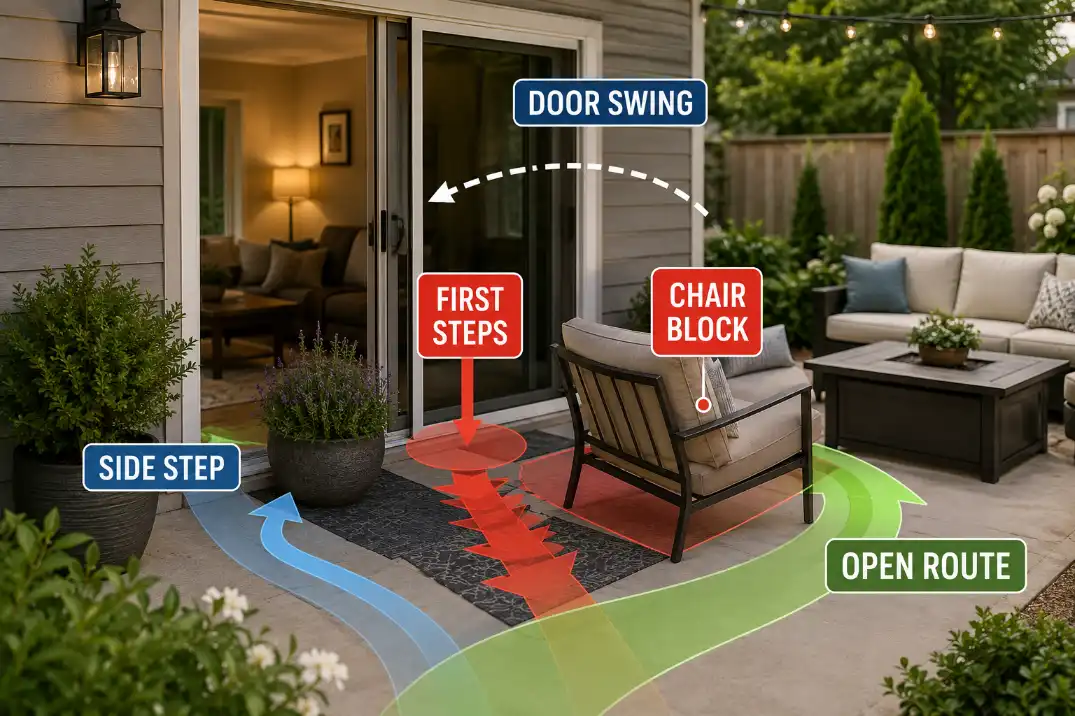
Stand inside the door as if you are carrying a plate, drink, or small tray. Open the door fully. Step onto the patio and take three natural steps toward the place people normally sit.
If your shoulder brushes a chair, your foot lands near a table leg, or you instinctively angle your body to avoid something, the entry route is already failing. That matters more than whether the furniture technically fits on paper.
Layout note: the entry should not do four jobs at once. When the same small zone acts as a doorway, plant display, grill corner, and seating edge, the first route usually loses.
A clear door route should stay clear when the patio is being used, not only when the chairs are pushed in. Screen door movement, door swing, step edges, grill corners, and planter placement all count.
When the issue is specifically the relationship between a sliding door, walkway, and patio furniture, treat it as a route problem instead of a whole-patio redesign. A deeper look at sliding door and walkway layout problems can help if the entry is where the layout first breaks.
Seating Fails When It Blocks Movement Instead of Supporting It
A seating zone fails when it works only as a picture. Chairs need to support sitting, conversation, legroom, and pass-behind movement at the same time.
A chair in showroom position is not the same as a chair in use. Dining chairs pull back. Lounge chairs collect foot space. Deep seating turns a corner into a wall. Conversation seating often angles inward, which feels friendly until the chair backs cut across the only walking route.
Check the pulled-out position
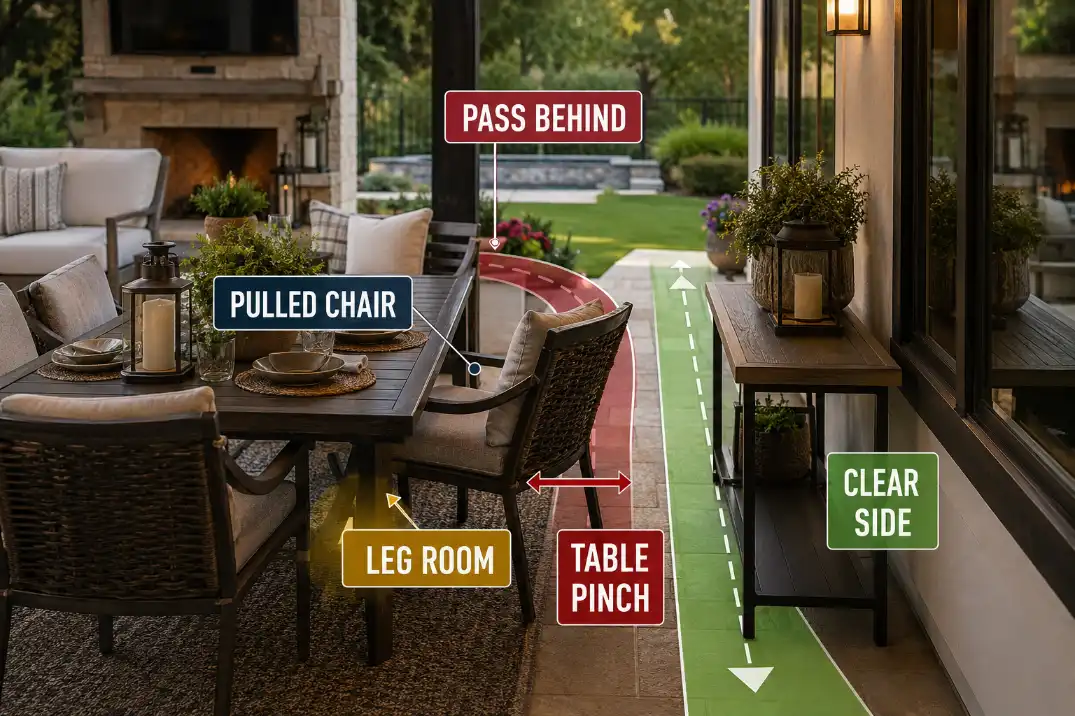
Pull every chair into its real used position. Then walk the route behind it. If passing behind a seated person requires turning sideways, stepping off the patio, or asking someone to move, the seating zone is occupying circulation space.
This does not always mean the seating is too large. Sometimes the angle is wrong. Sometimes the table is too centered. Sometimes the chair backs face the only open side. Sometimes a loveseat is less useful than two movable chairs because it locks the route in place.
Dining layouts make this easier to spot because the chair pull-out space changes the patio footprint during meals. If the problem appears only when people are eating, the next decision may be outdoor dining chair clearance, not a full patio redesign.
The common mistake is blaming square footage when the real failure is the seating boundary. A small patio can still feel usable when the route is protected. A larger patio can feel awkward if every chair points into the path people need to use.
When the Table Becomes the Traffic Jam
The table is the problem when everyone has to orbit it. It may be useful, attractive, and correctly sized, but still sit in the one place the patio needs to stay open.
This is especially common when the table sits in the center because that looks balanced from above. In real life, the table becomes the thing people walk around, reach over, bump into, or squeeze past.
The diagnosis is simple: carry something through the patio. A plate of food, a cup of coffee, a laptop, or a tray will reveal whether the table supports use or interrupts it. If you naturally pause, twist, or lift the item higher to clear a chair back, the table is no longer just furniture. It is a traffic jam.
For lounge patios, one large central table is not always the easiest answer. Two small side tables can keep drinks within reach without forcing every movement through the middle. For dining patios, the fix may be shape or position rather than size alone.
If the table itself is the pinch point, continue with table shape choices for tight patio routes instead of treating the whole patio as the failure.
Edges, Storage, and Cleanup Routes Reveal Problems You Miss at First
A patio can work while people are sitting and fail the moment it has to reset. That is why the edge matters. It is often the service lane for sweeping, cushions, hose access, trash, serving items, and small tools.
When that edge is blocked, daily use becomes heavier. Cushions have no nearby drop zone. The hose is reachable only by dragging it around chairs. Grill tools land on the dining table. A storage box sits where people should walk. Trash has to cross the seating area.
The edge should still work
Look at the perimeter after a normal evening outside. Can you sweep without moving three pieces of furniture? Can cushions go somewhere without crossing the seating route? Can someone carry trash, serving items, or a hose without cutting between seated guests?
If the answer is no, the patio may not need more storage. It may need storage placed outside the main walking loop. A practical next step is to reduce patio clutter without losing function so the reset path supports the layout instead of blocking it.
A patio that is hard to reset gets used less often. Homeowners begin leaving cushions out, avoiding the grill, skipping the rug, or not setting up the space for quick daily use because the cleanup path is too clumsy.
Shade, Grill, and View Choices Can Pull the Layout Apart
Some patio layouts fail because one secondary goal quietly overrules the main route. Shade, grill access, view direction, heat, and drainage can all pull the seating into a position that looks logical but performs poorly.
Shade is a common example. The seating may face the right view, but the shade lands behind the chairs during the hottest part of the day. Or the umbrella base sits in the walking route because the canopy needs to reach the table. In that case, the layout problem is partly a shade-placement problem.
Grills create a different pull. A grill near the door may be convenient for carrying food, but it can interrupt the main route, block a corner, or force guests through a cooking zone. If grill prep and dining are fighting for the same narrow strip, the patio needs a clearer cooking route, not just smaller chairs.
View-facing layouts can also backfire. Seating that turns toward the yard, fence, pool, or sunset may leave chair backs facing the door. That can make the patio feel closed off even when the view is good.
Drainage, reflected heat, and damp edges belong in this same boundary category. If one seating zone is always hot, wet, slippery, or uncomfortable, the layout may be responding to the wrong spot. When water or damp edges are the reason the “best” zone stays unused, diagnose patio drainage layout problems before moving every piece of furniture again.
Quick Field Test: Walk the Patio Before Rearranging It
Use this check before buying anything or copying a new layout:
- Start inside the house and walk from the door to the main seat while carrying a drink or plate.
- Open the door fully and notice whether the first three steps stay natural.
- Pull out every chair as if people are actually sitting.
- Walk behind the seated area without turning sideways.
- Place a cup, tray, or book where it would naturally go and check whether the table is useful or in the way.
- Find where cushions, trash, grill tools, serving items, and the hose go after use.
- Check the patio during the time of day you actually use it, not only when it looks best.
- Mark the first place where movement slows, narrows, twists, or forces someone to move.
The first repeated friction point is the diagnosis. It may not be the most visible object, and it may not be the largest piece of furniture. It is the first place where normal use stops feeling natural.
Fix the First Friction Point Before Changing the Whole Patio
The first fix should match the first failure. If the door route fails, protect the route before changing the seating. If the seating fails only when chairs are pulled out, adjust the chair angle, table position, or pass-behind path. If the table is the traffic jam, change the table’s shape, location, or job. If cleanup is the problem, move storage and reset support outside the walking loop.
Do not solve every patio layout problem at once. That usually creates a new problem somewhere else. A hard-to-use patio often needs one clear friction point corrected before the rest of the layout can be judged fairly.
For a neutral reference on accessible route concepts, see the U.S. Access Board guide to accessible routes.