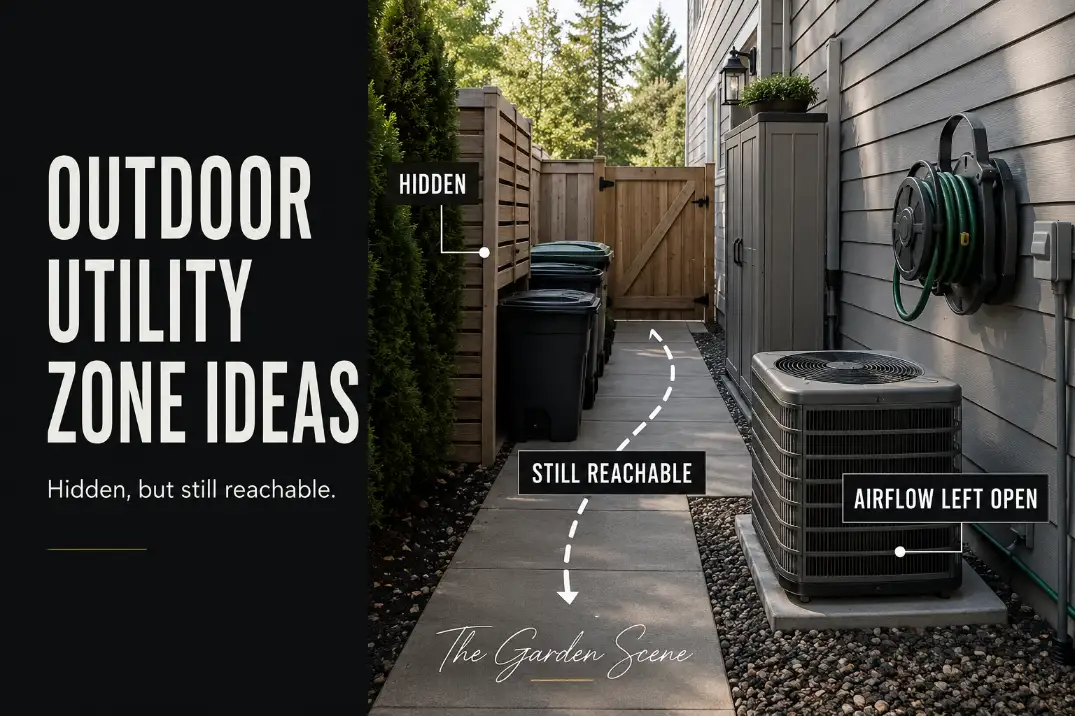
Outdoor utility zone ideas work best when the area is planned like a small service lane, not a leftover corner.
The best setup puts fixed equipment first, keeps a 36-inch route open where daily access matters, uses one-sided screening instead of boxing everything in, and gives trash bins, hose storage, and tools their own clear landing spots.
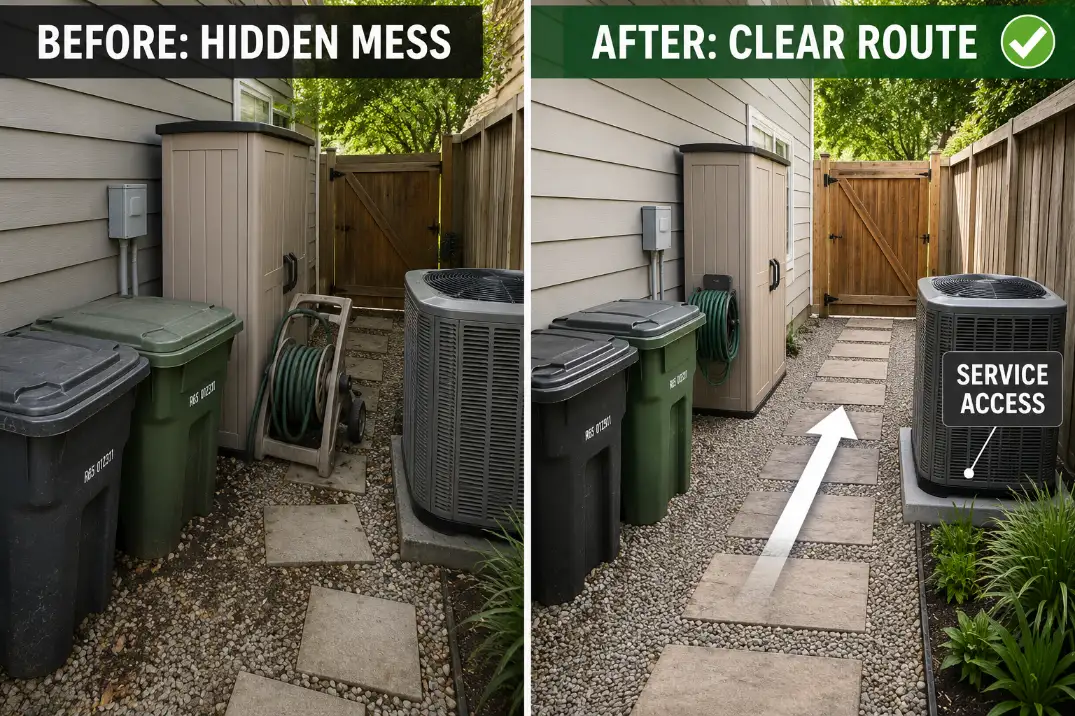
The common failure pattern is simple: bins, hose reels, AC equipment, tools, and gate swing all get pushed into the same 3- to 5-foot-wide strip.
The space may look cleaner from the patio, but it fails when you cannot roll bins out, reach the hose, open the gate fully, or let an AC condenser breathe. A utility zone is not successful because it disappears. It is successful when it stays quiet visually and still works every week.
Give Every Service Item a Place
A clean utility zone starts with order, not storage. Before adding a screen, cabinet, or bin enclosure, decide which items are fixed, which items move weekly, and which items are only seasonal.
Fixed Items Control the Layout
AC condensers, gas meters, utility boxes, downspouts, hose bibs, irrigation controls, and cleanouts should be placed first in your plan because they usually cannot move. Trash bins, small cabinets, hose reels, and planters can adjust around them.
This is where many outdoor utility zones go wrong. The visual problem gets solved first, then the working problem appears later. A screen looks good, but the meter is hard to reach. A storage box hides clutter, but its lid opens into the path. A planter softens the view, but it crowds the gate latch.
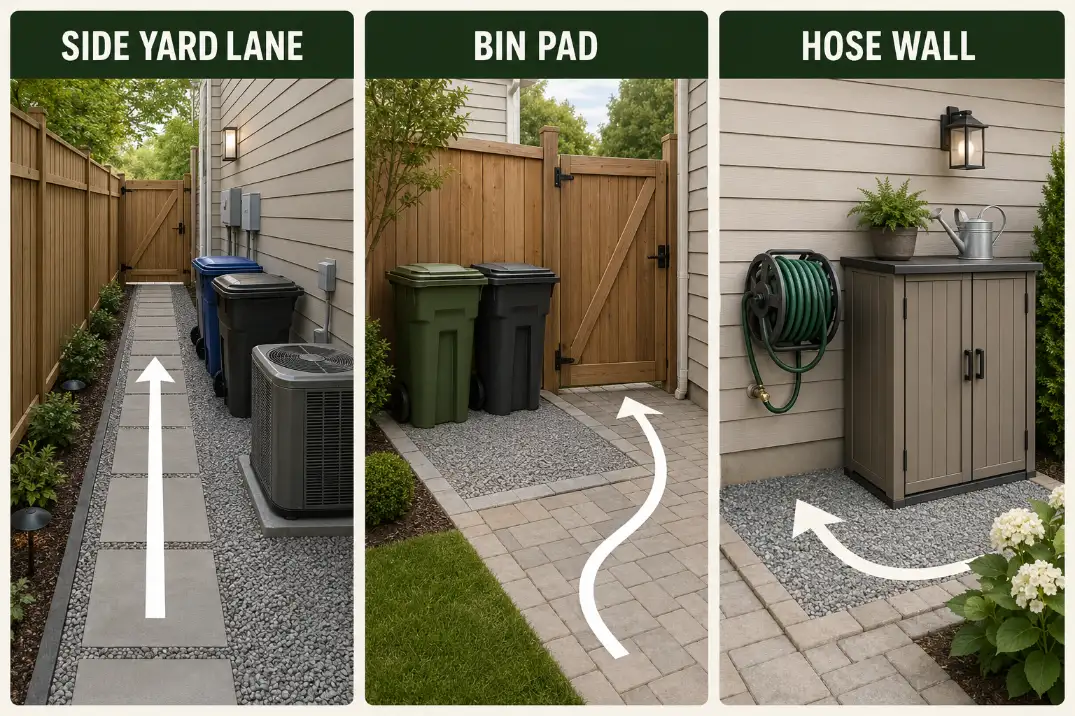
A practical service path should stay close to 36 inches wide where people need to carry bags, roll bins, drag hoses, or move a mower.
A 30-inch path may be enough for a person walking sideways through a side yard, but it is not generous for a trash cart or wheelbarrow. A 42-inch route is noticeably easier when bins, mowers, or garden carts pass through regularly.
If the utility area also acts as your side-yard route, the planning logic in Side Yard Utility Corridor Ideas fits this problem well because the route has to work before the storage looks neat.
Daily Items Should Be Closest to the Path
Trash bins, hose access, garden gloves, pet cleanup tools, and small hand tools should sit where they can be reached quickly. Seasonal items such as frost covers, spare pots, patio cushions, pressure washer attachments, and extra soil bags can sit deeper inside a cabinet or storage bench.
The mistake is treating every outdoor item as equal clutter. A hose used three times a week should not be buried behind seasonal bins. Trash carts moved weekly should not sit behind a decorative screen that has to be opened like furniture. The more often an item moves, the less hidden it should be.
Pro Tip: Before buying storage, mark each item’s footprint on the ground with cardboard or painter’s tape. Walk the route while holding a trash bag, hose, or garden tool. If the mockup already feels tight, the finished version will feel worse.
Best Outdoor Utility Zone Setups
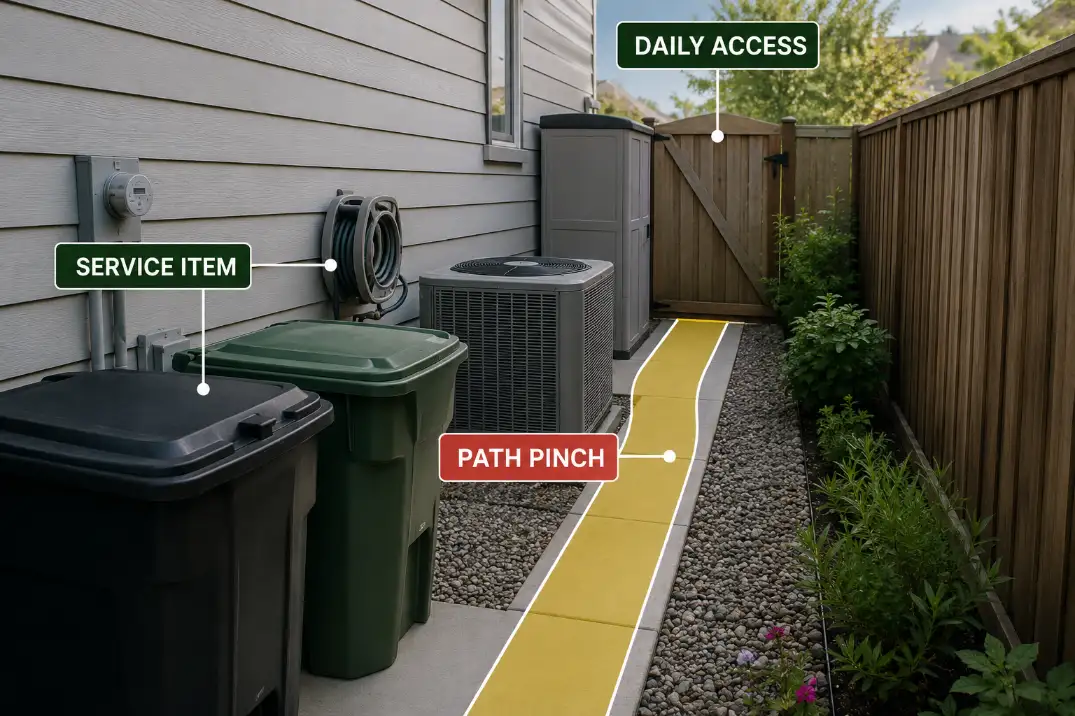
The strongest utility zone idea depends on what the space has to do most often. A narrow side yard, a gate-side trash area, and a hose wall should not be solved with the same layout.
Side Yard Service Lane
This is the best option when the side yard already holds AC equipment, meters, hose access, trash movement, or backyard entry. Keep the walking route open first, then place service items along one edge.
A side yard service lane works best when bins and cabinets do not zigzag across the route. Put bulkier items on one side and leave the opposite side as the movement lane. In a 4-foot-wide strip, that usually means shallow wall-mounted storage, a compact hose reel, and no deep cabinet doors opening into the path.
Gate-Side Trash Bin Pad
A gate-side bin pad works when trash carts need to move from the backyard or side yard to the curb every week. The pad should be easy to roll from, not just easy to hide.
Allow 6–12 inches of extra width around the carts so lids can open and hands can grip the handles. A tight enclosure may photograph better, but it usually fails when the cart wheels catch the side or the lid hits the screen.
If bins are the main issue, Trash Bins in Narrow Side Yards gives more focused layout help for tight cart storage.
Hose-and-Storage Wall
A hose-and-storage wall works well beside a planting bed, patio edge, or side-yard faucet. The key is keeping the hose reel near the hose bib and keeping small tools above or beside it, not scattered across the ground.
This setup is better than a deep storage box when the main problem is everyday reach. A wall-mounted reel, narrow shelf, and small closed cabinet can keep the area useful without stealing the path.
The surface below still matters. If the hose area stays muddy after watering, the zone will look unfinished no matter how clean the wall storage is.
AC Service Bay
An AC service bay is not a full enclosure. It is a lightly screened area that keeps the equipment visually quiet while leaving breathing room and service access. This setup works when the condenser is visible from a patio, walkway, or neighbor view but still needs open airflow.
A solid box or dense shrub ring is the wrong idea here. Treat the AC as fixed equipment with clearance needs, then soften the view from the main sightline only.
Mud-Resistant Utility Corner
This is the right setup when dogs, bins, hoses, rain, and foot traffic all meet in the same place. The priority is not a prettier screen. It is a base that stays firm, drains well, and does not track mud back to the patio or entry.
A compacted gravel pad with edging, concrete pavers, or a small hard-surface landing can make the area feel intentional.
If the same route is used by pets, bins, and backyard access, Side Yard Mud Control for Dogs, Bins, and Access connects the utility-zone problem to the surface wear that usually causes the mess.
Hide Without Losing Access
Screening should hide the view without blocking the job. The best utility screening works like a visual edge, not a sealed closet.
Use One-Sided Screening First
If the ugly view comes from the patio, screen the patio-facing side. If it comes from the driveway, screen the driveway-facing side. If it comes from a neighbor window, screen that view line. Do not wrap the entire zone unless the item truly needs enclosure.
This is especially important around bins, hose reels, and AC equipment. These items need lids, doors, handles, airflow, or service access. A screen that makes you move one object before reaching another is not a screen anymore. It is a daily obstacle.
Keep the Working Side Open
The working side of the utility zone should stay simple: enough room to stand, pull, lift, roll, or open. A front clearance zone of 24–36 inches is often the difference between a useful hidden area and a frustrating one.
A common weak fix is using a tall planter or fence panel exactly where the access should be. It looks logical because it hides the mess from the main view, but it often blocks the latch, hose reach, or cart handle. Better utility design hides the sightline, not the working side.
Make the Hidden Side Boring
Outdoor utility zones do not need a decorative theme. They need fewer materials, fewer loose objects, and one clean visual line. A gravel pad with edging and one simple slatted screen can look more finished than a corner full of small bins, mismatched shelves, plastic boxes, and leftover planters.
This is where homeowners often overestimate styling and underestimate negative space. A 6-inch gap beside a bin can make the area easier to clean.
A cabinet raised slightly above the surface can dry better than one sitting tight against damp ground. A screen that stops short of the gate may look less complete on paper but work better every day.
Keep Paths and Gates Clear
The path is the part of the utility zone that fails first. If the route from the driveway to the backyard, or from the patio to the hose, becomes awkward, the area will collect clutter again.
Check the Gate Swing Before Storage
A gate needs more than the width of its opening. It needs swing room, latch reach, and a place for someone to stand while opening it. If the gate swings inward, do not place bins, planters, hose reels, or storage cabinets inside the swing arc.
If it swings outward toward a driveway or walkway, make sure the utility zone does not force someone to stand in the wrong spot.
A 36-inch gate can still feel tight if the latch side is crowded. A 42-inch opening is more forgiving for mower access, wheelbarrows, and trash carts, but only if the approach is also clear. The real issue is the full route, not the gate width alone.
If the gate is the main pinch point, Side Yard Gate Swing Clearance Mistakes explains why a gate can measure wide enough and still feel blocked in daily use.
Leave a Rolling Route
People can twist around obstacles. Trash carts, wheelbarrows, spreaders, and mowers cannot. A loaded cart needs a straighter line and a wider turning area than a person walking through.
If the path includes two tight turns within 6–8 feet, bins are more likely to scrape walls, hit screens, or get left in the wrong place. That is why a straight rolling route usually matters more than adding a bigger storage cabinet.
Airflow, Drainage, and Service Space
The strongest utility zone ideas survive heat, rain, leaves, humidity, and service visits. If the layout only works on a dry day when nothing needs repair, it is not finished.
Give AC Equipment Breathing Room
AC condensers and heat pumps should not be boxed in with solid screens, dense shrubs, or storage cabinets. Treat two feet of open breathing space as a practical minimum around the unit unless the equipment manual requires more.
The top also needs open air, so shelves, roof panels, and overhanging storage should not trap heat above the fan.
This is a clear case where the visible symptom and the real mechanism are different. The visible symptom is an ugly metal unit. The real mechanism is heat exchange.
If the screen traps hot air, leaves, and debris, it may make the area prettier while making the equipment work harder.
In hot climates such as Arizona or inland California, tight enclosures are more punishing during long cooling cycles. In humid Florida or the Southeast, dense planting can hold damp debris around the pad.
When the utility zone includes AC equipment, Side Yard AC Screening Without Blocking Airflow is more useful than a general privacy screen idea because the risk is mechanical, not just visual.
Keep Water Moving Through the Zone
A utility zone should dry predictably. If puddles remain after 24 hours in warm weather, or the ground stays soft for 48 hours after normal rain, the problem is not just clutter. It may be poor slope, compacted soil, blocked drainage, or a surface that traps water under bins and cabinets.
A slight slope away from the house and away from storage bases helps. Even 1/8 to 1/4 inch of fall per foot can move water off a hard surface. Gravel can help drainage if it is compacted and contained, but loose gravel without edging can migrate into the path and make rolling bins harder.
Protect the Service Route
Service space is not wasted space. It is the reason the zone remains maintainable. Utility meters, cleanouts, hose bibs, AC panels, and electrical access points should remain visible or quickly reachable.
The routine fix stops making sense when a screen or cabinet creates a maintenance problem. If a technician would have to move bins, step over planters, or remove a panel just to reach equipment, the utility zone has been hidden too aggressively.
The Messy Corner Problem
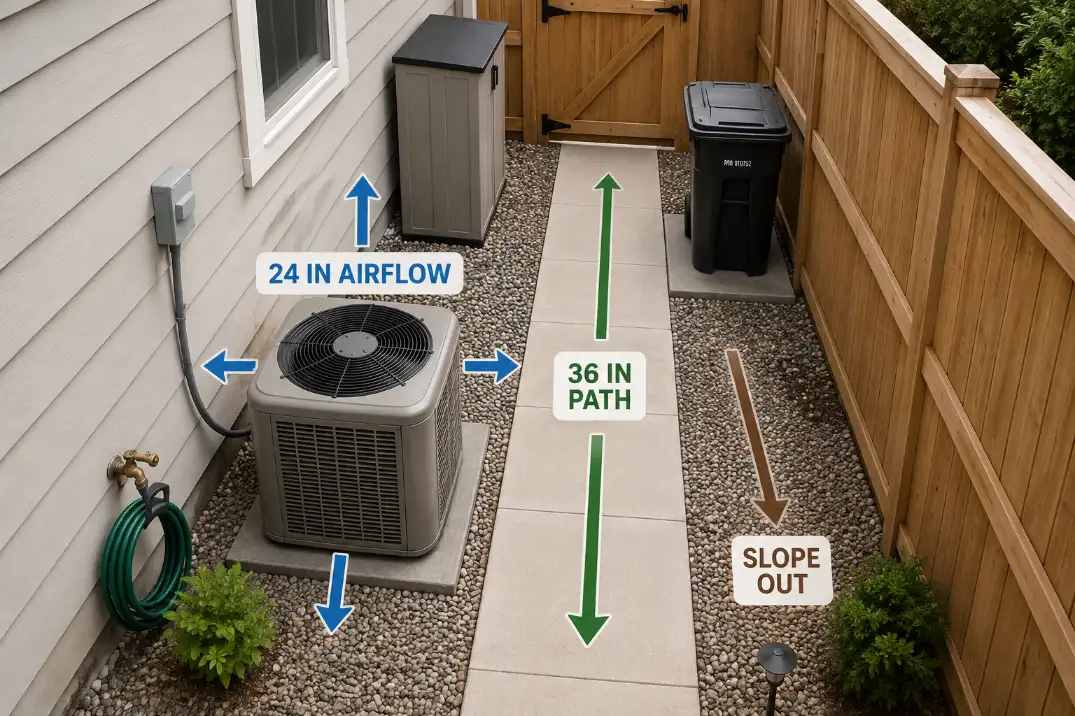
The messy corner usually forms because the yard has no defined service edge. Items get pushed against the fence, beside the AC pad, near the gate, or behind the patio because those are the least visible spots. Over time, the least visible spot becomes the least usable spot.
What Belongs Where
| Utility Item | Best Placement Logic | Clearance That Matters |
|---|---|---|
| Trash bins | Near the exit route, not buried deep behind screens | Lid space and rolling path |
| Hose reel | Near the hose bib and planting area | Reach without crossing the main path |
| AC condenser | Fixed first and screened lightly | About 24 inches of airflow space |
| Tool cabinet | Along a wall or fence edge | Door swing and dry base |
| Mower or cart access | Kept as a straight route | About 36 inches where possible |
| Utility meters | Visible and reachable | No locked or blocked enclosure |
This order matters because these items do not compete equally. AC clearance and meter access outrank visual neatness. Gate movement outranks storage volume. Drainage outranks a low cabinet that sits directly on damp ground.
Why One Big Storage Box Often Fails
The most common weak fix is buying one large deck box or outdoor cabinet and assuming the utility zone is solved. Storage helps when the problem is loose items. It does not fix a bad route, blocked equipment, wet ground, or a gate that cannot open.
A better approach is to divide the zone into three lanes: fixed service items, daily-use items, and seasonal storage. That prevents one corner from becoming a mixed pile.
If the issue is mostly loose tools and supplies rather than fixed equipment, Hide Backyard Tools and Supplies Without Creating Clutter gives a better storage-focused approach.
Useful Without Looking Unfinished
A utility zone can be practical and still look intentional. The goal is not to decorate the service area. The goal is to make the working parts line up cleanly.
Use a Finished Base First
The fastest visual upgrade is a finished base: concrete pavers, compacted gravel with edging, a small bin pad, or a simple hard surface that does not turn muddy.
In northern states, a stable base also matters during freeze-thaw cycles because bins and cabinets can tilt if the surface heaves. In rainy Midwest or coastal climates, the base should drain and dry instead of holding wet leaves under storage.
A base that stays firm after rain is more valuable than a prettier screen sitting over mud. If shoes, bin wheels, or pet traffic keep tracking dirt back to the patio, the zone is not finished yet.
Keep the Visual Language Narrow
Choose one main screen material and repeat it lightly. Slatted wood, dark metal, simple vinyl, or one dense planting edge can all work. Mixing lattice, bamboo, plastic sheds, wire shelving, and leftover pavers usually makes the area look temporary instead of designed.
The best-looking utility zones are often visually quiet. They use one surface, one storage form, one screen language, and clear spacing. That restraint is what makes the area feel intentional without pretending it is a decorative focal point.
Use This Before Adding More Storage
- Can one person roll trash bins out without moving another item?
- Can the gate open fully without hitting bins, cabinets, or planters?
- Is there close to 36 inches of walking or rolling route where daily access matters?
- Can a technician reach AC equipment, meters, or cleanouts without climbing over storage?
- Does the area dry within 24–48 hours after normal rain?
- Is the hose easy to reach without dragging it across the main path?
- Does the screen hide the view without blocking the working side?
If two or more answers are no, the utility zone does not need more hiding. It needs a better working order.
Questions People Usually Ask
Should an outdoor utility zone be in the side yard or backyard?
The side yard is usually better if it already carries service traffic, trash movement, hose access, AC equipment, or meter access. The backyard works better for seasonal storage, cushions, toys, and gardening supplies that do not need curb access.
The mistake is forcing everything into one hidden backyard corner when trash, hose, and service access happen somewhere else.
Is gravel or concrete better for a utility zone?
Concrete or pavers are better for rolling bins, heavy cabinets, and mower access. Compacted gravel is useful for drainage and visual softness, but it needs edging and a firm base. Loose gravel can become frustrating under trash wheels if the carts move every week.
How do you make a utility zone look intentional?
Use a defined base, one screen style, clear spacing, and fewer storage types. A simple zone with a bin pad, one cabinet, one hose reel, and one clean screen usually looks more finished than a corner packed with several small organizers.
What should not be hidden behind a screen?
Do not bury AC equipment, utility meters, cleanouts, hose bibs, electrical panels, or gate latches behind difficult screens. These items can be visually softened, but they should stay reachable without moving several objects first.
For broader equipment-clearance guidance, see the U.S. Department of Energy’s Air Conditioner Maintenance.