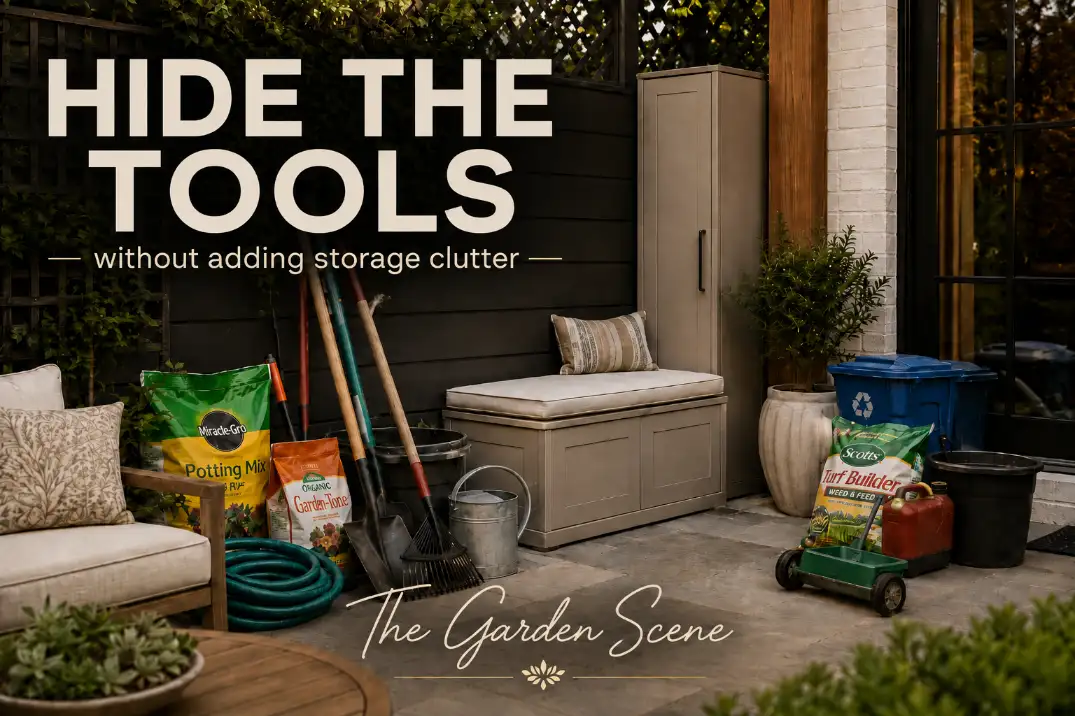
The best way to hide backyard tools and supplies is not to buy the biggest storage box. It is to stop the yard from reading as a storage area.
The problem is usually not just loose objects; it is exposed shapes, bright labels, hose loops, tool handles, and mismatched containers all competing in the same view.
Start with three checks: what is visible from the patio door, what is visible from the main seat, and what is used often enough to stay within 10–20 feet.
If more than 20–25% of a patio edge is occupied by loose supplies or storage pieces, the space will usually still feel cluttered. And if you can see three or more different storage surfaces from one seating position, the storage itself may have become part of the mess.
That is the key difference: a storage shortage means there is nowhere to put things. Visual clutter means the things, or the storage holding them, keep asking to be noticed.
Hide the Worst Shapes First
Backyard clutter rarely looks bad because every item is large. It looks bad because the shapes do not belong together. A rake, hose, bag of soil, spray bottle, cushion stack, and bucket all create different outlines. When they sit in one patio corner, the eye reads them as disorder even if they are technically grouped.
Tall tools need vertical control
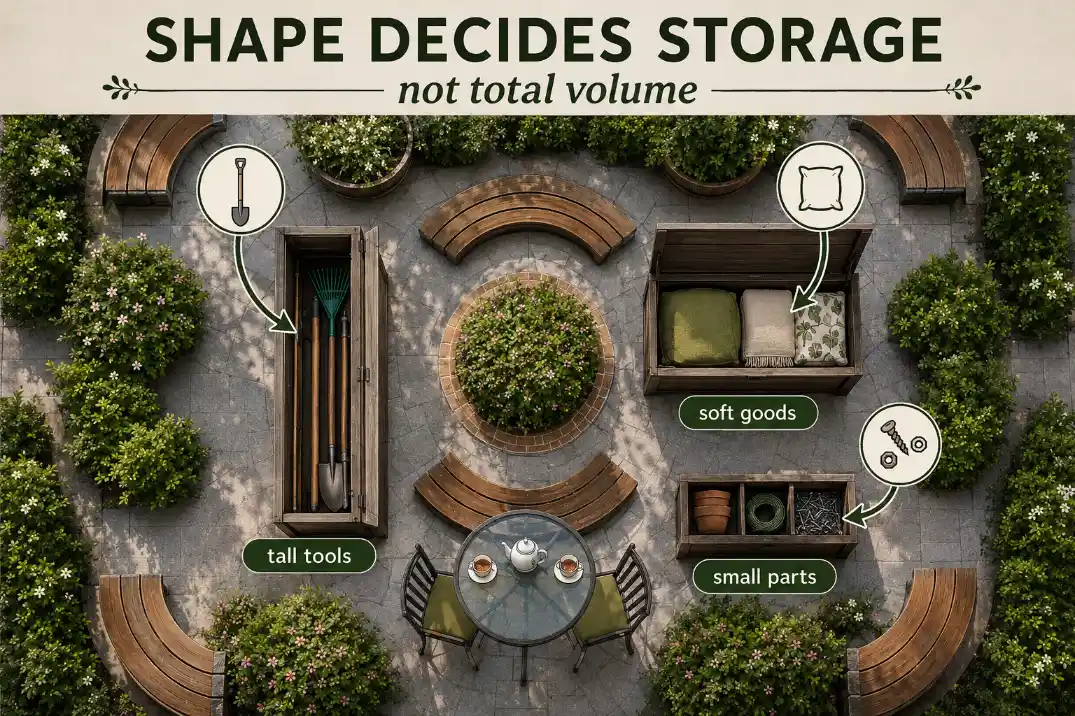
Long-handled tools are usually the first problem to solve because they create the most visible lines. Anything taller than about 36 inches should not be forced into a low deck box unless it breaks down cleanly.
Diagonal handles waste interior space, block lids, and still make the yard look improvised when they are pulled out again.
A slim vertical cabinet, fence-side tool locker, or covered wall organizer usually works better than another bin. The visual goal is simple: turn angled handles into one calm vertical face.
If the clutter is mostly handles rather than cushions, a dedicated cabinet is usually a smarter first purchase. That is where Best Backyard Storage Cabinets and Tool Organizers fits naturally, because the decision is less about total gallons and more about controlling height.
Soft items need dry volume
Cushions, furniture covers, outdoor pillows, kneeling pads, and folded tarps need a different solution. These items do not need vertical storage. They need dry, enclosed volume that is easy to open.
For a small patio, a 70–120 gallon storage bench or deck box can be enough if it is used for soft goods only. Mixing cushions with sharp tools, fertilizer, or dirty gloves is where storage starts to fail. Fabric picks up odor, moisture, and grit faster than people expect.
Small supplies need shallow access
Gloves, clips, hose washers, twine, sprinkler parts, seed packets, and small hand tools should not disappear into a deep box. They need trays, drawers, shelf bins, or divided containers no deeper than about 12–16 inches.
A 30-inch-deep storage box may hold more, but it often makes small supplies harder to find. If opening the box turns into digging, the system will not last through a normal gardening season.
The Wrong Storage Piece Can Become New Clutter
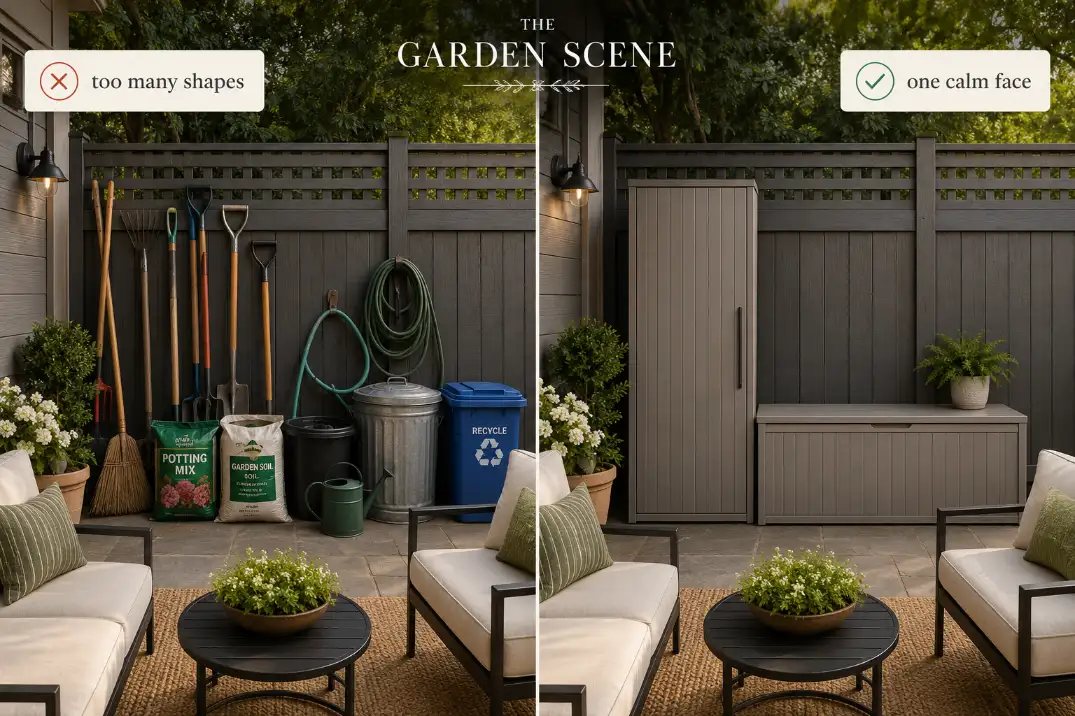
This is the mistake that makes many backyard storage fixes disappointing. A new box can hide tools and still make the patio feel busier. The clutter changes form, but it does not disappear.
Watch the storage surface, not just the storage volume
A deck box, resin cabinet, hose reel, plastic tote, outdoor shelf, and storage bench may all be useful individually. Together, they can create a patchwork of lids, handles, colors, and seams. From the main seating area, that patchwork reads as visual noise.
One large calm surface usually looks better than three smaller mismatched ones. But oversized storage has its own limit. On patios under about 120 square feet, a bulky box along the edge can start acting like a low wall. It may hide supplies, but it also makes the seating zone feel tighter.
The visible symptom is mess; the mechanism is contrast
The obvious symptom is clutter. The underlying mechanism is contrast: orange handles, green hoses, white buckets, blue tarps, printed soil bags, black bins, gray lids. Even when these items are lined up neatly, they still pull attention.
That is why color control matters. A fence-matched cabinet, a storage bench that relates to the seating, or a screened side-yard corner can do more visually than a bigger container in a random finish.
Pro Tip: If the area still looks cluttered after everything is stored, remove visible labels, bright lids, and mismatched containers before buying another storage piece.
Use Sightlines Before You Choose a Spot
The most empty corner is not always the best storage corner. The best hiding spot is the one that removes the most visual interruption from the places people actually look.
Check the three main views
Stand at the patio door, the main outdoor seat, and the kitchen window. If one storage position hides clutter from two of those views, it is usually better than a farther corner that only looks empty on a plan.
Daily-use tools should usually stay within 10–20 feet of where they are used. Seasonal or backup supplies can move 30–60 feet away, especially to a side yard, shed, garage wall, or service zone.
This is where people often overestimate the need for patio storage and underestimate the value of moving low-use items away.
If storage is already stealing walking room, the better move may not be another container. It may be relocating items off the patio, which is the same pressure point covered in How to Store Items Off the Patio and Free Up Space.
Keep movement clear
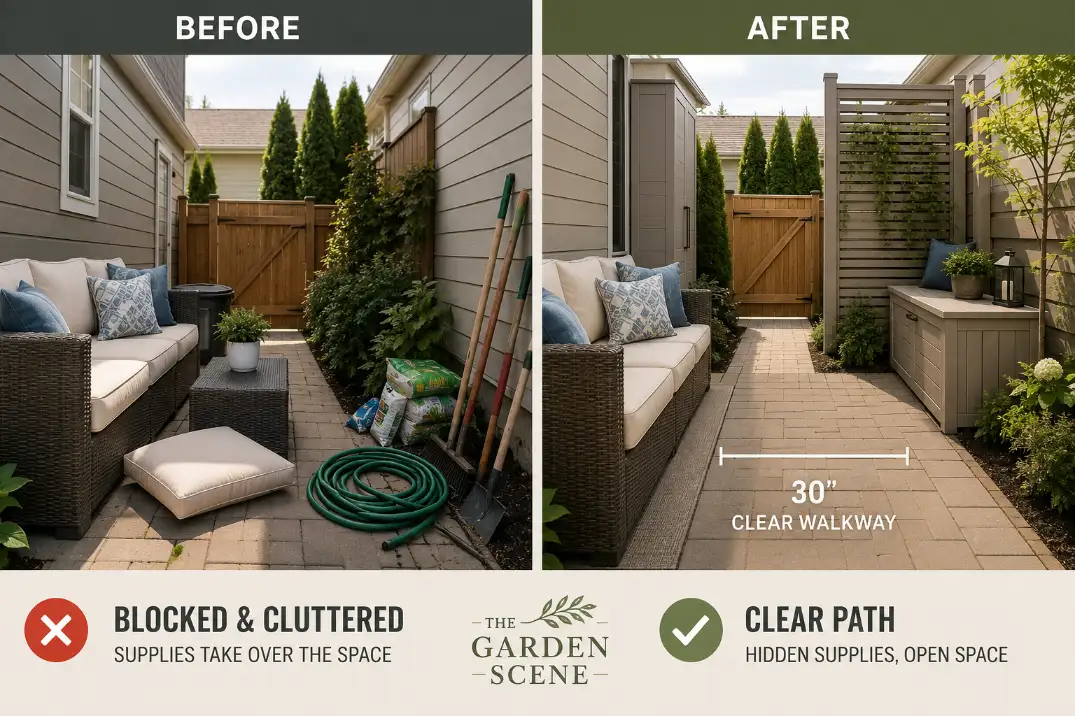
Leave at least 30 inches of clear walking space past storage benches, deck boxes, cabinets, and hose stations. Below that, the area may look tidy in a photo but feel irritating in use.
Storage should not require moving a chair, stepping over a hose, or lifting cushions every time you need gloves. If the fix makes daily use harder, loose clutter will return.
Match the Storage Type to the Clutter Pattern
The cleanest solution is usually a combination of two or three storage types, not one giant container. Each category should have the least visible form that still keeps it easy to use.
| Clutter pattern | Better storage choice | Why it works | Avoid this mistake |
|---|---|---|---|
| Long tools leaning on fence | Slim vertical cabinet or covered rack | Turns exposed handles into one flat face | Open rack in main sightline |
| Cushions and covers | Storage bench or deck box | Hides soft volume near seating | Mixing fabric with dirty tools |
| Hose loops and watering gear | Hose reel box or screened hook | Controls loops and shadows | Loose hose piled beside a bin |
| Soil, fertilizer, and bags | Lidded cabinet or side-yard bin | Hides printed packaging | Storing bags beside seating |
| Small parts and hand tools | Shallow trays or shelf bins | Prevents buried supplies | Deep box with no dividers |
| Rare seasonal items | Shed, garage, or side-yard shelf | Removes low-use objects from patio | Using premium patio space |
When a deck box is the wrong answer
A deck box is useful, but it is not a universal fix. It is weak for tall tools, wet tools, sharp tools, and small supplies that need sorting.
It also stops making sense when you need to open it more than 3–4 times during a normal outdoor task. If watering, trimming, grilling, and cleaning all require digging through the same box, the storage is hiding clutter at the cost of daily friction.
For soft goods, though, a storage bench can be one of the cleanest choices because it reads as furniture instead of equipment.
If the patio needs both seating and hidden cushion volume, Best Outdoor Storage Benches and Deck Boxes for Small Patios is the more relevant next step than another general tool organizer.
What Still Looks Cluttered After You Hide It
Some yards still look busy even after the tools are put away. That usually means the storage is technically working but visually failing.
Too many finishes
A black deck box, brown resin cabinet, gray tote, metal shelf, and wood screen can make a small backyard look pieced together. Choose one dominant visual language. Wood-tone, fence-matched, black metal, resin wicker, or painted cabinet can all work. The issue is not which one is best. The issue is mixing too many.
Open racks in the wrong place
Open racks are useful inside a shed, garage, or side-yard service area. They are less successful in the main patio view because they still show handles, hooks, shelves, and gaps. They organize the clutter but do not visually hide it.
Bright bags and product labels
Soil bags, fertilizer bags, pool chemical containers, and plant food bottles create strong label noise. Even one or two can pull the eye away from a seating area. These belong inside a lidded cabinet or behind a screen, not lined up neatly beside furniture.
This is also where storage mistakes start affecting the whole patio flow. Backyard Storage Mistakes That Disrupt Patio Flow goes deeper into the point where organization starts blocking movement or making the patio feel narrower.
Adjust the Plan for Climate
Outdoor storage has to hide supplies without trapping the conditions that damage them. This matters across the US because the same storage piece can behave differently in Florida humidity, Arizona sun, Midwest rain, or northern freeze-thaw cycles.
| Condition | What changes | Better choice |
|---|---|---|
| Humid or coastal areas | Trapped moisture can cause mildew, odor, and rust | Ventilated cabinet, raised box, airflow gap |
| Hot dry climates | Plastic can fade, warp, or become brittle under strong UV | UV-resistant resin, shaded placement, lighter heat exposure |
| Freezing winters | Lids and doors can stick; snow can block access | Raised cabinet, front clearance, simple door swing |
| Rain-heavy regions | Splashback and wet bases shorten storage life | Sloped lid, off-ground base, drainage gap |
| Windy open yards | Lightweight lids and covers can shift | Heavier storage, latchable doors, sheltered placement |
Let wet tools dry before they disappear
Do not seal wet tools, gloves, or hose parts immediately in a closed box. In mild dry weather, a few hours of surface drying may be enough. In humid conditions, overnight drying can be safer.
If tools are enclosed wet for more than 24 hours, rust, odor, or mildew becomes much more likely.
This is a good example of where the routine fix stops making sense. Hiding everything instantly may improve the view, but it can shorten the life of the tools.
A Short Buying Check Before You Add Storage
Use this before buying another cabinet, bench, rack, or bin:
- Is the main clutter tall, soft, small, dirty, or seasonal?
- Will the storage hide the item from the main seat or patio door?
- Does it preserve at least 30 inches of walking clearance?
- Can weekly-use items stay within 10–20 feet?
- Will wet tools have airflow before being enclosed?
- Does the finish match at least one existing outdoor element?
- Will this reduce visible shapes, or just add another storage object?
If the answer to the last question is weak, the storage piece may become part of the visual clutter.
What Usually Wastes Time
The weakest fix is rearranging loose items more neatly along a fence. It may look better for a day, but the exposed handles, hose loops, bags, buckets, and labels are still visible.
The same is true of decorative baskets used for the wrong items. A basket can soften small accessories, but it does not solve tall tools, wet supplies, or bulky bags.
Another common waste is buying one oversized container before separating use frequency. Large boxes attract unrelated items.
Within a month or two, the box becomes a mixed archive of gloves, faded cushions, broken nozzles, plant food, toys, and half-used bags. The yard may look cleaner briefly, but the system becomes harder to use.
Remove low-use items first
Anything used less than once per month should not occupy the most visible patio storage unless it is weather-sensitive and has no other home.
Contain the loudest shapes next
Long handles, hose loops, bright bags, and stacked buckets create more visual disruption than small neutral items. Solve those before fine-tuning decorative storage.
Make storage look intentional
A bench reads as furniture. A fence-matched cabinet reads as part of the edge. A random bin reads as storage. That difference matters because the goal is not only to hide supplies. It is to keep the backyard from feeling like a utility zone.
If the yard still feels smaller after the tools are technically organized, the issue may be visual interruption rather than storage volume. Why Backyard Clutter Makes Outdoor Spaces Feel Smaller explains that effect more directly.
Questions People Usually Ask
Should backyard storage be waterproof or weather-resistant?
For cushions and fabric, look for strong weather resistance, lid overlap, and an off-ground base. For tools, ventilation can matter more than total sealing because trapped moisture encourages rust.
Is it better to hide tools near the patio or in a shed?
Weekly-use tools should stay close but not exposed. Tools used only occasionally can move to a shed, garage wall, or side-yard cabinet. If a tool is used every 2–3 days during the growing season, inconvenient storage usually means it will end up leaning against the fence again.
Can plants hide backyard supplies?
Plants can soften a storage zone, but they rarely solve the problem alone. They work best as a screen in front of a cabinet, hose reel, or service corner. Plants alone do not hide tall handles, bright bags, or awkward equipment cleanly.
The Cleanest Storage Stops Asking for Attention
A cleaner backyard does not always need more storage. It needs fewer exposed shapes, calmer surfaces, and better placement.
Put tall tools in vertical storage. Put cushions in dry volume. Put small parts in shallow control. Move seasonal and dirty supplies away from the seating zone. Then make the storage match the yard instead of competing with it.
The cleanest backyard is not the one with the most containers. It is the one where the storage stops asking to be noticed.
For broader official guidance on safe pesticide storage around the home, see the U.S. Environmental Protection Agency.