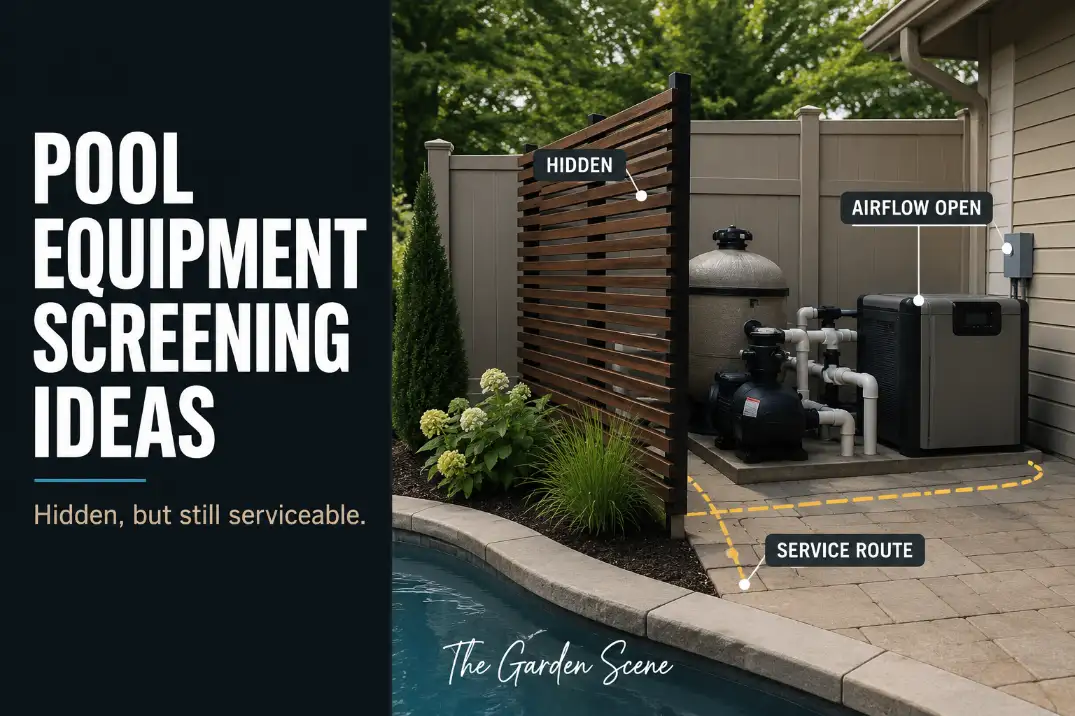
The best pool equipment screening ideas hide the most visible parts without turning the pump, filter, and heater into a boxed-in maintenance problem. Start with three checks: where the equipment is seen from, where the pump and filter are serviced, and how air and water move around the pad.
A clear working lane of about 36 inches in front of the main access side is a strong target, especially if the filter needs room to open or lift out. This is different from normal backyard privacy screening.
Pool equipment runs hot, needs inspection, and has controls that must stay reachable even after the screen looks finished.
The Pool Equipment Corner
A pool equipment corner usually looks messy because several functional parts are packed into one exposed area: pump, filter, heater, valves, pipes, conduit, chlorinator, automation box, and sometimes a backwash route.
The screen should simplify the view from the patio or pool deck without pretending those parts can disappear.
Screen the View That Actually Matters
The first decision is not “how do I hide everything?” It is “which view is actually bothering me?” Stand at the patio, pool lounge area, back door, and main window. In many yards, only one or two angles expose the equipment.
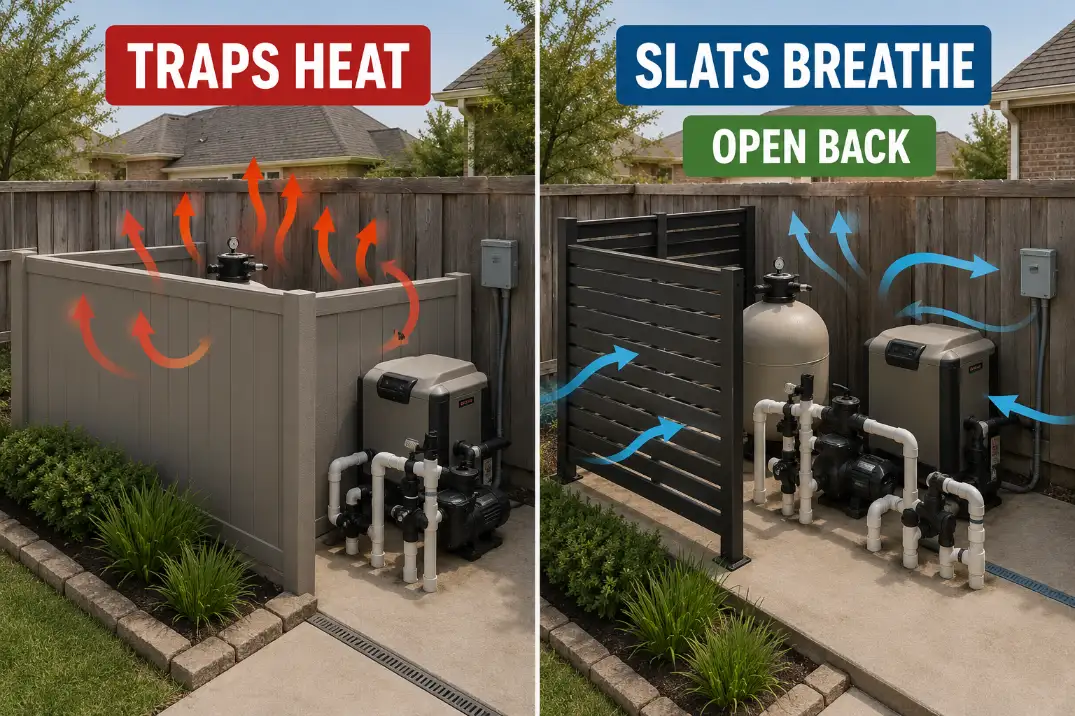
That means a partial L-shaped screen, a slatted panel, or one planting layer may do more useful work than a large enclosure.
This is where many pool equipment screens go wrong. They are built around the equipment instead of around the view. A better screen interrupts the line of sight from the living area while leaving the working side open.
Find the Working Side First
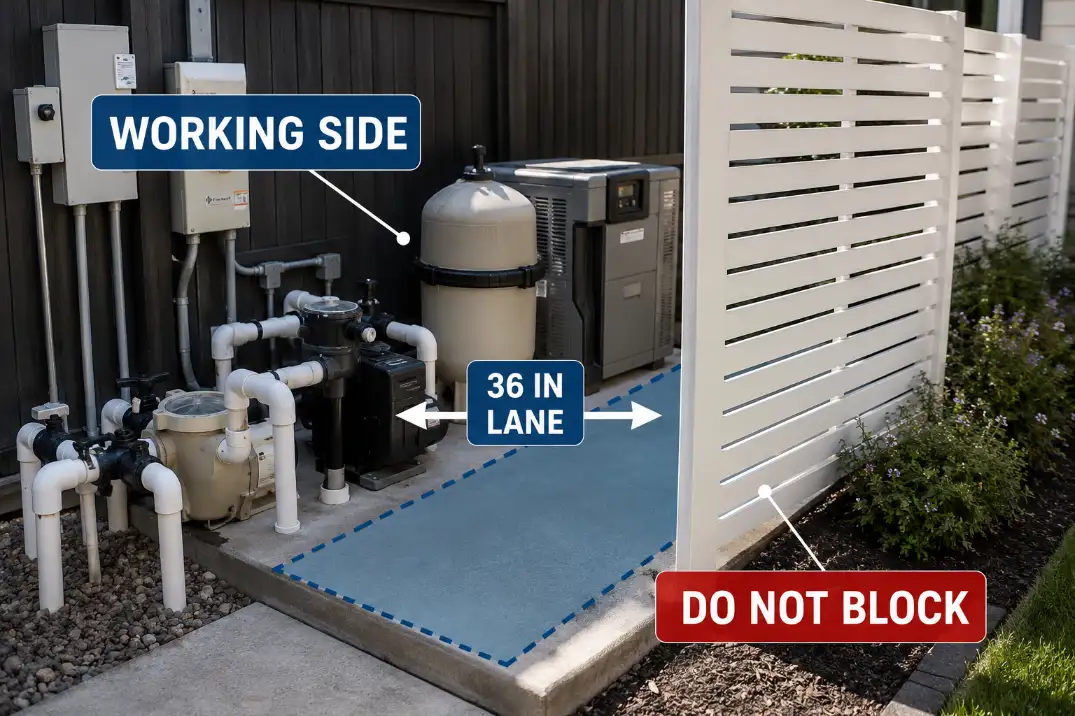
The working side is where the pump basket opens, the filter is cleaned, the valves are adjusted, and the heater or automation controls are read. That side matters more than the side that looks most visible from the yard.
If a panel hides the equipment but blocks the pump lid, filter band clamp, drain plug, union fittings, or electrical disconnect, the screen is misplaced.
This same access-first logic applies to other outdoor service zones too; Outdoor Utility Zone Ideas is useful if the equipment corner shares space with bins, gates, hoses, or storage.
Access Comes Before Screening
The screen should make the equipment less visible, not less usable. If a technician has to remove plants, unscrew panels, step over pipes, or work sideways between the heater and a fence, the design is too tight.
Keep the Clear Lane Honest
A 36-inch clear lane in front of the main access side is a strong target. About 30 inches may still work in a tight side yard if the gate opens fully and the filter can be removed.
Below 24 inches, routine service usually becomes cramped, especially when a cartridge filter has to lift upward or a larger filter housing needs room to open.
This is the tradeoff homeowners often misjudge. Hiding the equipment feels like the win on day one. Being able to clean, inspect, and repair it quickly is what decides whether the screen still feels smart two seasons later.
Use Hinged Access for Frequent Tasks
Removable panels are useful for occasional major service. They are not ideal for tasks that happen often. If the pump basket needs checking once a week in summer, daily-use access should be a hinged gate, open side, or walk-in lane, not a panel that has to be lifted out and leaned against the fence.
Pro Tip: Put the latch where a person naturally arrives from the path. A hidden latch behind shrubs looks clean but gets annoying quickly.
Keep Controls Easy to Find
The electrical disconnect, timer, automation box, valve labels, and heater display should stay visible or immediately reachable.
In humid climates like Florida, fast-growing planting can cover labels and controls in a single season. In dry regions like Arizona, dust and heat make quick inspection just as important. A finished equipment corner should not require a search before someone can turn something off.
Best Pool Equipment Screening Ideas by Situation
The right idea depends on what sits behind the screen. A pump and filter mainly need hand access and ventilation. A gas heater adds exhaust and combustion-air concerns.
A heat pump needs space for intake and discharge air. Treating every setup the same is how attractive screens become maintenance problems.
| Situation | Best screening idea | Why it works | Avoid |
|---|---|---|---|
| Equipment visible from patio | Slatted L-shaped screen | Blocks the main living-area view while leaving the back open | Four-sided solid enclosure |
| Tight side yard equipment pad | Hinged service gate | Keeps access possible in a narrow lane | Fixed panel in front of pump lid |
| Heater included | Open-back breathable screen | Reduces visibility without crowding heat or exhaust | Roofed mini-shed or tight box |
| Room for planting | Offset shrub or grass layer | Softens the view without crowding valves | Dense hedge against pipes |
| Pool area feels exposed too | Separate privacy screen near seating | Solves comfort without choking equipment | One wall trying to solve every problem |
| Noise is the main complaint | Proper noise barrier placed with clearance | Treats sound direction and reflection | Thin lattice used as sound control |
The strongest option is usually partial, breathable, and placed farther out than the first instinct suggests.
Airflow Around the Equipment
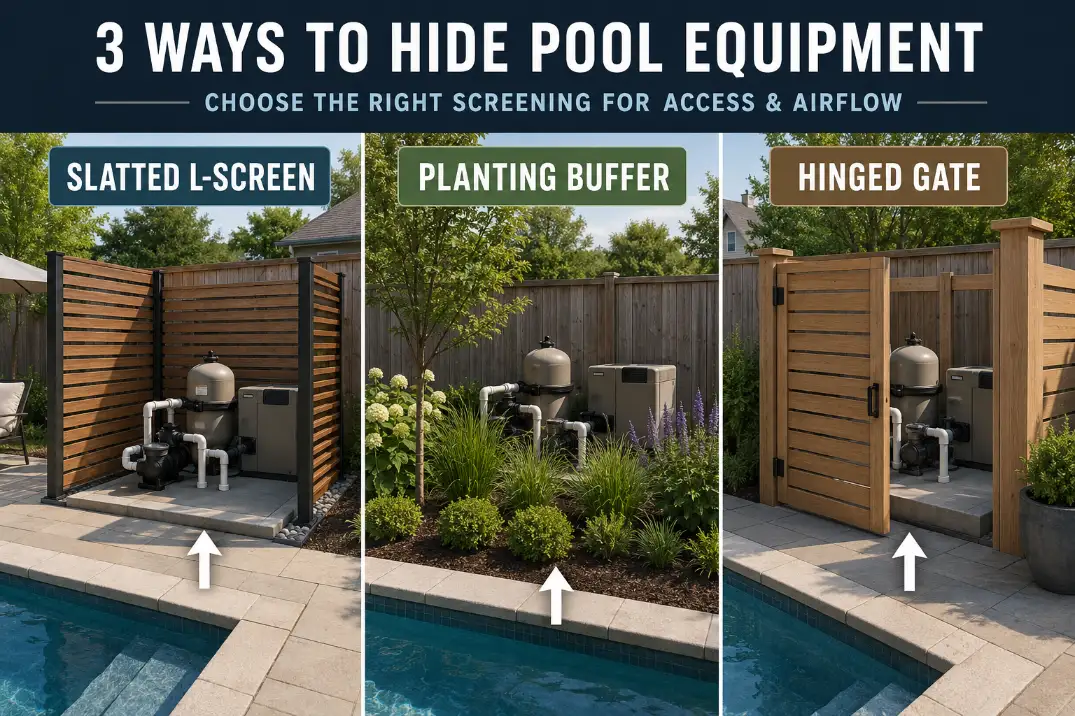
Airflow is where many attractive screens fail. The equipment may still run, but the corner becomes hotter, tighter, and harder on mechanical parts.
Let the Screen Breathe
Slatted wood, spaced composite boards, open-pattern metal panels, and offset lattice can all work when they are not pressed directly against the equipment.
A practical target is at least 12 to 24 inches of open space between a breathable screen and the equipment where the yard allows it. More space is better around heaters and heat pumps.
If the screened corner feels noticeably warmer than the open yard after the pump has been running for 30 minutes, treat that as a warning sign. A pocket that feels about 10°F hotter than nearby air on a still afternoon may not be getting enough air movement.
Separate Pump, Heater, and Heat Pump Needs
A pump and filter need room for cleaning, lid removal, and air circulation. A gas heater adds clearance concerns around exhaust and combustion air. A heat pump depends on open intake and discharge space. These are not cosmetic details; they decide where a screen can safely sit.
Manufacturer clearance instructions should override the landscape plan every time. If the manual requires more open space than the design allows, move the screen.
The same mistake appears around AC condensers, where a screen may look finished but block breathing room; Side Yard AC Screening Without Blocking Airflow explains that problem in a closely related outdoor equipment setting.
Planting That Softens the View
Planting works best as a softening layer, not as the main barrier. Around pool equipment, plants have to be chosen and placed carefully because leaves, flowers, seed heads, and overgrowth can affect maintenance.
Plant Outside the Work Zone
A planting strip 3 to 5 feet away from the access side is usually more practical than shrubs pressed against the pad. That distance gives the plant room to mature while keeping valves, lids, unions, and controls reachable.
The common mistake is planting small nursery shrubs too close because the equipment looks exposed on day one. Two seasons later, those same shrubs may cover pipes, scratch panels, or require constant pruning.
Use Plants to Break the Eye
One upright shrub, one grass clump, or one tall planter placed on the main view can hide more than a dense hedge in the wrong place. The goal is not to erase the equipment from every angle. It is to stop the eye from landing directly on pipes and machinery when someone looks across the pool area.
Avoid plants that drop heavy litter into the pool system. If debris turns pump basket cleaning from a weekly task into something needed every 2 or 3 days, the planting is creating work instead of solving the view problem.
Screens That Do Not Trap Heat
A screen can be solid, slatted, planted, or mixed, but it must not turn the equipment corner into a stagnant heat pocket. This is where the material choice and the open side matter more than the finished look.
Use Solid Panels Carefully
Solid panels can work from one side if the other sides remain open and the panel sits far enough away. They become more risky when used on multiple sides or when placed close to a heater or heat pump. A solid screen may look premium, but it gives air fewer ways to move.
In tight yards, slatted panels usually offer a better balance. They reduce the visual clutter, allow some air movement, and still feel intentional if the spacing is consistent.
Do Not Treat Noise Like a Visual Problem
If noise is the real complaint, a light decorative screen is usually the wrong fix. Visual screening and sound control are different jobs. A thin lattice or open slat panel may hide pipes, but it will not perform like a proper mass barrier.
For that separate issue, Pool Pump Noise Screening is the better supporting guide.
Hidden but Still Serviceable
A finished pool equipment corner should look calm from the yard and feel easy to maintain. If it looks beautiful but makes every service task awkward, the screen is not finished — it is misplaced.
Build Three Clear Zones
Think of the layout in three zones: the equipment pad, the clear work lane, and the visual screen. The pad stays clean. The lane stays open. The screen sits outside the working area and blocks the view that matters most.
Drainage should also stay visible. A slight slope away from the pad, often around 1/8 inch per foot, helps prevent water from sitting near equipment after rain, cleaning, or backwash.
If water remains around the pad for more than 24 hours after ordinary rainfall, screening should wait until the drainage problem is corrected. Hiding wet ground does not make the equipment corner healthier.
It just makes the warning sign easier to miss. If the pool area already has water movement problems, Pool and Hot Tub Drainage Design Mistakes fits that issue better than adding a decorative screen first.
When Screening Should Wait
Do not install a permanent screen yet if heater clearances are unknown, the access lane is under 24 inches, the electrical disconnect is hidden, the pad stays wet, or there are active leaks around pipes and unions. Those are not visual problems. They are layout and maintenance problems.
This is the routine-fix boundary: once screening starts covering access, airflow, drainage, or safety controls, it stops being an upgrade. Move the screen farther out, use a lighter partial panel, or solve the equipment layout first.
Keep Pool Privacy Separate
Sometimes the real issue is not that the equipment looks bad. It is that the whole pool or hot tub area feels exposed. In that case, do not force one wall to solve both problems.
Equipment screening needs air and access. Seating privacy needs comfort and sightline control. For the privacy side of that problem, Pool and Hot Tub Exposed Privacy Fixes is the more relevant direction.
Quick Serviceability Checklist
Use this before building or planting around pool equipment:
- Can the pump lid, filter, valves, controls, and disconnect be reached without moving the screen?
- Is there about 30 to 36 inches of working room at the main access side?
- Does the layout avoid dropping below 24 inches at any routine service point?
- Can air move around pumps, heaters, and heat pumps instead of collecting in a pocket?
- Are plants far enough away that mature growth will not cover pipes or controls?
- Does water drain away from the equipment pad within 24 hours after normal rain?
- Would weekly maintenance still feel easy after the screen is installed?
Questions People Usually Ask
Is it better to use plants or panels to hide pool equipment?
Use panels when you need a clean, predictable screen from one main view. Use plants when you have enough room to soften the view without crowding valves or controls. In many yards, the best answer is a slatted panel with planting placed outside the work zone.
Can lattice be used for pool equipment screening?
Yes, if it is offset from the equipment and leaves enough airflow. Lattice is better for softening the view than for full concealment or noise control.
Should a pool heater be screened?
A pool heater can be screened only if required clearances, exhaust, combustion air, and service access remain open. If the screen crowds the heater, the layout is wrong.
For broader official safety guidance on servicing pool chemical and recirculation systems with adequate ventilation, see CDC Healthy Swimming.