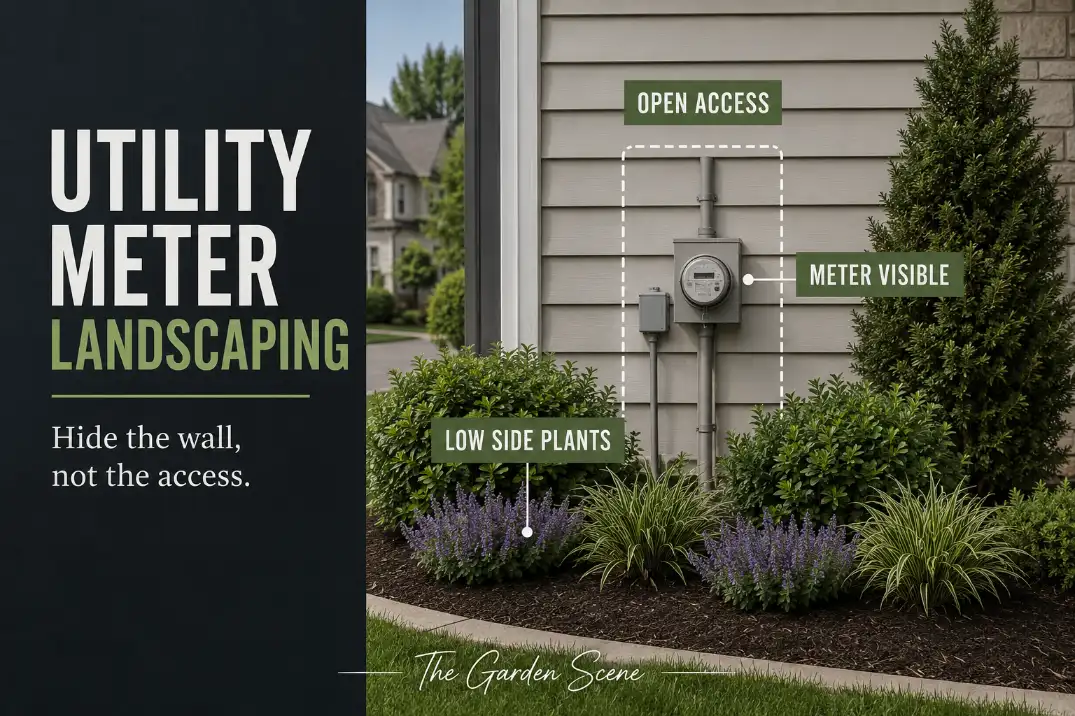
The safest way to landscape around a utility meter is to keep the front access open, place low plants to the side, avoid vines and thorny shrubs, and follow the local utility’s clearance rule before planting.
A 30–36 inch open approach zone is a useful landscape planning minimum, but some utilities require more room, especially around gas meters, electric meters, and ground-mounted service equipment.
This problem is different from hiding trash bins, hose reels, or a blank foundation wall. A meter is working equipment. If the face cannot be read from several feet away, or if a technician has to lean over plants to reach it, the planting is already doing too much.
The goal is not to make the meter disappear. The goal is to make the wall look intentional while keeping the equipment boring, visible, and reachable.
The Meter Must Stay Reachable
Treat the meter side as a service zone first
The meter side of the planting bed should be treated as a service zone first and a landscape bed second. That does not mean the area has to look bare. It means the open standing space, readable face, and safe approach route control every plant and material choice around it.
Start with the utility rule, then design the bed around it. If your utility requires a wider front clearance, side clearance, or open work area than your planting plan allows, the utility rule wins. Pretty landscaping does not matter if it blocks required access.
This is especially important when the meter sits in a working side yard with bins, hoses, gates, or storage. In that kind of tight space, the same logic used in Outdoor Utility Zone Ideas applies: every service item needs a reachable side, not just a place to sit.
Reading access and repair access are different
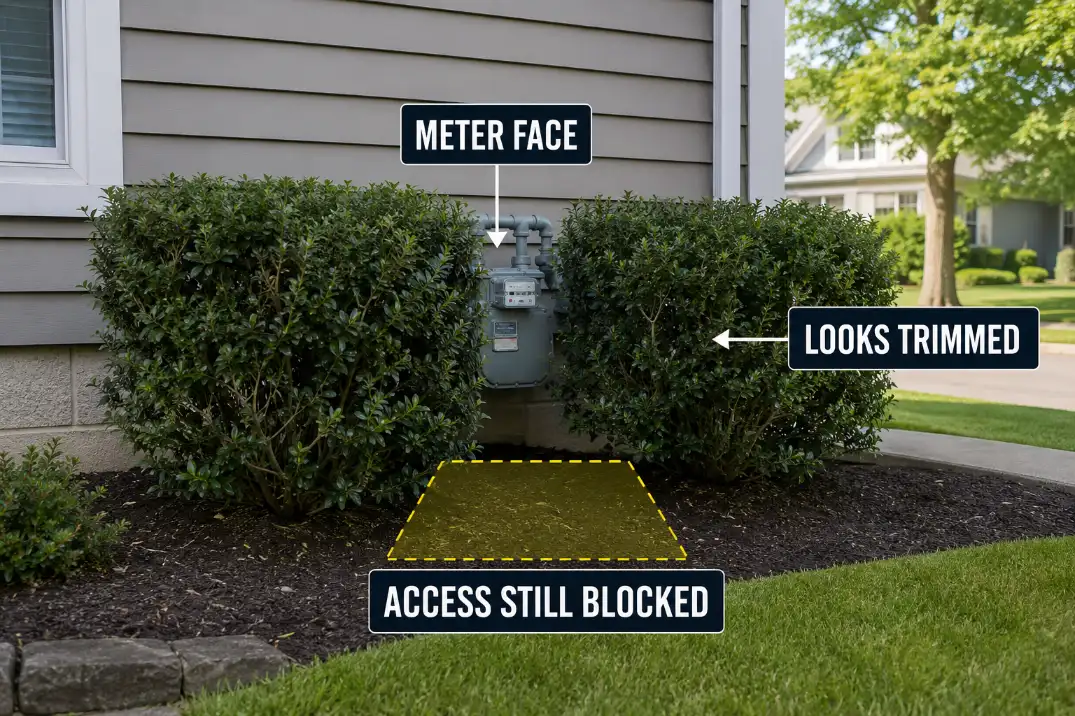
A meter can be readable and still be poorly accessible. Reading usually requires a clear view of the face. Service may require someone to open a panel, check connections, kneel, bend, or work with both hands. A shrub that sits just below the meter can still be wrong if it fills the standing area.
Use a posture test, not only a visibility test. If the meter can be seen from about 6 feet away and reached without stepping into plants, the layout is usually working. If someone has to push branches aside, stand sideways, or reach over a shrub wider than 18–24 inches, the plant is controlling the service zone.
Gas, electric, and ground equipment vary
House-mounted gas meters, electric meters, and ground-mounted service equipment may have different clearance requirements. Gas equipment can need clear access for inspection, emergency shutoff, snow, and ice.
Electric meters need a readable face and safe working area. Ground-mounted utility boxes or transformers may require larger open space around more than one side.
That is why spacing numbers in a landscape plan should be treated as starting points, not final permission. The better design choice is simple: keep the equipment side open, then soften the surrounding wall or bed from the side.
Plants That Grow Too Close
Mature width matters more than nursery size
The most common mistake is not planting something obviously huge. It is planting something that looks harmless in a small nursery pot and ignoring its mature width. A 1-gallon shrub may look tiny beside a house wall, but many common foundation shrubs can double or triple their footprint within 2–3 growing seasons.
If the mature width reaches into the 30–36 inch approach zone, the plant is too close even if it looks fine today. A shrub that matures at 3 feet wide does not belong 8 inches from the meter access path. The plant is not failing; the layout gave it space that should have stayed open.
In front yards with several fixed objects, this same problem shows up around mailboxes, utility boxes, and mowing strips.
The more service items a yard has, the more important the access logic becomes, which is also the core problem in Front Yard Maintenance Around Mailboxes, Utility Boxes, and Lawn Layout.
Frequent pruning is a warning sign
Trimming is useful for seasonal touch-up. It is not a real access plan when the plant’s natural shape keeps pushing back into the meter zone.
If you have to cut the same shrub every 4–6 weeks during the growing season just to keep the meter visible, the plant is probably the wrong size or in the wrong place.
The fix that often wastes time is repeated hard pruning. It may clear the meter for a few weeks, but it usually leaves a boxy, stressed-looking shrub and a maintenance habit that never ends.
Removing one oversized plant often improves the area more than trying to sculpt it forever.
| Planting choice | What goes wrong | Better use near meters |
|---|---|---|
| Fast-growing shrubs | Fill the access zone in 1–2 seasons | Use farther from the meter, not in front of it |
| Thorny plants | Make reading and service uncomfortable | Keep away from all utility equipment |
| Vines on walls | Hide labels, panels, and meter edges | Use only on separate trellis areas |
| Tall grasses | Flop across the meter late in the season | Use compact varieties off to the side |
| Low clumping plants | Stay easier to control below the face | Use as the safest softening layer |
Low Screening Near the Wall
Screen the wall, not the meter
Low screening works best when it improves the wall around the meter without covering the equipment itself. Think of the planting as a frame, not a curtain. The best plants sit below the meter face, stay narrow enough to leave the front open, and make the equipment feel less visually isolated.
A clean 6–12 inch mulch or gravel strip directly under and around the meter can help. It keeps stems from crowding the base, makes the no-plant area visual and intentional, and gives the equipment a small maintenance buffer.
In humid regions, this open strip also helps avoid constant damp contact around the wall and meter area.
Pro Tip: Use the mature size on the plant tag, not the nursery size, when deciding how close anything should sit to a meter.
Side placement is safer than front placement
If you want screening, place the strongest plant mass to the side of the meter rather than directly in front of it. A compact shrub, low evergreen, or clumping perennial group can interrupt the view from the street without interrupting the worker’s route.
This approach is especially useful when the meter sits near a walkway, driveway, or front corner. The goal is not to hide every inch of equipment. The goal is to make the bed feel designed enough that the meter no longer dominates the wall.
For front yards with multiple fixed service objects, the same restraint matters around utility boxes, hydrants, and signs.
A layout that respects equipment access will usually age better than one that hides everything on installation day, which is a key issue in Front Yard Design Around Utility Boxes in the Yard.
Clear Space for Reading and Service
Use the stricter rule when spacing conflicts
A homeowner-friendly rule of thumb is useful, but utility clearance is not a design preference. This is where many attractive meter beds fail: they are designed from the street view first and from the service route last.
Start with the open route. Then place the plants. Do not reverse that order.
A practical access checklist:
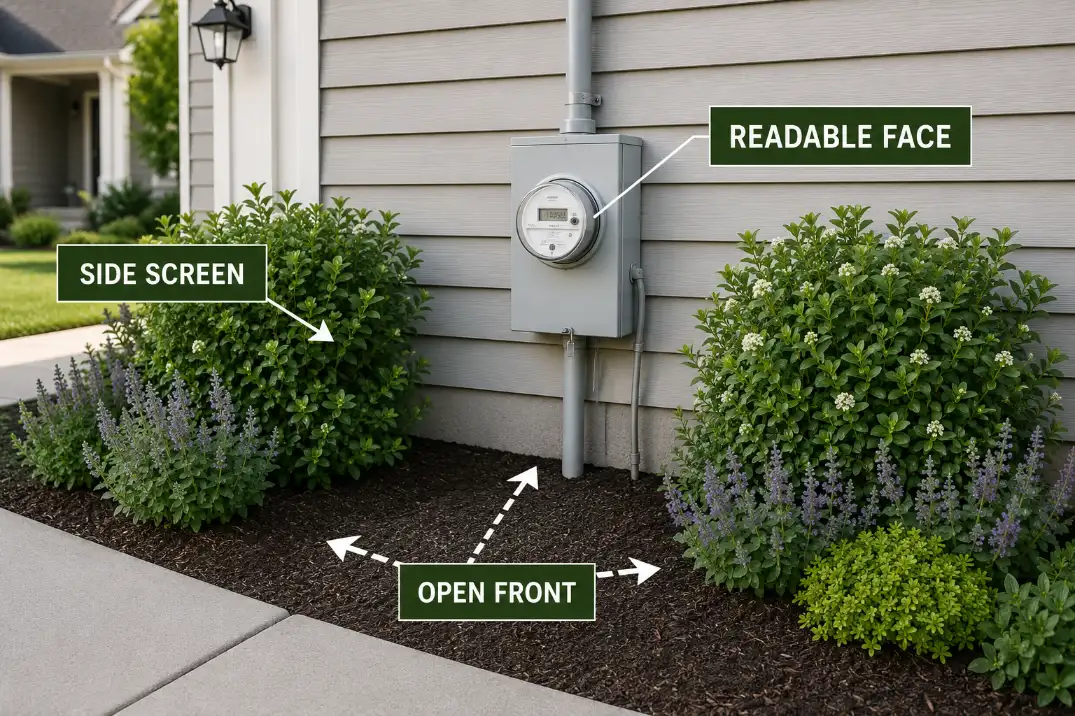
- Keep roughly 30–36 inches of open approach space unless your utility requires more.
- Keep the meter face visible from about 6 feet away.
- Keep mature plant width out of the standing zone.
- Avoid thorny, stiff, or sharp-edged plants near the access side.
- Avoid boulders, raised edging, heavy pots, or fixed decor in the work area.
- Recheck the meter after spring growth and again near late summer fullness.
This checklist is more useful than asking whether the planting is “low maintenance.” A low-maintenance shrub can still be wrong if it matures into the access route.
Narrow spaces need cleaner choices
Small side yards and tight setbacks leave less room for forgiveness. A 24 inch planting strip beside a walkway cannot hold the same plant volume as a 5 foot foundation bed.
If the meter shares space with a gate, hose bib, AC unit, or side-yard path, the walking and service route has to be protected first.
That is why a narrow utility area should be planned from the movement path outward. The same principle appears in Side Yard Utility Corridor Ideas: the corridor fails when storage, planting, and service access all compete for the same strip of ground.
A simple threshold helps: if a person carrying a tool bag, clipboard, or small service part cannot walk to the meter without brushing plants, the landscaping is too tight. It may look finished, but it is already harder to use than it should be.
Avoiding the Overgrown Look
Visual clutter is different from true blockage
An overgrown meter area is not always neglected. Sometimes the plants are trimmed, watered, and cared for, but the bed still looks messy because too many materials are competing around a service object.
Tall shrubs, grasses, annual color, edging stones, wall decor, and a meter can make one small wall feel crowded.
That is why subtraction often works better than another plant. A tidy meter bed usually needs one calm ground treatment, one low plant layer, and one protected access zone.
More layers do not hide the meter better; they often make the equipment area look busier.
Homeowners commonly overestimate how much height is needed to soften a meter. In many cases, 12–24 inch planting is enough to make the wall look intentional.
They underestimate how quickly a 30–36 inch shrub can turn from soft screening into a visual block once it reaches full width.
Crowding spreads into nearby routes
Meter planting can also make nearby walkways, side paths, and patio edges feel tighter. When plants push into a route, the problem stops being cosmetic. The yard begins to lose usable width.
This is the same pattern covered in Backyard Plants Crowding Paths and Seating: the planting may look healthy, but it starts to steal access.
Around a utility meter, that access matters even more because someone else may need to reach the equipment safely.
Pro Tip: If the meter area still looks messy right after trimming, the problem is usually plant selection, spacing, or material clutter—not trimming quality.
Tidy Without Hiding Too Much
The best meter layout stays boring
The most successful utility-meter landscaping does not make the equipment dramatic. It makes it boring. The wall looks organized, the planting bed has shape, and the meter remains easy to find.
That is a better goal than trying to erase the meter behind shrubs or a screen.
Use low clumping perennials, compact evergreens, mulch, gravel, or a clean planting edge to reduce visual clutter. Keep the tallest plant mass off to one side.
Keep vines off the meter wall. Keep fencing, lattice, and decorative panels far enough away that the meter can still be reached without moving anything.
A small removable planter can work if it is genuinely lightweight and never becomes the main access blocker. A heavy ceramic pot, raised planter box, or fixed screen is different.
Once something has to be dragged out of the way for reading or repair, it is no longer landscaping around the meter. It is an obstacle.
Know when trimming stops making sense
The standard fix is trimming plants lower and opening the face again. That is fine for seasonal growth.
It stops working when the plant grows back into the meter zone before the next normal maintenance cycle, when the woody base sits in the access path, or when the bed still blocks the standing area after pruning.
A healthier layout stays readable after 8–12 weeks of normal growth. A failing one looks blocked again within a month. When that happens, reset the layout instead of repeating the same cutback.
Remove the plant directly in front of the meter. Shift screening to the side. Keep the front open. Use lower plant material that stays below the face and below the hands-on service area. The final rule is simple: landscape around the meter, not over it.
Questions People Usually Ask
How much clearance should I leave around a utility meter?
A good landscape planning minimum is about 30–36 inches of open approach space, but your utility may require more. Always use the stricter local utility rule if it differs from a general yard-design guideline.
Can I completely hide a utility meter with landscaping?
No. You can soften the wall around it, but the meter should not disappear behind shrubs, vines, fencing, or heavy containers. If a reader or technician has to search for it or move something to reach it, the design has gone too far.
Is a small fence or screen better than plants?
A small screen can look cleaner than shrubs, but only if it leaves the working side open. Fixed panels that block access are usually worse than plants because they cannot be trimmed back quickly.
How often should I check meter landscaping?
Check it at least twice a year: once after the main spring growth period and once near late summer or early fall. Fast-growing plants may need a 6–8 week check during peak growth.
Before digging near meter-side beds or underground service lines, confirm safe planting and excavation with the national 811 service.