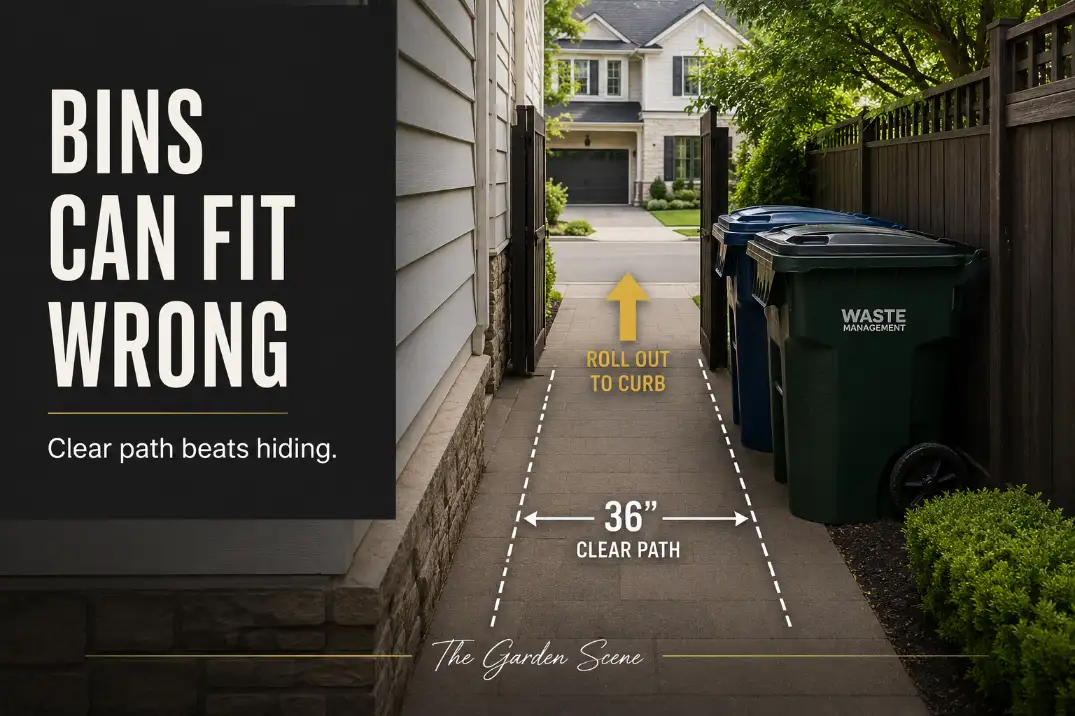
The best place to put trash bins in a narrow side yard is usually near the gate, off the walking route, and out of the gate’s swing path.
A good default is a gate-side bin bay that still protects a 32–36 inch clear route, keeps the handle facing the rollout direction, and dries within 24–48 hours after normal rain.
If that spot fails those tests, hiding the bins there will only make the problem look neater.
The common mistake is judging the parked bin, not the working bin. A cart may fit against the wall and still block the route once the lid opens, the handle needs clearance, or the bin tilts back on its wheels.
This is different from a general storage problem. In a narrow side yard, the real issue is movement: walking through, opening the gate, rolling the cart out, rinsing the ground, and keeping airflow around waste.
Bins in the Path
Trash bins become a problem when they occupy the same space the side yard needs for access. That sounds basic, but it is where many layouts fail. Homeowners often measure the bin footprint and stop there.
The better question is whether someone can walk past the bin while carrying a bag, hose, tool, or recycling overflow.
A standard residential rolling bin is often around 24–28 inches wide and 30–35 inches deep, depending on the cart size. In a 4- or 5-foot-wide side yard, one cart can consume most of the usable width once the handle, lid swing, wall clearance, and pulling angle are included.
The parked footprint is not the working footprint
A bin that “fits” may still be in the wrong place if the handle faces the fence, the lid opens into the wall, or the wheels have to be dragged sideways before they can roll.
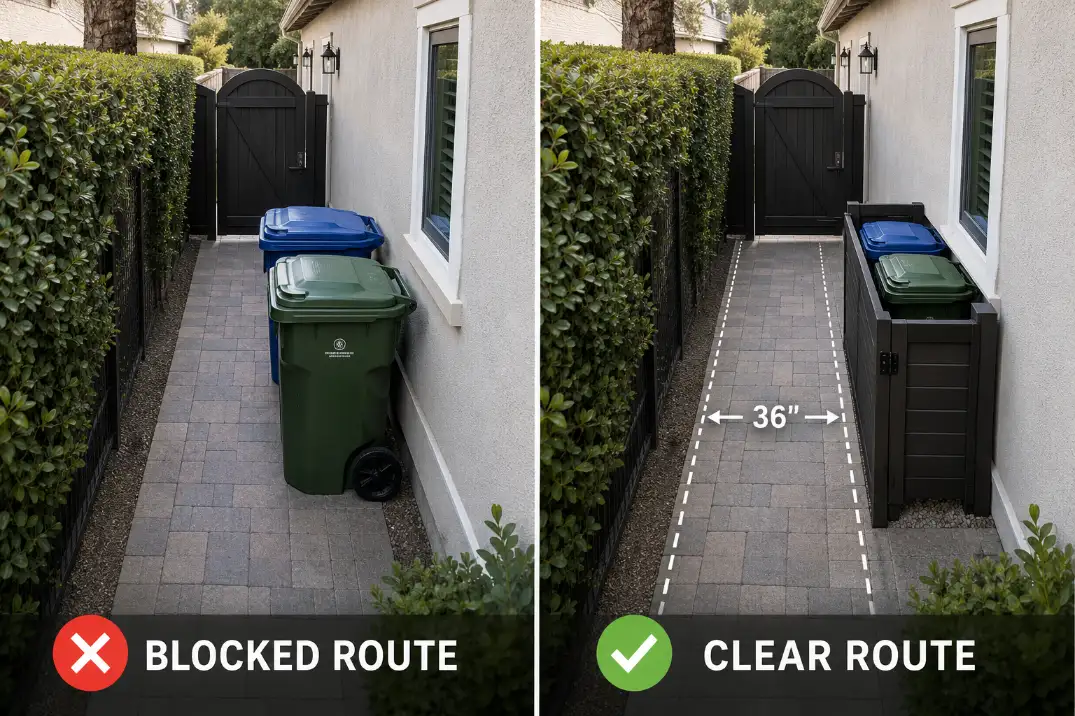
The healthier setup separates the walking lane from the bin bay. The failing setup makes every task pass through the bin zone.
That is why a narrow side yard should be treated more like a utility corridor than leftover storage.
If the side yard already carries bins, hose access, meters, drainage, and a gate route, the same planning logic in Side Yard Utility Corridor Ideas applies here: assign the route first, then place the objects.
The first fix is often subtraction
Before building a screen or moving the bins, clear the clutter around them. Loose pots, stacked bags, old pavers, hose piles, and overflow recycling can make the bin zone wider than the bins themselves. If removing those extras restores a 32–36 inch lane, the location may be workable. If the bins still pinch the route after the area is clean, the location is the issue.
Pro Tip: Test the route with the bin tilted back on its wheels. If the tilted cart forces you into the wall, fence, or planting bed, pickup day will stay awkward.
Best Spots That Usually Work
The right location depends on the route to the curb, the gate swing, the surface under the wheels, and how visible the bins are from the street or patio. The best-looking spot is not always the best-working spot.
Gate-side bay
A gate-side bay is often the strongest default because it shortens the rollout distance. A 6–10 foot pull from storage to gate is usually easier than hiding bins in a rear corner and dragging them 30–40 feet over uneven ground. The bin bay should sit near the gate, but not directly behind it.
The test is simple: open the gate fully, tilt the bin back, and roll it out without lifting or twisting. If the gate hits the lid, handle, or screen, move the bay 12–18 inches out of the swing path before considering a bigger fix.
Fence-side strip
The fence side often works better than the house side because it keeps bins farther from doors, vents, windows, and siding. But it only works if drainage and gate access stay clean. A damp fence-side strip that stays muddy for more than 48 hours after rain is not a good bin location, even if it hides the carts well.
This is where people often overestimate privacy and underestimate the ground surface. A bin on loose gravel, mulch, or soft soil may feel acceptable when empty, then become frustrating when full.
If the route itself is the weak point, Narrow Side Yard Walkway Flow matters more than another storage idea.
Driveway-side partial screen
When HOA rules or street visibility are the concern, a driveway-side or front-side partial screen may be better than forcing bins deep into a narrow side yard. The screen should block the main view, not trap the carts in a tight box. Local rules vary, so this option works best when the bins can be kept screened on non-pickup days and moved easily on collection day.
The stronger design choice is usually a modest screen with a clean rollout line, not a fully hidden corner that turns every weekly pickup into a chore.
Gate Swing and Bin Width
The gate is where many side-yard bin setups fail. A bin can look neatly parked all week and still block the one movement that matters most: getting the cart out cleanly.
A wide gate can still act narrow
A 36-inch gate does not always give a true 36-inch opening. Hinges, latch hardware, post thickness, and the stopping angle all reduce usable width. If the gate only opens to 80 or 90 degrees because a bin, planter, or enclosure sits behind it, the cart has to move diagonally. That diagonal movement is what makes narrow side yards feel worse than they are.
The practical rule is this: if you have to lift the front edge of the bin every week, the layout is failing. Lifting is not a design feature. It is a sign that the bin bay, gate swing, or rollout surface needs to change.
Handle direction changes the outcome
Bins should usually be stored with the handle facing the rollout direction. Turning a bin sideways can make the parked footprint look smaller, but it often creates a worse first move. The cart has to be pulled sideways before the wheels can do their job.
| Bin setup | What looks good at first | What usually fails | Better decision |
|---|---|---|---|
| Bin directly behind gate | Very close to pickup route | Gate hits lid or handle | Move bin 12–18 inches off swing path |
| Bin turned sideways | Looks narrower while parked | Hard first pull | Face handle toward rollout direction |
| Bin hidden at rear corner | Less visible from street | Long weekly drag | Use a closer bay with partial screening |
| Bin on loose gravel | Looks finished and simple | Wheels sink or twist | Add a firmer wheel strip |
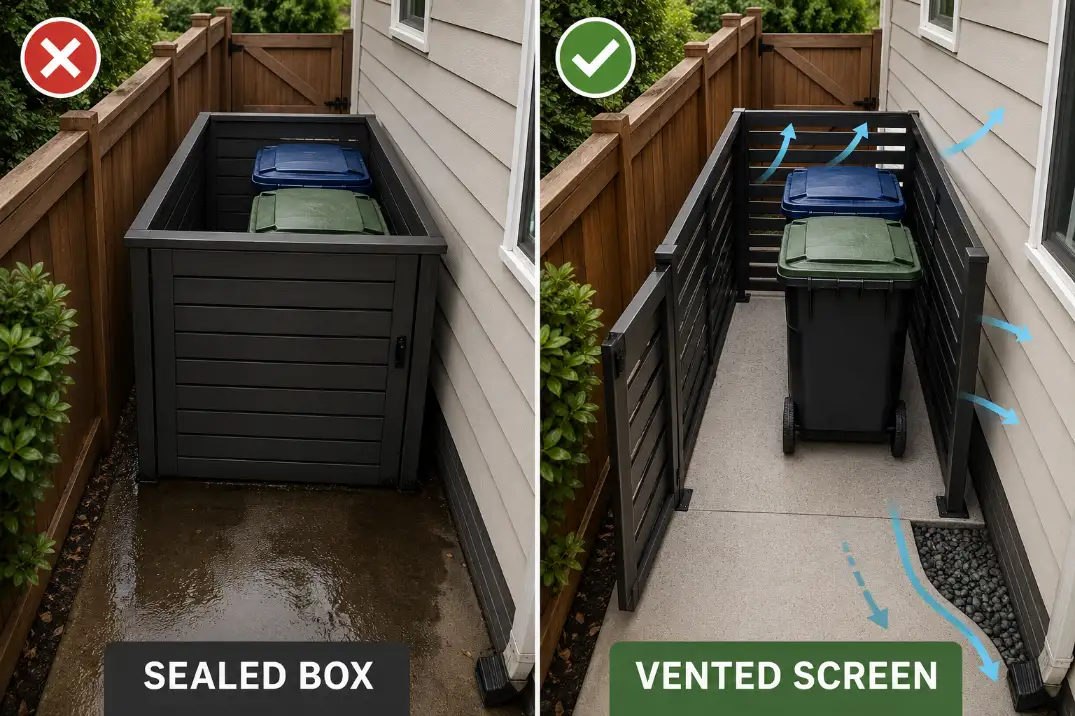
| Full enclosure beside wall | Looks premium and tidy | Odor, lid, and rinse access problems | Use a ventilated partial screen |
Air, Drainage, and Rollout
A bin area should not behave like a sealed closet. Trash bins need a dry base, airflow, and enough working space to open lids, rinse the ground, and roll out without scraping. This matters most in humid climates such as Florida or along coastal California, where warm still air can make odor show up quickly.
Odor is moisture; pests are access
Smell and pests are related, but they are not the same problem. Odor usually comes from heat, food residue, trapped moisture, poor lid closure, or weak airflow. Pest trouble is more often about access: loose bags, open lids, food scraps, and a spot where animals can nose around without being disturbed.
That distinction matters because the fixes are different. A smelly but sealed bin area may need airflow, rinsing, and a drier base. A pest-prone bin area needs tighter lids, fewer loose bags, and less exposed waste. Moving the bin to a hidden corner can make both problems worse if the corner stays damp and hard to clean.
Drying time is a useful warning sign
If the ground under the bins stays damp for more than 48 hours after normal rain, drainage deserves more attention than screening. A bin bay should drain away from the house and avoid low spots that collect runoff. A slight slope of about 1/8 to 1/4 inch per foot is often enough to shed water without making carts roll or lean.
In northern states, freeze-thaw cycles can make a damp low spot worse by heaving edges and creating uneven wheel tracks. In dry desert climates like Arizona, the problem may be less about standing water and more about dust, heat, and the need for an easy-to-rinse surface.
If drainage and access are already competing in the same narrow strip, Side Yard Ideas for Drainage and Access is the more important fix path than simply choosing a different screen.
Screening Without Smell
Screening helps when it hides the bins without stealing the route or trapping odor. The common overestimate is visual concealment. The common underestimate is maintenance access.
Partial screening usually beats full enclosure
A partial screen on the street-facing or patio-facing side often solves the visual problem without enclosing the bins on all sides. Slatted panels, spaced boards, or a short fence return can soften the view while leaving airflow, lid clearance, and rinse access intact.
A full enclosure only makes sense when it has enough interior space for the carts, the lid swing, ventilation, and cleaning. If every bin has to be pulled completely out just to open the lid, the enclosure is too tight. If the enclosure pushes the carts back into the walking lane, it has solved the cosmetic problem and made the real problem worse.
Plants are not always the cleaner answer
Planting around bins can work, but it often disappoints in narrow side yards. Dense shrubs hold moisture, drop leaves behind the carts, block rinsing, and slowly steal the access lane. A slim vertical screen is usually more predictable than a plant that needs two growing seasons and constant trimming to behave.
That does not mean the side yard has to look harsh. The stronger approach is disciplined: screen one view, protect the route, and keep the ground washable.
The same pattern shows up in Side Yard Mistakes That Make Tight Spaces Feel Cramped, where the fix meant to soften the space ends up making the working lane smaller.
Easy on Pickup Day
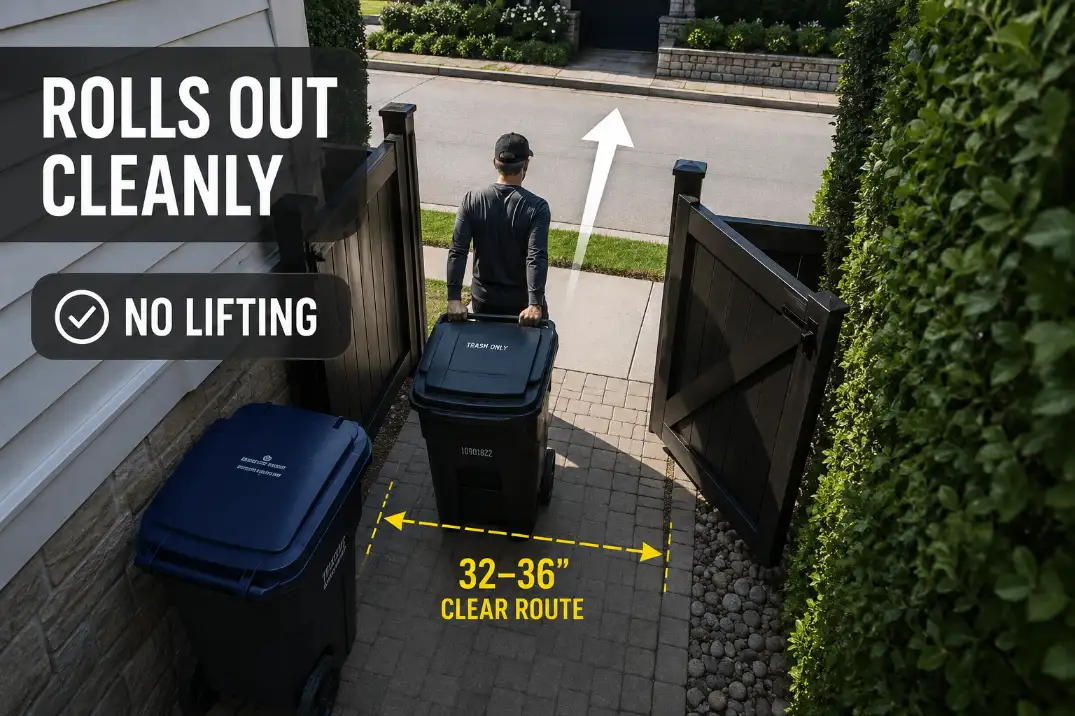
The final test is not how the bins look after you place them. It is how they behave on pickup day, in the dark, in rain, when the carts are full, and when someone is trying to move quickly.
Use a weekly friction test
A good setup should take less than a minute to move the bins from storage to curb without lifting, dragging sideways, or moving another object first.
If the routine takes 2–3 minutes because you have to shift planters, fight the gate, or pull carts over soft ground, the location is costing you every week.
Run the test for one full pickup cycle before making the setup permanent. Mark the bin bay with tape, scrap lumber, or loose pavers. Use it for 7 days, including normal lid opening, bag loading, and rollout.
If it preserves a 32–36 inch route, opens cleanly, dries within 24–48 hours, and lets the cart roll without lifting, it is probably worth building around.
Not every bin needs the same home
Grouping trash, recycling, yard waste, and compost together looks orderly, but it is not always the best layout. Trash and recycling may belong near the gate because they move weekly.
Yard waste may make more sense closer to the backyard work area if it is used seasonally. Compost may need a tighter lid and more shade than the recycling cart.
The point is not to scatter everything. It is to avoid forcing every cart into the same narrow pinch point just because it looks neat.
If the bins are part of a larger privacy or screening problem, Best Side Yard Privacy Ideas for Tight Spaces can help separate visual screening from access planning.
Questions People Usually Ask
Should trash bins go near the house or near the fence?
Near the fence is usually better if it keeps bins away from doors, vents, windows, and siding. The fence side still has to pass the gate-swing and drainage tests. A damp fence strip that traps smells is not better just because it hides the carts.
Is it bad to keep trash bins in full sun?
Full sun can help a damp spot dry, but it can also intensify odor in hot weather. Light shade with airflow is often better than a sealed hot corner or a wet shaded pocket.
How much space should I leave around trash bins?
Protect a 32–36 inch walking route first. Then leave enough room to open the lid, grab the handle, and roll the cart out without turning sideways. Where bins sit near a wall or screen, a 4–6 inch air gap can help more than a tight decorative enclosure.
What if the side yard is too narrow for bins and a walkway?
Then the bins should not live in the main corridor. Use a gate-side bay, driveway-side screen, garage-side location, or another code-compliant spot that keeps the access lane open. Forcing bins into the only route creates a weekly layout problem, not just a storage problem.
For broader official pest-prevention guidance around garbage storage, see the EPA’s pest control guidance.