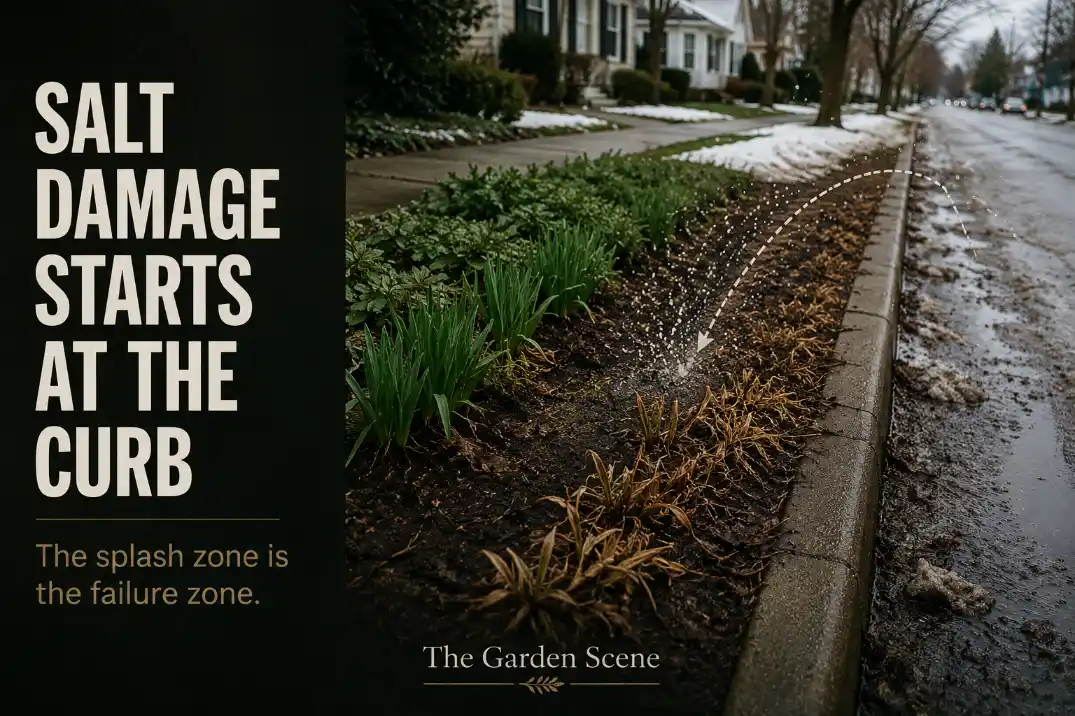
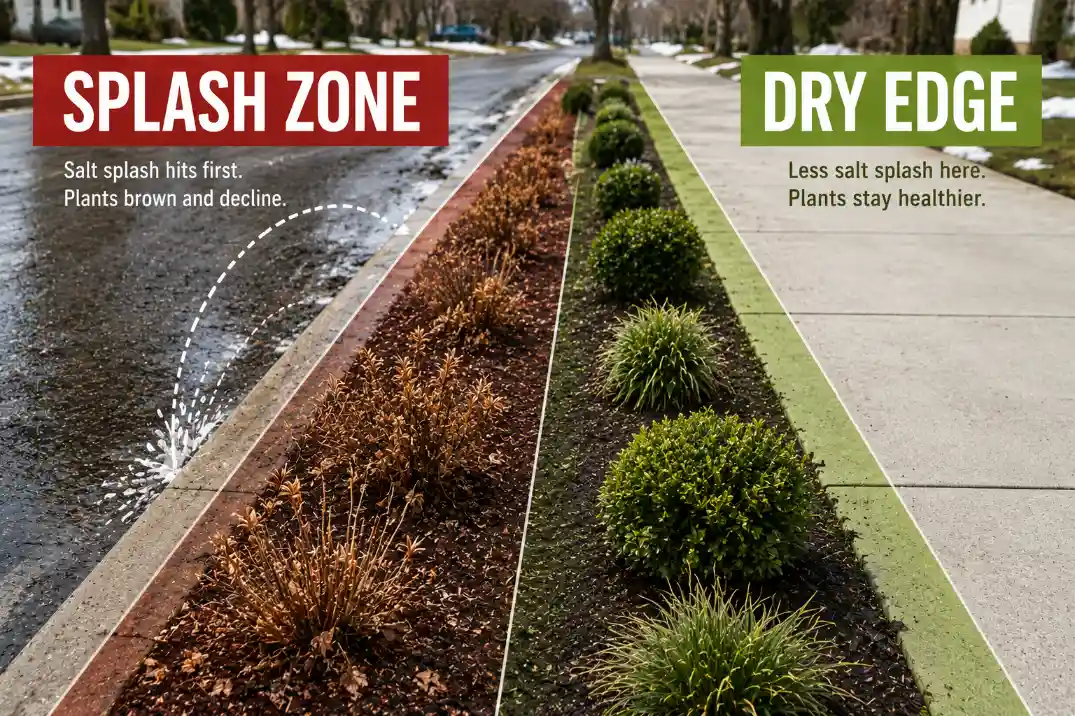
Road salt damage in a sidewalk strip usually shows up as a pattern before it shows up as a plant problem. If the road-facing 12–24 inches browns out while the inner strip still looks alive, treat it as a curb splash zone first, not a simple watering mistake.
The first checks are the direction of browning, whether plowed snow sat on the bed, and whether water can still soak into the top 2–4 inches after thaw.
The quick fix is not to replant the same soft plants in April. Start by removing dirty winter debris, loosening the compacted surface, testing infiltration, and deciding whether the curb edge needs a buffer.
Salt damage can look like drought, but the difference is location: drought usually spreads with exposure and poor watering, while curb splash damage concentrates along the road edge.
Why the Curb Side Fails First
The failure starts at the splash line
The curb side fails first because it takes the most concentrated hit. During winter and early spring, that narrow edge receives road salt, slush, sand, grit, tire spray, and sometimes snow piles pushed off the street.
A plant can look fine on the house-facing side while the road-facing side browns, splits, or leafs out weakly.
That directional pattern matters. It tells you the problem is not just “bad soil” across the whole bed. It is a repeated exposure zone.
Narrow strips have less room to recover
A wide planting bed may have a damaged front edge and a healthier back layer. A sidewalk strip often does not. In strips under 3 feet wide, the splash zone can reach most of the usable planting area, especially along busy streets or roads that get regular deicing.
That is why narrow curb strips need tougher layout decisions than normal front-yard beds. If the strip is already tight, the design logic in Narrow Sidewalk Strip Layouts Under 3 Feet Wide becomes more important because there may not be enough depth to hide weak plant choices behind a protected layer.
Salt, Splash, and Compacted Soil
Salt damage can look like drought
Salt-stressed plants often brown at the tips, leaf out late, or look dry even when the soil is damp. That happens because salt can interfere with water uptake. The plant may be sitting in moist soil but still struggling to move water through its roots.
This is where homeowners often misread the symptom. Browning is the visible signal. The underlying mechanism is a root zone and stem surface stressed by salt, splash, and poor flushing.
Compaction keeps salt where roots are
The second problem is compaction. Plowed snow, winter foot traffic, road grit, and repeated wet-dry cycles can seal the top layer of soil. When the surface hardens, spring rain may run across the bed instead of moving through it.
A simple threshold helps: after thaw, apply water slowly to the curb-side soil. If it sits, beads, or runs off for more than 10–15 minutes, the strip is not flushing well. Adding fresh mulch over that crust may make the bed look cleaner, but it does not solve the root-zone problem.
For strips that also suffer from summer heat, shortcut traffic, and compacted edges, Sidewalk Strip Maintenance for Heat and Traffic connects the winter damage pattern to the rest of the year.
Pro Tip: Loosen the top few inches carefully. Do not deep-till a curb strip where tree roots, irrigation lines, or utilities may be close to the surface.
Plants That Struggle Near the Road
The weakest plants usually fail first
The first plants to decline are usually soft, shallow-rooted, or moisture-sensitive plants. Young hydrangeas, boxwood, some heucheras, delicate groundcovers, broadleaf evergreens, and tender annual displays expected to look permanent can all struggle after one or two salted winters.
The better curb-side plants are not just “low maintenance.” They need to handle reflected heat, shallow soil, occasional grit, winter exposure, and inconsistent moisture. In northern states, the same curb strip may freeze, thaw, refreeze, and receive salty splash several times in one month.
Use the curb band differently from the inner band
The strongest sidewalk strips treat the curb edge as a harsher zone. The first 12–18 inches from the road should carry the toughest material: salt-tolerant low plants, a cleanable gravel or mulch band, or a simple sacrificial edge.
More ornamental plants belong farther back, where splash is lighter.
If the whole strip is only about 30 inches wide, avoid fussy plantings entirely. There may not be enough protected depth for plants that need even moisture and loose soil.
For plant selection in this exact setting, Best Plants for a Sidewalk Street Strip is more useful than a general front-yard plant list.
| Strip Zone | Best Use | Avoid |
|---|---|---|
| First 12–18 inches from curb | Tough low plants, gravel buffer, cleanable mulch band | Tender annual displays, young hydrangeas, boxwood |
| Middle strip | Salt-tolerant perennials, grasses, durable groundcovers | Plants that need constant moisture |
| Inner edge | More ornamental plants if splash is lighter | Crowding the sidewalk |
| Regular snow pile area | Replaceable cut-back plants | Brittle woody stems |
| High-traffic road edge | Low resilient planting or mineral buffer | Soft plants that collapse under grit and splash |
Mulch and Gravel After Winter
Dirty mulch should not be buried
Organic mulch can work well in a sidewalk strip, but the curb-side layer often becomes a winter filter. It catches salt residue, road dust, grit, and broken plant debris. By spring, the top half inch near the curb may be the dirtiest part of the whole bed.
The common mistake is to add fresh mulch over the contaminated layer. That hides the problem instead of removing it. Scrape away the worst curb-side debris first, then refresh only to a practical depth.
About 2 inches of mulch is usually enough; piling 4 inches around crowns and stems can create moisture and rot problems.
Gravel is cleaner but not automatically better
Gravel can be easier to rake clean after winter, and it does not mat down the way organic mulch can. But gravel also reflects more heat, migrates onto sidewalks, and looks messy if edging is weak.
It is best used where the strip has a defined edge and plants tough enough to handle warmer root conditions.
The better question is not whether mulch or gravel is universally better. It is which surface can be cleaned after winter without making the strip harder to maintain.
That comparison is handled more directly in Mulch vs Gravel for Sidewalk Strips, especially when winter cleanup and summer heat both matter.
Spring Cleanup Problems
Follow the right order
Spring cleanup works best when it follows the failure pattern. Start at the curb edge, not the prettiest part of the bed.
First, remove dirty mulch, road grit, dead foliage, and crusted debris from the curb-side band. Second, loosen the top 2–4 inches of soil where it is safe to do so.
Third, test infiltration before heavy rinsing. If water sits for more than 10–15 minutes, fix compaction before flushing the bed.
Once water can move through the surface, a slow soak can help move salts downward. A hard blast from a hose is less useful because it pushes mulch and soil into the gutter.
For narrow strips where water tends to escape instead of soaking in, Water a Sidewalk Strip Without Runoff is the more precise fix.
Do not replace plants too early
A brown plant in March is not always a dead plant. In colder regions, wait 2–3 weeks after consistent thaw before making final decisions on borderline perennials or small shrubs. If there is no new growth 4–6 weeks after normal spring leaf-out for your area, replacement makes more sense.
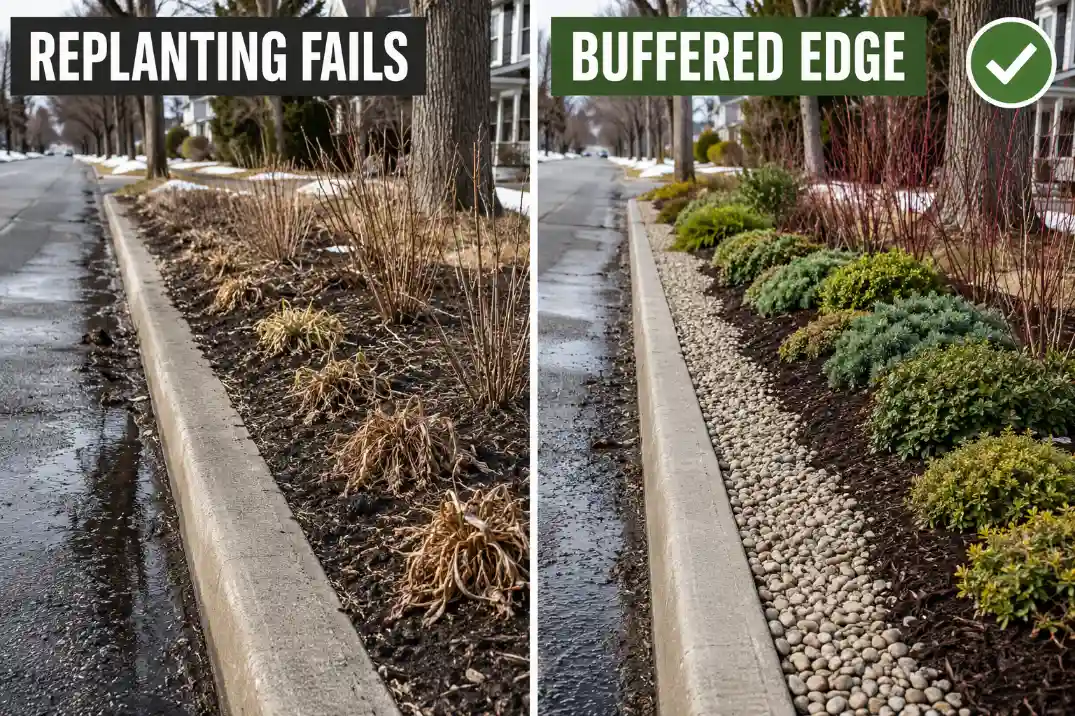
This is one of the places where routine cleanup can become wasteful. Cutting everything down too early may remove protection from shallow crowns. Replanting too early may put new roots into the same salty, compacted strip that damaged the last planting.
Pro Tip: If you see white crust, gritty mulch, and poor infiltration together, remove the contaminated surface layer before rinsing. Water alone rarely fixes a sealed curb edge.
Designing a Tougher Curb Edge
Build a sacrificial band
A tougher curb edge accepts that the road-facing strip will take abuse. A 6–10 inch sacrificial band of cleanable gravel, reinforced mulch, or very low resilient planting can reduce direct splash impact on the more important planting behind it.
This is the design move many attractive beds miss. They put the most decorative plants at the most stressful edge, then replace them every spring. The curb band should be the easiest part to clean, repair, or renew.
Stop replanting when the same band fails twice
One harsh winter does not always mean the design is wrong. A heavy snow year can damage even a reasonable sidewalk strip. But if the same curb-side band fails two springs in a row, stop treating it as a plant replacement problem.
At that point, the standard fix no longer makes sense. Redesign the curb edge before buying more plants. Improve cleanup access, rebuild the surface layer, choose tougher curb-side plants, and then refresh the finish material.
If the strip also struggles with material spreading or washout, Sidewalk Strip Mulch and Gravel Control fits the same repair logic.
Match the fix to winter maintenance
A quiet residential street with light sidewalk salting may only need tougher plants and cleaner spring maintenance. A busier road with plow piles needs a stronger edge. If snow is regularly stacked 12 inches or more over the strip, brittle woody stems and shallow ornamental plants should not sit right against the curb.
The underestimated factor is repetition. A plant may survive one salty splash event. It may not survive repeated winter splash events followed by compacted soil and a fast spring warm-up.
Questions People Usually Ask
Can I just add new soil over the damaged strip?
Only after removing contaminated debris and loosening the surface. Adding 1–2 inches of compost-blended topsoil can help, but burying salty mulch and crusted grit under fresh soil usually creates a shallow cosmetic repair.
Should I fertilize after salt damage?
Not right away. Salt-stressed plants are already struggling with water uptake and root stress. Wait until new growth is active, the soil drains properly, and damaged tissue has been pruned. Fertilizer does not fix a hostile curb zone.
When is replacement the right call?
Replacement makes sense when the plant shows no new growth 4–6 weeks after normal spring leaf-out, or when the same curb-side location fails repeatedly. If only the road-facing side is damaged, prune selectively and fix the splash edge before replacing the whole plant.
The Curb Edge Is the Real Test
Road salt and curb splash damage is not just a winter cleanup issue. It is a design test. The curb side fails first because it receives the most repeated stress.
The strongest fix is not a tougher-looking plant dropped into the same weak spot. It is a curb edge built for salt, splash, compaction, grit, and spring cleanup from the beginning.
For broader official guidance on how deicing salts affect soil and landscape plants, see the University of Minnesota Extension.