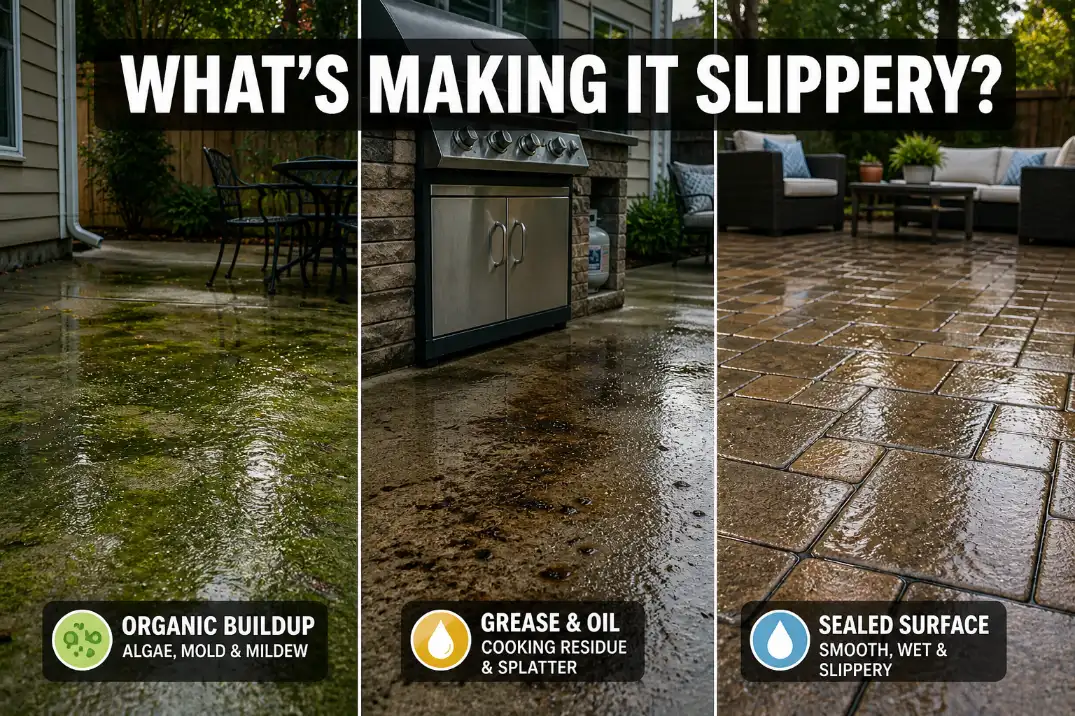
A slippery patio does not always need the strongest non-slip treatment. It needs the first product that matches the slip source: algae cleaner for green film, degreaser for oily residue, and anti-slip treatment only when the clean surface still lacks grip.
That distinction matters because algae, grill grease, glossy sealer, smooth outdoor tile, and standing water can all feel the same underfoot. But they do not respond to the same cleaner or treatment. The best buying decision is to clean what is sitting on the patio first, then treat the surface only if cleaning is not enough.
Quick Verdict: Start With the Slip Source
- Green, black, slimy, or shaded patio? Browse an outdoor patio algae cleaner first.
- Slick near the grill, dining table, or lounge chairs? Browse an outdoor patio degreaser first.
- Clean patio still slippery when wet? Compare anti-slip patio coatings or treatments.
- Slippery after sealing? You may need a sealer-compatible traction additive, not another cleaner.
- Smooth tile, stone, or polished concrete? Choose a material-specific traction treatment.
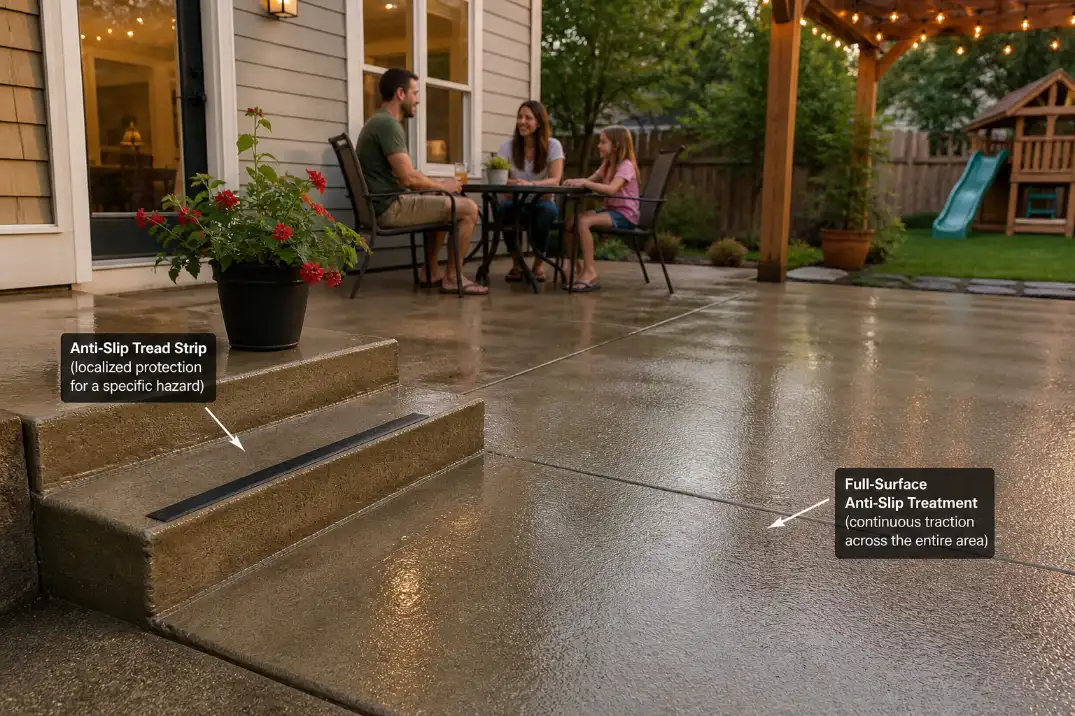
- One slippery step or threshold? Outdoor anti-slip treads may be enough.
- Standing water after rain? Fix drainage first, or the slipperiness will keep returning.
Best First Buy for Green or Slimy Patios: Outdoor Patio Algae Cleaner
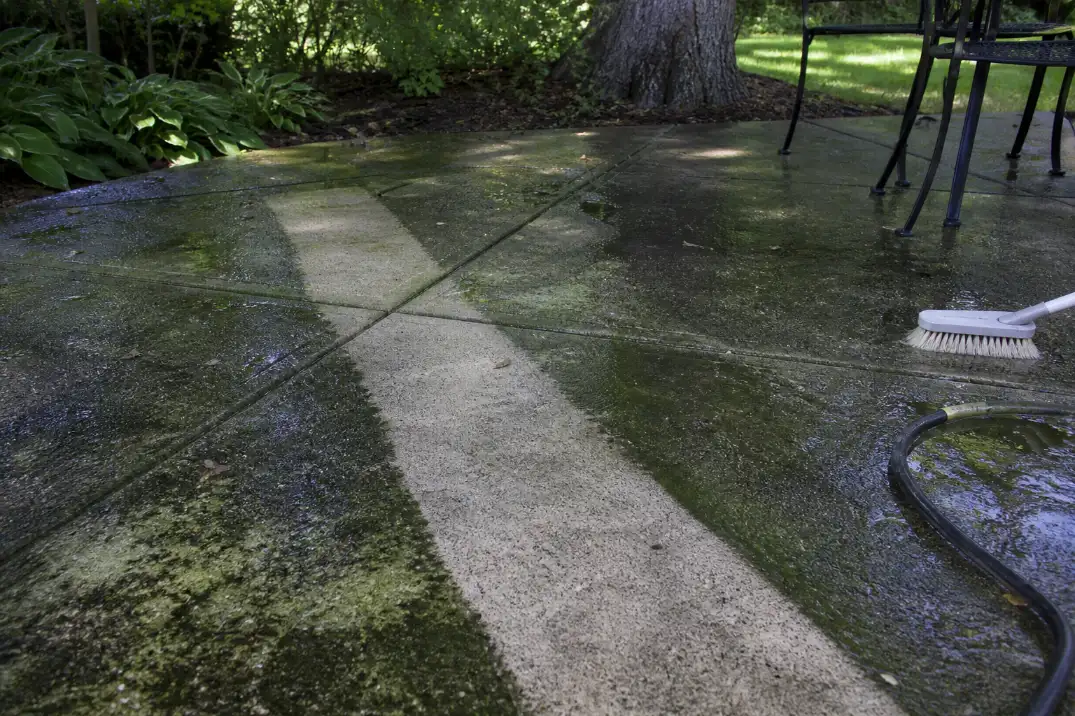
If the patio is green, black, damp-smelling, shaded, or slightly slimy when wet, an outdoor patio algae cleaner is the first category to browse. This is the most common early purchase for slippery concrete patios, pavers, brick patios, and stone areas where organic growth has built up on the walking surface.
Do not jump straight to coatings here. If algae or mildew is sitting on top of the patio, adding grip over it can trap the problem or fail sooner than expected. The surface needs to be cleaned before you can judge whether it actually needs a treatment.
Look for:
- patio-safe labeling for concrete, pavers, brick, or stone
- concentrate vs ready-to-use format based on patio size
- dwell-time and rinse directions
- plant, pet, and runoff cautions if the patio borders landscaping
Skip this category if the patio is already clean but still slick every time it gets wet. That usually points to surface texture, sealer finish, or drainage rather than algae.
If the patio has visible organic film, this is the lowest-friction first purchase. Clean the slippery layer away before paying for a more permanent treatment.
BEST FIRST BUY FOR GREEN PATIOS
Outdoor Patio Algae Cleaner
Best for shaded patios, damp concrete, pavers, brick, and stone with green or black slippery growth.
It fits when organic film is sitting on top of the patio and reducing wet traction.
Look for surface compatibility, dwell-time directions, rinse guidance, and plant or pet cautions.
🔴 SHOP outdoor patio algae cleaner
Best First Buy Near Grills and Dining Areas: Outdoor Patio Degreaser
If the slickest part of the patio is near a grill, prep table, dining set, or lounge area, the problem may be oil, food residue, spilled drinks, sunscreen, or body oils rather than algae.
That residue can survive a quick rinse. It can also interfere with sealers, coatings, and traction treatments. If you apply a grip product over greasy contamination, the treatment may not bond well or may wear unevenly.
An outdoor patio degreaser is the better first category for grill zones, outdoor kitchens, and eating areas on concrete, pavers, and other durable masonry surfaces.
Look for:
- outdoor concrete, paver, or masonry-safe labeling
- dilution control for light residue vs heavier grease
- sealed-surface compatibility if your patio has a finish
- clear rinse instructions and caution around plants, pets, drains, or delicate stone
Skip this category if the patio has green growth, a glossy sealed finish, or standing water as the main issue. Degreaser solves oily residue; it does not add traction to a smooth surface.
If the patio feels slick around cooking or seating areas, clean the residue before considering any anti-slip coating. It is the step that protects both traction and treatment performance.
BEST FIRST BUY NEAR GRILLS
Outdoor Patio Degreaser
Best for grill zones, dining patios, and seating areas where oil, food residue, or sunscreen makes the surface slick.
It fits when the patio feels slippery without obvious green algae or mildew growth.
Look for masonry-safe labeling, sealed-surface compatibility, dilution control, and clear rinse instructions.
🔴 SHOP outdoor concrete degreaser patio
Cleaner, Treatment, Coating, or Tread: What Are You Actually Buying?
Once algae and oily residue are ruled in or out, the decision becomes more specific. The right product category depends on whether you are removing a slick layer, changing the surface, adding texture to a finish, or solving one small hazard point.
| Product type | What it solves | Best for | Skip if |
|---|---|---|---|
| Patio algae cleaner | Organic film | Green, black, slimy patios | Patio is clean but still slick |
| Patio degreaser | Oil and residue | Grill and dining zones | Delicate stone unless labeled safe |
| Sealer additive | Slick sealed finish | Sealed pavers, stamped concrete | Coating is peeling or unknown |
| Surface traction treatment | Low-grip material | Smooth tile, stone, polished concrete | Surface is dirty or unidentified |
| Clear anti-slip coating | Larger wet walking zones | Clean but slick high-traffic patios | Drainage is still failing |
| Outdoor anti-slip treads | Local hazard points | Steps, thresholds, landings | Whole patio is slippery |
This is where homeowners often overspend. They buy a coating for a patio that only needed cleaning, or they keep buying cleaners for a patio that is clean but too smooth.
When Cleaning Is Not Enough: Anti-Slip Patio Coatings or Treatments
If the patio is clean, dry, and still becomes slippery when wet, the problem is probably not dirt. At that point, you are choosing from the treatment side of the category: sealer additives, surface traction treatments, or clear anti-slip coatings.
This is common with sealed pavers, stamped concrete, smooth outdoor tile, dense stone, polished concrete, and decorative concrete finishes.
If the patio got slippery after sealing
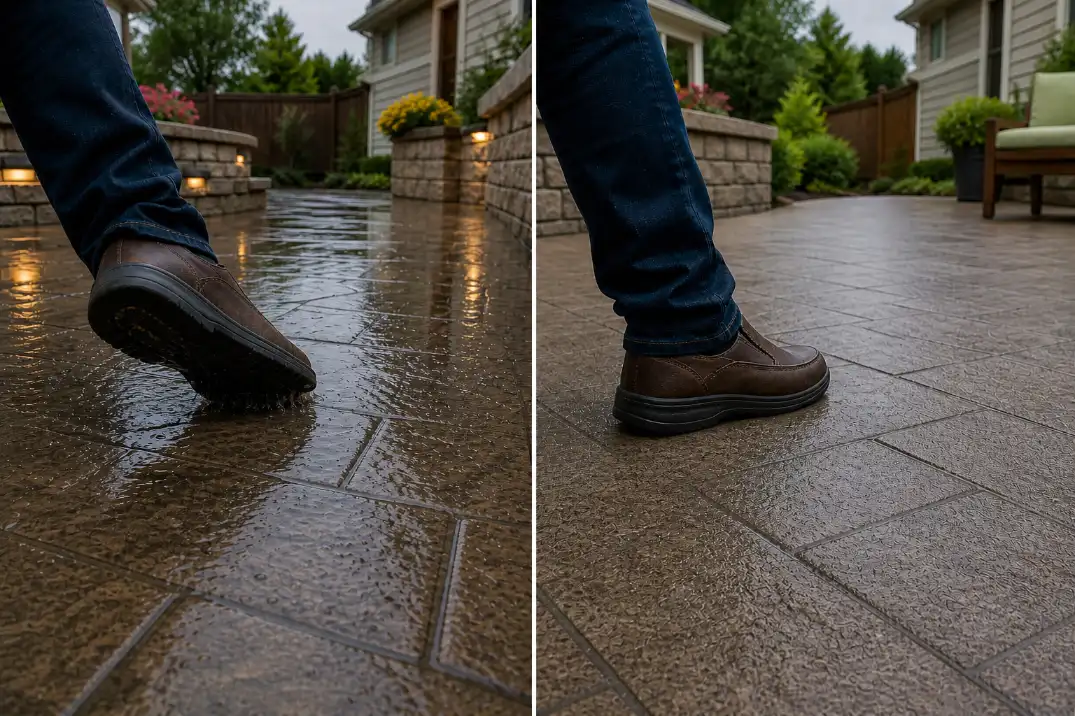
A sealed patio can become slick because the finish is too glossy, too smooth, or too thick. Film-forming sealers are more likely to create a visible surface layer, while penetrating sealers usually sit differently in the material. Product type, application thickness, and surface texture all matter.
If the patio became slippery after sealing, repeated cleaner purchases usually miss the point. The surface may need a compatible traction additive or recoat system that adds grip to the finish itself.
Look for sealer compatibility, fine traction media, outdoor wet-area suitability, clear recoat instructions, and finish expectations such as gloss or sheen change.
If the patio is smooth tile, stone, or polished concrete
Smooth tile and dense stone can feel clean but still unsafe when wet. In that case, a material-specific traction treatment may be more appropriate than a general patio cleaner.
Look for exact material compatibility, exterior wet-use labeling, test-area instructions, and warnings about sheen, color, or surface-feel changes. If the area is near a pool, hot tub, or family play zone, barefoot-friendly texture matters too.
If a larger clean area stays slick
A clear anti-slip patio coating can make sense when a broader walking zone stays slippery after cleaning. This is more relevant for clean concrete, outdoor tile, sealed pavers, pool-adjacent areas, covered patio entries, and high-traffic wet paths.
It is usually overkill for one small step or a patio that mainly has algae. But when a clean surface needs added grip across a larger area, it can be the better category than spot strips or repeated cleaning.
When a patio is clean but still slippery, the buying decision changes. You are no longer shopping for a cleaner; you are shopping for controlled surface grip.
BEST NEXT BUY AFTER CLEANING
Anti-Slip Patio Coating or Treatment
Best for clean sealed pavers, stamped concrete, outdoor tile, smooth stone, or concrete that still feels slick when wet.
It fits when the patio needs added grip rather than another round of cleaner.
Look for surface compatibility, exterior wet-use rating, sealer compatibility when relevant, and barefoot-friendly texture if used near a pool.
🔴 SHOP anti slip additive concrete sealer
What About Outdoor Anti-Slip Treads?
Outdoor anti-slip treads are useful, but they should not be treated as the main answer for every slippery patio. They are best for small, defined hazard points: a step, landing, doorway threshold, narrow transition, or edge where people change level.
Use them when one step is the main slip point, a doorway threshold gets wet, or people step from lawn, pool, or deck onto a hard patio surface. Look for outdoor-rated adhesive or mechanical fastening, water-resistant backing, low-profile edges, and a texture that adds grip without becoming uncomfortable under bare feet.
If the entire patio is slippery, treads only protect isolated walking lines while leaving the rest of the surface unchanged.
Does Pressure Washing Fix a Slippery Patio?
Pressure washing can help if the slipperiness comes from algae, dirt, pollen, or grime. It can expose the original texture of concrete, pavers, or brick and make the patio feel safer after wet weather.
But it will not fix a glossy sealer, smooth outdoor tile, polished stone, poor drainage, or a patio surface that lacks texture when clean. It can also damage soft stone, old concrete, loose paver joints, or decorative finishes if the pressure is too high.
Use pressure washing as part of the cleaning stage, not as the whole strategy. After washing, let the patio dry, wet a small area again, and test whether the surface still feels slick.
If Kids, Pets, or Bare Feet Use the Patio, Texture Level Matters
For family patios, pool-adjacent spaces, and outdoor areas used by pets, traction is not the only concern. Comfort matters too.
The roughest product is not always the best product. Aggressive grit may help shoes grip, but it can feel harsh around pools, play areas, and barefoot seating zones. For these settings, prioritize wet traction, barefoot-friendly texture, exterior durability, easy cleaning, and cleaner labels that address pets, plants, and runoff when relevant.
This is where a moderate, surface-compatible treatment often beats a rough, industrial-looking fix.
When to Pause Before Buying Another Non-Slip Product
Some patios should not be treated yet. If water pools after every rain, if runoff crosses the walking path, or if the surface stays damp for days, cleaners and treatments may only give temporary relief.
Standing water encourages algae, spreads fine sediment, and makes smooth surfaces more hazardous. In that case, drainage is part of the slip problem.
Pause before buying if the patio has water pooling in low spots, runoff flowing across the main walking route, peeling sealer, loose pavers, crumbling concrete, heavy freeze-thaw damage, or a stone, tile, or coating type you cannot identify.
This does not mean a cleaner or treatment will never help. It means the patio needs diagnosis first. A non-slip product performs better when the surface is stable, clean, and not constantly being recontaminated by water.
Common Buying Mistakes to Avoid
The biggest mistake is buying an anti-slip coating before cleaning the patio. If algae, grease, or residue is still on the surface, the treatment may not bond properly and the patio may stay slick underneath.
Another mistake is using one cleaner for every surface. Plain concrete, sealed pavers, natural stone, porcelain tile, and decorative stamped concrete do not all tolerate the same formulas. Surface compatibility should come before strength.
Also avoid assuming “non-slip” means permanent. Outdoor traction changes with rain, shade, leaves, pollen, grill residue, sunscreen, pool water, and seasonal algae growth. Even the right product still needs maintenance.
Finally, do not treat the whole patio when only one spot is dangerous. A slippery step, threshold, or landing may need a targeted tread, not a full-surface coating.
What Matters Most When Choosing
Start with the surface type. A product that works on rough concrete may be wrong for sealed pavers, soft stone, or decorative tile.
Then match the product to the slip source. Cleaner, degreaser, treatment, coating, and tread are different categories. Choose based on what is causing the slip, not which label sounds strongest.
Wet traction matters more than dry feel. Many patios feel fine when dry and unsafe after rain. Appearance matters too, especially on decorative pavers, stamped concrete, stone, and visible entertainment patios, because some treatments may change sheen or surface feel.
And if water sits on the surface, fix that first. Drainage can override even a good cleaner or treatment.
FAQ
What is the best cleaner for a slippery patio?
For green, black, or slimy patios, start with an outdoor patio algae cleaner. For slick grill or dining areas, start with an outdoor patio degreaser. If the patio is clean but still slippery, a cleaner may not be enough.
Is anti-slip coating better than patio cleaner?
Only when the patio is already clean and still lacks wet grip. A cleaner removes buildup. An anti-slip coating or treatment changes the surface traction. Using a coating before cleaning is usually the wrong order.
Can sealed pavers be made less slippery?
Yes, but repeated cleaning may not help if the sealer finish is the problem. A sealer-compatible traction additive or anti-slip patio treatment may be more appropriate after the surface is cleaned and prepared.
Does pressure washing make a patio less slippery?
It can if algae, dirt, or grime is causing the slipperiness. It will not fix glossy sealer, smooth tile, poor drainage, or a patio surface that lacks texture when clean.
What should I use around a pool or barefoot patio area?
Look for a barefoot-friendly anti-slip patio treatment with exterior wet-area suitability. Avoid overly aggressive grit if people regularly walk barefoot.
Final Verdict: Browse This First Based on What Is Slippery
If the patio is green, black, shaded, or slimy, browse outdoor patio algae cleaner first.
If the slick area is near a grill, dining table, lounge seating, or outdoor kitchen, browse outdoor patio degreaser first.
If the patio is clean but still slippery when wet, browse anti-slip patio coating or treatment first, especially for sealed pavers, stamped concrete, smooth tile, dense stone, or clean concrete that needs added grip.
If only one step or threshold is dangerous, consider outdoor anti-slip treads. If water keeps pooling, pause the product search and fix the drainage issue first.
The right first purchase is not the strongest product on the shelf. It is the category that matches why your patio is slippery in the first place.
Related Articles
- why cleaning, sealer, or drainage may be the real reason your patio feels slippery
- patio surface choices that age badly once water and foot traffic get involved
- low-slip patio surfaces worth considering before another treatment
- what pooling water near the house says about your patio problem
- how drainage problems often appear after patios and walkways are added
- when pavers or gravel make more sense for drainage-heavy backyards
For a practical university extension reference on why damp hardscape surfaces keep growing moss and algae, Oregon State University Extension notes that moss thrives with moisture and recommends reducing water on pavement in its guide to removing moss from pavement.