Last updated: May 2, 2026
Quick Solution Summary
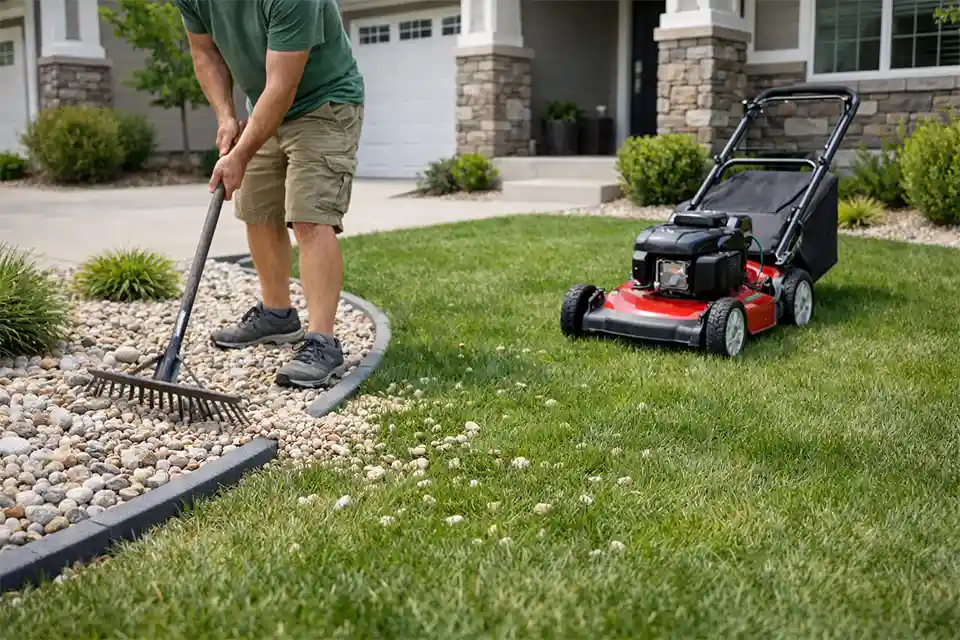
Gravel and decorative rock beds are often installed to reduce lawn area and lower maintenance. While these landscapes eliminate mowing in certain zones, many homeowners eventually notice that stones begin spreading into the surrounding lawn. Once this happens, mowing becomes more difficult, small rocks damage mower blades, and the grass surface becomes uneven.
The root cause is usually poor border containment. Gravel is a loose material that easily moves when exposed to mower wheels, rainfall runoff, soil shifting, or everyday foot traffic. Without a strong edging barrier or proper grading, rocks gradually migrate beyond their original boundary.
A reliable solution typically involves installing a deeper landscape edge (about 3–5 inches into the soil), lowering the gravel bed slightly below the lawn level, and occasionally redistributing stones that move during normal yard use. In climates with heavy rain or freezing winters, stronger edging systems such as steel borders or concrete mow strips provide longer-term stability.
Once the border design is corrected, gravel landscaping can remain stable and continue delivering the low-maintenance benefits homeowners expect.
Why Gravel Landscaping Slowly Moves Into Grass
Decorative stone beds may look stable when first installed, but the material itself is naturally mobile. Small stones respond easily to pressure, slope, and vibration.
One of the most common causes is displacement from lawn equipment. When mower wheels partially ride along the edge of a gravel bed, they push stones outward with each pass. Over an entire mowing season, even slight movement can scatter dozens of rocks into the turf.
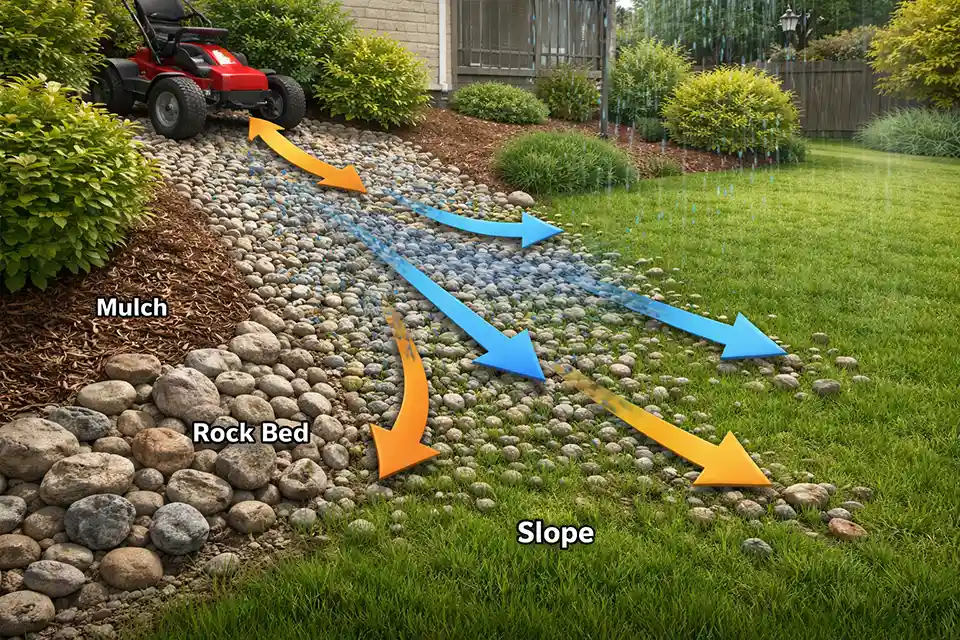
Surface elevation also plays a role. If the gravel bed sits just 1–2 inches higher than the lawn, gravity encourages stones to roll toward the lower surface. This effect becomes especially noticeable during heavy rainfall.
Landscape layouts that contain multiple obstacles often increase this issue. Front yards with utility poles, mailboxes, or service boxes frequently require awkward mowing patterns that disturb nearby rock beds. These situations are explored in more detail in Front Yard Maintenance Problems When Mailboxes, Utility Boxes, and Poles Interrupt the Lawn Layout.
Over time, even minor disturbances add up, gradually pushing gravel into nearby grass areas.
Quick Diagnostic Checklist
If gravel is spreading into your lawn, one or more of the following conditions is usually present:
-
Gravel bed sits higher than the surrounding lawn
-
Border edging is shallow or missing
-
Lawn mower wheels regularly travel along the gravel edge
-
Soil shifts during winter freeze–thaw cycles
-
Rainwater flows through the rock bed during storms
-
Yard slopes slightly toward the lawn area
When several of these factors occur together, gravel migration can become a recurring maintenance issue.
Environmental Conditions That Accelerate Gravel Movement
Natural forces play a larger role in gravel movement than many homeowners expect.
Rainfall and Surface Runoff
Heavy rain can easily displace loose landscape materials. During strong storms delivering 1–2 inches of rain in a few hours, flowing water may carry small stones several inches away from their original position.
This is especially common in front yards where water travels from driveways or sidewalks toward planting beds. Homes already dealing with surface runoff problems may notice faster gravel displacement, similar to situations described in Driveway Runoff Causing Front Yard Drainage Problems.
Over time, repeated storms gradually spread decorative gravel beyond its original boundary.
Freeze–Thaw Soil Movement
In northern states, winter introduces another mechanism. When soil moisture freezes, it expands roughly 9 percent in volume. This expansion lifts the soil slightly and shifts the materials resting on top.
As the ground thaws and settles, stones can move outward by small increments. After multiple winter cycles, gravel beds often become noticeably wider.
Wind and Yard Equipment
Leaf blowers can also contribute to the problem. Residential blowers commonly produce air speeds between 120 and 180 mph, which can easily push lightweight decorative gravel across lawn edges if the border is not secure.
If the gravel is not just spreading but you are also trying to decide what kind of border or stabilizer to buy, this guide to containing gravel before it reaches the lawn breaks down the best product category by movement pattern.
Border Design Mistakes That Allow Gravel to Escape
Most gravel migration problems originate from weak or shallow edging systems.
Plastic landscape edging is commonly installed only 1–2 inches below the soil surface. Over time, grass roots grow beneath it, soil shifts during rainstorms, and the edging begins to tilt or rise. Once this happens, stones can easily roll over the border.
A comparison of common border systems shows how much durability varies.
| Border Type | Effectiveness | Typical Lifespan | Common Weakness |
|---|---|---|---|
| Plastic landscape edging | Low | 3–5 years | Warps or rises from soil |
| Shallow trench edge | Moderate | 2–4 years | Soil collapses inward |
| Steel landscape edging | High | 10–20 years | Requires deeper installation |
| Brick border | High | 15–25 years | Can shift if base settles |
| Concrete mow strip | Very high | 20+ years | Higher installation cost |
Edges extending at least 3–5 inches into the soil typically prevent most gravel migration problems.
Why Lawn Mowing Often Spreads Decorative Stone
Routine mowing can unintentionally move gravel into turf.
When mower wheels pass along the edge of a rock bed, they apply lateral pressure that pushes stones outward. Riding mowers weighing 400–700 pounds can move significant amounts of gravel over a season.
Small stones then settle into the grass canopy where they are difficult to remove. As they accumulate, mowing becomes uneven and the mower blade may strike hidden rocks.
This issue becomes more noticeable in yards where mowing paths are already restricted. For example, compact properties sometimes force equipment to maneuver in tight spaces, a challenge described in Front Yard Maintenance Problems in Small Yards With No Equipment Access.
Once gravel becomes embedded in turf, the only reliable solution is usually manual removal with a rake or landscape vacuum.
Practical Ways to Keep Gravel Contained
Preventing gravel migration usually requires improving the structural border between landscape materials.
Install Deeper Landscape Edging
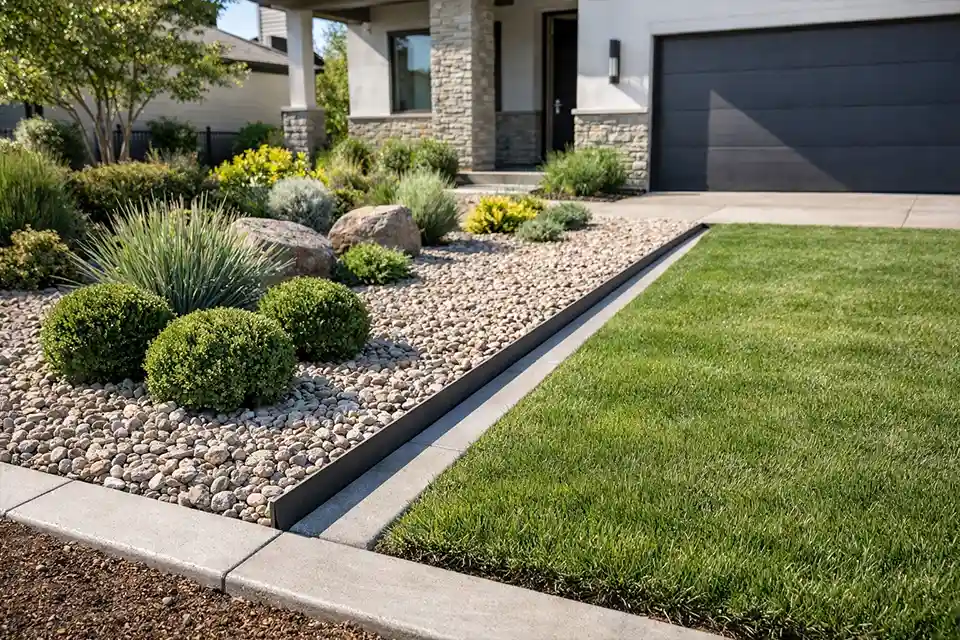
Steel edging installed 3–5 inches below the soil surface creates a durable barrier that stones cannot easily cross. This type of edging is widely used in professional landscaping because it resists bending and remains stable during freeze–thaw cycles.
Lower the Gravel Bed Slightly
Gravel beds that sit above lawn level tend to spread more quickly. Lowering the bed by about 1–2 inches creates a natural containment effect where gravity helps keep stones in place.
Create a Mow Strip
A mow strip is a hard surface border that separates lawn and gravel. Concrete or brick strips typically measure 6–12 inches wide and allow mower wheels to travel safely along the edge without disturbing the gravel.
Redistribute Gravel Periodically
Even well-built beds may shift slightly over time. Raking stones back into place once or twice per year prevents small movements from developing into larger maintenance issues.
How Gravel Movement Connects to Other Yard Design Problems
Gravel spreading into grass often signals broader landscape design issues.
For instance, properties located on street corners frequently experience more pedestrian traffic, vehicle airflow, and mowing complexity. These factors can disturb loose landscaping materials, contributing to maintenance challenges similar to those discussed in Front Yard Maintenance Problems for Corner Lot Homes With Extra Curbside Grass to Maintain.
Soil instability can also play a role. In some yards, underground root systems slowly push soil upward and disrupt landscape borders. When this happens near sidewalks or planting beds, stones and soil may gradually shift outward, a process related to the structural pressure described in Tree Roots Lifting Sidewalks and Damaging Front Yard Lawn.
When multiple landscape forces interact — slope, roots, runoff, and traffic — loose materials like gravel are far more likely to migrate.
Common Causes and Fixes
| Cause | Signal | Recommended Fix |
|---|---|---|
| Shallow edging | Gravel spills over border | Install deeper steel edging |
| Gravel bed higher than lawn | Stones roll downhill | Lower rock bed elevation |
| Mower displacement | Rocks scattered after mowing | Install mow strip |
| Rainwater runoff | Gravel trails downhill | Improve drainage and grading |
| Freeze–thaw soil movement | Edging shifts after winter | Reinforce edging depth |
Frequently Asked Questions
Is gravel landscaping truly low maintenance?
Gravel reduces watering and mowing, but it still requires occasional maintenance. Without strong edging, stones can gradually spread into nearby grass.
What type of gravel moves the least?
Larger decorative stones between ¾ and 1½ inches tend to stay in place better than pea gravel, which is lighter and easier to displace.
Does landscape fabric stop gravel from spreading?
Landscape fabric helps prevent weeds but does not stop lateral movement. Physical edging or structural borders are necessary to keep stones contained.
How often should gravel beds be maintained?
Most homeowners redistribute gravel once or twice per year. In areas with heavy rain or high foot traffic, light adjustments may be needed more often.
Processes related to soil erosion, landscape grading, and surface runoff are explained by the USDA Natural Resources Conservation Service: These guidelines help explain why loose materials such as gravel shift over time in outdoor environments.
Gravel landscaping can reduce lawn maintenance, but poorly contained rock beds often spread into surrounding grass. This movement is usually caused by shallow edging, elevation differences, mowing pressure, rainfall runoff, and seasonal soil movement.
Installing deeper edging, correcting landscape grade, and using mow strips are the most reliable ways to prevent gravel migration. When these structural improvements are combined with occasional maintenance, gravel landscaping can remain stable and attractive for many years.