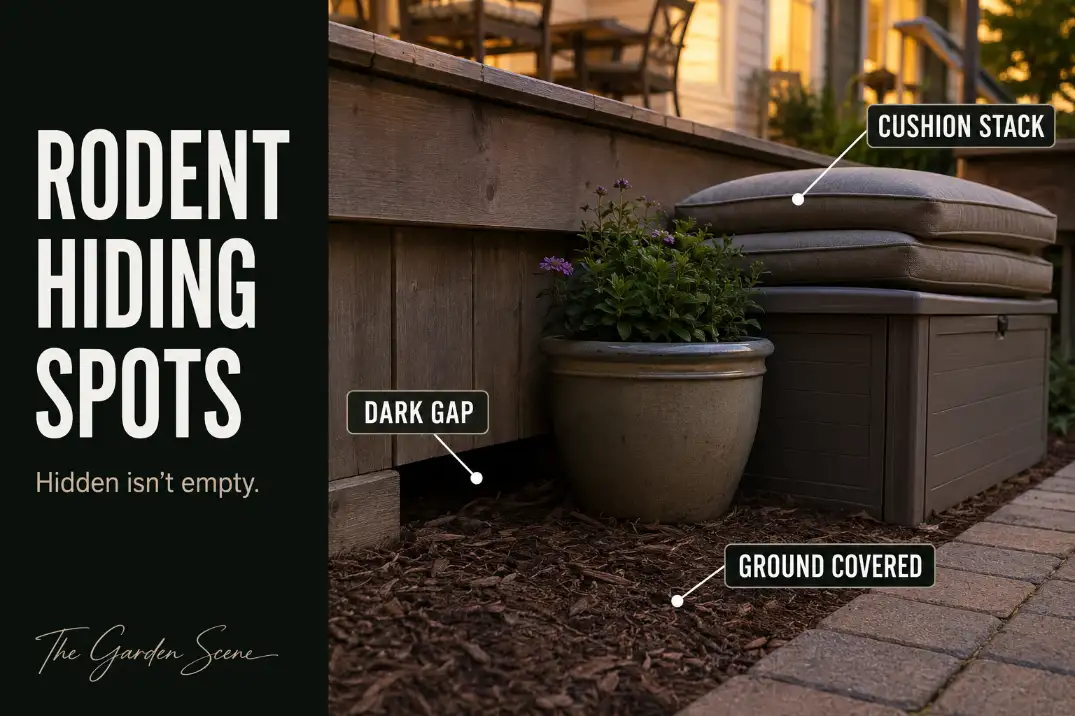
Rodent hiding spots under decks and outdoor storage usually start with shelter, not with the rodent itself. The first checks are simple: look for dark ground contact, soft nesting material, and a protected route that lets movement stay hidden for several feet.
A deck box, cushion stack, planter row, or tarp is not automatically a problem. It becomes one when it creates a dry, shaded pocket that stays undisturbed for days.
The useful threshold is visibility. If you cannot see the ground under or behind a stored item from 6–8 feet away, that area deserves inspection.
If the ground stays damp for more than 24–48 hours after rain, or if leaves, fabric, mulch, or cushion debris sit in the same corner for a week, the spot is no longer just messy. It is shelter with time.
The key distinction is this: a potential hiding spot is dark, covered, and quiet. An active rodent area shows fresh droppings, gnaw marks, shredded material, a burrow opening, or debris that returns within 24–72 hours after cleanup.
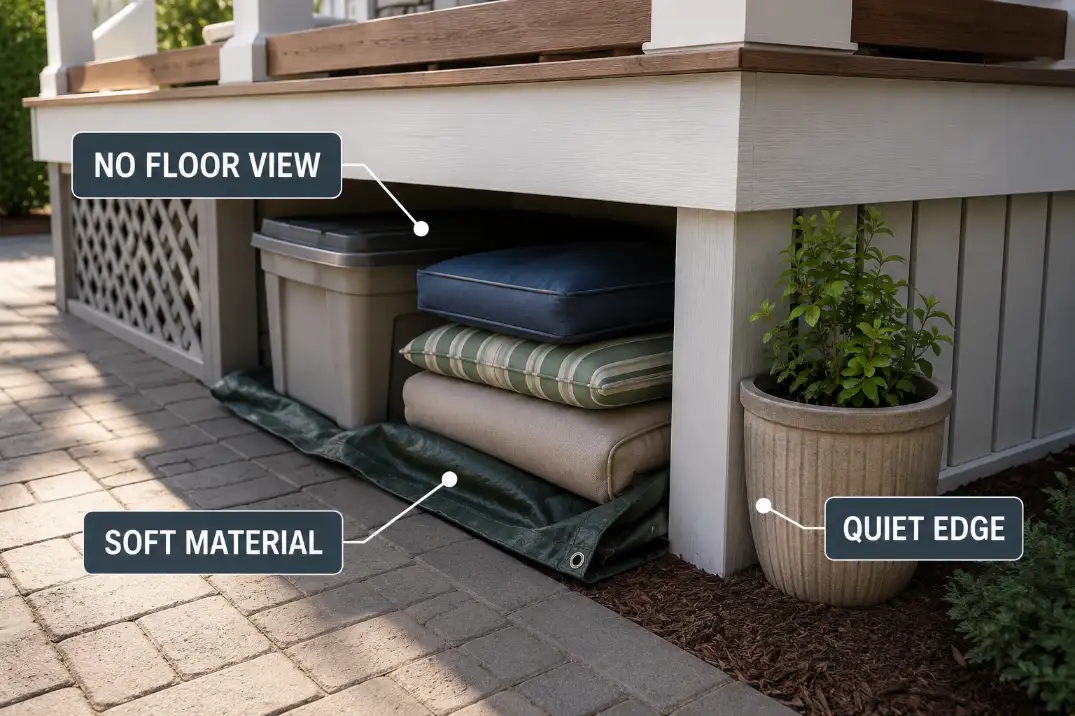
Potential Hiding Spot vs Active Rodent Sign
Treat shelter and activity differently
A dark corner is not the same as an active rodent problem. That distinction matters because the fix changes. A potential hiding spot can often be corrected with cleanup, airflow, clearance, and better storage.
Active signs need closer monitoring, gap sealing, and sometimes professional pest help.
Potential shelter usually looks like covered ground, soft material, and an edge that rarely gets disturbed. Active use looks more specific: small droppings near a wall or post, gnawed plastic or wood, fresh shredded leaves or cushion fibers, a worn line in mulch, or a burrow opening near the deck skirt.
If fresh signs return after one cleanup cycle, do not keep rearranging the same clutter. Recheck the route, the food source, and the under-deck edge.
Rodents rarely choose shelter alone. The spot becomes more attractive when garbage odor, pet food, birdseed, grill grease, fallen fruit, compost, or standing water sits nearby.
The fastest field test
Clear the suspect area, take a quick phone photo, then recheck it after 24–72 hours. Old debris will usually stay gone. Active movement tends to leave something new: displaced mulch, droppings, chewed material, or a narrow travel mark along the edge.
Pro Tip: Inspect before sweeping everything away. Fresh sign is easier to read when the area has not been scattered by a broom or blower.
Dark Storage Corners
The corner matters more than the container
The most likely hiding spot is not always the biggest object in the yard. It is the darkest, least disturbed edge where an object touches the ground or blocks your view.
Rodents prefer cover that lets them move without crossing open space, so a storage box set tight against a fence can matter more than a larger box sitting in the open.
A dark corner becomes more attractive when it has loose material nearby. Dry leaves, grass clippings, shredded cushion filling, cardboard, old landscape fabric, and plastic bags all matter because they can become nesting material.
A clean plastic bin sitting on pavers is a lower concern. A bin sitting over leaves and backed into a shaded fence corner is a different condition.
What people usually misread
Homeowners often overestimate the value of “sealed” storage and underestimate the ground around it. A deck box with a tight lid can still create shelter underneath, behind it, or beside it. The lid protects the contents; it does not automatically make the surrounding storage zone rodent-resistant.
This is where small backyard storage problems overlap with pest pressure. A storage arrangement that saves space can still fail if it creates blind floor pockets, which is why storage layout matters as much as the container itself.
If the backyard already feels crowded, the same logic in Storage Mistakes That Make Small Backyards Harder to Use applies here too: hidden floor zones usually cause more trouble than visible clutter.
Under-Deck Shelter
Under-deck space deserves higher priority
Under-deck shelter is more serious than ordinary storage clutter because the structure itself creates overhead cover. Skirt boards, lattice, posts, joists, and shaded ground can form a protected zone even when the yard looks tidy from above.
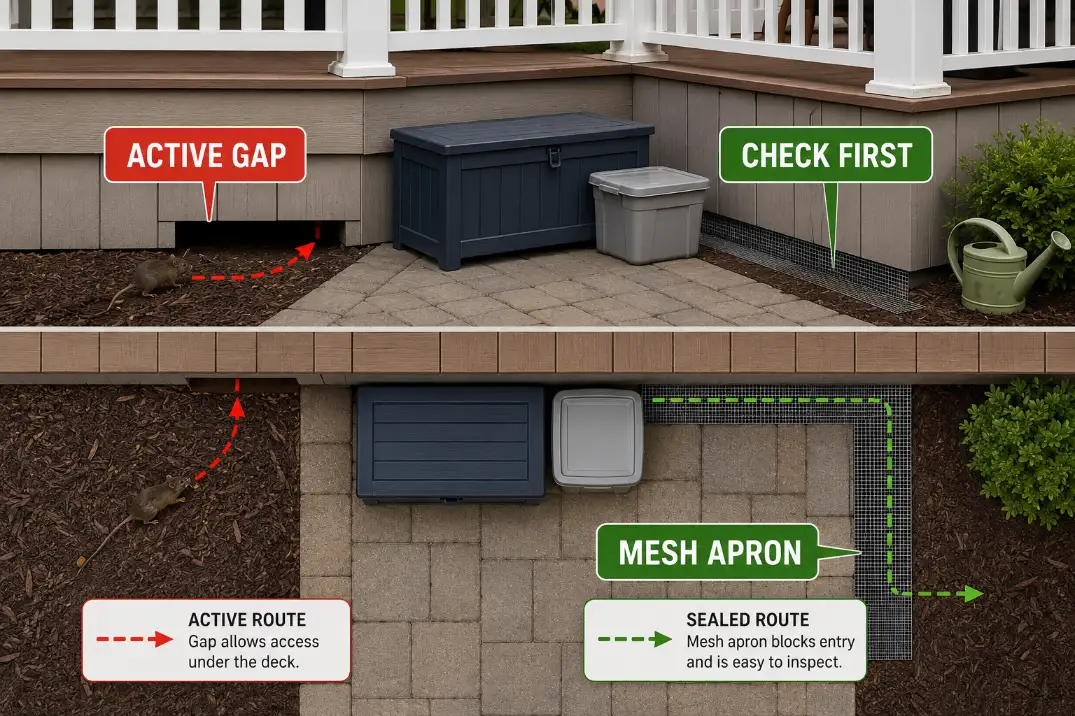
The clearest warning sign is repeated use, not one random gap. Look for a narrow worn path along the deck edge, displaced mulch, droppings near posts, gnaw marks, or nesting material pulled toward an opening.
A gap larger than 1/4 inch deserves attention around a home or deck structure, especially if fresh signs appear nearby.
Do not seal a suspect under-deck space blindly if you think an animal may already be inside.
First clear the exterior route, remove soft nesting material, reduce nearby food odor, and monitor the opening. Once you are confident the area is not occupied, physical exclusion makes more sense.
The mistake that wastes time
The common wasted fix is blocking one obvious hole while leaving the shelter system intact. If cushions, bins, leaves, and planters still create a covered route to the same deck edge, the rodent pressure has not been removed. You have only changed one doorway.
A better first move is to clear the route before sealing or screening. Pull storage 12 inches away from the skirt where space allows, rake out leaves, remove soft debris, and check whether the space stays clean for a week.
If new material appears, sealing gaps becomes more important. If nothing returns, the problem may have been shelter and debris rather than a true structural entry.
Outdoor trash can intensify the same pattern because food odor turns a safe hiding route into a repeat feeding route.
If bins sit near the deck or side-yard gate, the prevention logic in Raccoon-Proof Trash Storage for Side Yards also helps reduce rodent attention: tight lids, clean ground, and no quiet food trail.
Deck Boxes and Cushions
Soft storage changes the risk level
Deck boxes become more rodent-friendly when they hold cushions, throws, pet bedding, cardboard packaging, or seasonal fabric.
The concern is not only whether rodents can get inside the box. The surrounding setup can still provide soft material, shade, and a quiet exterior pocket underneath.
Cushions stored outside for weeks are a higher-risk item than hard tools. If cushions smell musty, stay damp, or shed foam, they become more attractive as nesting material.
In humid regions or shaded yards, fabric that stays damp longer than 48 hours after rain or rinsing should be dried, moved indoors, or stored in a cleaner elevated container.
When a deck box is still a good fix
A deck box still makes sense when it reduces loose material and keeps the floor visible. The better setup is a hard-sided box on a stable surface, with the area underneath and behind it easy to inspect.
If the box is so large that it cannot be moved, lifted, or checked seasonally, it can quietly become part of the problem.
For small patios and decks, a storage bench or compact deck box can still be useful, but choose it for access and clearance, not just capacity.
The buying logic in Best Outdoor Storage Benches and Deck Boxes for Small Patios fits this situation well: the right piece should reduce loose piles without creating a new hidden floor pocket.
Gaps Behind Planters
Planters can become routes, not just decor
Planters are often overlooked because they feel decorative, not like storage. But a row of large pots pushed tight against a deck skirt, fence, siding, or storage cabinet can create a protected travel lane.
The rodent does not need to live in the planter. It only needs the planter to block open sightlines and connect one hiding point to another.
A practical rule is to leave 4–6 inches behind large planters where possible, or enough space to see and sweep the ground. If the planter is too heavy to move, treat the gap behind it as a permanent inspection zone.
Check for seed hulls, droppings, shredded leaves, burrowed mulch, or soil displaced toward the back edge.
What looks harmless but is not
Deep mulch behind planters is commonly overestimated as “clean landscaping.” In rodent prevention, deep mulch can act like cover, especially when it piles against deck skirting or siding. A thin, maintained layer is different from a deep, soft strip that never gets disturbed.
This does not mean every planter gap is a nest. In many yards, it is only a travel route. That still matters because a covered route can connect food, water, trash, and under-deck shelter without forcing rodents into open view.
This is also where pest patterns around patios connect. Food residue from dining, water from saucers, and covered planter gaps can support the same movement route.
If the patio is used for meals, the broader pattern in Outdoor Pest Pressure Around Patios and Dining Areas is worth applying: remove the reward first, then remove the shelter.
Keep the Ground Clear
Clear ground is not cosmetic
The most effective first fix is not a trap, spray, or new container. It is making the ground readable. Rodents depend on cover, and homeowners depend on visibility. When the ground is clear, you can tell whether the problem is old debris, ongoing travel, or active nesting.
Aim for visible floor or soil under the main storage zone. A 6-inch clearance under shelves, benches, or raised bins is often enough to make inspection easier.
A 12-inch pullback from deck skirting or foundation edges gives you a better view of droppings, gnaw marks, or disturbed mulch. For tight patios, even a smaller gap is better than a sealed blind corner.
| Storage condition | Lower-risk sign | Higher-risk sign | Decision point |
|---|---|---|---|
| Deck box | Floor visible around base | Box tight to wall with leaves behind it | Pull forward and inspect monthly |
| Cushion storage | Dry, sealed, checked often | Damp fabric stored for weeks | Dry indoors or elevate storage |
| Under-deck edge | Clean skirt line after 7 days | New debris or droppings in 24–72 hours | Clear route, then consider exclusion |
| Planter row | 4–6 inch inspection gap | Pots tight against skirt or fence | Create sweepable space |
| Ground surface | Dries within 24–48 hours | Damp shaded pocket stays wet | Fix moisture and shelter together |
Quick diagnostic checklist
- Check under and behind storage from 6–8 feet away; if you cannot see the ground, inspect closer.
- Recheck cleaned deck edges after 24–72 hours for fresh droppings, debris, or disturbed mulch.
- Move soft items such as cushions, towels, cardboard, and pet bedding out of outdoor blind corners.
- Pull planters or bins 4–6 inches away from deck skirts where space allows.
- Treat damp ground lasting more than 48 hours as a shelter-supporting condition, not just a drainage annoyance.
- Stop relying on sealed lids if the storage base and surrounding floor stay hidden.
Storage Without Nesting
Choose storage that stays inspectable
Good outdoor storage does not just hide things. It keeps them dry, contained, and easy to inspect. The best setup has hard sides, a tight lid, limited fabric storage, and visible clearance around the base.
If a storage piece needs to sit in a tight deck corner, it should be simple to pull forward at least a few times per season.
The standard storage fix stops making sense when the object is too heavy, too deep, or too permanent to check.
A huge deck box that swallows clutter but creates a dark, untouched pocket behind it may be worse than two smaller containers that can be moved. In rodent-prone storage areas, inspectable storage beats maximum capacity.
If the storage need is temporary, do not create a permanent hiding zone for a short-term problem.
Seasonal cushions, party supplies, or garden tools can often be handled with a lighter system, and Temporary Outdoor Storage Ideas is a better fit when the goal is short-term organization without building another sheltered corner into the yard.
What to do before buying anything
Clear first, then decide. Remove loose debris, sweep the deck edge, dry out soft items, and separate anything that can become nesting material.
Then wait 48 hours and recheck. If the area stays clean, you may only need a better storage habit. If fresh signs return, the storage layout is part of a larger rodent route and deserves a more serious correction.
For active signs, avoid handling dry droppings or nesting material casually. Wear gloves, avoid stirring dust, and clean according to public health guidance.
If signs keep returning after the storage zone is cleared and gaps are sealed, it is time to consider professional pest help rather than adding more containers or moving the same clutter around.
Questions People Usually Ask
Do rodents actually nest inside deck boxes?
They can, but the more common issue is often around the box first: underneath it, behind it, or beside it. If the box contains soft cushions or has gaps, the risk increases. If it is hard-sided, dry, tight-lidded, and inspectable around the base, it is much less likely to become the main shelter.
Should I seal every under-deck gap immediately?
Seal clear entry points, but do not skip cleanup or inspection. If leaves, cushions, food odor, and planter gaps still create a protected route to the deck edge, sealing one gap may only shift activity to another spot. Clear the route, monitor for 24–72 hours, then seal the openings that show repeated use.
Is mulch under a deck always bad?
No. Thin, dry, maintained mulch is not the same as deep, soft, undisturbed mulch piled against skirting. The problem is depth, moisture, and cover. If mulch hides movement, stays damp, or collects nesting material, reduce it near storage and deck edges.
For broader official guidance on sealing gaps and reducing food, water, and shelter around rodent-prone areas, see the CDC’s rodent prevention guidance.