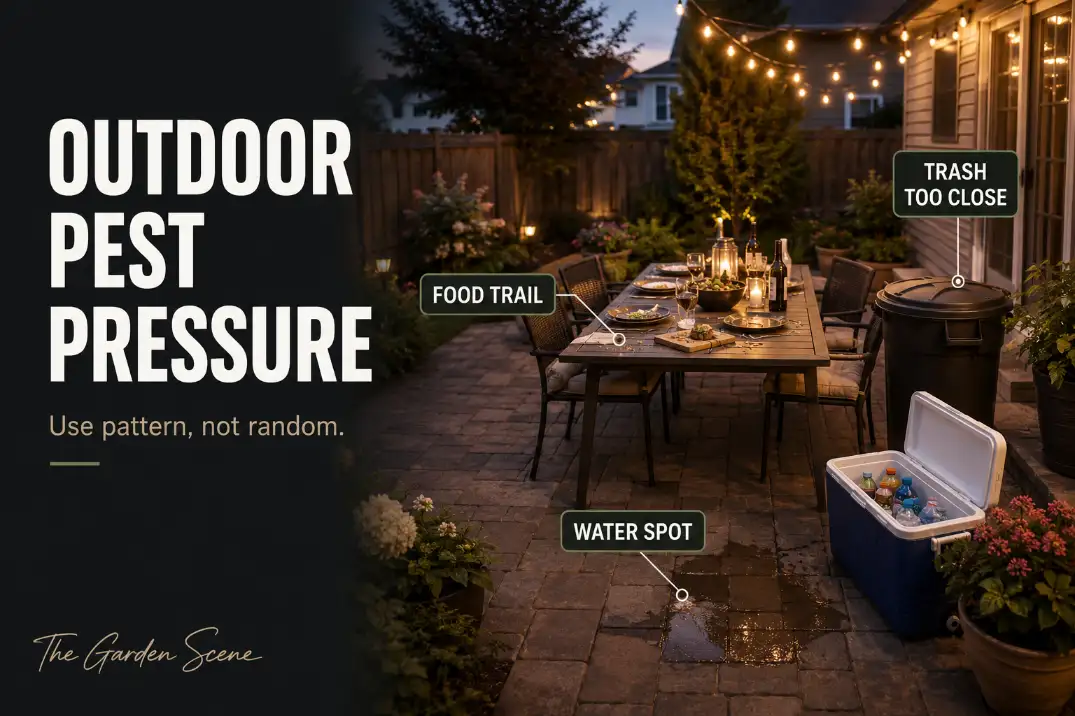
Outdoor pest pressure around patios and dining areas is usually a source map, not random bad luck. Ants often point to repeat food residue, flies and yellowjackets usually point to trash or sweet drinks, mosquitoes point to standing water, and rodents point to overnight food waste plus protected cover.
The first checks should be the same places pests keep revisiting: under the dining table, around the drink station, beside the trash lid, inside storage corners, and along damp paver seams.
A few insects outside are normal. A pattern is different. If pests return to the same 3–6 foot area within 15–30 minutes of meals, or if one patio corner stays wet more than 24 hours after rain, rinsing, or irrigation, the patio is giving them a reason to come back.
Sprays may knock down the symptom for a day. They do not fix a layout that keeps rewarding the same route.
Pests Follow Use Patterns
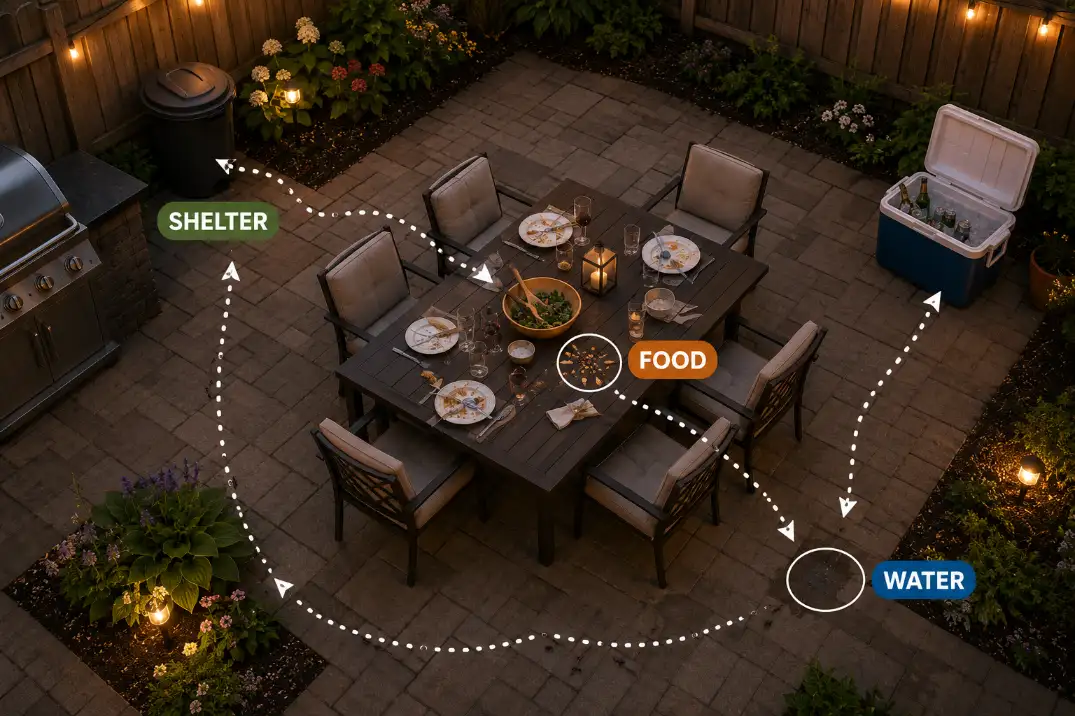
Repeated routes matter more than random sightings
The most useful clue is not the total number of pests. It is where they keep showing up. One fly passing through dinner does not mean the patio has a design problem.
Ants crossing the same paver joint every evening, wasps inspecting the same trash lid, or mosquitoes biting near the same damp planter corner tells you much more.
Outdoor pest pressure becomes easier to fix when the patio is treated as a set of repeated use zones. People grill in one spot, serve in another, set drinks in another, and usually place trash where it feels convenient.
If those zones collapse into one tight dining edge, the seating area becomes the reward zone.
A good layout separates food, drinks, trash, and seating without making the patio harder to use. The same planning logic that improves Outdoor Entertaining Flow Ideas also reduces pest pressure because the messy parts of hosting stop sitting directly beside the people.
Different pests point to different sources
Not every pest points to the same mistake. This is where many homeowners lose time. They treat “bugs around the patio” as one problem, then apply one generic fix. The better first move is to identify what the pest behavior is telling you.
| Pest Pressure | Most Useful First Clue | More Likely Source | Weak First Fix |
|---|---|---|---|
| Ants | Same route across pavers, table legs, or wall edges | Crumbs, sticky drinks, grill residue, pet food | Spraying the trail only |
| Flies | Activity near plates, prep surfaces, or the bin | Food scraps, warm trash, dirty serving zone | Moving chairs farther away |
| Yellowjackets | Interest in sweet drinks, fruit, meat, or open cans | Sugary spills, protein scraps, exposed trash | Citronella alone |
| Mosquitoes | Bites near damp shade or planters | Standing water, wet saucers, clogged drainage | Repellent candles only |
| Rodents | Overnight signs near storage or trash | Food waste plus protected shelter | Cleaning the tabletop only |
This does not mean every sighting is serious. It means the first fix should match the source. Ants near the table and mosquitoes near a damp planter corner are not the same patio problem.
Food, Water, and Shelter
Food residue is often smaller than people expect
The food source does not need to look messy. A few sticky drops under a cooler, sauce on a grill handle, crumbs under a bench, or pet food left outside for 20 minutes can be enough to start a repeat route.
People often overestimate the value of a clean tabletop and underestimate the table legs, chair feet, floor seams, and the underside of serving areas.
A healthier patio resets fast after use. The table is wiped, the ground below the eating area is checked, and food-contact surfaces are cleared before night. A failing pattern leaves small rewards in the same places until morning.
Serving zones matter here. A compact cart can help if it keeps plates, drinks, napkins, and cleanup supplies contained instead of spreading them across every side table.
The point is not to buy more patio furniture; it is to make the messy zone easier to clear in one pass. If your hosting setup keeps drifting across the patio, Best Outdoor Serving Carts for Patio Parties can support a cleaner dining flow when the cart is used as a controlled service station rather than another clutter surface.
Moisture keeps the pattern active
Water is the quiet part of the problem. A patio can look clean and still attract pressure if the same area stays damp. Mosquitoes are the obvious concern, but moisture also keeps scent, soft soil, wet leaves, and sticky residue active longer than a dry surface would.
Drink stations deserve special attention because they combine ice melt, sugar, fruit, cans, and foot traffic. If a cooler drips onto pavers every weekend, the patio may look clean from standing height while the ground underneath stays sticky or damp.
Pro Tip: Put drink coolers on a washable mat, tray, or hard surface, not directly over mulch, gravel, or a dark patio corner where spills disappear.
Shelter turns a visit into a hangout
Shelter is what makes pest pressure feel persistent. Loose cushion piles, cardboard boxes, stacked trays, bagged soil, hollow decor, and shaded storage corners give insects and small pests somewhere to pause.
Shelter may not create the first attraction, but it helps pests stay close once a route has already formed.
This is why spraying visible insects can feel satisfying but fail quickly. The spray changes the day. The layout keeps the route alive.
Trash Too Close to Seating
Distance beats a better-looking bin
Trash location is usually the highest-value fix around patio dining. A lidded bin beside the table may look organized, but it keeps odor, heat, and food residue inside the social zone.
In warm weather, even a closed trash bag can become noticeable within a few hours if it holds meat scraps, fruit, sticky cups, or napkins with sauce.
A better setup moves party trash away from the dining edge while keeping it easy enough that guests actually use it. For many patios, that means 15–25 feet from seating when space allows, not hidden so far away that people leave plates and cans on side tables.
The same placement logic behind Outdoor Trash Station Ideas for Parties applies on normal weekends too: visible enough for use, far enough from chairs to stop the reward point from sitting beside people.
Timing matters more than bin style
A premium trash can with a loose bag and all-night food waste still performs badly. A basic lidded can that gets emptied the same evening performs better.
For dining areas, the practical threshold is simple: food trash should not sit outside overnight within the patio zone.
This is one condition homeowners often underestimate. The bin does not have to look dirty to become the strongest attractor on the patio. A warm lid, a loose bag edge, or a few sticky cans can matter more than a few crumbs on the table.
Compost creates the same problem when it is treated like ordinary yard storage. A compost bin may be fine in a small backyard, but it should not sit beside the dining edge or along the route from grill to table.
Storage Corners Attract Trouble
Storage must stay inspectable
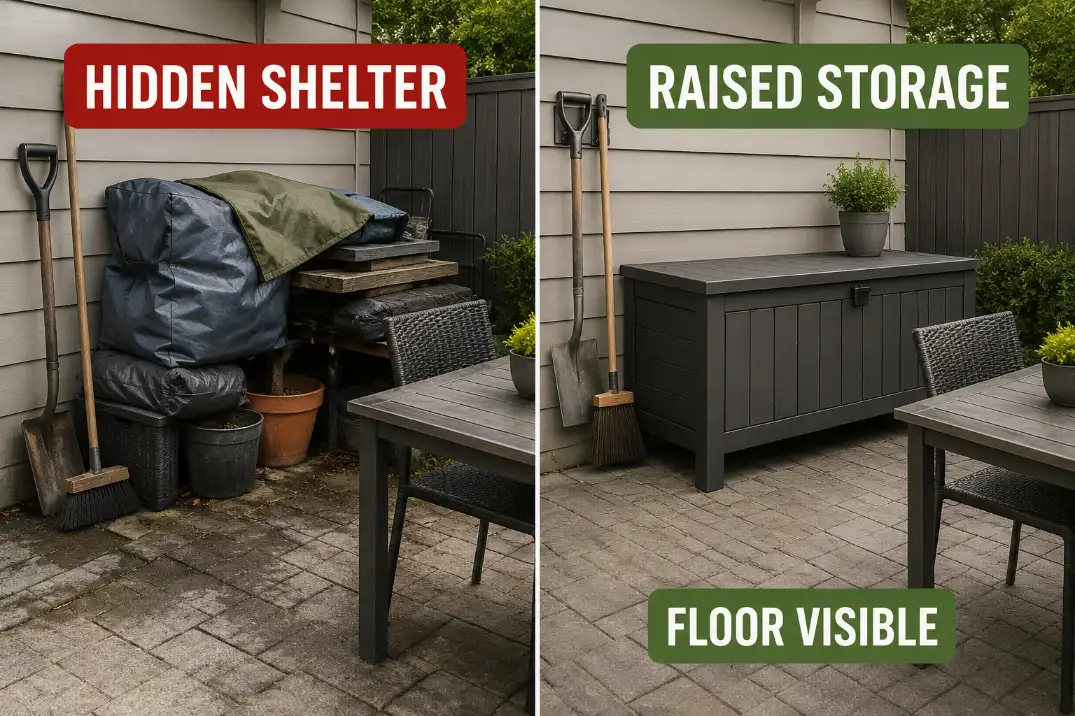
Storage corners are often the hidden reason pest pressure survives after cleaning. The patio looks clean from the house, but one shaded corner has a cushion bag, stacked planters, a folded umbrella cover, a bag of potting mix, and a half-open deck box. That corner may not smell like food to a person, but it offers cover, humidity, and still air.
The strongest storage setup is not always the largest one. It is the one that stays dry, closes cleanly, and leaves the ground visible.
A storage corner should be inspectable in under 30 seconds. If you have to unload half the patio to see the wall, floor, or back edge, the storage is too dense for a dining-adjacent zone.
For small patios, a raised bench or tighter deck box can be useful only when it reduces loose clutter and keeps the floor easy to sweep.
The buying decision should favor sealed lids, raised feet, wipeable surfaces, and a size that does not block cleanup access.
That is where Best Outdoor Storage Benches and Deck Boxes for Small Patios fits better than simply adding one more oversized container.
More closed storage can make the problem worse
Adding another box can make the patio look tidier while making pest pressure worse. A deep box that never fully dries, sits tight against a damp wall, or traps leaves underneath is not a source-control solution. It is a larger hiding zone.
The better move is selective storage: fewer soft items outside, tighter lids, raised feet, open clearance underneath, and enough spacing to sweep behind the unit.
If storage solves clutter but creates a shaded, damp, hard-to-check corner, it has only moved the problem.
Drainage and Standing Water
A damp corner is a design signal
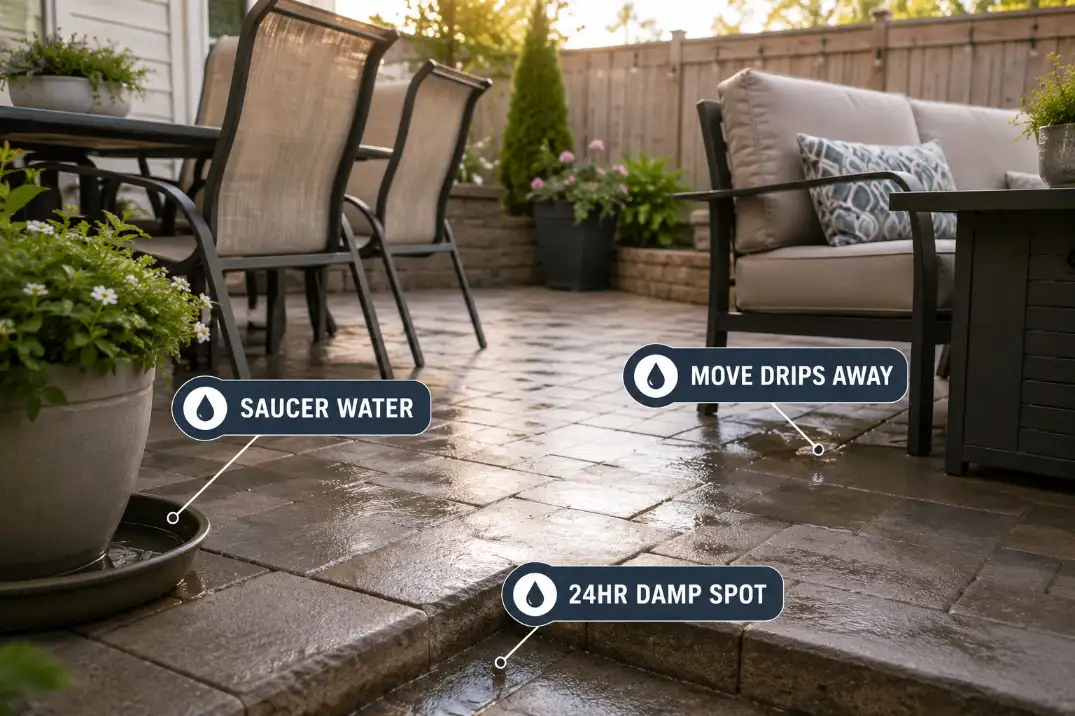
Standing water is not only a mosquito issue. It is a patio design signal. If one corner stays damp longer than 24 hours after typical weather while nearby areas dry, something is directing or holding water there: low pavers, clogged joints, poor slope, a leaking planter, an overwatered bed, a downspout splash zone, or irrigation overspray.
This is where food cleanup alone stops making sense. If the same shaded paver joint stays wet, the patio keeps one part of the pest pattern active even after crumbs are gone.
When water repeatedly crosses the patio or collects near the dining zone, Patio Drainage Layout Problems is the more relevant fix path than another repellent candle.
The goal is not a perfectly dry yard. The goal is to stop dining areas, storage corners, and traffic routes from becoming the lowest wet point.
Small water spots still count
A patio does not need a visible puddle to create trouble. A planter saucer with 1/2 inch of water, a cooler drip spot, a clogged furniture foot, or a low paver seam can hold enough moisture to matter.
In humid regions, shaded areas may dry slowly even when the rest of the patio looks normal. In drier climates, the clue is often more specific: one damp mark that keeps returning around a cooler, saucer, hose bib, or irrigation edge.
After rain, rinsing, or watering, check the patio twice: once after about 2 hours and again the next morning. The second check tells you which spots are truly staying wet.
Rain barrels and water features need the same discipline. A rain barrel with a loose screen, overflow splash, or damp base should not sit next to a patio table just because the downspout is convenient.
If the barrel keeps the dining edge damp, Rain Barrel Placement Mistakes becomes a pest-pressure issue as much as a drainage issue.
Design Before Sprays
Source reduction should come first
Sprays, candles, traps, and repellents may have a role, but they should not be the first design move. If pests return within 24 hours of spraying, the product may not be the main failure. The patio is probably still offering a source.
Use this order before spending more time or money:
- Clear food residue from the table, floor zone, grill side shelf, and serving area the same evening.
- Move trash 15–25 feet from seating when space allows, then empty food waste before overnight.
- Contain cooler drips, sweet drinks, and pet bowls so residue does not spread across the dining area.
- Open storage corners so the floor, wall edge, and back of the unit can be inspected in under 30 seconds.
- Fix any damp spot that remains visible the next morning after nearby surfaces have dried.
This order matters because it ranks the most likely sources first. Around dining areas, food and trash usually deserve the first look. Lingering moisture deserves the second. Dense storage or protected cover deserves the third. Neighboring mulch, normal vegetation, and random outdoor insect movement matter, but they are less useful to blame until the patio’s own reward points are under control.
When routine cleanup stops being enough
Routine cleanup stops making sense when the patio has a built-in attractor. A trash station beside the dining chairs, a damp paver corner under the cooler, a storage box that traps wet leaves, or a planter saucer that never dries will recreate the same pressure after every meal.
At that point, the fix is layout, not effort. Move the source, raise the storage, change the drainage, or redesign the service zone. A patio that supports outdoor dining well should be easy to reset in 10–15 minutes after use.
If cleanup takes longer because every item has to be moved, opened, dried, and checked, the design is making pest control harder than it needs to be.
Know the DIY boundary
Most patio pest pressure improves when the sources are corrected. But some patterns should not be treated as a normal dining-area nuisance. Repeated yellowjacket activity around a wall gap, rodent droppings near storage, chewing marks, indoor entry signs, or pest pressure that continues for 7–10 days after clear source reduction deserves a more cautious response.
That does not mean every patio needs professional pest control. It means the homeowner should stop treating the issue as a simple cleanup problem once the evidence points to nesting, entry, or repeated overnight activity.
The best fix is a patio that gives pests fewer reasons to return after people leave. Products can support that, but layout and source control decide whether the pressure keeps coming back.
For broader prevention-first pest control guidance, see the EPA’s integrated pest management principles.