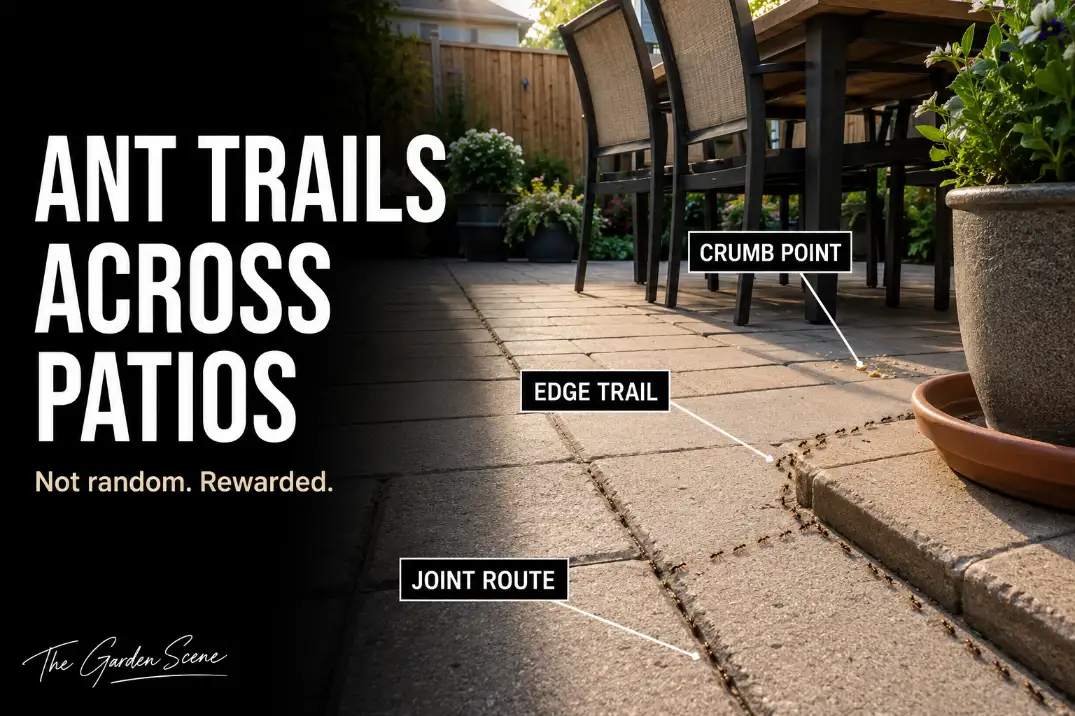
Ant trails across patio pavers usually return because ants have found a useful edge route: crumbs, sticky residue, planter moisture, open paver joints, shaded damp spots, or a protected crack that keeps leading them back.
A few scattered ants after outdoor dining is normal. A visible line that reforms within 30–60 minutes after wiping is a route problem.
Start by checking three things before treating anything: where the line disappears, what it touches every 2–3 feet, and whether the same joint also holds crumbs, damp sand, or tiny soil piles.
That distinction matters because a surface trail, a planter moisture problem, and a nest access point inside a paver joint need different fixes.
The biggest mistake is treating the ants you can see as the main problem. The trail is only the symptom. The real issue is whatever keeps making that same path worth using.
Ants Follow Edges
Start with the edge, not the center of the patio. Ants usually choose paver joints, wall bases, furniture feet, planter rims, edging strips, grill pads, and the narrow gap where the patio meets mulch or lawn because those lines are easier to follow and safer than open paver surfaces.
The Edge Is the Map
A clean open paver field gives ants less guidance. A 1/8-inch joint, a shaded furniture leg, or a raised border gives them a protected travel line. If that line also leads to food, water, or shelter, it can become the patio’s main traffic route.
The most useful clue is often not where the ants are most visible. It is where the line disappears. Follow the trail in both directions for at least 6–10 feet.
If it slips under a planter, table leg, siding edge, loose border paver, or mulch seam, that point matters more than the ants crossing the open patio.
When the Middle Is a Distraction
Spraying or scrubbing the middle of the patio often wastes time. The middle may look like the problem because that is where you notice the line, but the route usually starts along an edge.
A 2-inch strip beside a dining chair, cooler, trash bin, or planter can hold enough residue to restart the line after the broad patio surface looks clean.
If the patio has several pest pressure points after meals, the ants may be part of a bigger food-and-water pattern.
The same route logic behind Outdoor Pest Pressure Around Patios and Dining applies here: remove the reward points before chasing every insect you can see.
Paver Joints and Crumbs
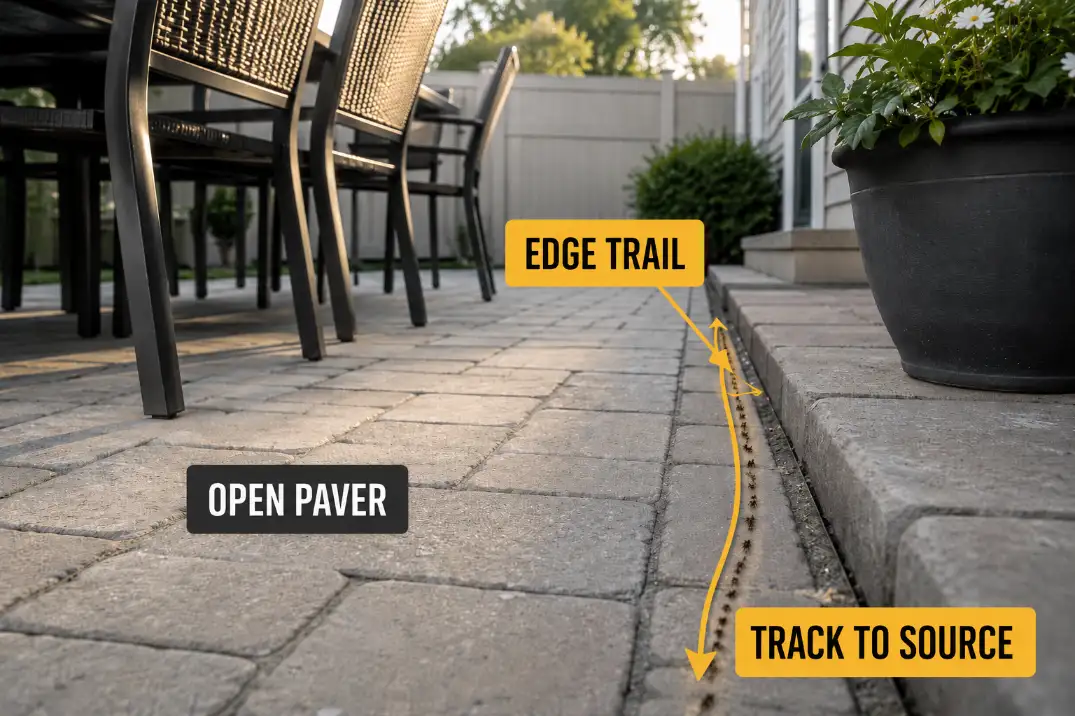
Paver joints create two problems at once. They hide small food particles, and they protect ant movement. A patio can look clean from standing height while crumbs, sugar residue, grease dust, pet food fragments, and organic grit still sit inside the joints.
Crumbs Set the First Route
The most likely trigger is rarely a dramatic spill. It is usually a small repeated source: crumbs under dining chairs, a chip fragment near the table leg, grill grease dust blown into a joint, or a sticky drink ring that was rinsed but not scrubbed.
If the strongest trail stays within 12–24 inches of the dining table, grill zone, cooler, or serving area, treat food residue as the first cause.
A healthier patio condition is simple: after cleaning, the line fades and does not rebuild by the next meal period. A failing condition is when ants return to the same joint within an hour, even with no fresh food sitting out.
When the Joint Becomes Shelter
Not every ant trail means the patio has a joint problem. But the joint itself deserves attention if the trail repeatedly follows open, washed-out, or shifting joints.
Once paver joints open beyond about 1/4 inch, they can hold crumbs, loosened sand, weed debris, and protected ant traffic below broom level.
If you see small soil or sand piles coming from the same joint, ants may not just be passing through. They may be excavating or using that gap as a nest access point.
That is the point where cleaning alone starts to look weak. The surface trail may be visible, but the protected joint is the reason it keeps surviving.
If the same loose joints also make the patio feel uneven or gritty, Polymeric Sand and Paver Repair for Shifting Patios is a more useful next read than another round of surface washing.
Pro Tip: Clean the joint line dry first, then wash. Water can push crumbs deeper into open joints if loose debris has not been lifted out.
Planters Near the Path
Planters near patio paths are easy to blame because ants often show up around the pot. Sometimes the planter is the source. Other times it is only a protected stop along the way.
Passing Around, Nesting Under, or Feeding on the Plant
There are three different planter patterns. Passing traffic moves along the rim or saucer edge and continues. Nesting traffic concentrates under the saucer, inside drain holes, or beneath the pot footprint.
Feeding traffic may climb the plant because aphids or scale insects are producing sticky honeydew on leaves and stems.
That last pattern is easy to miss. The plant itself may not be attracting ants; the insects on the plant may be feeding them.
If ants keep moving upward into tender growth instead of staying on the patio surface, inspect the stems and undersides of leaves before blaming the pavers.
Saucer Water Keeps Trails Active
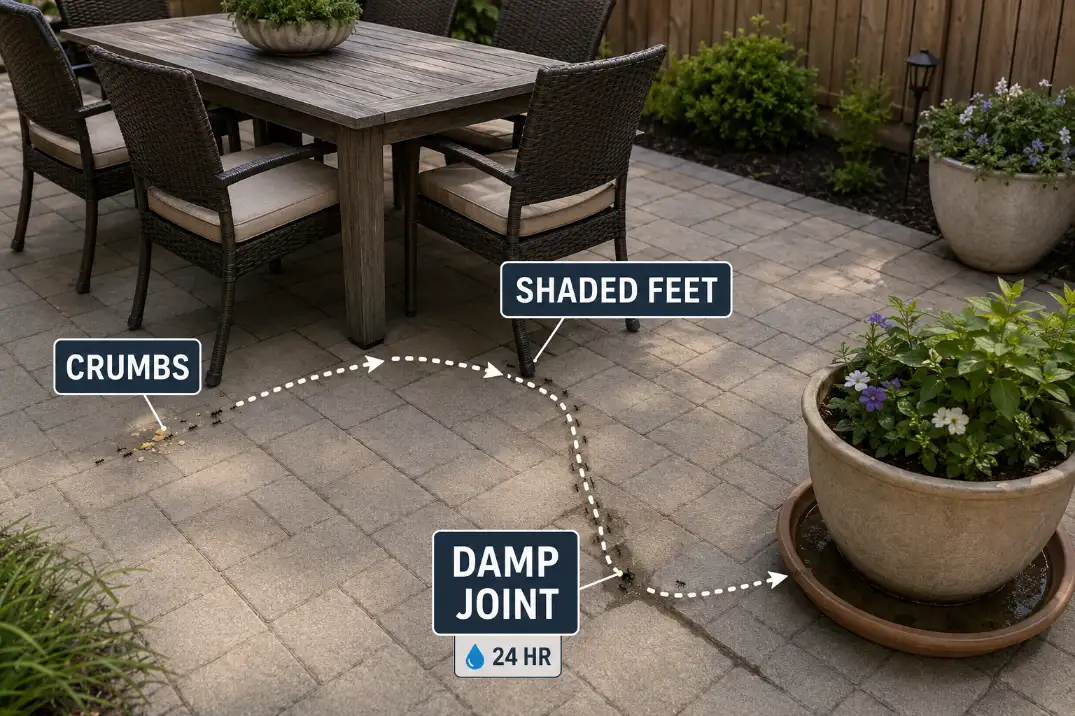
A planter saucer that holds water for more than 24 hours after irrigation is a useful stop for ants, especially during hot dry stretches. A damp pot footprint can also keep the joint below it cooler than the surrounding patio.
Move suspect planters 18–24 inches away from the traffic line for a day and clean the original footprint. If the trail weakens, placement and moisture were part of the pattern. If the line holds its exact route, the planter was probably only a landmark.
The condition people overestimate is the plant species. The condition they underestimate is the damp, dirty contact area below the pot.
Moisture Under Furniture
Food often starts the route, but moisture helps it last. The overlooked moisture points are usually small: shaded damp strips under furniture feet, wet paver joints below planters, cooler drips, irrigation overspray, and the dark line under storage benches or low outdoor seating.
Damp Does Not Have to Look Wet
A paver joint can stay cool and damp after the patio surface looks dry. If open pavers dry in 1–2 hours but the shaded joint under a chair, table base, or storage bench stays damp for 6–8 hours, that spot can support ant traffic.
This matters more on covered patios, humid patios, and tight furniture layouts where air movement is weak. A 2-inch gap under a bench dries very differently from an open paver field exposed to sun and breeze.
Repeated Damp Lines Point Beyond Cleaning
If ant activity concentrates near the same damp patio edge after every rain or irrigation cycle, the issue may not be crumbs anymore. It may be slope, drainage, low pavers, irrigation overspray, or a furniture layout that traps moisture in one strip.
A patio should not keep the same wet joint active long after the rest of the area dries. When damp zones keep returning in the same place, Patio Drainage Layout Problems becomes more relevant than another surface scrub.
Cleaning the Traffic Line
The best cleaning target is not the whole patio. It is the traffic line plus the source points feeding it: the joint itself, furniture feet, underside of the table edge, planter footprint, cooler drip area, trash contact zone, and any sticky serving spot.
Clean in the Right Order
Start dry. Sweep or vacuum the joint line first, especially where crumbs can sit below the top of the paver. Then wipe the hard edge with soapy water.
For sticky drink residue, a plain rinse is usually too weak because sugar film can remain after the surface looks clean.
Move furniture before judging the cleanup. Chair feet, table bases, storage bench legs, and grill cart wheels can all hide residue exactly where the trail keeps turning.
The working test is simple: a good cleanup should interrupt the line within a few hours and keep it from rebuilding in the same place later that day.
If ants are back in the same 3-foot section within 30–60 minutes, there is still a food source, a water point, a nest access point, or a protected joint condition nearby.
Why Hosing Often Disappoints
Repeatedly hosing the patio is one of the least reliable fixes. It can scatter ants, move crumbs deeper into open joints, and leave damp spots that support the route.
Fragrance-heavy cleaners are not much better. They may confuse the line briefly, but they do not remove the food, water, or shelter condition.
A rough or porous patio surface can make the problem more stubborn because residue sits in texture, pits, and stained joints.
If the trail keeps following rough dining zones or greasy surface areas, the issue overlaps with Patio Surfaces That Are Hard to Clean and Maintain, not just pest control.
Stop Feeding the Trail
Stopping an ant trail is mostly about making the route unrewarding. The strongest fix is not one dramatic treatment. It is a tighter routine around food, water, open joints, and protected edges.
Quick Diagnostic Checklist
| Check | What It Usually Means | Better Next Move |
|---|---|---|
| Trail reforms within 30–60 minutes | Reward or access point remains | Follow both ends before treating |
| Strongest line is within 12–24 inches of dining | Crumbs or sticky residue likely | Clean joints, chair feet, and table edge |
| Ants gather under a planter saucer | Moisture or pot access matters | Dry saucer and move pot 18–24 inches |
| Small sand piles come from one joint | Possible nesting or excavation | Inspect the joint before repeated rinsing |
| Trail follows joints wider than 1/4 inch | Shelter and debris collection | Clean deeper and check joint condition |
| Activity spikes after rain or irrigation | Moisture is supporting the route | Check drainage and shaded damp areas |
| Trail starts near trash or drinks | Food odor or sugar residue | Relocate and clean the service zone |
Tighten the Food Zone First
If ants show up after outdoor meals, treat the dining zone as the source area. Sweep under chairs after meals, wipe sticky drink spots the same day, and avoid leaving snack bowls, pet food, fruit scraps, or sweet drinks outside for more than 15–20 minutes after use.
For parties, the trash and drink area can matter as much as the table. A poorly placed bin can pull ants along the same path people use to sit down, which is why Outdoor Trash Station Ideas for Parties fits naturally with patio pest control.
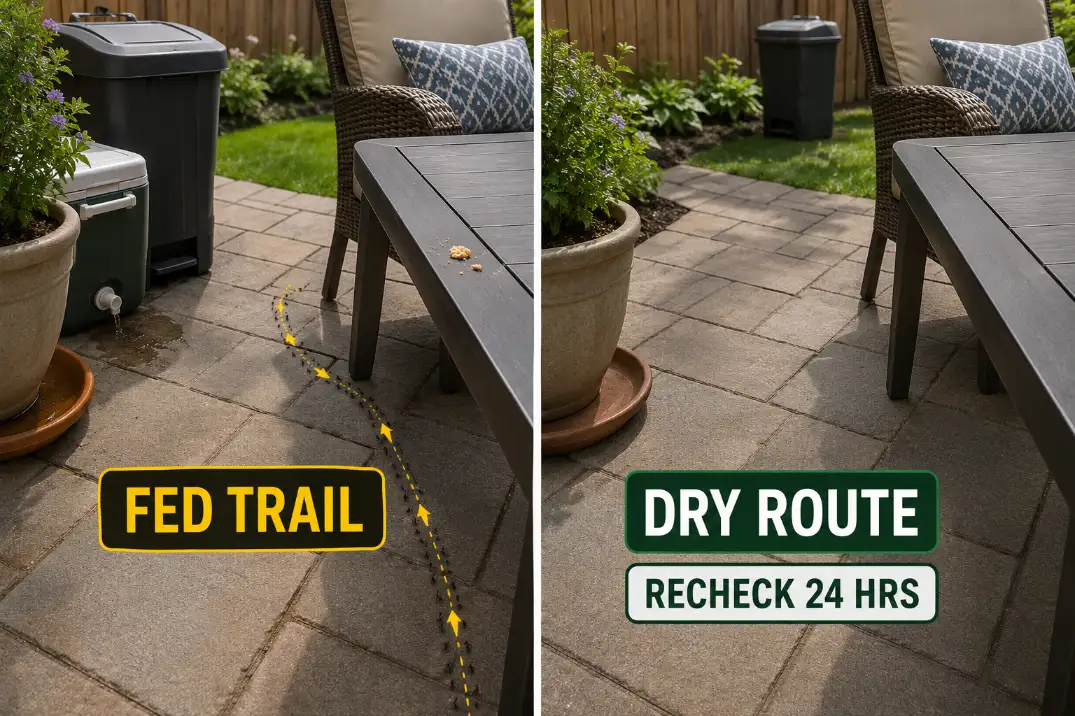
Coolers and drink dispensers deserve the same attention. Lemonade drips, soda residue, melting ice runoff, and sticky cup rings create small sugar points that do not look serious until the same trail keeps returning beside them.
When Cleaning Is Not Enough
Cleaning is enough when the trail fades for 24 hours and does not rebuild after the next meal, watering cycle, or warm afternoon.
Bait or targeted treatment becomes more relevant when ants keep emerging from the same joint, crack, wall base, or planter footprint after food and moisture are removed.
This is also where sprays can backfire. If you plan to use ant bait, do not spray the same active trail first. Bait needs ants to keep feeding and carrying material back.
A repellent spray can scatter the line, reduce feeding, and make it harder to tell whether the original route was solved.
The routine fix stops making sense when the ants are no longer responding to routine causes. A few scouts after dinner are normal.
A dense line that returns daily from the same joint, survives cleaning, and stays active when the patio is dry is no longer just a crumbs problem.
The Practical Fix Sequence
Do not treat every paver joint first. Start with the shortest path to the source.
First, trace the trail 6–10 feet in both directions. Second, remove the food point: crumbs, sticky residue, pet food, trash odor, grill grease dust, or drink drips.
Third, remove the moisture point: saucer water, cooler runoff, irrigation overspray, or a shaded damp strip. Fourth, clean the actual route with soapy water instead of only rinsing the patio. Fifth, watch the same line for the next 24 hours.
If the trail fades and does not rebuild, the patio needed better reward control. If it shifts to a nearby joint, ants are still finding something in that zone. If it comes from the same crack every time, the visible line is only the signpost.
Questions People Usually Ask
Are ants in patio pavers always pavement ants?
Not always, but pavement ants are common around patios, sidewalks, driveways, foundations, and paver joints. If the ants are aggressive, stinging, forming large mounds, or spreading beyond a simple patio trail, especially in fire ant regions, identify the ant type before treating.
Should I seal paver joints to stop ants?
Sealing or repairing joints can help when open joints are collecting debris, washing out, or sheltering traffic. It is not the first fix for a simple food trail. If crumbs, sticky residue, and damp planter saucers are still feeding the route, sealing alone will disappoint.
Will vinegar erase ant trails?
A vinegar-and-water wipe may disrupt a scent trail briefly, but it does not solve the reason the trail exists. Use it only after removing crumbs, sticky residue, standing water, and damp shelter points.
How long should I watch after cleaning?
Watch the same route for 24 hours. If the line does not reform by the next meal or irrigation cycle, the cleanup probably removed the source. If it returns within an hour, keep tracing the route instead of washing the whole patio again.
For broader official guidance on pavement ant identification and behavior, see Virginia Tech Extension.