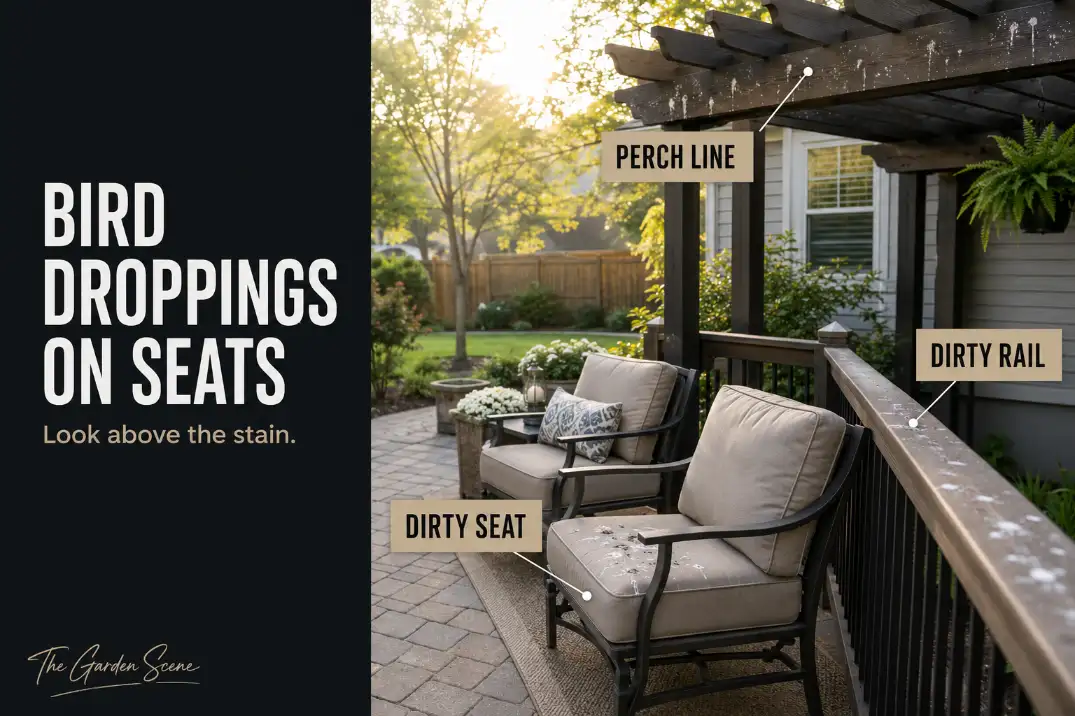
Bird droppings on patio seating and deck railings usually mean the dirty surface is not the real problem. The cushion, chair arm, railing cap, umbrella edge, or deck board is only where the evidence lands.
The useful clue is almost always above it: a branch, railing, pergola beam, roof edge, wire, or umbrella part that birds are using as a repeat perch.
Best first fix: clean the surface, find the perch directly above the stain, then move the affected seat 18 to 36 inches out of the drop path for 48 to 72 hours.
If the mess stops, the issue was furniture placement under a perch, not a general bird problem. If droppings keep appearing across the whole patio, then check food crumbs, open trash, feeder spill, water, and larger roosting points.
Do not start with sprays, fake owls, or reflective tape if one cushion is repeatedly dirty under the same branch, rail, or umbrella part. A tight stain pattern that returns to the same 12- to 24-inch zone within 1 to 3 days is a layout and perch problem first.
The Perch Above the Seat
Clean First, Then Read the Pattern
Start by cleaning the cushion, railing, and deck surface enough that new droppings are easy to separate from old marks. Wear gloves, avoid grinding dried droppings deeper into fabric, and follow the surface manufacturer’s cleaning instructions. The goal is not just sanitation; it is diagnosis.
Fabric cushions usually need gentle lifting and rinsing rather than aggressive scrubbing. Wood railings can hold residue in grain and seams. Composite or metal railings may clean faster, but the top cap still matters because it is the hand-contact surface.
Once the area is clean, the next mark tells you more than the old stain did.
If one chair keeps getting hit while nearby chairs stay clean, the bird is probably not passing randomly over the patio. It is stopping above that chair.
This is where many homeowners lose time. They treat the cushion as the problem because the cushion looks bad. The actual mechanism is vertical: bird, perch, drop zone, surface.
Tight Marks Beat Big Guesses
A narrow mess is more useful than a messy patio. Droppings concentrated under one railing section, one pergola beam, or one chair back point to a specific perch.
A wider scatter pattern across multiple surfaces may come from tree canopy movement, feeder traffic, windy conditions, or birds moving through the yard.
Look straight up from the dirty spot. Check the 3 to 8 feet above it first, then widen the search. A 1-inch-wide railing cap or umbrella rib can matter more than a large tree branch off to the side if it lines up directly over the seat.
Trees Over Furniture
One Low Branch Can Matter More Than the Whole Tree
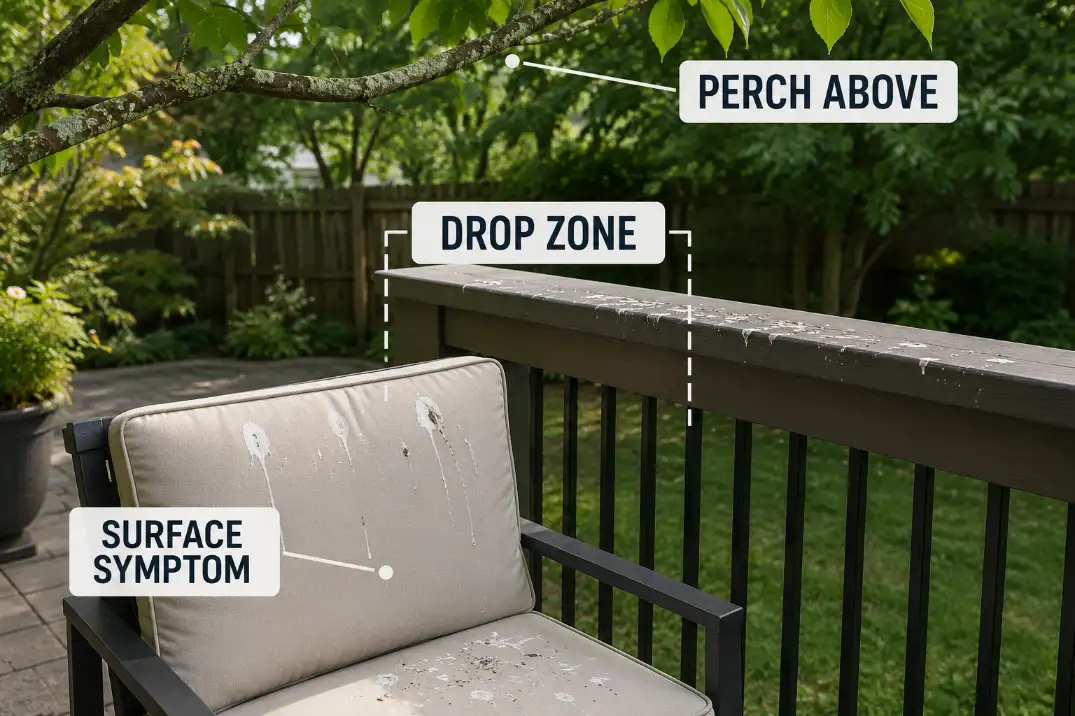
Trees over seating are not automatically a mistake. The problem starts when one exposed horizontal branch becomes a safe pause point over the furniture. Broad shade may be comfortable, but a low perch above a cushion creates a repeat drop zone.
Branch height changes the pattern. A branch 4 to 6 feet above a chair often creates a tight, obvious mark. A branch 15 to 25 feet above the same area can spread droppings across a wider zone, especially with wind.
That difference helps separate a true perch problem from general tree canopy activity.
A useful test is to clean the furniture, leave it uncovered and unused, then recheck after 48 hours. If the same cushion is marked again, placement under the branch matters more than the cushion material.
Shade decisions can create this kind of hidden conflict. A patio can look comfortable but still sit under the wrong overhead condition, which is the same basic mistake behind many patio shade problems in outdoor spaces.
Do Not Prune the Whole Canopy First
Whole-tree thinning is often too blunt for a patio droppings problem. First identify the exact branch that lines up with the marked surface. In many yards, shortening or removing one low perch does more than opening the entire canopy.
A practical threshold: if a branch sits less than about 6 feet above seated head height and directly over a cushion, bench, or railing, treat it as a likely problem branch. If the branch is high, offset, or not aligned with the dirty zone, move the furniture before cutting.
Pro Tip: Mark the dirty spot with painter’s tape, stand directly over that mark, and look straight up. The branch you see from that position matters more than the branch that looks most obvious from across the yard.
Railings and Pergolas
A Dirty Railing Usually Means Landing, Not Flyover
Deck railings collect droppings because they work like landing strips. A railing cap is raised, narrow, stable, and open to the yard. Birds can pause, look around, and leave droppings on the cap or on the furniture below it.
If only one railing section gets dirty every few days while the rest stays mostly clean, do not treat the whole deck as the problem. That section is probably a favored perch. Pulling cushion backs 12 to 18 inches away from that railing can reduce transfer to fabric even before you change the rail itself.
That spacing decision also protects how the deck works. Furniture pressed hard against railings can create dirty cushions, blocked views, and awkward use patterns, which is why deck seating near edges needs the same kind of judgment covered in deck furniture around railings and views.
Pergola Beams Create Drop Lines
Pergolas are different because the pattern can repeat in straight lines. If droppings appear across a table, bench, or cushion in a narrow stripe, look at the beam or slat above it. The mess may be following the overhead structure.
The better first move is often a small furniture shift, not a product. Move the table or chair between beams instead of directly below one. Even a 24-inch adjustment can move a cushion out of the main target line.
| What gets dirty | Most likely cause | First fix | Skip this first |
|---|---|---|---|
| One cushion | Branch, beam, or umbrella part above it | Move seat 18–36 inches | Spraying every cushion |
| Railing cap | Birds landing on the rail | Confirm landing section, then reduce perch comfort | Treating the whole deck |
| Table centerline | Pergola slat or umbrella rib | Shift table between overhead lines | Full pergola redesign |
| Cushion backs | Furniture pressed against railing | Pull seating 12–18 inches away | Buying new cushions |
| Whole dining zone | Food, feeder, water, or canopy scatter | Remove rewards and observe 48–72 hours | Random deterrents everywhere |
Umbrella Problems
A Closed Umbrella Can Become a Perch
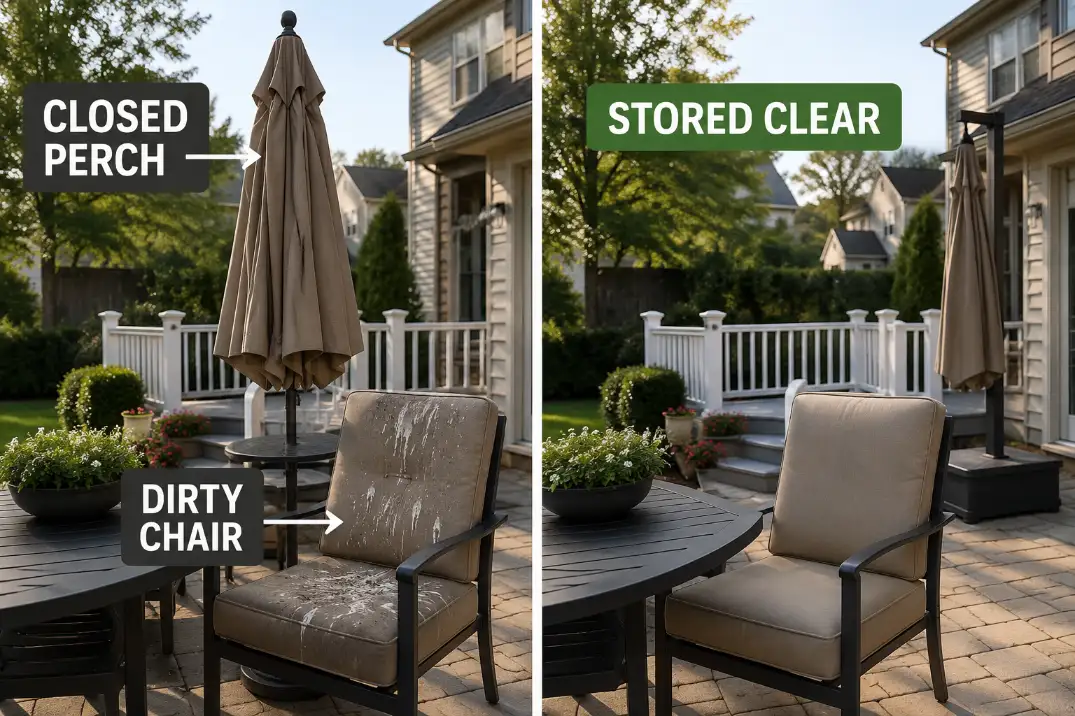
Patio umbrellas can solve one comfort problem and create another. The top hub, ribs, tilt joint, and closed fabric folds can all become landing points. If droppings appear on the chair directly under the umbrella edge or beside a closed umbrella, the umbrella may be part of the problem.
Closed umbrellas are especially easy to miss. A closed umbrella left beside a dining set for several days can act like a vertical perch post. Birds land on the top or folds, and the droppings fall onto the same chair or railing below.
The fix depends on the pattern. If droppings appear under the open ribs, adjust the furniture position or umbrella angle. If they appear under a closed umbrella, store the umbrella away from the seating zone when not in use or use a fitted cover that does not create loose folds and ledges.
Umbrella issues rarely happen alone. The same umbrella that shades the wrong spot can also catch wind, crowd a walkway, or push chairs into awkward positions, which is why shade placement and stability need to be considered together in patio umbrella problems in windy yards.
Move the Seat First
Break the Bird-Perch-Seat Relationship
Move the furniture before buying deterrents. It is the fastest way to learn whether the problem is the bird population or the chair’s position under a usable perch.
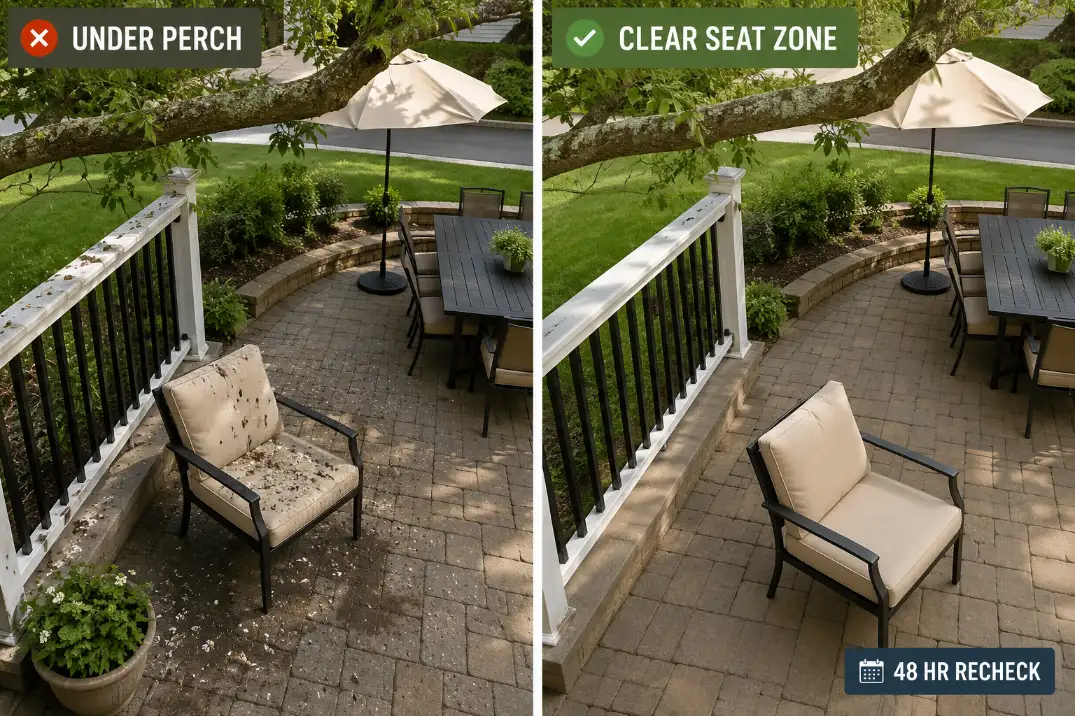
Start small. Move the affected chair, bench, or table 18 to 36 inches out of the vertical path. Leave everything else the same for 48 to 72 hours. If the seat stays clean, the cause was placement. If droppings follow the chair, look for food, water, feeder traffic, or another perch that now lines up with the new location.
This is the point where routine cleaning stops making sense. If the same railing cap needs wiping every morning or the same cushion needs washing twice a week, cleaning has become maintenance for the symptom. The overhead stop is still doing the real work.
Do Not Change Everything at Once
Changing the chair position, pruning the branch, covering the umbrella, adding deterrents, and moving the feeder all on the same day may reduce droppings, but it also hides the cause. A cleaner patio is good; an understood patio is better because the fix is easier to maintain.
Use one clean reset:
- Clean the affected surface.
- Mark the dirty zone.
- Move the seat 18 to 36 inches.
- Recheck after 48 to 72 hours.
- Add pruning, rail treatment, or attractant control only if the pattern remains.
Tight patios make this harder because there may not be much room to shift furniture away from railings, posts, and umbrellas. That is why basic spacing around chairs matters beyond comfort; the same clearance logic in outdoor dining chair clearance also gives you room to escape a dirty overhead path.
Cleaner Seating Zones
Remove Rewards After You Read the Pattern
Food and water matter, but they are not always the first cause. A tight stain under one branch is a perch problem before it is a crumb problem. A broader mess around dining chairs, planters, side tables, and trash points more toward rewards that keep birds returning.
Sweep under eating areas after meals, especially if the patio is used in the evening. Empty saucers, trays, and shallow containers that hold water longer than 24 hours. Keep pet food, open trash, and loose snack packaging away from seating zones.
Bird feeders and birdbaths are another common blind spot. A feeder 10 to 20 feet from the patio can still influence where birds pause if the nearest railing, umbrella, or branch gives them a safe lookout.
If seating keeps getting dirty near a dining zone, the broader food-and-water pattern may overlap with the perch issue. That is the same kind of pressure pattern discussed in outdoor pest pressure around patios and dining.
Choose Deterrents Only Where the Perch Is Confirmed
Physical deterrents can help, but only when they match the surface. A narrow railing cap that birds clearly use may be a candidate for a low-profile perch reducer, sloped cap, or tension-style deterrent.
A tree branch over a chair is usually better handled by pruning or moving the seat. A closed umbrella over a cushion is better stored clear.
Shiny tape, fake owls, and random reflective objects are weaker choices for this specific problem. They may disrupt birds briefly, but birds often adjust within days if the perch is still comfortable and the patio still offers food, water, or cover.
Pro Tip: Add deterrents to one confirmed perch at a time. If you treat every edge at once, you may push birds from the rail to the umbrella and still not know which surface is driving the mess.
When Cleaning Is Not Enough
Repeated Droppings Signal a Use Pattern
Occasional droppings after a windy day, seasonal bird movement, or one heavy morning of activity do not justify a major patio redesign. Repeated droppings in the same small zone do.
Use this threshold: if droppings return to the same cushion, railing cap, or table area within 24 to 72 hours after cleaning, treat the problem as a repeat-use pattern. The bird is landing, waiting, feeding nearby, or using the overhead structure often enough that cleaning alone will not hold.
For fabric cushions, remove droppings promptly and let the fabric dry fully before storage or use. For railings, clean the top cap first because it is the hand-contact surface. Then solve the perch, not just the stain.
When Not to DIY the Bird Problem
Do not trap, poison, or disturb active nests to solve patio droppings. If the issue involves active nesting, heavy pigeon roosting, roofline work, second-story ledges, or a large flock using the structure daily, the problem has moved beyond ordinary cushion cleaning and furniture placement.
HOA rules, rental restrictions, and local wildlife rules can also limit what you can attach to railings, roof edges, pergolas, or shared structures. In those cases, the safest first move is still observation: identify where droppings return, document the likely perch, and avoid permanent changes until the surface and rules are clear.
The right fix is the smallest change that breaks the relationship between the bird’s stopping point and the surface you use. Once that relationship is broken, the patio becomes easier to keep clean without turning every morning into another cushion-washing routine.
For broader nuisance bird prevention guidance, see Penn State Extension’s bird control guidance.