Quick Solution Summary
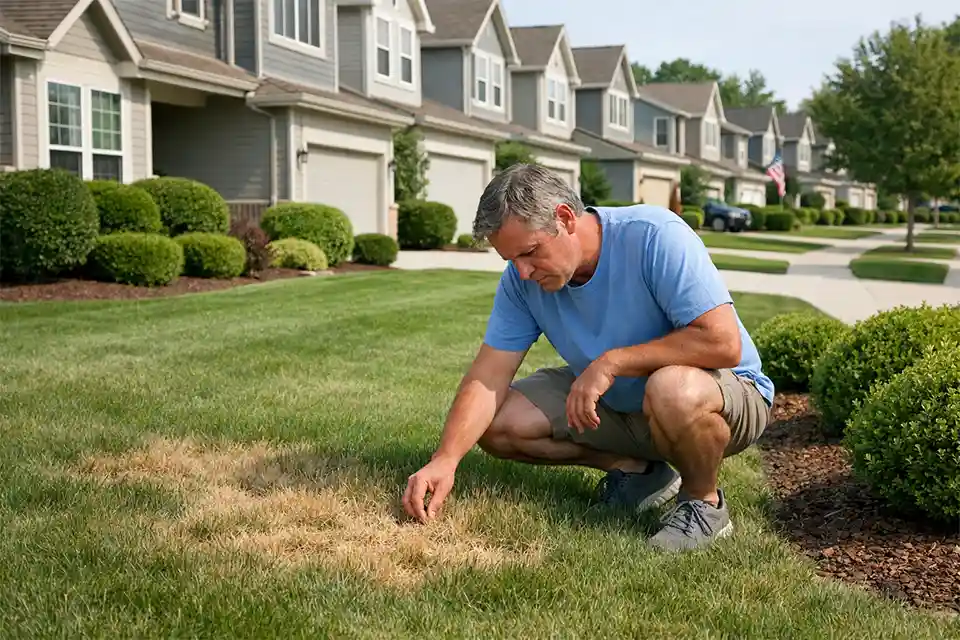
Homeowners association (HOA) landscaping rules often limit what residents can plant in their front yards. While these policies aim to maintain neighborhood consistency and curb appeal, they can unintentionally create maintenance challenges when approved plant lists do not match the local climate or soil conditions.
In many regions of the United States, HOA rules require large areas of turfgrass and restrict alternative landscaping such as native plants, gravel beds, or drought-tolerant ground covers. Maintaining turfgrass alone typically requires 1–1.5 inches of irrigation per week, and during summer heat waves above 90°F (32°C) lawns may require even more water to prevent dormancy or browning.
These requirements can lead to recurring problems like thinning grass, excessive watering, pest outbreaks, and constant pruning of shrubs selected mainly for appearance rather than adaptability. Over time, maintenance costs can increase by 20–30% compared with landscapes designed around native plants or climate-appropriate ground covers.
Fortunately, homeowners can reduce these problems by improving soil quality, choosing the most resilient plants within the HOA’s approved list, and redesigning planting layouts to reduce irrigation demand. Small adjustments—such as mulched beds, drip irrigation, and strategic plant spacing—often reduce maintenance dramatically while still staying compliant with HOA landscaping rules.
Why HOA Landscaping Rules Often Increase Yard Maintenance
Many HOA landscaping policies were originally designed to create visually consistent neighborhoods. Developers commonly established rules that favor tidy lawns, evenly trimmed hedges, and a limited selection of ornamental plants.
While this uniform look can enhance curb appeal, it may conflict with environmental conditions such as soil composition, sunlight exposure, and regional climate patterns.
Several factors frequently contribute to maintenance issues:
-
Mandatory turfgrass coverage regardless of climate
-
Limited plant diversity in approved plant lists
-
Restrictions on native or drought-tolerant species
-
Height limits on trees that would otherwise provide shade
For example, a lawn required by HOA guidelines in Arizona’s desert climate may struggle with daily evaporation rates exceeding 0.25 inches of water per day during peak summer heat. Similarly, turfgrass installed in humid coastal areas of Florida can develop fungal diseases when humidity levels remain above 75–80% for extended periods.
When plant selections ignore environmental conditions, homeowners must compensate with increased irrigation, fertilization, and pest control.
Common Front Yard Maintenance Problems Under HOA Landscaping Rules
When landscaping options are restricted, several recurring problems appear in HOA-regulated neighborhoods.
| Problem | Cause | Maintenance Impact | Practical Adjustment |
|---|---|---|---|
| Brown or thinning lawn | Heat stress or poor soil depth | Frequent reseeding and watering | Improve soil with compost and aeration |
| Excessive irrigation needs | Turfgrass required in dry climates | Higher water bills | Install drip irrigation for shrubs |
| Shrubs growing too fast | Limited species choices | Constant trimming | Increase spacing during planting |
| Weed growth in lawn | Weak grass coverage | Chemical treatments needed | Add mulch beds around plant groups |
| Pest outbreaks | Low plant diversity | Damage spreads quickly | Introduce mixed plant layers |
Over time, these issues create a maintenance cycle where homeowners spend increasing time and resources maintaining landscapes that were never suited to the environment.
Quick Diagnostic Checklist
If HOA landscaping rules are making your front yard difficult to maintain, look for these common indicators:
-
Lawn needs watering more than 3–4 times per week
-
Grass becomes brown during summer temperatures above 90–95°F
-
Shrubs require trimming every 2–3 weeks
-
Soil becomes compacted and drains slowly after rain
-
Weeds appear even after frequent mowing
If several of these conditions occur regularly, the landscaping design may not be compatible with the local climate or soil.
Soil and Climate Conflicts in HOA Landscapes
Another common issue arises from the way residential developments are constructed. During construction, heavy equipment often compacts the soil, leaving only a thin layer of topsoil—sometimes 3–5 inches deep—above dense subsoil.
Turfgrass roots struggle in this environment because they cannot penetrate compacted layers. Water may pool near the surface during rainstorms and evaporate quickly during hot weather, leaving grass stressed and vulnerable to disease.
Clay-heavy soils present an additional challenge. Clay particles retain moisture longer but restrict oxygen flow to plant roots. During hot summer days, these soils can dry into hard surfaces that crack and prevent consistent root growth.
Problems like this often occur in neighborhoods where drainage is already limited. Situations involving dense clay soil are explored in more detail in
How to Fix Clay Soil Drainage Problems in Front Yards, where poor soil permeability significantly increases maintenance demands.
Climate conditions can further amplify the issue. In northern states where winter temperatures drop below 20°F (-6°C), repeated freeze–thaw cycles weaken grass roots and compact soil even further. Meanwhile, in humid southern regions, excess moisture promotes fungal lawn diseases such as brown patch or dollar spot.
Plant Selection Problems Caused by Restricted HOA Plant Lists
HOA plant lists often prioritize visual symmetry and predictable growth patterns. Unfortunately, plants selected primarily for appearance may not perform well in every climate.
For instance:
-
Boxwood shrubs often develop fungal blight in humid regions.
-
Certain ornamental grasses die back in colder northern climates.
-
Fast-growing hedges can require pruning every 2–4 weeks during summer.
These problems arise when landscaping decisions ignore how plants interact with sunlight exposure, soil conditions, and seasonal rainfall.
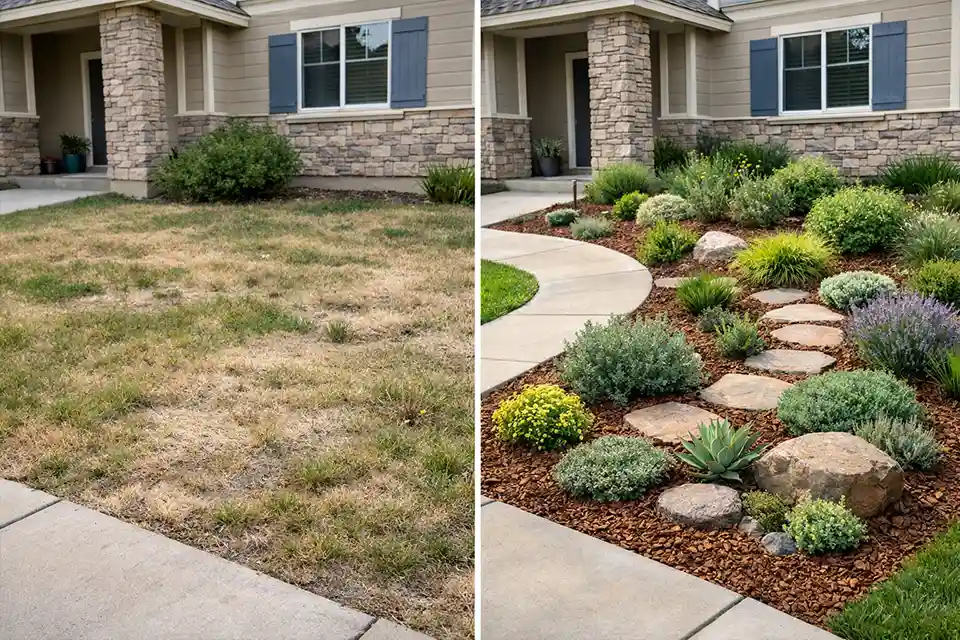
Choosing plants carefully—even within HOA guidelines—can significantly reduce maintenance demands. For example, selecting drought-tolerant varieties from an approved list may reduce irrigation needs by 30–40%.
A detailed explanation of plant selection strategies can be found in How to Choose Plants for Front Yard Landscaping, which discusses how matching plants to environmental conditions improves long-term landscape performance.
Spacing is also critical. When shrubs are planted too closely together to achieve a “full” look quickly, they often require constant trimming once mature.
Allowing 2–4 feet of spacing depending on shrub species typically reduces pruning frequency and improves plant health.
Working With HOA Landscape Approval Rules
Many homeowners assume HOA landscaping rules are completely inflexible, but most associations actually allow design adjustments through an approval process.
Typical HOA landscape modification procedures involve submitting a short proposal that includes:
-
A planting plan or simple landscape sketch
-
Plant species and sizes
-
Irrigation adjustments
-
Mulch or ground cover materials
Review committees often approve modifications if the final design maintains the overall neighborhood aesthetic.
Understanding this approval process can allow homeowners to introduce climate-appropriate plants while remaining compliant. For instance, replacing portions of turfgrass with approved shrub beds or low-water ground covers may significantly reduce irrigation demands without violating HOA guidelines.
Some states have even passed laws limiting how restrictive HOAs can be regarding water-efficient landscaping. California’s Water Efficient Landscape Ordinance, for example, prevents HOAs from banning drought-tolerant landscaping entirely.
Practical Landscaping Adjustments That Reduce Maintenance
Even under strict HOA rules, several landscaping techniques can dramatically reduce maintenance requirements.
Improve Soil Structure
Adding 2–3 inches of organic compost each year improves soil structure, allowing roots to grow deeper and absorb water more efficiently.
Healthy soil can reduce irrigation needs by 10–20%.
Install Efficient Irrigation Systems
Traditional sprinkler systems often lose 20–30% of water due to evaporation or wind drift.
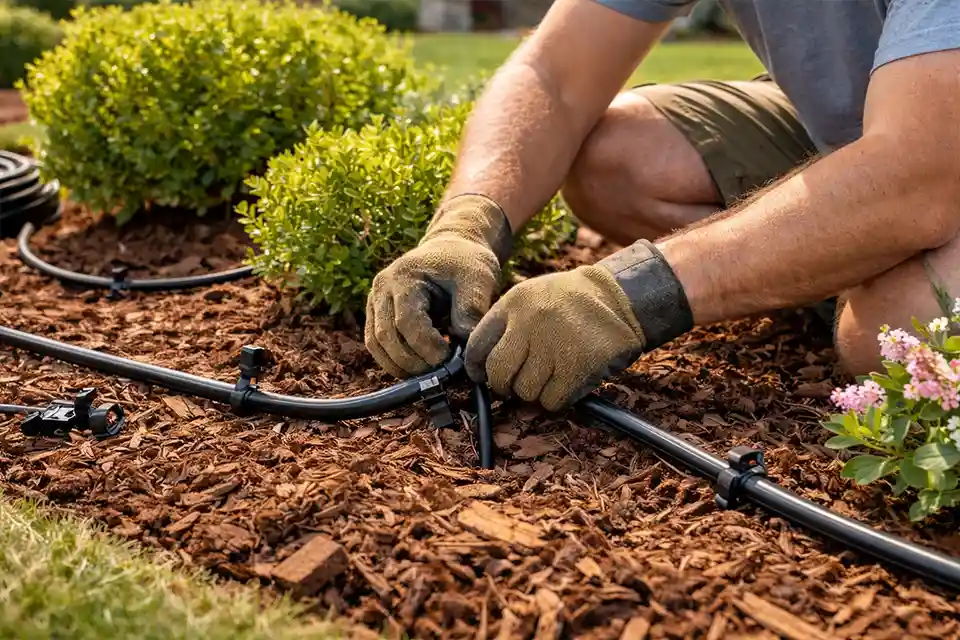
Drip irrigation delivers water directly to plant roots and can reduce water use by 30–50%.
Use Mulch to Protect Soil
Organic mulch layers 2–4 inches thick help stabilize soil temperature, retain moisture, and reduce weed growth.
Mulch also prevents soil compaction caused by rainfall.
When “Low Maintenance” Landscaping Becomes High Maintenance
Many HOA communities promote landscaping guidelines that appear low maintenance at first glance. However, the long-term reality can be quite different.
Mandatory lawns and uniform plant lists often create maintenance cycles where grass must be reseeded frequently and shrubs must be trimmed repeatedly to maintain the neighborhood’s appearance standards.
Design mistakes frequently amplify these problems. Poor plant spacing, inadequate soil preparation, and overreliance on turfgrass can turn a simple yard into a demanding landscape.
These issues are explored in detail in Why Low Maintenance Front Yards Often Become High Maintenance, where small design decisions often lead to years of unnecessary upkeep.
Lot shape can also influence maintenance challenges. Homes built on narrow suburban lots frequently struggle with sunlight distribution and plant placement, a problem discussed in Front Yard Design Problems on Narrow Lots.
Environmental Benefits of Climate-Appropriate Landscaping
Research consistently shows that landscapes designed around local climate conditions require fewer resources and less maintenance.
Native plants, for example, evolved in specific environments and typically tolerate local rainfall patterns, temperature fluctuations, and soil composition.
According to research from the University of California Agriculture and Natural Resources (UCANR), landscapes using climate-adapted plants can reduce irrigation demand by up to 60% in drought-prone regions.
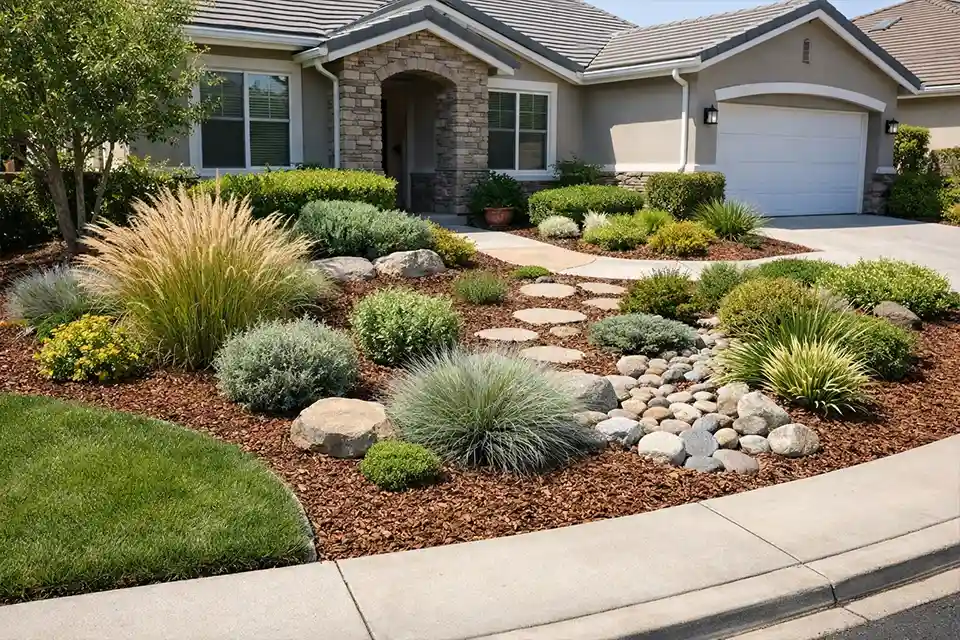
Many examples of climate-appropriate landscaping strategies are demonstrated in Front Yard Landscaping Ideas Using Native Plants, where native shrubs and grasses improve resilience while still maintaining curb appeal.
Even when HOA guidelines limit native plant use, incorporating a few approved drought-tolerant plants can significantly reduce water consumption and maintenance.
For homeowners interested in the research behind climate-adapted landscaping and water-efficient plant selection, the guidance summarized in California Native Plant Landscaping Guidelines explains how plant choice, soil conditions, and irrigation design influence sustainable residential landscapes.
Frequently Asked Questions
Can HOA rules prevent drought-tolerant landscaping?
In some states, laws limit HOA authority over water-efficient landscaping. Associations may regulate design appearance but cannot prohibit drought-tolerant plants entirely.
Why does my HOA lawn require constant watering?
Many HOA guidelines require turfgrass species that are poorly suited to local climate conditions. During temperatures above 90°F, cool-season grasses often require additional irrigation to survive.
Can I modify my front yard if the HOA has strict rules?
Most HOAs allow landscaping changes through an approval process. Submitting a landscape plan that maintains neighborhood appearance standards often results in approval.
What is the easiest way to reduce HOA yard maintenance?
Improving soil health, adding mulch beds, and selecting drought-tolerant plants within the approved list are among the most effective strategies.
Key Takeaways
HOA landscaping rules are designed to create attractive and consistent neighborhoods, but they sometimes overlook how environmental conditions affect plant performance. When required plant lists do not match local climate patterns or soil conditions, homeowners often face recurring maintenance problems such as excessive watering, weak turfgrass, and constant pruning.
By improving soil quality, installing efficient irrigation systems, and selecting the most climate-adapted plants within HOA guidelines, homeowners can dramatically reduce maintenance demands.
Working with HOA approval processes—rather than against them—often allows homeowners to introduce practical landscaping adjustments that maintain curb appeal while making front yard maintenance far easier over time.