Last updated: July 5, 2026
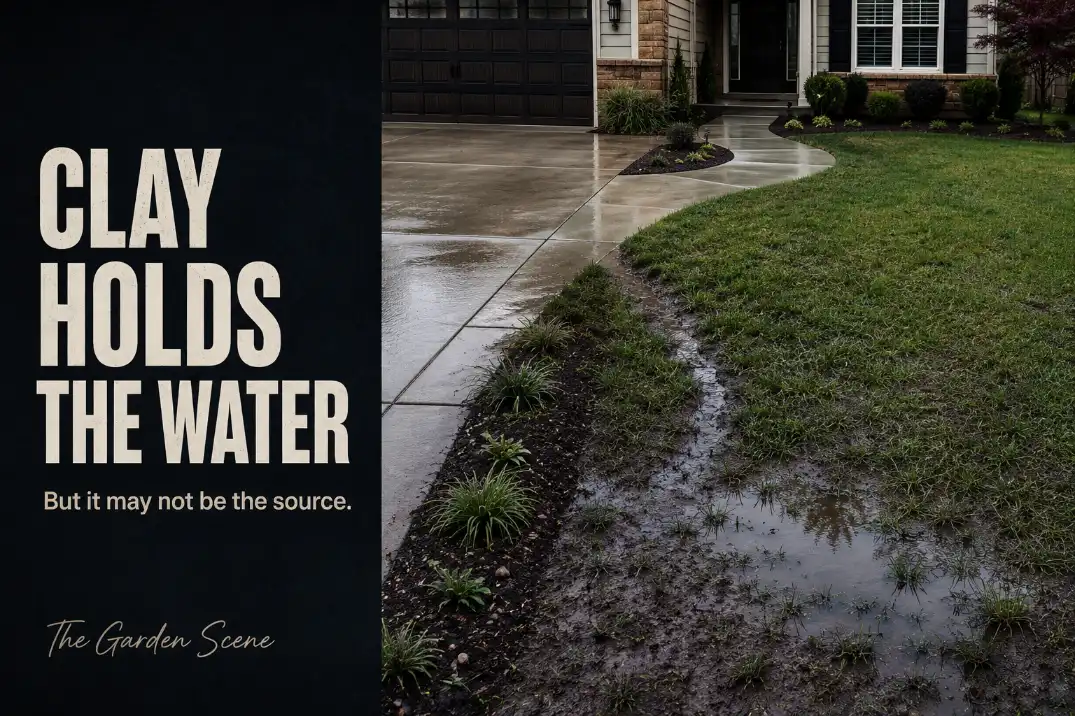
If your front yard stays soft, shiny, muddy, or patchy after rain, clay soil may be the reason water lingers. But clay is not always the reason water arrived there.
That distinction controls the fix. A clay lawn that holds ordinary rainfall needs a different response than a clay bed being overloaded by roof water. A compacted clay strip beside a front walk is not the same problem as runoff crossing from a driveway edge. And a wet low spot near the house should not be treated like a simple lawn repair.
The useful first move is not adding compost, gravel, topsoil, or a drain. It is reading the after-rain pattern: where water appears first, where it stays longest, and whether the clay is the cause, the holding layer, or only the final stop.
Why Clay Soil Causes Front Yard Drainage Problems
Clay becomes a drainage problem when slow soil, surface sealing, and front-yard traffic all work together. The soil particles pack tightly, water moves through them slowly, and the surface can smear or seal when it is walked on, mowed, or worked while wet.
Front yards add extra pressure that many backyard clay areas do not get. Driveways shed water toward lawn edges. Walkways can channel runoff. Downspouts may release roof water into planting beds. Delivery routes, mower turns, curb splash, and repeated foot traffic all compact the surface where the yard also needs to look clean from the street.
So the fix depends on the role clay is playing. Is water sitting because the soil drains slowly? Is water entering from a hard edge? Or is the surface so compacted that rainfall cannot enter evenly in the first place?

Start With the After-Rain Pattern, Not the Soil Label
The first diagnosis should happen while the yard is still telling the story. A week later, clay, runoff, mower marks, and mulch movement all start to blend together.
What to check right after rain
Look for the first wet area. If water appears first along the driveway edge, beside the walkway, below a downspout, or at the front curb, clay may be receiving water from somewhere else. The soil can still make the damage worse, but it is not acting alone.
A true clay-holding problem usually looks broader and flatter. Instead of one clear trail, you may see a dull, shiny surface across a low patch of lawn. Footprints may press into the turf. Grass may thin because the root zone stays tight, wet, and low in air after each rain.
If the water trail begins at pavement, treat that clue seriously. A clay lawn can make the damage more obvious, but driveway runoff entering the front yard usually needs the entry point corrected before soil work helps.
What to check the next day
The next-day check tells you what the clay is holding. If the lawn is still soft, the soil surface still looks sealed, or the planting bed edge still feels muddy, the yard has a slow-drying zone. That does not automatically mean you need a drain. It means the wet area deserves a second look before you disturb the soil.
Use this compact field check before choosing a fix:
- Check where water appears first: driveway, walkway, downspout, curb, bed edge, or open lawn.
- Recheck several hours later to see whether the wet area spreads or stays in one pocket.
- Recheck the next day for soft turf, shiny clay, muddy footprints, or smeared soil.
- Look for sediment lines, mulch movement, or a faint water trail.
- Compare the wettest area with the lowest area in the yard.
- Note whether the wet area is near the house, near pavement, or isolated in the lawn.
- Avoid working the soil while it is still sticky or smeary.

Separate Clay Soil From Runoff, Slope, and Downspout Water
Clay should be blamed only after the water source has been checked. The same wet clay patch can mean three different things: slow soil, incoming runoff, or both.
When clay is the main problem
Clay is more likely to be the main problem when the wetness is broad, slow, and tied to compacted soil rather than a clear water trail. The lawn may stay soft in a flat area. The surface may seal after rain. Grass may thin out in the same heavy patch even when there is no obvious flow line from pavement.
This is where soil structure and compaction matter. The fix may begin with opening the surface, reducing traffic, improving organic structure over time, and protecting the area while it recovers. If that same area also receives runoff, those improvements can fail quickly.
Clay belongs inside the larger pattern of soil, slope, and runoff working together, especially in front yards where hard edges and shallow grades often decide where water settles.
When clay is only where the water ends up
Clay is probably not the first problem when you see directional evidence. Sediment lines, mulch pulled downhill, water marks along a walkway, or a wet strip starting at the driveway edge all point to incoming water. In that case, the clay is the receiving zone.
Downspouts can do the same thing. A front bed may look like a clay problem because the plants sit in wet soil, but the trigger may be roof water dumping into the bed or running along the walkway. If the wet pattern follows the house edge, entry walk, or splash area, check for downspout and walkway drainage problems before rebuilding the soil.
Field note: clay is often the evidence, not the origin. The repair starts where water enters the problem area, not always where the puddle is deepest.
| Symptom in the front yard | More likely cause | First check |
|---|---|---|
| Broad soft lawn with no clear flow trail | Compacted clay holding water | Recheck the same area the next day |
| Sediment line or mulch moved in one direction | Runoff crossing the surface | Trace the line back to pavement or slope |
| Wet bed below a downspout | Water source overloading clay | Watch where the downspout releases during rain |
| Low lawn wet after every storm | Grade or slope pressure plus clay | Compare first wet area with lowest area |
| Water close to the foundation | Drainage boundary problem | Treat it as more urgent than a lawn issue |

Do Not Start by Burying Clay Under More Material
Covering wet clay before diagnosing the water usually creates a cleaner-looking version of the same problem. More mulch, more topsoil, more compost, or more gravel may hide the surface for a short time, but it does not change the water pattern underneath.
Loose material over sealed clay can create a shallow wet layer. The top looks new, but the hard clay below still limits movement. In a lawn, that can leave uneven footing and weak turf. In a planting bed, it can keep roots sitting in a saturated pocket.
Mulch is especially misleading in front yards because it makes beds look finished until water moves. If mulch floats, piles against edging, or slides toward the walk, the bed is showing a water-movement clue, not just a mulch-depth problem.
Gravel has a similar boundary. It can keep a surface cleaner in the right place, but it does not make heavy clay drain if water has nowhere to go. Used too early, it becomes a decorative lid over the same saturated condition.
Choose the Fix Path Based on What the Diagnosis Shows
The right fix is the one that matches the pattern, not the one that sounds most complete. A clay lawn with surface sealing does not need the same first move as a clay bed fed by a downspout.
When soil improvement is enough
Soil improvement is the right starting path when water sits broadly, drains slowly, and does not show a strong incoming trail. In that case, the front yard needs better surface structure and less compaction pressure.
The practical moves are controlled: open the surface, avoid working it wet, reduce repeated traffic, and improve organic structure gradually. This is not a one-day clay conversion. The goal is to help water enter and air return to the root zone, not to replace the whole soil profile.
When the water source must be corrected first
If the wet area starts at a driveway, walkway, downspout, or curb edge, correct the source before improving the receiving soil. Otherwise, the repaired area keeps getting overloaded after every storm.
This is where front-yard drainage gets specific. A bed beside the entry may need a cleaner release point for roof water. A lawn edge beside the driveway may need flow slowed or redirected. A low pocket near the front walk may need the walkway channel understood before the soil is changed.
If wet clay sits close to the house, do not treat it as a cosmetic lawn repair. Persistent water pooling near the house changes the priority because the risk is no longer just turf or planting-bed failure.
When the front yard needs a drainage route
Some clay yards need more than surface improvement because water has no practical place to go. That does not mean every wet clay yard needs a major drain. It means the diagnosis has crossed a boundary: water is arriving repeatedly, staying too long, or moving toward a place where it should not collect.
| Diagnosis result | Better first fix path | What not to do first |
|---|---|---|
| Broad compacted clay lawn | Open surface and reduce compaction | Add loose topsoil over sealed clay |
| Wet strip from pavement | Correct incoming hardscape flow | Amend only the receiving lawn edge |
| Saturated planting bed | Adjust bed edge and water entry | Keep piling mulch higher |
| Thin muddy turf from traffic | Reduce wear and rebuild surface gradually | Mow low while soil is soft |
| Water staying near house or major low point | Route to drainage-specific planning | Treat as a simple soil issue |
A compact order keeps the repair from drifting:
- Identify where water appears first.
- Identify where it stays longest.
- Fix incoming water before improving the receiving soil.
- Open compacted clay only when it is workable, not sticky.
- Recheck the same area after the next heavy rain.
Fix Clay Front Yard Beds Differently Than Clay Lawn Areas
Clay lawn areas and clay planting beds fail in different ways. Treating them the same can make the front yard messier instead of more stable.
Clay lawn symptoms
In lawn areas, clay problems usually show as soft turf, mower ruts, thin grass, shallow roots, and muddy footprints. The surface may feel slick when wet and hard when dry. If the grass is thinning in the same compacted zone, the issue may be less about one storm and more about repeated wet compaction.
Do not rush to overseed a clay lawn while the surface is still sealing and holding water. New seed may germinate, but the same tight root zone can make the repair weak. If the main symptom is thin turf, weeds, and poor recovery rather than clear water movement, the better next read may be poor soil causing patchy front yard grass.
Clay planting bed symptoms
In planting beds, clay drainage problems show around the root zone. Plants may yellow, decline, or sit in soil that stays wet at the base. Mulch may stay damp. Raised bed edges can accidentally trap water if they form a lip against the lawn or walkway.
The fix is not simply to plant “wet-tolerant” material everywhere. First decide whether the bed is wet because the clay drains slowly, because water is being poured into it, or because the bed shape blocks release. A front yard bed also has to preserve curb appeal, walkway access, and house visibility, so the repair should be clean rather than bulky.
Know When Clay Soil Is Not the Problem You Should Fix First
Clay should move down the priority list when the pattern points to a larger water-control issue. Soil work cannot compensate for water repeatedly entering from the wrong direction.
If water flows toward the house, handle that as a drainage and grading concern. If water enters from the driveway or street, the entry path matters before the soil layer. If the front yard sits at the bottom of a slope, the clay may be holding water that arrived from uphill.
For homes where the lot sits low, front yards at the bottom of a hill need source diagnosis before soil improvement. Otherwise, the front yard keeps receiving water faster than the clay can release it.
Recent grading or hardscaping also changes the diagnosis. If a walkway, driveway, bed edge, or front entry project changed how water moves, the clay may only be exposing the new mistake. Avoid deep DIY fixes when standing water is persistent, close to the foundation, tied to municipal or street runoff, or connected to a major slope.
Keep Clay Soil From Becoming the Same Drainage Problem Again
Once the front yard pattern is clear, the prevention rule is simple: do not recreate the sealed, overloaded surface that caused the failure.
Avoid working clay when it is wet enough to smear. Keep repeated foot traffic off soft areas. Do not mow low through wet clay and leave ruts that become tiny channels. Keep downspouts, driveway edges, and walkway borders from sending water back into the repaired area.
Planting beds need the same discipline. Bed edges should not trap water like a shallow bowl. Mulch should protect the surface, not hide movement.
If the bed keeps staying wet after the source is corrected, the planting zone may need a different structure or plant tolerance, but that decision should come after the water pattern is understood.
The final check is the next rain. Watch where water appears first, where it holds longest, and whether the repaired clay area dries more evenly than before.
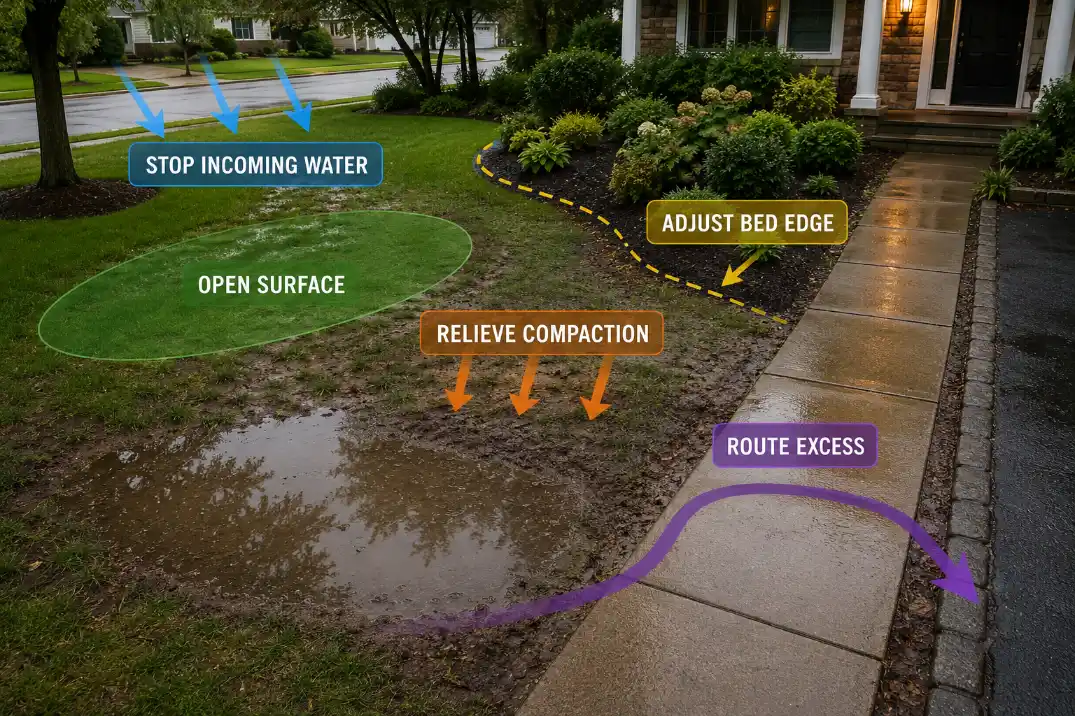
Fix clay soil drainage in a front yard by diagnosing the pattern first: open the surface when clay is the cause, reduce compaction when traffic is sealing it, stop incoming water when runoff is feeding it, adjust beds when edges trap it, and route excess water when the yard is receiving more than soil work can handle.
For neutral background on how compaction reduces water infiltration and drainage, see the University of Minnesota Extension guide to soil compaction.