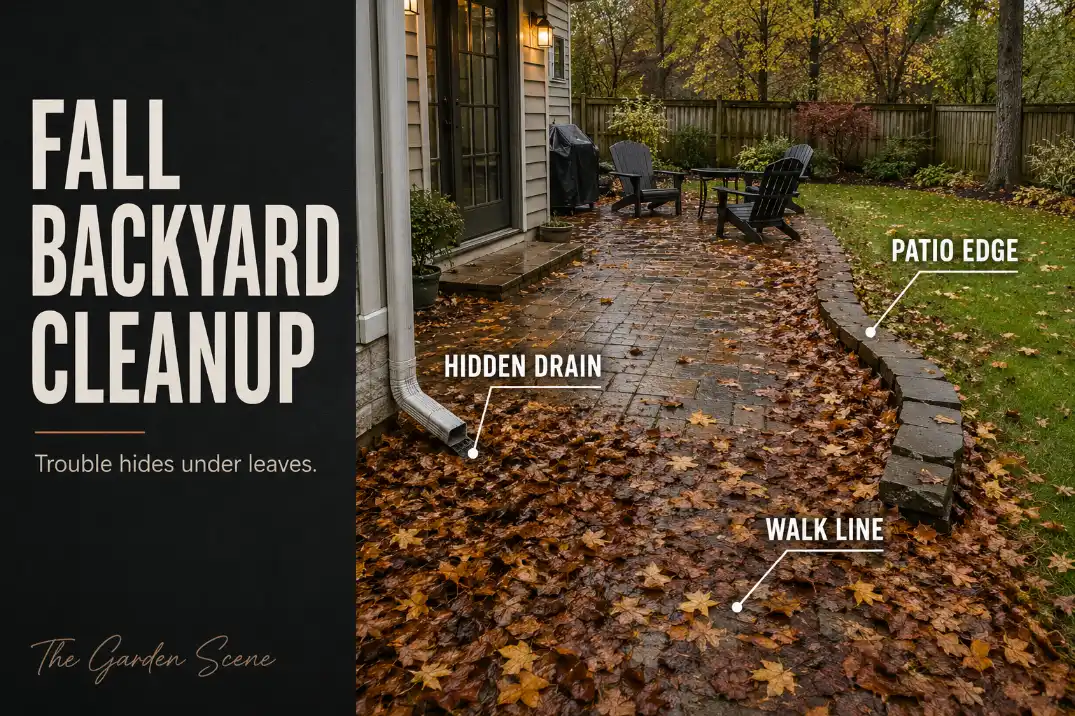
Fall backyard cleanup should not start as a beauty pass. It should start as a pre-winter failure scan.
The first places to check are wet leaf mats, blocked drainage exits, patio edges that feel soft or uneven, and walking routes people still use after dark.
A thin layer of dry leaves across the lawn is usually less urgent than 2 inches of wet leaves packed over a drain, step edge, or downspout outlet.
The useful difference is this: normal fall debris looks messy, but problem debris hides water movement, surface movement, or footing.
If a low patio corner stays wet for more than 24 hours after dry weather returns, or water still crosses the same walking line after a 1/2-inch rain, the cleanup has uncovered a bigger issue.
Leaves Hide Trouble
Clear leaves first where they hide water, edges, steps, or active routes. Do not begin by chasing every leaf across open lawn while the back-door route, drain grate, and patio border are still buried.
Dry leaves are not the same as wet mats
Loose dry leaves are easy to move and often harmless for a short period. Wet leaves behave differently. Once they flatten into a mat, they hold moisture against paver joints, stair noses, lawn edges, and low drain areas.
That mat can make a raised paver, loose edging, or slick landing disappear from view.
The leaf count matters less than the location. A light scattering in a planting bed may not need immediate removal.
A compressed layer over the route from the back door to the patio should move to the top of the list, especially when evenings get darker and the surface stays damp.
Start with the places people step
The highest-priority cleanup zones are usually the back door landing, patio-to-lawn transition, grill route, trash path, deck stairs, side-yard gate, and any low area where water collects.
These areas deserve attention before low-use corners because they affect safety and drainage at the same time.
A common waste of effort is raking the open lawn first because it gives the biggest visual payoff. That can leave the real trouble hidden.
If the drain, edge, or walking route is still covered, the yard may look cleaner while the risk stays exactly where it was.
Clear Drainage Paths
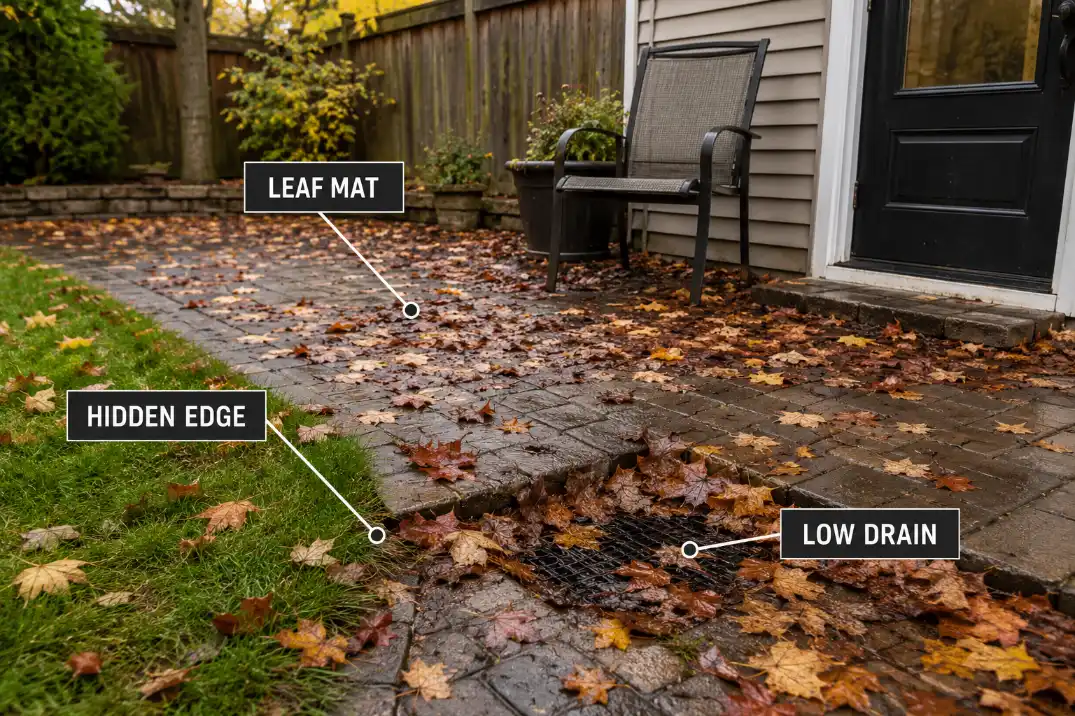
Clear water routes before cleaning decorative surfaces. If water cannot leave the yard correctly, a neat patio will not stay stable for long.
Follow the water chain
Start where roof water, patio runoff, or lawn runoff already wants to move.
Check gutter overflow points, downspout outlets, splash blocks, swales, channel drains, catch basins, low paver corners, and the place where lawn meets hardscape.
Backyard wet spots sometimes begin above the patio, not on it. A buried downspout outlet or clogged overflow path can send water sideways into areas that were never meant to carry it.
A drain grate should still be visible after normal leaf drop. If you have to dig through wet leaves and sludge to find it, the drainage system is not ready for winter.
In yards where the patio already fights runoff, the cleanup should follow the same priority logic as Patio Drainage Layout Problems: protect the path water takes before you polish the surface.
Use rain as the test
A damp area right after rain is not automatically a failure. A low spot that stays slick, smells sour, or holds leaf sludge after 24 hours of dry weather deserves a closer look.
The practical threshold is simple: if water or wet debris remains in the same place the next day, treat it as a drainage problem, not just a cleanup task.
For hardscape near the house, direction matters. Patio surfaces should generally move water away from the foundation, often around 1/8 to 1/4 inch per foot.
If the slope is weak and leaves are trapping moisture near the wall, the next freeze or heavy rain can turn a small fall cleanup issue into a spring repair.
Pro Tip: Clear drainage exits twice in fall: once during peak leaf drop and once after most trees are bare.
Protect Patio Edges
Expose patio edges before winter because the edge is where small movement becomes spring repair. The middle of a patio can look clean while the border is losing support.
The edge is the support line
A patio edge is not only a visual border. It holds the surface in place where pavers, concrete, gravel, soil, or lawn meet. When wet leaves sit along that joint, they can hide soil washout, loose edging, low spots, and pavers beginning to rock underfoot.
In northern states, the problem gets sharper when moisture enters a gap, freezes, expands, and loosens the backing. In rainy regions, repeated runoff can pull soil away without any dramatic one-day failure.
A 1/4-inch gap along the edge may be cosmetic. A 1/2-inch gap with loose soil, washed-out gravel, or a rocking paver is no longer just a cleanup note.
If the patio edge sits near the house and water keeps returning to that side, compare the pattern with Patio Water Pooling Against the House before assuming the problem is only seasonal debris.
Power washing is often the wrong first fix
One of the easiest ways to waste a fall weekend is to power-wash the open patio while leaving the leaf-packed edge untouched.
The surface looks better, but the vulnerable part remains wet and hidden. A better sequence is to expose the border, remove trapped organic sludge, check whether the edge still feels firm, and refill minor washouts before winter weather works into the gap.
Store Loose Furniture
Store what can move, not only what looks fragile. Fall storms do not need to lift furniture into the air to create damage or block access.
Small pieces often cause the biggest trouble
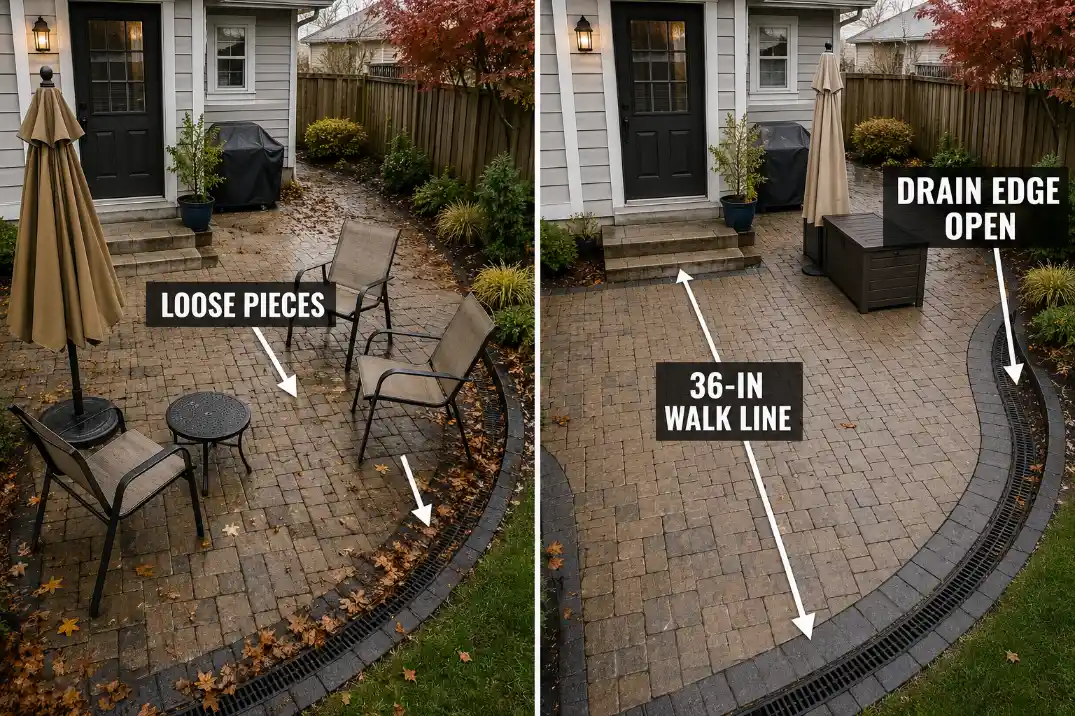
Start with umbrellas, folding chairs, side tables, cushions, empty planters, lightweight benches, and anything broad enough to catch wind.
A heavy dining table may stay in place, while a small aluminum chair slides across pavers and wedges against a door, drain corner, or step.
The common overestimate is believing that “heavy enough” means safe. Furniture only has to shift 12–18 inches to block a route, scrape glass, trap leaves along a patio edge, or force people onto wet grass.
In exposed yards, a 25–35 mph gust can reveal which pieces are truly stable and which only looked settled on calm days.
Store without creating a new blockage
A rushed cleanup often moves everything into the side yard, garage path, or back-door landing. That creates a different problem. Keep at least a 36-inch walking line open on routes used for trash, tools, firewood, groceries, pets, or winter access.
The stronger layout is not always “put everything away.” Sometimes it is grouping heavier pieces, removing cushions, closing and storing the umbrella, and keeping the drainage edge open.
For exposed patios, the same thinking used in Wind-Resistant Patio Furniture Layout applies during cleanup: reduce loose individual objects before wind tests them.
Keep Walkways Visible
Clear the routes people actually use after dark before cleaning low-use corners. In fall, visibility is part of cleanup because shorter daylight changes how the yard reads.
Wet leaves on steps are same-day priority
A wet leaf mat on a lawn corner can wait longer than wet leaves on a step, landing, narrow path, or patio threshold. These areas combine slickness with poor contrast.
From inside the house, a damp paver, dark mulch edge, and leaf-covered step can look like one flat surface.
Focus on the back door to patio route, patio to trash area, deck stairs, grill path, and side-yard gate. If people use that path after 5 p.m., the edge should be obvious without guessing.
A visible route does not need to be decorative, but it does need contrast, footing, and a clear line of travel.
Cleanup has a limit
If a step edge disappears after the leaves are cleared, cleanup is no longer the solution. The route may need lighting, surface contrast, a more stable edge, or a different traffic pattern. A clean but invisible step is still a risk.
This is where fall cleanup overlaps with layout safety. If step or path edges remain hard to read even after clearing debris, the next decision belongs closer to Outdoor Step Visibility Ideas than ordinary leaf removal.
Clean Without Stripping Everything
The right fall cleanup removes risk, not all organic cover. A backyard stripped bare can still drain poorly, erode faster, and feel less protected going into winter.
Leave useful cover where it helps
Leaves can stay in planting beds, under shrubs, or in low-use garden corners when they are not burying crowns, smothering turf, blocking drains, or covering walkways.
A 1–2 inch layer in a bed can reduce soil splash and protect the surface from heavy rain. That is different from a wet pile against a patio edge, stair base, fence line, or foundation wall.
This is the condition people often underestimate. Total removal is not automatically better. The smarter move is to keep organic cover where it supports soil and remove it where it hides water, movement, pests, rot, or footing.
Know what should not stay
Selective cleanup does not mean ignoring diseased or messy material. Remove diseased foliage, rotten fruit, heavy piles against wood, and wet debris pressed against structures.
Those materials do not function like clean leaf cover in a planting bed. They can hold moisture, attract pests, or carry problems into the next growing season.
The practical question is not “Should I clean this?” It is whether the material should be cleared, left in place, or treated as a warning sign before winter.
| Fall cleanup area | Clear it | Leave it | Fix before winter |
|---|---|---|---|
| Main walking routes | Wet leaves on steps, landings, and narrow paths | Dry leaves off the active route | Route still hard to see after clearing |
| Drainage paths | Leaves over grates, outlets, swales, and low corners | Light debris away from water flow | Water remains after 24 hours of dry weather |
| Patio edges | Wet leaf mats, sludge, and washed-out soil | Dry surface leaves away from the edge | Rocking pavers or 1/2-inch loose gaps |
| Planting beds | Diseased foliage, rotten fruit, piles against stems | Thin clean leaf cover around stable plants | Soil washing toward patio or walkway |
| Furniture zones | Cushions, umbrellas, light chairs, loose small tables | Heavy stable pieces that do not block routes | Furniture shifts 12–18 inches in wind |
Recheck after rain
A fall cleanup is not finished until rain tests it. After the next 1/2-inch rain, look again at the same drain outlets, patio edges, walkway lines, and storage zones.
If this cleanup reveals repeated weak points, it can help to compare the yard against a broader seasonal check like Seasonal Outdoor Readiness before winter weather locks those problems in.
If water moves cleanly, edges stay firm, and routes remain visible, the cleanup worked. If leaves return to the same drain, water crosses the same walking route, or a patio edge softens again, the cleanup has revealed the next fix.
That is useful information. It means the yard is showing you where winter will apply pressure before the repair becomes larger.
The Bottom Line
Fall backyard cleanup prevents bigger problems when it is aimed at the places that fail first: drainage exits, patio edges, walking routes, and loose objects.
Leaves on open lawn are rarely the emergency. Leaves hiding water flow, footing, edge movement, or storm-vulnerable furniture deserve attention first.
Clear what affects water, support, wind, and walking before stripping the whole yard bare. Leave harmless organic cover where it protects soil, but remove wet mats, diseased debris, and anything that hides a route or weak edge.
A good fall cleanup should make the backyard easier to read before winter, not just cleaner for one weekend.
For broader official guidance on keeping yard waste out of waterways, see the EPA’s yard runoff guidance.