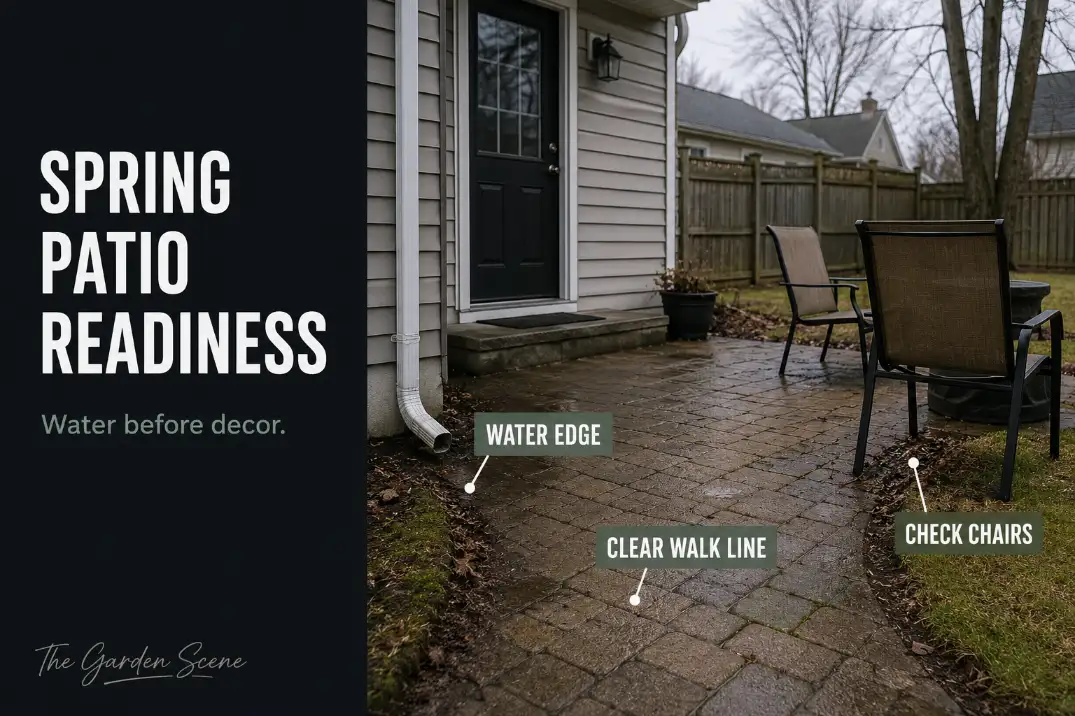
A spring patio readiness checklist should start with water, movement, and walking lines before cushions, planters, rugs, or decor come back outside.
The most useful first checks are simple: where rainwater sits, whether any surface edge has lifted, and whether the route from the back door still works when furniture is used normally.
A patio that looks “just dirty” may actually have a raised paver, a blocked drainage edge, slippery algae, or furniture returning to the same cramped layout that made last season awkward.
Use one practical rule first: after a normal spring rain, water should not sit against the house, across the main walking route, or in paver joints for more than 24–48 hours.
Dirt can wait. Standing water, 1/4-inch raised edges, slick step zones, unstable chairs, and blocked door clearance should move to the top of the list.
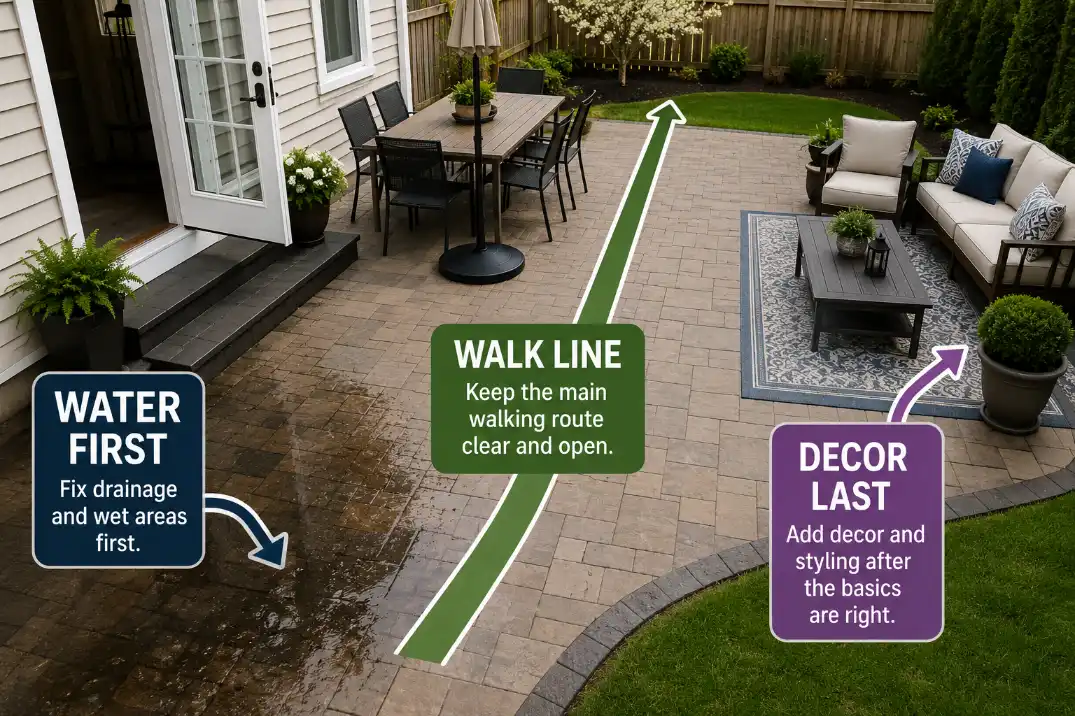
A spring-ready patio does not have to look finished yet. It has to drain, walk, and sit correctly before the prettier layers return.
Quick spring patio readiness order
- Check water after rain before cleaning.
- Look for raised edges, loose joints, or rocking surfaces.
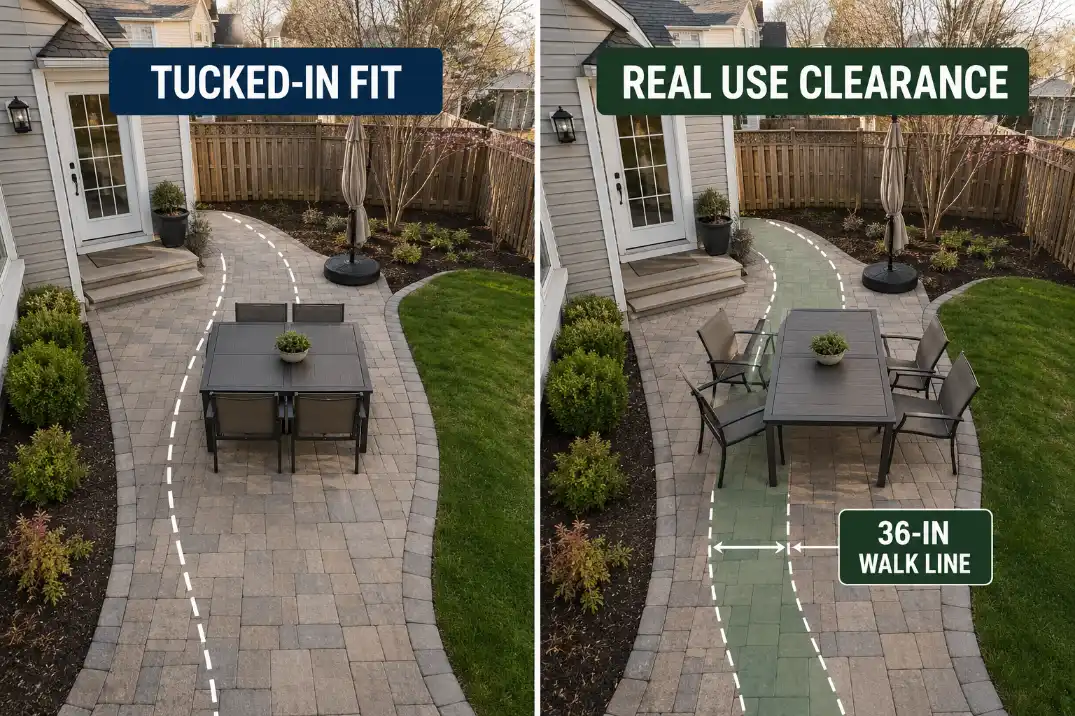
- Keep the main walking line close to 36 inches where possible.
- Pull chairs out before approving the furniture layout.
- Add shade, cushions, rugs, and decor after the patio proves it can dry and move well.
Look for Winter Damage
Winter damage is rarely spread evenly across a patio. The shaded corner, low edge, north-facing joint line, or strip beside a planting bed usually tells the story before the open center does.
Start at the back door and walk outward, because that is how the patio is actually used.
Separate dirt from movement
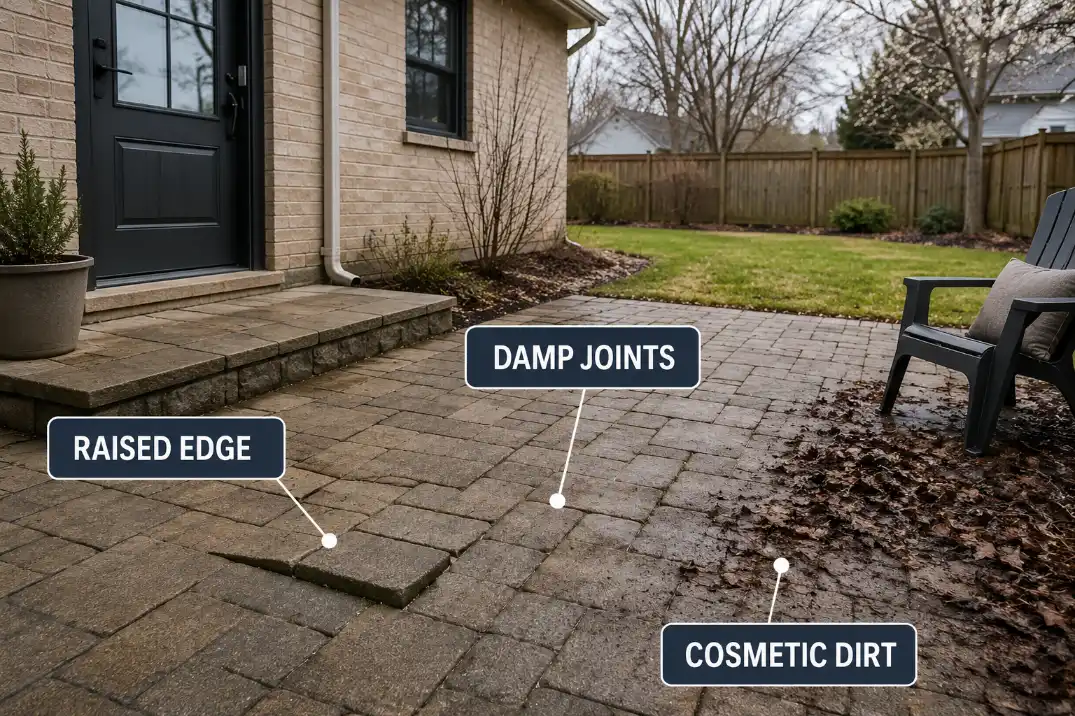
Dirt, leaves, and surface staining are symptoms. Movement is the more important mechanism. A stained paver may only need cleaning, but a paver that sits 1/4 inch higher than the one beside it can catch shoes, rock a chair, or hold water in the joint.
That matters more than whether the patio looks bright on the first warm weekend.
Check slab joints, paver edges, step noses, border restraints, and the transition where the patio meets the lawn or planting bed.
If a chair leg rocks in the same spot every time, the surface is telling you more than a stain does.
What changes by patio type
Paver patios need a close look at joint sand, edge restraints, loose border pieces, and settled areas where water collects. Concrete patios need attention around cracks, spalling, widened joints, and low areas where water keeps returning. Patios connected to decks or wood steps need a different check: soft boards, loose fasteners, shaded slick spots, and step edges that became harder to read over winter.
This distinction prevents a common spring mistake. A paver patio with joint loss does not need the same first fix as a concrete slab with water running toward a crack. A shaded deck step with green film is not mainly a decor problem. It is a traction and visibility problem.
Check the door and step zone first
The first 3–5 feet outside the back door deserve extra attention because that is where people step out carrying food, drinks, cushions, tools, or trash.
If the landing has a loose mat, raised threshold, wobbly paver, or slick green film, fix that before spreading attention across the whole patio.
A full patio wash can make the far corner look better while leaving the most-used step edge unclear. For safety and daily use, the first step, the turn, and the path to the main seating area matter more than a perfectly clean surface everywhere.
Check Drainage First
Drainage should be checked before cleaning, furniture placement, or new planting because water creates many problems that look unrelated later: slippery film, settling pavers, muddy edges, mosquito pressure, and stained furniture legs. If the patio does not dry correctly, almost every other improvement becomes less reliable.
Watch where water actually goes
The useful test is not whether the patio looks wet during rain. It is where water remains after the rain stops. After the next steady rain, look again 2 hours later, then the next morning.
Water that clears quickly is normal. Water still sitting in a low pocket after 24 hours deserves attention. Water that remains after 48 hours usually means the grade, joint fill, soil edge, or outlet path is not working.
A patio should generally pitch away from the house. A consistent fall of about 1/8 inch per foot, or roughly 1–2%, can be enough when the outlet edge is open.
The problem is not always lack of slope. Sometimes the patio had enough slope, but mulch, soil, gravel, or turf built up along the edge and blocked the water’s escape route.
If water collects near a door, along the house wall, or at the main seating edge, treat that before polishing the surface.
A broader look at Patio Drainage Layout Problems can help connect the patio surface, soil edge, and runoff path instead of treating each wet spot separately.
Why cleaning first can waste time
Pressure washing often feels like the obvious spring fix because it gives a fast visual result. The problem is that it removes the symptom while leaving the mechanism in place.
If runoff still crosses the walking route, a shaded strip still stays damp, or a low paver joint still holds water, the same slick film can return within 1–2 weeks.
That is where routine cleaning stops making sense as the main answer. Clean the surface, yes, but do not confuse a brighter patio with a working patio.
Pro Tip: Check drainage before moving heavy furniture back. Bare patio surfaces make low spots, wet joints, and blocked edges much easier to see.
Clean the Walking Lines
Spring cleaning should start with the routes people use, not the areas that photograph best. The walking lines are the paths from the back door to the seating area, grill, side gate, trash zone, steps, and yard. If those routes are slick, narrow, or interrupted, the patio is not ready even if the seating area looks fresh.
Keep the main route wide enough
A comfortable patio route usually needs about 36 inches of clear walking width. Less can work in a tight patio, but once the route drops near 24 inches, people begin turning sideways, stepping around chair legs, or walking through wet grass instead.
This is where spring patios often fail quietly. A deck box, extra planter, umbrella base, rolled rug, or side table seems harmless by itself, but each one steals a few inches from the same route. The result is not clutter in a general sense. It is a broken movement line.
If the back-door route already felt awkward last season, use spring reset as the moment to fix the layout rather than repeat it. Keep Patio Entry Clear is especially useful when the first few feet outside the door keep collecting furniture, mats, shoes, storage, or decor.
Clean traction before color
Sweep first, rinse second, and scrub only where traction is weak. Algae, packed leaf film, and mud at step edges matter more than faded patio color.
In humid climates or shaded patios, green film can return faster than expected, especially where leaves sat through winter.
A cleaner patio is not automatically a safer patio. The better test is whether shoes grip at the step, whether water stops crossing the walking line, and whether a person can move from the door to the seating area without stepping around furniture or damp debris.
| Patio signal | What it usually means | First useful action |
|---|---|---|
| Dirt on a flat, dry surface | Cosmetic winter debris | Sweep and rinse normally |
| Green film near a shaded step | Moisture and low sun exposure | Scrub traction zone and improve drying |
| Water across the door route after 24 hours | Drainage path crossing use area | Redirect runoff before deep cleaning |
| Rocking chair in one spot | Surface movement or settling | Check pavers, joints, or slab edge |
| Mud pushed onto patio edge | Soil or bed edge too high | Clear the outlet edge before adding decor |
Test Furniture Placement
Patio furniture should go back only after the surface and walking routes are checked. The goal is not to recreate last year’s layout automatically. The goal is to see whether the old layout still works after winter movement, new traffic habits, different shade, or added storage.
Test with the chairs pulled out
A dining set that fits with chairs tucked in may fail during actual use. Pull chairs out 24–30 inches and walk behind them. If the back-door route disappears when someone sits down, the table is too close to the movement line.
The same applies to lounge chairs. A deep chair may look fine from above but block the patio when angled for comfort. Test each piece in the position people actually use, not in the neat position it holds for photos.
This is especially important near sliding doors, narrow walkways, and small patios where one oversized chair can break the whole layout.
If traffic from the house to the patio keeps getting squeezed, Patio Layouts for Sliding Glass Doors and Walkways can help you separate seating comfort from door clearance.
Do not overestimate heavy furniture
Homeowners often overestimate weight. A heavy-looking chair can still slide, tip, or scrape if it has narrow legs, a tall back, or sits on smooth concrete.
Umbrellas are even more misleading because the base may feel heavy while the canopy turns into leverage.
The better spring test is practical: can the piece stay stable when pulled out, turned, or bumped?
Can people move around it without stepping off the hard surface? Does it leave a usable walking line when the patio is in real use?
For patios where winter storms exposed a strong wind lane, furniture placement also needs a stability check. Lightweight chairs, umbrellas, and side tables should not sit in the most exposed path near glass doors.
A more stable setup is covered in Wind-Resistant Patio Furniture Layout.
Refresh Shade and Seating
Shade and seating are spring readiness items, but they should come after drainage, surface safety, and furniture flow. This is the order many patios get wrong.
Buying a new umbrella, cushions, or outdoor rug will not solve a patio that holds water under the seating area or forces people into a narrow route.
Check the shade path, not just the shade object
A shade setup should cover the seat when the seat is actually being used. In spring, the sun angle may make last summer’s shade feel slightly off, but placement usually matters more than the season.
If the umbrella base blocks the walking line or the canopy shades the table center while seats stay exposed, the setup is not doing enough.
For small patios, shade often fails because it tries to cover everything at once. A better target is usually the 2–3 seat positions used most often in late morning or afternoon.
When shade hardware starts stealing access, Add Patio Shade Without Blocking Walkways can help keep comfort from turning into clutter.
Delay rugs and cushions in slow-drying zones
Cushions, rugs, and side tables should earn their way back. If a rug traps dampness over pavers that already dry slowly, skip it or wait until the surface has dried properly after at least 2 real rain events.
If cushions were stored in a damp shed and still smell musty after 24 hours in dry air, they are not ready for regular seating.
This is where people underestimate moisture. A patio can feel seasonally ready on a sunny afternoon while shaded corners, cushion undersides, and rug edges stay damp long enough to create odor, staining, or slickness.
The limit is simple: if a rug, cushion, or shade base makes the patio harder to dry, harder to walk through, or harder to clean, it is not part of readiness yet. It is an accessory waiting for the patio to work first.
Fix Before the Season Starts
The final spring patio readiness step is deciding what must be fixed now and what can wait. Not every flaw deserves the same urgency, and treating everything as equal is how simple patio preparation becomes scattered.
Fix safety and water before comfort
Fix these before the season starts: raised step edges, loose pavers in the main route, standing water near the house, slick film where people step, unstable furniture, blocked door clearance, and shade bases that create trip points.
Refresh these after the core patio works: cushions, planters, rugs, decor, small side tables, lighting accents, and seasonal styling. Those details matter, but they should not hide a layout or drainage issue that will keep coming back.
A broader seasonal pass can also catch weak points beyond the patio itself. If the patio connects to side yards, storage corners, steps, outdoor dining zones, or trash areas, Seasonal Outdoor Readiness can help you look at the full outdoor route instead of treating the patio as an isolated surface.
Use a fix now, watch, wait filter
| Priority | Patio condition | What to do |
|---|---|---|
| Fix now | Water near house, slick step, raised edge, blocked door route | Correct before regular patio use |
| Fix now | Furniture tips, slides, or blocks the main route | Change placement before adding decor |
| Watch | Mild staining on a flat, dry surface | Clean normally and recheck after rain |
| Watch | One damp shaded corner that dries within 24 hours | Improve debris removal and airflow |
| Wait | Cushions, rugs, planters, and styling | Add after drainage and routes work |
Finish with one last readiness pass
Before the patio season really starts, make one compact pass in the right order: check water after rain, walk the back-door route, test raised joints and chair wobble, pull furniture into real-use positions, and delay rugs or decor in areas that still dry slowly.
That final pass is not about making the patio look perfect. It is about making sure the first warm weekend does not expose the same winter problems you could have caught while the patio was still mostly empty.
Questions People Usually Ask
Should I pressure wash the patio every spring?
Not automatically. Sweep, rinse, and scrub traction zones first. Pressure washing can help stained concrete or pavers, but it can also disturb joint sand or expose weak edges.
If the same area turns slick again within 1–2 weeks, solve the moisture pattern instead of cleaning harder.
When is patio damage more than normal winter wear?
Raised edges, rocking pavers, water near the house, recurring slick film, and step-area movement are more important than color changes. If the surface changes how people walk, sit, or drain water, treat it as functional damage.
Should furniture or drainage be checked first?
Drainage comes first. Furniture can hide low spots, damp joints, and blocked edges. Once water paths are clear, furniture placement becomes easier to judge because you can see where people should walk and where pieces should not sit.
For homeowner-focused guidance on keeping rainwater away from foundations and hardscape edges, see the University of Minnesota Extension moisture guidance.