Last updated: March 24, 2026
Front yard privacy can feel tricky because homeowners want relief from street visibility without making the property look closed off. In many American and Canadian neighborhoods, the front yard is still expected to feel welcoming and visually open, which limits the use of tall walls or solid fencing.
A well-designed front yard doesn’t eliminate visibility entirely—it redirects it. Thoughtful landscaping, small structural elements, and strategic plant placement can soften sightlines from sidewalks and roads while keeping curb appeal intact.
Across suburban communities from North Carolina to British Columbia, the most successful privacy designs tend to rely on layered landscaping instead of heavy barriers. These approaches create a buffer between the house and the street without making the property feel defensive.
1. Layered Hedge Borders That Quietly Block Street Views
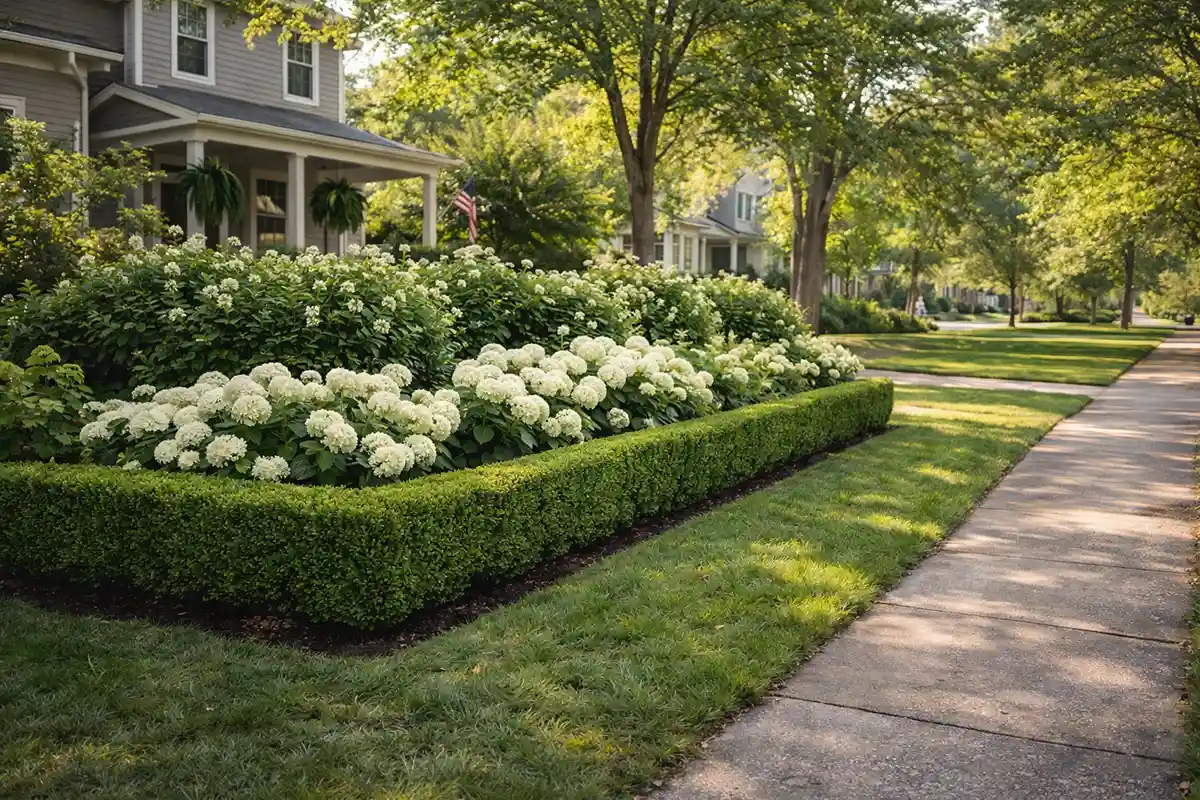
Layered hedge borders are one of the most dependable front yard privacy strategies because they break sightlines gradually rather than blocking them abruptly. Instead of planting a single hedge row, homeowners combine low shrubs, mid-height plants, and taller background hedges to create a soft visual barrier between the sidewalk and the house.
This technique works particularly well in neighborhoods where homes sit fairly close to the street. In places like suburban Denver or parts of Ontario, layered hedges allow homeowners to maintain an open landscape while still reducing direct views toward front windows or porch seating areas. The structure also gives the yard depth, which makes the landscaping feel intentional rather than defensive.
The key is plant variety and spacing. Boxwood, viburnum, and hydrangea are commonly combined because they grow at different heights and maintain good density throughout the season. When planted correctly, this type of border can reduce visibility from the street without creating the heavy appearance of a traditional fence.
2. Ornamental Trees That Break Sightlines Without Closing Off the Yard
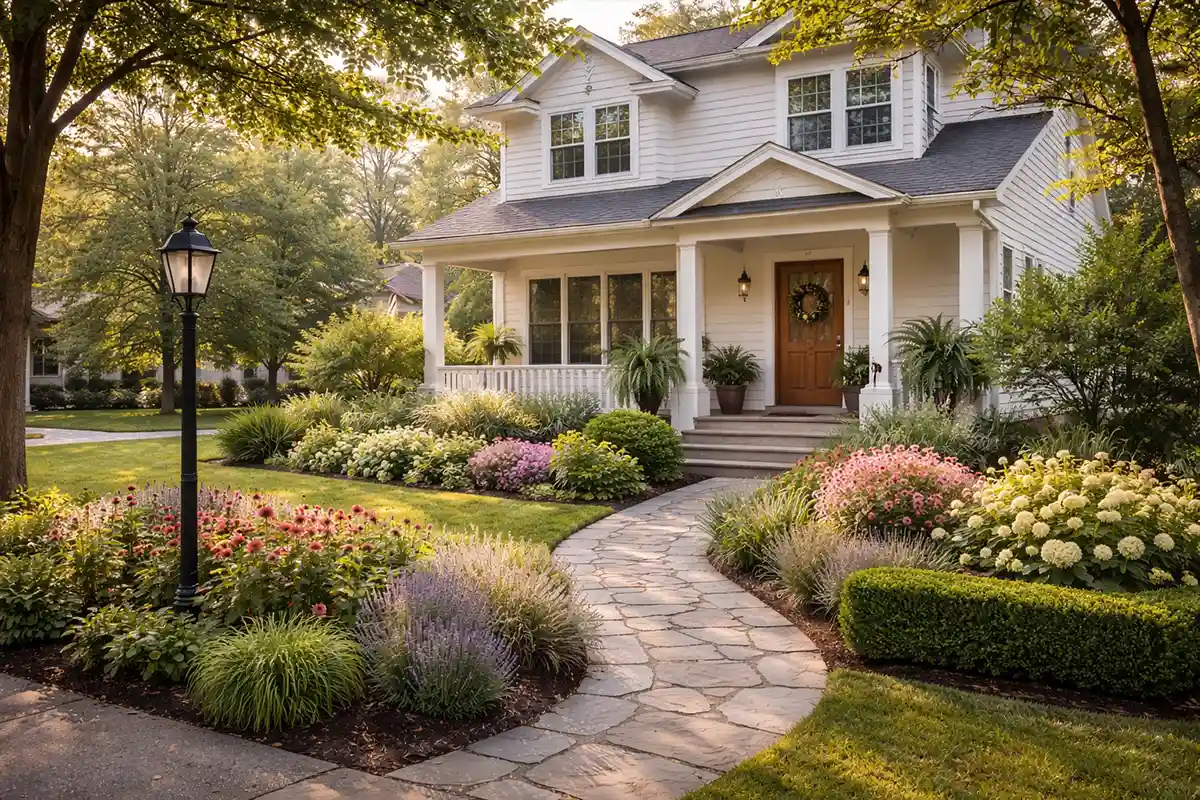
Small ornamental trees are one of the most overlooked privacy tools in residential landscaping. Planted between the street and the house, they interrupt the direct visual line that pedestrians or passing drivers naturally follow when looking toward a home.
This strategy is common in Pacific Northwest neighborhoods such as Portland and Seattle, where homeowners use trees like Japanese maple, dogwood, or serviceberry to soften the front yard view. These species provide seasonal beauty while still allowing light to filter through the yard.
Unlike dense hedges, ornamental trees create privacy without forming a wall. Their branching structure gently breaks sightlines while preserving the openness that most front yards need to maintain a welcoming appearance.
3. Decorative Metal Privacy Screens for a Modern Front Yard
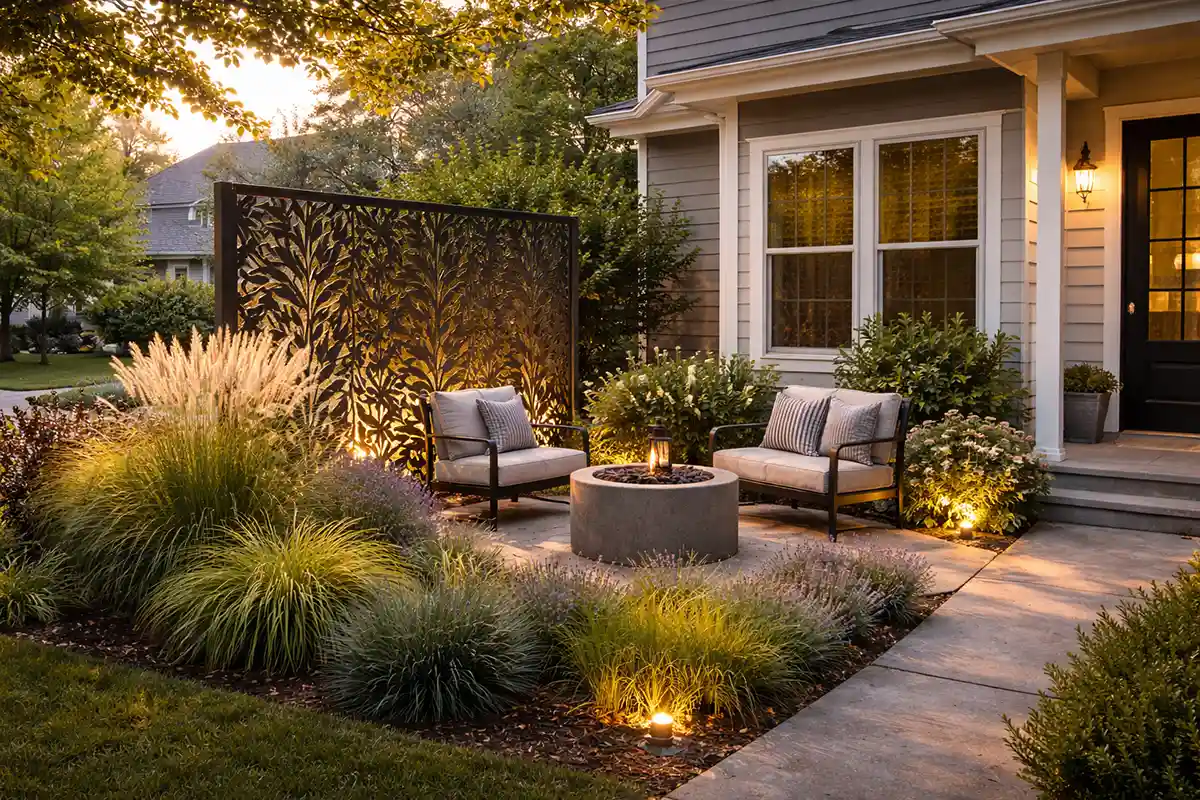
Decorative privacy screens have become increasingly popular in newer residential developments, especially in states like California and Arizona where contemporary landscaping styles dominate. These panels typically feature laser-cut metal designs or geometric patterns that partially obscure views while still allowing airflow and light.
Installed near porches, seating areas, or entry walkways, these screens create a sense of enclosure exactly where homeowners need it most. They work particularly well when paired with surrounding plants that soften the edges of the structure.
Another advantage is flexibility. Unlike a permanent fence, decorative screens can be placed strategically in smaller sections of the yard to block specific viewing angles. When used thoughtfully, they function as both a privacy solution and an architectural design feature.
4. Tall Planters That Create Instant Front Yard Privacy
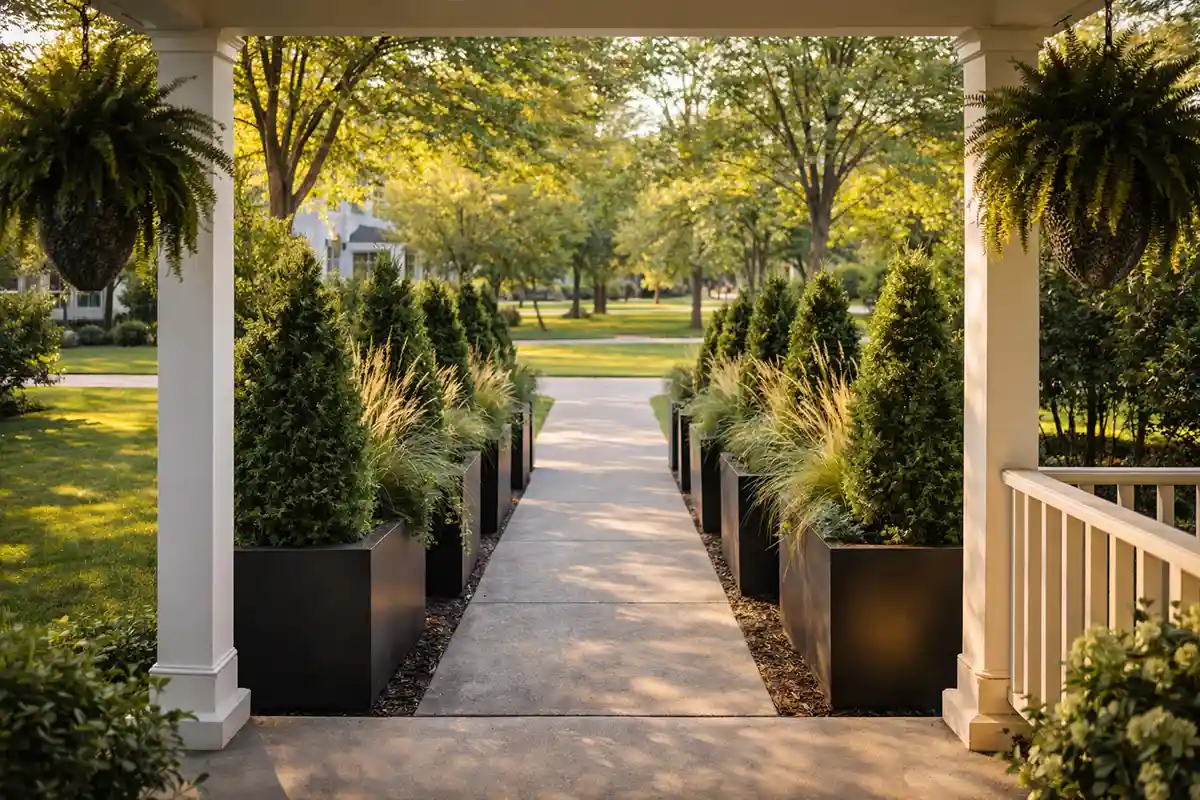
Tall planters offer a quick way to introduce vertical screening without major landscaping work. Large containers filled with dense shrubs, ornamental grasses, or small evergreens can create immediate visual barriers around entry paths, front patios, or porch seating areas.
In compact suburban neighborhoods—such as many communities in Texas or Southern California—planters are often used where traditional planting space is limited. A row of elevated containers can form a flexible privacy wall that can be adjusted or rearranged over time.
Planters also allow homeowners to experiment with different plant varieties. Evergreen shrubs provide year-round coverage, while ornamental grasses add seasonal movement that keeps the yard feeling lively rather than closed off.
5. Mixed Privacy Planting Beds That Feel Natural, Not Defensive
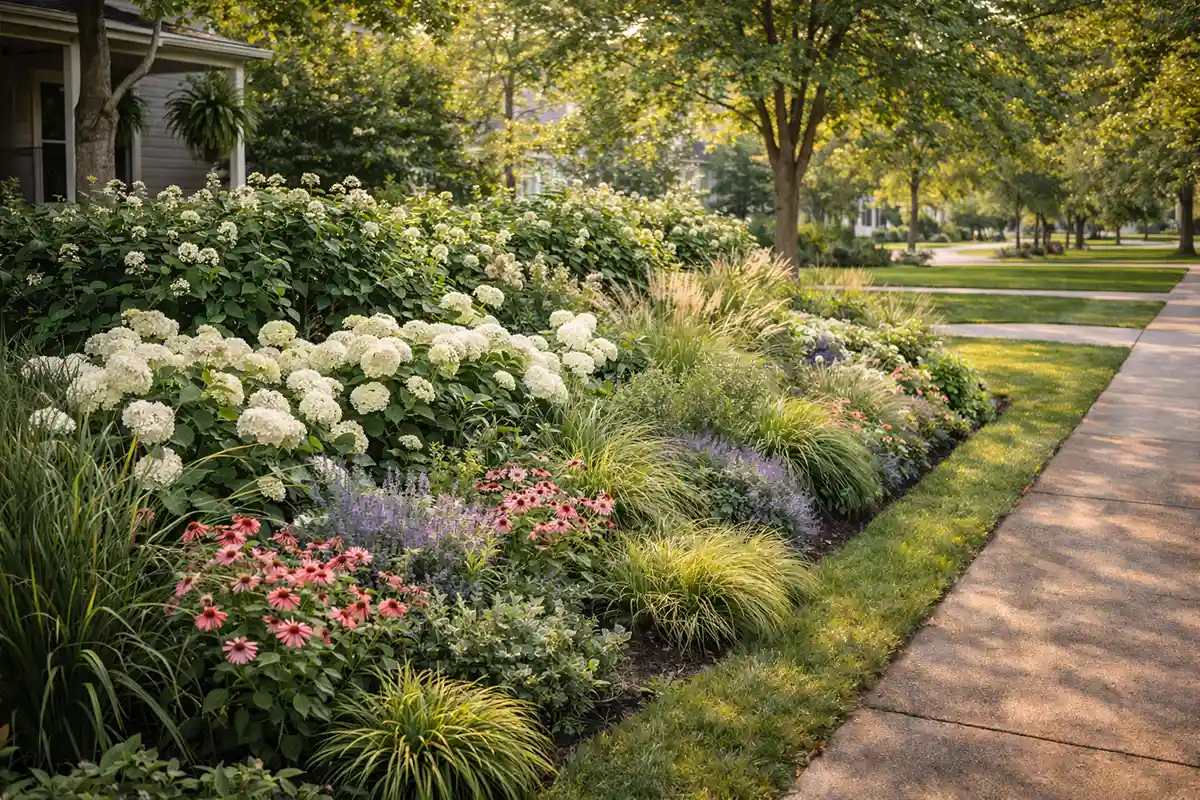
Mixed planting beds combine shrubs, perennials, and ornamental grasses to form a layered privacy buffer that blends naturally into the landscape. Instead of relying on a single dense hedge, these beds create visual complexity that gradually obscures views from the street.
This style is especially common in older Northeastern neighborhoods, where homes often sit closer to sidewalks. Plants such as hydrangea, viburnum, and tall grasses work together to create a textured border that softens the edge of the yard.
Because the plant heights vary, mixed beds disrupt sightlines more effectively than uniform hedges. The result is a front yard that feels lush and colorful while still offering meaningful privacy around windows and seating areas.
6. Living Evergreen Privacy Fences That Stay Green Year-Round
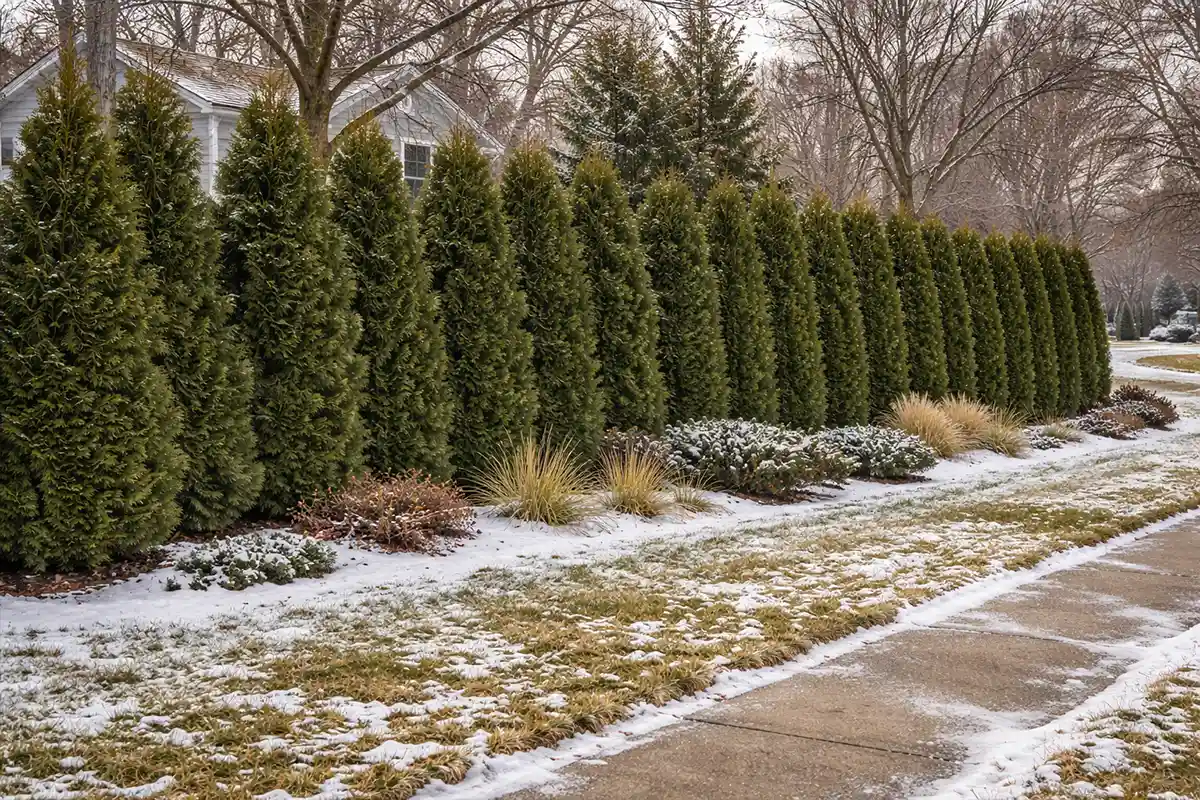
A living privacy fence uses tightly spaced evergreen shrubs to form a natural green wall along the front of the property. Arborvitae, boxwood, and cherry laurel are common choices because they maintain dense foliage throughout the year.
This approach is especially popular in colder climates such as the Midwest and parts of Canada, where homeowners want screening that remains effective during winter months. When mature, evergreen hedges can significantly reduce visibility from the street without requiring a traditional fence.
Spacing is critical for success. Shrubs planted too far apart will never form a solid screen, while plants placed too tightly may struggle to grow. Many landscaping guides recommend gradual layering with surrounding plants, similar to the approach described in How to Layer Plants in Front Yard Landscaping, to create both density and visual depth.
7. Slatted Wood Panels That Add Privacy Without Heavy Fencing
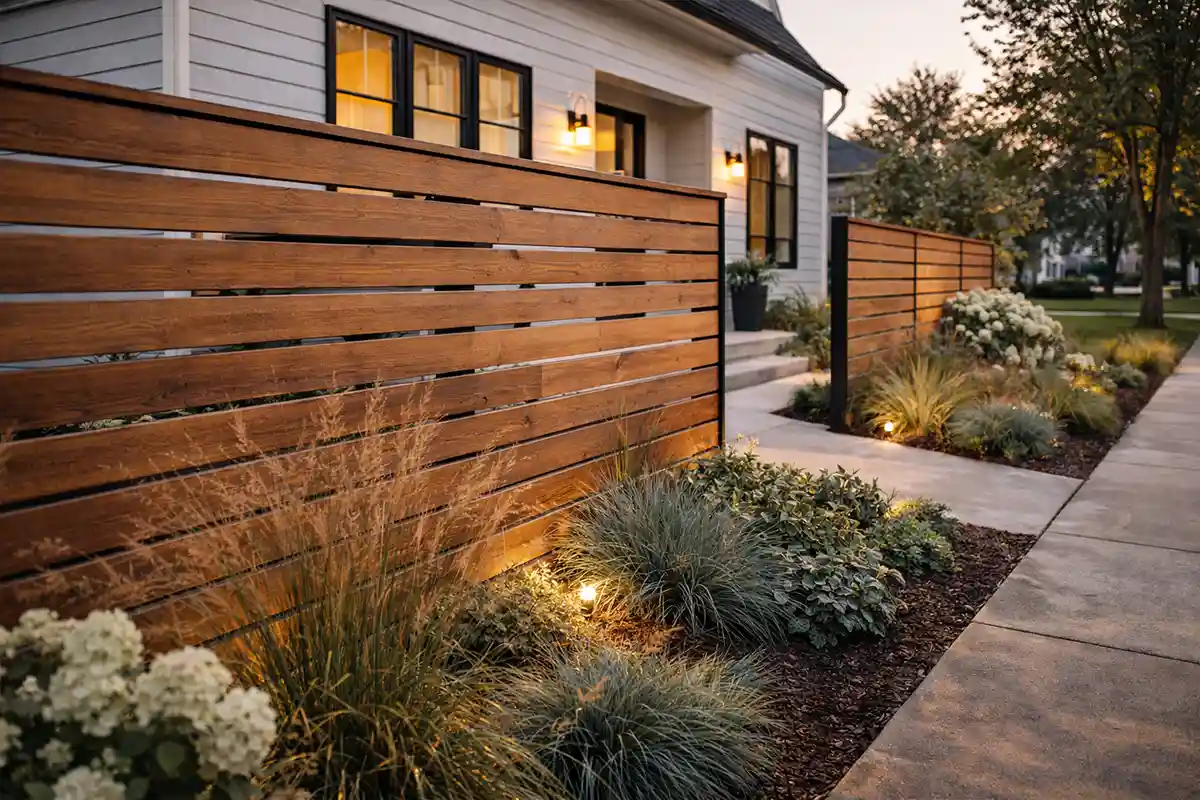
Horizontal slatted wood panels provide a modern alternative to traditional fences. Instead of forming a solid wall, the narrow spacing between boards allows partial visibility while still limiting direct views into the yard.
This style has become increasingly common in West Coast landscaping, particularly in cities like San Diego and Vancouver where contemporary home designs emphasize clean lines and natural materials. When placed strategically near entry paths or patio areas, slatted panels create privacy exactly where homeowners need it.
Wood panels also pair well with surrounding plants. Climbing vines, ornamental grasses, or shrub borders can soften the structure and help it blend naturally into the landscape.
8. Pergolas with Climbing Vines That Create a Soft Privacy Canopy
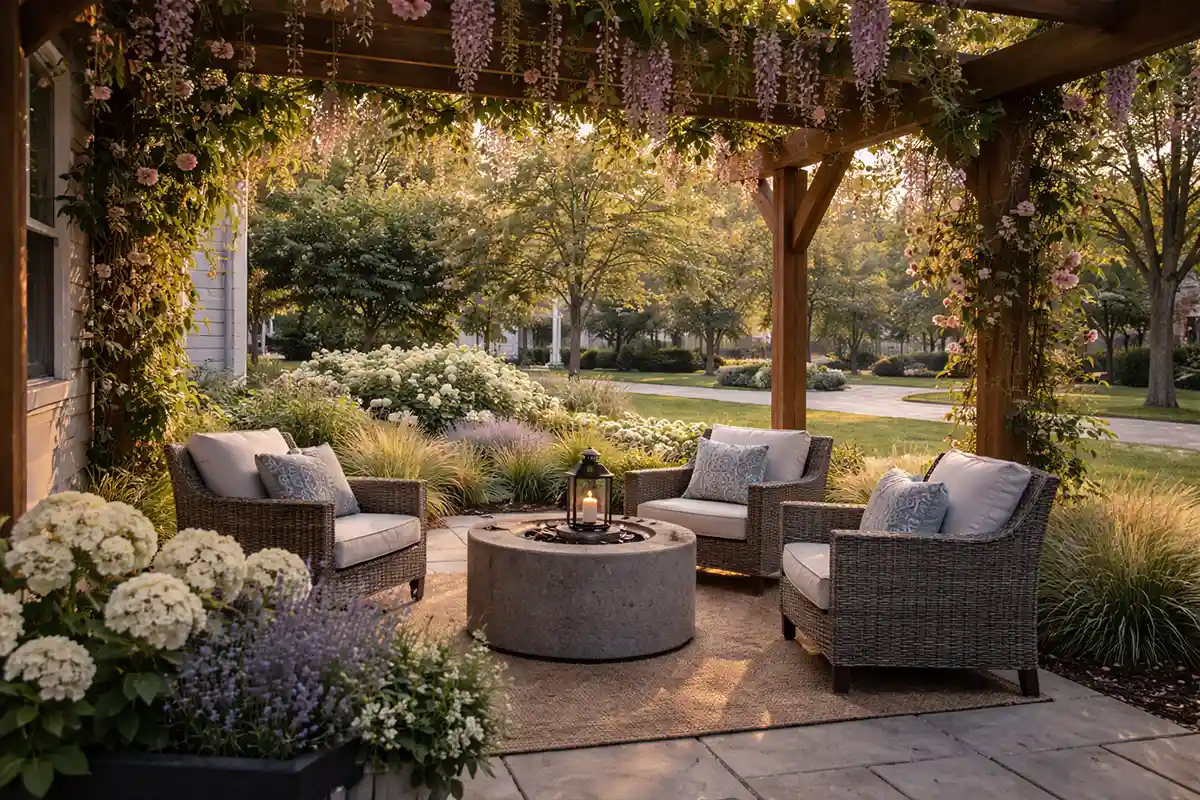
A front yard pergola can transform a small seating area or entry space into a semi-private garden feature. When climbing plants such as jasmine, clematis, or wisteria grow across the structure, they create a natural canopy that partially screens views from above and from the street.
This approach is particularly popular in warmer regions such as California and the Southeast, where climbing plants grow quickly and provide seasonal shade. Over time, the vines soften the wooden structure and integrate it into the surrounding landscape.
Pergolas do not block visibility entirely, but they create a comfortable sense of enclosure that makes front porch seating or small garden areas feel more private. When combined with surrounding shrubs or decorative screens, they can become an important part of a layered front yard privacy design.
Many homeowners eventually combine these structural features with additional landscape buffering techniques similar to those described in Front Yard Privacy Problems on Busy Streets, especially in neighborhoods where sidewalks and traffic bring constant visibility to the front of the home.
9. Tall Ornamental Grasses That Blur Views from the Street
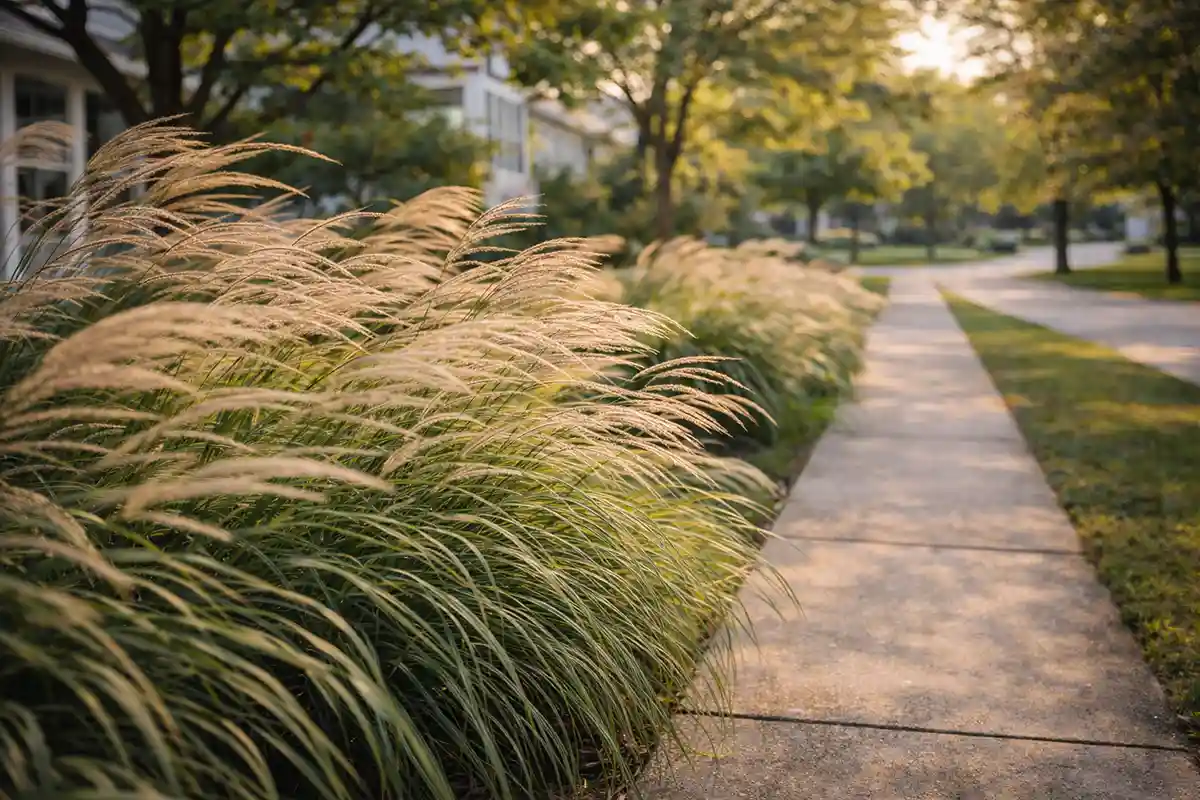
Tall ornamental grasses are one of the simplest ways to soften visibility along the front edge of a property. Instead of forming a dense wall, grasses such as miscanthus, feather reed grass, or switchgrass move naturally in the wind and create a shifting visual barrier that partially obscures the yard.
This approach is particularly common in Midwestern landscapes, where prairie-inspired planting styles blend well with suburban neighborhoods. In cities like Kansas City or Minneapolis, homeowners often plant ornamental grasses near sidewalks to blur sightlines toward the house while maintaining an airy, open feel.
Grasses also require less structural commitment than shrubs or fences. Their seasonal height and movement help reduce direct visibility during warmer months when front yards are used most frequently.
10. Window-Line Planting That Shields the Front of the House
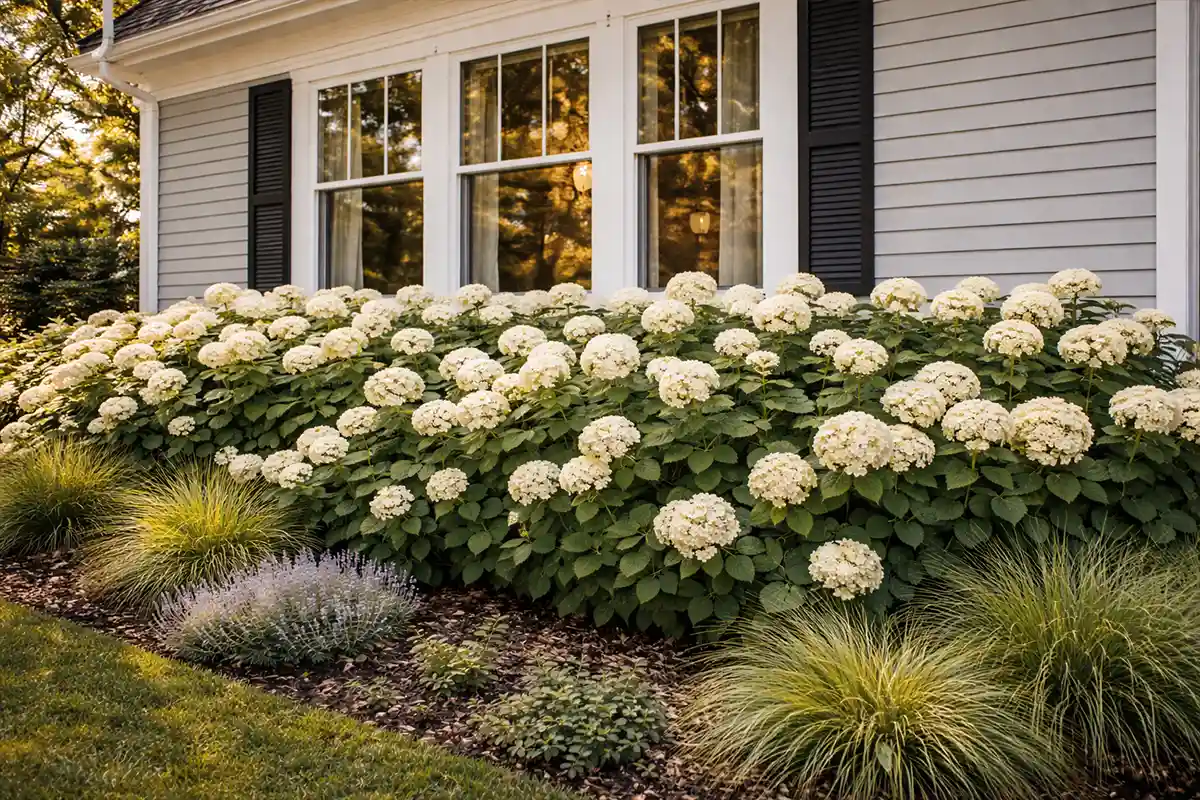
Strategic planting near the front windows of a home can dramatically improve privacy without altering the overall landscape design. By positioning medium-height shrubs or flowering plants along the window sightline, homeowners can interrupt direct views from the sidewalk or street.
This technique works especially well in traditional neighborhoods across the Northeast, where homes often sit relatively close to the street. Hydrangeas, viburnum, or lilac shrubs are commonly used because they provide both seasonal color and enough foliage density to reduce visibility toward the house.
Window-line planting focuses on solving a specific visual problem rather than reshaping the entire yard. In many cases, it can provide meaningful privacy even in small front yards where large landscaping changes are not practical.
11. Low Front Yard Fences Combined with Strategic Planting
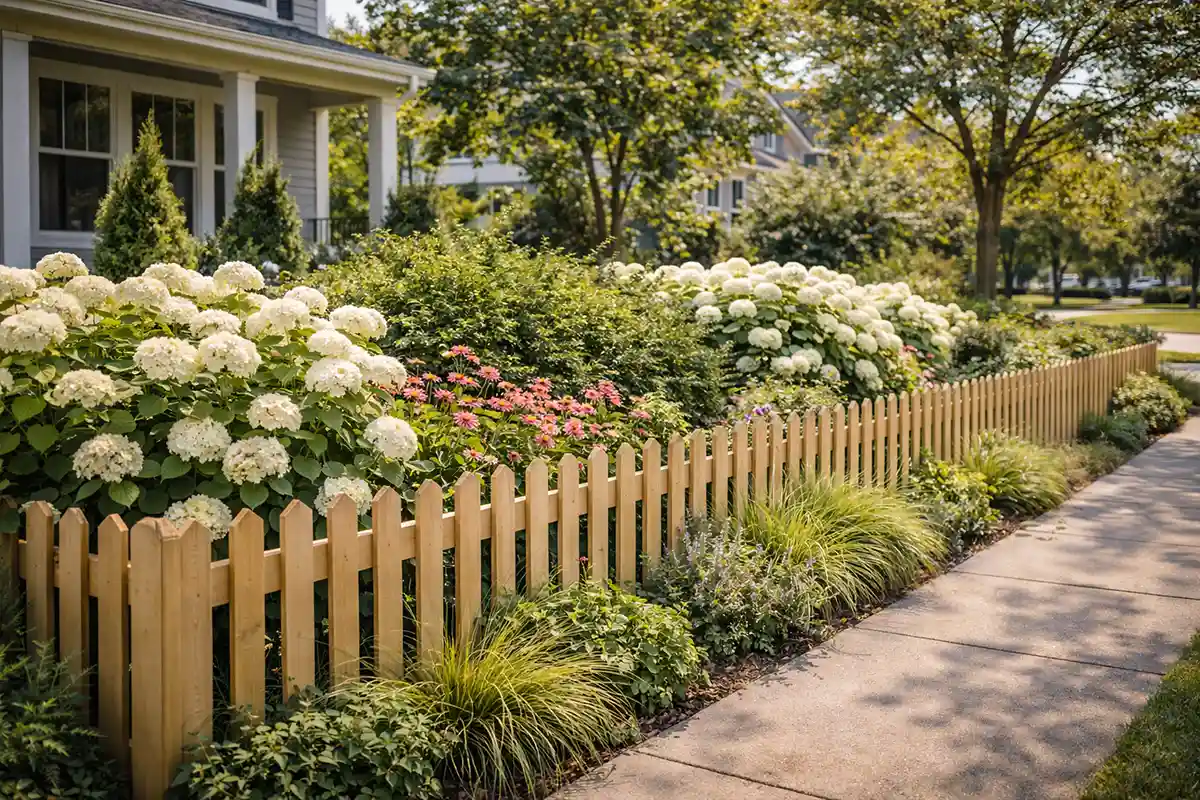
Low fences paired with landscaping offer a balanced privacy solution that avoids the heavy appearance of tall barriers. Instead of blocking the entire yard, a shorter fence defines the property edge while surrounding plants soften views beyond it.
This hybrid approach is common in historic neighborhoods throughout cities like Boston and Toronto, where design guidelines discourage tall front fences. A waist-high wooden or metal fence combined with layered shrubs can redirect sightlines without making the yard feel closed off.
When the fence and planting work together, each element reinforces the other. The fence provides structure while the plants fill visual gaps, creating a privacy buffer that looks intentional rather than restrictive.
12. Evergreen Corner Planting for Natural Privacy Buffers
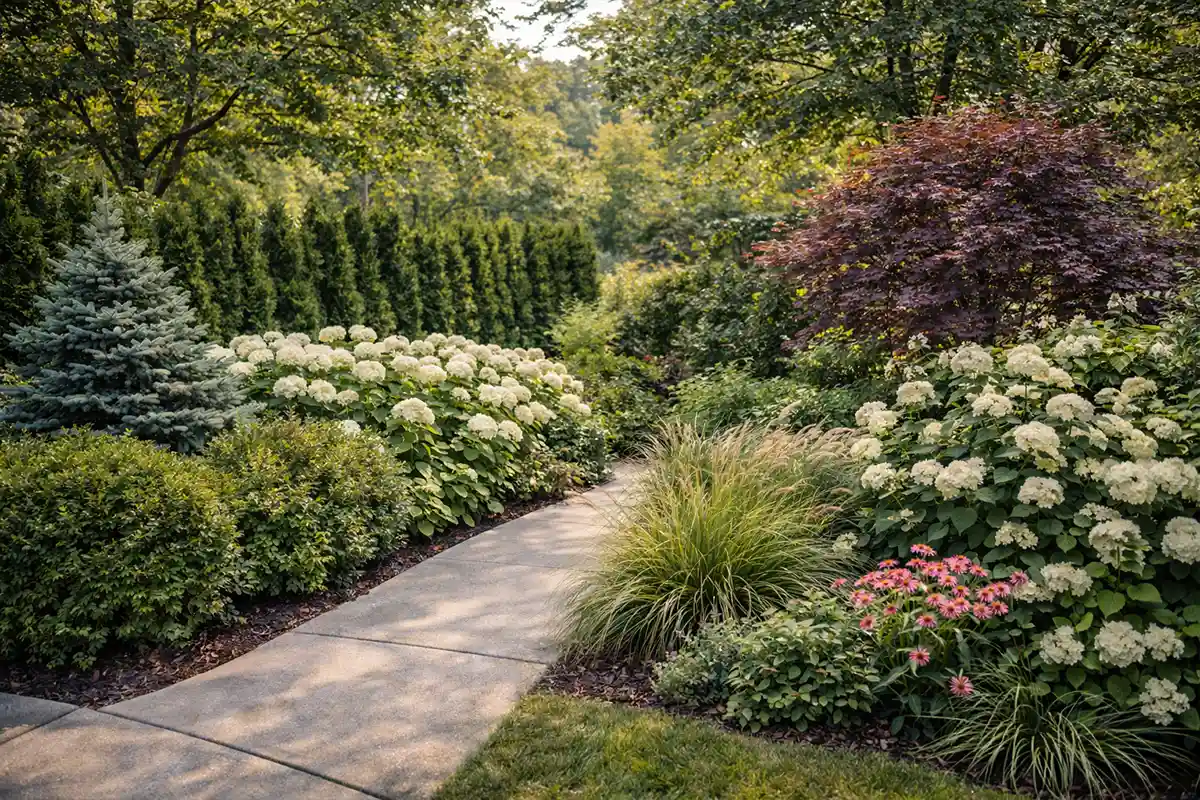
Corner planting focuses on areas of the yard where visibility naturally funnels toward the house. By placing dense evergreen shrubs or small trees in those locations, homeowners can block the most exposed sightlines without landscaping the entire front yard.
This strategy works well in suburban developments where houses sit on corner lots or where sidewalks angle toward the front door. In regions like Michigan or Ontario, evergreen species such as arborvitae or spruce are often used because they provide year-round screening even during winter months.
Corner planting is effective because it targets the angles that people naturally look through when approaching a property. By interrupting those lines of sight, a small cluster of plants can provide more privacy than a long hedge planted in the wrong location.
13. Lattice Screens Covered in Climbing Roses or Vines
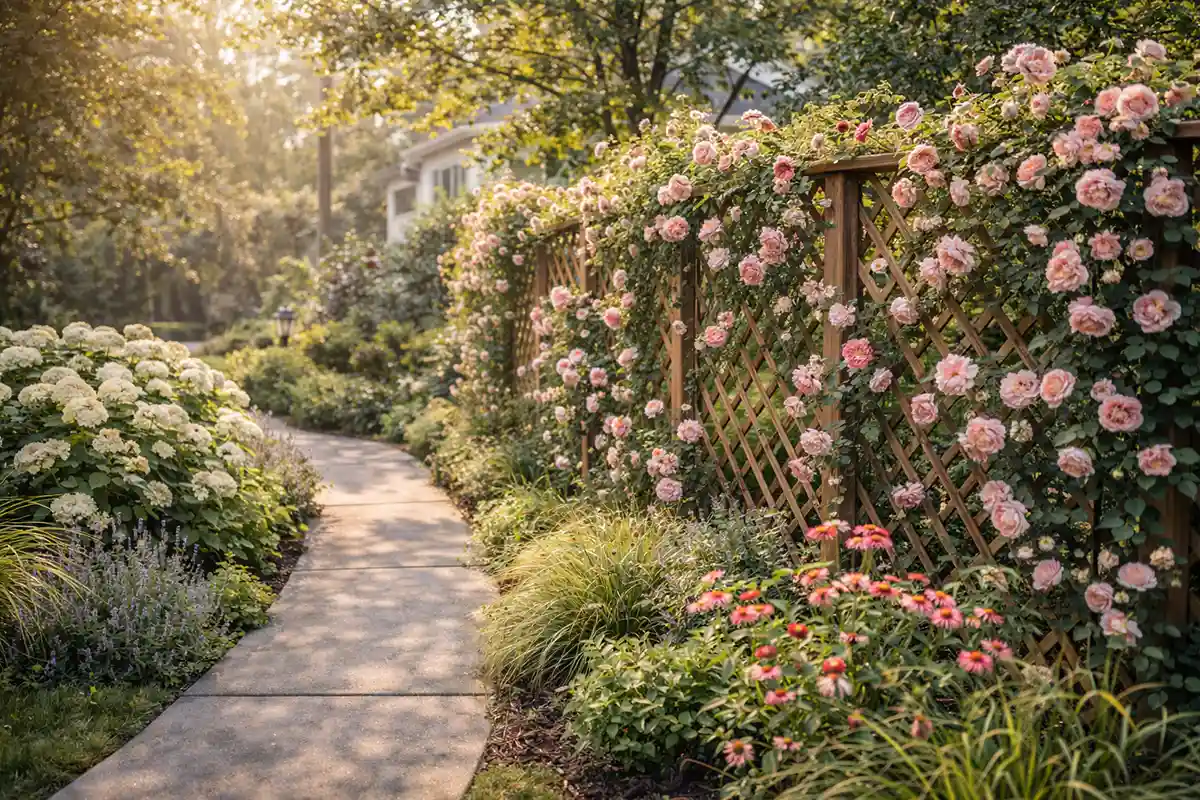
Lattice panels offer a lighter alternative to solid privacy screens. Their open framework allows climbing plants to weave through the structure, gradually creating a living wall that feels more like a garden feature than a barrier.
In many traditional neighborhoods across the Northeast and parts of the Pacific Northwest, lattice structures are paired with climbing roses, clematis, or ivy to soften the front yard edge. Over time the plants fill the openings and create partial screening that blends naturally with surrounding landscaping.
The effect is decorative as much as functional. While lattice panels rarely block views completely, they diffuse visibility enough to make porch seating areas or front garden spaces feel more comfortable.
14. Entry Path Landscaping That Creates a Subtle Privacy Corridor
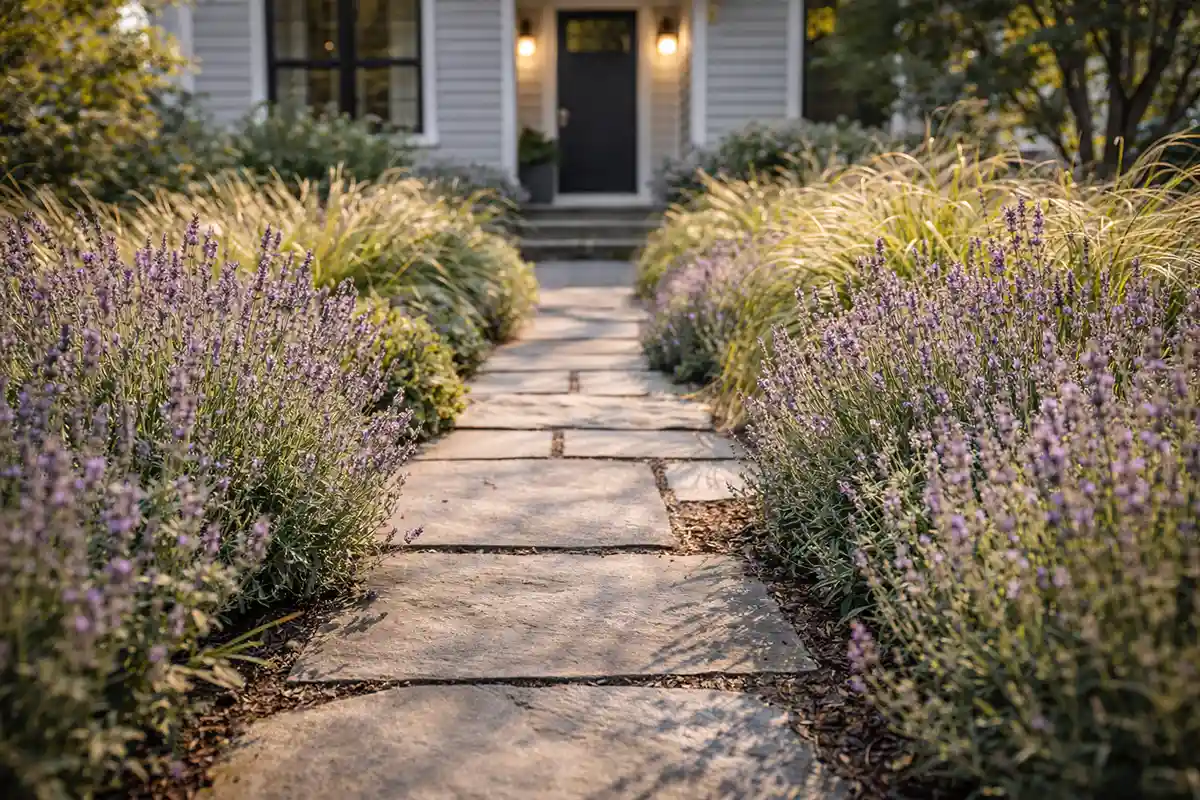
Landscaping along the front walkway can quietly reshape how visitors and pedestrians see the yard. By placing shrubs, grasses, or flowering plants along the path, homeowners create a gentle corridor that guides movement toward the front door while shielding parts of the yard from direct view.
This technique is common in California and parts of the Southwest, where landscape designers often use drought-tolerant plants such as lavender, sage, or ornamental grasses to frame walkways. The plantings remain low enough to keep the entrance visible but dense enough to soften views toward nearby windows or seating areas.
Entry path landscaping works best when combined with other privacy elements in the yard. It acts as a transitional layer between the street and the home, subtly redirecting attention toward the entry rather than the interior of the property.
15. Flowering Shrub Borders That Add Color and Screening
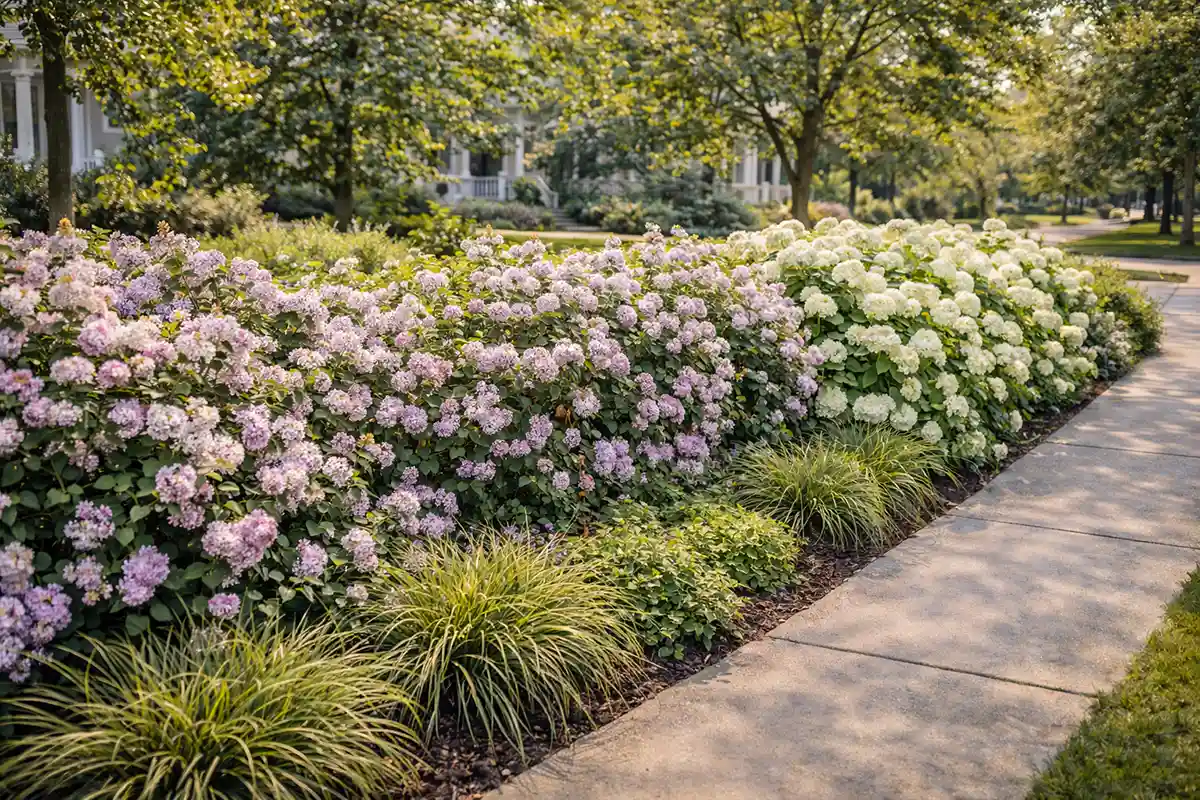
Flowering shrubs offer a privacy solution that doubles as a seasonal landscape feature. Hydrangeas, lilacs, viburnum, and similar plants grow dense enough to interrupt sightlines while adding color and texture to the front yard.
In many Northeastern and Midwestern neighborhoods, flowering shrubs are planted along the front edge of the yard to create a soft visual barrier between the sidewalk and the home. During bloom season they draw attention away from the house itself, which naturally reduces how directly people look toward windows or porch areas.
However, shrub borders require careful spacing and maintenance to remain effective. Overcrowded plantings can become difficult to manage, while poorly chosen species may lose density in winter climates. For homeowners looking for more structural landscape approaches, solutions explored in Front Yard Landscaping for Privacy Without Fences often combine shrubs with layered planting techniques for stronger long-term results.
Choosing the Best Front Yard Privacy Strategy
Not every yard needs the same type of privacy solution. If your home sits close to the street or receives constant foot traffic, then layered plantings or evergreen hedges typically provide the most consistent screening. If the main issue is visibility around a porch or seating area, then decorative screens or tall planters may solve the problem more efficiently.
A useful rule of thumb is this: if the privacy issue comes from wide street exposure, then layered planting usually works best; if the problem is a specific viewing angle near the house, targeted screens or structural features often perform better. Many homeowners ultimately combine both approaches to create a balanced design.
There is also an important trade-off to consider. Dense hedges provide the strongest long-term privacy, but they require patience and regular trimming as they mature. Decorative screens or planters provide faster results but may need replacement or adjustment over time as landscaping evolves.
For most suburban yards across the United States and Canada, layered planting supported by a few structural elements tends to be the most reliable default approach. This strategy interrupts sightlines gradually, maintains curb appeal, and adapts well to different climates and yard sizes. The main exception occurs in extremely small front yards where planting space is limited—in those cases, compact screens or tall planters often become the more practical solution.
More Front Yard Privacy Guides
Front yard privacy rarely comes from a single feature. Many successful landscapes combine several techniques that gradually reduce visibility from the street while keeping the property welcoming.
• How to Create a Privacy Buffer in a Suburban Yard Step-by-Step
• Front Yard Landscaping for Privacy Without Fences
How to Create Front Yard Privacy That Still Looks Welcoming
For broader landscaping guidance and sustainable planting practices, resources from organizations such as the USDA Natural Resources Conservation Service offer practical insights for homeowners designing landscapes that balance aesthetics, ecology, and long-term durability.