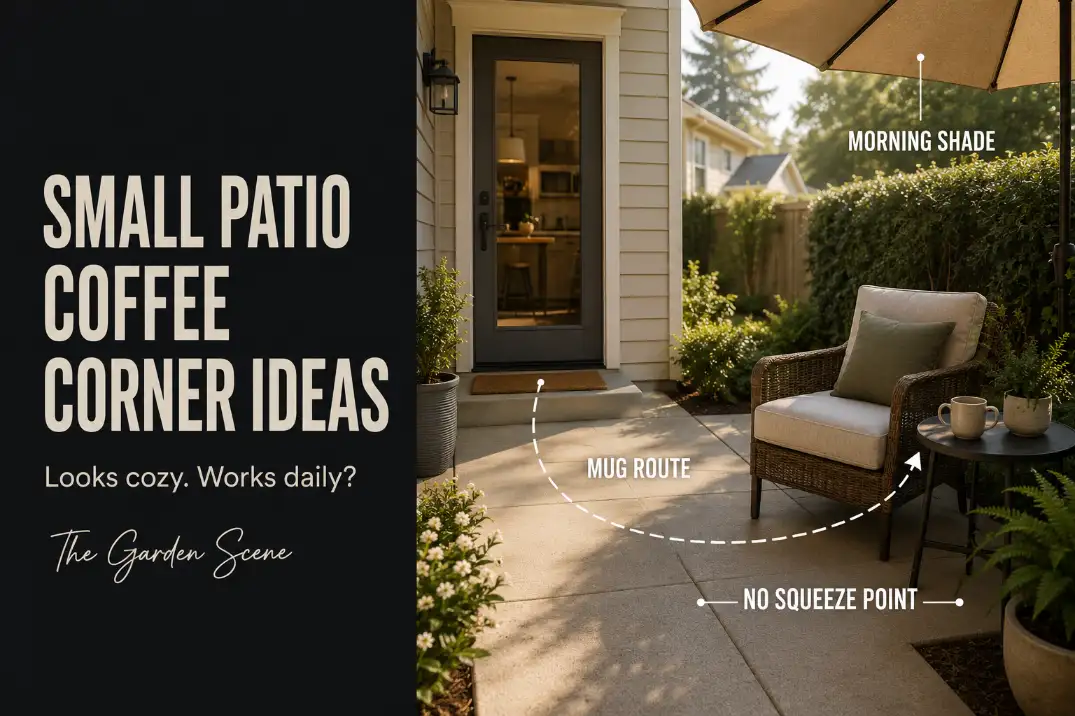
A small patio coffee corner works when it passes a simple morning test: can you step outside with a mug, sit down comfortably, stay shaded for 20 to 30 minutes, and return inside without squeezing around furniture?
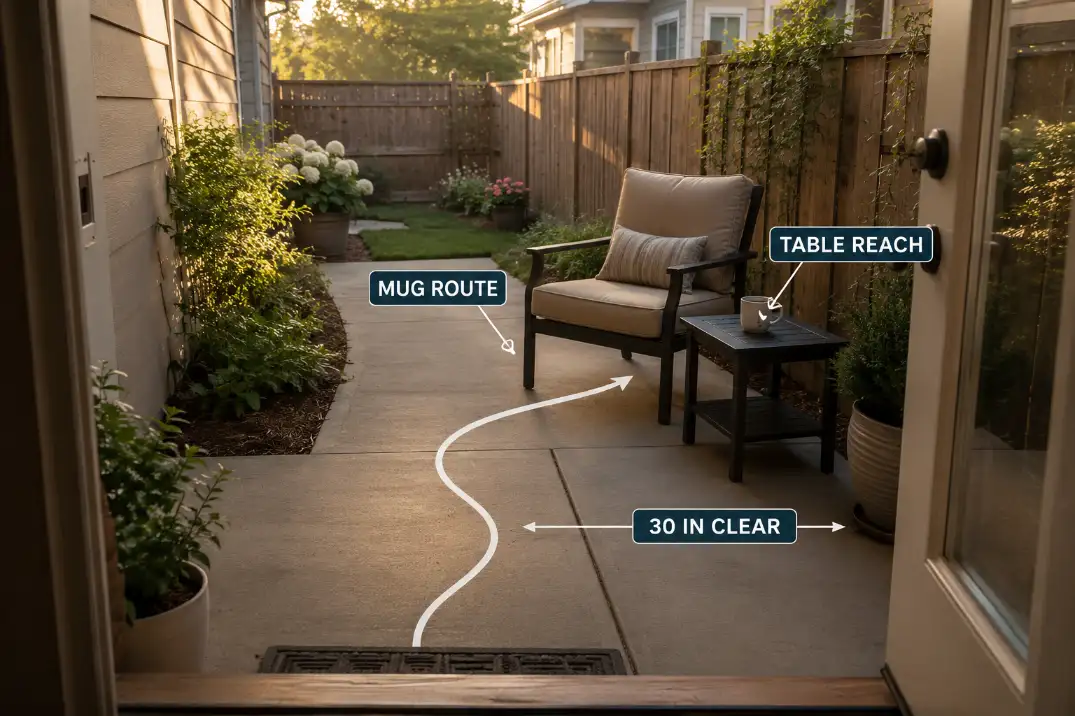
Start with the route, not the decor. The strongest setup is usually within 6 to 10 steps of the kitchen or back door, with at least 30 inches of clear walking space and a table that holds more than one mug.
This is different from designing a small patio lounge. A lounge can be occasional. A coffee spot has to feel automatic at 7 a.m., 8 a.m., or whatever hour you actually use it.
The common failure is not a lack of charm. It is a chair placed where the photo looks good while the shade, table reach, or door path quietly makes the space harder to use.
Start With the 20-Minute Morning Test
Test the real habit before choosing furniture
Before buying anything, stand at the door with a mug in your hand and walk to the intended seat. If the route needs a side-step around a planter, a turn around a table, or a reach across the chair to set the mug down, the corner is already working too hard.
A useful morning corner should handle the first 20 minutes without adjustment. The chair is ready, the table is stable, and the path does not feel tight when your hands are full.
The best spot is often not the deepest corner of the patio. It is the closest calm edge that gives you a quick sit-down moment without blocking the rest of the outdoor space.
What usually gets misread
People often treat a coffee corner like a small bistro scene. Two chairs, a round table, a rug, a planter, and a lantern may look finished, but on a tight patio that setup can steal the only easy route from the house.
For daily use, one good chair and one useful table usually beat a crowded two-chair set. Add the second chair only if the patio still has a clean door route and enough space to pull each chair back without moving the table.
Keep the Coffee Route Short and Clear
Near the door, but not in the door path
A coffee corner should feel connected to the house. If it takes 15 to 20 steps, or if you have to cross the whole patio before sitting down, the space starts to feel like a destination instead of a habit.
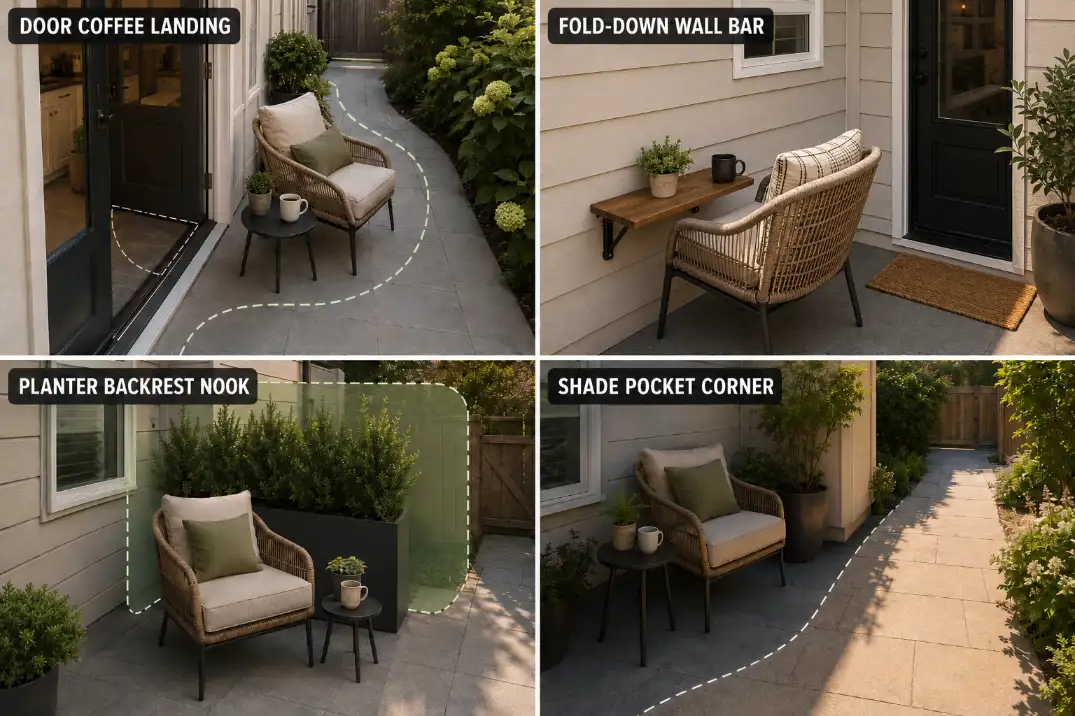
The better target is close but offset: near the door, not directly in front of it. Sliding doors need a clear landing zone.
Hinged doors need swing room. Even a beautiful chair becomes a daily irritation if it sits where someone naturally steps outside.
This is why a small patio coffee corner often works best along the side of the door zone, not centered in the patio. If your back door controls the whole layout, the route-first thinking in Patio Layouts for Back Door Seating fits the same problem.
Do not let the table become the obstacle
The table should serve the chair, not the whole patio. A front coffee table can look polished, but it often blocks knees and narrows the path. For one-person morning use, a side table is usually stronger because it keeps the front of the chair open.
If the walking gap drops below about 30 inches, the layout may still look possible but feel crowded in daily use. That is the point where styling starts costing function.
Pick One Seat That Fits the Habit
One comfortable chair is often the right answer
The best coffee chair is not always the deepest lounge chair. It should let you sit down easily, hold a mug nearby, and stand up without using the table for balance.
A seat height around 17 to 19 inches works well for many adults, while very low lounge seating can feel relaxed but less practical for a short morning routine.
Chair width matters too. Wide arms and deep cushions can be comfortable, but on an 8-by-10-foot patio they may use up the only open corner. A slimmer lounge chair, upright outdoor club chair, or reading-style patio chair can feel more intentional without swallowing the space.
If the seat is the main purchase decision, Best Outdoor Reading Chairs for Patio Corners is a natural place to compare compact comfort, arm height, and small-corner fit.
When a bistro set makes sense
A two-chair bistro set works when the corner is also meant for conversation. It makes less sense when the second chair sits empty most mornings and blocks the route.
Use a bistro set only if each chair still has roughly 24 inches of pullback room and the table does not sit in the main door path. Otherwise, one stronger chair with a better side table will feel more useful.
Use a Table That Holds Coffee Without Taking Over
The surface has to be stable, not just small
A tiny table is not automatically a good small-patio table. It has to hold a mug, phone, small plate, book, or sunglasses without wobbling. A top around 16 to 22 inches wide is usually enough for one person. Smaller than that can work for a mug only, but it leaves no margin.
Table height should also match the chair. A side table that sits roughly level with the chair arm, or just slightly below it, usually feels natural. If the table is more than about 18 inches from the front edge of the seat, you will feel the reach every time you set something down.
For tight patios, shape matters as much as size. Round tables soften squeeze points, square tables tuck cleanly against walls, and narrow rectangular tables can work beside a chair when depth is limited.
The decision logic in Best Patio Table Shapes for Small Spaces fits this exact choice.
Watch the floor under the table
A table that sits across paver joints, gravel edges, or a sloped slab may wobble even if it looks fine. For a coffee corner, that is not a small detail. A rocking table changes how relaxed the space feels.
If the patio slopes for drainage, place the table so all legs sit on the most stable part of the surface. A small shim, flatter table base, or slightly shifted chair position can matter more than buying a larger table.
| Coffee Corner Decision | Better Target | Warning Sign |
|---|---|---|
| Door-to-seat distance | 6–10 steps | Feels like a separate destination |
| Walking route | 30 inches clear | Side-stepping with a mug |
| Table width | 16–22 inches | Mug-only surface with no margin |
| Chair pullback | About 24 inches | Chair hits table, wall, or planter |
| Setup time | Under 2 minutes | Cushions, table, or shade must be moved daily |
Test Shade at the Hour You Actually Sit There
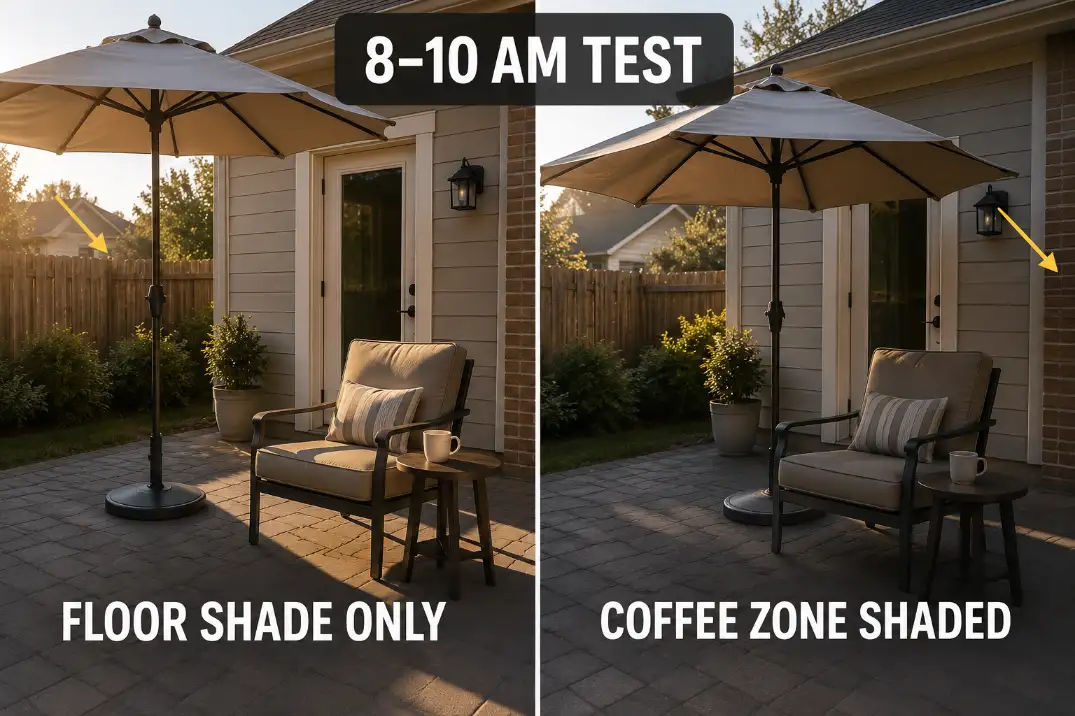
Shade on the floor is not enough
The useful question is not whether the patio has shade. It is whether the chair, face line, and table surface are shaded during the real coffee window. For many people, that means somewhere between 7 a.m. and 10 a.m.
Low morning sun can slide under an umbrella or roof edge. That is why a corner may look shaded at noon but feel bright and exposed during breakfast. On east-facing patios, the first sun angle often hits from the side, not from overhead.
A quick test is to place the chair and table, then check them at the actual hour for two or three mornings. If the sun moves off the seat before you finish coffee, the setup needs a position change before it needs more decor.
Umbrellas are useful, but easy to overestimate
A patio umbrella can help, but it does not solve every small coffee corner. The base may crowd the floor, and the canopy may shade the chair while missing the table or face line.
A slightly shifted chair, side screen, or taller planter can sometimes do more than a larger umbrella. If an umbrella is still the right fix, Best Patio Umbrellas for Shade in Small Backyards is more useful after you know the sun angle you need to block.
That choice should follow the morning test, not replace it.
Block the First View, Not the Whole Patio
Privacy should be selective
A coffee corner does not need full enclosure. It needs enough screening so the first view from a neighbor window, driveway, sidewalk, or shared side yard does not land directly on the seat.
That is usually a small sightline problem, not a full fence problem. A 24- to 36-inch-wide planter screen, narrow trellis, or tall potted shrub can interrupt the view while keeping airflow and light. When the screen sits close to the chair, a height of about 4 to 5 feet is often enough for seated privacy.
This is where people overbuild. A heavy curtain wall or full-height panel may solve the view, but it can make the patio feel smaller, darker, and less inviting in the morning.
For a coffee spot that needs privacy without closing the patio in, Privacy Planters for Front Yards and Patios is a better fit than treating the whole edge like a fence line.
Sit down before placing the screen
The right privacy line is easiest to find from the chair, not from standing height. Sit where the chair will go and look toward the uncomfortable view. If one narrow screen interrupts that direct line, stop there.
The goal is not to hide the whole yard. It is to make the first few minutes outside feel calm enough that you stay.
Keep the Corner Ready, Not Staged
Daily use fails when setup takes too long
A small patio coffee corner should not need a morning assembly routine. If you have to carry out cushions, unfold a table, move a planter, adjust an umbrella, and wipe off every surface, the space becomes occasional.
A practical threshold is 2 minutes. If the corner takes longer than that before you can sit down, simplify it. Choose fewer movable pieces, store cushions closer to the door, or use one weather-tolerant chair that does not need daily handling.
This is also where storage can help or hurt. A compact bench or deck box near the patio can keep cushions dry and close, but only if it does not crowd the route. If storage is part of the coffee setup, Best Outdoor Storage Benches and Deck Boxes for Small Patios connects well with that daily-use decision.
Keep weather from deciding for you
A shaded damp corner can stay wet longer than people expect, especially in humid regions or under dense tree cover. Cushions that dry in a few hours after light rain are easier to live with than thick cushions that still feel damp the next morning.
Metal tables can heat quickly in direct sun. Pale concrete can bounce glare into your eyes. A roof drip line can make one chair leg sit in water after every storm. These are not dramatic problems, but they decide whether the corner feels ready or neglected.
Quick Coffee Corner Checklist
- Walk the route with a mug before choosing the final furniture position.
- Keep at least 30 inches clear between the door and the main patio path.
- Use one strong chair before adding a second chair.
- Choose a table that is stable, reachable, and about 16 to 22 inches wide.
- Test shade at the actual morning hour, not at midday.
- Block the first direct sightline instead of enclosing the whole patio.
- Keep daily setup under 2 minutes.
Questions People Usually Ask
Is one chair enough for a small patio coffee corner?
Yes. One comfortable chair is often better than two cramped chairs. Add a second chair only if the route, pullback space, and table access still work.
Should I use a bistro set or a lounge chair?
Use a bistro set if two people will regularly sit there. Use one lounge or reading-style chair if the corner is mostly for one-person mornings.
How much space does a coffee corner need?
A very small corner can work if the chair, table, and route are controlled. The more important number is 30 inches of walking clearance, not the total patio size.
What makes a coffee corner feel unused?
The usual cause is friction: the chair is too far from the door, the table is awkward to reach, the shade misses the seat, or the setup takes too long each morning.
A good small patio coffee corner should feel ready before you think about styling. Keep the route short, the table stable, the shade timed to your real morning, and the privacy focused on the first view. When those pieces are right, the corner does not need much to feel finished.
For broader official guidance on using shade around the home, see the U.S. Department of Energy’s landscaping for shade guide.