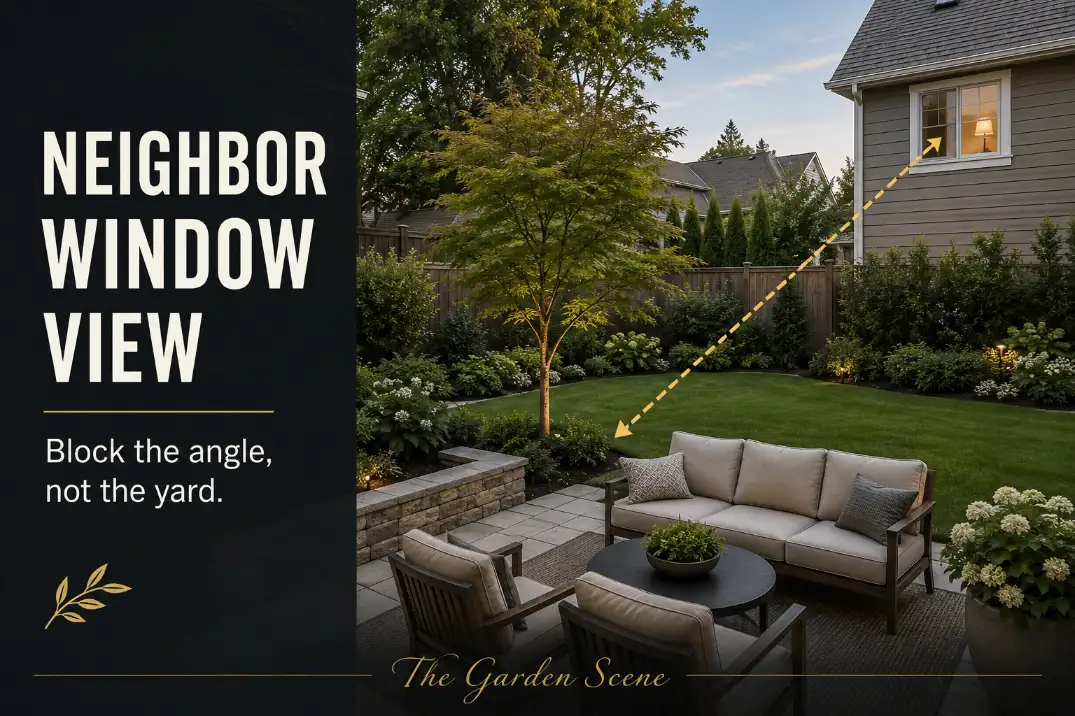
Privacy landscaping from neighbor windows works when it blocks the view path, not the whole property line. Before buying shrubs, check three things: which window sees you, how high it is, and which part of the yard is actually exposed.
A ground-floor side window may only need a practical 5- to 7-foot screen. An upstairs window may need a 10- to 15-foot interruption, but usually in one focused spot, not around the entire yard.
The common mistake is treating every neighbor-window problem like a hedge problem. A hedge can help, but if it sits outside the actual sightline, it may grow for 3 years and still leave the patio visible.
The better move is to trace the view, place height where the eye travels, and keep the rest of the yard open.
Find the Window View
Start from the exposed spot
Stand where the privacy problem feels real: the patio chair, dining table, grill area, hot tub, kitchen window, or play space. Then look back toward the neighbor’s window. That reverse view usually tells you where the screen belongs.
If the window lines up with one sitting area, you probably need a targeted screen. If the view reaches across the whole yard from above, you need layered height and depth, not one flat row of shrubs.
A useful test is to watch the yard for 15 minutes at the time you use it most. Evening often makes the issue worse because patio lighting can make people outdoors easier to see while the neighbor’s window appears darker.
Do not confuse exposure with lack of planting
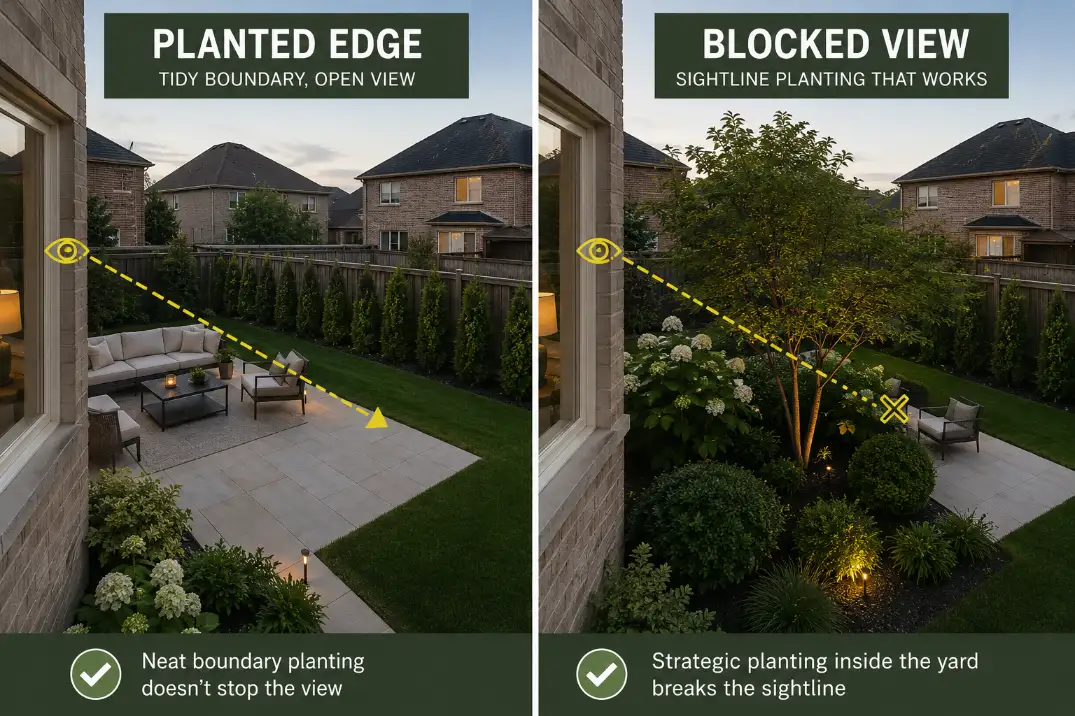
A yard can feel exposed even when it already has plants. The symptom is “I feel watched.” The mechanism is usually a straight visual corridor between window glass and a use area.
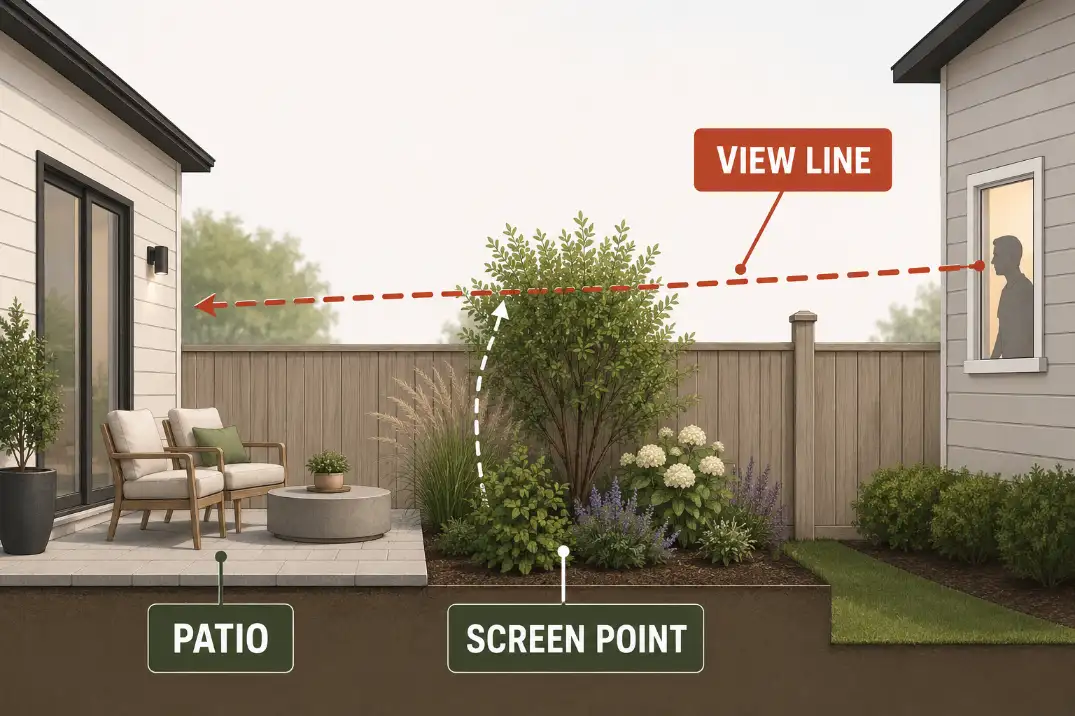
That is why the best privacy planting is not always on the fence. If the line of view cuts diagonally across the lawn, a screen placed several feet inside the yard can outperform a longer hedge pressed against the property line.
For a broader privacy framework, Landscaping for Privacy is useful when this window view needs to connect with the rest of the yard instead of becoming one isolated patch.
Privacy From Side Windows
Side windows are usually easier to screen than upstairs windows because the view is flatter. The fix should stay precise.
Use medium height before full height
For many side-window views, shrubs or small trees maturing around 6 to 8 feet are enough. Going straight to tall evergreens can create extra shade, extra pruning, and more visual weight than the problem requires.
Place the screen where it intersects the view. In many suburban yards, moving the planting 3 to 6 feet inside the property line blocks the view sooner and keeps the border easier to maintain.
Leave access space behind the screen
Do not plant so tightly that the side yard becomes a maintenance trap. A shrub that matures 5 feet wide does not belong in a 2-foot strip beside a fence unless you are prepared to prune it constantly.
Pro Tip: Choose the mature width first, then the mature height. Most failed side-yard screens become too wide for the space before they prove too short for the view.
Privacy From Upstairs Windows
Upstairs windows change the problem because they look down over fences, low shrubs, and foundation planting. This is where homeowners often underestimate the angle and overestimate what border planting can do.
One vertical interruption matters most
For an upstairs window, the strongest move is often one taller element placed between the window and the active area. That could be a small ornamental tree, a columnar evergreen, a narrow trellis, or a layered group with height in the middle.
A single 12-foot screen in the right spot can do more than 40 feet of 5-foot shrubs in the wrong place. The goal is not to erase the neighbor’s house. The goal is to interrupt the direct view into the part of the yard where people sit or gather.
If the view comes from a second-floor bedroom, loft, or upper hallway, Second Story Windows Backyard Privacy Fixes fits the same core issue: the screen has to meet the viewing angle, not just the fence height.
Low planting is not a privacy fix from above
Low planting can make the yard look finished, but it will not solve a downward view. Fresh mulch, neat borders, and small shrubs may improve the edge while leaving the privacy problem untouched.
This is the point where a routine fix stops making sense. If the viewer can still see over the planting from above, adding more low plants is decoration, not screening.
Privacy From Neighbor Decks
Neighbor decks behave more like raised windows than side-yard views. The viewer is outside, often standing, and the sightline may be wider than a single window.
Screen the use zone first
The obvious fix is to plant along the shared boundary. Sometimes that helps. But if the deck looks diagonally into your patio, the better screen may sit closer to your seating area.
For deck views, the most useful privacy zone is usually the 8- to 15-foot area around where you sit, cook, or gather. Trying to screen every inch of lawn can make the yard feel smaller without improving the place you actually use.
When the issue is specifically an elevated outdoor platform, Neighbors Deck Overlooks Backyard Privacy Fixes gives a more direct way to handle that raised viewing angle.
Add Height in One Spot
Height is valuable only when it lands where the eye crosses open space. Adding height everywhere is slower, heavier, and often more expensive than the problem requires.
| View Source | Better First Move | Weak Move |
|---|---|---|
| Ground-floor side window | 6–8 ft shrubs near the sightline | Full fence-line hedge |
| Upstairs window | 10–15 ft vertical screen | Low border planting |
| Neighbor deck | Screen the seating angle | Plant only at the property line |
| Narrow side yard | Columnar plants or trellis | Wide shrubs that crowd access |
| Small patio | One focused privacy point | Dense planting around every edge |
Use height where it changes the view
A screen works where the viewer’s eye passes through open space. That may be halfway between the window and your patio, or it may be closer to the patio itself.
If a 6-foot fence does not intersect the view, making the fence prettier will not solve the privacy problem. You need height above the fence, depth inside the yard, or a screen placed closer to the activity zone.
Small Trees for Privacy
Small trees often solve neighbor-window privacy better than a hedge because they add height without creating a solid wall at ground level.
Choose the tree form before the tree name
For window privacy, form matters more than the label on the nursery tag. A narrow upright tree works better in a side yard. A multi-stem ornamental tree can soften a patio view. A small evergreen gives winter structure where privacy matters all year.
Look at where the foliage starts. A tree with a clear trunk and canopy beginning around 5 to 7 feet can block a raised view while keeping the yard open underneath. A dense shrub-form tree may block more at ground level but make a small patio feel tight.
A practical mature height of 12 to 20 feet is enough for many neighbor-window situations. The best tree is not the tallest one available. It is the one whose canopy crosses the sightline after 5 to 10 years without swallowing the space.
Match the tree to the climate
In humid parts of Florida, airflow and disease resistance matter. In dry Arizona conditions, water demand and reflected heat become bigger issues. In northern states with freezing winters, deciduous trees may lose screening power for 4 to 5 months.
That does not mean every privacy tree must be evergreen. It means the most important view corridor should not depend entirely on leaves if the yard is exposed year-round.
Layered Planting for Views
Layering helps when the view is broad, angled, seasonal, or coming from more than one window. It also feels less defensive than one solid wall of evergreens.
Combine depth with selective height
A strong layered screen might use a small tree for upper interruption, evergreen shrubs for year-round structure, and lower planting to soften the base. The layers do not need to be equal. One tall element and two supporting layers are often enough.
On sloped lots, the neighbor may start with a visual advantage before any planting is added. In that case, Uphill Neighbor Privacy on a Sloped Lot is especially relevant because a normal hedge can feel ineffective when the grade lifts the viewer above it.
Planters for Window Screening
Planters are useful when you need privacy fast, when soil is limited, or when you are not ready for permanent landscaping. They are strongest for small, specific views.
Use containers for narrow privacy gaps
A planter screen works best for a side window view into a seating area, porch corner, or small patio. It is weaker for broad upstairs views because containers limit root volume and long-term height.
For larger shrubs or upright grasses, use containers at least 18 to 24 inches deep as a practical starting range. In hot climates, small pots can dry out in less than a day during peak summer heat. In freezing regions, exposed containers can stress roots faster than in-ground planting.
Planters make sense when the privacy gap is immediate and limited. If you need a permanent 12-foot screen, start planning the in-ground layer instead.
Avoid Blocking the Yard
The best privacy landscaping still lets the yard breathe. If the solution makes the patio dark, blocks circulation, or removes useful lawn, it has gone too far.
Keep openings where privacy is not needed
Do not wrap the entire yard because one window feels uncomfortable. Keep open views toward trees, sky, garden beds, or your own house. Privacy feels better when it is selective.
As a practical design threshold, if the screen blocks more than about one-third of a small backyard’s usable width, reconsider the placement. You may be solving the right problem with too much mass.
A lighter layered approach can help in tight areas. Front Yard Privacy Layering Without a Fence focuses on front yards, but the same principle applies: staggered layers usually feel better than one hard visual block.
Neighbor Privacy Mistakes
Planting where the neighbor is
This is the most common mistake. The neighbor’s window may be on the side, but the view may cross the yard diagonally. Planting directly along the shared fence can miss the actual line.
Buying for instant height
Fast privacy is tempting, but oversized plants often struggle after transplanting and may need 1 to 2 growing seasons before they look settled. Smaller plants placed correctly can outperform larger plants placed under stress.
Ignoring winter privacy
In cold regions, a deciduous screen can lose much of its privacy for several months. If the exposed view matters in winter, the key corridor needs some evergreen structure, fencing, trellis work, or branching density.
Making the screen too dense
A dense wall can make a small yard feel boxed in. The better screen interrupts the eye while leaving light, air, and movement. Privacy is not the same as enclosure.
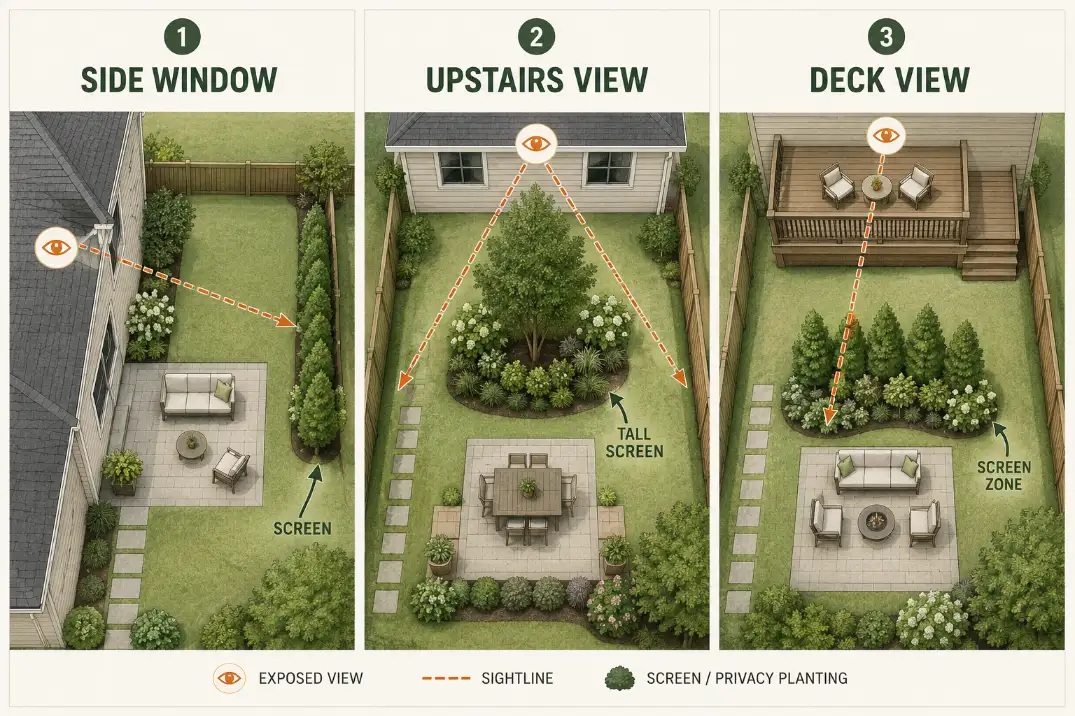
Simple Window Privacy Layouts
The side-window layout
Use a staggered group of shrubs or a narrow small tree between the neighbor’s side window and your active area. Keep the tallest plant on the sightline and use lower planting only to soften the base.
The upstairs-window layout
Use one taller vertical element near the patio or seating area, then support it with lower shrubs. The screen should interrupt the downward view before it reaches the place people sit.
The deck-view layout
Treat the neighbor deck like a raised viewing platform. Screen the angle into your patio first, then soften the boundary if needed. A pergola, small tree canopy, or tall grouped planting may be more useful than a long hedge.
The small-yard layout
Use one privacy anchor instead of surrounding the yard. A single well-placed tree, trellis, or evergreen group can protect the main seating zone while leaving the rest of the yard open. In small spaces, selective privacy almost always feels better than full enclosure.
For broader plant-selection and care guidance, see the University of Minnesota Extension trees and shrubs guide.