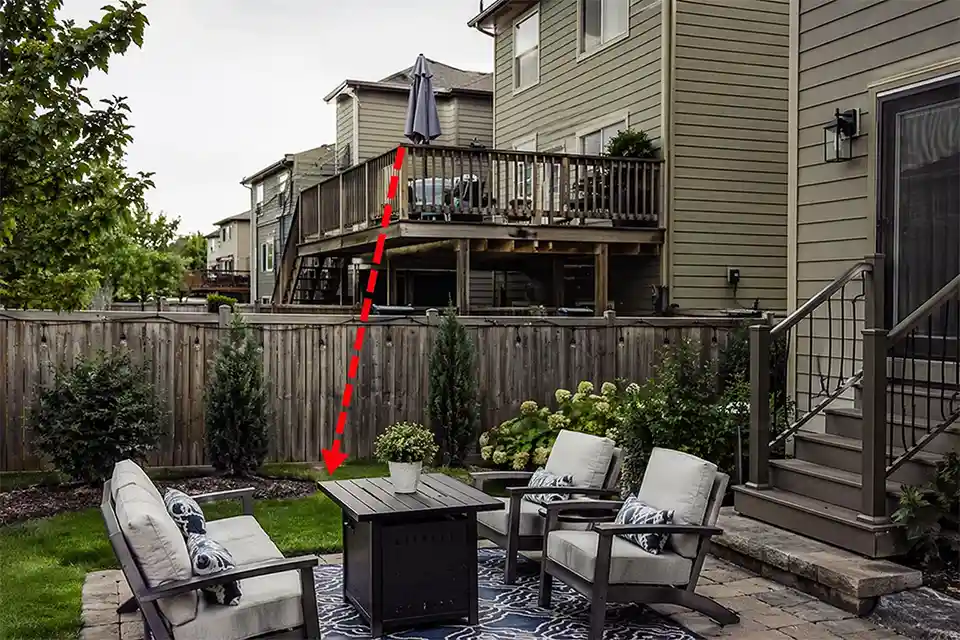
A neighbor’s deck overlooking your backyard is usually not a fence problem first. It is a sightline problem. That is why a standard 6-foot fence can feel fine from the lawn and still fail once the neighbor is sitting or standing on a deck platform 8 to 12 feet above grade.
The first useful checks are simple: where the view actually lands, whether the exposure affects the whole yard or only a 10- to 15-foot use zone, and whether the unwanted visibility comes mostly across the fence line or sharply down from above.
That distinction changes the fix. Most durable solutions combine one immediate block near the place you actually use, one element that interrupts the upper angle, and one slower planting layer that improves privacy over time instead of pretending to solve it overnight.
Map the sightline before you buy anything
The fastest way to waste money is to start with materials before you identify the actual view path.
Check the view where you actually sit
Stand in the yard, then repeat the check seated. A backyard can feel exposed in a chair and acceptable when standing. That difference matters because an elevated deck usually looks down into a seated use zone, not into the entire yard equally.
Focus on the place that bothers you most:
- the dining set
- the grill area
- the hot tub
- the lounge corner
- the section of patio you use most often
If the discomfort is concentrated in one zone, treat that as an advantage. It usually means you can solve the real problem with a 6- to 7-foot near-screen instead of trying to harden the entire perimeter.
Sort the problem by angle
Use this quick rule:
- Deck only slightly above fence line: reinforce the boundary first
- Deck mainly overlooks one patio zone: screen the use zone first
- Deck looks sharply down from above: use overhead or angled privacy first
That is where broad privacy galleries usually lose usefulness. They show fences, hedges, curtains, pergolas, and planters as if they solve the same problem. They do not. An elevated overlook needs the fix matched to the angle, not just to the category.

Which privacy fix actually fits the deck
If the overlook is shallow, reinforce the boundary
If the deck is only modestly elevated and the view is not dropping steeply into the yard, the property edge can still do most of the work. In that case, the right move is usually a layered fence-line strategy: existing fence, added planting depth, and selective screening where the line of sight is weakest.
A fence still matters here. It just should not be asked to solve a geometry problem it cannot physically solve.
If the overlook lands on one patio zone, move the screen inward
This is the most common winning move. A freestanding slatted screen, privacy panel wall, or pergola side screen placed near the actual use zone usually blocks more unwanted view per foot of material than a much longer perimeter project.
That sounds counterintuitive until you remember what the deck is doing. It is not watching your property line. It is looking into the place where you sit.
A 7-foot screen placed a few feet from a seating area can interrupt the sightline more effectively than a much longer fence upgrade because it is positioned at the landing point of the view instead of at the edge of the lot.
That same logic fits naturally with backyard layout mistakes in shared-fence yards, where the bigger issue is often that the activity zone and the exposure zone have been left fully aligned.
If the view drops sharply from above, use overhead or angled privacy
This is where generic hedge advice usually breaks down. If the neighbor is looking down from a high platform, vertical screening alone often leaves the most uncomfortable angle open.
Better answers here include:
- a pergola with one screened face
- an angled slat roof over the patio
- a shade sail positioned to cut the upper view
- a partial canopy that blocks the deck-facing side
Pro Tip: Before building anything permanent, hang a temporary outdoor fabric panel or shade cloth for one weekend. It reveals the height and angle that actually change the feeling of privacy.
What wastes time most often
Taller fence alone
This is the most common false solution. It may soften the view, but once the deck clearly clears the fence plane, more fence height rarely solves the core problem by itself.
A single row of fast growers
People love the speed story here. The reality is less generous. A thin line of one species often stays too narrow where privacy matters, grows unevenly, or becomes a maintenance burden later.
That is why the longer-lasting answer is usually a mixed screen rather than a straight monoculture hedge. It is also one reason backyard privacy problems and fixes that fail often come from repeating the same privacy move across the whole edge without fixing the real view corridor.
Screening the whole yard before screening the use zone
This is where budgets disappear. If the deck mainly exposes a patio corner, start there. Solving a 12-foot problem before a 60-foot problem is not a compromise. It is usually the smarter order.
Quick Diagnostic Checklist
- The deck is visibly several feet above your fence line.
- The privacy problem feels worse when you are seated, not standing.
- The exposure is strongest in one main use zone.
- A fence already exists but the yard still feels overlooked.
- The view is coming down at an angle, not just across.
- You want relief in the next 30 days, not two growing seasons from now.
- You have less than about 3 feet of planting depth along the boundary.
If four or more of these are true, a fence-only or hedge-only plan is unlikely to be the best answer.
Use plants as the long-term layer, not the rescue layer
Plants still matter. They just need the right job.
What planting is good for here
Planting works best when it:
- softens a hard privacy screen
- fills side gaps over time
- adds year-round and seasonal depth
- reduces the visual harshness of structural screening
A bed that is 3 to 6 feet deep gives you room to build a real layered screen. That is usually enough space to combine taller evergreens, medium shrubs, and a lower edge without ending up with a thin strip that never fully closes.
What planting is not good for here
It is not a fast fix for a deck that already looks directly into your patio this month. Even a good planting plan is usually a trajectory solution, not an instant privacy solution.
That is one reason layout matters as much as planting. In some yards, shifting and defining the social zone works better than trying to grow a living wall in a strip that never had enough depth to begin with. That fits closely with backyard zoning mistakes that hurt outdoor flow.

The best fix sequence for most yards
1. Block the exposed use zone now
Use a near-patio screen, slatted wall, pergola side panel, or overhead element. This creates immediate functional privacy.
2. Improve the angle next
If the overlook is steep, add upper-angle control. That can be a pergola top treatment, partial roof, or shade sail positioned toward the deck side.
3. Layer planting after that
Once the immediate privacy works, add planting to widen, soften, and stabilize the screen over the next few seasons.
This order matters. Reversing it is how people end up waiting on plants while still feeling watched.
Comparison guide: what actually fits this problem
| Situation | What usually works first | What people try instead | Better decision |
|---|---|---|---|
| Deck only slightly above fence | Fence-line reinforcement and layered planting | Rebuilding the whole patio area too early | Keep the fix at the boundary if the angle is still shallow |
| Deck overlooks one seating zone | Freestanding near-screen by patio | Screening the entire yard perimeter first | Solve the landing zone before the whole lot |
| Deck looks sharply downward | Overhead or angled privacy element | Taller fence alone | Block the upper angle, not just the side view |
| Privacy needed fast | Structural screen first, plants second | Waiting on hedge growth | Get immediate function, then build long-term softness |
Before you build anything tall
A good privacy idea can still become a bad project if it ignores local limits. Fence height, attached structures, pergolas, screens near setbacks, and HOA rules can all affect what is realistic.
One smaller detail that changes the result at night is lighting. A brightly lit patio can make the overlook feel worse by turning the use zone into a stage. Lower, shielded lighting usually protects the mood of the space better, which is one reason backyard lighting mistakes that hurt outdoor spaces at night can indirectly intensify privacy problems.
A neighbor’s deck overlooking your backyard does not usually call for more ideas. It calls for the right geometry. Once you block the specific sightline that lands on the place you actually use most, the fix usually gets smaller, smarter, and much more effective.
For broader planting guidance, see the University of Maryland Extension privacy screen guide.