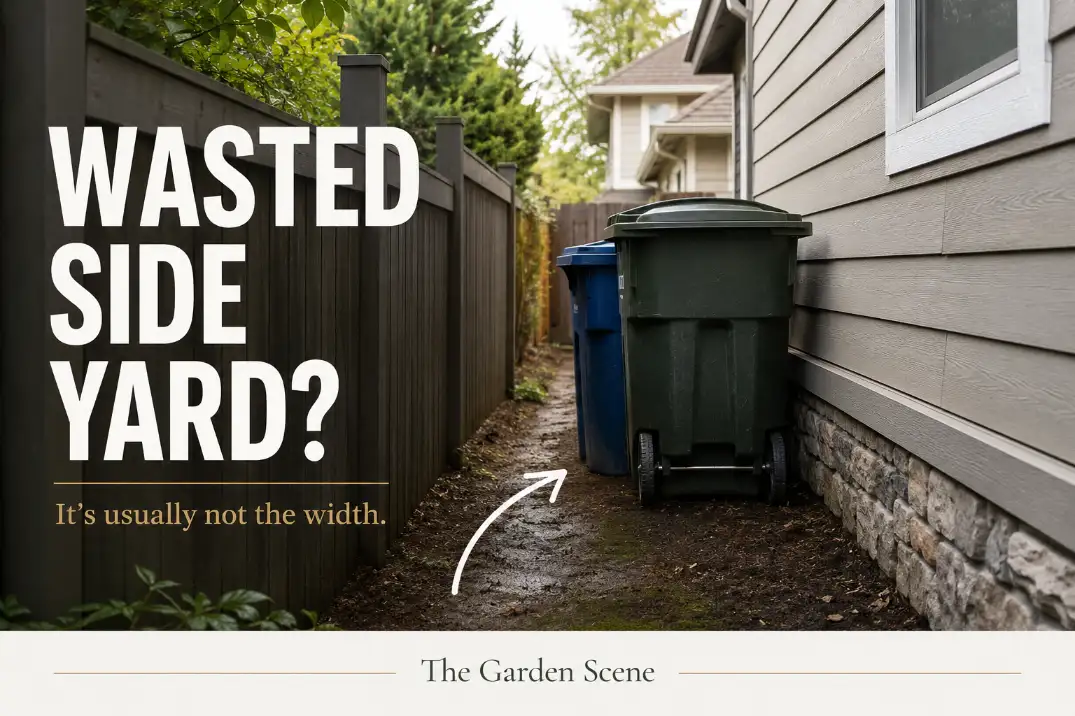
Side yards usually become wasted outdoor space because they have no assigned job. They are too important to ignore, but too narrow to survive random storage, random planting, and random paving.
The first checks are not decorative: measure the clear walking width, look for water after rain, and ask whether the strip connects two useful places or simply collects leftovers.
If the usable path is under 30 inches wide, most people will avoid it. If water still sits there 24–48 hours after a normal storm, the space is not just unattractive; it is failing as outdoor access.
And if the side yard has no destination, even a fresh gravel path may become a prettier version of the same dead zone.
This is different from a small backyard problem. A small backyard usually needs better zoning. A side yard usually needs a clearer purpose.
The Real Problem Is Not the Side Yard’s Size
A side yard does not need to be large to be useful. It needs to be legible. A 4-foot-wide side yard with a dry surface, clean route, and one defined role can work better than an 8-foot-wide strip filled with bins, leftover pavers, overgrown shrubs, and half-finished landscaping.
Clear width matters more than total width
The number that matters most is not the full fence-to-wall measurement. It is the clear usable width after AC equipment, hose reels, shrubs, gates, bins, and storage are counted.
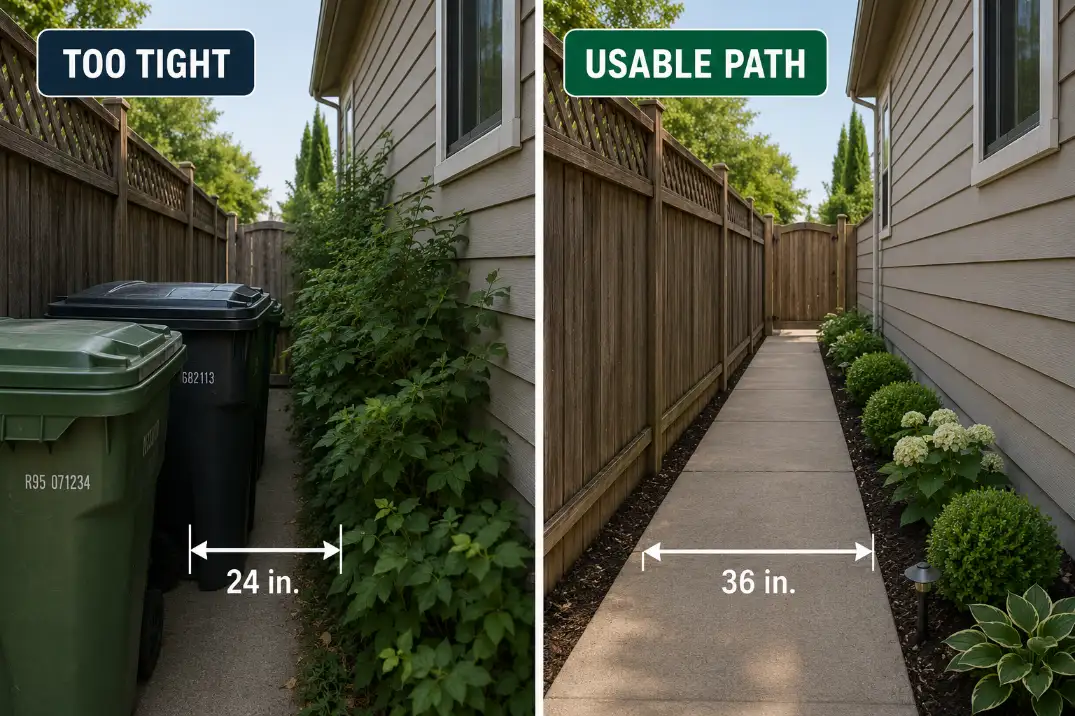
A side yard that measures 5 feet across may have only 24 inches of real passage. That is why many side yards feel tighter than they look on a property survey.
For basic access, aim for at least 36 inches of clear walking width. For trash bins, wheelbarrows, garden carts, or regular service movement, 42–48 inches is more realistic.
Once the route drops below about 30 inches, the space starts behaving less like a passage and more like a storage gap.
This is also why side yards often connect to larger layout problems. If the main backyard already feels awkward, the side yard becomes the overflow zone for tools, bins, hoses, and unused materials.
The same movement issue appears in Backyard Layout Problems That Make Spaces Hard to Use, where dead areas often exist because circulation was never given priority.
Match the Fix to the Width
The most useful side yard decision is not “What can I put here?” It is “What can this width support without becoming annoying to use?”
A narrow side yard can be valuable, but only when the use matches the clearance.
| Clear Usable Width | Best Use | What Usually Fails |
|---|---|---|
| Under 30 inches | Visual cleanup only | Storage, shrubs, wheel access |
| 30–36 inches | Narrow walking passage | Bins, wide planters, bulky lights |
| 36–48 inches | Service path | Loose gravel under rolling bins |
| 4–6 feet | Path plus one storage or planting edge | Two-sided planting |
| 6–8+ feet | Garden corridor, dog run, or small work zone | Treating it like a full patio |
The service path is often the highest-value use
For many US homes, the best side yard is not a lounge, dining area, or mini courtyard. It is a clean service route. That may sound plain, but it can make the entire backyard easier to use.
If trash bins, hoses, garden tools, grill fuel, mower access, or patio entry all depend on one awkward strip, fixing that strip removes friction from the whole outdoor routine.
A side yard used 3–5 times per week deserves a better surface than scattered stepping stones over mud.
Wider does not mean unlimited
A 6-foot side yard can still fail if both sides are filled. Two planting beds, a storage cabinet, decorative lights, and a hose station can quickly reduce the route back to a squeeze.
The better rule is simple: choose one active edge. Put storage, planting, screening, or utilities on one side, then protect the path. This is especially important when side yard clutter is already making the rest of the outdoor space feel smaller.
The same principle carries into Backyard Clutter Makes Outdoor Spaces Feel Smaller, where the issue is not the amount of space but how much of it remains usable.
Side Yard Ideas That Actually Match the Space
The best side yard ideas are not the most decorative ones. They are the ones that match the width, drainage, access needs, and visibility of the strip.
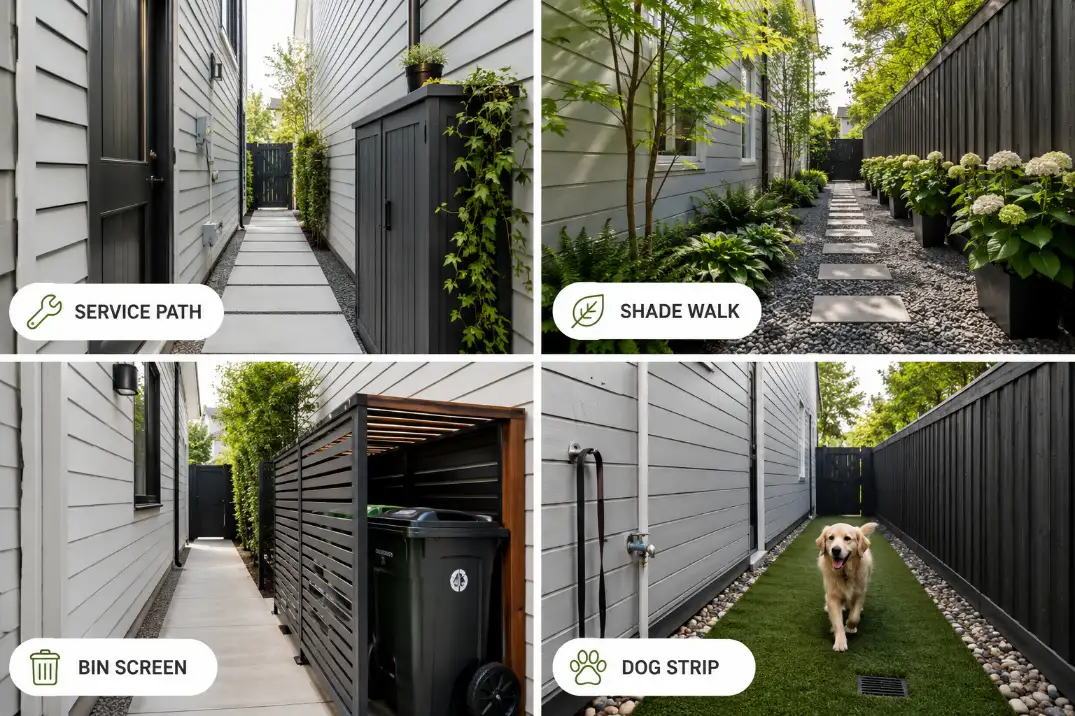
Service path with one storage edge
This is usually the strongest choice for a narrow side yard used weekly. Keep the walking route clear, place storage along one side, and avoid anything that forces people to turn sideways while carrying tools, bags, or bins.
A slim cabinet, wall-mounted rack, or screened bin area can work if it leaves at least 36 inches of continuous passage. If it does not, the storage is consuming the space it was supposed to organize.
Shaded gravel garden corridor
For a side yard with stable drainage and light foot traffic, a simple gravel path with repeated shade-tolerant planting can make the strip feel intentional without crowding it. The key is repetition. Three to five plant groups often look calmer than ten different small plants.
This works best when the route is not needed for rolling bins or heavy carts. If wheels use the path every week, compacted crushed stone or pavers on a proper base usually perform better than loose decorative gravel.
Screened bin zone with a protected lane
Trash and recycling bins often belong in the side yard, but they should not own the whole side yard. A short screen, narrow fence return, or dedicated bin pad can clean up the view while keeping the route open.
The failure point is door swing and turning space. If the bins cannot roll out without scraping plants or blocking the gate, the screen is only cosmetic.
Dog-friendly washable strip
A side yard can work as a dog route when the surface drains, cleans easily, and does not track mud into the house. Mulch often disappoints here because it scatters, absorbs odor, and moves under repeated traffic.
A firmer washable surface, controlled drainage, and a simple hose point matter more than decorative planting.
What People Usually Misread First
The two conditions people blame most often are shade and narrowness. Both matter, but neither is usually the full reason a side yard goes unused.
Shade is often overestimated
Many side yards get only 2–4 hours of direct sun, especially between two-story homes, tall fences, or close neighboring houses. That limits lawn, vegetables, and many flowering plants. It does not make the space worthless.
Shade can support a service path, a storage wall, a fern-and-gravel passage, a dog run, a rain-garden edge, or a cooler transition zone in hot climates.
The mistake is choosing a use that needs 6+ hours of sun, watching it fail, and deciding the side yard itself is impossible.
Drainage is often underestimated
Water is usually more important than shade. Narrow side yards often collect runoff from rooflines, downspouts, compacted soil, and fence-side grading.
If the ground slopes toward the house instead of away from it, even a good-looking path can become a damp maintenance problem.
A practical target is roughly a 1–2% slope away from the foundation where site conditions allow. That means about 1–2 inches of drop over 8 feet. If the soil stays soft for more than 48 hours after moderate rain, planting more shrubs is not the first fix.
Pro Tip: Check the side yard after rain before buying plants or pavers. Standing water tells you more than sunlight does.
Why the Obvious Fix Usually Fails
The obvious fix is to make the side yard look nicer with gravel, stepping stones, mulch, or narrow planting beds. Those can work, but only after the side yard has a role.
Stepping stones do not fix mud
Stepping stones over wet soil usually create prettier mud. They may give your foot a place to land, but they do not solve compaction, low spots, roof runoff, or poor grading.
If the side yard needs to move trash bins, garden carts, or regular foot traffic, the surface has to match that job. Decorative pea gravel over thin landscape fabric is not a long-term solution for rolling bins.
A firmer surface such as compacted crushed stone, pavers on a proper base, or a narrow concrete walk is usually more practical.
Once the space handles repeated traffic more than 2–3 times per week, loose decorative material often becomes maintenance, not improvement.
Plants do not soften a path if they erase it
Planting is not the problem. Mature size is.
A shrub that looks harmless in a 1-gallon pot may reach 3–5 feet wide. In a 5-foot side yard, that can erase the entire passage. The installed size may look controlled, but the mature width decides whether the layout survives.
This is the same failure pattern behind Backyard Plants Crowding Paths and Seating. The space does not fail on planting day. It fails two seasons later, when the path has quietly disappeared.
If You See the Side Yard From Indoors, Treat It Differently
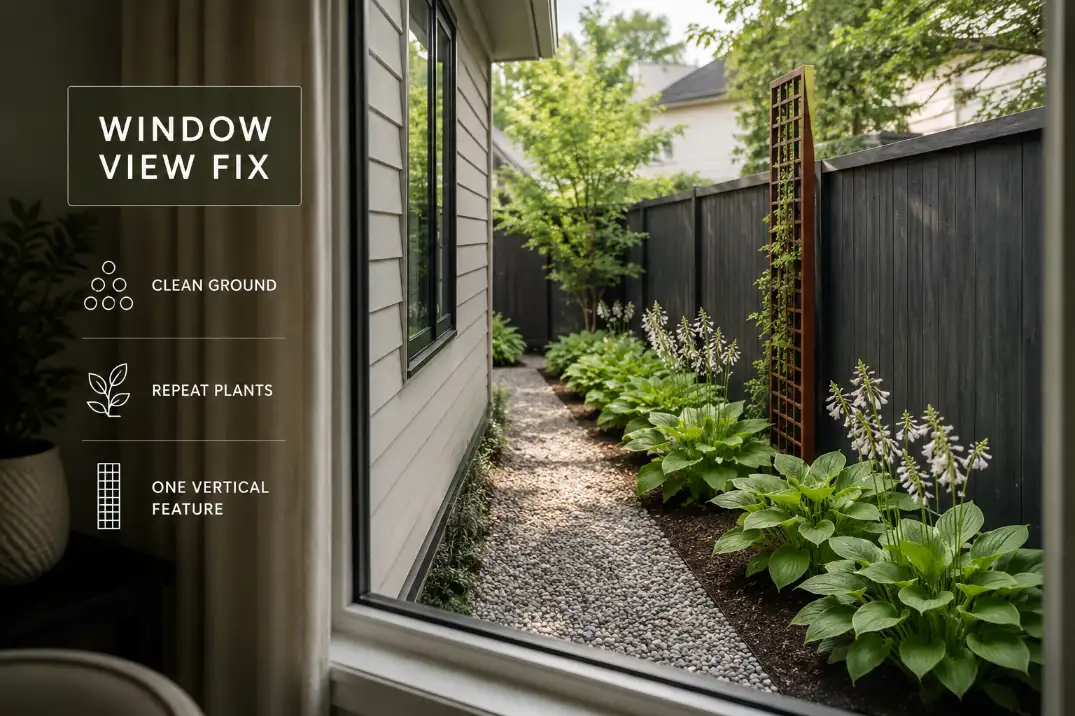
Not every side yard needs to become a route or storage zone. Some matter because they are visible from a kitchen window, bedroom, hallway, or dining area. In that case, the side yard’s job may be visual calm.
This is where many homeowners overdecorate. A narrow side yard seen from indoors usually looks better with fewer elements: one clean ground plane, repeated shade-tolerant planting, a repaired fence surface, and maybe one vertical feature such as a slim trellis or wall-mounted planter.
The goal is not to create a tiny show garden packed with color. It is to remove the “forgotten strip” feeling. Gravel or pavers, 3–5 repeated plant groups, and one clean vertical surface often create more value than mixed pots, solar lights, ornaments, and several plant heights competing in a tight view.
Fix the Failure Pattern, Not Just the Look
The right improvement depends on what is making the side yard unusable. Start with the condition that limits everything else.
If it is muddy, fix drainage first
Muddy side yards usually come from compacted soil, roof runoff, poor slope, or repeated traffic over weak ground. Adding mulch may hide the problem for a few weeks, but it does not improve water movement.
A better sequence is to redirect downspouts, correct low spots, add a firm base, and choose a surface that can handle traffic. This matters in humid Florida yards, Midwest rainfall patterns, and clay-heavy areas where wet soil lingers after storms.
If the side yard sends water toward the patio, foundation, or planting beds, drainage should outrank decor. That decision overlaps with Fix Drainage or Layout First, because a beautiful outdoor layout rarely performs well over unresolved water movement.
If it is a dead-end, create a reason to enter
Some side yards fail because they do not lead anywhere. A gate opens, but the path stops at a wall, hose pile, utility box, or blank fence corner. Without a destination, people stop maintaining the space.
The destination does not need to be dramatic. A hose station, compost access, potting shelf, bin screen, tool cabinet, shade planting view, or clean route to the backyard can be enough. The point is not to make the side yard a second patio. The point is to give it one reason to stay clear.
If it is too narrow, reduce decisions
Very narrow side yards need less design, not more. Use one surface, one edge treatment, and one main purpose. Mixing gravel, stepping stones, planters, lights, storage, and decorative fencing in a 3-foot-wide strip usually makes the space feel smaller.
In side yards under 4 feet wide, prioritize passage or visual cleanup. In 5–6 feet, consider one storage edge or one planting edge. Beyond 6 feet, the strip may support a small garden corridor, dog run, or work zone, but only if access and drainage are already controlled.
Side Yard Fixes That Usually Waste Money
Some upgrades sound useful but fail because they do not match the way side yards are actually used.
Pea gravel where bins roll weekly
Pea gravel looks clean at first, but rolling bins, carts, and wheelbarrows often sink, wobble, or drag through it. If the route handles wheels every week, a compacted base matters more than the decorative top layer.
Fast-growing shrubs in a 4-foot strip
Fast growth is not a benefit in a narrow corridor. It often means more pruning, more crowding, and less usable width. A plant that needs monthly trimming to keep the path open is usually the wrong plant.
A shed that blocks the only route
A small shed can be useful in a wide side yard, but it becomes a problem if the door opens into the passage or prevents access to utilities. Storage is not successful if using it makes the route harder.
Lighting before footing
Path lighting can improve a side yard, especially near gates and steps. But if the ground is uneven, muddy, or slippery, lighting is secondary. Safe footing comes first.
The same applies to storage upgrades. A slim cabinet or tool rack only helps if it protects the route instead of invading it.
If tools and supplies are the main problem, How to Hide Backyard Tools and Supplies Without Adding More Visual Clutter is a better next step than adding another decorative feature.
When Utilities Set the Limit
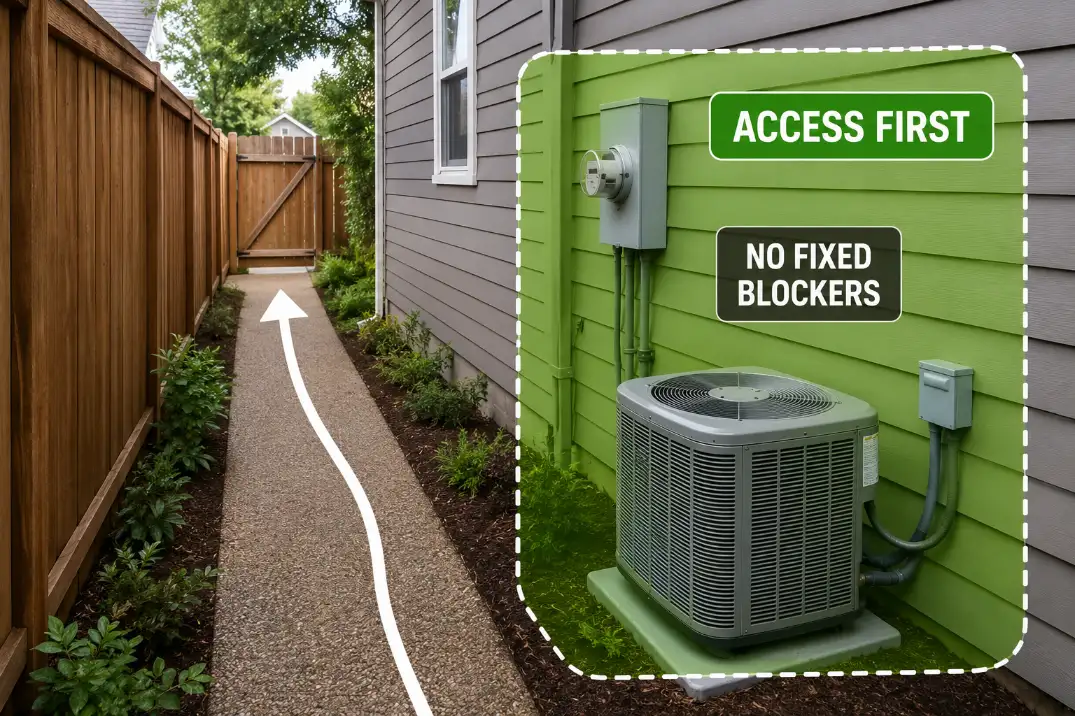
If the side yard contains an AC condenser, gas meter, electric meter, irrigation valves, hose bibs, cleanouts, or service panels, design the space as an access corridor first and a garden second.
Access beats screening
Screens, shrubs, cabinets, and planters can all look better than exposed utilities. But fixed blockers can create maintenance problems.
Many AC condensers need open airflow and service clearance around the unit, and exact requirements vary by manufacturer and local code. Gas and electric meters also need clear access.
The safe design principle is simple: anything placed near utilities should be easy to move, narrow enough to preserve the route, and low enough not to trap heat or block service.
Permanent upgrades should earn their place
Custom gates, paver paths, built-in cabinets, irrigation, and lighting can all make sense in the right side yard. But they are easy to overbuy when the space is used mostly for bins and occasional access.
Use frequency as the filter. If the side yard is used daily or several times per week, invest in durable footing and organized storage.
If it is used once or twice a month, keep the fix simpler: dry ground, safe access, utility clearance, and visual cleanup from the street or main backyard.
That same spending logic applies across the yard. Before turning a side strip into a major project, compare it with higher-use areas covered in Backyard Problems Worth Fixing First.
Quick Diagnostic Checklist
- Clear path is under 30 inches: the space is functionally too tight.
- Water remains after 24–48 hours: drainage outranks cosmetic upgrades.
- Rolling bins cross the area weekly: loose gravel is probably the wrong surface.
- Plants mature wider than 24 inches: they may steal the route.
- Utilities are present: access comes before screening.
- The side yard has no destination: it needs a job, not more decor.
- The view from indoors is ugly: simplify the ground plane and repeat fewer elements.
The Best Side Yard Fix Is Usually Boring First
The side yards that stop feeling wasted are rarely the ones with the most ideas. They are the ones with a clear route, a dry surface, controlled storage, utility access, and planting sized for the actual width.
A useful side yard may become a shaded garden walk, a clean service corridor, a bin screen, a dog-friendly strip, or a quiet view from a window. But it should not become all of those at once.
Choose the job first. Then choose the surface, storage, planting, and screening that support that job without narrowing the space back into failure.
For broader official guidance on managing runoff in residential landscapes, see the University of Minnesota Extension rain garden guide.