A patio surface becomes hard to clean when dirt has somewhere to hide and moisture gives it time to come back.
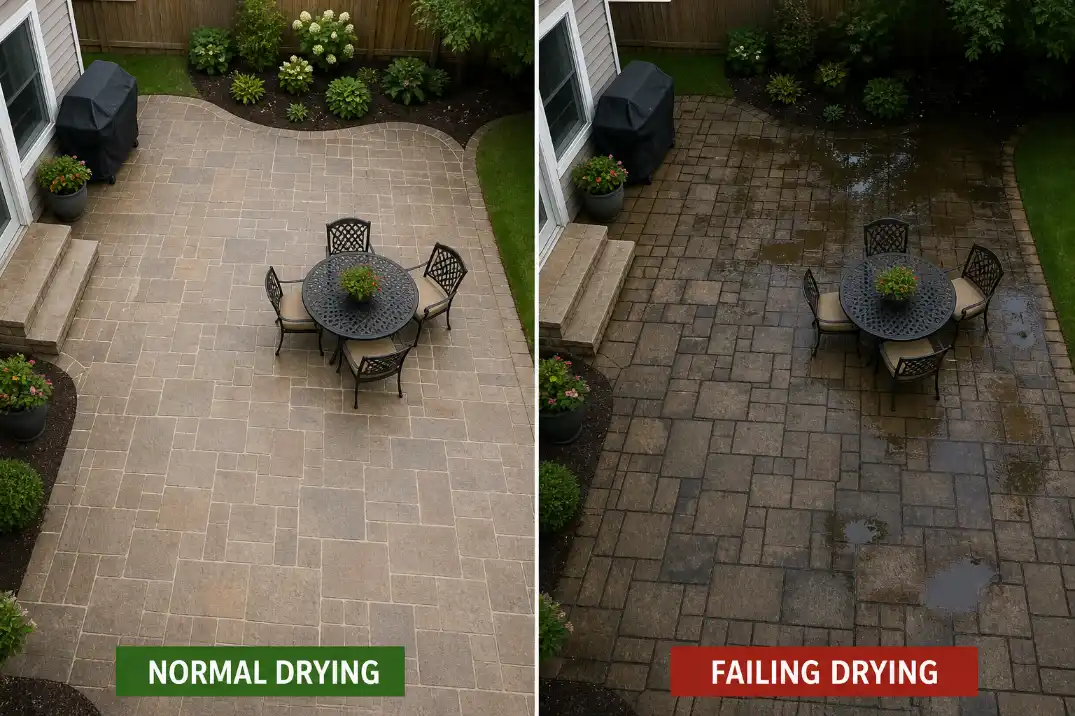
The first checks are simple: whether water still sits there 24 hours after rain, whether the same dark joints return within 2–4 weeks of cleaning, and whether grit remains in pits, grooves, or gaps after a stiff broom pass.
A patio that dries within 2–6 hours after normal rainfall usually behaves very differently from one that stays damp into the next day.
This is not the same as a patio that looks messy after pollen, leaves, or a windy week. Loose debris sits on top. Real maintenance trouble starts when dirt settles below the broom line, stains move into porous material, or water keeps feeding algae in the same low spots.
At that point, the question is no longer “What cleaner should I use?” It is “Why does this patio keep creating the same mess?”
The Real Reason Patio Surfaces Become High-Maintenance
Most frustrating patios are not dirty because they were ignored. They are dirty because the surface, joints, slope, and drying pattern work together to hold residue. Surface color may decide how obvious the mess looks, but moisture usually decides how persistent it becomes.
Slow drying matters more than color
A pale concrete slab may show every leaf stain, but a dark, shaded, textured paver patio can be harder to actually clean. Color affects visibility. Drying time affects the maintenance cycle.
If the patio has shallow birdbaths, low corners, clogged edges, or a slope under about 1/8 inch per foot, water slows enough for fine soil and organic matter to settle. A healthier patio often has closer to 1/8–1/4 inch of fall per foot, depending on layout and site conditions, so water moves off instead of lingering in shallow films.
That is why a patio can look freshly cleaned after pressure washing and then look tired again three weeks later. The cleaning removed the visible film. It did not change the places where water and grit collect.
Dirty joints are usually a system problem
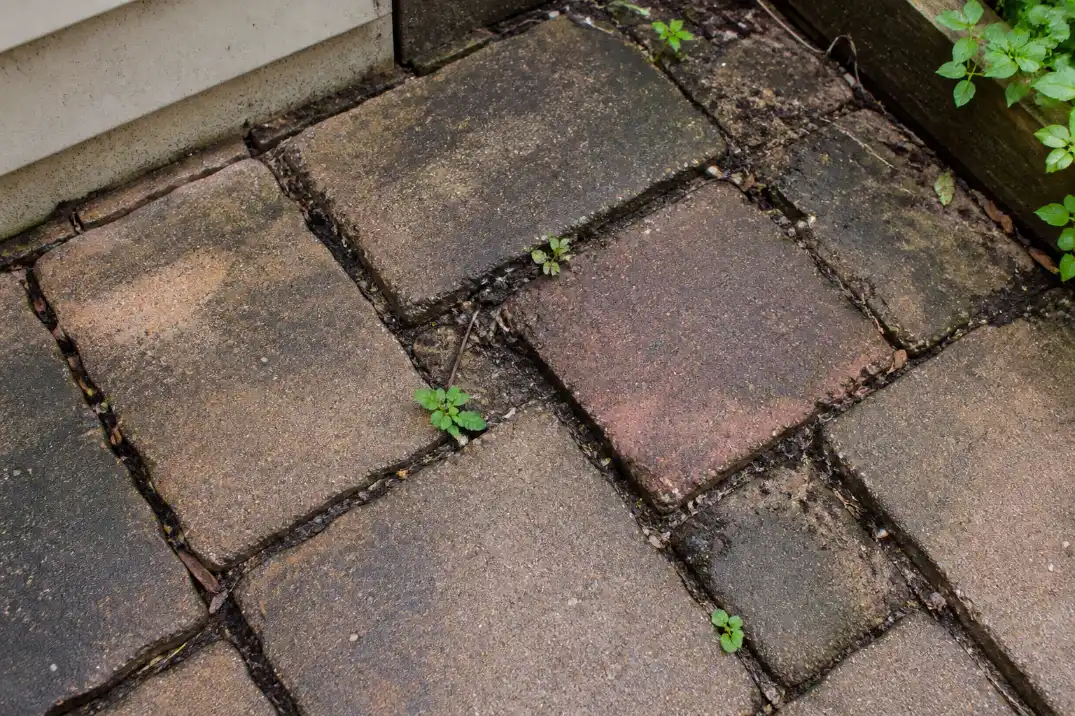
On paver patios, the surface may still look decent while the joints are already failing. Open gaps, missing sand, ant activity, weeds, or joint spaces wider than about 1/4 inch allow debris to settle below the top edge of the paver. Once dirt sits inside the joint, sweeping only cleans what you can see.
This is where stronger cleaner often becomes the wrong tool. If the joints keep washing out or the pavers shift under furniture, the cleaning problem may actually be a joint and base problem. For that situation, Polymeric Sand Paver Repair for Shifting Patios is a more useful next step than another round of surface scrubbing.
Surface Traits That Trap Dirt
The hardest patios to maintain usually share at least one physical trait: they hold dirt below the reach of normal cleaning, absorb stains before they can be rinsed away, or stay damp long enough for growth to return. The material matters, but the way it behaves on that specific site matters more.
Deep texture holds soil below broom level
Texture is not automatically bad. A light broom finish or lightly textured paver can improve traction and still clean easily. The problem is deep, irregular, or damaged texture that traps soil beneath the contact point of a broom.
You can usually see this after rinsing. If the patio looks clean while wet but dries with gray, brown, or green shadows still visible, residue is probably sitting in micro-pits. Loose dirt moves. Embedded residue stays.
A useful test: clean one stained area with a stiff outdoor broom and hose. If the same patch remains after two honest attempts, the problem is likely texture, staining, or moisture behavior—not effort.
Porous surfaces absorb stains before you notice
Unsealed concrete, older pavers, soft stone, and some natural flagstone can absorb oil, tannins, fertilizer marks, rust, and dirty water. Around a grill, cooking oil may darken porous concrete within hours. Under wet leaves, tannin shadows may become stubborn after 1–2 rainy weeks.
This is where homeowners often underestimate speed. A stain does not need a full season to become difficult. On a hot patio, grease can soak in during one afternoon. Under a planter, trapped moisture can leave a ring even when the rest of the patio looks dry.
Nonporous surfaces still fail when drainage is wrong
Porcelain pavers and some outdoor-rated tiles are often easier to clean because the surface itself is less absorbent. That is a real advantage for stains. But it does not make the patio automatically low-maintenance.
A nonporous surface with poor slope, slick texture, shaded edges, or weak grout lines can still stay dirty because water and residue sit on top instead of moving away. The surface may not absorb the stain, but it can still hold film, algae, or cleaning residue in the wrong conditions. Nonporous helps most when the patio is already draining and drying correctly.
What Homeowners Usually Misread First
The easiest thing to see is not always the thing that needs fixing. Algae, dark patches, and dirty joints are symptoms. The more useful question is why they appear first in the same places.
Algae is a symptom, not the root cause
Green or black growth gets blamed as the problem because it is visible. But algae usually needs moisture, shade, and residue to keep returning. If the patch sits near a downspout, dense hedge, planter cluster, wall, or low patio corner, the growth is probably the visible result of a drying problem.
In humid climates such as Florida or the Gulf Coast, a shaded patio can regrow surface film faster than the same material in Arizona. That does not mean the material is always bad. It means the local drying window is shorter, so slope, airflow, and joint condition matter more.
Shade is often blamed too broadly
Shade can slow drying, but shade alone is not enough to explain every dirty patio. A shaded surface with good airflow, tight joints, and proper fall can still be manageable. A partly sunny patio with rough texture and poor drainage can be worse.
What gets underestimated is blocked airflow. Storage boxes, dense shrubs, outdoor sofas, privacy screens, and planters can hold damp air against patio edges. Even a 6-inch gap behind furniture or containers can help debris dry and clear instead of sitting in a dark strip.
Pro Tip: After one normal rain, check the patio at 2 hours, 6 hours, and 24 hours. The areas still damp at 24 hours are the ones most likely to keep creating maintenance problems.
Quick Diagnostic Table
Use this table to decide whether the patio needs cleaning, repair, drainage correction, or replacement thinking. The more the dirt repeats in the same location, the less likely it is to be a simple cleaning issue.
| What You Notice | Likely Mechanism | Better Next Move |
|---|---|---|
| Surface dries within 2–6 hours | Normal drying behavior | Routine sweeping and seasonal cleaning |
| Same spots stay damp after 24 hours | Low spot, poor slope, shade, or blocked airflow | Correct drainage or drying conditions first |
| Dirt returns in 2–4 weeks in the same places | Recurring moisture or debris trap | Treat the cause, not just the stain |
| Joint gaps are wider than about 1/4 inch | Debris reservoir below broom level | Refill, stabilize, or repair joints |
| Grease darkens the surface within hours | Porous or unsealed material | Blot quickly; consider surface protection later |
| Cleaning removes sand every time | Maintenance is damaging the joint system | Stop aggressive washing and repair the joints |
A patio with one weak signal may only need better routine care. A patio with three or more of these patterns is usually telling you that cleaning is not the main problem anymore.
Why Stronger Cleaning Often Disappoints
A stronger cleaner can solve the right problem quickly. It can also waste time or make the patio harder to maintain if the actual problem is open joints, poor drying, or a damaged surface.
The cleaner has to match the problem
Organic growth, food spills, grease, rust, leaf tannins, and sealer haze are not the same problem. Treating all of them with the same “patio cleaner” approach is one reason results are inconsistent.
Organic growth usually needs cleaning plus better drying. Grease needs quick absorption control and a surface-safe degreaser. Open joints need joint repair. Standing water needs slope, leveling, or drainage correction. White haze after sealing needs diagnosis before more sealer goes anywhere near it.
A cleaner can remove residue. It cannot make a low patio corner drain.
Pressure washing can open the problem wider
Pressure washing can be useful when used carefully, but aggressive washing often creates the next maintenance issue. It can remove joint sand, roughen concrete paste, scar softer stone, and drive water into areas that already dry slowly.
On pavers, the damage may not look dramatic at first. The joints simply sit lower than they should, collect more grit, and sprout weeds faster. If every cleaning removes more sand, the patio is becoming less maintainable each time.
This also matters when the patio feels slick. A slippery patio can come from algae, sealer choice, residue, poor drainage, or surface finish. Before treating it as one generic cleaning problem, it is worth separating those causes, as explained in Slippery Patio Finish: Clean, Sealer, or Drainage Problem?.
Sealer only helps after the patio behaves correctly
Sealer can make future cleaning easier on porous concrete, some pavers, and certain stone surfaces. But sealer is not a fix for standing water, loose joints, active staining, or trapped moisture.
A patio should be clean, dry, stable, and draining properly before sealing. If water is still standing after 24 hours, sealing is premature. If stains have not been identified, sealing may lock in the discoloration. If the joints are failing, sealer may only make the surface look temporarily improved while the structure keeps creating work.
Pro Tip: If a patio looks dirty again in the exact same places within a month, do not reseal it yet. Map the repeat spots first.
Which Patio Surfaces Are Hardest to Maintain?
No surface is low-maintenance in every yard. A smooth concrete slab with poor drainage can be worse than textured pavers in an open, sunny space. Still, each surface has a typical weak point.
Concrete is simple until the top layer starts holding stains
Concrete is not hard to clean simply because it is concrete. It becomes harder when the surface paste wears, the slab stays damp, or stains soak into an unsealed top layer before they are rinsed away.
Fresh, well-sloped concrete can be easy to sweep and hose off. Older or more porous concrete is less forgiving. Oil, rust, leaf tannins, fertilizer marks, and dirty planter rings can stand out quickly, especially on lighter slabs.
Pavers are forgiving on top and demanding in the joints
Pavers hide some dirt better than pale concrete, and individual units can sometimes be lifted or repaired. Their weak point is the joint system. Open joints, washed-out sand, edge movement, and settling create more maintenance than the paver face itself.
This is why a paver patio can seem like a smart choice at first and then slowly become a cleaning chore. The issue is often not that pavers are bad. It is that the base, edge restraint, joint sand, or drainage was not durable enough.
If the surface is shifting as well as staining, When Cheap Pavers Stop Being a Smart Backyard Choice gives a clearer view of when the original savings start turning into maintenance.
Natural stone depends on density and surface shape
Natural stone is too variable to judge as one category. Dense, smooth stone can clean well. Soft, porous, cleft, or layered stone can hold dirt and absorb stains more easily. Wide flagstone joints can also collect soil, mulch, and plant debris if nearby beds wash across the patio.
In northern freeze-thaw climates, water entering small cracks or layered edges can make maintenance worse over time. A surface flaw that looks cosmetic in September may widen after repeated winter freezing.
Porcelain and outdoor tile are cleanable but not foolproof
Outdoor porcelain pavers and tile can be excellent where stain resistance matters. They are less likely to absorb oil, tannins, and dirty water than many porous materials. That makes cleaning the surface itself easier.
The tradeoff is that they rely heavily on correct installation, surface texture, and drainage. A slick finish can feel risky when wet. Poor slope can leave films and residue sitting on top. Weak grout or edge details can become the maintenance point even when the tile face cleans easily.
Gravel and decomposed granite change the maintenance job
Loose gravel does not stain like concrete, but it does not avoid maintenance. It changes the work from scrubbing stains to controlling migration, weeds, leaves, and displaced stones.
Decomposed granite can compact and look tidy, but fines can track onto nearby surfaces or wash during heavy rain. If the choice is really about how water moves through the backyard, the surface comparison should include drainage behavior, not just cleaning.
Pavers vs Gravel for Backyard Drainage is useful when the question is whether the patio surface is shedding, slowing, or collecting runoff.
When Cleaning Stops Making Sense
The line between cleaning and repair is not based on how ugly the patio looks. It is based on whether cleaning changes the pattern. If the same mechanism keeps recreating the mess, cleaning becomes temporary reset work.
Clean when the patio still behaves well
Cleaning makes sense when the patio drains, dries, and stays mostly level. Seasonal pollen, leaf debris, grill crumbs, muddy footprints, and light algae are normal. A heavily used patio may need light sweeping weekly during messy seasons and deeper cleaning a few times a year.
That becomes a warning sign only when the patio needs aggressive cleaning more than monthly during ordinary use, or when the same stains return in the same spots within 2–4 weeks.
Repair when dirt follows joints, dips, and edges
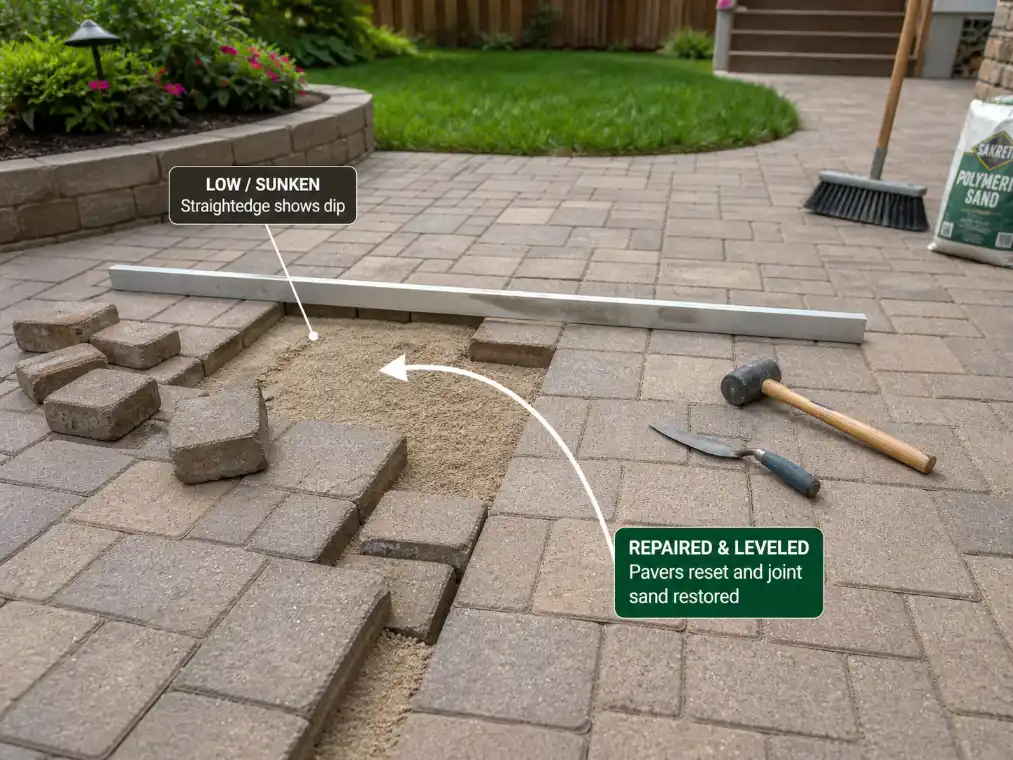
Repair makes sense when the dirt draws a map: dark joint lines, sunken pavers, one wet corner, loose edge restraints, or a strip that stays dirty beside a wall or planting bed. In those cases, the patio is showing where water and debris are being held.
A low spot does not have to be dramatic. A dip around 1/4 inch deep can collect enough silt and water to create a repeating stain. If several small dips connect, the patio starts acting like a shallow catch basin.
If the problem appeared after adding hardscape, changing beds, extending a walkway, or redirecting runoff, maintenance may be downstream of a drainage change. Backyard Drainage After Adding a Patio or Walkway fits that situation better than another cleaner comparison.
Replace when the surface keeps creating the same work
Replacement starts to make sense when cleaning, spot leveling, joint repair, and sealing no longer change the pattern. That usually means the base, slope, surface choice, or patio layout is working against you.
This is the stage where homeowners often keep spending on the most visible symptom. A new cleaner, another sealer, or a stronger pressure washer feels cheaper than rebuilding.
But if the patio stays damp after ordinary rain, loses joint material after every wash, and needs the same dirty areas cleaned again within weeks, the surface is no longer low-maintenance in practice.
The better question is not whether the patio can be cleaned. Almost any patio can be made to look better for a day. The better question is whether the surface stays clean under normal use without constant correction.
Questions People Usually Ask
Why does my patio look clean when wet but dirty when dry?
Water temporarily darkens and evens out the surface, so stains and residue can seem less obvious while the patio is wet. When it dries, dirt sitting in micro-pits, porous areas, low spots, or rough texture becomes visible again.
Should I seal a patio to make it easier to clean?
Only after the patio is clean, dry, stable, and draining correctly. Sealing over dampness, unidentified stains, open joints, or low spots can preserve the problem instead of solving it.
What is the clearest sign cleaning is not enough?
Repeat location. If the same joints, corners, dips, planter rings, or shaded edges get dirty first every time, the patio is showing a moisture, joint, slope, or surface-behavior problem.
For broader official guidance on reducing runoff from hard surfaces, see the U.S. Environmental Protection Agency.