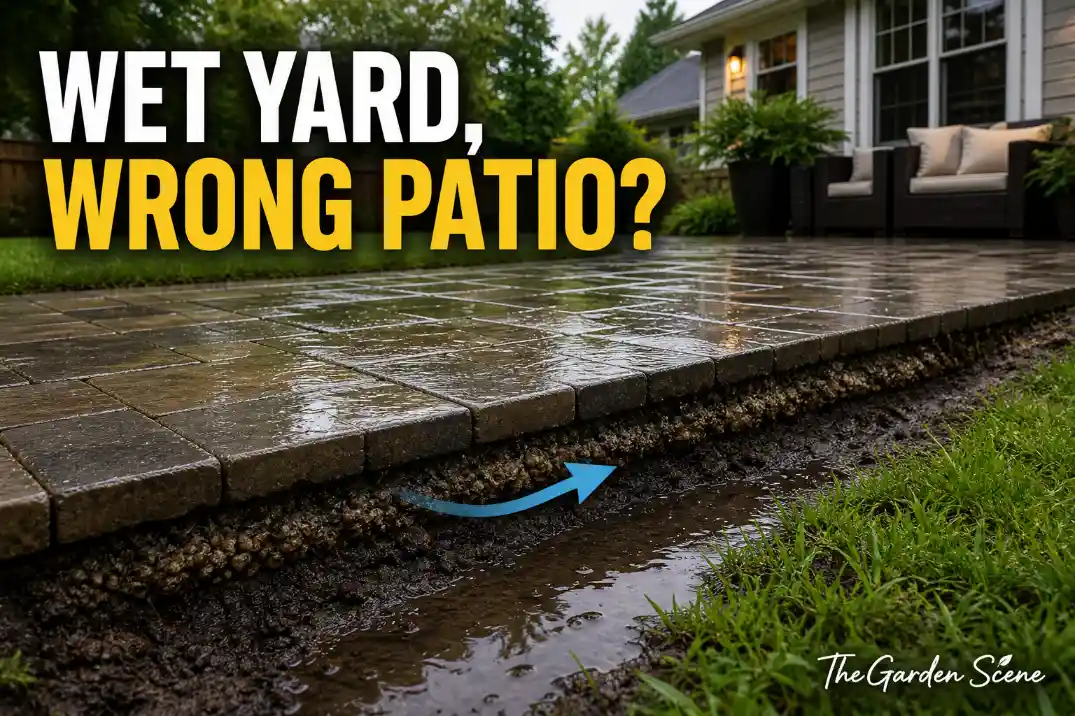
The best patio material for a wet backyard is not the one that looks most waterproof. It is the one that matches how water behaves on your site. A patio that stays damp for a few hours after rain is normal. A patio with puddles after 24–48 hours, soft soil at the edges, algae returning within a few weeks, or water moving toward the house is showing a drainage problem.
The first useful distinction is whether water sits on top of the patio, stays under the patio, or moves across the patio from another part of the yard. Those conditions can look similar, but they do not need the same material. A rougher surface may help traction. It will not fix a wet base. Gravel may let water pass through. It will not create an outlet. Concrete may feel solid. It can still become a shallow pan if the slope is wrong.
First, Diagnose the Wet Backyard Pattern
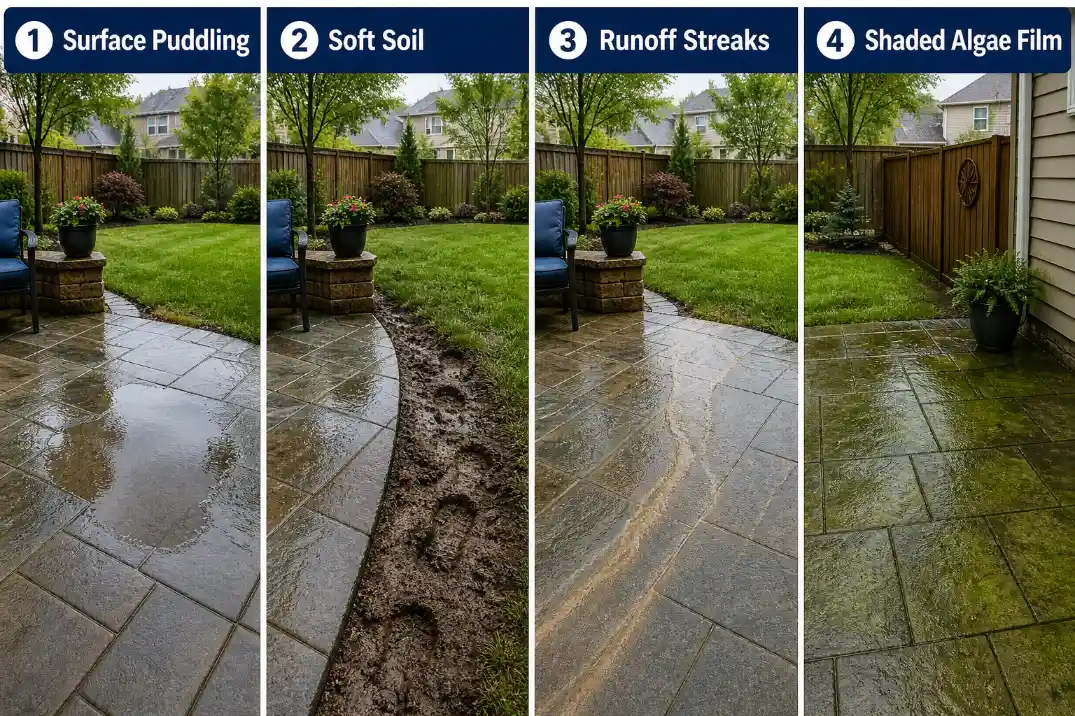
Surface puddles point to slope and low spots
If water sits more than 1/4 inch deep in the same area after rain, the patio is not shedding water well enough. That may be a flat installation, a sunken section, a blocked edge, or a surface that slopes toward the wrong place.
This does not automatically rule out concrete, pavers, porcelain, or stone. It means the surface plane matters before the finish. A premium material laid too flat will still hold water.
Soft edges point to base trouble
If the lawn edge stays spongy 24–48 hours after rain, or existing pavers rock when you step on them, the issue is probably below the surface. Wet clay, shallow base material, poor compaction, or trapped water can make the patio move even when the top looks dry.
This is where modular materials usually beat one-piece surfaces. A paver patio can be lifted and corrected in sections. A poured slab with a low spot is much harder to repair cleanly.
Runoff means the patio is in the water path
Runoff leaves evidence: sediment lines, mulch washed onto the patio, gravel pushed to one edge, or water entering from the uphill side of the yard. In that case, the patio is not just wet. It is being used as a drainage route.
Before choosing the finish, decide whether water should be redirected around the patio, absorbed through it, or carried away at the edge. The decision is close to the tradeoff in Pavers vs. Gravel for Backyard Drainage, because the better surface depends on whether you need stability, drainage, or both.
Shade changes the cleaning and slip problem
Shade does not always cause puddles, but it slows drying. In humid parts of the Southeast, along a north-facing fence, or under dense tree cover, a patio may stay damp most of the day. That encourages algae, moss, and fine soil film.
In shaded wet yards, the best surface is not always the roughest one. Rough stone or heavily textured concrete can hold grime. A lightly textured, easy-clean surface that drains well may perform better than a surface that feels grippy in the store but stays dirty outside.
Best Patio Materials for Wet Backyards
| Patio material | Best wet-yard use | Be careful when | Cost / upkeep reality |
|---|---|---|---|
| Concrete pavers | Most wet yards with settling risk | Base depth or edge restraint is being skipped | Mid cost, repairable |
| Permeable pavers | Runoff-prone patios | Clay soil has no outlet below | Higher install cost, strong puddle control |
| Stabilized crushed stone | Budget seating areas and drainage edges | You need stable dining furniture | Lower cost, more edge upkeep |
| Porcelain pavers | Premium patios with solved drainage | Finish is glossy or indoor-style | Higher material cost, easier cleaning |
| Natural stone | Premium patios with textured stone | Smooth stone will stay damp and shaded | Higher cost, variable maintenance |
| Poured concrete | Sites already graded correctly | Low spots or house-side pooling exist | Moderate upfront, costly to correct |
| Raised decking | Ground stays saturated for days | Airflow below will be blocked | Higher build cost, ventilation matters |
Concrete pavers: the safest default
Concrete pavers are usually the best all-around material for wet backyards because they are durable, modular, and repairable. If one section settles, it can be lifted, the base can be corrected, and the pavers can be reset. That matters in clay-heavy yards, freeze-thaw regions, and backyards that stay soft after storms.
The main failure point is rarely the paver itself. It is usually the base, joints, and edge restraint. Thin base prep may look fine at first, then dip after one wet season. If the project budget forces shortcuts under the surface, When Cheap Pavers Stop Being a Smart Backyard Choice becomes the more important decision than color or pattern.
Permeable pavers: best when water needs to pass through
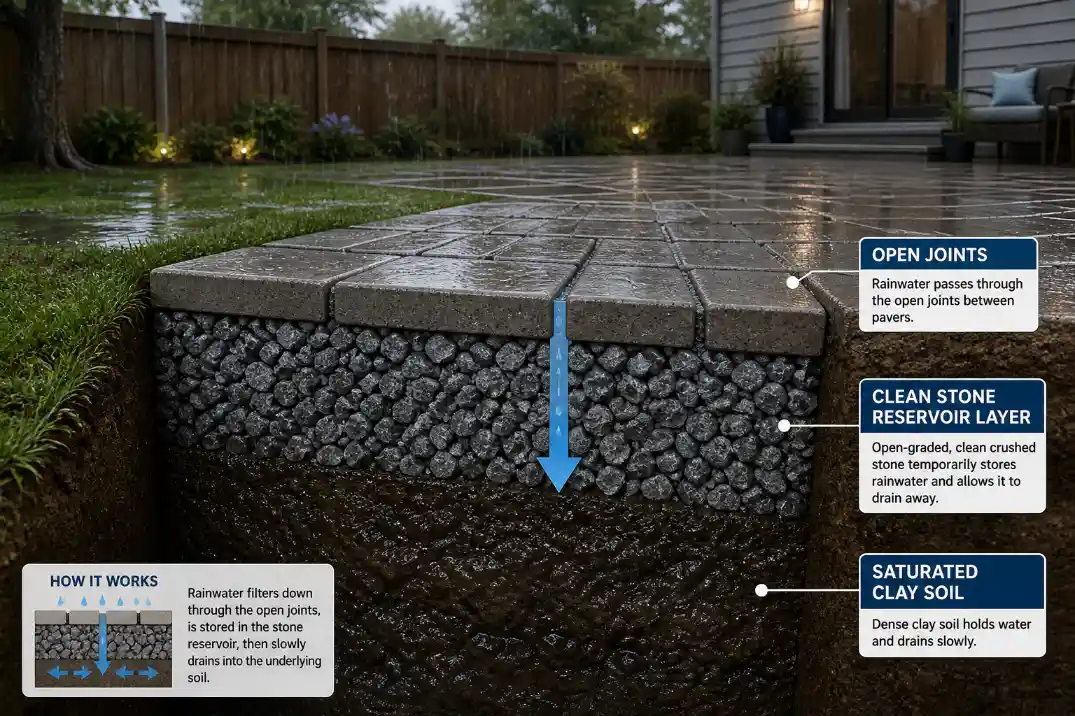
Many permeable pavers are concrete pavers. The difference is the wider joint spacing and open-graded stone base below. Water enters through the joints, spreads into the stone layer, and drains away instead of sitting on the surface.
Permeable pavers are strongest when runoff would otherwise cross the patio or collect in low spots. They are not just a nicer paver style; they are a drainage system. The catch is that the system still needs storage depth and somewhere for water to go. Over dense clay with a shallow base and no outlet, permeable pavers can become a wet reservoir.
Pro Tip: Ask where the water goes after it enters the joints. If the answer is vague, the permeable system has not been fully designed.
Stabilized crushed stone: best budget option
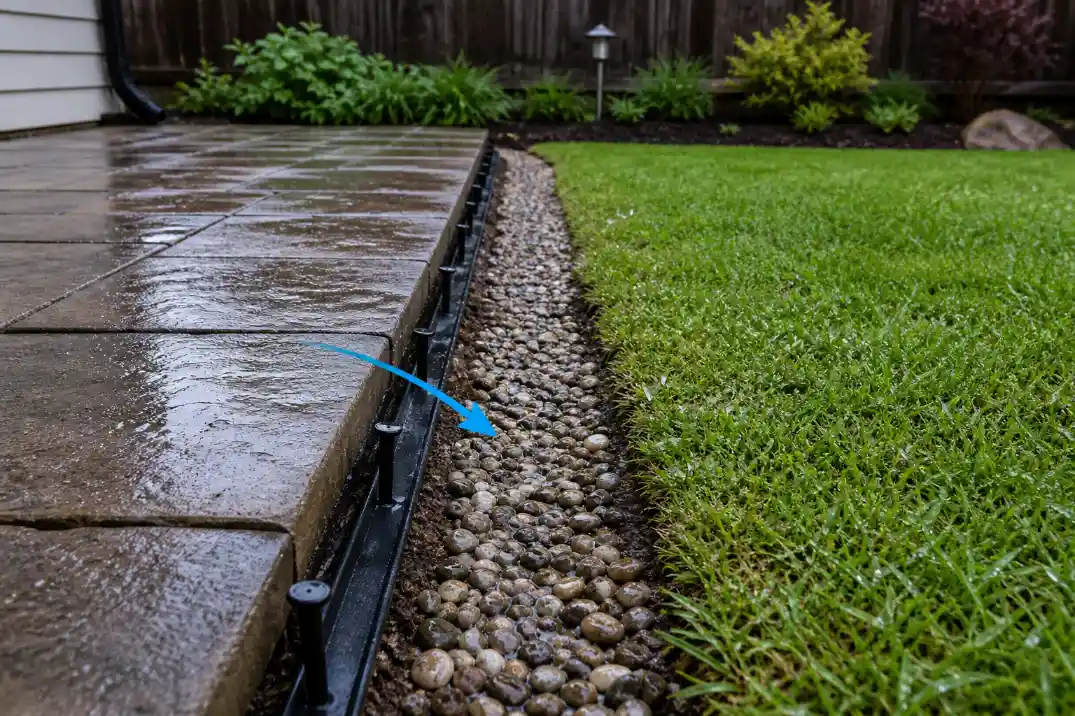
Gravel can work in wet backyards, but loose gravel is often oversold. Crushed stone is usually better than pea gravel because angular pieces lock together more firmly. A stabilizing grid makes the surface more usable for chairs and foot traffic.
Loose pea gravel looks relaxed, but it shifts under furniture, scatters into beds, and can spread 6–12 inches into lawn after repeated storms or daily use. Decomposed granite can work in dry climates, but in shaded wet yards it may soften, track, or form a gritty film unless it is compacted and stabilized correctly.
Use gravel for informal seating, drainage borders, and lower-budget areas. Do not expect it to behave like a flat dining patio. If loose stone is already migrating, Backyard Landscaping Gravel Maintenance Problems is a better guide than simply adding more material.
Porcelain pavers: premium, clean, but not magic
Porcelain pavers absorb very little water and clean easily, which makes them attractive in humid or shaded backyards. They can look crisp and modern without holding stains the way more porous materials can.
The limit is traction and installation. For wet backyards, porcelain should be exterior-rated and textured enough for wet-foot traffic. Glossy or indoor-style finishes are the wrong choice. Porcelain also still needs slope and base preparation. It is a clean surface, not a drainage fix.
Natural stone: strong when the stone is chosen carefully
Natural stone can be excellent in wet yards, but the category is too broad to judge as one material. Dense, textured stone may perform well. Smooth stone can become slick. Irregular flagstone can drain through joints, but those same joints may collect soil and moss in damp shade.
Stone works best when the patio is slightly raised above surrounding grade and the surface has enough texture for wet conditions. It is weaker where you need perfectly even furniture movement or low-maintenance cleaning.
Poured concrete: only when grading is already right
Poured concrete is stable under furniture and easy to rinse, but it is unforgiving in wet yards. A low spot is hard to correct neatly. A slab that pitches toward the house can move water toward thresholds, siding, or the foundation.
A common patio slope target is about 1/8 to 1/4 inch of fall per foot. Across a 10-foot patio, that is roughly 1.25–2.5 inches of total drop. If the site cannot shed water away from the house, concrete should wait. When water already collects along the foundation side, Why Patio Water Pools Against the House should be addressed first.
Raised decking: best when the ground stays saturated
Sometimes the best patio material for a wet backyard is not a ground-level patio at all. If soil stays soft for several days after rain, or previous patios have settled more than once, a raised wood or composite deck may be more realistic.
The key is airflow. A raised deck can keep the usable surface above the wet zone. Low deck tiles or tight overlays placed directly over damp hardscape can trap moisture, grow mildew, and hide deterioration.
The Slope Test Matters More Than the Sample
A small sample tells you color, texture, and style. It does not tell you whether the finished patio will drain. In wet backyards, the whole surface needs a consistent fall away from the house and away from the main sitting zone.
The house-side edge matters most. Water sitting at the outer lawn edge is annoying. Water sitting near the foundation, door threshold, or steps is more serious. New hardscape also sheds water faster than lawn or planting beds, so a patio can make a drainage problem worse if the runoff path is not planned.
If a new patio or walkway has already changed where water collects, the issue is no longer just material choice. The drainage path around the hardscape needs attention, as explained in Backyard Drainage After a Patio or Walkway.
What Homeowners Usually Overestimate
Surface texture
Texture helps traction, but it does not solve slow drying. A rough paver can still become slippery if algae and fine soil film keep returning. If green film comes back within three or four weeks of cleaning, the site is recreating the condition.
If the surface is mostly slick from algae, mildew film, or residue rather than standing water, Best Non-Slip Cleaners and Treatments for Slippery Patios may be a better first step than replacing the patio material.
Gravel’s drainage power
Gravel lets water pass through the surface. It does not make saturated soil disappear. Without depth, containment, and a drainage path, gravel can hide wetness while furniture still sinks and weeds establish below.
Sealers and coatings
Sealers can improve stain resistance and cleanability. They should not be treated as drainage fixes. In some shaded patios, glossy coatings can even reduce traction. If the patio still feels damp 24 hours after ordinary rain, slope, airflow, runoff control, or base correction matters more than another coating.
When the Usual Fix Stops Working
The usual fix stops making sense when the same symptom returns in the same place after one wet cycle.
More joint sand will not fix a saturated paver base. More gravel will not fix weak edging or muddy soil below. More sealer will not fix a patio that stays damp into the next day. At that point, the visible issue is only the symptom.
The repair should match the failure pattern. Sinking pavers need base correction. Migrating gravel needs containment. Repeated green film needs better drying conditions. House-side pooling needs drainage correction before any surface upgrade.
Final Choice
For most wet backyards, concrete pavers are the best default because they balance durability, traction, and repairability. For runoff-prone areas, permeable pavers are stronger. For budget spaces, stabilized crushed stone is better than loose decorative gravel.
For premium patios, porcelain and textured stone work well once drainage is solved. Poured concrete belongs only where grading is dependable. Raised decking is the better answer when the ground itself stays saturated.
Choose the material after you understand the water pattern. A patio that drains, dries, and can be corrected will age better than a prettier surface installed over the same wet-yard problem.
For broader official guidance on permeable hardscapes and runoff reduction, see the University of Maryland Extension.