Last updated: July 7, 2026
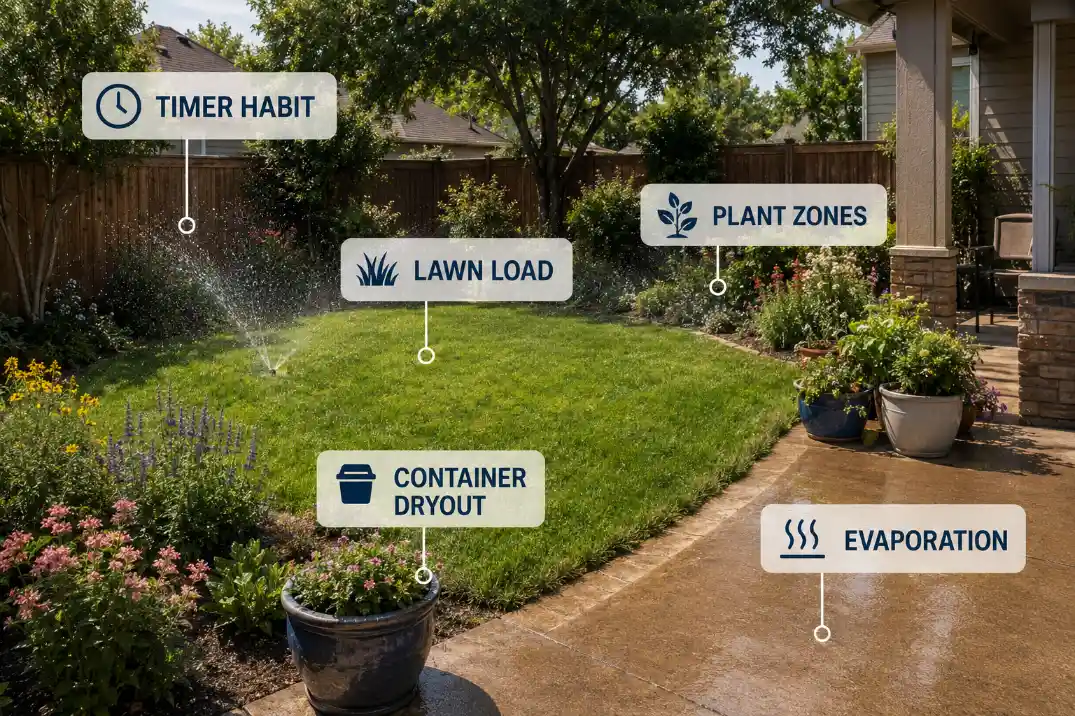
A summer backyard water bill spike is not usually solved by guessing which plant looks thirsty. The useful move is to locate the water-use source: the timer habit, the lawn area, the mixed planting zone, the containers, the runoff path, or the water lost to heat and wind.
That distinction matters because summer makes normal routines look reasonable even when they have become expensive. One extra irrigation day, one dry container group, one hot lawn edge, or one sprinkler head hitting patio instead of soil can quietly become the new baseline.
This is a backyard diagnosis, not a front yard irrigation-cost guide and not a full watering layout plan. The question is narrower: which backyard condition changed enough in summer to move the bill?
Why Summer Water Bills Jump in the Backyard
Start by separating water applied from water actually used. A sprinkler can run for the same number of minutes and still deliver less useful moisture if the spray hits hardscape, drifts in wind, runs off compacted soil, or evaporates faster in summer heat.
A backyard also has several water behaviors packed into one area. Lawn pulls water across a wide surface. Patio edges radiate heat. Pots dry faster than beds. New plants struggle before established shrubs do. A higher bill can come from longer run times, but it can also come from more frequent cycles that repeat all season.
| Backyard clue | Likely bill driver | First check |
|---|---|---|
| Timer runs more days than it did in spring | Habit-driven increase | Compare current frequency with the last normal bill period |
| One dry bed controls the whole yard schedule | Plant-zone mismatch | Check whether nearby beds are staying wet |
| Lawn browns near hot fences or slopes | Lawn demand plus site stress | Watch for runoff before water soaks in |
| Containers wilt before beds do | Container dryout | Separate pot watering from bed watering |
| Spray lands on patio, gravel, or fence | Evaporation, overspray, or drift | Watch one full watering cycle |
The Irrigation Habit That Quietly Adds the Most Water
Diagnose the habit before blaming the landscape. The most common summer spike is not one dramatic watering session; it is a small schedule increase that keeps repeating after the first hot week has passed.
That pattern is easy to miss. A homeowner adds a manual hose watering after work, raises the timer for a dry spell, or adds one more irrigation day because the lawn edge looks tired. Then the weather changes, but the new habit stays.
Frequency is the bill mover. One extra watering cycle repeated every week can matter more than one unusually long watering day. Automatic timers make this especially easy because they keep running after a cloudy stretch, after a storm that missed one side of town, or after a heat wave breaks.
The first check is not technical. Look at what changed since the last normal bill. Did the number of watering days increase? Did each zone run longer? Did manual watering become a routine? If yes, the spike may be behavior-driven before it is plant-driven.
Early morning watering is usually more efficient than watering in hot afternoon conditions, but timing alone will not fix a schedule that has quietly expanded. The bill often starts with the timer, then gets justified by whichever part of the backyard looks driest.
Plant Zones Make One Watering Schedule Expensive
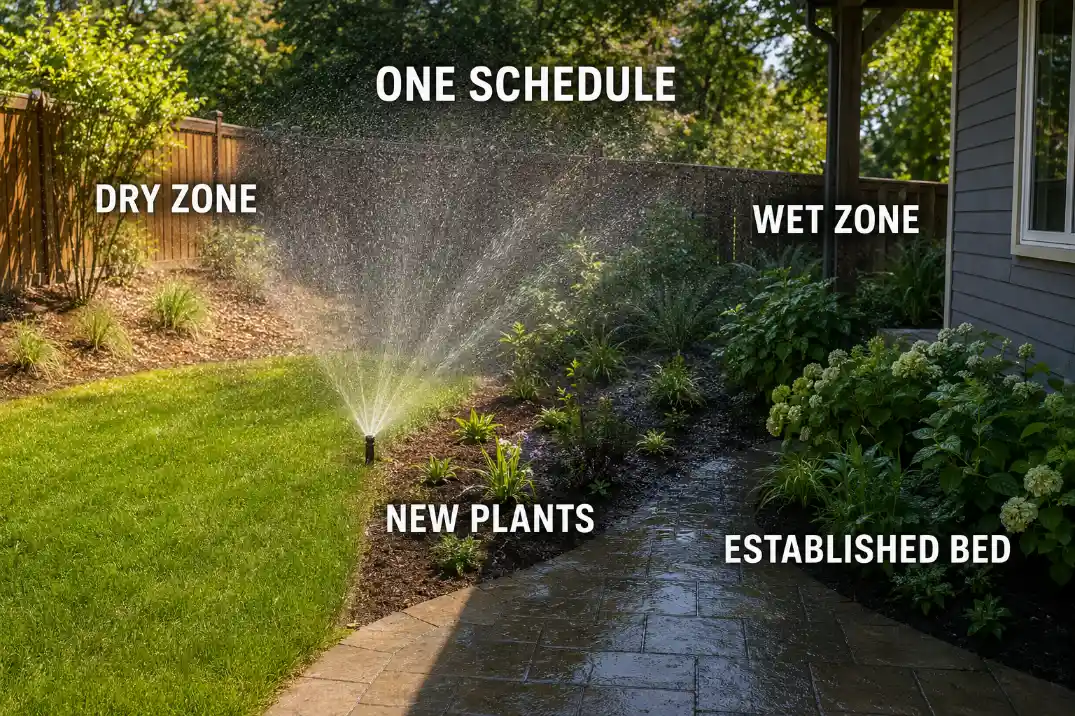
A single watering schedule becomes expensive when it is set for the thirstiest part of the backyard. That dry corner may need attention, but the rest of the yard may be getting dragged along with it.
Backyards rarely have one water need. A sunny bed by the fence, a shaded bed near the house, established shrubs, new perennials, shallow-rooted annuals, patio containers, and lawn edges all respond differently in summer. The waste begins when one dry zone becomes the rule for every zone.
The clues are practical. Mulch stays soggy in one bed while another bed looks dry. Soil near established shrubs feels soft long after watering. Weeds show up along constantly damp seams. A shaded edge stays wet while a sunny corner wilts. Yellowing plants in wet soil may be telling a different story than thirsty plants in heat.
The decision is not “water the backyard more.” It is “separate the area that is forcing the schedule higher.” If one new bed, narrow hot strip, or shallow-rooted planting area keeps controlling the timer, the first adjustment belongs there, not across the whole backyard.
Lawn Areas Turn Small Changes Into Big Bill Movement
Check the lawn early because scale gives it leverage. A small increase across a broad lawn area can move more water than a noticeable change in a small planting bed.
That does not mean the lawn is always the problem. It means lawn stress deserves a closer look before the timer gets raised. A brown edge near a fence, patio, wall, or reflected-heat source can make the whole lawn seem thirsty even when only one strip is under pressure.
Runoff is the warning sign that more time may not help. A sloped or compacted lawn can shed water before it soaks in, so the grass still looks dry while water is already moving toward a patio edge, side path, or low spot. If that pattern shows up, the water bill can rise without the lawn actually improving.
Browning alone is not a diagnosis. Watch one cycle. Does water soak in, or does it sheet away? Does only one hot edge struggle? Does shade make one section thin no matter how much water it gets?
If grass keeps asking for water because the site is wrong for it, especially in a dim backyard area, the issue may be closer to shaded backyard grass that never really fills in than a simple summer watering shortage.
Containers Can Distort the Whole Watering Routine
Treat containers as separate water users, not as proof that the whole backyard is dry. Pots react faster than beds, and that fast reaction can push homeowners into overwatering nearby areas.
A container on a hot patio can dry out much faster than an in-ground bed. Small pots heat quickly. Dark containers absorb more heat. Windy corners pull moisture from leaves and potting mix. A plant near a hardscape edge may wilt while shrubs a few feet away are still fine.
The mistake is raising a bed, lawn, or sprinkler schedule because patio containers look tired late in the day. That adds water to areas that may not need it while still failing to solve the container problem cleanly.
If containers wilt before beds do, separate the routine. Hand water pots, group containers by exposure, move the most heat-sensitive pots out of the harshest afternoon zone, or check whether the potting mix is drying faster than expected. The bill diagnosis changes once container watering stops controlling the rest of the yard.
Evaporation Makes the Same Watering Habit Cost More
Evaporation is the reason the same watering habit can perform worse in summer. The timer may not change, but heat, wind, and hardscape can reduce how much water reaches the root zone.
Hot afternoon watering can lose more water before plants use it. Sprinklers near patios, fences, gravel, walls, and driveways can also lose effectiveness because those surfaces hold and reflect heat. Spray landing on hardscape is not just a cleanup issue; it is a visible clue that water is leaving the useful area.
Wind adds another layer. A sprinkler pattern that looks fine on a calm morning can drift toward a fence or patio on a breezy afternoon. The lawn or bed may still look dry because the water never landed where the roots needed it.
Hardscape heat can make nearby planting areas behave differently from the rest of the backyard. If the patio itself is part of the heat problem, patio surfaces that get too hot in summer can explain why the area beside the surface keeps asking for more water.
The useful test is visual. During a watering cycle, look for spray crossing patio, wetting fence boards, drifting away from the target area, or pooling on gravel and pavers. Then check the soil later, not just the surface. A dry-looking surface is not always dry below, and a wet surface does not always mean water reached the root zone.
In backyards where heat exposure is the recurring driver, the larger pattern may connect to backyard design problems in hot summer climates. For this diagnosis, the point stays narrow: evaporation and reflected heat can make extra watering feel necessary even when the real fix is timing, spray direction, or exposure control.
How to Find the Backyard Source Before Changing Everything
The audit should happen before the fix. If you change every zone first, you lose the evidence that would have shown which backyard source was actually driving the bill.
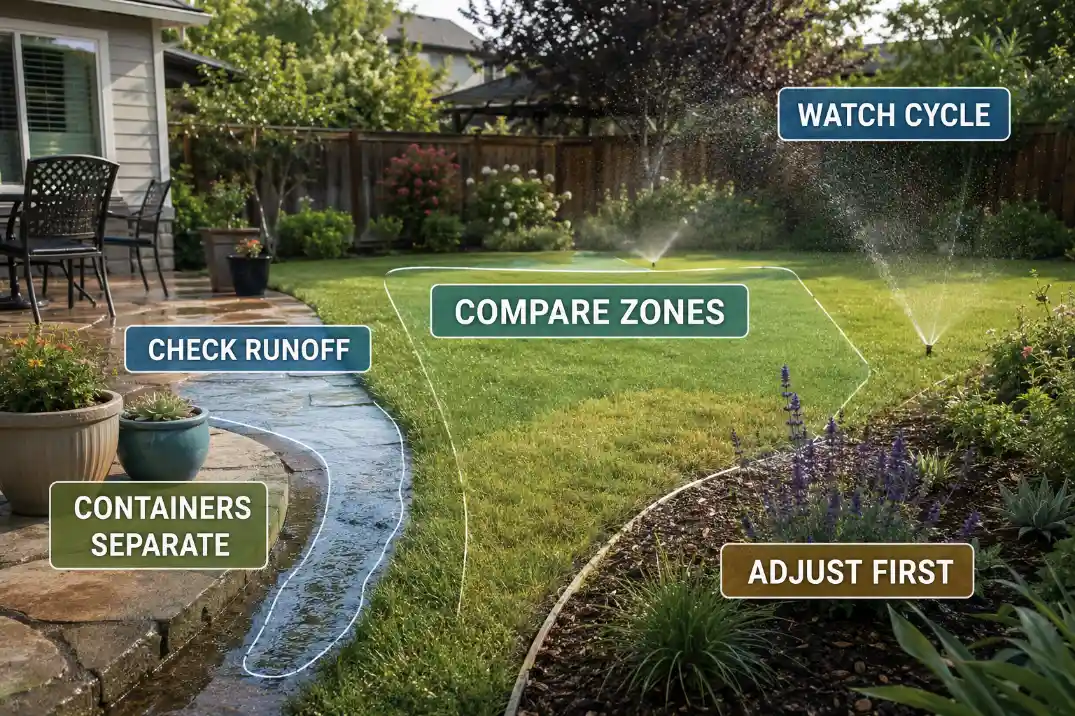
Use this short audit before increasing the whole schedule:
- Compare the current timer frequency with the last normal bill period.
- Watch one full watering cycle and note overspray on patio, walkway, fence, gravel, or driveway edges.
- Check whether water runs off before soaking into lawn or planting beds.
- Compare wet and dry soil across sunny beds, shaded beds, and established planting areas.
- Treat containers separately and see whether they are driving extra hose watering.
- Mark the one area that looks driest, then check whether the rest of the backyard is already wet enough.
Runoff deserves special attention because it can make watering feel ineffective while still using plenty of water.
If water moves away from the target area, collects near a low spot, or repeatedly leaves the lawn before soaking in, the issue may overlap with backyard drainage problems you should not ignore.
What to Adjust First When the Bill Jumps
The first adjustment should match the source you found, not the most visible stressed plant.
If the timer changed, reduce the habit before redesigning the yard. If one dry bed is driving the schedule, separate that bed’s need from the rest of the backyard. If the lawn dominates the bill, watch for runoff, shade failure, and hot edges before adding more time. If containers are the trigger, handle them separately from in-ground beds. If evaporation and overspray are visible, change timing and spray behavior before increasing run time.
The wrong first move is watering everything more because one part of the backyard looks stressed. That usually hides the real cause and makes the next bill harder to read.
A summer water bill spike can also reveal a larger maintenance pattern: one area keeps asking for extra attention, and the rest of the yard gets pulled into that routine. When that happens beyond watering, the same logic shows up in why low-maintenance backyards become high-maintenance.
The practical decision is simple: locate the source before you add water. A backyard bill spike becomes easier to control when you know whether the extra water is going to the timer, the lawn, one mismatched zone, containers, runoff, or summer evaporation.
For neutral watering guidance on timing, evaporation, and efficient yard irrigation, see the University of Minnesota Extension water-wise yard guidance.