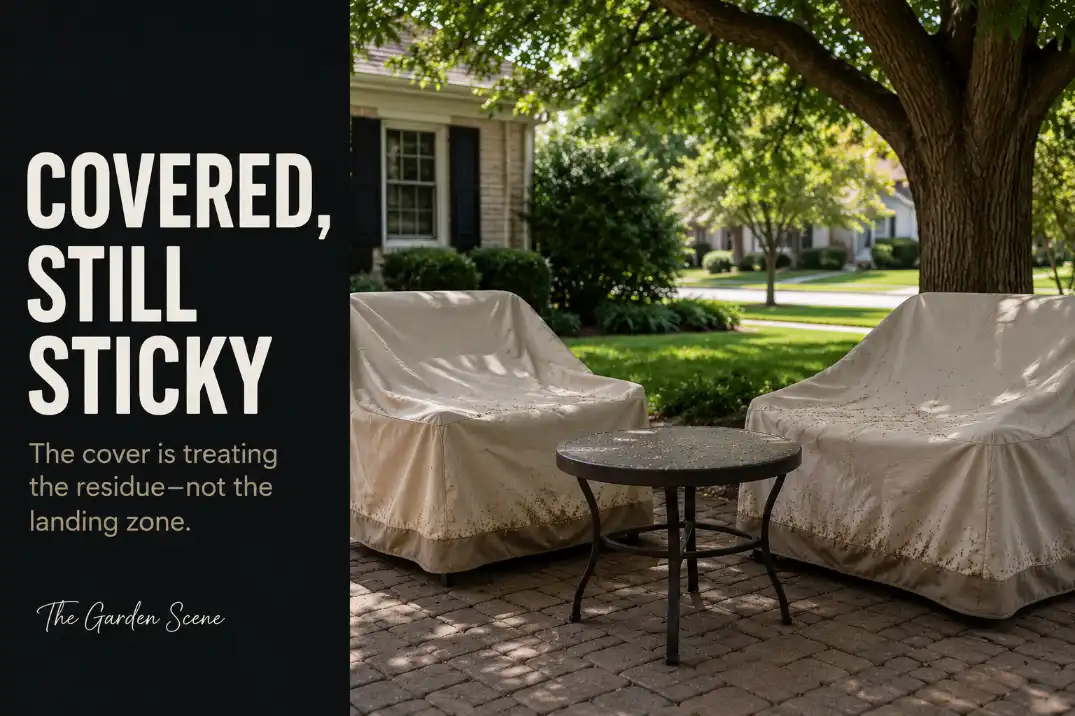
A patio chair can stay covered for days and still feel sticky when the cover comes off. Residue returns to the same table edge, chair arm, or cover seam, while dust and small debris cling to those spots almost immediately.
That pattern points to a placement problem before it points to a cover problem.
The cover may shield the seat beneath it, but it does not change where sticky material lands. If the furniture remains inside the same canopy footprint, the cover simply becomes the next exposed surface—one that must be removed, handled, folded, and cleaned without transferring residue back to the seating.
The useful question is not, “How can I cover this furniture better?” It is, “Which part of this seating area keeps receiving the residue?”
Once that landing boundary becomes visible, the patio can often keep its useful tree shade without accepting constant cleanup as the price of comfort.
Why Some Seating Areas Get Sticky Even When They Stay Covered
A cover protects what sits beneath it; it does not remove the furniture from the landing zone.
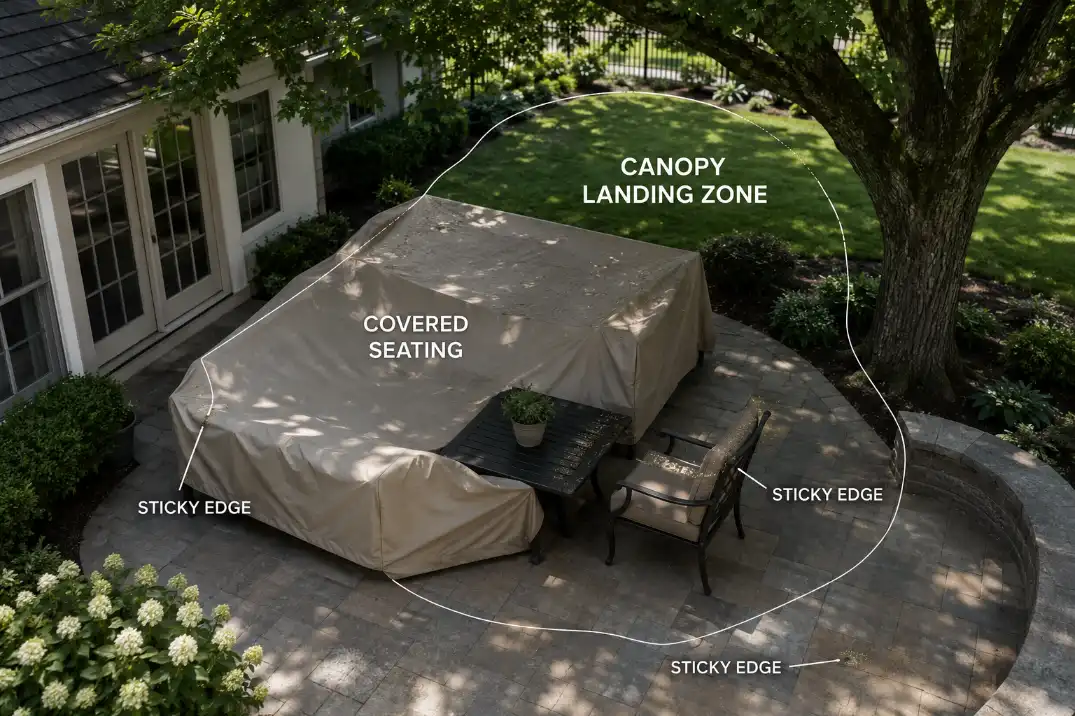
The sap landing zone is the recurring area beneath or beside the canopy where sticky residue reaches covers, chair backs, armrests, tables, paving, and other exposed surfaces. It may not line up neatly with the trunk or the outer edge of the branches.
Wind can push residue sideways. One branch may affect only the rear half of a seating group. As the canopy fills out or shifts through the season, a chair that stayed relatively clean earlier may move into the active footprint without the furniture moving at all.
This is why inspecting only the seat surface gives an incomplete picture. Residue often appears first on:
- The upper edge of a furniture cover
- Chair backs and armrests
- The side of a table facing the canopy
- Cushion piping or exposed corners
- Paving immediately beside the seating
The cover itself then becomes part of the maintenance problem. A sticky top surface collects dust and leaves. When the cover is pulled off, folded, or draped over a chair, residue can move onto cleaner areas, clothing, or the cushions underneath. Existing patio furniture cover problems become harder to manage when the cover is expected to compensate for a permanently exposed seating position.
What homeowners describe as sap may include more than one kind of sticky canopy residue. For the seating decision, the repeated pattern matters most. When the same contact points become tacky again soon after cleanup, the furniture is still sitting inside the active exposure footprint.
Field Check: Find the Active Landing Zone
- Look for residue returning on the same cover edge.
- Check chair backs and arms, not only the seat.
- Compare tabletop spots with branches above and beside them.
- Inspect nearby paving for repeated sticky or dark marks.
- Note whether the pattern shifts after wind or canopy growth.
One isolated drop does not define the zone. Repeated marks across several neighboring surfaces do.
How Tree Sap Changes Fabric, Cushions, and Tabletops
The surfaces that deserve priority are not necessarily the largest ones. They are the ones that hold residue, transfer it easily, and require the most handling.
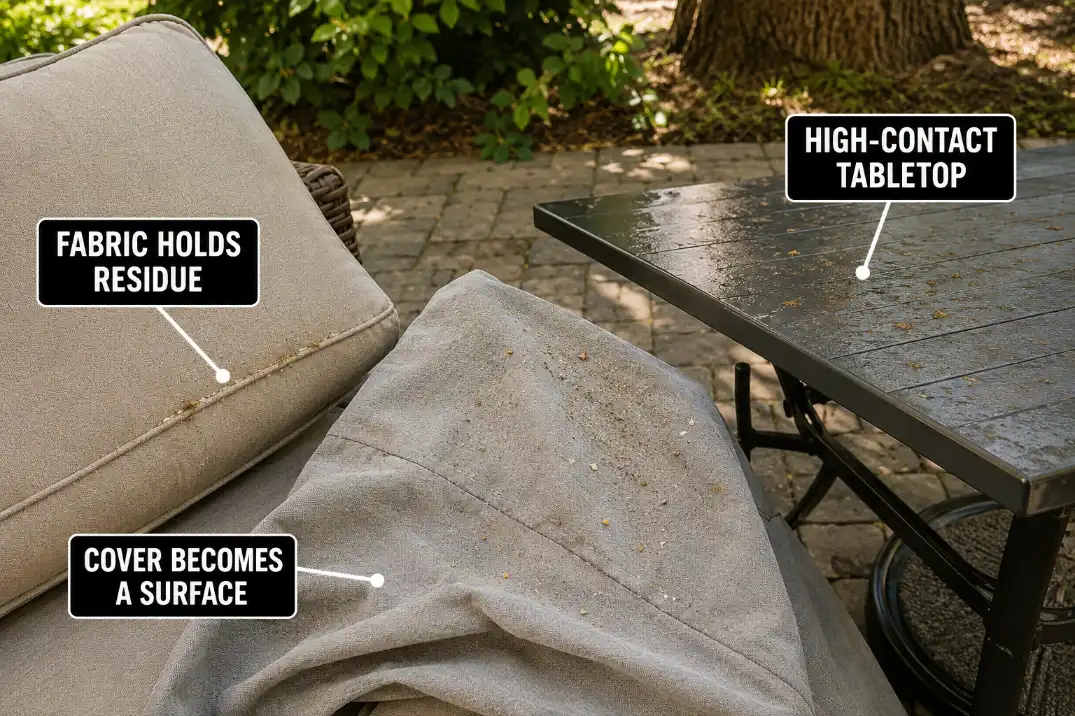
Soft materials usually create the longest maintenance cycle. Cushion fabric, piping, seams, folds, and textured upholstery provide small recesses where sticky residue can remain. Dust and light debris then attach to those areas, making a minor mark feel dirty and abrasive.
High-contact surfaces create a different problem. Residue on an armrest, seat edge, or cushion corner can transfer to skin and clothing before it is noticed. A contaminated cover can also touch the cushions while being removed or press dirty and clean sections together when folded.
Hard tabletops are easier to inspect, but placement still matters. A few tacky marks can interfere with drinks, dishes, laptops, books, or serving trays. Ease of wiping does not make a repeatedly exposed dining surface low-maintenance.
The highest-priority items usually combine several risk factors:
- Porous or textured surfaces
- Frequent hand or clothing contact
- Long periods left outdoors
- Difficult handling or storage
- Position beneath the strongest repeated exposure
That ranking becomes important when the whole arrangement cannot move. Relocating one upholstered chair or the most exposed side of a dining setup may remove more maintenance than shifting several low-contact hard surfaces.
Why Shade Is Not Always a Low-Maintenance Advantage
Tree shade should be judged by two outcomes: how comfortable the seating feels during use and how much exposure the location creates between uses.
Mature canopy shade can keep chairs cooler and make a patio usable during the hottest part of the day. Because the location feels naturally protected, however, homeowners are also more likely to leave cushions in place, keep the furniture permanently arranged, and depend on covers for long periods.
That increases total exposure time.
A seating area can therefore perform well while occupied and poorly while sitting unused. The chairs remain comfortable, but cushions, covers, and tabletops stay beneath the same canopy for hours or days.
The correction is not automatically to remove the tree or move everything into full sun. Directly overhead shade and useful edge shade are not the same condition. A small shift may keep the seating cool while moving the most vulnerable surfaces outside the strongest landing path.
Editorial Note: Shade is not low-maintenance when the same comfortable position keeps the highest-contact surfaces inside a recurring residue zone.
The goal is to keep the comfort value of the tree without treating repeated cleanup as unavoidable. This is also why shade, seating, and airflow should be evaluated together rather than solving the sticky-residue problem by pushing the furniture into an exposed, uncomfortable part of the yard.
Where to Move Seating Before Buying More Covers
Move the surfaces that create the most handling and transfer risk before moving the entire patio arrangement.
Cushioned chairs, upholstered benches, fabric-backed seating, and high-contact table positions should receive priority. A hard side table may tolerate the outer edge of the landing zone better than a deep chair with multiple cushions, seams, and armrests.
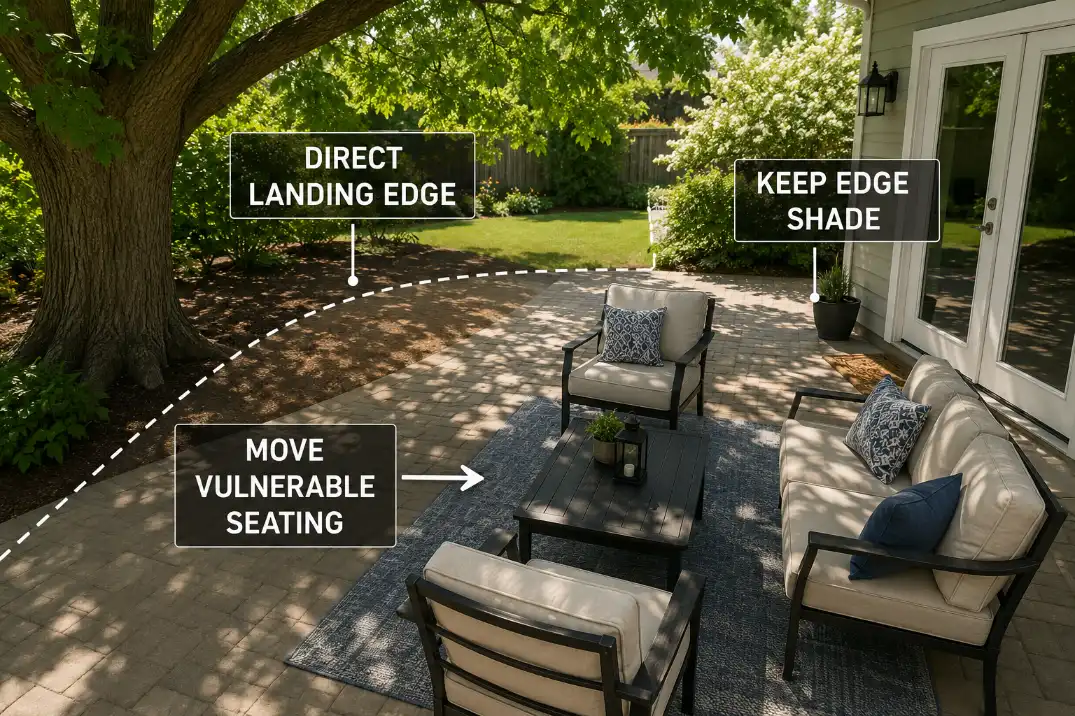
Use the residue already present as a placement map. A sticky rear cover edge, repeated spots on one side of a table, or marks across the backs of two neighboring chairs can show both the exposure direction and the likely boundary.
Then make the smallest useful shift:
- Move the softest and most frequently touched seating first.
- Observe whether the same contact points become sticky again.
- Adjust the table or remaining hard surfaces only if exposure continues.
The whole seating group may not need to leave the tree’s shade. Moving the vulnerable pieces just beyond the repeated landing edge can preserve canopy-edge shade while reducing direct contact.
Do not create a new usability problem in the process. The revised position should not block a door, narrow the main walking route, interfere with the grill area, sit in a drainage path, or make the seating awkward to use. A cleaner location that disrupts the patio is not a durable fix.
A cover becomes more effective after this placement correction. It can handle occasional residue, leaves, and weather exposure instead of serving as a permanent collection surface beneath the active canopy zone.
Common Mistake: Buying a second cover or replacing the existing one while leaving the same furniture in the same footprint. The protective layer changes, but the exposure pattern does not.
How to Reduce Cleanup Without Losing Tree Shade
The practical end state is not zero exposure. It is fewer vulnerable surfaces sitting beneath the strongest repeated landing path.
Keep fabric-heavy and frequently touched seating toward the canopy edge. When space is limited, easier-to-inspect hard surfaces can remain closer to the exposure boundary. This reduces the maintenance burden without forcing the entire patio into direct sun.
Use covers after the placement has been improved. Treat them as removable protective layers, not as substitutes for correcting the furniture footprint. Before folding or storing a cover, check the areas that repeatedly receive residue so the contaminated side is not pressed against cleaner surfaces.
When the seating will be unused for an extended period, removing the most vulnerable cushions can further reduce exposure. Keep the routine simple enough to maintain; a system that requires moving every cushion after every brief use usually creates a different kind of patio friction. The same principle applies to avoiding outdoor cushion storage mistakes: storage should reduce exposure without creating a routine that is too awkward to use consistently.
Recheck the pattern after noticeable canopy growth or seasonal change. The landing edge can move even when the furniture does not. New residue appearing on previously clean chair backs or cover edges is a reason to reassess placement, not simply increase cleanup.
The strongest maintenance decision is to correct exposure before escalating protection. Move the high-contact seating beyond the active landing edge, retain the useful shade, and let the cover protect furniture that is already in a better position.