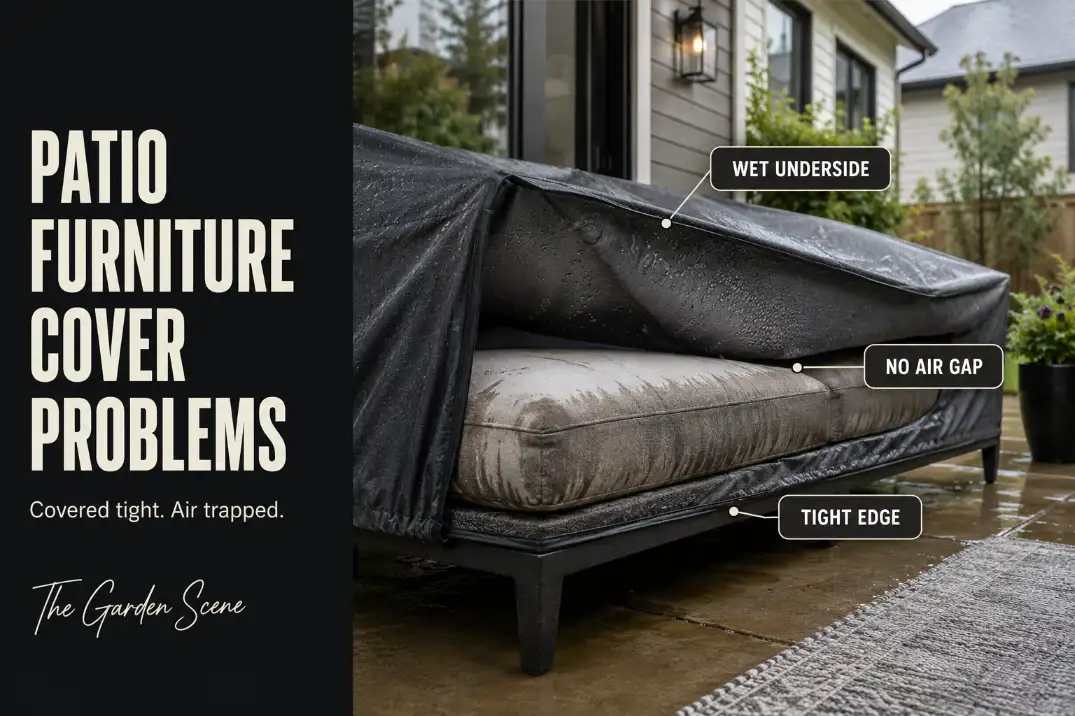
Patio furniture cover problems usually start when a cover stops acting like a small roof and starts acting like a sealed bag. The first checks are simple: lift the cover after a dry night, press the cushion seams, look for water pockets on top, and see whether the lower hem leaves at least 1–2 inches of air gap instead of sealing against the patio.
If cushions still feel cool or damp 6–12 hours after the cover comes off, the issue is not just rain exposure. It is trapped moisture. A dry-looking cover can still be wet underneath, especially after cold nights, humid mornings, or several rainy days in a row.
That is different from normal outdoor wear. Fading, dust, and pollen are cosmetic. Damp seams, musty odor, black specks, swollen wood, or rust marks under a “protected” cover point to a repeating moisture cycle.
The fix is rarely just a thicker cover. More often, the answer is better fit, better airflow, smarter cushion storage, or a patio layout that lets the furniture dry before it gets covered again.
Covers Can Trap Moisture
The outside can look protected while the inside stays wet
A furniture cover is useful when it sheds rain, blocks debris, and reduces direct sun exposure. The mistake is assuming “covered” always means “dry.” Moisture can come from rain, wet cushions, damp concrete, pavers, nearby mulch, morning dew, or humid air trapped under the cover overnight.
This is why the most useful inspection happens underneath the cover, not on top of it. If the outside surface is dry but the underside has droplets, the cover may not be leaking at all. It may be trapping humid air and letting it condense against a colder surface.
In humid climates such as Florida or coastal areas, that trapped-air problem can happen quickly. In drier climates, the same cover may seem fine because the air under it dries faster. The cover did not magically become better; the environment is simply more forgiving.
Damp cushions reveal the real failure
Cushions usually show the problem first because seams, piping, and foam edges hold moisture longer than smooth frame surfaces. A cushion that dries in 2–4 sunny hours is usually in a healthier cycle. A cushion that still feels damp after 24 hours under a cover is not being protected well, even if the cover kept direct rain off the fabric.
This is where patio furniture cover problems overlap with Outdoor Cushion Mildew Problems. The mildew may appear on the cushion, but the failure pattern often starts above it: damp fabric gets covered before it has a chance to dry.
Fit Matters More Than Size
A cover can match the measurements and still fail
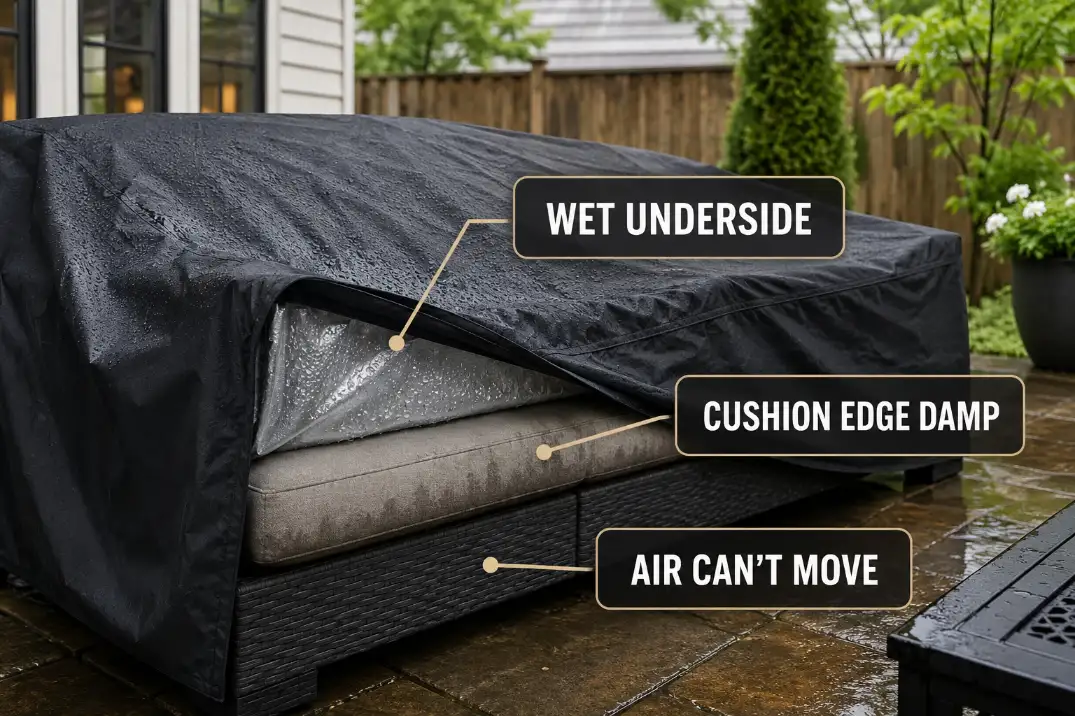
Length and width matter, but they are not the whole fit. A cover can technically be the right size and still create low pockets, tight contact points, or sealed edges that hold moisture around the furniture.
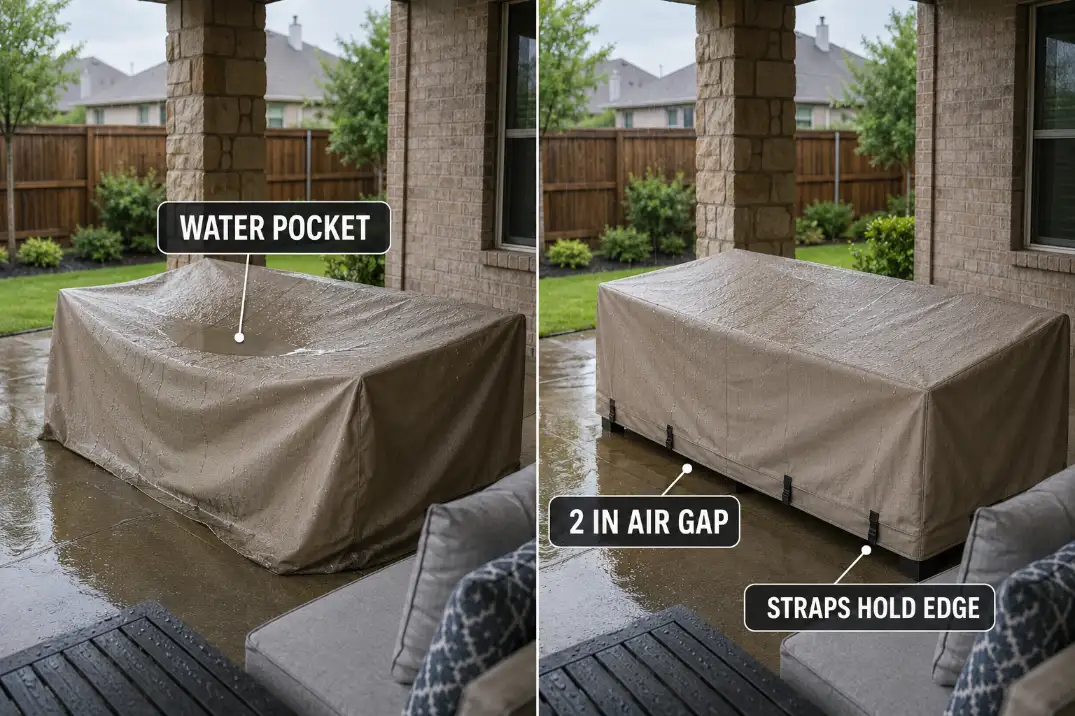
The most common buying mistake is choosing a cover that is simply “big enough.” Oversized covers sag between arms, backs, cushions, and table edges. If the top surface dips more than 2–3 inches, rainwater can collect instead of running off. That water adds weight, presses fabric against cushions, and increases the chance that seams begin to seep.
The opposite problem is a cover that hugs the furniture too tightly. A very tight cover may look clean in a product photo, but if it presses against cushions and wraps all the way to the patio surface, it reduces airflow exactly where the furniture needs it most.
The best fit creates slope and breathing room
A healthier cover fit has three qualities: it sheds water, stays off the wettest surfaces, and allows some air exchange. The lower hem should not drag through puddles, wet leaves, soil, or mulch. On patios with splashback, a hem that sits 1–2 inches above the surface often performs better than one that reaches the ground.
Shape matters too. Sectionals, deep seating sets, curved arms, and high-back lounge chairs are harder to cover than simple dining tables. A flat rectangular cover over irregular furniture almost always creates low spots. Those low spots become the first wet areas after rain.
If cushions are removable, the cover should protect the frame and reduce daily weather exposure. It should not become the only moisture plan during long wet spells. For rainy weeks, travel periods, or winter shutdowns, Outdoor Cushion Storage Mistakes becomes more important than finding a bigger cover.
Wind Gets Under Loose Covers
Loose fabric turns protection into movement
Wind does not have to blow the cover completely off to create problems. It only has to lift the lower edge repeatedly. Once air gets underneath, the cover can balloon, slap against furniture arms, pull at seams, rub finish off corners, and expose one side of the set during rain.
This happens most on open patios, upper decks, side yards, and backyard corners where wind has a clear path. A cover that behaves well in a sheltered seating nook may flap constantly in a space that gets regular 15–25 mph gusts.
Straps, buckles, drawcords, and leg clips help, but they should stabilize a good fit, not rescue a bad one. If the middle of the cover inflates like a sail, tightening only the bottom edge may trap damp air while the top still moves.
Exposure can matter more than the cover brand
When covers keep shifting, the better question is not always “Which cover is stronger?” Sometimes it is “Why is this furniture sitting in the wind lane?” Moving a sofa 2–4 feet closer to a wall, hedge, railing, or protected patio corner can reduce cover movement more than buying a heavier replacement.
This is the same logic behind Wind Resistant Patio Furniture Layout. The furniture, cover, and site exposure work as one system. If one part is ignored, the cover gets blamed for a layout problem.
Condensation After Cold Nights
Wet underneath does not always mean leaking
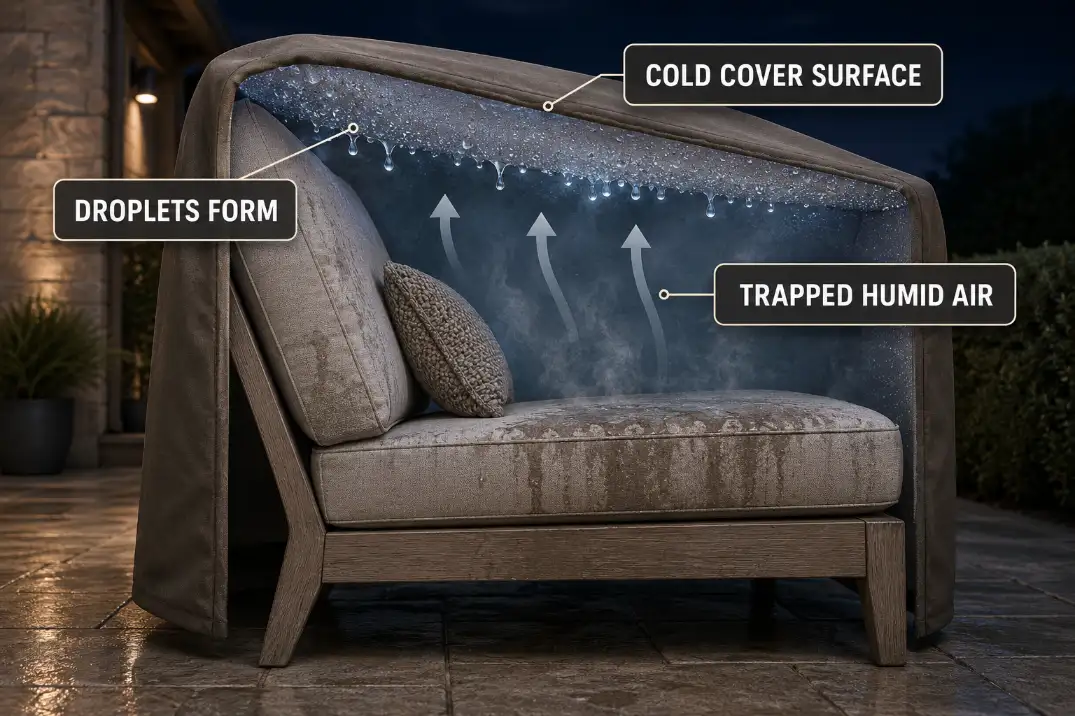
Condensation is one of the most misread furniture cover problems. After a cold night, moisture can form under a waterproof cover even when no rain fell. Damp air gets trapped, the cover surface cools overnight, and water vapor turns into droplets on the colder underside.
This is more likely when the daytime temperature is mild, the nighttime temperature drops 15–25°F, and the furniture sits over damp concrete, pavers, or soil. A covered patio can make this worse if it blocks sun and air movement while still allowing humid air to linger around the furniture.
The quick test is simple. Lift the cover in the morning after a dry night. If the outside is dry and the underside is wet, the issue is condensation. If the outside is wet after rain and the inside is wet below seams or low pockets, leakage or pooling may also be involved.
Thicker waterproof fabric is often the wrong fix
This is where many people waste money. If the underside is wet after a dry night, buying a thicker waterproof cover usually does not solve the real problem. It may actually reduce drying even more if the new cover has poor venting.
Waterproofing spray can help an old cover shed rain, but it cannot stop condensation caused by trapped air. The better fix is airflow: covered vents, a slightly raised hem, fewer wet contact points, and furniture that is dry before it gets covered.
| What You Notice | What It Usually Means | What Not to Do | Better First Fix |
|---|---|---|---|
| Wet underside after a dry night | Condensation, not necessarily a leak | Buy a thicker sealed cover immediately | Improve venting and lift the lower edge |
| Puddles on top of the cover | Sagging fit or flat surface | Keep tightening the bottom only | Add slope or choose a better-shaped cover |
| Musty cushion smell | Damp fabric stayed covered too long | Spray fragrance or keep covering it | Dry cushions fully before covering |
| Cover flaps during gusts | Loose profile or exposed placement | Add random weights on top | Improve fit, straps, and wind exposure |
| Rust marks at frame contact points | Damp fabric touching metal repeatedly | Ignore it as normal aging | Keep cover off sharp/wet contact points |
| Swollen wood or cloudy finish | Moisture held against the surface | Seal over damp wood | Dry fully, then reassess protection |
Different Furniture Fails in Different Ways
Cushions fail first, but frames tell the longer story
Cushions get the attention because mildew smell is obvious. But the frame often shows whether the cover problem has been going on for weeks.
Metal furniture usually reveals trapped moisture through rust at joints, screw heads, welds, and contact points where wet cover fabric touches the frame. Wood and teak pieces may show swelling, finish clouding, or dark staining where moisture sits against the same area repeatedly. Resin wicker may not rot like natural material, but grime and mildew smell can collect in tight woven gaps if the cover keeps air from moving.
Dining tables have a different risk. A large flat cover that sags in the center can create a water pocket even when the chairs stay dry. Deep seating sets have the opposite problem: multiple cushion edges, arms, and backs create many contact points where moisture can linger.
That is why the right cover is not just about furniture size. It is about the most vulnerable surface on that specific set.
Covers That Block Daily Use
A cover can protect furniture and still make the patio worse
The best cover is not always the heaviest one. A heavy cover that takes 10 minutes to remove, fold, and secure may be durable, but it can make the patio less usable. When a cover becomes annoying, people start leaving it half-secured, tossing it on damp ground, or covering furniture before cushions are dry.
That is not a small behavior detail. It changes the outcome. A cover routine that feels awkward will not be followed consistently.
For everyday seating, the routine should take about 2–3 minutes. The cover should be easy to lift, shake dry, and hang over a railing or chair back before storage. If the furniture is used several times a week, a lighter vented cover may work better in real life than a heavy winter-style cover that constantly gets skipped.
Storage has to support the cover
A cover becomes less effective when the patio has nowhere for wet cushions, folded covers, or loose accessories to go. If the cover ends up balled on the ground, stuffed behind a chair, or folded while wet, the moisture problem simply moves from the furniture to the cover itself.
This is where a cover-only solution reaches its limit. If the cushions are thick, slow-drying, or used daily in a wet climate, a separate dry storage habit matters more than another cover upgrade. For that decision point, Best Outdoor Cushion Storage for Rain and Mildew is the more useful next step than continuing to compare cover thickness.
Protection Without Creating Mold
Cover dry furniture, not hopeful furniture
The most important routine is simple: do not seal damp furniture and hope the cover will fix it. If cushions were rained on, hit by sprinklers, or soaked with dew, stand them upright first so air reaches both faces. Press the seams before covering. If they still feel cool or soft after 6 hours of dry weather, they are not ready to be covered overnight.
That threshold matters because mildew problems usually begin before the surface looks terrible. Musty odor often appears before visible black or gray specks. Waiting for obvious mold means the drying cycle has already been failing for a while.
Give the cover a roof job, not a storage job
A good patio furniture cover should shed water, block debris, resist wind lift, and slow sun damage. It should not be expected to dry wet cushions, fix patio drainage, solve wind exposure, or replace storage during long wet spells.
This is the condition many homeowners underestimate: the patio surface itself can keep feeding moisture into the covered space. Damp pavers, shaded concrete, or water pooling near furniture legs can keep humidity high under the cover even when the sky is clear.
If the furniture area regularly stays wet after storms, the cover is treating the symptom. The underlying issue may be drainage, slope, splashback, or furniture sitting in the wrong drying zone. In that case, Patio Drainage Layout Problems belongs in the same fix path.
Quick diagnostic checklist
- Lift the cover after a dry night and check for droplets on the underside.
- Look for sagging pockets deeper than 2–3 inches where water can pool.
- Check whether the lower hem drags on wet patio surfaces, mulch, or leaves.
- Press cushion seams after 6–12 dry hours; cool damp seams mean delayed drying.
- Watch the cover during gusts; repeated lifting means wind is entering underneath.
- Smell cushions before sitting; musty odor usually appears before visible mildew.
- Check metal and wood contact points where damp fabric touches the same spot.
The Smarter Cover Routine
For frequent use
Use a fitted, vented cover that comes off quickly. Let cushions air out before covering, especially after rain or heavy dew. Shake the cover before folding it so you are not storing wet fabric against itself.
If the cover takes longer to manage than the furniture takes to use, the setup is too fussy for daily patio life.
For rainy weeks
Do not rely on the cover alone if the cushions are already damp. Remove cushions or stand them vertically in a protected, ventilated spot. A cover can protect the frame while cushions dry separately.
If the patio also has storage clutter, cushion bags, folded tarps, and deck boxes blocking movement, the protection system may need to be simplified. The goal is not more outdoor gear; it is a patio routine that actually gets used.
For winter or long trips
Clean the furniture, let it dry fully, and avoid sealing leaves, pollen, or dirt under the cover. Organic debris gives mildew more to feed on once moisture gets trapped. In northern states with freeze-thaw cycles, avoid letting covers sit in pooled water because frozen pockets add weight and stress seams.
A patio furniture cover is still worth using. The key is knowing what it can and cannot do. It can block direct exposure. It cannot make wet cushions dry inside sealed air. It can reduce weather damage. It cannot overcome standing water, poor airflow, or a cover that fits like a tarp.
The best result comes from a cover that sheds water, leaves breathing room, stays secure in wind, and works with the way the patio is actually used.
For broader moisture guidance, see the EPA’s A Brief Guide to Mold, Moisture and Your Home.