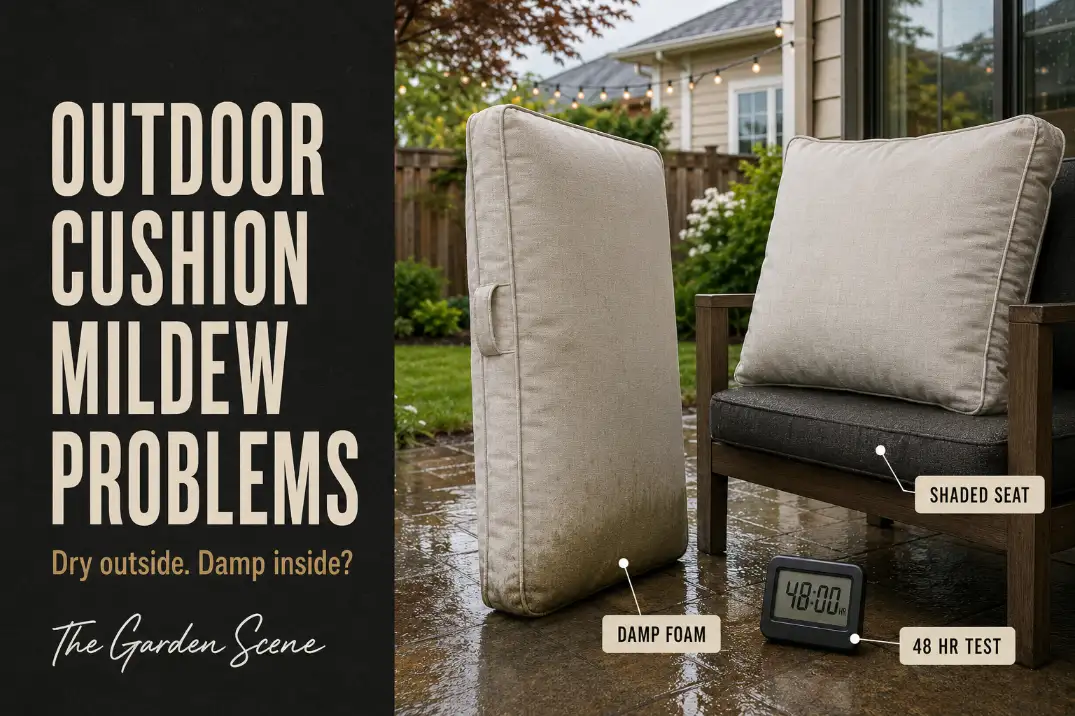
Outdoor cushion mildew problems usually start when the cushion looks dry on the outside but still holds moisture in the foam, seams, piping, or lower edge.
Rain is the obvious trigger, but it is not the only one. In humid weather, overnight dew can reset the drying clock even when no storm hits the patio.
Start with three checks: smell the cushion after 24 hours, press the lower edge for cool dampness, and compare one cushion against another from the same set.
If the cushion still smells musty or feels heavy after 48 hours of dry weather, the issue is no longer just wet fabric. It is trapped moisture.
That distinction matters because surface mildew and foam odor need different fixes. Cleaning the cover may remove stains. It will not solve a cushion that cannot dry inside.
Why Cushions Stay Damp After the Fabric Looks Dry
Outdoor cushions do not mildew because one rainstorm touched them. They mildew because moisture stays long enough for pollen, dust, skin oils, and fabric residue to become food. The surface can dry first while the lower foam and stitched edges remain damp.
The dry surface is not the final test
A cushion can feel dry to the hand after 6 to 8 hours in sun while the inside still holds moisture. That is why the press test is more useful than the touch test. Press the lower edge, zipper side, or seam area. If the cushion releases a musty smell or feels cool compared with the top surface, it has not fully dried.
The most useful threshold is the 48 hour test. After two dry days with reasonable airflow, a healthy outdoor cushion should not feel cool, heavy, or stale in the lower third. If it does, the drying path is failing somewhere.
Weight tells you what color cannot
Mildew signs are not always visible. A cushion may look clean but feel slightly heavier than the cushion beside it. That usually means the foam, batting, or lower seam area is holding water.
Compare matching cushions from the same furniture set. If one stays heavier, softer, or cooler at the bottom, focus on that cushion’s chair position before blaming the whole set. The frame, shade pattern, or storage habit may be the real difference.
Cleaning too early is one of the most common wasted fixes. Spraying a damp cushion with cleaner can improve the surface while adding more moisture to a cushion that already cannot dry fast enough.
Shade, Dew, and Still Air Reset the Drying Clock
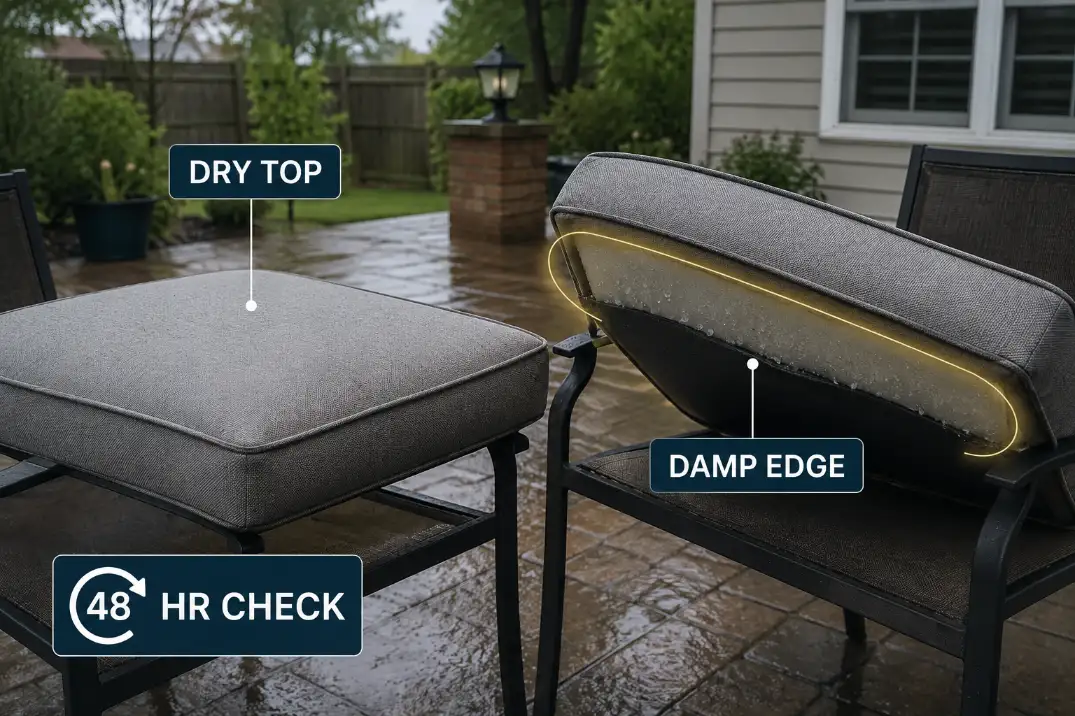
Shade is often underestimated because it feels protective. A covered patio, screened porch, north-facing seating area, or tree canopy may keep cushions out of direct rain, but it can also slow evaporation.
The risky pattern is cool shade plus low airflow
A cushion in sun with a light breeze may dry in one afternoon. The same cushion under a covered patio can take 24 to 48 hours, especially when the air stays humid.
In Florida, the Gulf Coast, and parts of the Midwest during summer, cushions can feel almost dry in the afternoon and become damp again by morning because of dew.
That is the hidden cycle: wet, partly dry, damp again, then stored too soon.
For outdoor cushions, 60% relative humidity is not a magic cutoff, but it is a useful warning zone inside covered patios, garages, sheds, and closed storage boxes.
If the air feels heavy and the cushion is shaded most of the day, assume drying will take longer than the fabric surface suggests.
A seating zone that already struggles with shade often has comfort problems beyond cushions, so the same layout logic that helps with Patio Shade Problems in Outdoor Spaces can also explain why one chair group dries slower than another.
Morning air matters more than late heat
Morning sun and moving air usually dry cushions better than late-day warmth. Afternoon heat may warm the fabric, but if evening humidity arrives before the foam dries, the cushion never fully resets.
Look for a drying window of at least 2 to 3 hours where cushions can stand upright with air touching both sides. This does not require harsh sun all day. It requires open air, separation, and time.
Setup Note: After rain or a humid night, stand cushions upright with a 2-inch gap behind them. Flat cushions dry slower even when the fabric is labeled outdoor-safe.
Storage Boxes Protect Cushions but Trap Humidity
Storage becomes part of the mildew problem when damp cushions go into a closed deck box, storage bench, shed, or plastic bin too soon. The box keeps new rain out, but it can also trap the moisture already inside the cushions.
Closed storage is not drying storage
A deck box is shelter, not a dryer. If cushions go in slightly damp, the air inside the box becomes humid. A sealed plastic box in warm weather can act like a damp chamber, especially when cushions are packed tightly from wall to wall.
Use the press-and-smell test before storing. Press the lower edge. Smell near the zipper or seam. If there is still a stale note, leave the cushions upright longer.
If mildew only appears after storage, the container is not neutral. It is part of the moisture system.
A raised, breathable, easy-open storage setup is usually a better match than a tight box that simply hides the cushions; this is where Best Outdoor Cushion Storage for Rain and Mildew Problems supports the decision without turning storage into guesswork.
Tight packing creates edge mildew
Even dry-looking cushions can mildew where they touch each other tightly. The pattern is usually a clean face with musty piping, corners, or compressed edges. That does not mean the cushion fabric is failing everywhere. It means the contact points stayed damp.
Leave small air gaps when storing thick seat cushions, deep-seat backs, or sectional cushions. On smaller patios, storage volume and air gaps matter more than simply choosing the biggest-looking box, which makes Best Outdoor Storage Benches and Deck Boxes for Small Patios a more useful comparison point.
| Cushion condition | Most likely cause | Best next move |
|---|---|---|
| Dry top, damp underside | No airflow under seat | Lift, rotate, or improve chair support |
| Musty smell after 48 hours | Moisture inside foam | Dry upright before cleaning again |
| Mildew mostly on edges | Tight storage contact | Store loosely with air gaps |
| Smell appears after storage | Box traps humidity | Change storage timing or container |
| One cushion fails faster | Frame, shade, or foam issue | Compare location before replacing all |
The Seat Base Decides Whether the Underside Dries
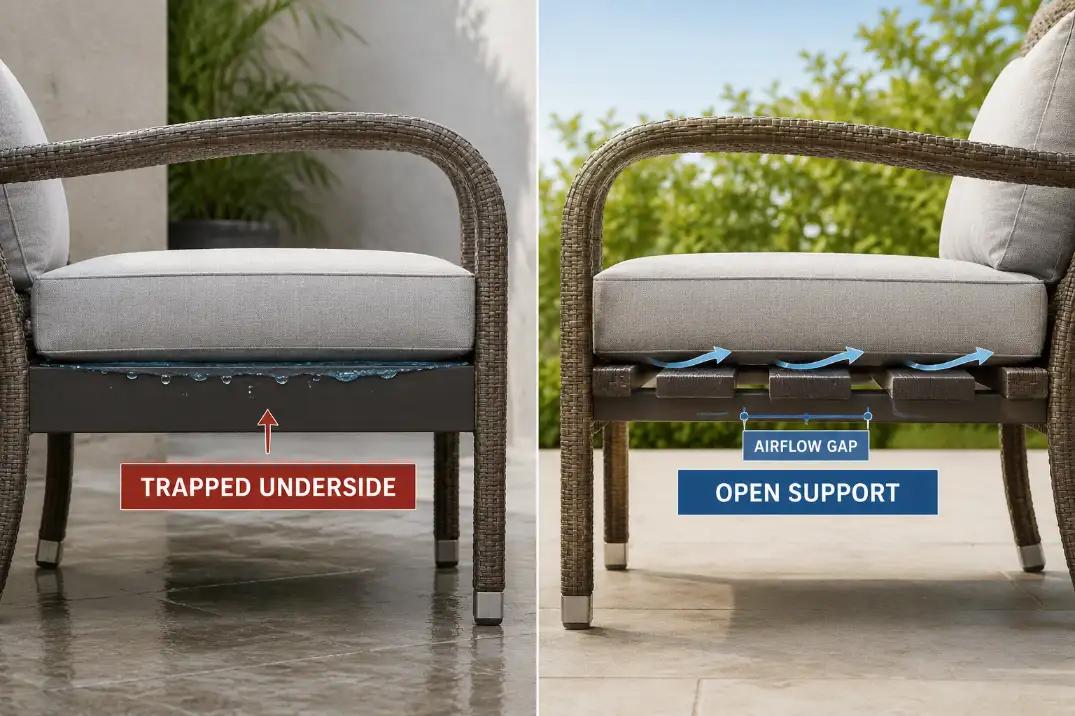
The underside of the cushion often matters more than the top. A cushion sitting on open slats dries differently from one sitting on a solid seat pan, sagging webbing, or a deep chair pocket where the lower fabric stays pressed against a surface.
Solid support traps the wettest side
The lower cushion face is where water settles by gravity. If that side rests flat against a solid chair base, it has almost no drying path. Even a small 1/4-inch gap can help, but open slats or mesh support usually dry better than a solid plastic tray.
This is why mildew can show up on only one seating group even when every cushion came from the same set. The fabric is the same. The drying condition is not.
Patio moisture can feed the problem from below
Cushions can also absorb humidity from below when the patio surface stays wet under the seating area. If water pools around chair legs for several hours after rain, the cushion is not sitting above a drying zone. It is sitting above a damp zone.
In that case, cushion mildew is the symptom. The mechanism is poor drying around the seating area. A patio with wet corners, low spots, or repeated puddles may need the same kind of surface check described in Patio Drainage Layout Problems, because the cushion issue will return if the seating zone stays humid from below.
When Fabric Cleaning Helps—and When Foam Is Done
Fabric choice matters, but it is often overestimated. Solution-dyed acrylic, olefin, and polyester outdoor fabrics can resist moisture and fading better than indoor fabric, but no fabric saves a cushion that is stored damp or pressed into a shaded wet seat.
Clean only after the cushion can dry
Surface mildew can usually be treated if the cushion dries fully and the odor is not coming from the foam. Brush off loose debris first. Use the fabric label as the rule, not a random internet recipe.
Some performance fabrics tolerate diluted bleach solutions for mildew stains; others can fade, weaken, or lose finish if cleaned too aggressively.
The order matters:
- Dry the cushion as much as possible.
- Brush off pollen, leaves, and dust.
- Clean according to the fabric label.
- Rinse thoroughly if the cleaner requires it.
- Air dry completely before storage.
Cleaning is useful when mildew is on the surface. It becomes cosmetic when the cushion smells stale again after compression.
Foam odor is the replacement boundary
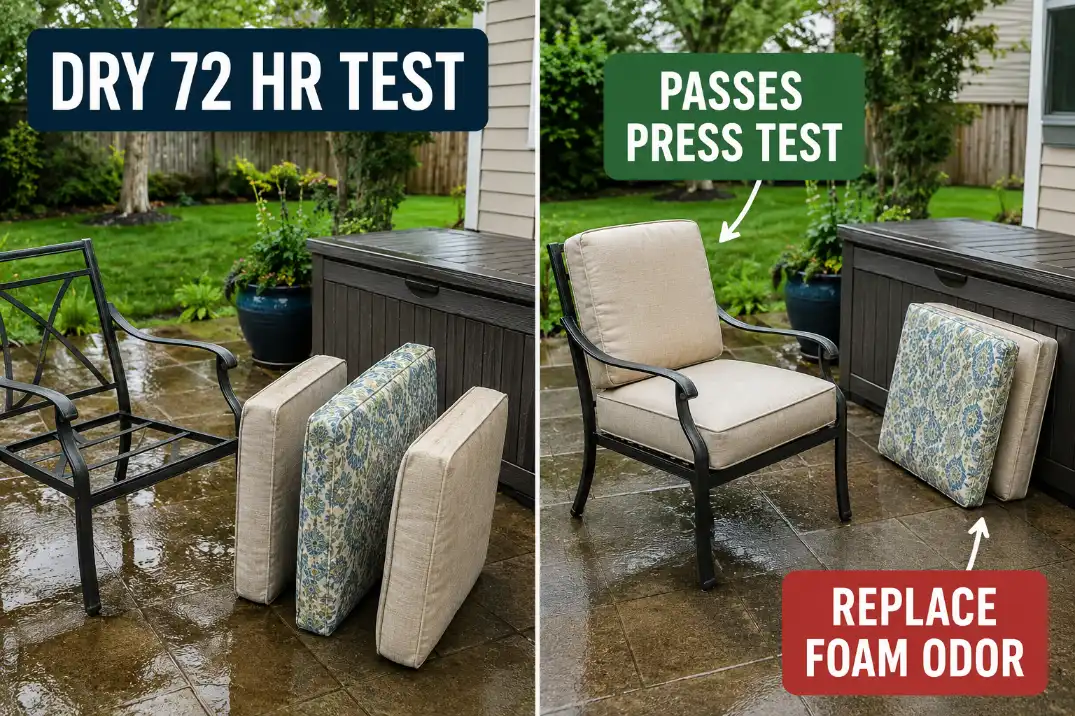
Routine cleaning stops making sense when the foam core has a persistent musty odor. If the cushion smells bad after 48 to 72 hours of warm drying with moving air, the problem may be inside the cushion rather than on the cover.
The clearest test is compression. Press the cushion firmly after it seems dry. If musty air comes out, the cover is not the main problem anymore. If the odor returns immediately after cleaning, replacement is usually more rational than repeating the same fabric treatment.
A Drying Routine That Prevents Repeat Mildew
The goal is not to keep cushions perfectly dry every day. Outdoor furniture gets wet. The goal is to make sure cushions dry fully between wet periods often enough that mildew does not get established.
Fix the drying path before buying more cleaner
After rain, stand cushions upright instead of leaving them flat. Give each cushion air on both sides. Rotate the shadiest cushions into a brighter drying spot for a few hours. Keep cushions out of closed storage until they pass the press-and-smell test.
For covered patios, airflow becomes even more important because the roof blocks rain and sun at the same time. A covered space that feels protected can still hold stale air around soft goods, especially if curtains, walls, or screens limit cross-breeze.
The same ventilation logic behind Covered Patio Ventilation Mistakes applies to cushions: protection without air movement often creates damp comfort problems.
Quick diagnostic checklist
- Cushion still smells musty after 48 hours of dry weather.
- Lower edge feels cool or heavy when pressed.
- Mildew returns within 1 to 2 weeks after cleaning.
- Seat base is solid, sagging, or shaped like a pocket.
- Storage box smells damp when opened.
- Patio surface stays wet under the chair zone for several hours.
- One cushion fails faster than matching cushions from the same set.
What to prioritize first
Start with drying conditions before replacing everything. Lift cushions after rain, clean off organic debris, create underside airflow, and stop storing cushions while damp.
If mildew only appears after cushions sit in a closed container, storage timing is the first fix. If mildew appears while cushions stay on the chairs, the seat base, shade, or patio moisture is more likely.
For seasonal resets, it helps to treat cushions as part of the full patio readiness check, not as isolated decor. When spring storms or summer humidity start, a simple pass through Spring Patio Readiness Checklist can catch storage, drainage, shade, and airflow problems before cushions smell stale again.
Questions People Usually Ask
Can mildew on outdoor cushions be cleaned?
Surface mildew can often be cleaned if the cushion dries fully and the odor does not come from inside the foam. Clean according to the fabric label, rinse if required, and air dry completely. If the smell returns when the cushion is pressed, cleaning the cover is not reaching the real source.
Why do cushions smell musty even when it has not rained?
Overnight dew, humid air, shaded seating, and damp storage can all add moisture without visible rain. If the cushion dries during the afternoon but feels cool again in the morning, the drying clock is being reset.
Should cushions be stored every night?
Not always. Storing cushions every night can help before storms, but it can backfire if they go into a closed box damp. In dry climates, leaving cushions upright with good airflow may be better than packing them tightly every evening.
When should outdoor cushions be replaced?
Replace them when the foam stays musty after 48 to 72 hours of warm drying, when one cushion remains noticeably heavier than the others, or when odor returns immediately after cleaning.
For broader official guidance on moisture and mold cleanup, see the EPA mold resources.