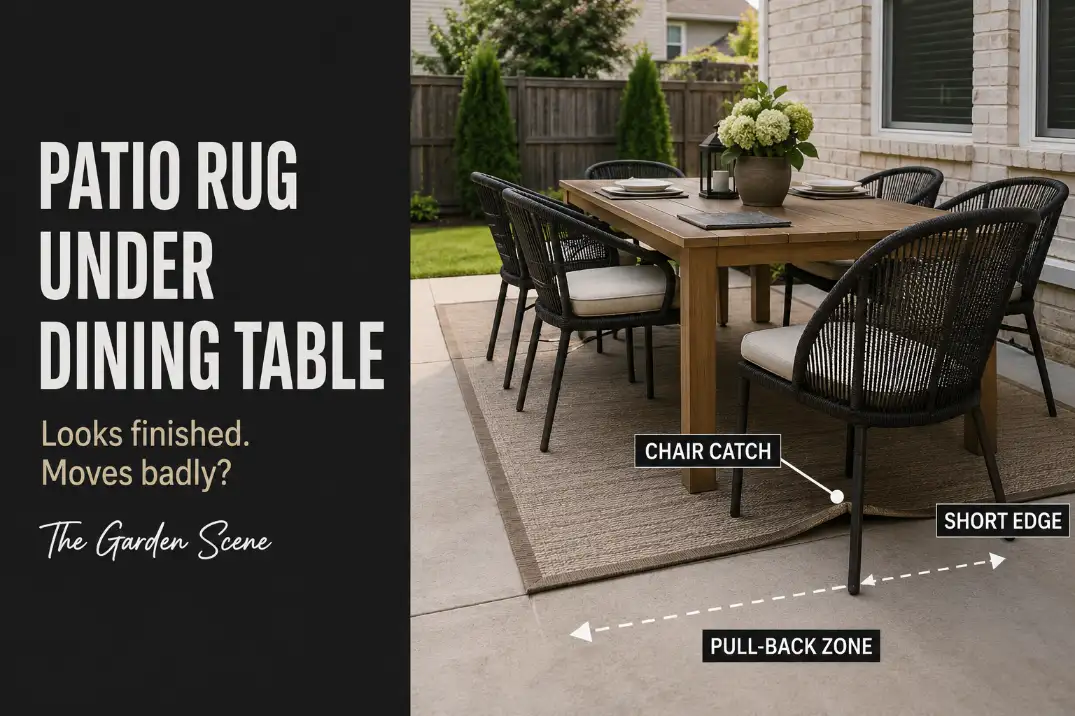
Most patio rug under dining table problems are not really rug problems at first. They are movement problems. The rug may look right when every chair is pushed in, then fail the moment someone pulls a chair back 24 to 30 inches.
That is the first check: do the back chair legs stay on the rug during normal use, or do they drop off the edge?
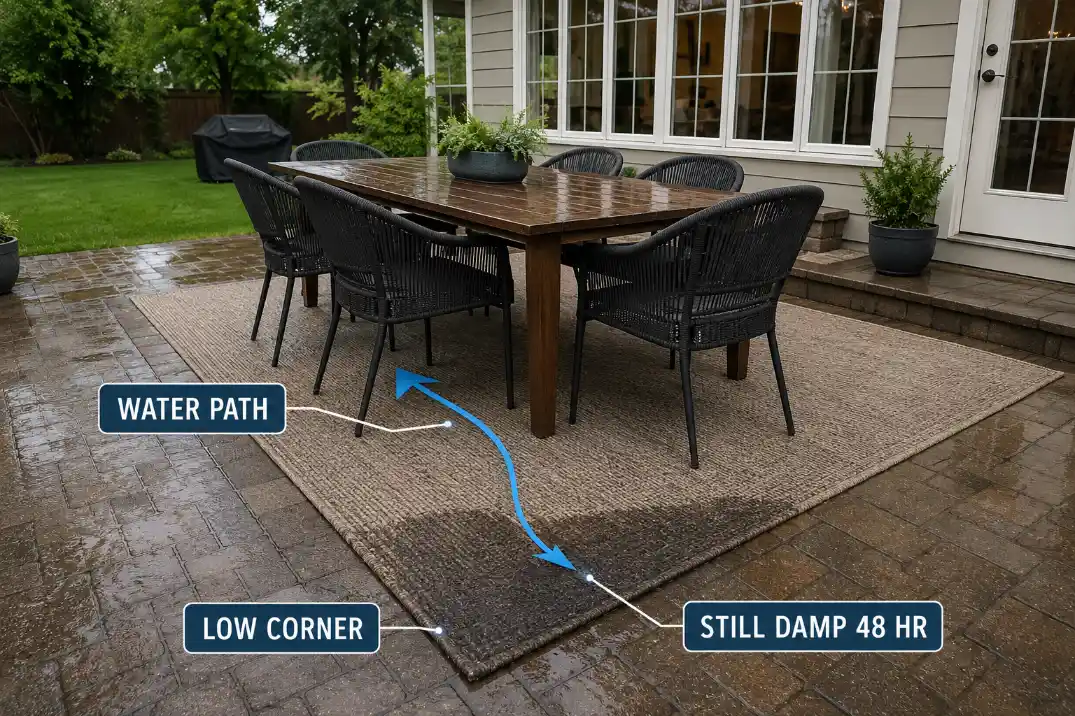
The second check is moisture. If one corner stays damp more than 24 to 48 hours after rain, the rug is probably sitting in a low spot or blocking airflow.
The third check is cleanup friction. A dining rug that needs to be lifted after every meal is not adding comfort; it is creating a chore.
This issue differs from a general outdoor rug problem because the dining table adds repeated chair drag, food spills, table-leg traps, and wet contact points in the same small zone.
If the rug only works when the chairs are pushed in for a photo, it is not solving the dining area; it is decorating the problem.
Chairs Catch the Edge
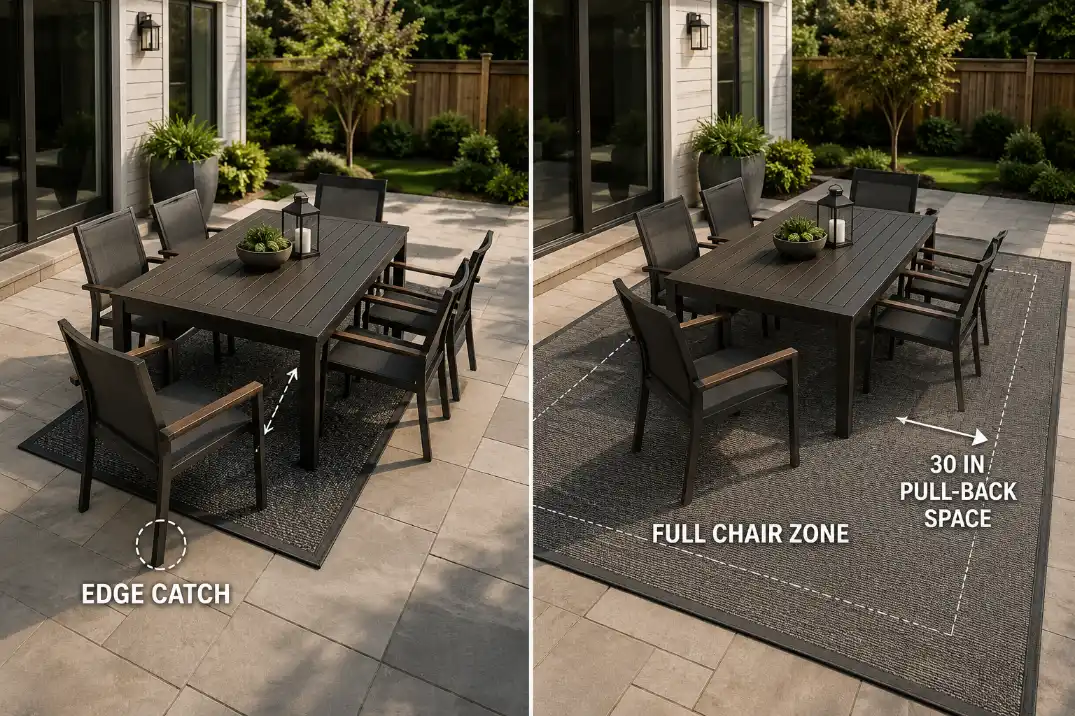
The real test happens with chairs pulled out
A patio rug can look perfectly centered under a dining table and still be functionally too small. The mistake is measuring the table, not the chair movement.
For most outdoor dining chairs, the useful pull-back zone is about 24 inches at minimum and closer to 30 inches if the chair has arms, a deep seat, or a heavier metal frame.
A better rule is simple: when someone sits down or stands up, all four chair legs should remain on the rug. If the rear legs drop onto the patio surface, the chair tilts, snags, or drags the rug edge.
That is the symptom. The underlying mechanism is a repeated height change between the patio surface and the rug edge.
This is where a lot of fixes waste time. Rug tape, corner weights, and heavier rug pads may reduce curling, but they do not fix a chair that keeps crossing the rug boundary. If the chair path is wrong, the edge will keep taking abuse.
For a deeper spacing check, the same movement issue shows up in Outdoor Dining Chair Clearance, especially when the patio is tight behind the chairs.
Thin rugs usually work better than plush ones
Under a dining table, comfort is less important than low friction. A low-profile flatwoven outdoor rug, often roughly 1/8 to 1/4 inch thick, usually behaves better than a thick, cushioned rug because chair legs move across it with less resistance. Higher pile, raised borders, and braided edges create more catch points.
The edge matters more than the pattern. A beautiful rug with a thick bound border can become annoying faster than a plain flatweave if chairs scrape over the border every day.
Food and Drink Stains
A single stain is different from a stain pattern
A dropped drink is a cleaning issue. A repeated stain pattern around the same chair legs, table base, or serving side is a layout issue. It tells you where people actually move, spill, and step, not just where the rug looks dirty.
That distinction matters because many homeowners try to solve repeated dining stains with darker colors. A darker pattern can hide a berry mark, sauce drip, or coffee spill for a while. It does not make the rug easier to clean, and it does not change the traffic pattern that keeps putting food in the same place.
The first 10 to 15 minutes after a spill matter more than the marketing label on the rug.
Blot liquid, rinse lightly, and keep the area from drying into the fibers. If every normal meal leaves a mark that needs scrubbing, the rug is probably too textured for dining use.
“Outdoor-rated” is often overestimated
People often overestimate what “outdoor rug” means. It usually means the material tolerates moisture better than an indoor rug. It does not mean barbecue sauce, wine, grease, melted popsicles, and wet leaves will disappear without effort.
The condition people underestimate is the table-leg zone. Food does not fall evenly across the rug. It collects near chair feet, table legs, and the edge where people step in and out. If those areas are hard to reach with a broom or hose, the rug will age unevenly.
A rug under a rarely used bistro table can stay attractive for years. The same rug under a family dining table used 4 or 5 nights a week may look tired in one season if the weave holds debris.
Wet Corners After Rain
A wet corner is usually a slope clue
When only one corner of the rug stays wet, the most likely cause is not poor rug quality. It is usually the patio surface underneath.
Many patios are built with a slight slope, often around 1/8 to 1/4 inch per foot, so water can move away from the house. If the rug sits across that drainage path, the low corner can become a sponge zone.
This is especially noticeable after summer storms in humid regions or on shaded patios where morning sun never reaches the dining area. A normal outdoor rug should begin drying once surface water clears. If the same corner still feels wet after 48 hours, the problem is no longer cosmetic.
If the same rug also curls, traps grit, or stays damp away from the table, the issue may be part of a broader pattern of Outdoor Rug Problems on Patios, not just a dining-table placement mistake.
When the rug blocks drying
A rug under a dining set has less airflow than a rug in an open lounge area. Table legs press down. Chair legs compress sections. The rug may also sit partly under shade for most of the day. That slows drying from below.
A patio that keeps water under furniture needs layout attention, not just a new rug. The broader drainage pattern is covered in Patio Drainage Layout Problems when the wet area connects to slope, runoff, or poor furniture placement.
The routine fix stops making sense when the underside smells musty after cleaning and drying. If odor returns within a day or two, the rug is holding moisture in the backing or sitting over a surface that stays damp.
At that point, moving the rug, changing the layout, or removing the rug from the dining zone is more useful than another round of deodorizing.
Rug Size Changes Movement
Bigger fixes one problem and may create another
The usual advice is to buy a larger rug. That is often right, but not always. A rug that extends 24 to 30 inches beyond the table on every chair side usually allows smoother movement. But on a small patio, that larger rectangle may run into a walkway, grill route, door swing, or step.
That is the tradeoff: a dining rug must be large enough for chairs, but not so large that it steals the circulation around the table. A 6-person rectangular dining set may need a rug closer to 8×10 feet or 9×12 feet to work well.
On a 10×12 patio, that can consume nearly the entire usable surface.
If the furniture is already too large for the patio, a bigger rug hides the sizing problem instead of solving it. In that case, changing the table shape may work better than adding more rug area. Best Patio Table Shapes for Small Spaces is a useful next step when the rug problem is really a table-footprint problem.
| Dining rug condition | Likely mechanism | Better fix | Fix to avoid |
|---|---|---|---|
| Chair legs fall off the rug | Rug is too short for pull-back | Add 24–30 inches beyond table edge | Corner tape only |
| One corner stays wet | Patio low spot or blocked airflow | Move rug out of drainage path | More deodorizer |
| Rug bunches under chairs | Rug too loose or too textured | Flatweave with stable backing | Thick pad under dining chairs |
| Patio feels smaller | Rug extends into walkway | Smaller table or no dining rug | Oversized rug |
| Crumbs collect near legs | Tight table base blocks cleaning | Simpler leg layout or easier-lift rug | Darker pattern only |
The table base matters too
Pedestal tables, crossbar bases, and chairs with wide rear legs can make cleaning and movement harder. Four slim table legs near the corners may be easier to sweep around than a heavy central base with feet that trap crumbs.
If you are already considering a furniture change, do not choose only by seat count. A compact dining set that needs less chair pull-back can solve more than the rug can.
That is where Best Outdoor Dining Sets for Small Patios fits naturally into the decision, because the set controls the rug size you can realistically use.
Cleaning Around Table Legs
Daily friction predicts long-term failure
A rug under a patio dining table fails slowly through friction. Not dramatic damage, but small annoyances: crumbs that stay under chair legs, damp grit at the edge, sticky spots that need kneeling to reach, and a rug that has to be lifted more often than expected.
A reasonable maintenance rhythm is light sweeping after meals, a better rinse after messy use, and a full lift-and-dry check every 2 to 4 weeks during wet or humid seasons. If the rug needs a full reset every few days, the layout is too demanding for that rug.
This is also where the dining set itself matters. A table that is too large, too heavy, or too close to the patio edge turns every cleanup into furniture moving. If the rug problem keeps coming back after resizing, Patio Dining Set Space can help separate a rug issue from a patio that is simply too tight for the table.
The worst cleaning setup is heavy furniture on a large rug
The most frustrating version is a large dining set on a large rug where the table is too heavy to move. You can rinse the visible surface, but the dirt stays under the legs. Over time, the clean areas and trapped areas age differently.
A lighter flatweave rug that can be pulled out, shaken, and dried is usually better than a premium-looking rug that never moves. Under dining furniture, easy recovery beats perfect styling.
Dining Without Daily Friction
Keep the rug if it passes three tests
A patio rug under a dining table earns its place when it passes three practical tests. First, chairs stay fully on the rug during normal pull-back. Second, the rug dries within 24 to 48 hours after typical rain. Third, cleaning does not require moving the entire dining set every week.
If it passes those checks, the rug can make the dining area feel finished, soften the patio surface, and define the zone without much downside.
If it fails one check, adjust the layout first. Shift the table, rotate the rug, or move the rug away from the low side of the patio. If it fails two or three checks, the rug is no longer helping daily use.
Remove the rug when it becomes the obstacle
There is no rule that a dining table needs a rug. On many patios, especially smaller concrete or paver patios, the best dining setup is a clean surface with no rug under the chairs.
The area can still feel finished with lighting, planters, seat cushions, or a smaller accent rug away from the food zone.
This is the point where people often overvalue the finished-photo look and undervalue daily movement. A dining area that works smoothly without a rug is better than one that photographs well but catches chairs every night.
Questions People Usually Ask
Should an outdoor rug go under all dining chair legs?
Yes, if the rug is used under the dining table at all. The rug should hold all chair legs when chairs are pushed in and when they are pulled back for sitting. If only the front legs stay on the rug, the edge will become a repeated catch point.
Is a round rug better under a round patio table?
It can be, but only if the diameter supports chair movement. A round table with four chairs may still need a rug large enough to give about 24 inches of pull-back space around the seating area. A round rug that only frames the table base will not solve chair drag.
Can a rug pad fix patio dining rug problems?
A rug pad can reduce sliding and add grip, but it cannot fix a rug that is too small, too thick at the edge, or sitting in a wet low spot. Use a pad only after the rug already fits the chair path and dries properly.
When should you skip the rug completely?
Skip it when the chairs catch after resizing, one corner stays wet beyond 48 hours, or cleaning under the table becomes a weekly frustration. In those cases, the patio surface is the better dining floor.
For broader official guidance on mold-prone damp materials, see the EPA mold cleanup guide.