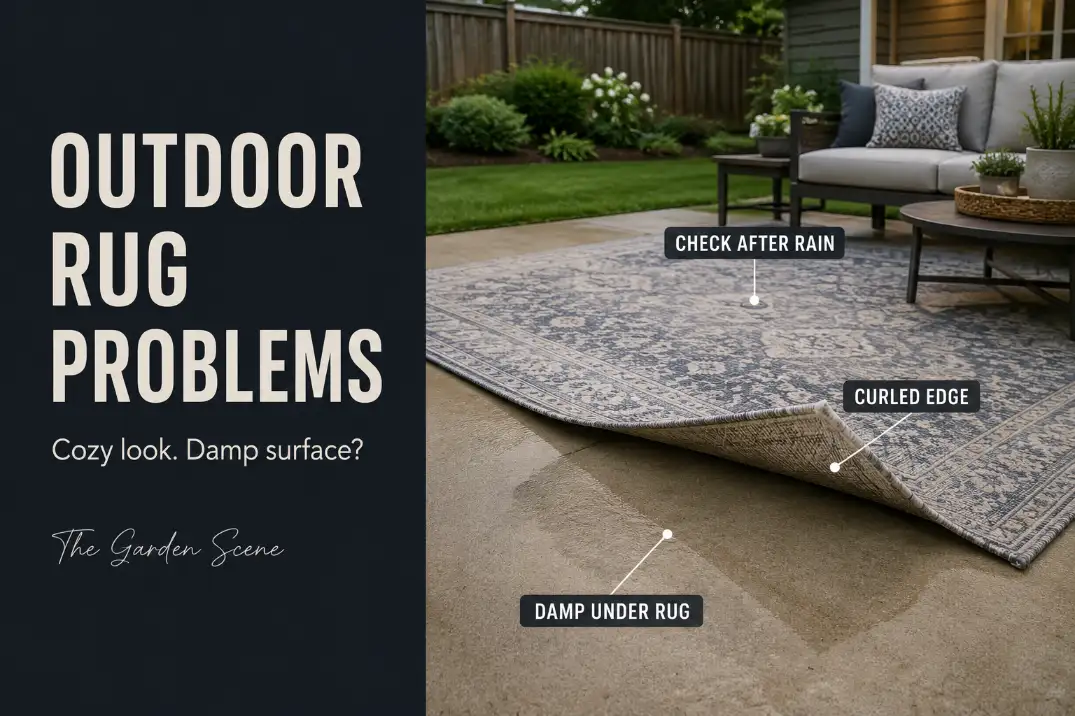
Outdoor rug problems on patios usually start underneath the rug, not on the top fabric. The most useful first checks are simple: lift one corner 24 hours after rain, look for a darker surface outline, and check whether any edge rises more than 1/4 inch where people walk.
If the patio around the rug dries but the surface underneath stays dark or slick after 48 hours of dry weather, the rug is changing the patio’s drying behavior.
That is different from a normal dirty patio. Dirt sits on top. A rug problem often traps moisture, grit, heat, and movement between the rug backing and the surface.
The rug may still make sense, but only if it dries quickly, stays flat, and does not hide a drainage, traction, or heat problem that should be fixed first.
The Rug Changes the Surface
The rug acts like a lid
An outdoor rug can make a patio feel finished, but it is not a neutral layer. It shades part of the surface, slows evaporation, catches grit at the edges, and changes how the patio feels underfoot.
On rough concrete, that may only be a mild maintenance issue. On sealed concrete, porcelain tile, smooth pavers, or composite decking, it can become a slickness or staining issue.
The mistake is judging the rug only from above. A rug can look clean while the patio beneath it stays damp, dusty, or slightly filmed over.
The diagnostic clue is the contrast: exposed patio dry and normal, covered patio darker and slower to recover.
If the surface was already hard to rinse clean before the rug went down, the rug rarely solves it. It usually hides the issue until the outline becomes more obvious.
That is the same surface-first logic behind Patio Surface Hard to Clean or Maintain.
The backing matters more than the pattern
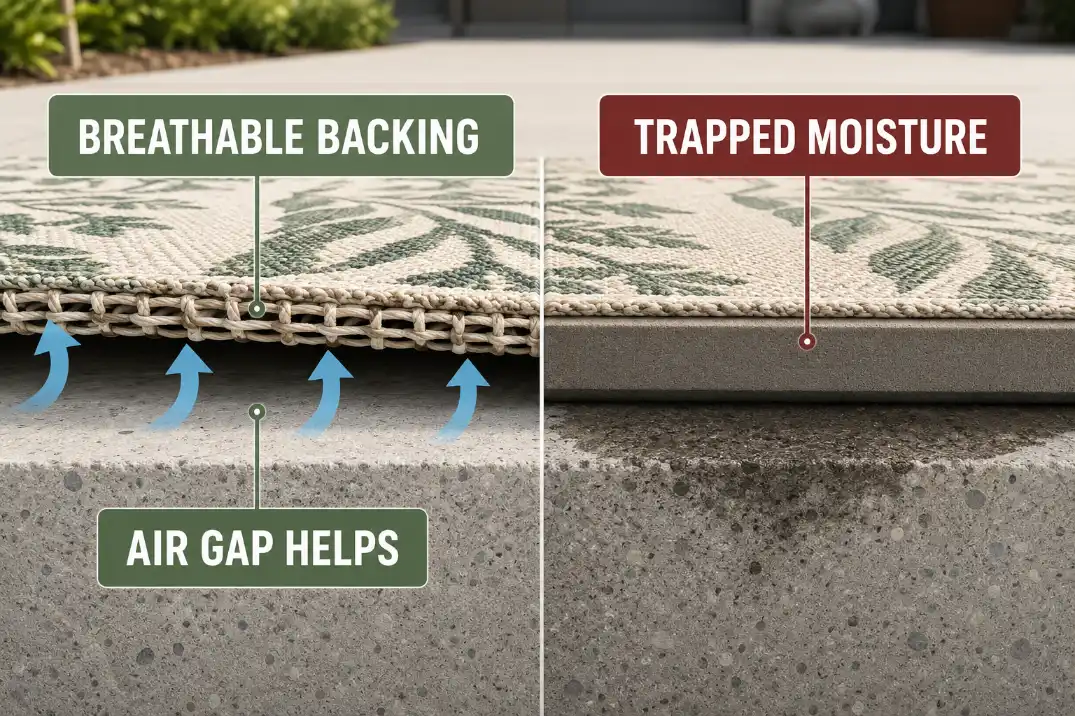
The rug’s color and pattern affect the look, but the backing affects the patio. A low-profile flatweave outdoor rug usually dries faster than a dense, rubbery, or padded rug.
Polypropylene and other synthetic outdoor rugs can work well, but only when water can escape from underneath.
A heavy rug may stay flatter in wind, but it can also hold moisture longer. A dense backing may feel more stable at first, then leave a damp rectangle after repeated rain.
The better choice for an exposed patio is usually not the thickest rug. It is the rug that lies flat, sheds water, and lets air reach the surface.
Moisture Trapped Underneath
Normal wetness has a recovery window
Outdoor rugs get wet. That alone is not failure. The question is how long the patio stays wet underneath after the weather clears.
A healthy setup should show visible drying within the first day after light rain. After a soaking rain, the underside may need longer, but it should not stay dark, slick, or musty after 48 hours of dry weather. If it does, the rug is holding more moisture than the patio can release.
This matters most where the patio has weak slope or poor air movement. A patio surface usually needs about 1/8 to 1/4 inch of fall per foot to move water away cleanly.
If the rug sits across that path, covers a low spot, or holds water close to the house, the rug becomes part of the drainage problem.
When the damp outline appears near a wall, sliding door, or threshold, compare the rug issue with Patio Water Pooling Against the House before blaming the rug alone.
Covered patios can still stay damp
A covered patio does not automatically protect a rug. It may get less direct rain, but it can also have weaker airflow, more shade, and slower drying under furniture. That is why a rug under a roof can still smell musty even when it rarely gets soaked.
The common overestimate is protection from the cover. The common underestimate is trapped humidity under the rug. A shaded covered slab that stays cool all morning may dry more slowly than an uncovered patio that gets sun and breeze after rain.
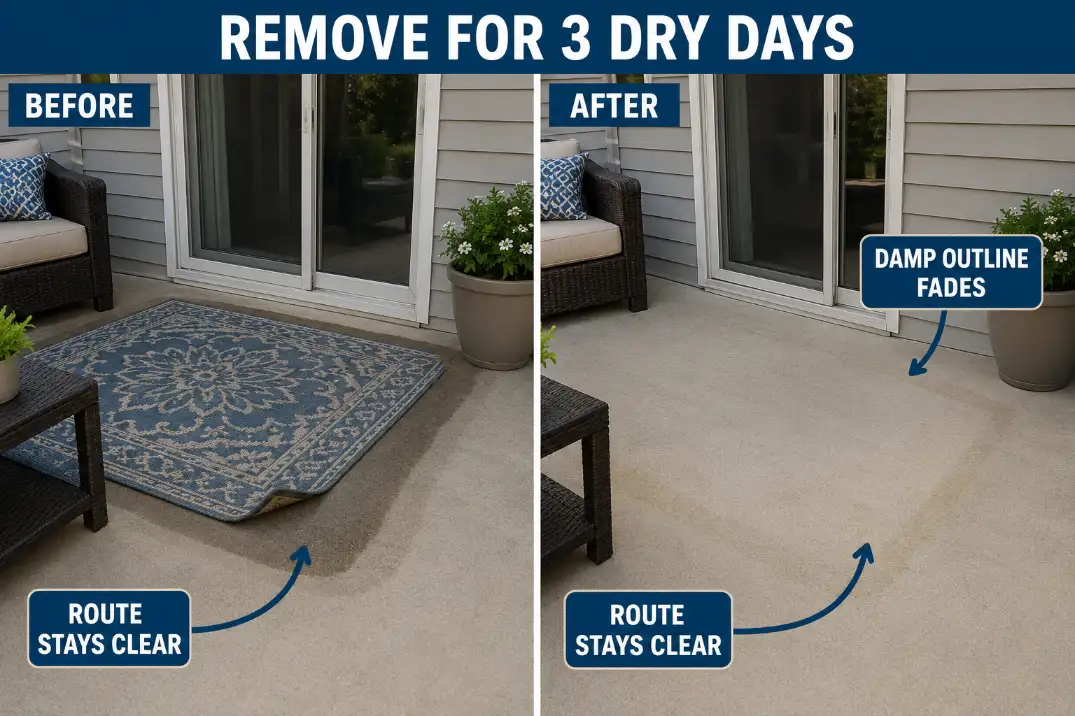
Remove the rug for 3 dry days if the underside keeps smelling musty. If the patio dries evenly and the smell disappears, the rug or backing was the main trap. If the same area stays damp without the rug, the patio surface or drainage needs attention first.
Washing the rug is not always the fix
Washing helps when the rug is dirty. It does not fix a flat backing, a low spot, a slick sealed surface, or a patio that cannot dry underneath.
This is where many fixes waste time: the rug gets cleaned, placed back in the same spot, and recreates the same damp rectangle within a week.
A better routine is to lift and check, not just wash. After long rain, lift the rug edge once the weather clears. If the underside is still wet after 48 hours, dry both sides before putting it back.
| Patio surface | Rug risk | Best check |
|---|---|---|
| Unsealed concrete | Dark damp outline, musty smell | Lift after 48 hours |
| Sealed concrete | Slick film under rug | Wet traction test |
| Pavers | Grit lines, uneven drying | Check joints and low spots |
| Porcelain tile | Slippery edge zone | Test when damp |
| Wood or composite deck | Slow drying beneath rug | Check debris and discoloration |
Edges That Curl or Shift
Location matters more than the curl itself
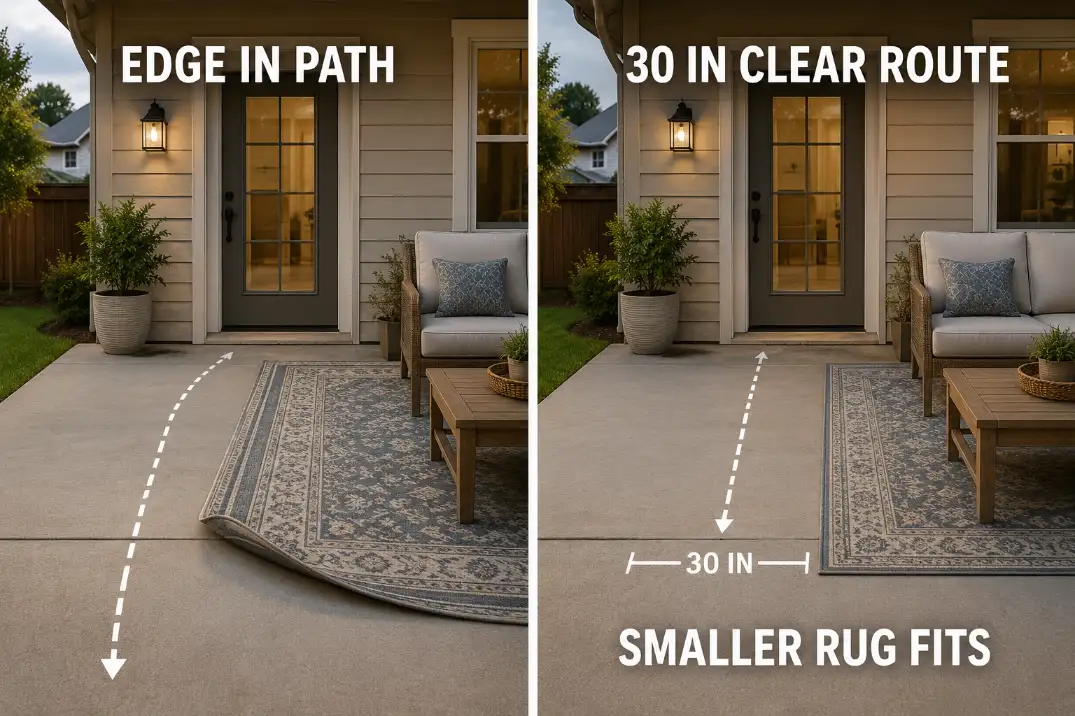
A curled rug edge is not equally serious everywhere. A 1/4-inch curl in a quiet corner may be mostly cosmetic. The same curl in a door route, grill route, or dining chair pullback zone is a use problem.
People usually do not trip over the center of a rug. They catch the edge while stepping through a doorway, backing out a chair, carrying food, or walking in low light. That is why edge curl should be judged by route, not just by height.
Keep at least a 30-inch clear walking route from the back door to the main patio zone. If the rug edge sits inside that route, the rug is controlling movement instead of supporting the layout.
For entry-heavy patios, the better reference point is Keep Patio Entry Clear, not the rug size printed on the product page.
Pads and tape have a limit
Outdoor rug pads, grippers, and tape can help on a dry, flat, protected surface. They stop making sense when the patio is gritty, wet, uneven, or exposed to repeated sun and rain.
Adhesive only sticks as well as the surface below it, and dusty concrete or filmed-over pavers weaken that bond quickly.
A heavier rug can reduce shifting, but it may also dry more slowly. That tradeoff is not worth it if moisture is already the main issue. If you have to flatten the same edge every few days, the rug does not fit that location.
Dirt Lines Around Furniture
Dirt lines show where water and grit stop
Furniture rings and rug outlines are not just cleaning issues. They show where moisture, dust, and pressure are collecting. Chair legs pin the rug down.
Table legs compress the backing. Rug edges catch blown-in grit. After 2–3 weeks of normal use, those pressure points can leave a visible pattern on the patio.
The common misread is assuming the rug dye caused the mark. Dye transfer can happen with poor-quality rugs, but the more likely issue is trapped dirt and uneven drying.
The surface outside the rug gets rinsed, walked on, and sun-dried. The surface under the rug stays covered and slower to recover.
If a slick film appears where the rug sat, do not cover it again. Test the patio itself when damp. A rug placed over a slippery finish only hides the traction problem until the rug shifts or someone steps on the exposed wet edge.
In that case, Slippery Patio Finish, Cleaners, Sealer, and Drainage is a better fix path than buying another rug.
Cleaning should follow the outline
Do not scrub only the visible border. Lift the rug, clean the full rectangle underneath, and rinse beyond the rug edge. If the rug sits under dining furniture, move the chairs and table long enough for the surface to dry evenly.
A monthly lift-and-rinse check is enough for many patios during dry weather. During rainy periods, the check should happen after long wet spells, not by the calendar.
Heat Under the Rug
A rug can feel cooler first and hotter later
People often overestimate the cooling effect of a rug. A rug can make a hot patio more comfortable for bare feet at noon, especially if the exposed surface is pale concrete or pavers. But dark, dense rugs can hold heat into the evening.
On a 90°F summer afternoon, the top of the rug may feel better than bare concrete at first. The underside can still stay warm after the surrounding patio starts to cool. That matters on west-facing patios, enclosed courtyards, and patios near reflective walls or sliding glass doors.
The healthier condition is a rug that cools as the sun drops and air moves through it. The failing condition is a rug that stays warm underneath while the rest of the patio becomes usable again.
When the whole patio overheats, the rug is only a small comfort layer. The larger issue may be closer to Patio Surfaces Too Hot in Summer.
Heat can speed up edge failure
Heat does not only affect comfort. It can soften some backings, exaggerate curling, and dry the top faster than the underside. That uneven drying is one reason a rug may look flat in the morning and lift by late afternoon.
A thicker rug is not automatically better. Thick rugs can feel more substantial, but they often dry slower and hold more grit. For exposed patios, a lower-profile rug with a breathable backing is usually the more practical choice.
When a Rug Makes Sense
Use the rug to define a zone, not hide a problem
A patio rug works best when it defines a seating or dining zone without blocking drainage, door movement, chair clearance, or a main walking route. It should sit on a clean, flat, well-drained area and dry on both sides within a reasonable window after rain.
The best rug locations usually stop short of thresholds, drains, step edges, and door swings. Leave a few inches of exposed patio around tight edges so water and debris do not get locked against a wall or track.
A rug is strongest when it clarifies the outdoor room. It is weakest when it is used to hide a patio flaw.
Remove, store, replace, or skip
Remove the rug when the underside smells musty, the patio stays dark after 48 hours of dry weather, or the same corner keeps curling in a walking route. Store it during long wet spells if the patio has poor airflow or heavy shade.
Replace the rug if the backing stays musty after cleaning and drying, or if the edges no longer lie flat. Skip the rug entirely if the patio has pooling water, a slick sealer, loose pavers, or a narrow door route that cannot spare the space.
When furniture, planters, or borders interrupt runoff, the rug is rarely the main problem. The better diagnosis is often Patio Drainage Layout Problems, because the rug is only revealing a water path that was already weak.
Questions People Usually Ask
Can an outdoor rug damage concrete?
Yes, indirectly. The rug usually does not damage concrete by itself, but trapped moisture, grit, and slow drying can leave dark outlines, film, or staining. The risk rises when the area under the rug stays damp for more than 48 hours after rain.
Should you put a pad under an outdoor rug?
Only if the pad is made for outdoor use and does not trap water. A pad that improves grip but slows drying can trade one problem for another. On exposed patios, drying matters as much as cushioning.
Is a plastic outdoor rug better than fabric?
Plastic or polypropylene rugs often dry faster than heavier fabric-style rugs, but they can still trap moisture if the backing sits flat on the patio. Material helps, but placement, slope, airflow, and edge control decide whether the rug works.
When should you remove the rug completely?
Remove it when the underside smells musty, the patio stays dark after 48 hours of dry weather, or the edge keeps curling in a walking route.
For broader official guidance on moisture and mold risk, see the EPA mold resources.