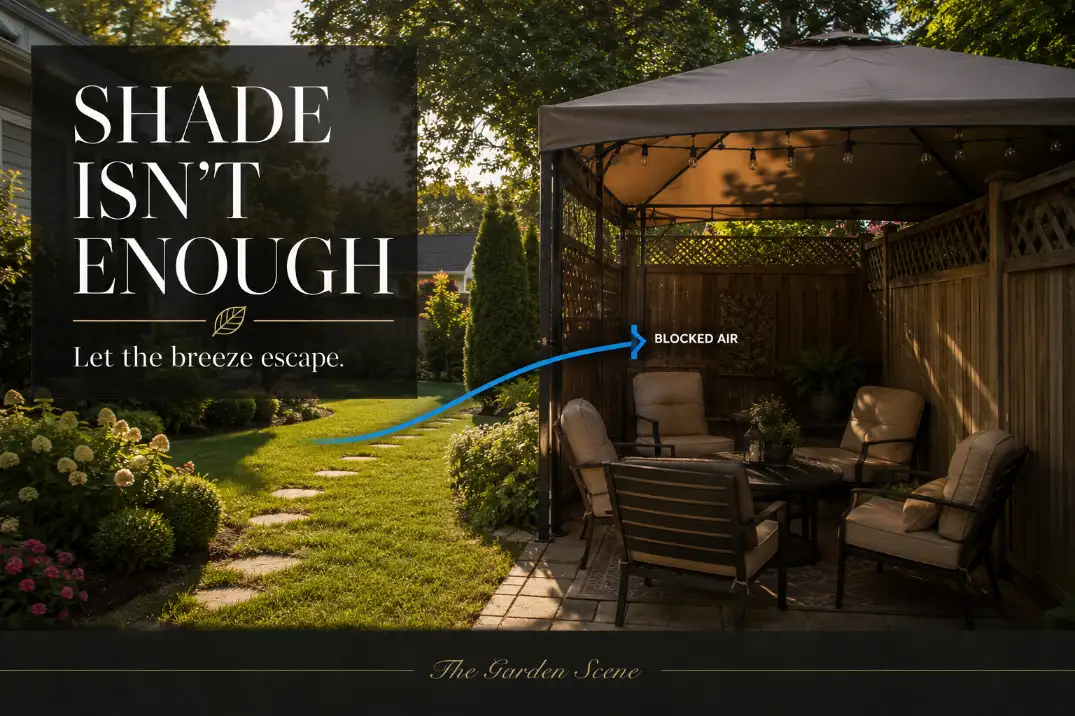
The best backyard layout for shade, seating, and airflow usually fails in one specific window: late afternoon, roughly 2 to 6 p.m. A backyard can look finished and still feel uncomfortable if the seating faces low western sun, the shade misses the chairs, or the only breeze dies against a fence.
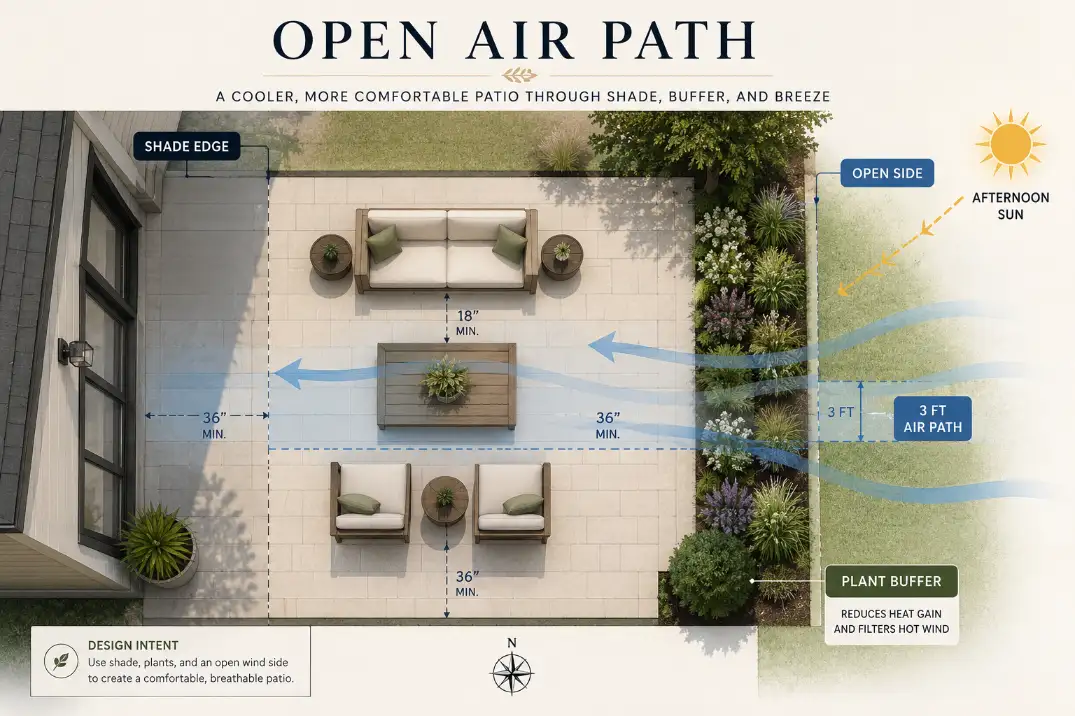
Check three things before buying anything: whether the seats stay shaded after 3 p.m., whether chairs have 30–36 inches of pull-out clearance, and whether at least one 3-foot-wide path lets air move through the seating area.
This is not just a small-patio problem. The space may be large enough, but comfort breaks down when shade, furniture, glare, and airflow are working against each other.
The 30-Minute Layout Test Before Buying Anything
Most hot backyard layouts are not missing a product. They are missing a better placement decision. Do this quick test before adding an umbrella, pergola, fan, or new furniture set.
Mark the shade where people actually sit
Check the patio or seating area at 10 a.m., 1 p.m., 3 p.m., and 5 p.m. The 3–5 p.m. marks matter most because that is when many patios become too bright, too hot, or too still to use.
If the shade leaves the chairs before 3 p.m. in summer, the layout needs either a different seating position or a stronger shade source. A small umbrella may shade the tabletop while chair backs, knees, and faces stay exposed.
Test the view from the chair, not the kitchen window
Put one chair where someone would actually sit. Then look toward the house, yard, fence, and sun. If the best view forces people to face low western glare, the layout will disappoint no matter how polished the furniture looks from indoors.
This is the first thing many homeowners misread. Morning comfort does not predict afternoon comfort. A spot that feels pleasant at breakfast can become the least usable part of the yard by late afternoon.
Walk the route with chairs pulled out
Pull dining chairs back as if people are seated. Walk from the house to the grill, lawn, garden gate, or side yard. Less than 30 inches behind chairs feels tight. Less than 24 inches changes behavior: people squeeze, step into beds, drag chairs, or avoid the space.
A good layout protects the route used every week, not the largest party setup imagined once a year.
The Layout That Works Most Often
The strongest backyard arrangement is not the most shaded corner. It is a shaded seating zone placed near the edge of cover, with one open side for air and one clear path for movement.
Use the edge of shade, not the deepest pocket
A chair does not have to sit under the darkest part of the yard. Often, the better spot is just inside the shade line, where the person is protected but the air can still move.
That distinction matters in humid climates like Florida, the Gulf Coast, and parts of the Midwest, where deep shade against a fence can feel damp and still after rain. In dry areas such as Arizona or inland California, overhead shade can dramatically improve comfort, but reflected heat from walls, pavers, and stucco still needs to be controlled.
If the main problem is late-day glare, the pattern is similar to patio shade problems from afternoon sun: overhead shade helps less when low sun is coming sideways into the seating area.
Solve airflow before adding more shade
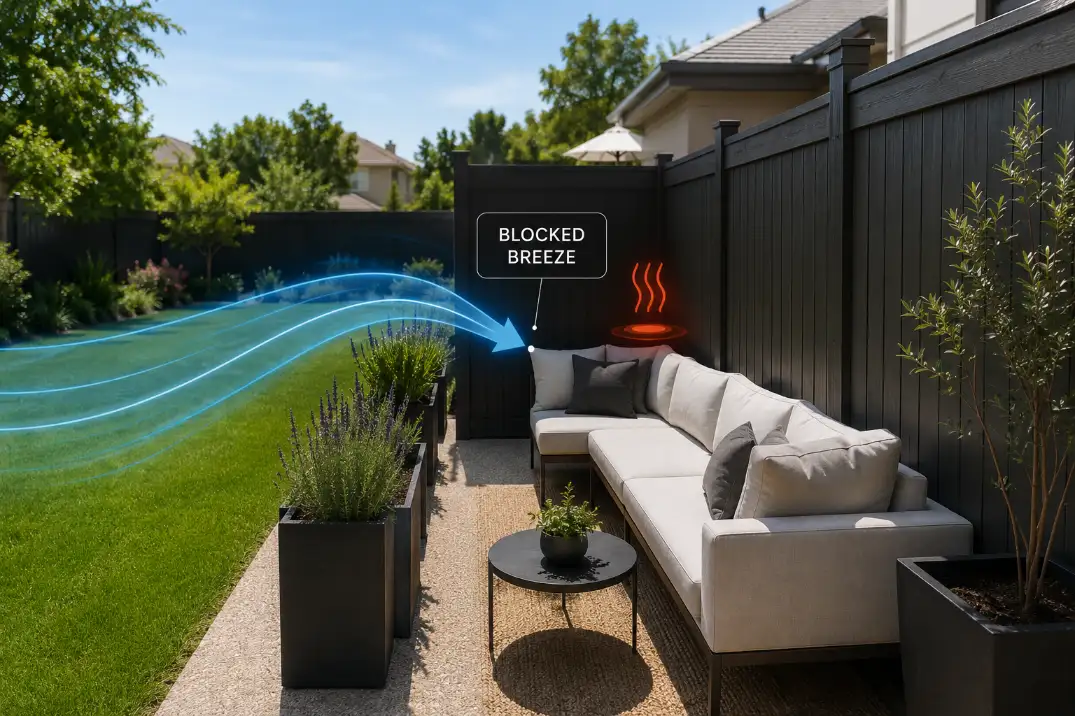
Airflow needs an entry and an exit. A sofa pushed into a fenced corner may look cozy, but it often creates a dead-air pocket. Leave one side open toward the most likely breeze and preserve a 3- to 4-foot lane beside or through the seating area.
That lane should not become storage for extra stools, coolers, side tables, or planters. A yard can have open lawn and still feel airless if the patio is blocked at sitting height.
The real mechanism is poor outdoor flow, not simply limited square footage. The same issue shows up in backyard zoning mistakes that hurt outdoor flow, where zones exist on paper but do not work in daily use.
Plant for cooling without sealing the patio
Planting can soften glare, reduce reflected heat, and make a patio feel calmer. But dense planting pressed against the seats can also block air and hold moisture.
Keep shrubs at least 12–18 inches away from cushions and chair backs at mature size. If foliage touches furniture after rain, the layout is already too tight. Lower plants near the patio, taller screening set back, and visible gaps between plant masses usually work better than one solid hedge wall.
Choose the Shade Type by the Problem
Shade structures are not interchangeable. The right choice depends on whether the main issue is overhead sun, low-angle glare, stored surface heat, privacy, or flexibility.
| Shade option | Best for | Weakness to watch | Best layout move |
|---|---|---|---|
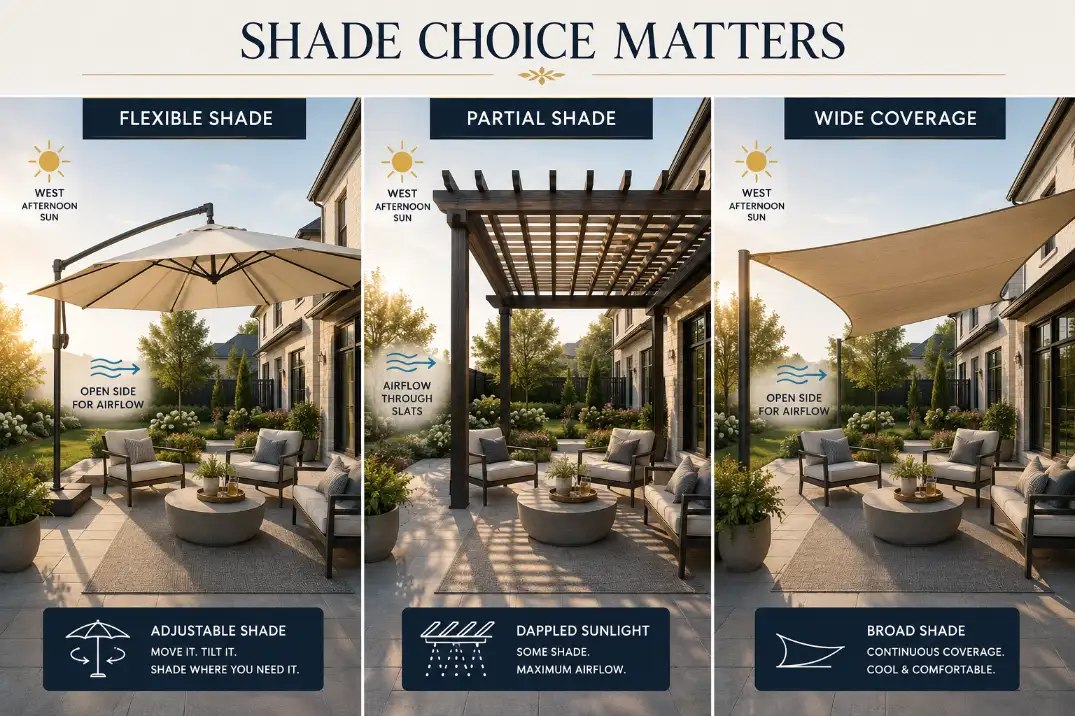
| Cantilever umbrella | Flexible lounge seating | Needs a heavy base and wind caution | Use when furniture moves seasonally |
| Market umbrella | Small dining tables | Often misses chair backs | Use only when the sun angle is mild |
| Pergola with slats | Permanent partial shade | Weak against low western sun | Add side screening, fabric, or vines |
| Louvered pergola | Adjustable shade | Expensive and structure-heavy | Best for patios used daily |
| Shade sail | Broad modern coverage | Needs correct anchor height and tension | Raise one edge so heat can escape |
| Retractable awning | House-adjacent patios | Less useful away from the wall | Strong for dining near the kitchen |
| Slatted privacy screen | Blocking views without killing airflow | Does not create much overhead shade | Place on the problem side only |
| Tree canopy | Natural cooling and atmosphere | Slow to mature | Match canopy width to seating size |
High shade usually breathes better
A low shade sail, low canopy, or tightly curtained gazebo can trap heat like a lid. In many seating areas, an 8- to 10-foot high edge feels better than a low cover because warm air has room to rise and leave.
Outdoor curtains are often overused. They can block glare or a specific privacy view, but closing several sides in a humid backyard usually makes the air feel heavier, not cooler.
Pro Tip: Screen only the view or sun angle that causes the problem. Wrapping the whole seating area often solves privacy while ruining airflow.
Best Layouts for Common Hot Backyard Problems
The best layout depends on the yard’s shape, sun direction, and whether privacy features are helping or hurting comfort. Do not solve every backyard with the same shaded corner.
For a west-facing patio
A west-facing patio usually needs side protection, not just overhead shade. Low sun can slip under pergolas, umbrellas, rooflines, and tree canopies.
Angle the seating north, east, or diagonally toward the yard instead of straight west. Use an offset umbrella, shade sail, trellis, or slatted side screen on the western edge. A pergola is not the best first fix for low western sun unless it includes side shade.
For a fenced suburban yard
The common mistake is pushing the seating into the back corner to “save the middle.” That often creates the stillest and hottest spot in the yard.
Float the seating slightly away from the fence, keep one side open to the lawn, and use planting behind or beside the furniture as a heat buffer. Even shifting a sofa 18–24 inches off the fence can improve movement and reduce the boxed-in feeling.
For a small patio
In a small patio, furniture scale matters more than furniture count. A bench plus two movable chairs often works better than a full sectional because the chairs can follow shade and leave the path open.
If the patio is around 8 by 10 feet, forcing a dining zone and lounge zone together usually weakens both. The better decision is to protect the main use and preserve circulation, which is also the logic behind 8×10 patio furniture layouts that stay open.
For a humid backyard
In humid regions, airflow deserves nearly as much priority as shade. A fully enclosed gazebo, curtains on every side, or dense planting around the patio can make a shaded area feel stagnant.
Use high shade, open sides, slatted panels, and planting gaps. If a shaded seating area still feels warmer or heavier than the open yard after 20–30 minutes in the evening, trapped air or stored heat is probably the issue. In humid yards, a slatted screen usually beats a solid privacy wall near the seating area.
For a dry, exposed backyard
In dry heat, direct sun and hot surfaces usually dominate. Light-colored surfaces, broad overhead shade, and planted edges can reduce the heat load more effectively than rearranging furniture alone.
Still, airflow matters. A patio surrounded by masonry walls, dark pavers, and solid fencing can keep radiating heat two hours after sunset. If surfaces are still warm to the touch that long after shade arrives, the layout needs a heat buffer, not just another umbrella.
Shade Add-Ons Worth Considering
These additions can help, but only when they solve the actual comfort problem. The wrong one can make the patio more expensive without making it more usable.
Slatted side screens
Use these when privacy or western glare is the issue. Slats interrupt views and sunlight without creating the same dead-air effect as a solid wall. They are usually better than full-height solid panels near seating.
Outdoor curtains
Use outdoor curtains sparingly. One curtain on the problem side can block glare or a neighbor’s view. Curtains on three or four sides often trap humidity and heat, especially in the Southeast.
Vines on pergolas
Vines can soften pergola shade and reduce glare, but they are not instant. They also add maintenance, leaf drop, and seasonal variation. They make sense when the pergola is permanent and the patio is used often enough to justify upkeep.
Portable fans
A fan is useful when it pushes air across the seating zone toward an open side. It is much less useful in a sealed corner. Most backyards should solve airflow before buying a larger fan.
Outdoor rugs
An outdoor rug can reduce contact heat on some hard surfaces, but it will not fix a patio that stores heat all evening. In damp climates, rugs can also slow drying if drainage is poor.
Fixes That Often Waste Time
The most overrated fix is adding shade to the same bad seating location. If the chairs are pressed into a dead corner, another umbrella may make the space darker without making it comfortable.
Bigger furniture usually makes the problem worse
A larger sectional can make a yard look more finished in photos, but it often steals the clearance that made the patio usable. Once the route behind furniture drops below 30 inches, the space starts to behave like an obstacle course.
This is why patio furniture mistakes in small backyards are not limited to tiny yards. Oversized furniture can make a medium yard feel cramped and still.
Fans help only when air has somewhere to go
An outdoor fan can improve comfort, but it cannot fix a sealed layout. It works best when it moves air across the seating zone toward an exit path. In a blocked corner, it may only stir warm air.
Covered patios need extra attention because heat can collect overhead. If the space has a roof, side walls, or curtains, covered patio ventilation mistakes can matter more than furniture placement.
Drainage can masquerade as a comfort problem
A shaded seating area at the lowest part of the yard may seem like the cool choice, but it can create dampness, mosquitoes, soft ground, or mildew. If water remains for more than 24 hours after ordinary rain, the problem is not just layout.
In that case, comfort depends on correcting water first, especially if trouble started after hardscaping. The failure pattern is common when patios and walkways change runoff, so backyard drainage after adding a patio or walkway should come before more furniture or shade purchases.
Quick Diagnostic Checklist
Use this before committing to a layout:
- Seats stay shaded after 3 p.m. during the hottest season.
- A 3-foot route remains open beside or through the seating area.
- Dining chairs have 30–36 inches of pull-out clearance.
- Main seats do not face low western sun.
- Privacy screens filter wind instead of sealing the patio.
- Nearby surfaces are not radiating heat two hours after sunset.
- Water does not sit in the seating area for more than 24 hours after rain.
Questions People Usually Ask
Should backyard seating face the house or the yard?
Usually the yard. Facing the yard improves the view, reduces the boxed-in feeling, and often keeps people from staring into glare reflected off windows or siding. The exception is a strong view back toward the house, such as an outdoor fireplace, kitchen pass-through, or shaded wall feature.
Is a pergola better than an umbrella for airflow?
A pergola often breathes better because it is higher and more open, but it does not automatically provide better shade. A slatted pergola may need vines, fabric, or a west-side screen to handle late afternoon sun. An umbrella is more flexible, but it covers a smaller area and can be awkward in wind.
How much open space should remain around outdoor seating?
Keep at least 30 inches behind chairs and 3 feet for main walking routes. For a small conversation area, a 10-by-12-foot zone is often enough if the furniture is scaled well. More space is not useful if it is in the wrong place; the key is preserving the path people actually use.
The Best Starting Layout
Start with one shaded seating zone close enough to the house to use easily, but not pressed against the hottest wall or fence. Angle the main seats away from low western sun.
Keep one side open to the breeze. Use planting where heat and glare bounce off hard surfaces, not as a solid wall around every side.
The layout is right when people do not have to fix it every time they sit down. They should not need to drag chairs into shade, move planters, dodge glare, or squeeze around the table. Good backyard comfort comes from placement first, shade second, and furniture size third.
For broader official guidance on using vegetation to reduce heat around homes, see the US Environmental Protection Agency.