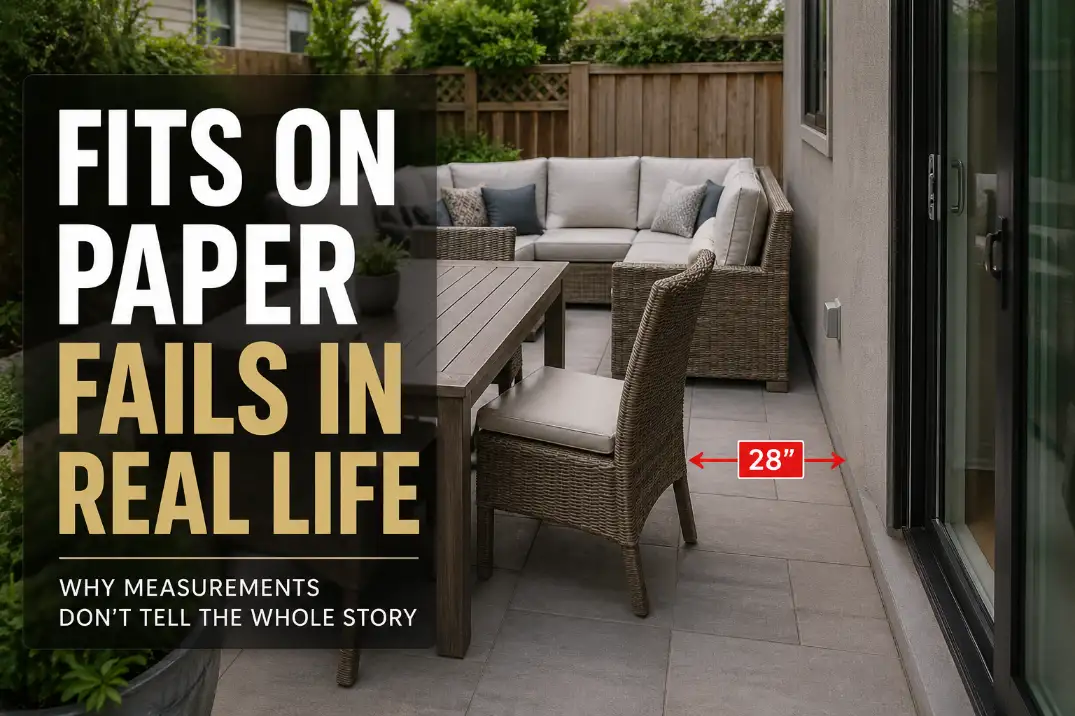
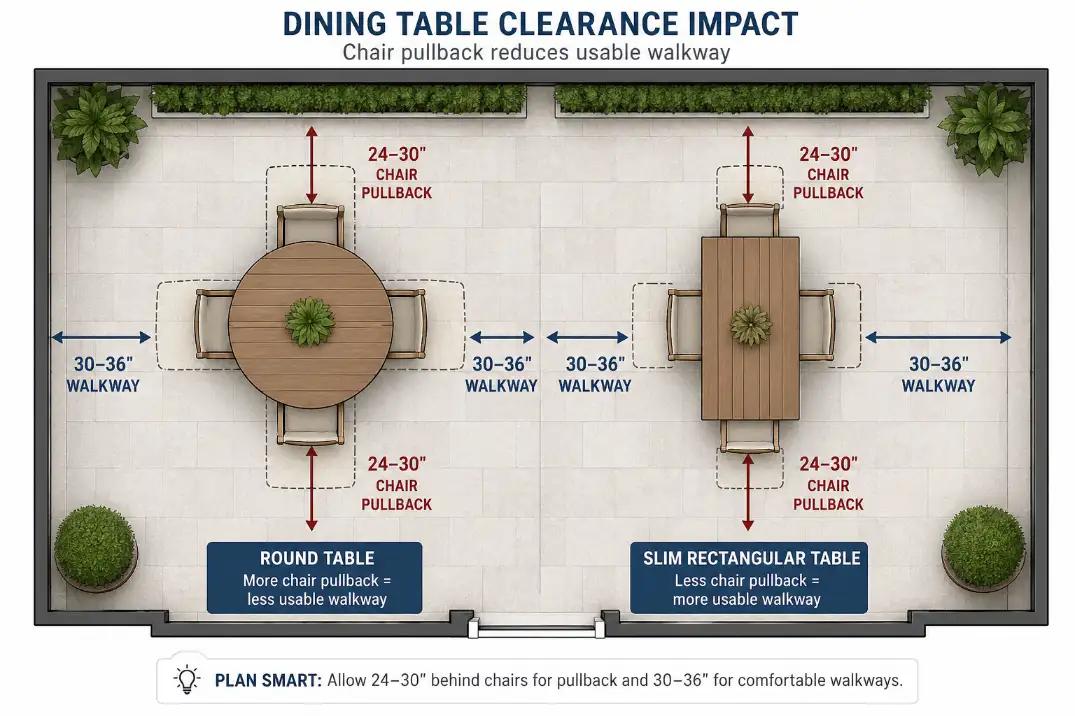
Small backyard patio furniture mistakes usually happen when people measure the furniture, not the behavior around it. A table may fit inside the patio edges, but the chairs still need 24 to 30 inches to pull back.
A sectional may fit against the fence, but it can still leave less than 30 inches for walking. A grill may have a place to stand, but the lid, side shelf, heat zone, and serving path may all compete with the same narrow strip of space.
The first checks are simple: keep 30 to 36 inches for main walking routes, avoid placing seated chairs directly in door or grill paths, and leave enough open floor that two people are not constantly stepping around each other.
This is different from a patio that only looks visually busy. The real failure is when normal use requires negotiation.
Mistake 1: Measuring the Patio Instead of the Movement
The most common mistake is thinking in floor area instead of movement area. A 10-foot by 10-foot patio has 100 square feet, but not all of that space is usable once chairs slide out, people turn, doors open, and side tables get added.
The furniture footprint is only the first layer
A 42-inch table is not just 42 inches in use. Add chairs, pullback room, and walking space, and the working footprint can approach 8 feet across. A lounge chair that is 36 inches deep may need more like 5 feet of practical depth once someone sits, stretches, and places a drink nearby.
That is why small patios often look fine when staged and fail during dinner. Empty furniture sits still. People do not.
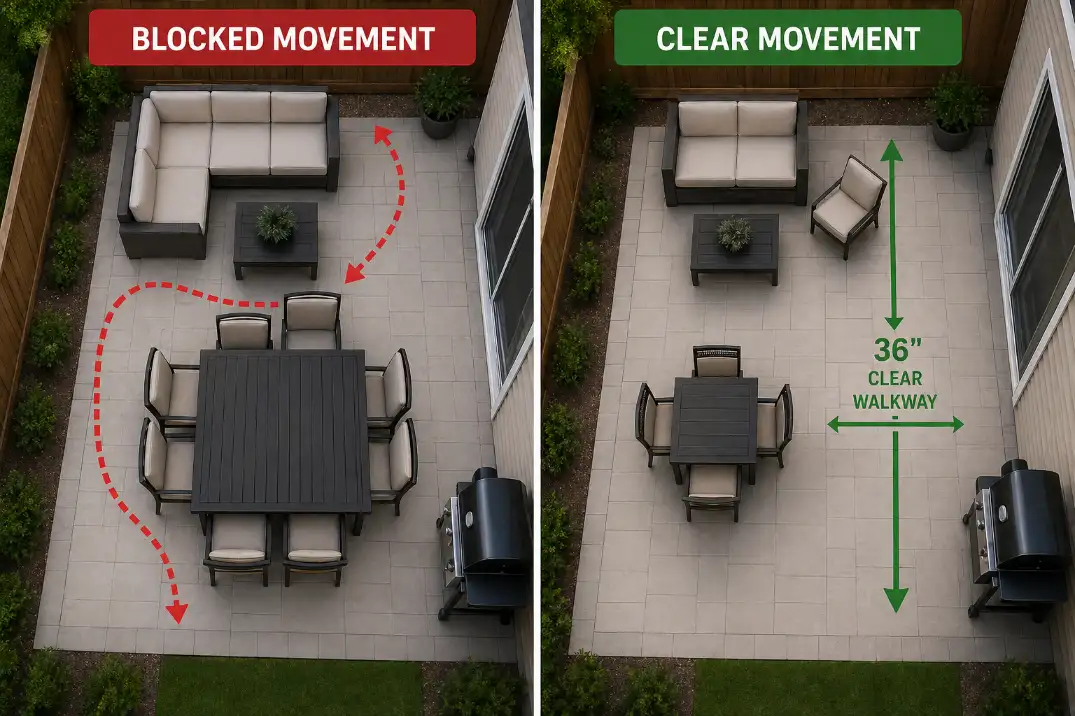
If the patio is close to 10 feet by 10 feet, the safest starting point is not a full conversation set. It is one clear anchor use. A compact layout guide like What Outdoor Furniture Actually Fits on a 10×10 Patio helps because the limiting factor is usually clearance, not square footage.
The 24-hour tape test is better than guessing
Tape the footprint of the largest piece on the patio and leave it there for a full day. Walk to the grill. Open the back door. Carry a plate outside. Pull an imaginary chair back. If the taped shape feels annoying before the furniture arrives, the real piece will feel worse.
Pro Tip: Test the patio during the time you actually use it. Evening grilling, weekend breakfast, and afternoon lounging create different traffic patterns.
Mistake 2: Buying Deep Seating Before Choosing the Patio’s Main Job
Deep seating is comfortable, but in a small backyard it should be treated as a commitment. Many outdoor lounge chairs are 34 to 40 inches deep. Some sectionals are deeper than indoor sofas. Once that depth enters a compact patio, dining, grilling, and walking routes all have to adjust around it.
Comfort can become the space problem
The issue is not just the cushion depth. It is the legroom in front, the side table beside it, the angle people use to sit down, and the route around the furniture. A deep chair may be comfortable for one person and still make the patio harder for everyone else to use.
This is where people often overestimate how often they will lounge and underestimate how often they will pass through. If the patio is used daily for a back door, dog route, grill route, or access to the yard, deep seating must not control the best path.
For patios that need both comfort and movement, Why Deep Seating Makes Small Patios Harder to Use explains why furniture depth can matter more than the number of seats.
Mistake 3: Choosing the Wrong Table Shape for the Patio Shape
A dining table can make a small backyard feel organized or trapped. The mistake is choosing the table shape you like before considering the patio shape.
Round tables soften corners but need width
A round table works well when people need to move around it from several sides. It avoids hard corners and often feels friendlier in square patios. But a 48-inch round table with chairs can still need close to 8 feet of working width once the chairs are occupied.
Rectangular tables save space only when aligned correctly
A slim rectangular table can work beautifully along a fence, wall, or long patio edge. It becomes a problem when it cuts across the narrow direction of the patio. Then every chair becomes a pinch point.
The better decision is not “round versus rectangular” in general. It is whether the shape supports the patio’s natural path. If the main walkway runs from the back door to the yard, the table should not sit across that line like a barricade.
For a deeper breakdown, Best Patio Table Shapes for Small Spaces is more useful than choosing by style alone.
Mistake 4: Using Too Many Separate Pieces
Small backyards rarely get ruined by one side table. They get crowded by many reasonable pieces added one at a time: two lounge chairs, a coffee table, a storage box, an umbrella base, planters, a serving cart, and extra folding chairs “just in case.”
Accessories become furniture in tight spaces
A 20-inch side table may sound harmless. But if it sits in the only turning area, it matters as much as a chair. A storage box near the back door may be useful but still become the thing everyone steps around. An umbrella base can steal the exact spot where chair legs need to move.
This is where a common fix wastes time: buying slimmer decor while keeping the oversized anchor pieces. If the sectional or table already consumes the patio, smaller accessories will not rescue the layout. Remove one low-use piece first. If the patio immediately works better, the issue was crowding, not styling.
Mistake 5: Treating Chairs, Benches, and Sectionals as Equal
They are not equal in small backyards. Chairs are flexible but need pullback space. Benches reduce visual clutter but can make the middle seat awkward. Sectionals create comfort but lock the layout into one direction.
| Mistake | What it looks like | Better move |
|---|---|---|
| Too many chairs | Seats fit when pushed in but block paths when used | Use fewer chairs or one bench |
| Oversized sectional | One corner controls the whole patio | Choose two lounge chairs or a smaller loveseat |
| Wrong table shape | Corners or chair arcs interrupt movement | Match table shape to patio shape |
| Heavy accessories | Storage, planters, and bases fill turning space | Remove low-use pieces first |
| Matching set overload | Every piece has the same bulk and footprint | Mix one anchor piece with lighter support pieces |
Matching is often less useful than flexibility
A matching set looks finished in a showroom. A flexible mix works better in a small backyard. Two lighter chairs and a compact table may outperform a full four-piece set because they can shift when guests arrive, the grill is used, or shade changes during the day.
This is also where people overestimate symmetry. A perfectly balanced arrangement that blocks a door is still a poor layout. A slightly uneven layout with a clean path will feel better every day.
If seating choice is the sticking point, Bench Seating vs Patio Chairs helps clarify where benches actually save space and where they simply shift the inconvenience.
The Mistake Most Guides Underplay: Visual Weight
Not every small-patio problem is physical. Some patios work well enough on paper but still feel cramped because the furniture visually closes in the space.
High backs and dark frames shrink the view
Tall chair backs, thick arms, dark blocky frames, and large cushion volumes can make a small patio feel boxed in. This matters most when the patio is viewed from the house.
If the first thing you see through the sliding door is the back of a bulky sofa, the yard feels smaller before anyone even steps outside.
Low-profile furniture, open-frame chairs, lighter cushions, and fewer tall objects near the main sightline can make the same patio feel calmer without changing the footprint.
This does not mean every piece has to be pale or delicate. It means the heaviest visual object should not sit where it cuts off the view.
Broken surfaces make the patio feel busier
A small patio with pavers, an outdoor rug, planter bases, furniture legs, and storage boxes can start to look fragmented. In humid Florida yards, mildew-darkened cushions can add visual heaviness.
In dry Arizona sun, faded fabrics and dusty dark frames can make furniture look harsher faster. In northern states, bulky all-weather storage may be useful during freeze-thaw seasons, but it still needs a place that does not crowd the main use area.
Visual weight is not more important than clearance. But once movement works, it is often the next reason a patio still feels smaller than it should.
Mistake 6: Ignoring the Grill, Door, Gate, and Storage Routes
A patio layout that blocks a route used every day will become irritating quickly. The common trouble spots are the back door, grill, gate, hose bib, trash path, storage box, and steps to the lawn.
The route matters more than the rare guest
Many people design for six guests they host twice a year, then live every day with a chair blocking the door. That is backward. A small backyard should prioritize the routes used weekly or daily.
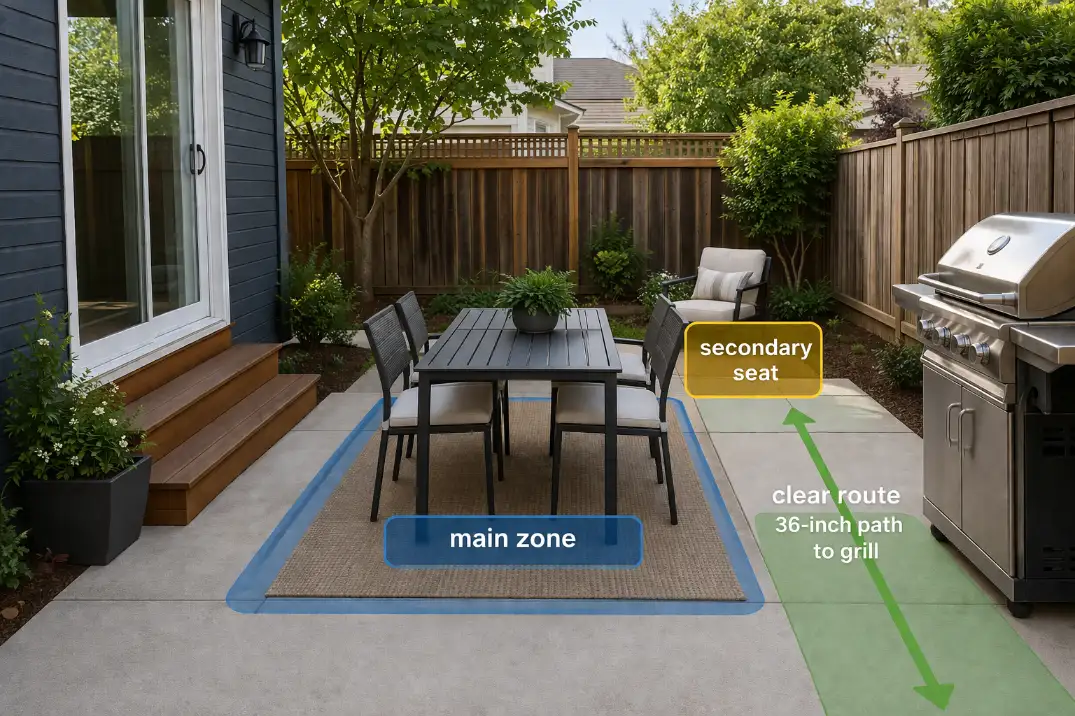
Keep roughly 3 feet of working room where people carry food, move around a grill, or pass through with tools. Around a grill, account for lid swing, side shelf use, heat clearance, and the cook’s stance.
A chair that looks fine when empty can become a real conflict when someone is seated near the cooking zone.
For patios that combine eating and relaxing, How to Choose Outdoor Seating for a Patio Used for Dining and Lounging fits naturally because mixed-use patios need hierarchy more than they need extra furniture.
Quick Diagnostic Checklist
Use this before replacing anything:
- Is the main walking route at least 30 inches wide?
- Can dining chairs pull back 24 to 30 inches without blocking a door?
- Does one oversized piece force every other piece into leftover space?
- Can someone reach the grill, gate, or yard without moving furniture?
- Are accessories occupying the only open corners?
- Does the patio have one obvious main purpose?
- Would removing one item improve the layout more than buying another?
What Actually Fixes the Problem
The best fix is usually subtraction before replacement. Remove the least-used piece for one week. If the patio instantly feels easier to use, the problem was too many objects, not the wrong style.
After that, resize the anchor piece. In most small backyards, the anchor is the dining table, sectional, or grill zone. Do not start with pillows, planters, or decorative storage. Those changes may make the patio prettier, but they rarely solve blocked movement.
A healthier small patio can look slightly underfilled when empty. That is not a flaw. It means the space is ready for people. A failing layout often looks complete when empty and cramped the moment anyone sits down.
For broader official guidance on outdoor grill safety, see the U.S. Fire Administration.