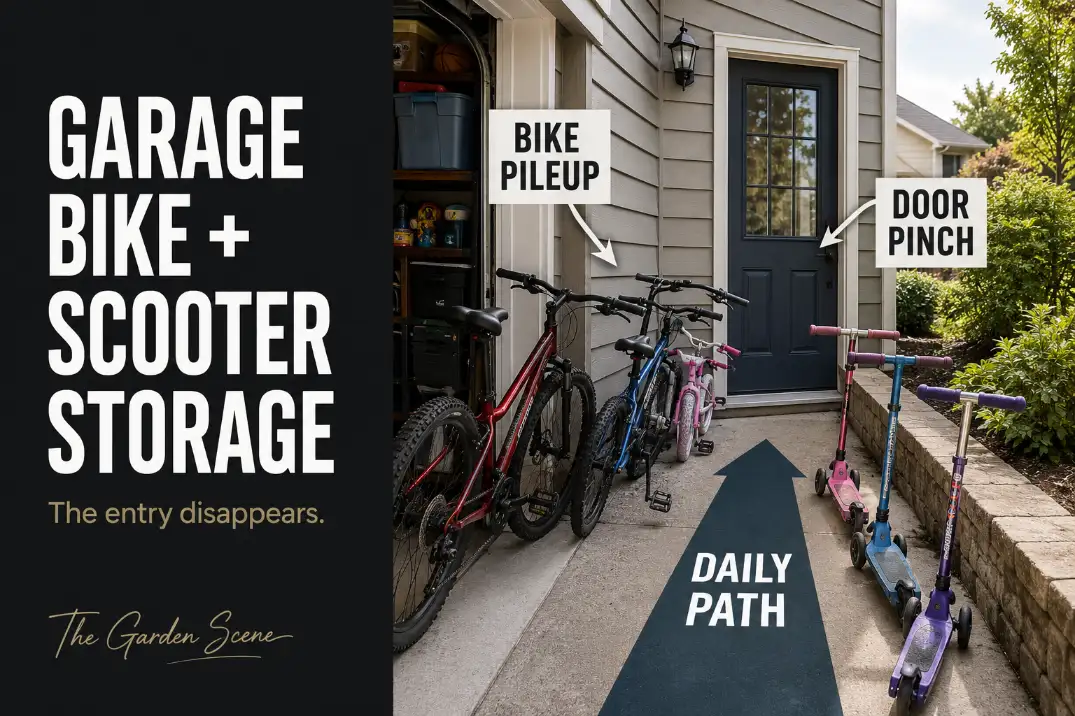
Outdoor bike and scooter storage near the garage should protect the entry path before it organizes the gear. The best setup keeps a 36-inch clear lane to the door, gives daily scooters a low roll-in spot, moves adult bikes into a wall or side-bay zone, and keeps locks and chargers out of the walking line.
The common mistake is treating the garage edge as leftover space. It is not. It is usually a traffic corridor for school runs, groceries, trash day, yard access, and quick exits.
A rack can make bikes look neater while still creating the same problem: handlebars, pedals, kickstands, and scooter decks stealing 8–18 inches from a route that already feels tight.
This is different from general backyard storage because the garage area has doors, cars, charging cords, wet tires, and kids using the same space several times a day.
Bikes Create Daily Clutter
Frequency matters more than gear count
Bike and scooter clutter usually starts because the equipment is used in short bursts. One child rides a scooter before school.
Another leaves a bike near the side door after practice. An adult leans a bike against the garage because it will “only be there for a minute.” By the end of the week, the temporary parking spot becomes the storage system.
That is why the first decision is not which rack looks best. It is which items are used daily, which are used weekly, and which are seasonal. A scooter used twice a day deserves easier access than an adult bike used twice a month.
A good garage-side setup lets the most-used scooter roll out in less than 10 seconds without moving another bike. If a child has to lift, angle, or pull out two other items first, the system will fail quickly.
Clutter is a movement problem
The visible symptom is a messy pile. The real mechanism is lost access. Adult bike handlebars often project 24–30 inches from the frame, and pedals can catch bags, pant legs, stroller wheels, or a trash cart. Scooter decks look smaller, but they create low trip points near the door.
Garage-side bike storage has more pressure than ordinary outdoor storage because the same few feet may need to handle a side door, garage wall, parked car, driveway edge, and family gear.
A neat row is not automatically a working row. If people still turn sideways to reach the door, the storage has only made the clutter look more intentional.
Keep the Door Path Clear
Plan from the walking line outward
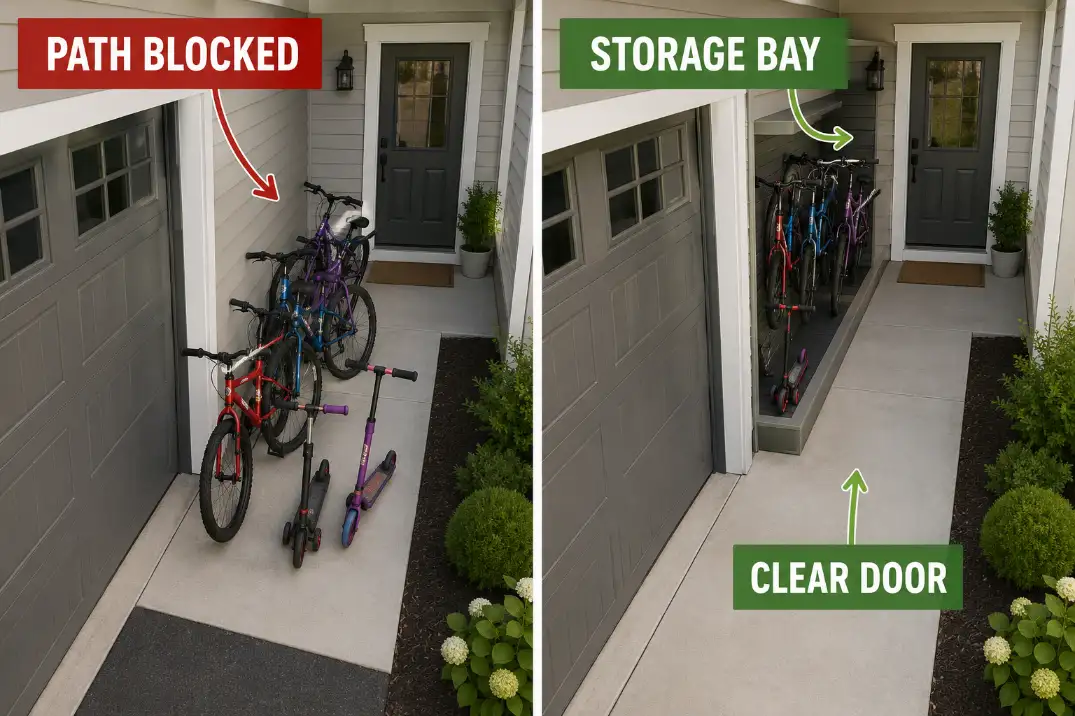
The door path should be marked before any rack, hook, cabinet, or storage shed is chosen. Open the garage-to-house door, side door, or pedestrian garage door fully.
Then stand where a person actually walks with groceries, a backpack, or a trash bag. That movement area is the protected zone.
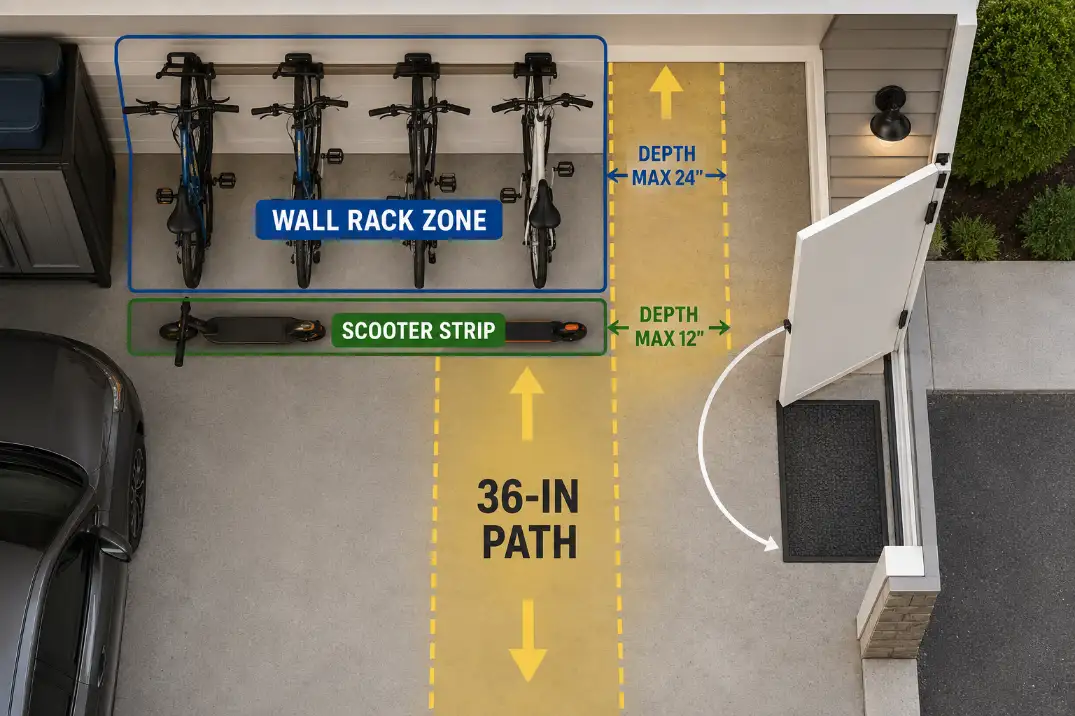
For a daily garage entry, 36 inches is the practical minimum. A 42-inch lane works better where people pass with sports bags, folded chairs, strollers, or trash cans.
The healthier setup keeps that width even when everything is parked. The failing setup looks fine when the bikes are straight, then loses space as soon as a handlebar turns outward.
If the garage route connects to a patio, side yard, or backyard, the same access logic used in Side Door Walkway Between Garage and Patio applies here: movement stays separate from storage. The bike area can sit close to the garage, but it should not become part of the doorway.
The wrong rack only organizes the blockage
A freestanding rack often looks like the easiest fix, but it can waste money if it sits in the same traffic line. It may hold bikes upright and still block the door, the car door, or the path to the side yard.
The better sequence is simple: clear lane first, storage bay second, product third. If the movement line is not protected, the product choice will not solve the daily frustration.
Pro Tip: Tape a 36-inch path on the floor or pavement for one week before buying storage. If bikes keep crossing the tape, the planned storage zone is too close to the entry.
Wall Storage Without Crowding
Vertical hooks save floor space but need pull-down room
Wall storage can be excellent near the garage, especially for adult bikes that are not used every day. But vertical hooks are often overestimated. They save floor width only if the pull-down space does not overlap the entry path.
A full-size adult bike may need about 72–84 inches of wall height and roughly 30–36 inches of clear space in front of the hook for lifting and lowering. If that working space lands inside the door route, the bike is still crowding the garage entry, just in a different position.
Vertical wall storage is usually better for adult bikes, backup bikes, and seasonal bikes. It is usually worse for a child’s daily scooter or small bike. A storage system that requires adult help every time will not stay organized.
Horizontal racks are easier but wider
Horizontal wall racks reduce lifting, but they need wall length. Two adult bikes can claim 5–6 feet of usable wall once handlebars, pedals, and spacing are considered.
That can work well on a side wall away from the entry, but it becomes frustrating beside a freezer, tool bench, trash-bin route, or side door.
The wall also has to support the load. Hooks and wall racks should be mounted into solid framing or a properly installed support board, not just drywall or thin siding. The rack should not wobble when a bike is lifted off at an angle.
If the main problem is not just clutter but choosing the right bike storage type for a tight garage-side route, the next decision is the storage category itself.
A low rack, wall-mounted setup, or narrow outdoor bike storage solution should be chosen by who uses it daily, how much lifting is realistic, and whether the entry lane stays open.
For that product-level decision, Outdoor Bike Storage for Entry Paths is the better next step.
The key is not choosing the largest storage device. It is choosing the one that keeps the bike depth, handlebar swing, kid access, and daily door movement from competing for the same space.
Weather and Theft Concerns
Covered does not always mean dry
A garage wall, eave, or narrow overhang may reduce rain exposure, but it does not automatically create dry storage. Wind-driven rain can still hit bikes from the side, and wet tires can drip for 30–90 minutes after a ride. In humid or coastal areas, repeated dampness matters more than one heavy storm.
The mistake is parking bikes under cover but tight against a wall, mulch edge, or soil strip. That traps moisture around tires, chains, helmets, and fabric scooter bags.
Leave an air gap where possible, keep wet gear off constantly damp ground, and avoid sealing helmets or pads inside a closed box before they dry.
The mess pattern is similar to Front Entry Mud and Dirt Control: the problem usually comes from repeated daily transfer, not one dramatic muddy day.
Locking changes once gear stays outside
A bike left near the garage for 20 minutes while kids come inside is not the same risk as a bike left visible from the street overnight. Once bikes or scooters stay outside for 8 or more hours, a basic freestanding rack is no longer enough.
Use a fixed lock point attached to a wall, post, or ground anchor. The lock should pass through the bike frame, not only the front wheel.
If the storage bay is visible from the street, place the most valuable bike farthest from the open edge and keep the lock point easy to reach without pulling bikes into the walking lane.
If the gear stays outside overnight, treat the setup as weather-and-security storage, not simple garage organization.
Charging belongs outside the doorway
E-bikes and e-scooters add one more decision. Charging should not force cords across the garage entry, side door, or driveway path. A charger placed “temporarily” across a 36-inch route turns into a trip line, especially at night.
Do not build the storage plan around the nearest outlet if that outlet makes the route unsafe. The better layout keeps the charging spot against the storage bay, off the walking line, and away from wet tire drip.
Use the supplied charger, avoid unattended overnight charging, and keep the charging area dry enough that wet tires, puddles, or damp gear are not sharing the same corner.
The charger, lock point, and daily roll-in zone should work together instead of competing for the same space.
Kids Need Easy Access
Low storage beats perfect storage
Kids need storage they can use without negotiation. That usually means low rails, open slots, a shallow roll-in strip, or a clearly marked scooter bay.
The more perfect the system looks to adults, the more likely it is to fail if it requires lifting, rotating handlebars, or moving another bike first.
For family use, the most-used scooter should get the easiest slot even if that makes the layout less visually balanced. Practical storage is not always symmetrical. If the child’s daily scooter is harder to reach than the adult weekend bike, the storage plan is upside down.
A useful test is simple: can the child return the scooter to the same spot in under 10 seconds without help? If not, the system depends on adult enforcement rather than actual usability.
Plan for seasonal overflow
Garage-side storage often looks worse in summer because bikes, scooters, helmets, sports bags, pool gear, and yard toys arrive at once.
In northern winters, the same area may collect slush, salt, and wet tires. The stored gear can expand noticeably when seasonal items start sharing the same garage edge.
That does not always mean the permanent rack should get bigger. Sometimes the better answer is a small seasonal overflow zone that can disappear later.
Temporary Outdoor Storage Ideas is useful when the problem is short-term gear, not a year-round storage shortage.
The limit is time. If a temporary bin, cart, or rack stays in place for more than one full season, it should be judged like permanent storage. It still needs a boundary, a dry zone, and a clear relationship to the entry path.
Organized Without Blocking Entry
Build a storage bay, not a parking row
The strongest garage-adjacent setup is usually a storage bay with a defined edge. That bay might be a wall rack zone, a low scooter strip, a lockable outside cabinet, or a covered side strip. What matters is that the bay has a boundary and does not leak into the entry route.
A working family bay often needs about 30–36 inches of depth for scooters and angled bikes, plus 6–8 feet of length if several items are stored together.
That may sound large, but it usually takes less usable space than scattered bikes across the door, garage wall, driveway edge, and side path.
This is the same reason broader garage-side utility areas work best when they are zoned instead of casually filled.
If bikes, bins, tools, and backyard gear are all competing near the same door, Garage Backyard Utility Zone Ideas can help separate storage from access before the area becomes a permanent pileup.
| Storage option | Best use | Clearance test | Weak point |
|---|---|---|---|
| Low floor rack | Kids’ bikes and daily scooters | Child can roll in without lifting | Can spread without a clear edge |
| Vertical wall hooks | Adult or seasonal bikes | 30–36 inches of pull-down room stays clear | Hard for kids and heavy bikes |
| Horizontal wall rack | Frequent adult bike use | Handlebars stay outside the door path | Needs long wall space |
| Lockable cabinet | Street-visible or higher-theft areas | Door opens without blocking entry | Can trap damp gear |
| Covered side bay | Wet climates and daily use | Drip zone stays off the walking line | Needs airflow |
| Freestanding rack | Flexible family storage | Rack stays outside the 36-inch route | Often migrates over time |
When the standard fix stops working
Wall hooks stop making sense when the people using the bikes cannot lift them. A freestanding rack stops making sense when it keeps drifting into the doorway.
A cabinet stops making sense when damp helmets, chargers, and muddy tires all get sealed into the same box.
The warning signs are easy to read: more than four bikes, two or more scooters, an everyday stroller, a tight side door, or a garage wall already shared with bins and tools. At that point, another hook is not the main fix. The storage needs zoning.
Put daily kid gear low. Move adult or seasonal bikes higher or farther back. Keep wet tires out of the step-in area. Add a fixed lock point where it does not pull bikes into the route.
Keep charging off the floor path. The result may look less like a catalog rack, but it will work better on a normal weekday.
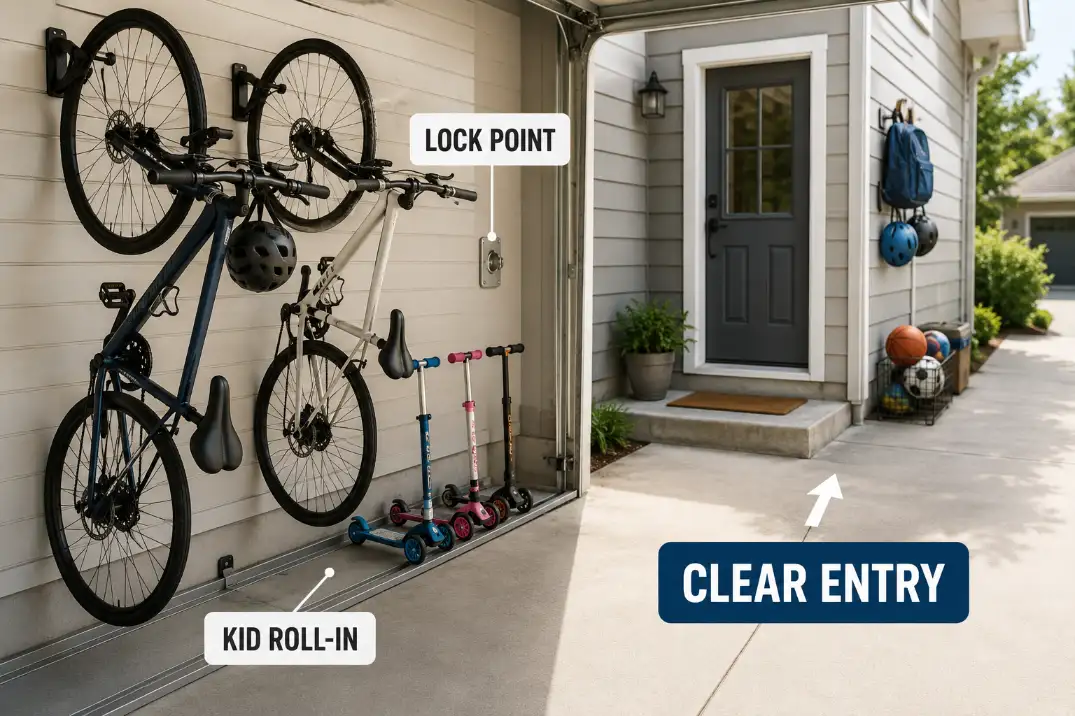
The best outdoor bike and scooter storage near the garage is not the biggest rack or the most hidden cabinet. It is the setup that keeps the daily route readable after everyone has actually used it.
Protect the 36-inch path first, give kids a low return point, keep adult bikes out of the entry line, and treat weather, locking, and charging as part of the layout instead of separate afterthoughts.
For broader bike, e-bike, and scooter safety context, see the U.S. Consumer Product Safety Commission micromobility guidance.