Quick Solution Summary
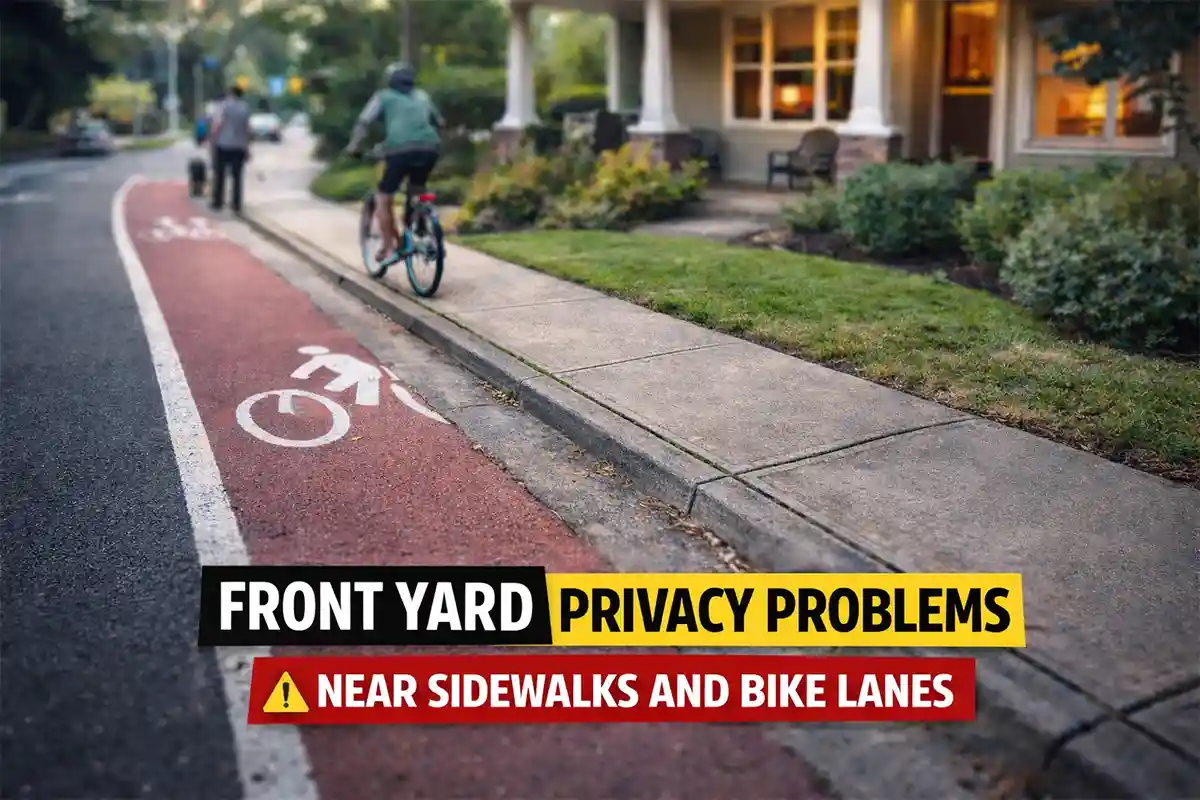
Front yard privacy problems often appear in neighborhoods where sidewalks and bike lanes run continuously along residential streets. Unlike car traffic that moves quickly and stays farther away, pedestrians and cyclists travel closer to homes and at slower speeds, which makes yards and windows far more visible.
Most suburban homes have front setbacks between 15 and 30 feet, and when sidewalks run only 5–10 feet from the property line, people walking or cycling may pass within 15–20 feet of the house itself. At this distance, normal eye-level sightlines can easily reach porches, patios, and living room windows.
The most effective solution is rarely a fence. Many neighborhoods restrict them in front yards anyway. Instead, privacy is usually restored by layered landscaping buffers, combining shrubs, ornamental grasses, and small trees positioned between the sidewalk and the house. Properly designed layers can reduce direct sightlines by 60–80% while still maintaining curb appeal.
This guide explains why sidewalk and bike lane traffic creates privacy problems and how homeowners can design landscape buffers that restore a sense of separation from the street.
Quick Diagnostic Checklist
You may have a sidewalk-related privacy issue if several of these conditions apply:
-
Sidewalk sits within 6–10 feet of your property line
-
Pedestrians pass within 15–20 feet of your front windows
-
Cyclists regularly slow near intersections or crossings
-
Your yard contains mostly lawn or low plants under 24 inches
-
Front porch seating is visible from the sidewalk
-
Interior lighting at night makes windows visible from outside
If three or more of these conditions exist, your yard likely lacks a visual privacy buffer between public space and the house.
Why Sidewalk and Bike Lane Traffic Reduces Privacy
Unlike typical residential streets, sidewalks and bike lanes create continuous slow-moving activity close to homes.
Three environmental factors usually drive the privacy problem.
Eye-Level Sightlines
Most pedestrians stand between 5 and 6 feet tall, placing their sightline directly toward residential window heights, which typically begin 30–42 inches above ground.
If plants are shorter than 3 feet, they rarely block this line of sight.
Slow Movement and Observation
Pedestrians and cyclists travel much slower than vehicles:
| Traffic Type | Typical Speed | Visibility Impact |
|---|---|---|
| Cars | 25–35 mph | Minimal observation |
| Cyclists | 10–18 mph | Moderate observation |
| Pedestrians | 2–4 mph | High observation |
Slower movement increases the chance that people naturally look into yards, especially when approaching:
-
intersections
-
crosswalks
-
neighborhood trails
-
bus stops
Homes experiencing similar exposure often share challenges described in Front Yard Privacy Problems on Busy Streets, where continuous activity keeps outdoor spaces visible throughout the day.
Night Lighting Contrast
After sunset, privacy problems can become even more noticeable. Interior lighting typically ranges from 300–500 lux, while street lighting may be 10–20 lux.
This contrast makes interior spaces highly visible from sidewalks when window treatments or landscape buffers are absent.
Landscape Designs That Often Fail in These Locations
Many front yards prioritize open curb appeal instead of functional screening.
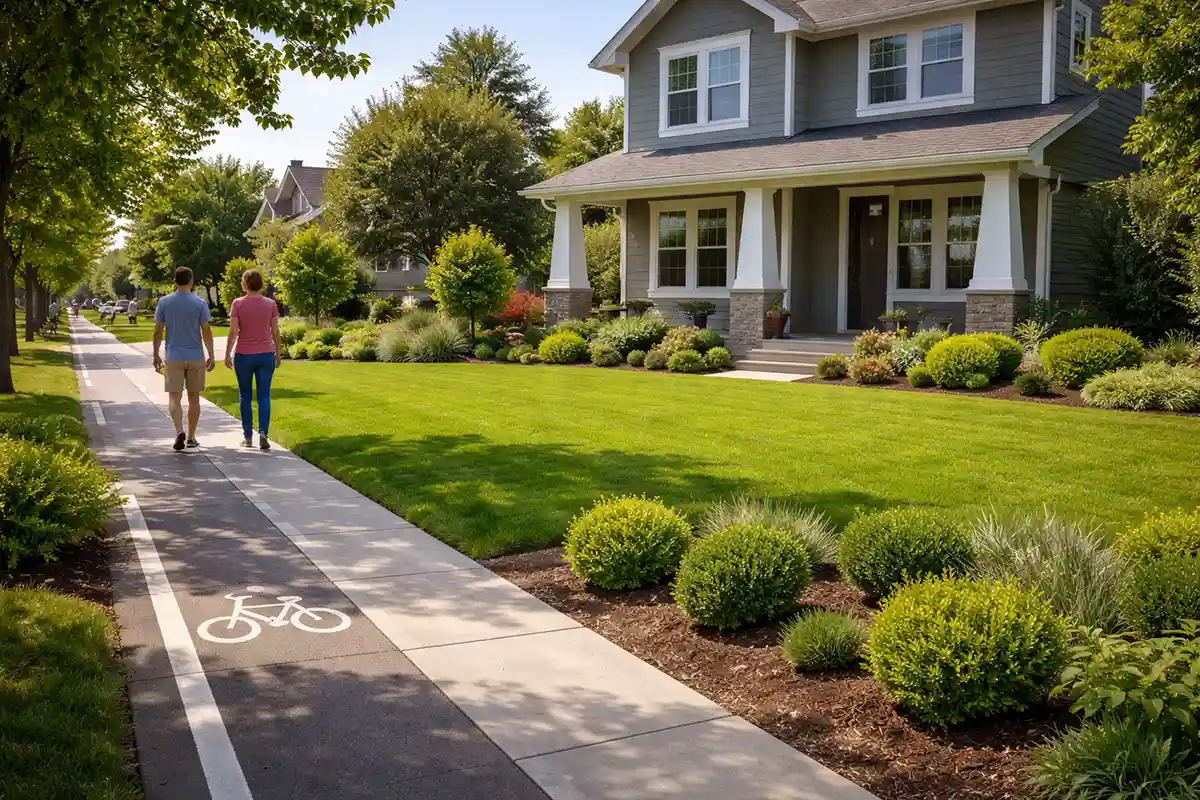
Common examples include:
| Design Choice | Privacy Impact | Reason |
|---|---|---|
| Open lawn to sidewalk | Very low | No visual barrier |
| Low foundation plants | Minimal | Too short to block sightlines |
| Single ornamental tree | Limited | Canopy begins above eye level |
| Widely spaced shrubs | Moderate | Gaps allow visibility |
| Decorative edging beds | Minimal | Too shallow to screen views |
These designs look clean and attractive but rarely address sightline geometry between pedestrians and windows.
Several of these layout mistakes are also discussed in Front Yard Landscaping Mistakes That Lower Home Value, where landscape choices prioritize aesthetics but ignore functional design.
Distance-Based Privacy Solutions
The distance between the sidewalk and the house strongly influences which privacy strategy works best.
| Distance From Sidewalk | Privacy Difficulty | Typical Landscape Solution |
|---|---|---|
| 10–15 ft | Very high | Dense shrub hedge + grasses |
| 15–25 ft | High | Layered shrubs and small trees |
| 25–35 ft | Moderate | Ornamental trees and clusters |
| 35–45 ft | Low | Optional screening or partial buffer |
Short setbacks require denser planting because pedestrians remain within direct visual range of windows.
In contrast, homes with deeper yards can rely more on trees and spacing.
Step-by-Step Privacy Layout Blueprint
A layered landscape buffer is usually the most effective way to block street-level views.
Step 1: Measure Distance From Sidewalk
Measure the space between the sidewalk and the front windows.
Most effective buffers begin 5–8 feet inside the property line.
Step 2: Install the Shrub Layer
Plant evergreen shrubs reaching 3–5 feet tall. Spacing shrubs about 30–36 inches apart creates a continuous visual barrier within a few growing seasons.
Step 3: Add a Semi-Transparent Layer
Ornamental grasses or tall perennials planted 18–24 inches in front of shrubs create movement and soften the appearance of the hedge.
Step 4: Add Vertical Screening
Small ornamental trees spaced 10–15 feet apart break long sightlines from cyclists and pedestrians further down the street.
Step 5: Shift Activity Zones
Move seating areas or porch furniture 5–10 feet deeper into the yard whenever possible.
Homes without fences often rely on these techniques, similar to the approaches discussed in Front Yard Landscaping for Privacy Without Fences.
Example Privacy Buffer Layout
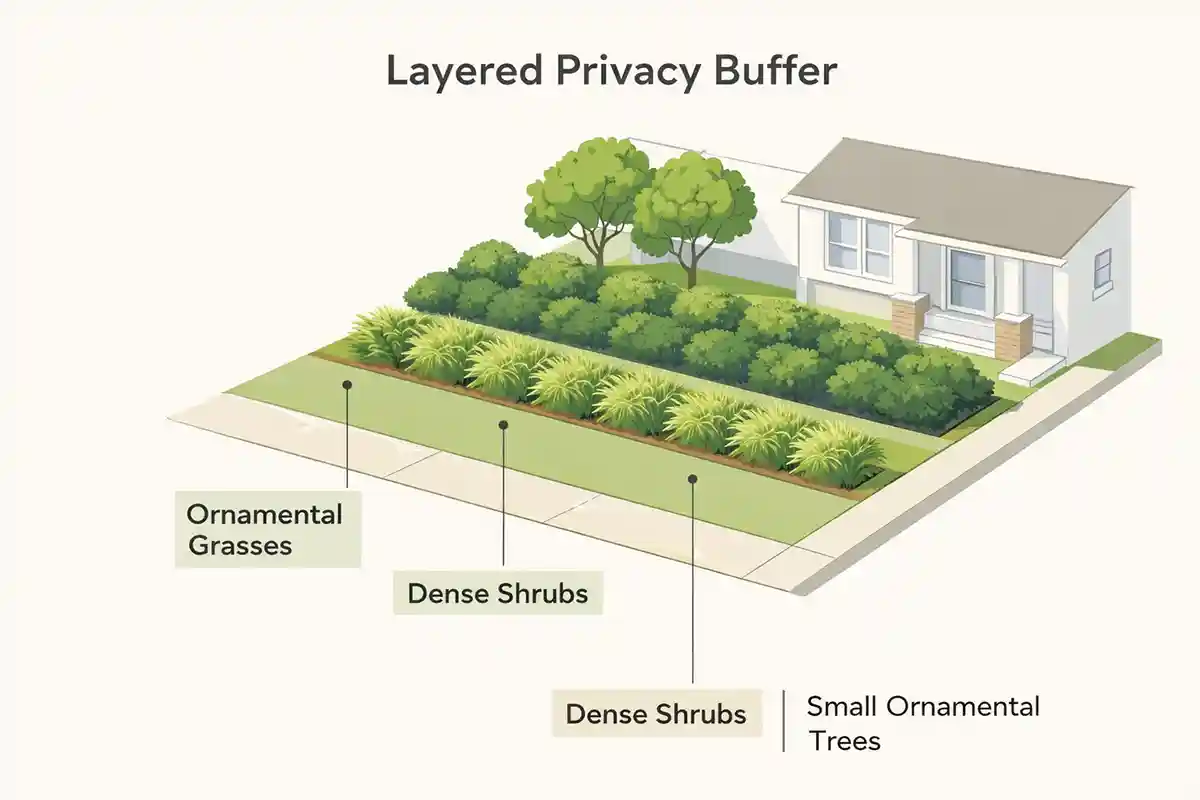
Typical layout sequence:
↓
Ornamental grasses (4–6 ft height)
↓
Evergreen shrub hedge (3–5 ft height)
↓
Small ornamental trees (12–18 ft height)
↓
Front porch or windows
This layered approach interrupts multiple sightlines simultaneously and typically improves privacy by 50–80% depending on plant density.
Climate Considerations for Privacy Planting
Plant selection should reflect regional climate conditions.
Humid Southeast
In states such as Florida or Georgia, fast-growing shrubs like viburnum or wax myrtle can grow 2–3 feet per year, forming effective screening in 3–4 seasons.
Dry Southwest
Arizona and Nevada landscapes often rely on drought-tolerant species such as Texas ranger or hopseed bush that tolerate summer temperatures above 100°F.
Northern Climates
Regions with winter temperatures below 20°F benefit from evergreen species like arborvitae or juniper that maintain screening year-round.
Proper plant selection also prevents long-term maintenance issues similar to those described in Why Low-Maintenance Backyards Often Become High Maintenance.
Traffic Pattern Factors That Influence Privacy
Privacy problems are often worse depending on neighborhood traffic patterns.
| Traffic Pattern | Impact | Example Scenario |
|---|---|---|
| Commuter cycling routes | High exposure | Morning bike commuters |
| School walking routes | High exposure | Students passing daily |
| Recreational trails | Moderate | Weekend cyclists |
| Neighborhood sidewalks | Low–moderate | Local dog walkers |
Understanding these patterns helps determine whether a dense buffer or partial screening is necessary.
In locations where sidewalks run extremely close to the house, homeowners often face similar challenges discussed in Front Yard Privacy Problems When the Sidewalk Runs Only a Few Feet From Your Windows.
Privacy Strategy Comparison
| Strategy | Privacy Level | Maintenance | HOA Friendly |
|---|---|---|---|
| Solid fence | Very high | Low | Often restricted |
| Evergreen hedge | High | Moderate | Usually allowed |
| Layered planting | High | Moderate | Highly compatible |
| Ornamental grass buffer | Medium | Low | Allowed |
| Window film | Medium | Very low | Always allowed |
Layered planting tends to offer the best balance between privacy, aesthetics, and neighborhood regulations.
Research Insight on Landscape Buffers
Landscape research from University of Illinois Extension shows that vegetative screening can significantly improve residential comfort and perceived privacy in urban and suburban environments.
https://extension.illinois.edu
Vegetation buffers not only reduce visibility but also soften noise and improve microclimate conditions around outdoor living spaces.
Key Insights
Sidewalks and bike lanes bring people closer to residential properties than typical road traffic. Because pedestrians move slowly and remain near eye level with windows, even attractive front yard landscapes may fail to provide adequate privacy.
The most effective solution is layered planting positioned strategically between the sidewalk and the house. By combining shrubs, ornamental grasses, and small trees at different heights, homeowners can significantly reduce street-level sightlines while preserving curb appeal and neighborhood aesthetics.
Frequently Asked Questions
Are bike lanes worse for privacy than normal streets?
Often yes. Cyclists travel closer to homes than vehicles and slow near intersections, increasing visibility into yards.
How tall should privacy plants be near sidewalks?
Shrubs between 3 and 6 feet tall are usually needed to block pedestrian sightlines effectively.
How long does it take for a privacy hedge to work?
Fast-growing shrubs may provide screening in 2–3 years, while slower species may require 4–6 years.
Do fences work better than landscaping?
Fences provide strong privacy but may violate HOA or municipal regulations in front yards. Landscape buffers are usually more acceptable.