Quick Solution Summary
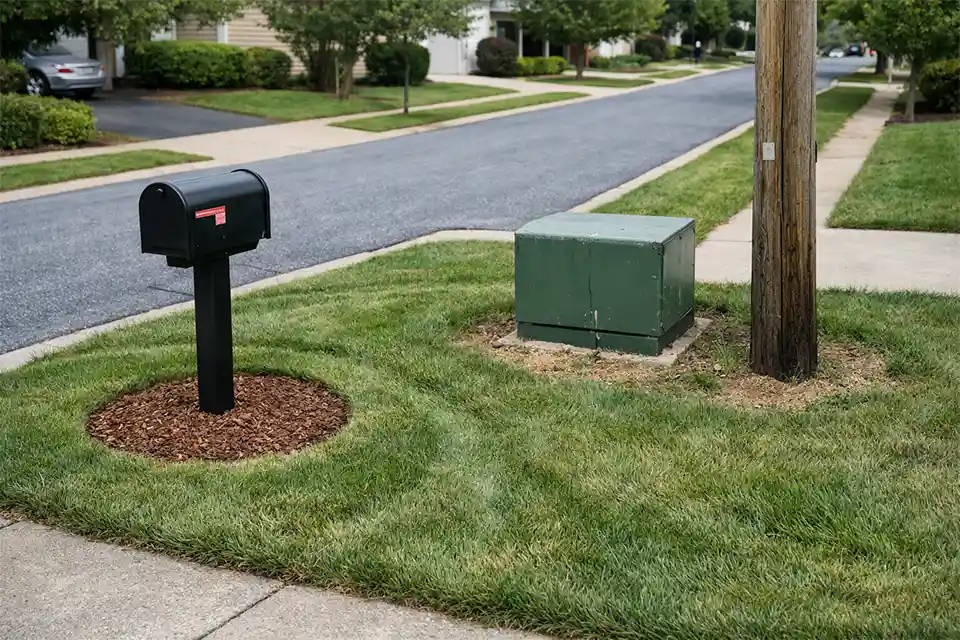
Mailboxes, utility boxes, cable pedestals, and power poles often disrupt front yard lawn layouts, making routine maintenance more difficult. These fixed structures interrupt mowing paths, compact the surrounding soil, and sometimes create heat or shade conditions that weaken turf grass.
A practical solution is to convert the immediate area around each obstacle into a defined landscape buffer zone. Homeowners typically remove grass within a radius of about 18–30 inches and replace it with mulch, decorative gravel, or low-maintenance plants. This prevents mower damage, reduces trimming time, and protects soil structure.
Adjusting mowing direction also helps. Instead of mowing directly toward obstacles, aligning mowing lines parallel to the sidewalk or street reduces awkward turns and improves mowing efficiency.
Climate conditions influence the best solution. In humid states such as Florida, mulch beds help suppress weeds and retain moisture. In dry desert regions like Arizona, decorative gravel rings reduce irrigation demand and prevent soil cracking around infrastructure.
With small design adjustments, these obstacles can shift from frustrating lawn interruptions into intentional landscape features that simplify front yard maintenance.
Why Mailboxes and Utility Equipment Disrupt Lawn Maintenance
Front yard lawns were rarely designed with utility infrastructure in mind. Over time, neighborhoods accumulate service equipment such as electrical transformers, cable pedestals, fiber optic access boxes, and street signage.
Each obstacle interferes with lawn care in several ways.
First, mowing patterns become inefficient. A standard residential mower deck measures roughly 20–24 inches wide. When obstacles interrupt mowing paths every few feet, homeowners must repeatedly stop, reposition, or switch to a string trimmer.
Second, soil compaction frequently develops around utility equipment. Installation crews often place equipment on compacted bases to prevent shifting. Soil compaction can reduce water infiltration by approximately 30–40%, weakening nearby turf roots.
Third, surface temperatures may increase around metal equipment. In sunny climates such as Southern California, metal utility boxes can heat nearby soil to 105–120°F during summer afternoons, which stresses cool-season grasses.
Finally, irrigation coverage may become uneven when sprinkler spray patterns are blocked by these structures.
Similar lawn disruptions occur when underground roots distort lawn edges or sidewalks, a problem explained in detail in Front Yard Maintenance Problems When Tree Roots Push Up Sidewalks and Damage the Lawn.
Quick Diagnostic Checklist
If obstacles are interfering with lawn maintenance, the following symptoms are common:
• Grass thinning or dying in circular areas around posts or boxes
• Frequent mower blade contact with metal or concrete bases
• Uneven mowing stripes caused by repeated turns
• Soil that feels hard or compacted near utility structures
• Persistent weed growth in areas difficult to trim
• Sprinkler spray blocked or redirected by obstacles
If several of these conditions appear, redesigning the lawn layout usually works better than repeatedly reseeding damaged grass.
Common Front Yard Infrastructure Obstacles
Different types of infrastructure affect lawns in different ways.
| Infrastructure Type | Typical Lawn Problem | Additional Impact | Recommended Landscape Fix |
|---|---|---|---|
| Mailbox post | Tight mowing radius | Soil compaction from foot traffic | Circular mulch bed |
| Electrical transformer box | Grass die-off from heat | Technician access needed | Gravel access zone |
| Fiber or cable pedestal | Lawn damage during repairs | Frequent access visits | Decorative planting bed |
| Power pole | Partial shade | Root competition | Shade-tolerant groundcovers |
| Street sign pole | Small mowing obstacle | Trimmer damage | Edging border ring |
Utility providers often require clear working space around equipment. In most U.S. neighborhoods this clearance typically ranges between 24 and 36 inches from the equipment panel.
Landscaping Around Mailboxes: Designs That Simplify Maintenance
Mailbox posts are among the most common lawn obstacles. Because they sit close to the curb, they often interrupt mowing lines and irrigation coverage.
A few simple design strategies help eliminate these problems.
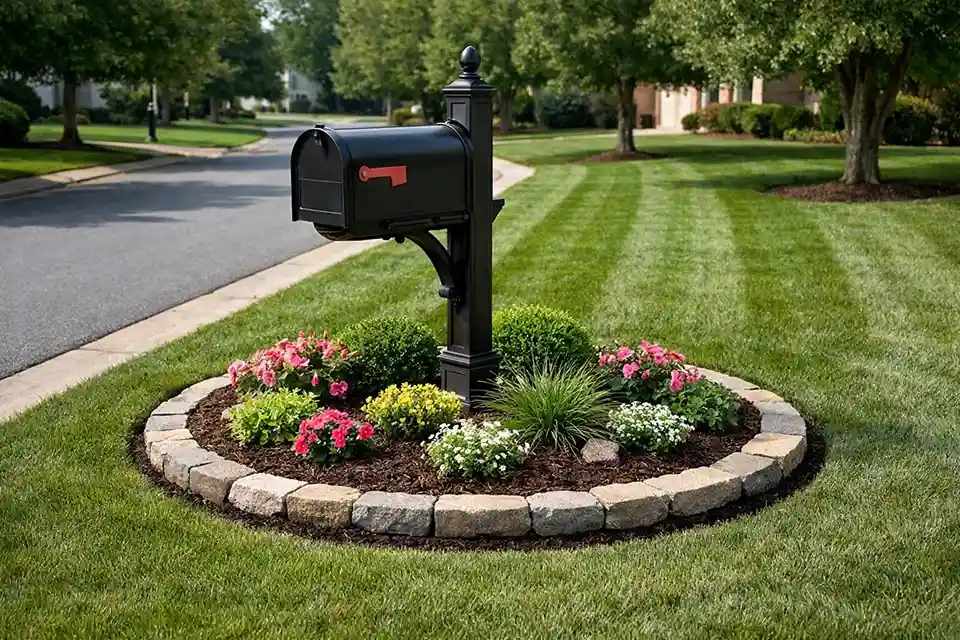
Mailbox mulch island
A circular mulch bed about 24–30 inches wide prevents mower damage and protects grass roots. Decorative stone edging or metal landscape borders keep the bed contained.
Mailbox plant border
Low-growing plants such as creeping thyme, dwarf liriope, or sedum create a soft border that eliminates trimming around the post.
Mailbox gravel ring
In drier regions, decorative gravel provides a low-maintenance solution that reduces irrigation requirements.
These design adjustments also improve curb appeal while making mowing easier.
Landscaping Around Utility Boxes Without Blocking Access
Electrical transformer boxes and telecommunications pedestals require occasional technician access, which means landscaping must remain functional.
A common solution is a gravel access bed around the equipment.
Typical installation includes:
• landscape fabric base layer
• 1.5–2 inches of crushed stone or decorative gravel
• metal edging to separate gravel from turf
This design protects the soil from repeated foot traffic and prevents lawn damage when technicians service the equipment.
In neighborhoods with limited lawn space, obstacles can compound maintenance challenges, particularly in properties where equipment access is already restricted. These issues are explored in Front Yard Maintenance Problems in Small Front Yards With No Space for Lawn Equipment Access.
Environmental Conditions That Make the Problem Worse
Several environmental factors amplify lawn damage near front yard infrastructure.
Soil Compaction
Repeated foot traffic from technicians or pedestrians can compress soil to densities above about 1.6 g/cm³, reducing oxygen availability to grass roots.
Heat Exposure
Metal equipment can radiate heat into the surrounding soil. When soil temperatures exceed roughly 95°F, cool-season grasses such as Kentucky bluegrass slow root growth.
Irrigation Shadowing
Sprinkler heads may spray unevenly when obstacles block water distribution. Areas directly behind utility boxes often receive 15–25% less water.
Snow and Road Maintenance
In northern states such as Minnesota or Michigan, snow plows may push packed snow against mailbox posts or utility markers, damaging nearby turf during winter.
Grass struggles under similar environmental stress when dense tree canopies reduce sunlight, as discussed in Front Yard Grass Not Growing Under Shade Trees.
Lawn Layout Design Strategies for Obstacle-Heavy Front Yards
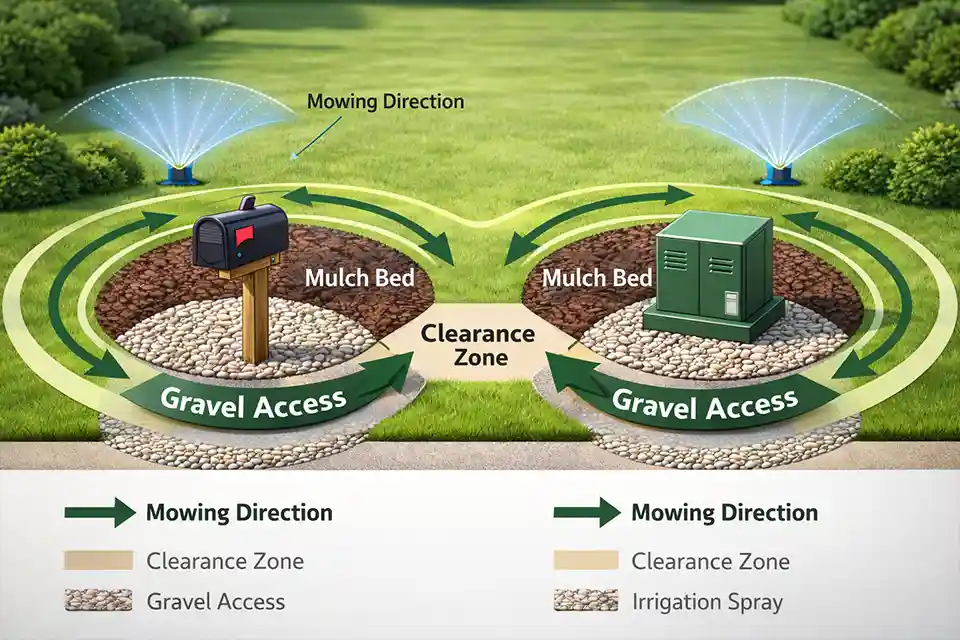
Instead of forcing grass into every small corner, modern landscape design often divides the front yard into functional zones.
These zones might include:
• a sidewalk planting strip
• a mailbox landscape island
• a utility access bed
• a continuous mowing corridor across the lawn
This layout allows mower paths to remain straight and consistent.
Front yards near busy streets often experience additional lawn damage from dust and traffic exposure, which can compound the problems caused by infrastructure obstacles. Those conditions are explained in Front Yard Maintenance Problems Caused by Busy Roads, Dust, and Debris.
Long-Term Landscape Planning for Utility Infrastructure
When designing or renovating a front yard, planning around infrastructure early can prevent years of maintenance frustration.
Effective strategies include:
• leaving a 24–36 inch maintenance clearance around service panels
• avoiding dense shrubs that block technician access
• installing durable groundcovers near equipment
• designing mowing paths that bypass obstacles
In some communities, homeowners associations regulate landscaping changes near mailboxes or service equipment. Those restrictions are discussed in Front Yard Maintenance Problems Caused by HOA Landscaping Restrictions.
Frequently Asked Questions
How far should landscaping be from a utility box?
Most utility providers require 2–3 feet of clear space in front of the access panel. Side clearance requirements vary depending on the type of equipment.
Why does grass die around utility boxes?
Grass may die due to soil compaction, heat radiation from metal equipment, blocked irrigation spray, or repeated foot traffic during maintenance visits.
Is mulch or gravel better around mailbox posts?
Mulch works well in humid climates because it retains moisture and improves soil structure. Gravel is often better in arid climates where water conservation is important.
What plants work well near mailbox landscaping?
Low-growing plants such as creeping thyme, sedum, dwarf liriope, or ornamental grasses tolerate heat and limited soil space around mailbox posts.
Key Takeaways
Mailboxes, utility boxes, and poles often interrupt front yard lawn layouts, making mowing and irrigation more difficult. These structures create localized soil compaction, heat stress, and awkward mowing patterns.
Instead of forcing turf grass into tight spaces around infrastructure, defining maintenance zones with mulch, gravel, or low-growing plants typically produces better results.
By designing landscape buffers and adjusting mowing paths, homeowners can transform disruptive lawn obstacles into organized landscape features that simplify maintenance and improve curb appeal.