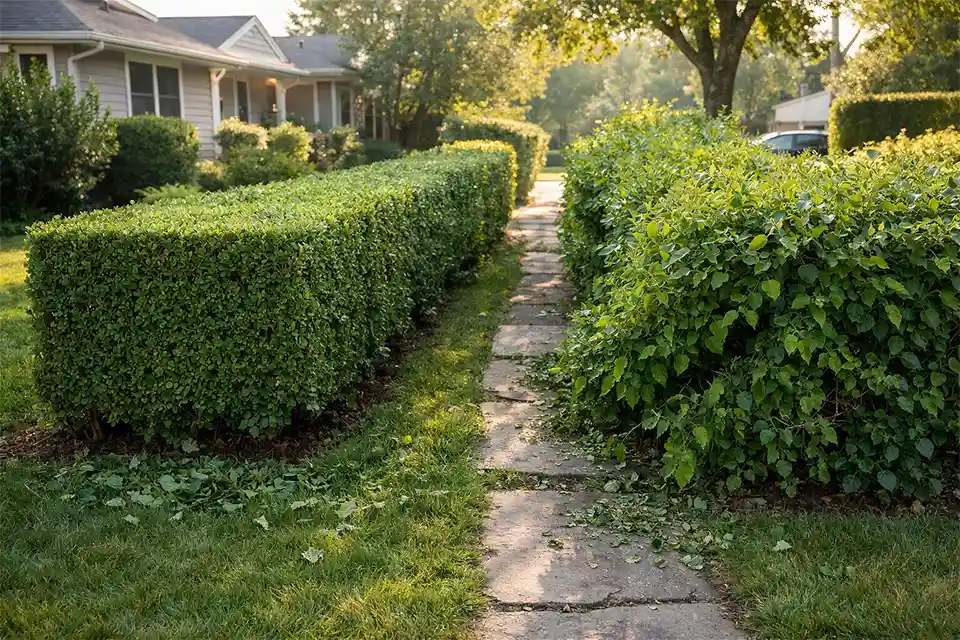
A fast-growing hedge can look like a smart front yard choice at first. It fills in quickly, softens the edge of the property, adds privacy, and makes a newer landscape look established much sooner. The problem is that early success often hides what the plant will demand later. By the time the hedge starts swallowing the walkway, shading the lawn edge, or throwing new growth every few weeks, the issue is no longer just appearance. It has become a maintenance pattern.
That is where many homeowners get stuck. They assume the hedge simply needs more frequent trimming, when the real problem is usually mismatch. The shrub may be too vigorous for the space, too close to the house or driveway, or being maintained in a way that makes the workload heavier every season. A hedge that puts on 12 to 24 inches of growth per year can be manageable in a large side yard, but in a front entry bed or narrow boundary strip, that same growth rate turns routine upkeep into constant correction.
In humid Florida conditions, that growth cycle can feel almost continuous for long stretches of the year. In the Midwest, spring rainfall can trigger a strong flush that quickly pushes hedges out of shape. In colder northern states, the growing window is shorter, but the timing problem is still real because a shrub can put on most of its annual extension before the homeowner is ready to deal with it. In dry parts of Arizona, heat reflected from stucco walls, concrete, or stone can push aggressive top growth even when the plant is under other forms of stress.
The practical fix is not always to prune more often. Sometimes it means reducing the hedge properly and changing the pruning method. Sometimes it means cutting back on irrigation or fertilizer that is driving excessive growth. And sometimes the real fix is admitting that the plant was never right for that location in the first place.
Quick Solution Summary
If a front yard hedge needs constant trimming to stay off the sidewalk, out of the windows, or away from the lawn, the problem is usually bigger than surface overgrowth. Fast-growing hedges become high-maintenance when their mature size, growth rate, and pruning needs do not match the space around them. In many cases, repeated shearing makes the situation worse by creating a dense outer shell that looks neat from the street but hides a woody interior and pushes the shrub outward year after year.
The best first step is to stop treating every hedge problem as a basic trimming problem. Check how much new growth appears in one season, how close the hedge sits to paths or walls, and whether nearby grass is already thinning from shade or root competition. Then decide whether the hedge should be maintained as a formal clipped shape, opened up with selective thinning, or replaced with a slower-growing alternative. That decision matters more than one more weekend of pruning.
A hedge that fits the site can usually be maintained on a predictable schedule. A hedge that constantly outgrows the site creates extra cleanup, blocks access, reduces airflow, and slowly makes the rest of the front yard harder to manage.
Quick Diagnostic Checklist
-
The hedge pushes into the walkway or driveway more than once during the growing season
-
Trimming one part of the hedge exposes bare or woody interior branches
-
Grass near the base is thinning, yellowing, or filling with weeds
-
Mowing and edging around the hedge takes longer every month
-
The shrub looks fine right after trimming but quickly becomes bulky again
-
Cleanup from clippings and fallen leaves is becoming part of every routine yard task
Why This Problem Usually Starts Earlier Than People Think
The front yard rarely becomes difficult all at once. What usually happens first is something smaller and easier to dismiss. The mower starts catching the outer branches. The hedge begins brushing against people using the front walk. The bed line becomes harder to edge cleanly. A window loses a little more light than it did the year before. None of that seems serious on its own.
That is why fast-growing hedges are often misdiagnosed as a simple maintenance nuisance rather than a design problem. A plant can stay green, dense, and technically healthy while still being wrong for the site. In fact, vigorous growth is often what creates the burden. Homeowners tend to assume strong growth means the planting decision was successful, but front yard landscapes are judged as much by manageability as by survival.
This is one reason supposedly easy landscapes often become more demanding over time. What looked like a quick privacy or border solution can end up following the same pattern described in Why Low-Maintenance Front Yards Often Become High-Maintenance. The yard does not fail because the plants die. It becomes difficult because the maintenance rhythm was underestimated from the start.
Fast Growth Is Not the Same Thing as Good Fit
A hedge can grow quickly for several different reasons, and not all of them point to the same solution. Some shrubs are simply vigorous by nature. Others are being pushed by rich soil, long growing seasons, automatic irrigation, or excess nitrogen from lawn feeding. In many front yards, the shrub is effectively being treated like turf: watered often, fed regularly, and clipped on the outside whenever it gets unruly. That combination keeps the hedge looking active while making it harder to control.
The plant choice matters too. Many homeowners buy for appearance at planting time rather than mature size, branching habit, or annual growth rate. A shrub that looks compact in a nursery container may eventually want 6 to 10 feet of width, and the front yard may only have room for half of that once walkways, windows, and lawn edges are accounted for. That is why plant selection matters more than people think, especially in visible areas where shrubs are expected to look tidy year-round. The same planning issue comes up in How to Choose Plants for Front Yard Landscaping.
A privacy hedge also creates a specific kind of trap. People often want quick screening, so they choose plants known for fast fill-in. That works in the short term, but speed usually comes with more pruning pressure later. The result is a front yard screen that gives privacy but demands ongoing correction to avoid becoming oversized, top-heavy, or visually harsh.
Why Constant Shearing Often Makes the Hedge Harder to Manage
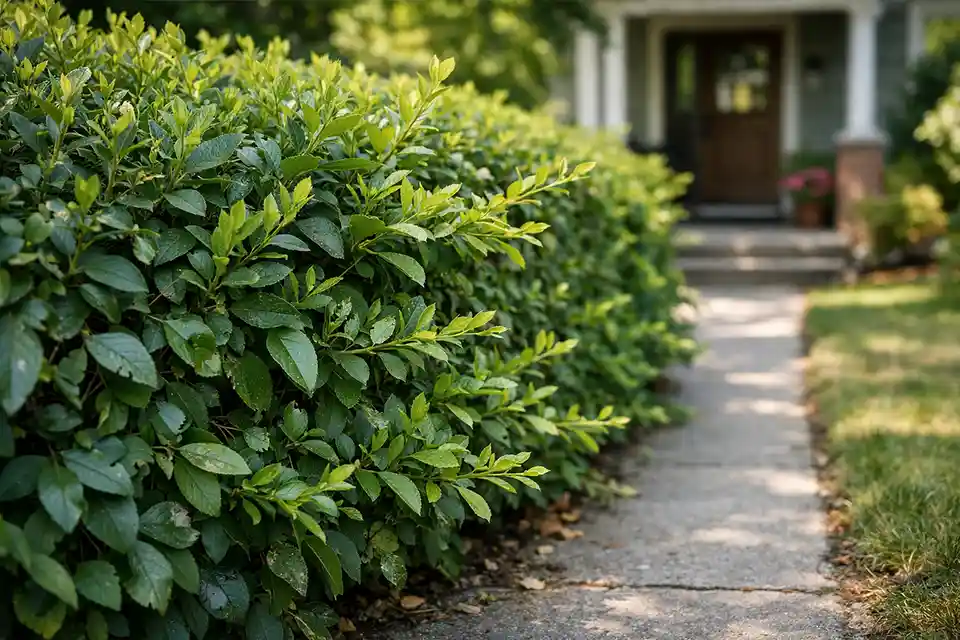
This is where a lot of homeowners unintentionally make the problem worse. They keep flattening the outer surface because that is the fastest way to make the hedge look controlled again. Visually, it works for a while. Structurally, it often creates a more difficult plant.
Repeated shearing encourages dense growth near the outside of the hedge. Light stops reaching the interior and lower branches as effectively, so the center of the plant gradually becomes woody and sparse. The hedge can still look thick from the street, but once you try to reduce its size more seriously, the hidden structure becomes obvious. You cut back the green shell and expose a framework that may not refill evenly.
Extension guidance consistently points in the same direction here: hedge form and pruning method matter. A clipped hedge should generally be narrower at the top and slightly wider at the base so lower foliage still receives light. If the sides are allowed to become vertical or wider at the top, the bottom thins out over time and the plant becomes less stable visually and functionally.
Pro Tip: If a hedge already has a dense outer shell, do not try to solve everything with one heavy trim. A staged reduction across one or two growing cycles usually gives better recovery and avoids the shock of suddenly exposing large bare sections.
The Front Yard Problems That Develop Around the Hedge
Once a hedge begins outgrowing its space, the effects spread into the rest of the yard. Access is often the first thing to go. The mower has less turning room, edging lines become uneven, and cleanup takes longer because clippings collect in tight corners, under shrubs, and along hardscape edges. In small front yards, that lost working room matters more than people expect. The hedge does not have to be enormous to disrupt maintenance if the layout is already tight, which is part of the same access problem discussed in Front Yard Maintenance Problems in Small Yards With No Equipment Access.
Shade is another slow-building consequence. A dense hedge can reduce light along the lawn margin enough to thin turf and open the door to weeds, especially where the grass is already under pressure from root competition or compacted soil. Homeowners sometimes blame the grass first because that is the symptom they notice. The real driver may be the mass of shrub growth beside it. That overlap is similar to what happens in Front Yard Shade Trees and Grass Not Growing, even though the shade source is different.
Airflow matters too. Hedges packed close to siding, porches, or entry paths can keep dampness around longer after irrigation or rain. In coastal parts of California or other areas with regular moisture in the air, that slower drying time can make the front yard feel heavier, messier, and harder to keep crisp.
| Problem | What You Notice First | What Is Usually Causing It |
|---|---|---|
| Walkway crowding | Branches brushing legs or bags | Hedge width expanding faster than expected |
| Uneven lawn edge | Mower misses and ragged trimming lines | Shrub mass limiting access |
| Thin grass near hedge | Weak turf and more weeds | Shade and root competition |
| Bare interior branches | Green outside, woody inside | Repeated surface shearing |
| Constant cleanup | Clippings collect after every trim | Growth rate too high for the space |
| Damp area near house | Slower drying after watering or rain | Dense foliage restricting airflow |
Why the “Just Trim It More Often” Approach Breaks Down
At some point, trimming frequency stops being a real solution. It becomes a way of postponing a bigger decision.
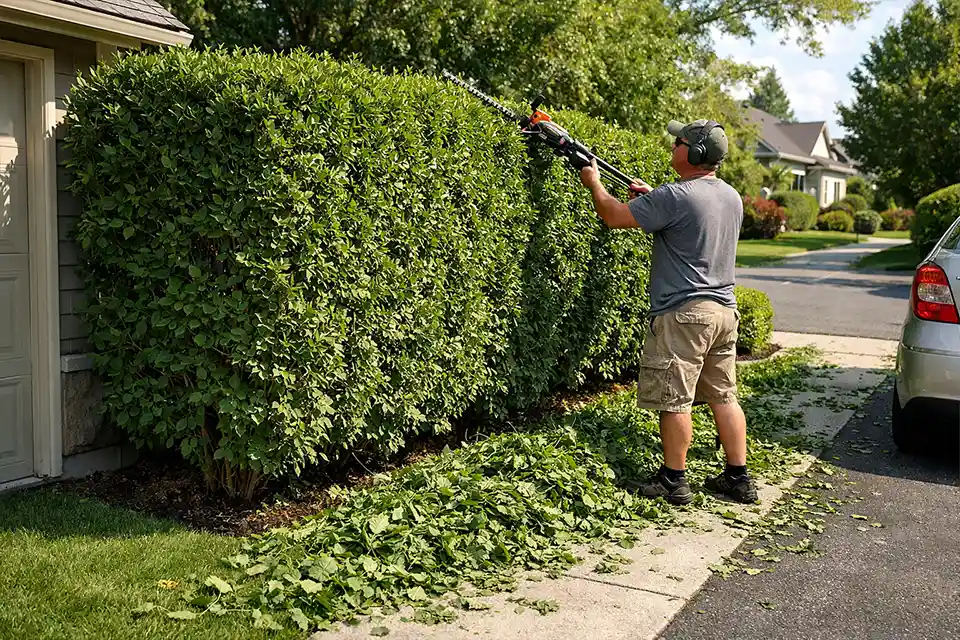
If the hedge needs cutting every few weeks during active growth just to preserve walkway clearance or keep it off the windows, the plant is telling you something important. Either it is being pushed too hard by the site conditions, or it is simply too aggressive for the footprint available. More frequent trimming may keep appearances acceptable, but it does not reduce the long-term burden. It often increases it by adding debris, labor, tool wear, and repeated stress on the visible surface.
This is especially true in neighborhoods where the front yard is expected to stay polished. HOA standards or simple curb-appeal pressure can push homeowners toward frequent cosmetic trimming instead of smarter structural correction. That tension shows up clearly in Front Yard Maintenance Problems Caused by HOA Rules, where the yard can look compliant while still becoming harder to manage behind the scenes.
A hedge that requires constant correction is usually not giving you low-maintenance privacy. It is just delivering privacy on high-maintenance terms.
How to Regain Control Without Making the Hedge Look Worse
The first step is to decide what role the hedge is supposed to play. If it is meant to be a formal visual frame, then it needs a species that tolerates regular shaping and still holds foliage well. If it is meant to provide soft screening, selective thinning may work better than rigid shearing. If it is just filling space because that seemed like the easiest solution at planting time, replacement may be the more honest answer.
Then look at what is feeding the growth. Too much irrigation, overspray from lawn zones, and fertilizer drifting into the hedge root area can all push excessive extension growth. Reducing those inputs does not always solve the problem, but it often makes the pruning cycle less aggressive.
After that, the hedge should be reduced with a clear goal in mind. Do not just cut it back until it looks smaller for the week. Establish the width it can realistically occupy without interfering with the walkway, lawn edge, or front windows. If the hedge cannot stay inside that footprint without constant intervention, the plant and the site are still fighting each other.
Pro Tip: When checking front hedge clearance, measure from the mature outer edge you can actually maintain, not from the trunk line. A shrub may start 18 inches back from a walk and still end up functioning as if it were planted right on top of it.
When Replacement Is the Smarter Choice
There is a point where maintenance discipline no longer fixes a bad fit. If the hedge is too wide for the bed, too tall for the house proportions, bare inside, and still growing hard every season, replacement may save time faster than renovation.
This is especially true when the hedge was chosen mainly as a quick privacy answer. Front yard privacy planting works best when the plant’s mature form matches the visibility problem it is supposed to solve. A massive hedge in a narrow strip can screen views, but it can also darken windows, crowd the entry, and create a wall effect that makes the front of the home feel closed off. That balance is important in Front Yard Landscaping for Privacy Without Fences, where privacy needs to work with scale, access, and curb appeal at the same time.
A slower-growing shrub is not automatically better, but it gives the yard more margin for error. That matters in front yards because homeowners tend to judge those spaces in shorter maintenance windows. If the hedge only looks good for three days after each trim, it is already too dependent on constant intervention.
| Condition | Likelihood It Becomes a Long-Term Problem | Best Response |
|---|---|---|
| Fast growth but good spacing | Moderate | Adjust pruning method and inputs |
| Frequent overgrowth near walkway | High | Reduce width and reclaim clearance |
| Woody interior and repeated shearing | High | Shift to thinning or staged renovation |
| Excessive size in narrow bed | Very high | Consider replacement |
| Privacy hedge blocking light and access | High | Reassess plant choice and role |
| HOA-driven cosmetic trimming only | Moderate to high | Balance appearance with structural management |
External Authority
University of Minnesota Extension explains that hedges often need repeated pruning during the growing season to maintain shape, and that hedge sides should be wider at the base than at the top so lower foliage continues receiving light. That single detail is easy to overlook, but it often separates a hedge that stays full from one that slowly thins at the bottom while getting bulkier overhead.
Questions Homeowners Usually Ask
How often should a fast-growing front yard hedge be trimmed?
That depends on species, climate, and the look you are trying to maintain, but fast-growing formal hedges often need at least one major trim and one follow-up trim during the active season. In long warm growing regions, they may need more.
Why does my hedge look green on the outside but bare inside?
That usually happens when the outer surface is clipped repeatedly and light can no longer reach interior branches. The hedge stays visually green from the street while the hidden structure becomes woody and sparse.
Can fertilizer fix a hedge that looks thin after trimming?
Usually not. If the hedge is bare inside because of poor light penetration or repeated shearing, extra fertilizer often just pushes more outer growth and makes the maintenance cycle worse.
Is it better to prune hard or replace the hedge?
If the species tolerates renovation pruning and the size problem is still manageable, staged reduction may work. If the plant is fundamentally too large or too aggressive for the site, replacement is often the cleaner long-term solution.
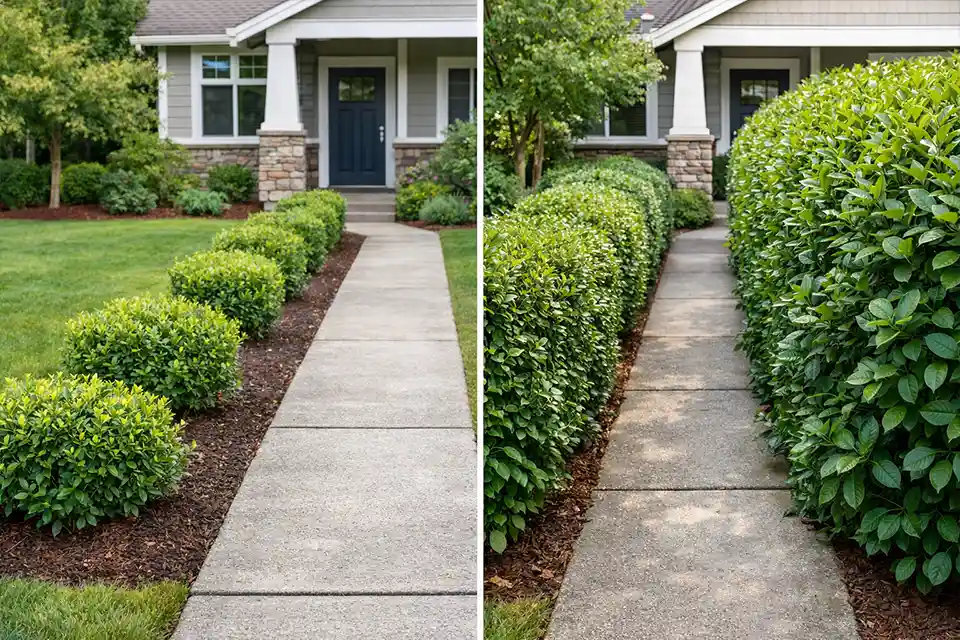
Fast-growing hedges are not automatically a bad front yard choice. They become a problem when speed, size, and maintenance expectations stop matching the space. That is why the issue often feels frustratingly repetitive. The hedge keeps doing what it was built to do, while the yard around it keeps getting harder to manage. Once you look at it that way, the solution becomes clearer: not just trim the hedge again, but decide whether the hedge and the front yard are actually working together.