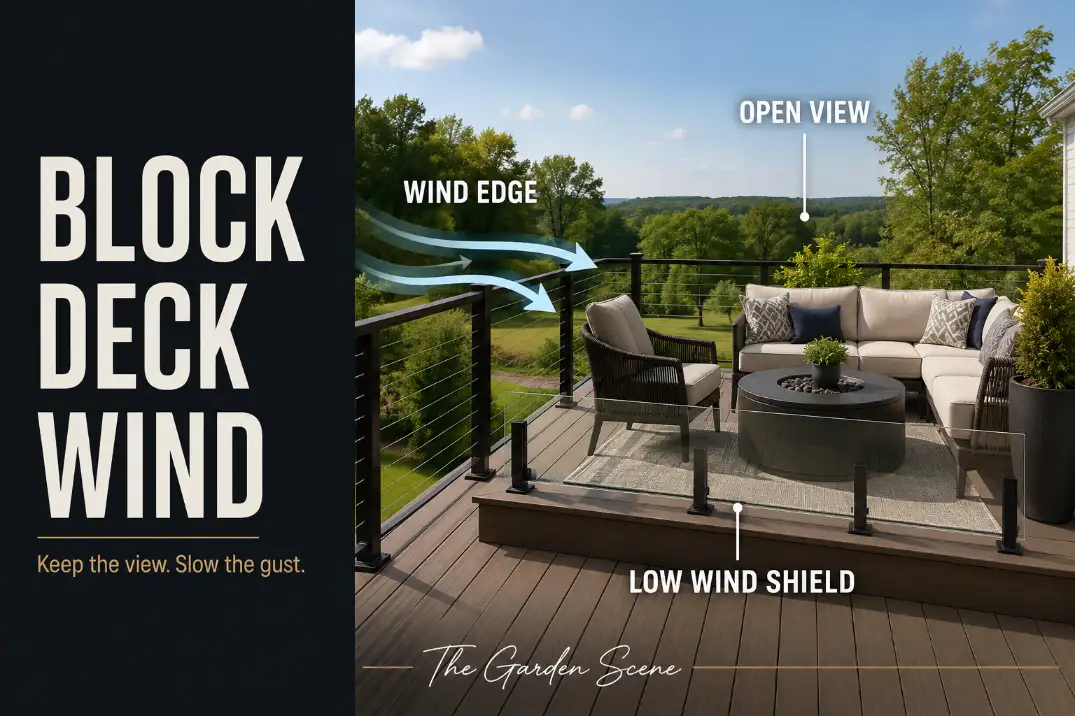
The best way to block wind on a deck without blocking the view is to protect the first-hit wind edge, not the whole deck. A 30- to 42-inch low screen, dense planter line, clear panel, or heavier seating layout can slow wind at seated height while leaving the upper view open.
Start by checking where wind hits first, which chairs take the breeze across the back, and whether cushions or lightweight items shift within 10–15 minutes on an ordinary breezy afternoon. That is different from a privacy problem.
Privacy usually needs height. Deck wind comfort usually needs position, partial filtering, and enough weight to stop the air path before it crosses the use zone. If the deck only feels bad during 30 mph gusts or storm fronts, the fix is not a permanent wall.
The strongest deck wind fix is usually partial: protect the exposed edge, keep the upper view open, and avoid turning the railing into a full enclosure.
The View and Wind Conflict
Wind protection is not the same as privacy
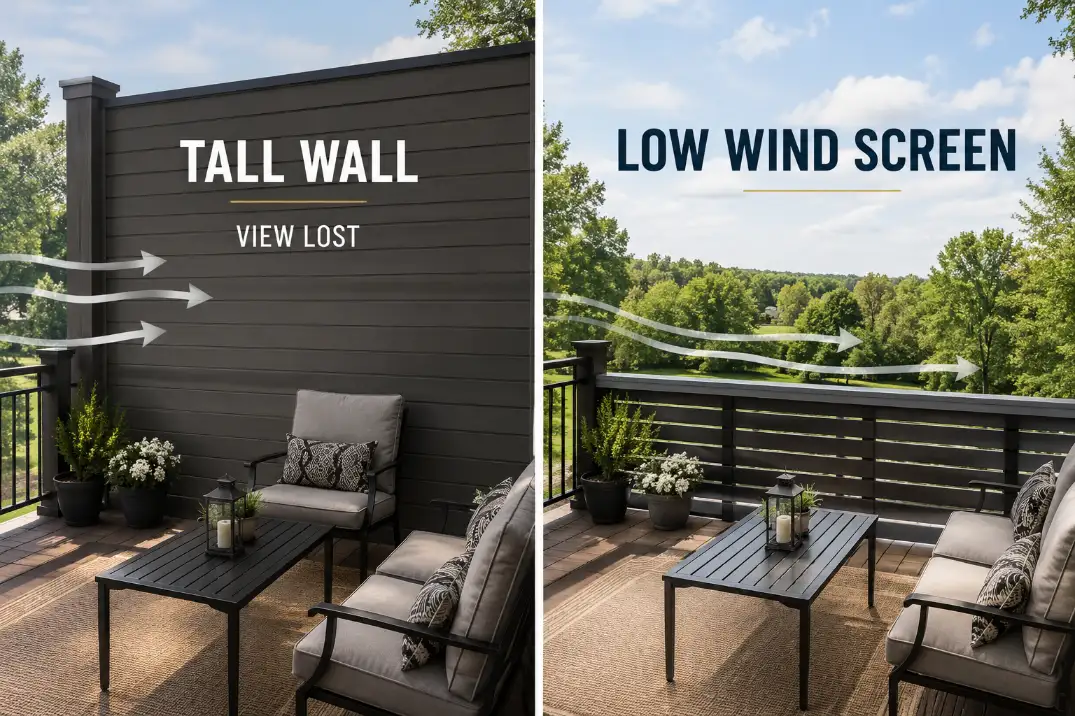
The most common mistake is treating deck wind like a sightline problem. A tall panel seems logical because it blocks something. But on a deck with a good view, a 6-foot wall can solve the breeze while ruining the reason the deck feels worth using.
Wind comfort is mostly a seated-body issue. If the breeze hits shoulders, table surfaces, cushions, or glassware, the useful protection zone is often from the deck surface up to about 36 or 42 inches.
That lower zone can change how the deck feels without closing the view above the railing.
What usually gets overbuilt
People often overestimate how much height they need. A low screen may feel too modest when you are standing at the rail, but the real test is seated comfort.
If the view line is above the railing, a rail-height wind break can protect the chair zone while leaving the horizon, trees, or yard visible.
What gets underestimated is side wind. A deck can look open and calm from the house door while the worst wind enters from one side railing and cuts across the chairs.
That is why upper decks often need a more specific layout than ground patios. If the deck also has shade and view conflicts, the planning logic in Upper-Level Deck Layout for Wind, Shade, and Views helps separate wind comfort from the rest of the deck layout.
Start With the Wind Edge
Find the first-hit side before buying anything
The wind edge is the side of the deck that receives the breeze before it reaches the seating or dining zone. It is not always the widest or most open side.
Wind often accelerates around a house corner, between neighboring homes, across an exposed railing, or along the side of an upper deck.
Watch the deck during two or three different afternoon periods before adding anything permanent. If the same chair backs, table edge, or grill side take the first hit each time, that side matters more than the rest of the railing.
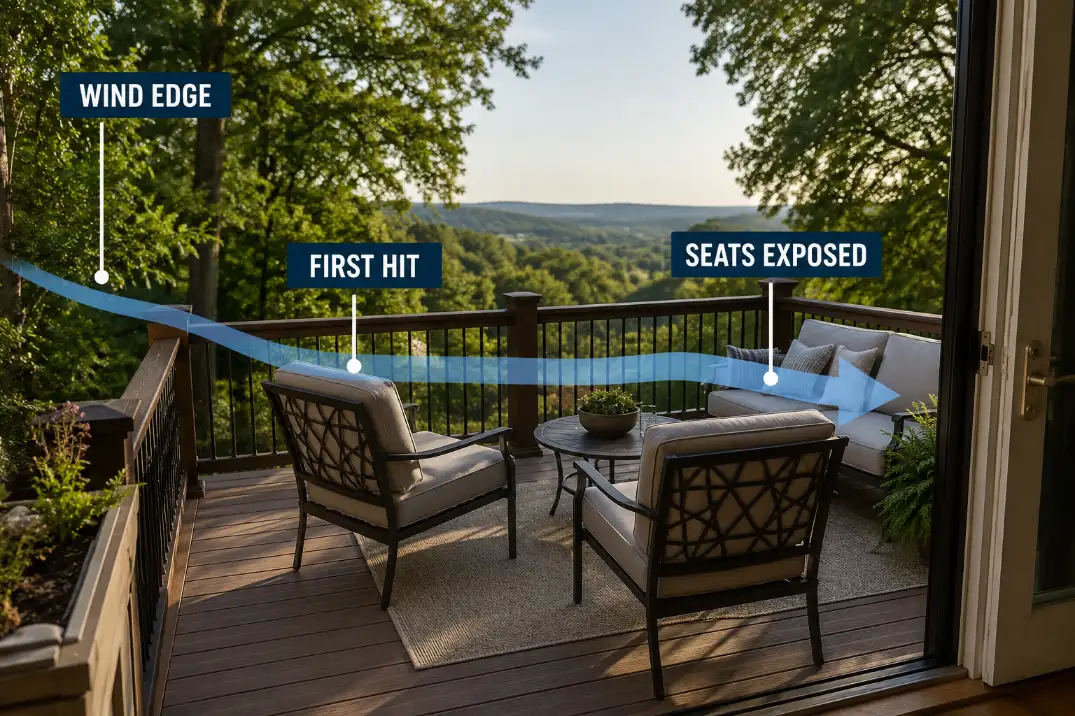
Use a seated comfort test
A practical threshold is this: if napkins, seat cushions, or lightweight dining items shift repeatedly within 10 minutes of normal use, the deck needs wind control at the use zone.
If the movement only happens during a front, thunderstorm, or wind advisory day, redesigning the whole deck is probably overkill.
Mark the first-hit side with a chair, planter, or temporary screen for one weekend before committing. Even a temporary 36-inch barrier can show whether the problem is direct wind or general exposure.
Pro Tip: Test wind control while sitting down, not while standing at the rail. Standing tests exaggerate the need for height and can lead to view-blocking fixes.
Low Screens Work Differently
A low screen protects the body, not the horizon
A deck wind screen does not need to erase wind. It only needs to slow the first push of air before it reaches the seating zone. For most decks, the sweet spot is a screen near railing height, often 30–42 inches tall, placed along the wind edge or just behind the most exposed chairs.
A solid low panel can work, but semi-open material often feels better. Slatted wood, composite strips, outdoor mesh, or panel inserts with gaps can reduce direct wind without making the deck feel boxed in.
A little filtered movement is usually more comfortable than a hard stop that sends wind curling around the sides.
Choose the material by view loss, not just wind blocking
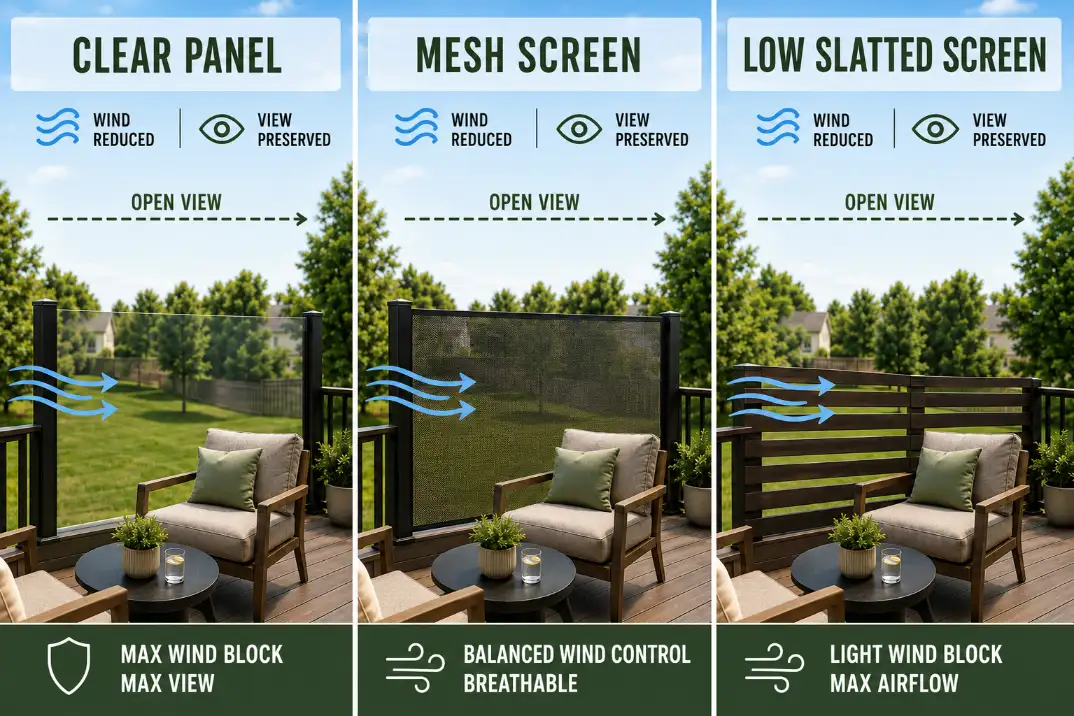
Clear acrylic or glass panels preserve the view best, but they are not always the cleanest answer. They can show smudges, reflect sun, create glare, and need secure installation because wind pressure still pushes against them.
They work best when the view is the priority and the deck structure can safely support the panel system.
Mesh or retractable screens are more forgiving because they can reduce the direct push of wind while still letting some air pass through. They may slightly soften the view, but they often feel more comfortable than a hard wall in humid climates or on west-facing decks that already hold heat.
Slatted screens are the middle ground. They interrupt wind, look more integrated with deck furniture, and avoid the “clear plastic sheet” look. Their weakness is that they partially break the view, so placement matters more than height.
Why the obvious wall fix can disappoint
A tall solid wall often creates a new problem: wind curls around the top or side and drops into the seating area in a swirl. On a small deck, that swirl can feel worse than the original breeze because it is less predictable.
It may also trap heat in humid states like Florida or make a western deck feel hotter in summer.
This is where rail and furniture planning matter together. A screen that protects the seating edge should not push chairs into the walking route or block the best view line.
The same principle shows up in Deck Furniture Around Railings and Views, where the railing is not just a boundary but part of the usable layout.
| Deck Wind Fix | Best Use | View Impact | Watch-Out |
|---|---|---|---|
| 30–36 inch low screen | Seated wind at rail edge | Low | May be too short for standing dining or grill zones |
| 36–42 inch semi-open screen | Chairs, small table, side wind | Moderate-low | Needs secure attachment and a stable frame |
| Clear acrylic or glass panel | Strong view preservation | Low | Glare, cleaning, wind load, and secure installation |
| Retractable mesh or clear screen | Adjustable wind control | Low to moderate | Can flap, wear, or feel flimsy if underspecified |
| Tall solid panel | Severe exposure or privacy need | High | Can create swirl and close in the deck |
| Dense planter line | Softer wind break with greenery | Low to moderate | Needs weight, drainage, and plant survival |
Planters Can Break Wind
A planter has to act like a line, not a decoration
Planters help when they are placed along the first-hit edge, not scattered as accents. One large planter in a calm corner does little. A row of heavy planters near the side where wind enters can interrupt the air path before it crosses the chairs.
For deck use, look for planters with enough mass and soil volume to stay stable. A planter that is 18–24 inches deep and wide is usually more useful than a narrow decorative trough.
With plants, the goal is density from about 24 to 48 inches above the deck surface. Tall, thin stems that whip in the wind are less useful than fuller plants with enough structure to filter air.
Planters also work well when the deck needs a softer look than screens. The planning logic overlaps with Privacy Planters for Front Yards and Patios, but the deck version must be more careful about weight, drainage, and wind exposure.
When planters are the wrong fix
Planters stop making sense when the deck is too exposed for them to remain upright, when watering runoff creates staining below, or when the railing edge cannot visually handle a heavy container line.
In dry Arizona conditions, small containers can dry too fast to maintain dense growth. In northern states, freeze-thaw cycles can crack lightweight containers and turn winter storage into part of the real cost.
A planter is also not a substitute for anchoring or stability. If a container can slide when bumped, it is not ready to serve as wind protection. Stable deck wind planters should feel like site elements, not movable accessories.
Furniture That Stays Stable
Loose furniture is a symptom, not always the cause
When chairs move, people often blame the furniture first. Sometimes that is fair. A 12-pound aluminum chair will behave differently from a 28- or 35-pound dining chair with a lower center of gravity.
But furniture movement is usually the symptom. The underlying problem is direct wind crossing an unprotected use zone.
Replace furniture only after checking the wind edge. Buying heavier pieces may help, but it can waste money if the same open side keeps pushing wind across the deck.
That is especially true on narrow decks where larger furniture also eats the walking route.
Choose low, dense, and less sail-like pieces
Stable deck furniture usually has three traits: weight, low profile, and limited sail area. Deep cushions, tall backs, hanging chairs, loose umbrellas, and lightweight folding pieces are more vulnerable.
Dining chairs with open backs often handle wind better than broad solid-back chairs.
If the deck is small, the answer is rarely “buy the biggest furniture.” Heavy pieces can create their own problem when they pinch door, stair, or railing clearance.
For tighter deck layouts, Compact Deck Furniture for Tight Stairs and Railings is a better match than simply choosing heavier pieces.
A useful rule: if a furniture fix forces the walking path below about 30 inches wide, the wind solution is starting to damage deck usability. Wind comfort should not make the deck harder to enter, serve, or exit.
Protection Without a Wall
Offset the shield from the main view
The best deck wind protection often sits slightly to the side of the view, not directly across it. Instead of running one continuous barrier along the entire railing, protect the first 6–10 feet where wind enters the seating zone.
This keeps the main view open while changing the air path enough to make the chairs usable.
Offset screens are especially useful on decks with one dominant wind direction. They can sit behind exposed chair backs, along the short side of a dining table, or near the corner where wind wraps around the house.
This is also why a deck wind fix may look smaller than expected. The goal is not to fortify the deck. The goal is to interrupt the route wind takes into the use zone.
The same “protect the seat, not the whole yard” principle appears in Windy Patio Layout Ideas, but decks are less forgiving because the railing, stairs, and view line are fixed constraints.
Do not ignore attachment and wind load
A deck wind screen is not just a decor piece once it catches air. Large panels, especially solid or clear ones, can add wind load to railings, posts, or mounts.
That matters more on upper-level decks than on ground patios because the exposure is stronger and the consequences of a loose panel are higher.
If a screen must be attached to the railing, check the railing system, local requirements, HOA or condo rules, and manufacturer guidance before treating it as a simple weekend add-on.
Freestanding panels are safer only when they are properly weighted and used within their limits. A movable screen that is fine during a 12 mph breeze may be the wrong object to leave out during a wind advisory.
Pro Tip: If the wind fix needs straps, zip ties, or improvised railing attachments to feel stable, it is not a finished deck solution.
Combine wind control with airflow
A good deck wind fix still lets the space breathe. Semi-open screens, planter gaps, rail-height protection, and stable furniture can work together without turning the deck into a box. This matters in hot, humid climates, where a fully blocked deck may feel calmer but warmer.
For decks that also struggle with shade, heat, and stale air, Backyard Layout for Shade, Seating, and Airflow can help keep the comfort fixes from fighting each other.
Quick deck wind decision checklist
Use this short check before choosing a fix:
- If wind hits one side first, protect that edge before changing the whole deck.
- If seated comfort is the problem, start with 30–42 inches of protection, not a 6-foot wall.
- If furniture moves within 10–15 minutes on ordinary breezy days, reduce direct wind before buying heavier pieces.
- If the best view is above rail height, use low, clear, or semi-open protection.
- If the fix narrows circulation below about 30 inches, it is solving wind by creating a layout problem.
- If the screen must attach to the railing, treat wind load and fastening as part of the decision.
- If the deck only feels bad during storms or strong fronts, use removable protection rather than permanent enclosure.
Questions People Usually Ask
Do clear deck wind screens block the view?
Clear deck wind screens usually preserve the view better than wood or solid privacy panels, but they can still add glare, reflections, visible seams, and cleaning maintenance. They work best when the view is the top priority and the panel system can be installed securely.
How tall should a deck wind screen be?
For seated comfort, many decks should start with a 30- to 42-inch wind screen instead of a full-height wall. Taller protection may be needed for severe exposure, standing dining areas, or grill zones, but extra height should be based on the wind pattern, not added automatically.
Are planters enough to block wind on a deck?
Planters can block some deck wind when they are heavy, stable, and placed as a line along the first-hit wind edge. They are usually not enough when the deck is highly exposed, the containers are narrow, or the planting is too thin to interrupt air movement.
The Best Fix Is Usually Partial
Blocking wind on a deck without blocking the view is mostly a placement problem. Start with the wind edge, protect the seated zone, and keep the upper view open.
Low screens, clear panels, mesh, heavy planters, and stable furniture work best when they interrupt the wind path before it reaches people.
Tall walls should be the last move, not the first one. The strongest deck wind fix often feels modest: one protected edge, one calmer seating pocket, and the view still doing its job.
For planted windbreak basics that explain how barriers slow and filter wind, see the University of Minnesota Extension.