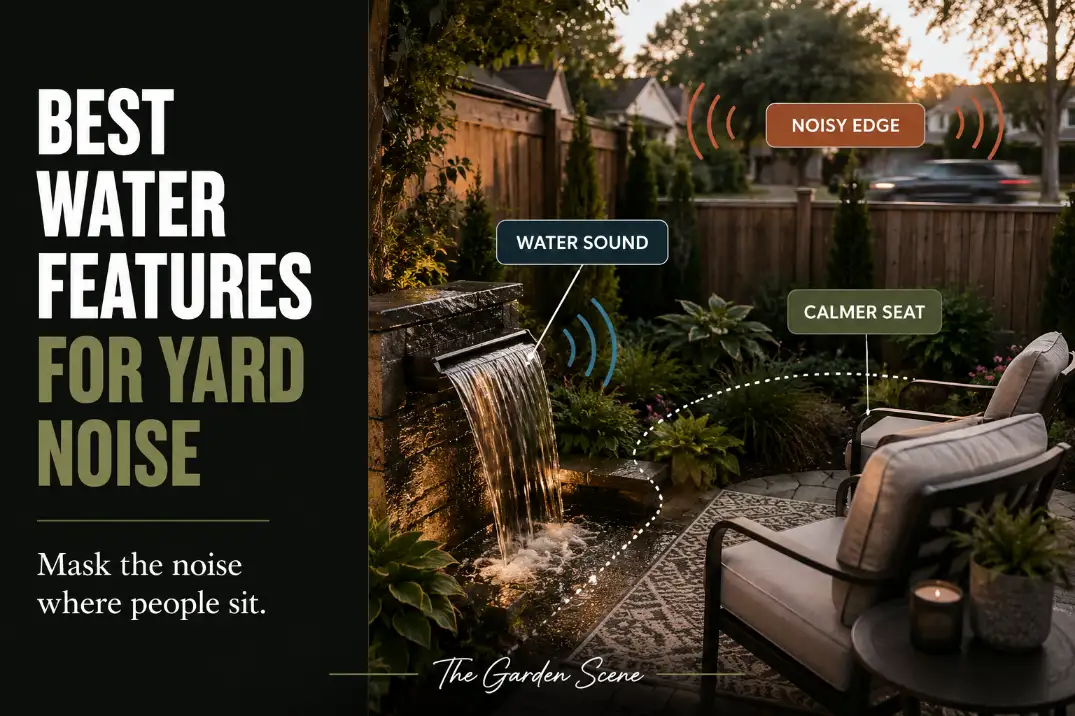
Outdoor water features help soften yard noise when they create steady, close-range sound near the place where people actually sit.
They do not block traffic, barking dogs, HVAC hum, or neighbor voices the way a solid barrier can. Their real job is masking: adding a consistent water sound that makes irregular background noise feel less sharp.
Start with three checks before buying anything: how close the noise source is, where people sit, and whether the water sound can be placed within about 3–8 feet of that seating area. A tiny tabletop bubbler across the yard will not do much.
A feature with adjustable flow, enough basin volume, and a 12–24 inch water drop can make a patio feel calmer, especially when the noise is moderate rather than overwhelming.
If the unwanted sound clearly overpowers the water feature at the seat, the feature will feel decorative, not functional.
Quick Answer: Which Water Feature Should You Start With?
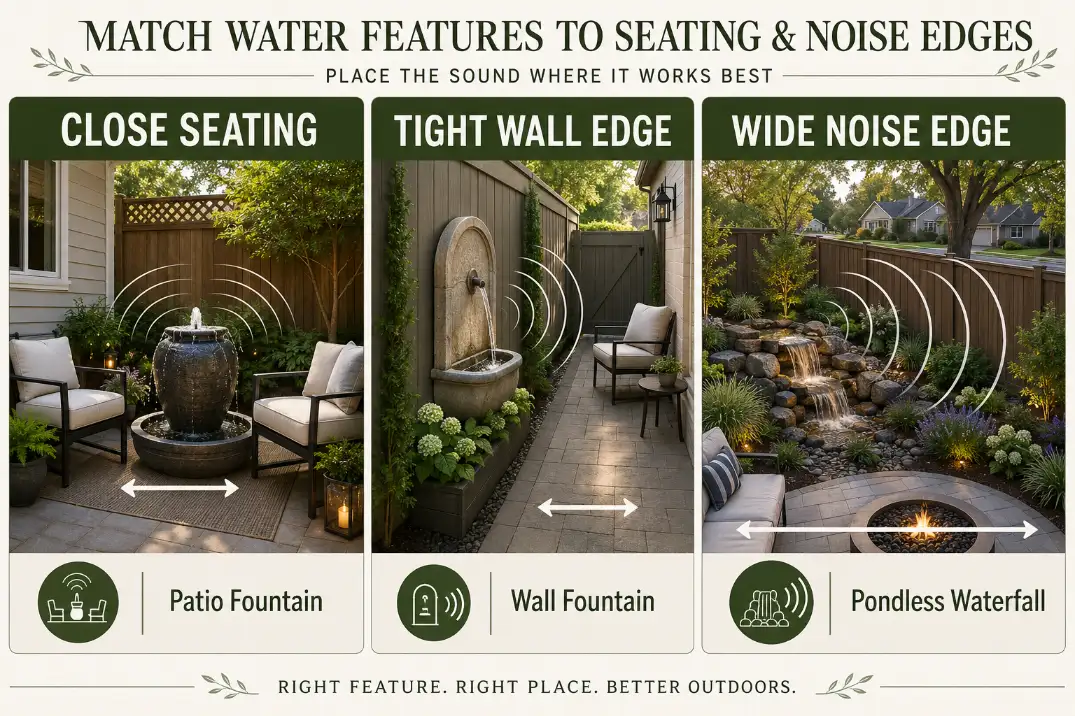
For most patios, start with a medium-flow patio fountain because it gives the best balance of audible water sound, simple setup, and placement flexibility. For narrow patios or fence-side seating, a wall fountain often works better because it places the sound vertically near ear level without taking up floor space.
For larger backyards where the noise comes from a wider street or shared fence line, a pondless waterfall kit is usually the stronger category because it produces broader sound coverage.
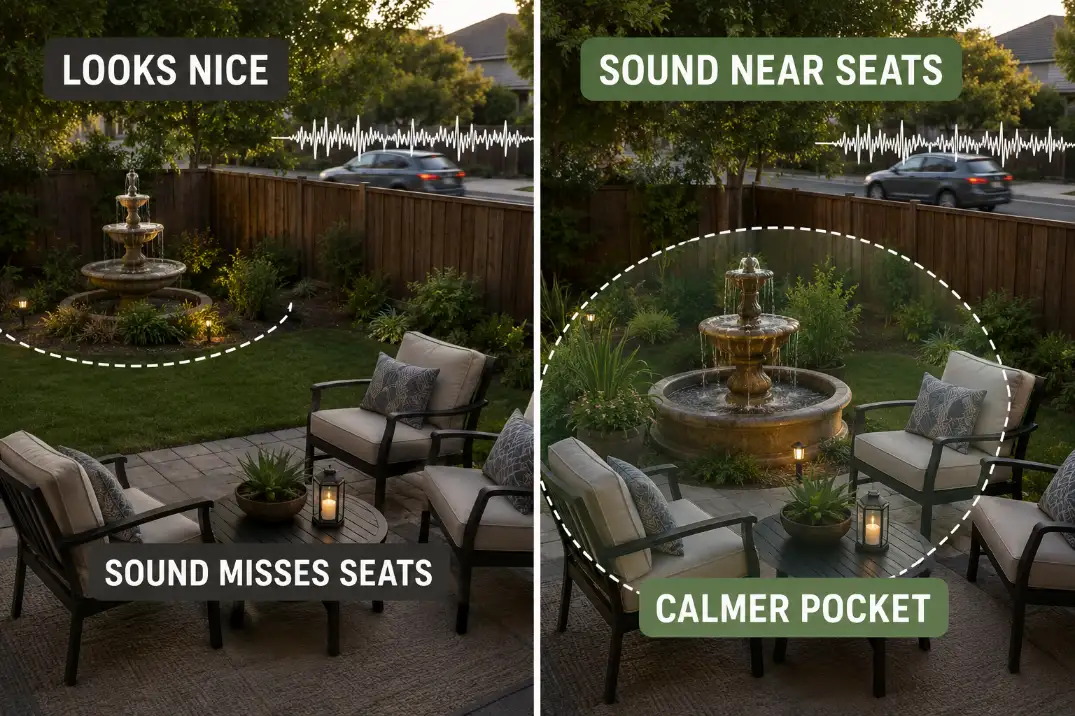
The mistake is shopping by appearance first. A beautiful water bowl with a soft trickle may look right in a product photo but disappear under real backyard noise after 10 minutes of traffic, conversation, or wind.
If your noise problem is mostly around one patio table, bench, or lounge chair group, this is the first category worth browsing. It gives you the closest useful sound layer without forcing a larger pondless system, open pond, or permanent rebuild.
BEST FIRST CATEGORY FOR PATIOS
Outdoor Tiered Patio Fountain
Best for small to medium patios where the seating area is the main listening zone.
It works because tiered or cascading water creates a more noticeable sound layer close to the chairs.
Look for a 36–48 inch outdoor tiered or cascading design, adjustable pump flow, a stable basin, and outdoor-rated power.
🔴 SHOP outdoor tiered patio fountains
What Water Features Can Actually Do for Yard Noise
They Mask Noise, Not Remove It
A water feature does not erase noise. It adds a nearby, more pleasant sound layer that competes with harsher background noise. That distinction matters because it changes what you should buy.
A soft bubbler may be enough for faint neighbor conversation or light road hum. It is usually not enough for a busy road, pool equipment, a loud AC condenser, or repeated dog barking. In those cases, the water feature needs more flow, more splash texture, and better placement.
Think of the water sound as a comfort layer. It works best when the noise is already somewhat reduced by distance, fencing, planting, or layout. If the seating is directly exposed to a loud edge, fix the exposure first. A water feature can support a noise-buffer layout, but it should not be asked to do the whole job alone.
The Seat Matters More Than the Property Line
The most useful measurement is not the distance from the water feature to the noise source. It is the distance from the water sound to the listener. Water placed 25 feet away may look impressive and still fail because the person sitting on the patio hears traffic more clearly than the fountain.
For a small seating area, the sweet spot is often within 3–8 feet of the main chairs. For a dining table, place the sound near the side where people face the loudest edge.
For a lounge area, keep it close enough that the water is audible without forcing the pump to run at its highest setting all day.
Best Outdoor Water Feature Types for Softening Yard Noise
Medium-Flow Patio Fountains: Best for One Real Seating Area
A medium-flow patio fountain is the safest first choice for many homeowners because it can sit near the actual listening zone. It does not require a large yard, major digging, or a permanent pond. The right one creates a consistent splash or sheet of water rather than a weak drip.
Look for adjustable pump flow, a basin that holds enough water for daily use, and a sound profile that stays steady rather than harsh. For small patios, a fountain in the 24–40 inch height range is often more useful than a tiny tabletop model because the water sound reaches seated ear level better.
A pump in the rough 80–300 GPH range can work for many patio fountains, but the actual sound depends on water drop, surface, and basin design more than the pump number alone.
Skip this category if your noise problem comes from a wide, constant source such as a busy road along the whole back fence. A single fountain may help one seating pocket, but it will not soften the whole yard.
Wall Fountains: Best When Floor Space Is Tight
A wall fountain makes sense when the seating area sits near a fence, privacy wall, side wall, or covered patio edge. Its advantage is placement. Because the sound comes from a vertical surface, it can be positioned closer to ear level while keeping the floor clear.
This category works especially well on narrow patios, townhouse backyards, and small courtyards where a floor fountain would pinch the walking path. A 24–48 inch wall fountain can create a more noticeable sound layer than a small bowl fountain because the water has more vertical movement. It also keeps the feature visually contained, which matters in tight U.S. suburban yards where every foot of patio space counts.
The common overestimate is assuming a wall fountain will act like a sound wall. It will not. The wall or fence may help interrupt some direct sound, but the fountain’s job is still masking. If the wall is open slat fencing or thin lattice, it may look private while letting plenty of noise through.
If the patio is too narrow for another floor object, do not start with a freestanding fountain. Start with a wall fountain category first because it keeps the walking route open while putting the water sound where people can actually hear it.
BEST FIT FOR NARROW PATIOS
Outdoor Wall Fountain
Best for tight patios, courtyard edges, and fence-side seating where floor space matters.
It fits because the sound stays close to ear level without taking up another chunk of patio floor space.
Look for a 30–50 inch outdoor wall design, adjustable flow, a splash-controlled basin, and materials suited for outdoor weather.
🔴 SHOP outdoor wall water fountains
Pondless Waterfalls: Best for Larger Noise Edges
A pondless waterfall is the stronger category when the goal is not just softening one chair but creating a broader calm zone along a patio, pool edge, or backyard seating area. It uses moving water over rock or spillway sections, then recirculates into a hidden reservoir instead of an open pond.
This type usually makes more sense when you have at least several feet of planting-bed or edge space to work with. A 2–4 foot wide waterfall run with a 12–24 inch drop can create a fuller sound than most compact fountains.
It can also be shaped into a planting layer, which helps the feature feel integrated rather than dropped onto the patio.
If the seating area is still sitting in a direct noise path, the water feature should come after the basic buffer logic, not before it. A stronger result usually comes from creating a protected pocket first, then adding water inside that zone; the same principle applies when planning outdoor noise buffer ideas around a patio or fence line.
The tradeoff is commitment. Pondless systems need more setup, more water volume, and more seasonal attention. In freeze-thaw climates, they may need winter shutdown or draining before hard freezes.
In hot, dry areas, evaporation can mean topping off every 1–3 days during peak summer heat. In humid regions, the hidden reservoir and splash zone need enough circulation to avoid stagnant pockets.
If the noise comes from a wide fence line or street edge, a compact fountain is usually too localized. At that point, you are no longer shopping for decoration; you are shopping for a wider sound layer.
This is where a pondless waterfall kit becomes the category worth comparing first because it creates broader water sound instead of only helping one chair.
BEST CATEGORY FOR LARGER NOISE EDGES
Pondless Waterfall Kit
Best for wider patios, poolside seating, and backyard edges facing steady street or neighbor noise.
It works because a spillway-style water feature creates broader water sound than a small freestanding fountain.
Look for a spillway box, pump access, tubing, reservoir compatibility, and enough water flow for a 2–4 foot feature run.
🔴 SHOP pondless waterfall spillway kits
How to Choose the Right Water Sound
Steady Flow Beats Dramatic Splash
Louder is not automatically better. A harsh splash can become annoying after 20–30 minutes, especially near dining or conversation areas. The best sound is steady enough to blur background noise but soft enough that people do not raise their voices over it.
For patios used mainly for meals, choose smoother sheet flow or tiered water. For lounge areas near traffic hum, a livelier spill can work. For reading corners, avoid features with sharp, irregular splatter because the sound can feel busy rather than calming.
This is also where layout and privacy overlap. If the water feature is part of a more secluded sitting area, it should support the seating pocket instead of sitting as a decorative object off to the side.
A quieter-feeling patio usually comes from combining sound, screening, and seating position, much like the logic behind patio privacy ideas for secluded seating.
Basin Size Changes Daily Use
Small basins are easier to place but more sensitive to evaporation. In dry summer climates, a small fountain can need water every day if it sits in sun and wind. A larger basin may only need topping off every few days, depending on heat, splash, and pump flow.
This is where many buyers underestimate maintenance. They compare shape and height but ignore water volume. A fountain that runs low often sounds harsher, strains the pump, and needs more attention than expected.
For a decorative patio fountain, that may only be annoying. For a feature meant to soften yard noise, it becomes a performance issue because the sound changes as the water level drops.
Placement Should Support the Layout
A water feature should not block the walking route, crowd the grill zone, or sit where people bump into it at night. If it makes the patio harder to use, it is not solving the right problem.
For small patios, keep at least a 30–36 inch clear route where people walk between the door, seating, and yard. For family yards, avoid placing the basin where kids, pets, or chairs will constantly disturb it.
For covered patios, check splash direction so water does not hit walls, outlets, or furniture cushions.
Comparison Guide: Which Water Feature Fits Your Yard?
| Water Feature Type | Best Use Case | What It Does Well | When It Fails |
|---|---|---|---|
| Medium-flow patio fountain | One patio table, bench, or lounge corner | Adds close, flexible sound near seating | Too weak for a wide or very loud noise edge |
| Outdoor wall fountain | Narrow patio, courtyard, fence-side seating | Saves floor space and raises the sound source | Poor fit if there is no stable wall or mounting surface |
| Pondless waterfall kit | Larger backyard edge or poolside noise | Creates broader, fuller water sound | Overbuilt for tiny patios or renters |
| Small tabletop bubbler | Very quiet corners or visual mood | Cheap, simple, easy to move | Often disappears under real outdoor noise |
| Large open pond | Spacious yards with landscape focus | Adds visual depth and habitat feel | More maintenance, safety, algae, and mosquito concerns |
What Buyers Usually Get Wrong
Buying for Looks Before Listening
The most common mistake is choosing the prettiest feature and hoping the sound will follow. Water sound depends on flow rate, drop height, spill surface, basin shape, and distance from the listener. A sleek feature with a silent sheet of water may look premium but do very little for noise.
When possible, choose adjustable flow. A feature that sounds right in spring may need a lower setting during quiet evenings or a higher setting during afternoon traffic.
Expecting Water to Fix an Exposed Seating Layout
If the chairs sit directly in the sound path, water alone is a weak first fix. Shift the seating behind a screen, planter, hedge, or fence break first, then add water inside the protected pocket. That order usually works better than buying a larger fountain and leaving the patio exposed.
This is why water features work best as part of a broader comfort plan. In a yard where the issue is exposure from several directions, backyard privacy ideas without a fence may do more to shape the calm zone before the water feature is even added.
Ignoring Power, Splash, and Winter
Outdoor-rated power access matters. Extension cords across patios are not a long-term plan. Splash also matters because water that constantly hits pavers, wood decking, or nearby cushions can create staining, slippery spots, or extra cleaning.
In northern states, freezing temperatures can damage pumps, basins, and water lines if the feature is not designed for winter shutdown. In hot regions, direct afternoon sun increases evaporation and can make small basins annoying to maintain. The right category should fit the climate as well as the sound problem.
Final Decision Guide
If the sound problem is local, buy local sound. A medium-flow patio fountain is the first choice for one table, bench, or lounge group because it places water sound close to the people using the space.
If the patio is narrow, buy vertical sound. A wall fountain usually makes more sense than another freestanding object because it protects the walking route while still creating a clear sound layer.
If the noise edge is wide, buy a wider water system. A pondless waterfall kit is the more serious category when the yard has room for a permanent feature and the goal is to soften a broader fence-line or street-side edge.
Skip the purchase for now if the seating is fully exposed to a loud road, barking area, or mechanical noise source with no screen, planting layer, or layout protection. In that case, the better first move is to create a quieter pocket, then use water to make that pocket feel calmer.
When the patio also struggles with sun, wind, or poor seating orientation, a broader comfort layout like backyard seating with shade and airflow can help the water feature feel intentional instead of isolated.
A good water feature does not make a noisy yard silent. It makes the better part of the yard easier to stay in.
For a broader environmental view of how unwanted noise affects everyday comfort and health, see the EPA noise pollution overview.