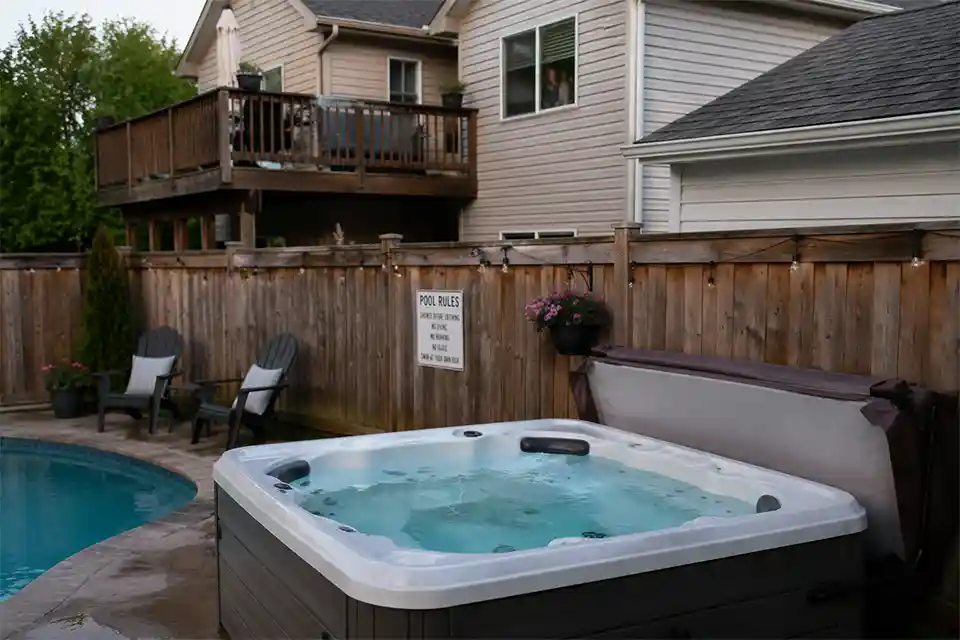
If your pool or hot tub feels too exposed, the problem is usually not the whole yard. It is one failed sightline into one high-use zone.
That is where the right fix starts. A backyard can feel reasonably private from the patio and still feel exposed once someone settles into a hot tub or lingers at the shallow end of a pool.
Start with three checks: where the clearest view comes from, whether that view is level or elevated, and whether the exposed feeling happens only in leaf-off months or all year.
A 6-foot fence can feel adequate at standing height and still fail badly at soak height, especially if the spa sits 18 to 30 inches above grade or the neighbor is looking down from a deck, stair landing, or second-story window.
The fastest wins usually come from targeted screening near the failed view corridor, not from trying to close off the entire backyard.
The first split: hot tub privacy and pool privacy are not the same problem
A hot tub privacy problem is usually tighter and more intense. A pool privacy problem is usually wider, but less constant. That distinction changes what deserves protection first.
Hot tubs fail at sitting height
What makes spas feel exposed faster is not just visibility. It is stillness. When you are soaking, your head and shoulders stay in the same line of sight for 20 to 45 minutes. Even a narrow overlook can feel much worse than it would from a patio chair.
This is why plant-only fixes often disappoint hot tub owners. They may soften the yard, but they usually do not solve the failed angle fast enough.
When the problem is elevated visibility, Second-Story Windows Backyard Privacy Fixes is often the more relevant pattern than general backyard screening.
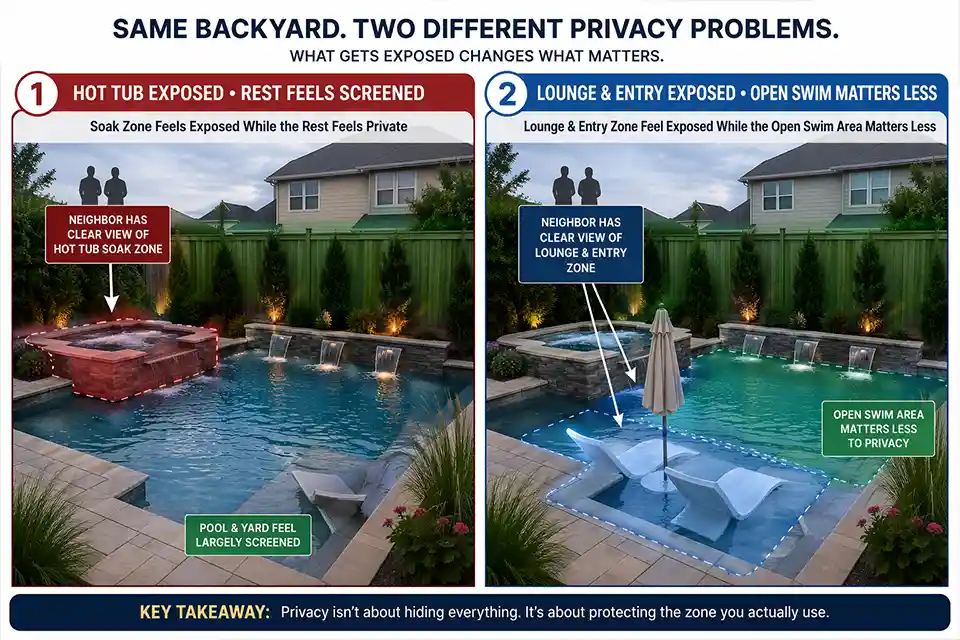
Pools fail at stay zones, not every edge
With pools, people often overbuild the perimeter. That wastes money and can make the space feel boxed in. Most of the time, you do not need every pool edge to feel hidden. You need the places where people pause to feel protected.
That usually means the tanning ledge, the entry steps, the shallow-end bench, the chaise area beside the water, or a raised spillover spa if there is one.
Open swim space matters less because people move through it. The more useful question is not “Can people see the pool?” but “Where do people stay visible long enough to care?”
Where the exposure comes from changes the right fix
Not all privacy problems deserve the same solution. This is where most generic idea-list articles fall short.
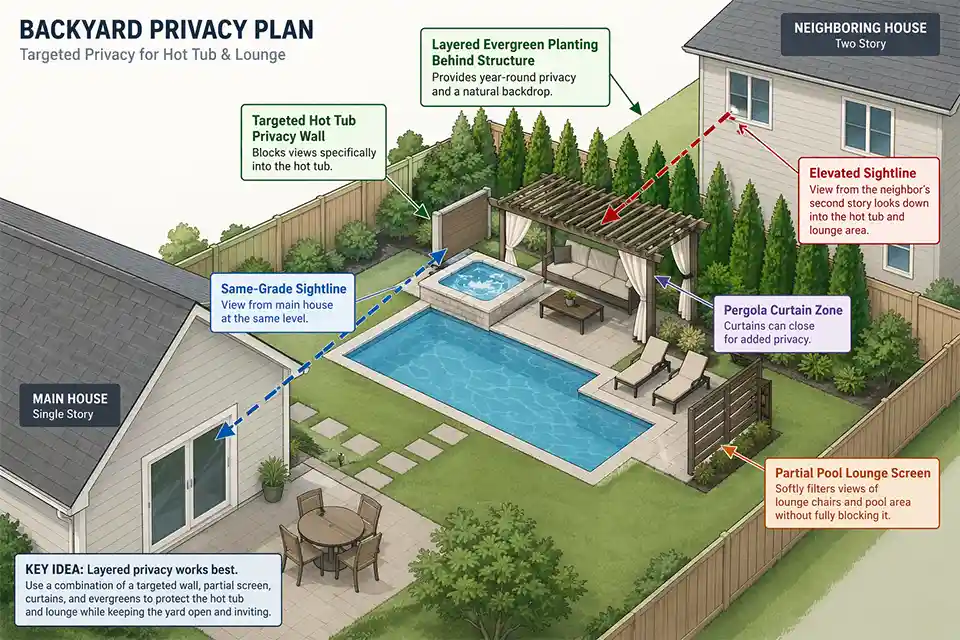
Same-grade views usually need local interruption
If the unwanted view comes from the neighbor’s patio, yard, or shared fence line at roughly the same grade, the best fix is often a local barrier close to the use zone.
A slatted screen, privacy panel, compact hedge, or mixed planting strip can work well because it interrupts the line before it opens fully into the pool or spa area.
This kind of problem usually responds better to precise placement than to more material.
Elevated views need height, not width
If the view comes from above, widening the perimeter often wastes time. This is the most commonly misread condition. Homeowners keep adding shrubs along the fence when the real problem is downward visibility.
In that case, the better answers are a taller focal screen, a pergola side panel, a louvered privacy wall, or a targeted overhead-plus-side combination. That same elevated-overlook logic is why Neighbor’s Deck Overlooks Your Backyard? Privacy Fixes That Actually Work tends to solve the right problem more directly than general fence advice.
Seasonal exposure needs structure first
If the yard feels exposed mainly for 3 to 5 months in winter, the issue may not be missing privacy so much as seasonal transparency. Deciduous layers that look full in June can become nearly irrelevant in January.
That does not mean plants are the wrong move. It means they should not be the first move if winter use matters. For year-round privacy, the initial layer should usually be structural or evergreen.
What usually wastes time
People often spend money in the right category but in the wrong order.
Replanting the whole fence line first
This is one of the most common time-wasters. It sounds logical, but if the hot tub is exposed from one deck corner or one upper window, broad replanting may not change the actual view enough.
A mixed screen can absolutely help over time, and Plants for Mixed Privacy Screens is a strong reference for building layered privacy planting. But for an exposed spa, plant-only fixes are usually too slow to be the first answer.
Treating a spa like a patio
A fence that feels private from a dining chair may fail from a hot tub. That is not a small distinction. It is often the exact reason people feel confused after already spending money on privacy improvements.
Solving a small-yard problem with too much bulk
In tight backyards, privacy can start stealing the yard it is trying to improve. A bed that is 4 to 6 feet deep may add screening, but it can also squeeze deck circulation, reduce service access, and make the pool area feel cramped. That is where thinner structural solutions often outperform bigger planting zones. Small Backyard Privacy Fences Fall Short matches that exact failure pattern.
What works now vs what works over time
Readers usually want both a quick fix and a better long-term fix. These are not the same thing.
What to do this season
If you need privacy now, think in terms of targeted structure: movable screens, fixed privacy panels, pergola curtains, louvered sections, or a compact architectural wall near the failed sightline. These work because they change the view immediately.
For hot tubs, the best location is often just 18 to 36 inches beyond the spa’s main exposure edge. For pools, the best location is usually beside the stay zone, not around the whole perimeter.
Pro Tip: Use temporary stakes and a clipped sheet or tarp for one evening before building anything permanent. If the exposed feeling disappears, you have identified the right screen location before spending real money.
What to build over the next 2 to 4 seasons
Longer-term privacy is where layered planting earns its place. Evergreens, shrubs, grasses, and trellis-supported vines can soften a harder screen, close awkward side gaps, and make the privacy fix feel designed instead of bolted on.
This is also where the scenario can overlap with Backyard Privacy New Construction With No Screening, because many newer lots feel exposed not because the layout is wrong, but because the living screen has not matured yet.
Privacy that also improves comfort usually outperforms privacy alone
This matters more for hot tubs than people expect. Some privacy fixes do more than block views. They also cut wind, reduce glare, and make the space feel more sheltered during cool evenings or shoulder seasons.
That is why pergola side panels, louvered walls, and curtained structures often outperform a simple fence addition for spa users. They do not just hide the area. They change how protected it feels. For pools, this matters less in the open swim area and more in the lounging zones where people sit still.
The better way to choose a fix
| Situation | Best first fix | Better long-term fix | What usually disappoints |
|---|---|---|---|
| Hot tub exposed from same-grade yard | Tight local screen or panel | Mixed planting behind it | Reworking the whole fence line first |
| Hot tub exposed from upper deck or window | Taller focal screen or pergola side wall | Structural screen plus layered evergreens | Low shrubs alone |
| Pool lounge area feels exposed | Partial privacy wall near seating | Layered edge planting plus one structure | Trying to enclose the whole pool |
| Winter-only exposure | Add evergreen or structural layer | Mixed year-round screen | Relying on deciduous planting |
| Small yard needs privacy fast | Thin structural screen | Targeted softening around it | Deep planting beds everywhere |
When the standard fix stops making sense
There is a point where “more privacy” becomes the wrong goal.
If every added layer makes circulation tighter, maintenance harder, and the yard more boxed in, the answer is not another layer. It is a better-placed one.
If the real problem is one raised overlook, solve the overlook.
If the real problem is one exposed soak edge, solve the soak edge.
That is also why HOA limits matter only when they block the fix you actually need. If height restrictions are shaping your options, Backyard Privacy HOA Fence Height Limits is the more useful companion topic than generic fence inspiration.
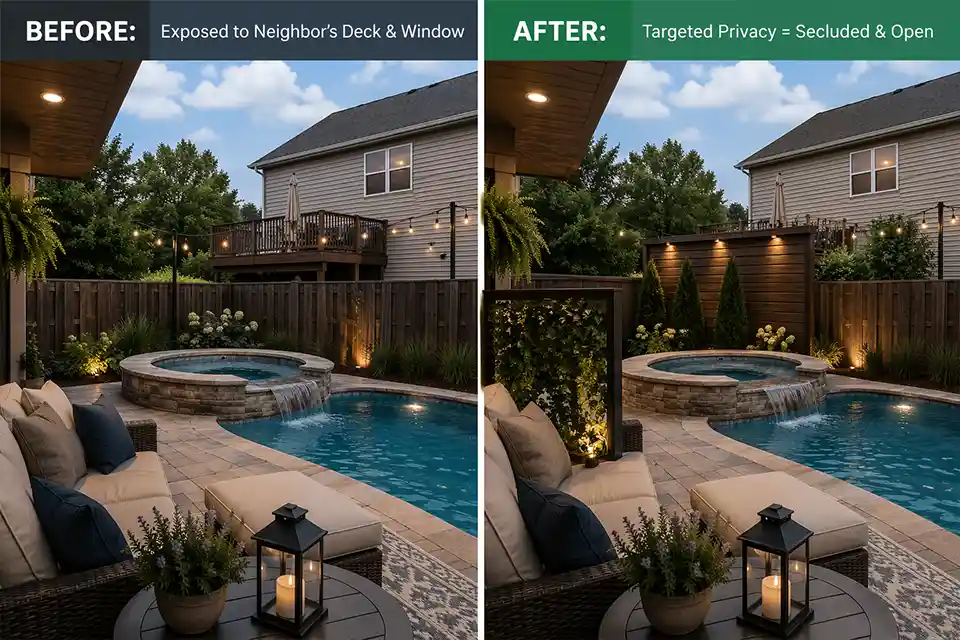
The clearest decision rule is simple: do not start by asking how to hide the whole pool or hot tub area. Start by asking which exact sightline makes the space feel exposed, and which use zone is being exposed by it. That is the fix that changes the outcome.
A good privacy solution here should do three things at once: block the right view, protect the part of the space people actually use, and avoid making the yard feel heavier than it needs to.
When a fix does all three, it usually looks better and works better.
For broader plant-screen guidance, see University of Maryland Extension.