Quick Solution Summary
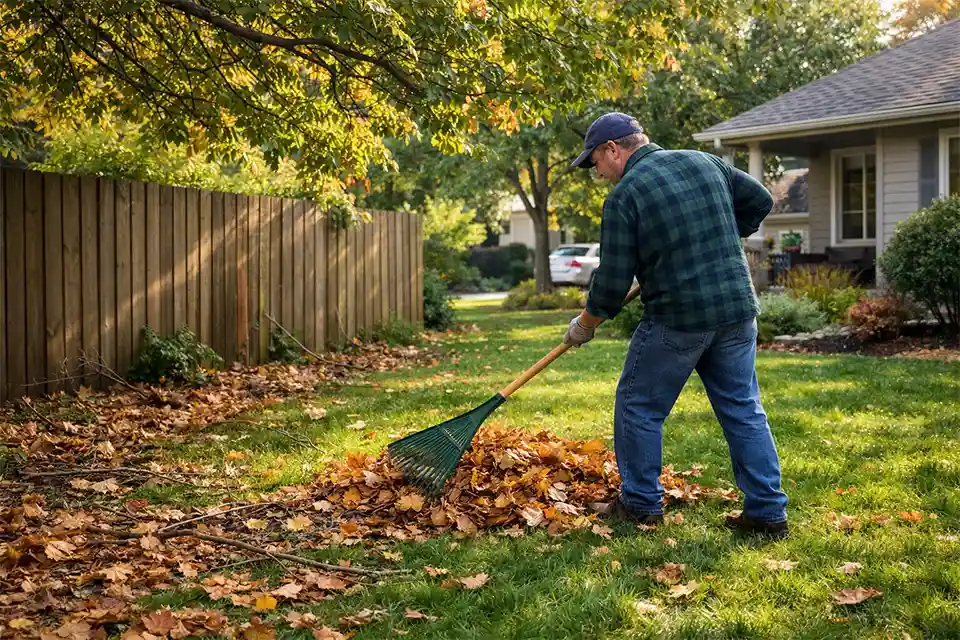
Overhanging neighbor trees can turn routine lawn care into a constant front yard maintenance problem. Leaves, twigs, seed pods, and small branches may fall throughout the year, especially when mature trees extend their canopy beyond property lines. A single large deciduous tree—such as maple, oak, or sycamore—can drop 30–80 pounds of organic debris per month during peak seasons.
The most effective approach combines strategic pruning, debris containment, and lawn resilience techniques. Property owners in most U.S. regions are allowed to trim branches that extend across their property line, provided the trimming does not damage the tree. Professional arborists typically recommend reducing canopy weight by 10–20%, which can lower debris volume by 20–40%.
Environmental conditions also influence how frequently debris falls. Humid climates like Florida accelerate leaf decomposition, while dry regions such as Arizona allow debris to accumulate for longer periods. In colder northern states, winter storms may cause branches to break and fall into nearby yards.
Understanding how neighboring trees interact with your lawn makes it easier to reduce cleanup time and protect grass health without creating conflicts with neighbors or violating local regulations.
Why Neighbor Trees Create Constant Yard Debris
Most homeowners associate leaf cleanup with autumn, but overhanging trees can create maintenance issues during multiple seasons.
Several natural processes contribute to year-round debris:
-
spring blossoms and seed pods dropping
-
summer twig shedding during heat stress
-
autumn leaf fall from deciduous species
-
winter branch breakage caused by wind or ice
Large shade trees can have canopies spreading 40–70 feet wide, which means branches frequently extend over fences or property boundaries. Once a canopy crosses into neighboring space, gravity and wind naturally deposit debris into nearby lawns.
This issue becomes more noticeable when shade density increases. When sunlight reaching the lawn drops below 4–5 hours per day, grass growth slows significantly. Thin turf struggles to recover from repeated leaf coverage, which is one reason lawns beneath large trees often deteriorate over time.
This pattern is explained further in Why Grass Struggles to Grow Under Large Shade Trees, where dense canopy coverage prevents healthy turf development.
When grass becomes sparse, leaves accumulate more easily and are slower to break down.
Quick Diagnostic Checklist
Use this checklist to determine whether a neighbor’s tree is responsible for constant debris in your yard.
-
Leaves appear on the lawn even outside the fall season
-
Twigs or small branches appear after moderate wind events
-
Parts of the lawn receive less than 4 hours of direct sunlight daily
-
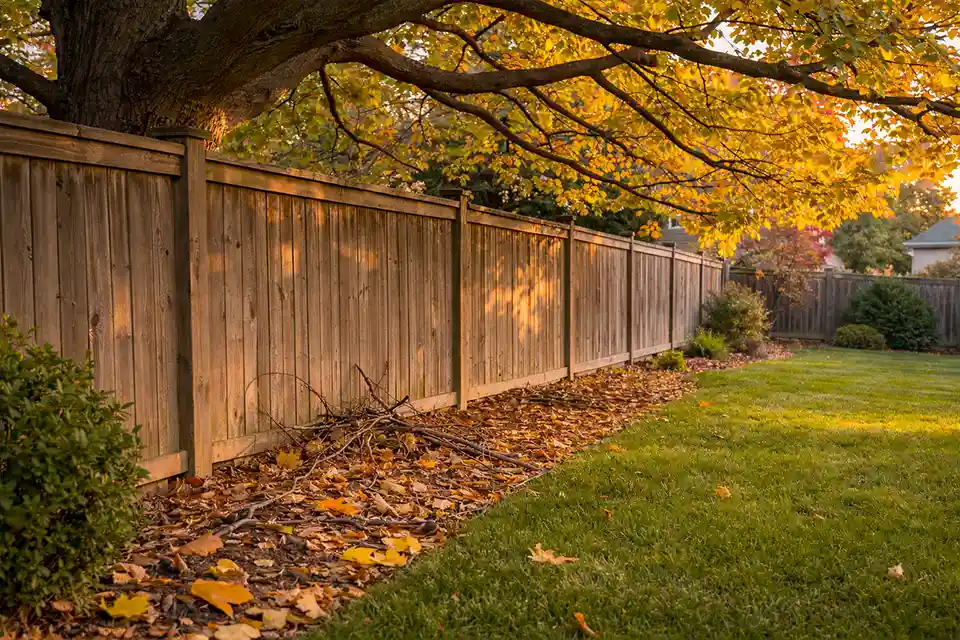
Debris consistently collects along fences or property lines
-
Cleanup is required every 3–5 days during peak seasons
If several of these conditions occur regularly, the overhanging canopy is likely contributing to ongoing maintenance problems.
How Falling Leaves Affect Lawn Health
Organic debris may seem harmless, but repeated accumulation can disrupt lawn health and soil conditions.
Light Blockage
When leaves remain on grass for 7–10 days, sunlight cannot reach the turf surface. Photosynthesis slows, and grass begins to weaken or yellow.
Moisture Trapping
Thick leaf layers hold moisture near the soil surface. In humid regions, this environment encourages fungal diseases such as:
-
brown patch
-
dollar spot
-
leaf spot fungus
Soil Chemistry Changes
As leaves decompose, they release tannins and organic acids. While small amounts benefit soil fertility, heavy layers can temporarily alter soil pH and slow turf recovery.
Uneven Lawn Growth
Leaf accumulation often forms along sidewalks, driveways, or fences where airflow is limited. Lawns in these zones frequently grow thinner or patchy.
Debris accumulation may also increase when nearby streets generate wind-driven material, a situation similar to the conditions described in Front Yard Maintenance Problems Near Busy Roads With Dust and Debris.
Common Types of Tree Debris Homeowners Encounter
Different tree species create different maintenance challenges.
| Tree Type | Typical Debris | Monthly Debris Volume | Peak Season |
|---|---|---|---|
| Maple | Leaves and seed helicopters | 20–50 lbs | Spring and fall |
| Oak | Large leaves and acorns | 30–70 lbs | Fall |
| Pine | Needles and cones | Continuous light debris | Year-round |
| Sycamore | Bark flakes and twigs | Moderate | Summer and fall |
| Sweetgum | Spiky seed balls | 25–60 lbs | Fall |
Some species also shed small branches during temperature fluctuations. Rapid swings of 20–30°F within 24 hours, common in Midwest transitional seasons, can cause stressed limbs to break and fall.
Over time, debris from neighboring trees may also accumulate near sidewalks or paved areas. Roots from these same trees sometimes expand underground, eventually lifting pavement or damaging lawn edges—a related problem explored in Tree Roots Lifting Sidewalks and Damaging Front Yard Lawn.
Practical Ways to Reduce Yard Cleanup
Strategic Branch Pruning
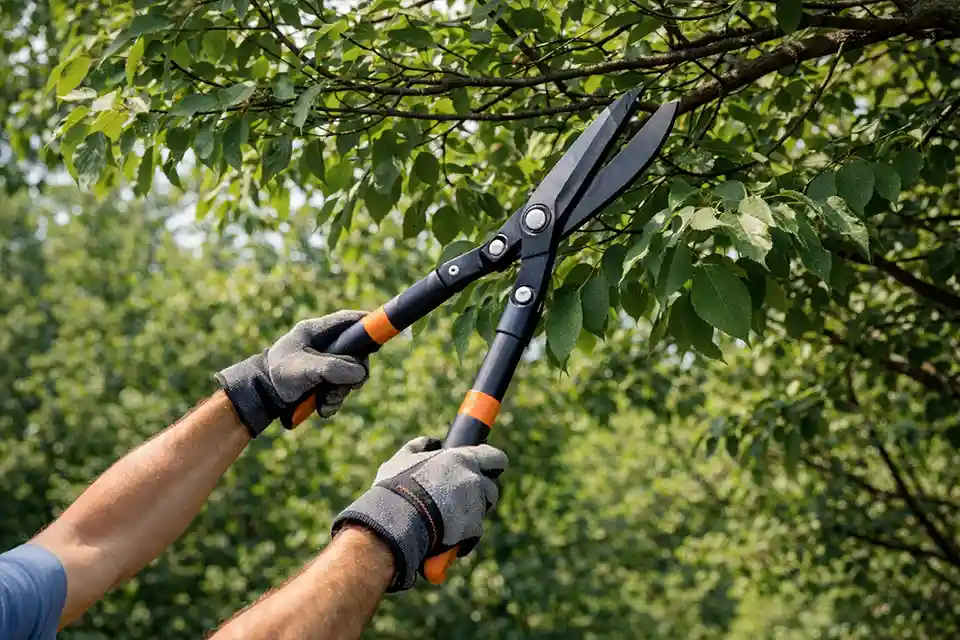
In most U.S. jurisdictions, homeowners may legally trim branches that extend across their property line. This practice improves sunlight exposure and reduces falling debris.
Arborists typically recommend removing no more than 15–20% of canopy mass in a single season to prevent stressing the tree.
Create Debris Containment Zones
Installing landscape buffers along property boundaries can make leaf cleanup easier.
Common solutions include:
-
mulch borders
-
decorative gravel strips
-
groundcover beds
-
edging barriers along fences
These areas act as debris collection zones that are easier to clean than lawn surfaces.
This containment strategy works similarly to the approach described in Front Yard Maintenance Problems When Gravel or Rock Landscaping Spreads Into the Lawn, where defined borders help prevent materials from spreading across grass areas.
Strengthen the Lawn
Stronger grass tolerates leaf coverage more effectively. Maintenance improvements may include:
-
aerating compacted soil annually
-
overseeding cool-season grasses in early fall
-
maintaining mowing heights between 3 and 3.5 inches
These steps help turf recover faster after leaf removal.
Environmental Factors That Increase Tree Debris
Tree debris levels vary depending on climate and neighborhood conditions.
Humid Southeastern States
Warm temperatures and humidity cause leaves to decompose quickly. However, rapid decomposition may create slippery organic buildup on sidewalks or driveways.
Dry Southwestern Regions
In places like Arizona, leaves dry quickly and remain intact longer. Without frequent rainfall, debris may accumulate until manually removed.
Cold Northern Climates
Snowstorms and freezing temperatures often weaken small branches. When ice melts in early spring, accumulated debris becomes visible across lawns.
Wind-Exposed Neighborhoods
Homes located on open streets or intersections often experience stronger wind currents. These areas can collect more leaf debris than sheltered yards, particularly when properties sit on corner lots with multiple exposed sides.
Similar maintenance challenges often appear in properties discussed in Front Yard Maintenance Problems for Corner Lot Homes With Extra Curbside Grass, where wind exposure increases yard maintenance demands.
Legal and Neighborhood Considerations
Tree maintenance can occasionally become a source of disagreement between neighbors. While most states allow homeowners to trim branches that cross property lines, certain restrictions apply.
Common guidelines include:
-
trimming must not damage the overall health of the tree
-
work should remain within the homeowner’s property boundary
-
local tree preservation laws must be respected
In some communities, landscaping changes must also follow neighborhood regulations. For example, homeowners in managed developments may need approval before altering trees or yard boundaries.
These limitations are explained in more detail in Front Yard Maintenance Problems Caused by HOA Rules.
Open communication with neighbors often helps resolve maintenance concerns before they become disputes.
Environmental Conditions That Increase Debris
| Factor | Impact on Yard | Likelihood | Recommended Response |
|---|---|---|---|
| Mature tree canopy | High debris volume | Very common | Seasonal pruning |
| Strong seasonal winds | Leaves carried across property | Moderate | Install debris buffers |
| Dense shade | Weak grass growth | High | Adjust lawn care |
| Property fencing | Debris accumulation along edges | Moderate | Add mulch borders |
| Temperature swings | Twig breakage | Occasional | Inspect after storms |
Urban forestry research shows that tree canopy size, wind exposure, and seasonal stress can influence how frequently mature trees shed leaves and small branches throughout the year. Guidance from the University of Minnesota Extension explains that environmental stress, seasonal change, and natural pruning processes often cause mature trees to drop small branches or leaves.
Homes located on open streets or intersections often experience stronger wind currents. These areas can collect more leaf debris than sheltered yards, particularly when properties sit on corner lots with multiple exposed sides.
Urban forestry research also shows that tree canopy size, wind exposure, and seasonal stress influence how frequently mature trees shed leaves and small branches. Guidance from the University of Minnesota Extension explains how environmental stress and seasonal changes can increase natural leaf and twig drop in mature trees.
Frequently Asked Questions
Can I legally cut branches from my neighbor’s tree?
In most U.S. states, you can trim branches that extend across your property line. However, trimming must not damage the tree or cross into the neighbor’s property.
How often should leaves be removed from a lawn?
During heavy leaf drop periods, removing leaves every 5–7 days prevents turf damage and reduces fungal risk.
Do leaf blowers work better than rakes?
Leaf blowers clear large areas quickly, while rakes offer more precision around garden beds, fences, and landscape edges.
Why do small branches sometimes fall even without storms?
Branches may drop due to temperature swings, drought stress, or natural pruning processes within mature trees.
Key Insights
Overhanging neighbor trees can create continuous front yard maintenance challenges. Leaves, twigs, seed pods, and small branches may fall throughout the year, particularly when mature trees extend their canopy beyond property boundaries.
Strategic pruning, debris containment zones, and improved lawn care practices can significantly reduce cleanup demands. Climate conditions, wind exposure, and tree species also influence how frequently debris accumulates.
By understanding how neighboring trees interact with lawn health and property layout, homeowners can design practical maintenance strategies that keep front yards cleaner and easier to manage.