Last updated: July 1, 2026
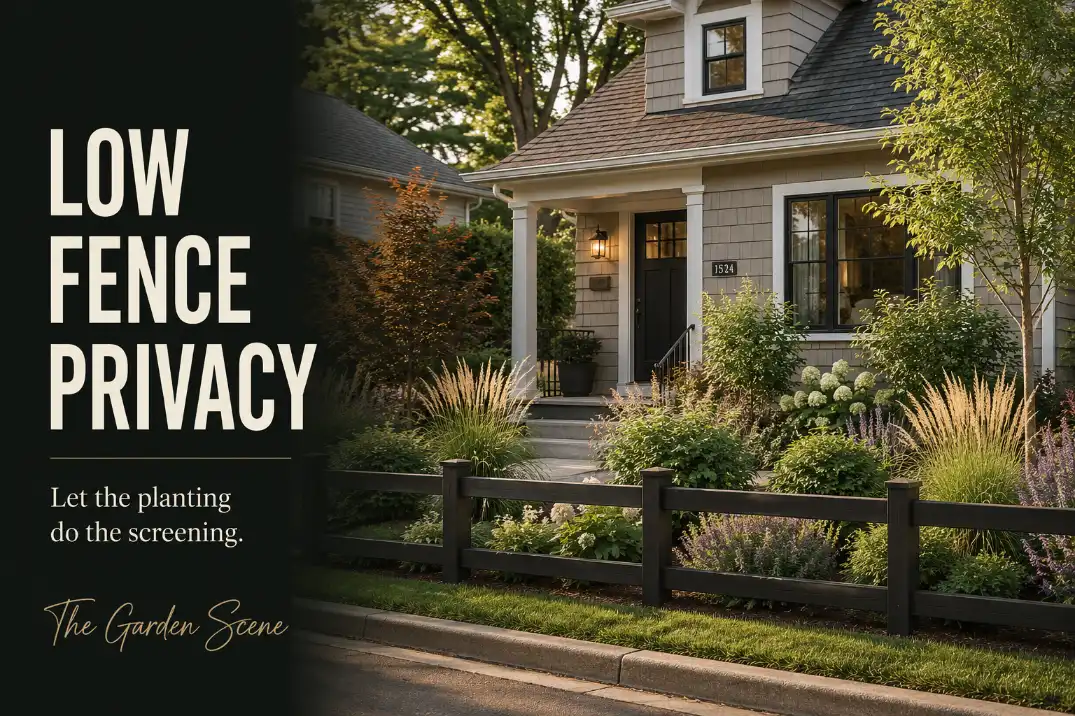
A low fence only becomes useful for front yard privacy when it is not asked to act like a short privacy wall. Its job is to set the base edge. The planting behind and around it does the actual screening.
That distinction controls the whole layout. A low fence can make the yard feel more defined from the curb, but most people walking by will still see over it. The privacy improves when layered shrubs, grasses, and selective vertical accents interrupt the specific line of sight toward a window, porch, or sitting area.
This is not a full privacy fence plan, where height and enclosure carry the result. It is also not a no-fence planting plan, where the landscape does all the work alone.
Low fence landscaping sits between those two: the fence organizes the front edge, the planting filters the view, and the entry stays readable enough that the house still feels welcoming.
The best layout is not the tallest low fence you can fit. It is the clearest combination of low boundary, planting depth, targeted sightline interruption, and open arrival space.
Why a Low Fence Needs Planting to Create Real Privacy
The first decision is whether the fence is supposed to define the yard, filter a view, or fully enclose space. A low fence can do the first job well. It can support the second job when planting is layered correctly. It usually cannot do the third job.
A 2- to 3-foot fence may make an open lawn feel more intentional, especially on a shallow suburban front yard. But a person on the sidewalk is usually looking over that fence, not through it. If the street-facing window, porch chair, or living room sightline sits above the fence line, privacy has to come from what rises behind the fence.
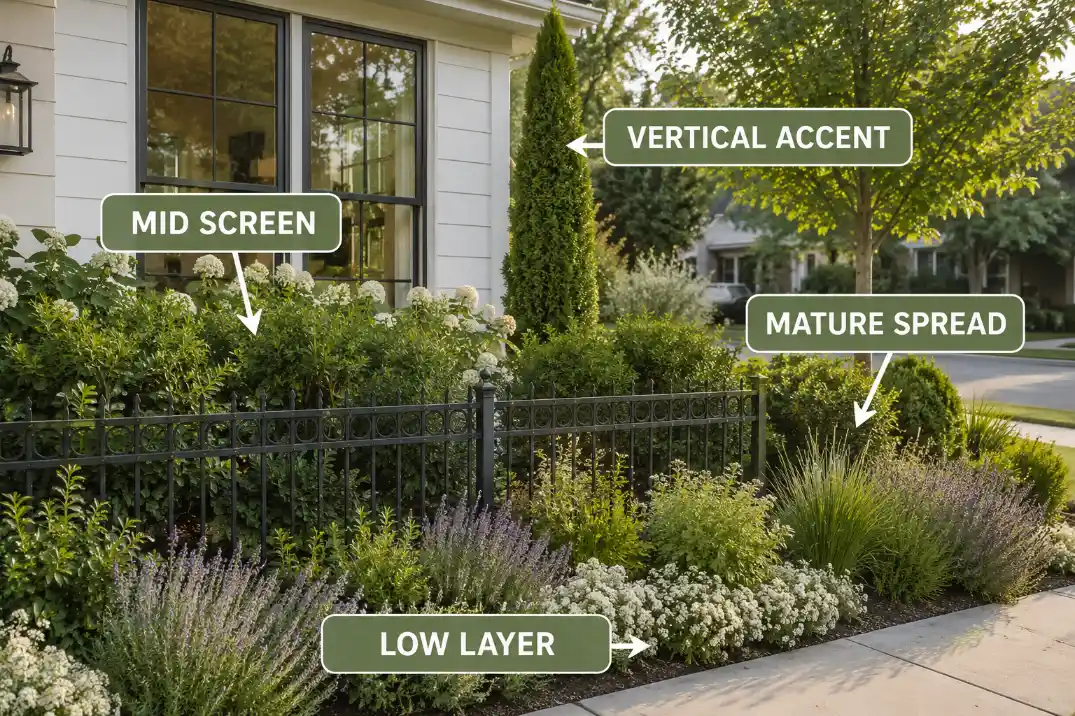
That is where layered planting changes the result. The fence creates the bottom edge. Shrubs, ornamental grasses, and selective upright accents create the middle and upper interruption. The goal is not to erase the house from the curb. The goal is to make the most exposed view less direct.
This is also why a low fence should not be designed like a shorter version of a tall privacy fence. A tall fence uses mass and height. A low fence uses alignment, planting depth, rhythm, and partial obstruction.
A homeowner who needs full enclosure may be in the wrong category. But a homeowner who needs a street-facing window softened, a porch view filtered, or a front yard edge made less exposed is exactly where this combination can work well.
For a broader privacy framework beyond this low-fence approach, front yard landscaping for privacy is the better parent-level direction.
Start With the Sightline, Not the Fence Height
The useful test is simple: stand where the unwanted view starts, then look toward the part of the house that feels exposed. That line matters more than the fence height on paper.
From the curb or sidewalk, the exposed point is usually one of four things: a street-facing window, a porch sitting area, a front walk that feels too open, or an angled view from a driveway or corner approach. Each one needs a slightly different low fence layout.
Street-to-window sightlines
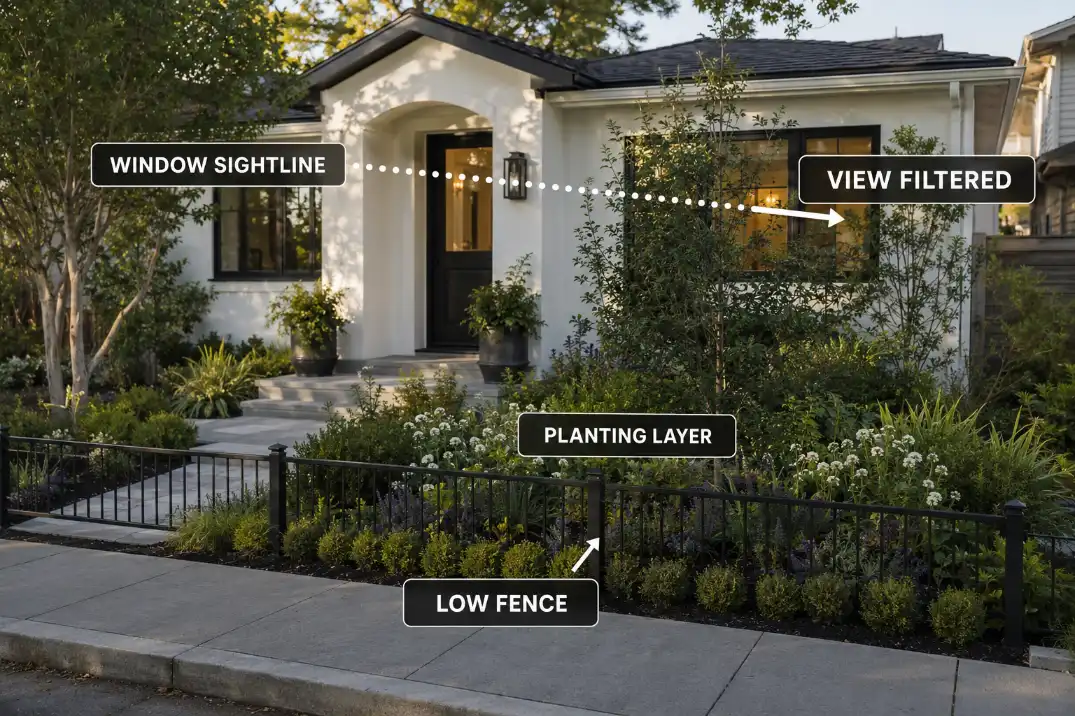
A low fence works best when the planting behind it crosses the line between sidewalk eye level and the lower part of the window. The fence does not need to cover the window. It needs to support a planting band that makes the view less clean.
For a low window, mid-height shrubs behind the fence may do enough. For a higher window, one or two taller vertical accents placed off-center can break the view without turning the whole frontage into a wall. That targeted move usually looks better than running the same dense planting across the entire house.
Sidewalk-to-porch sightlines
Porch privacy needs more restraint than window privacy. A porch still has to feel connected to the entry, steps, and front walk. If the low fence and planting close the porch too evenly, the house can start to look guarded rather than private.
The better layout usually filters one side of the porch or the lower approach angle, leaving the steps and door readable. The fence defines the edge of the yard or bed; the plants interrupt the personal view into the porch.
If the sidewalk is only a few feet from the house, planting depth becomes more important than fence style. In a very tight setback, the low fence may only provide order, while the real privacy has to come from narrow, carefully placed planting. That is where a more compact strategy like small front yard privacy landscaping may be a better supporting read.
Use the Fence as the Front Edge of a Layered Planting Band
The layout starts working when the fence stops being treated as the screen and starts acting as the front edge of a deeper planting band.
That usually means the fence sits closer to the street, sidewalk, or front edge of the planting bed, while the shrubs sit behind it with enough room to reach their mature width. The fence gives the eye a neat line. The shrubs break up the view above that line.
If there is enough depth, a small ornamental tree or narrow upright evergreen can interrupt the tallest sightline without making the whole frontage feel sealed.
The fence line should be simple
A low fence does not need to zigzag around every plant. When the fence line becomes too busy, the front yard starts to feel decorative instead of intentional. A simple straight or gently stepped fence line usually works better because the planting can provide the softness and movement.
The fence should read as the base. The plants should read as the privacy layer.
The planting should not become a flat wall
The planting can look tidy and still work poorly if it becomes one same-height row directly behind the fence. Over time, that flat row can turn into a green stripe across the house. It may block some view, but it also reduces depth and can make the lower facade feel heavy.
A better low fence layout staggers the planting. Use lower plants near the fence, mid-height shrubs behind them, and one or two taller accents only where the sightline needs help. The result feels more like a filtered front yard than a miniature barricade.
The difference is subtle but important: a flat row tries to copy a hedge; a layered band uses the fence to organize planting depth.
Keep the Entry Readable While You Screen the Window
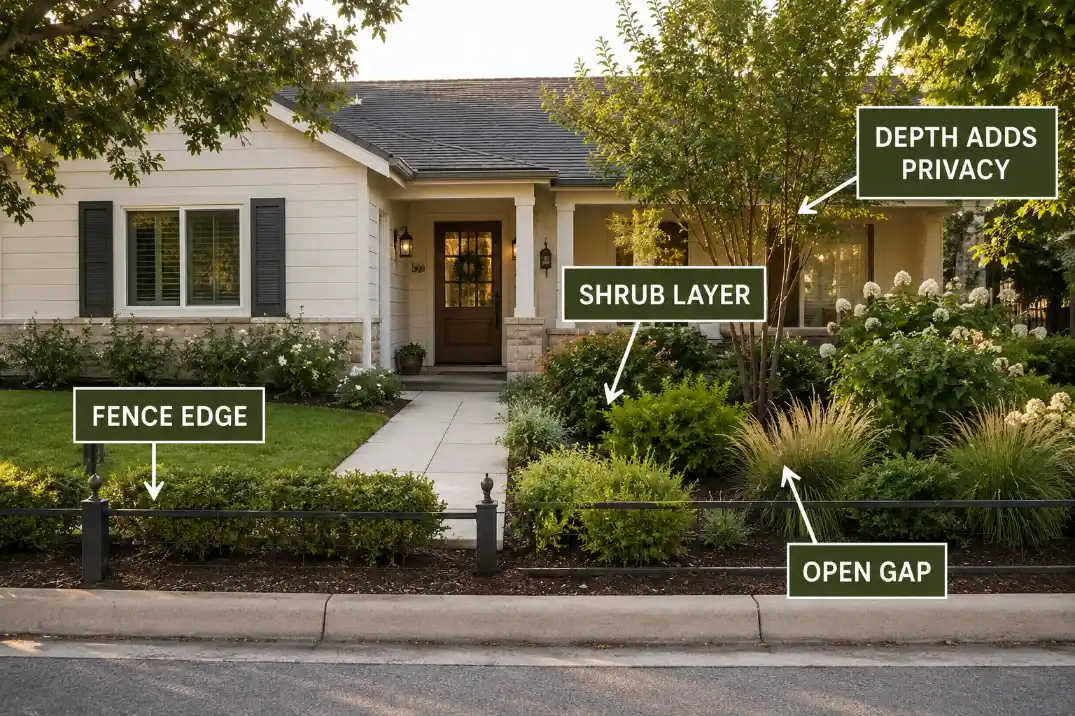
The screen should become strongest where the view becomes personal, not where the property line begins. That usually means more density near the exposed window and more openness near the route to the door.
A front yard still has to explain how someone arrives. The door, walkway, porch light, house number area, and landing should remain easy to read from the curb. If privacy planting makes visitors hesitate, walk toward the wrong side, or miss the door, the layout has traded exposure for confusion.
This is the most common failure with low fence privacy. The fence and planting begin as a targeted window screen, then slowly spread across the whole frontage. The house gains privacy, but the entry loses clarity.
The better move is to let the screen taper. Keep the planting taller or fuller where the window sightline is direct. Lower it, open it, or break it near the main route. That may mean a wider opening at the gate line, lower plants beside the walkway, or a visible gap where guests move from sidewalk to door.
This is especially important when the front walk crosses the planting band. A fence opening that is technically wide enough can still feel pinched if mature shrubs lean into the route. Think about mature spread, not just planting-day size. A walkway that feels open during the first season can feel crowded two or three years later if the shrubs were placed too close.
A good low fence privacy layout lets the house stay legible. The window can be softened. The porch can feel less exposed. But the entry should not disappear.
For front yards where privacy improvements have already started to make the arrival feel too closed, front entry privacy that does not feel closed off is the more specific entry-focused direction.
Match the Low Fence Layout to the Front Yard Exposure
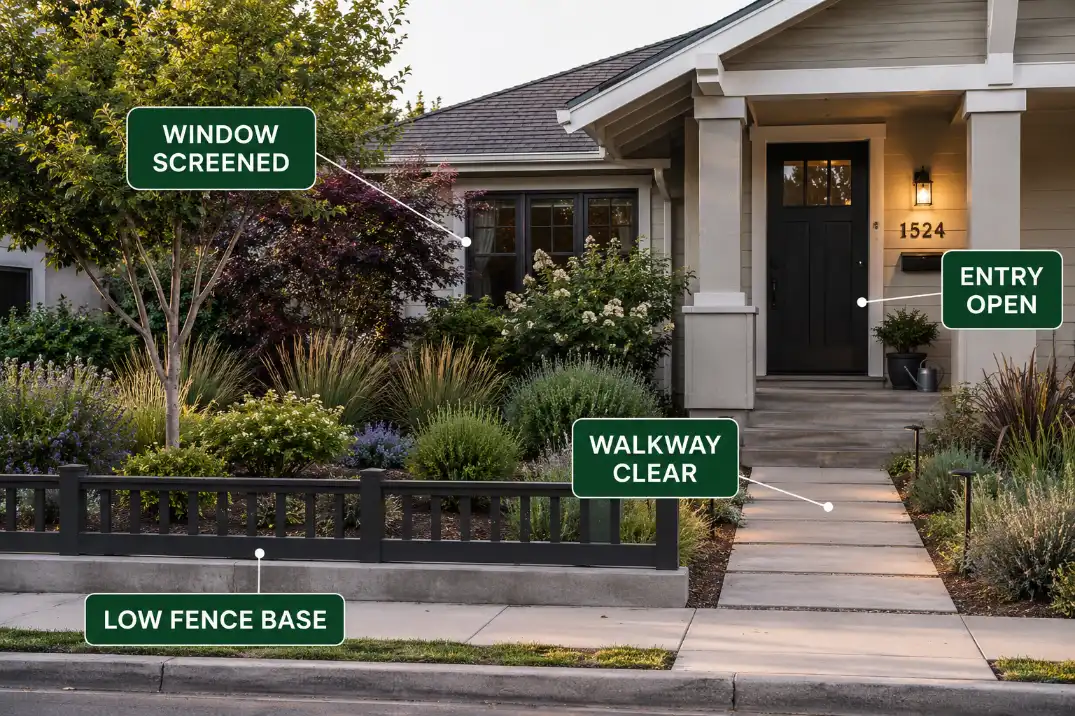
The same low fence can behave differently depending on where the pressure comes from. The fence may stay low, but the planting depth, height rhythm, and open gaps should change with the exposure.
For a close sidewalk, the layout needs depth in a narrow band. A low fence at the sidewalk edge may define the yard, but the real screening should happen just behind it. Use plants that can stay narrow enough to avoid spilling into the public path or crowding the front walk. This is one of the few cases where restraint matters more than fullness.
For a street-facing window, the strongest move is a targeted planting pocket rather than a full-width screen. Place the densest planting where the window sightline is most direct, then let the planting lower or open as it approaches the entry. The yard will feel more intentional if the privacy is concentrated where it is needed.
For a porch that feels exposed, avoid treating the porch front like a fence line. The better layout usually screens one side or the lower approach angle, leaving the steps and door visible. A porch needs filtered edges, not a planted curtain.
For a corner lot or angled view, the sightline may not come straight from the curb. It may come diagonally across the lawn or from the driveway side. In that case, the low fence can still define the front edge, but the planting may need to bend or thicken at the angle.
If driveway exposure is the stronger problem, the layout logic starts to shift toward front yard privacy when the driveway is open to the street.
For a narrow planting strip, the low fence may be more useful as a visual organizer than as part of a deep screen. The planting should stay selective: one narrow screening layer, a few lower softening plants, and enough breathing room for maintenance. Trying to force a full privacy band into a strip that cannot hold mature plants usually creates pruning pressure fast.
Choose Planting Layers That Make the Fence Work Harder
Choose planting by role, not by how private the plant sounds in a nursery tag. In this layout, each layer has a job: soften the fence, interrupt the view, add selective height, or preserve access.
A low front layer softens the fence so it does not look like a hard line dropped onto the lawn. This layer can be low shrubs, grasses, perennials, or groundcover depending on the site. Its job is not privacy. Its job is to make the fence feel settled into the yard.
The mid layer does the main privacy work. This is usually where shrubs matter most. They should be tall enough at maturity to interrupt the view from the sidewalk or street, but not so aggressive that they swallow the fence or crowd the route. Mature width is just as important as mature height.
A vertical accent is useful only where the sightline needs it. One narrow upright plant near the edge of a window can do more than a full row of tall plants across the house. Used carefully, it breaks the direct view without making the front yard feel sealed.
Evergreen, mixed, or seasonal layers
Evergreen planting gives more reliable year-round screening, especially for a window or porch that feels exposed in winter. Mixed planting can look softer and more natural, but it may reveal more during dormant months. The right choice depends on how constant the privacy need is.
If the view is uncomfortable every day, use at least part of the mid layer for reliable screening. If the privacy issue is more about summer porch use or occasional sidewalk traffic, a mixed layer can work well and may feel lighter from the curb.
Maintenance access matters
A low fence buried inside mature shrubs loses part of its job. It becomes hard to paint, repair, clean, or trim around, and the planting can start to look like it is swallowing the edge instead of working with it.
That is why planting depth should be planned around mature spread, not just first-season spacing. The fence should remain visible enough to do its boundary job. The plants should be full enough to filter the view. Neither one should consume the other.
If the homeowner wants the plants to do nearly all the screening without a fence, that becomes a different design problem. In that case, front yard landscaping for privacy without fences is the closer match.
Where This Approach Stops Working
Low fence landscaping stops working when the privacy expectation is stronger than the layout can honestly deliver. It can filter, soften, and define. It should not be sold to the yard as full enclosure.
The first limit is complete privacy. A low fence with planting can make a window view less direct and a porch feel less exposed, but it will not create the same effect as a taller fence, wall, or dense enclosure. If the goal is “no one can see into this area,” the design has moved beyond low fence landscaping.
The second limit is upper-level exposure. Planting behind a low fence can interrupt street-level sightlines, but it usually cannot solve a second-story window looking down into the yard or porch. That requires a different vertical strategy.
The third limit is lack of planting depth. If there is only room for a fence but not enough room for shrubs to mature, the fence may still improve the edge of the yard, but privacy will be limited. Forcing plants into a space that cannot hold them often creates pruning pressure instead of screening.
Heavy traffic exposure can also overwhelm a light layout. A home facing constant pedestrian traffic, a school route, or a busy corner may need more targeted screening than a simple low fence band can provide. The low fence can still be part of the design, but it should not be asked to solve every angle alone.
The practical judgment is this: use low fence landscaping when the yard needs a clearer edge and a filtered sightline, not when it needs full separation. Let the fence mark the base.
Let the planting interrupt the view. Keep the walkway and door readable. When those three pieces work together, the front yard feels more private without making the house feel shut down.
For plant selection and mature-size planning, University of Minnesota Extension explains why matching plants to site conditions supports healthier landscapes: Landscape design and plant selection