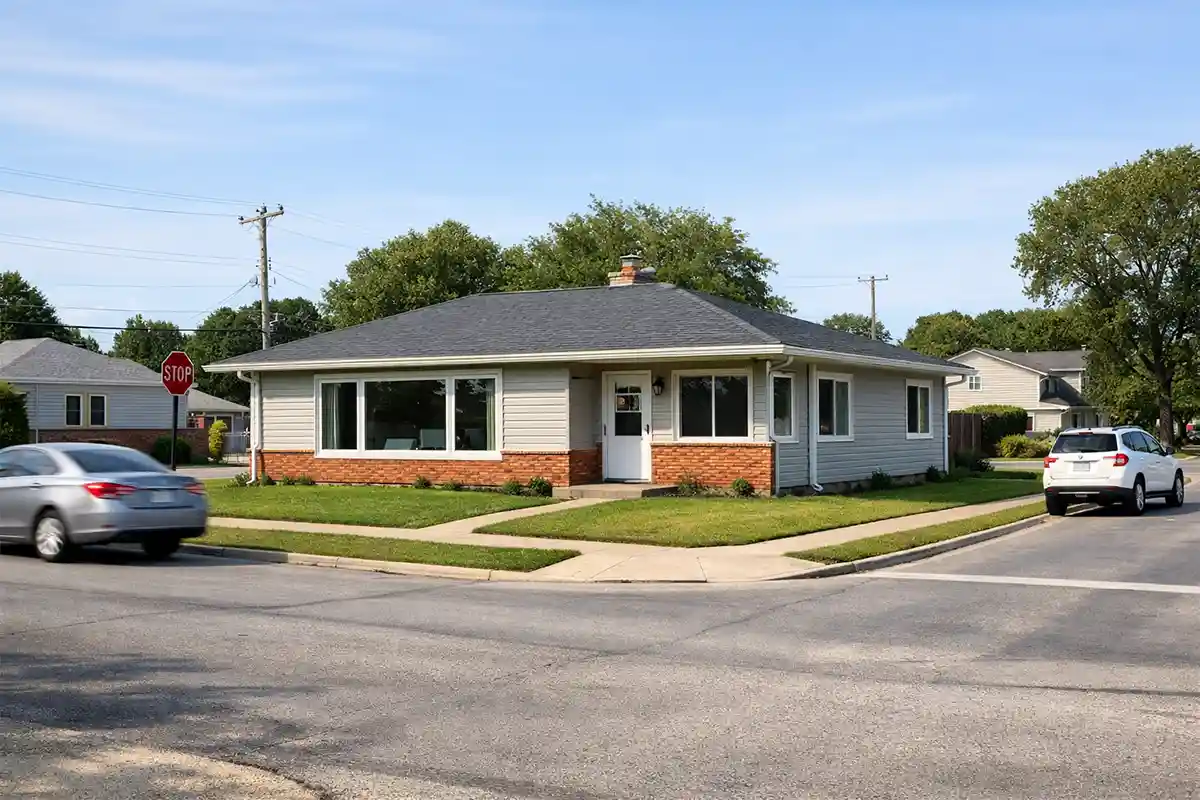
Living on a corner lot often means the front yard is exposed from two directions. Traffic moves past the property all day, pedestrians cut across the sidewalks, and the house sits in full view from multiple angles. Privacy disappears because there is no side yard buffer and no neighboring structures blocking sightlines.
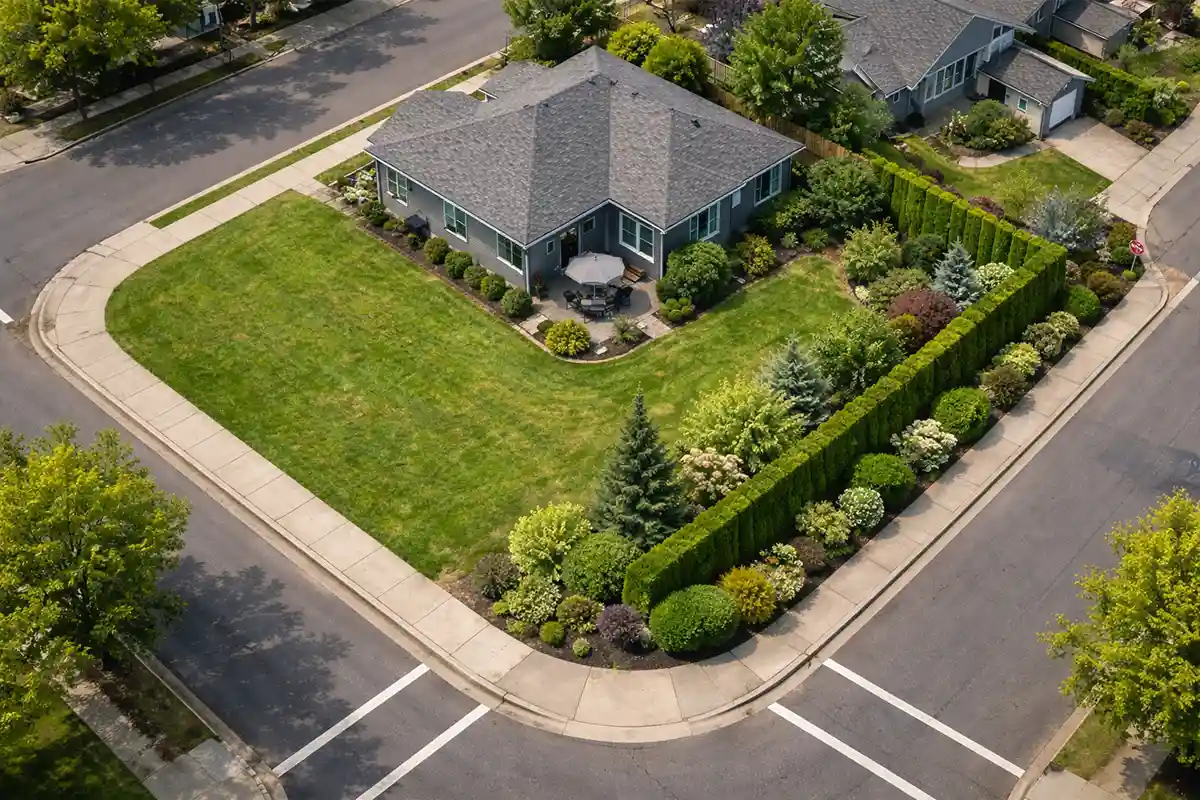
The fastest solution usually involves creating layered visual barriers rather than a single tall screen. Low hedges, staggered shrubs, and partial planting beds placed along both street edges interrupt visibility without making the yard feel closed off. Even a 3–4 foot planting layer can block direct sightlines from passing cars. When structured correctly, these layers reduce exposure while still keeping the yard open and welcoming.
Why This Happens
Corner properties experience a different exposure pattern than standard lots. Instead of a single street-facing edge, two sides of the property remain visible at all times.
Several layout conditions contribute to the privacy problem:
-
Multiple viewing angles from intersecting streets
-
Continuous sidewalk traffic passing along both sides of the yard
-
Wide open lawn areas with no visual barriers
-
Front windows facing the intersection
-
City setback rules limiting tall fences
Visibility on corner properties is dramatically higher than typical homes. Research from several urban planning departments shows that corner lots can experience 30–50% more pedestrian exposure because foot traffic often crosses intersections rather than staying on one side of a street.
Another factor is traffic stopping or slowing near the property. Cars waiting at stop signs or signals often sit directly beside the yard. The issue becomes more noticeable in homes located at intersections discussed in Front Yard Privacy Problems on Busy Streets, where prolonged vehicle visibility increases the sense of exposure.
Because many municipalities restrict solid fencing near intersections for safety reasons, landscaping solutions often provide the most flexible privacy strategy.
Quick Diagnostic Checklist
A corner-lot privacy issue typically shows several visible signs:
-
The front yard is visible from two street directions.
-
Passing drivers can see directly into the yard or windows.
-
Pedestrians walking along sidewalks look straight into the property.
-
Cars frequently stop beside the yard at a stop sign or light.
-
Landscaping is limited to lawn or small plants below window height.
When multiple conditions appear together, the property likely lacks enough visual layering to interrupt sightlines.
Common Situations Where This Occurs
Certain property layouts make corner-lot exposure much more noticeable.
One common scenario involves homes built close to the intersection where sidewalks pass directly beside the lawn. A homeowner might notice neighbors walking dogs or pushing strollers within just a few feet of the yard. Without shrubs or raised beds, the entire property becomes visible.
Another frequent situation appears in suburban developments where corner homes have oversized front lawns. Builders often leave these areas open to maintain visibility for drivers, but the result is a completely exposed yard.
In neighborhoods with steady foot traffic, the yard may feel like part of the public streetscape rather than private space. That is why layered planting strategies used in How to Create a Privacy Buffer in a Suburban Yard Step-by-Step often perform better than single barriers. Multiple planting zones gradually block views instead of creating a sudden wall.
A third situation involves homes with large front-facing windows near the intersection. Evening interior lighting can make visibility even worse, allowing pedestrians to see directly inside.
Common Causes and Practical Fixes
| Cause | Signal | Fix |
|---|---|---|
| Open lawn extending directly to the sidewalk | Yard fully visible from passing cars and pedestrians | Install layered planting beds with shrubs 3–5 feet tall along both street edges |
| Corner setback rules preventing tall fences | Local code limits solid barriers near intersections | Use staggered shrubs and ornamental grasses instead of fencing |
| Front windows facing the intersection | Interior visible from street at night | Add medium-height hedges or raised planting beds below window line |
| Lack of depth in landscaping | Single row of small plants fails to block sightlines | Create a two-layer planting zone with low plants in front and taller shrubs behind |
Some homeowners attempt quick fixes like isolated screens or decorative panels, but those rarely work well in highly visible areas. Structural planting layers are more effective because they break up viewing angles gradually. Many failed attempts are explained in Front Yard Privacy Without Fences: What Usually Fails, where single barriers leave gaps in visibility.
A well-designed privacy layer does not need to be tall. Even moderate plant heights can significantly reduce exposure because sightlines from vehicles usually sit 3–4 feet above ground level.
Quick Questions
Is a fence the best option for a corner yard?
Often not. Many cities restrict tall fences near intersections for traffic visibility. Landscaping layers usually provide better privacy while staying within local regulations.
How tall should privacy plants be in a corner yard?
Shrubs between 3 and 5 feet tall usually interrupt most street-level sightlines without blocking the entire front yard view.
Quick Summary
Corner lot homes often struggle with front yard privacy because two streets expose the property from multiple angles. Open lawns, sidewalk traffic, and intersection visibility make the yard feel constantly public.
The most effective solution involves layered landscaping rather than solid barriers. Strategic planting beds placed along both street edges interrupt sightlines, reduce direct views into windows, and soften the exposure created by the intersection.
When shrubs, hedges, and staggered plant layers are arranged correctly, the yard gains privacy while still maintaining the open appearance expected in front-yard landscapes.
Guidelines for residential landscape privacy design are widely discussed by research programs such as the University of California Agriculture and Natural Resources, which studies residential landscape planning and urban yard design.